Streaming reports and market data
Documents
Esports Rising: State of the Global Esports Market
The global esports market is experiencing a period of robust expansion, characterized by double-digit growth in both viewership and revenue.
- The global esports market is projected to reach $1.08 billion in revenue by the end of 2021, marking a 14.5% year-over-year increase driven primarily by sponsorships and media rights.
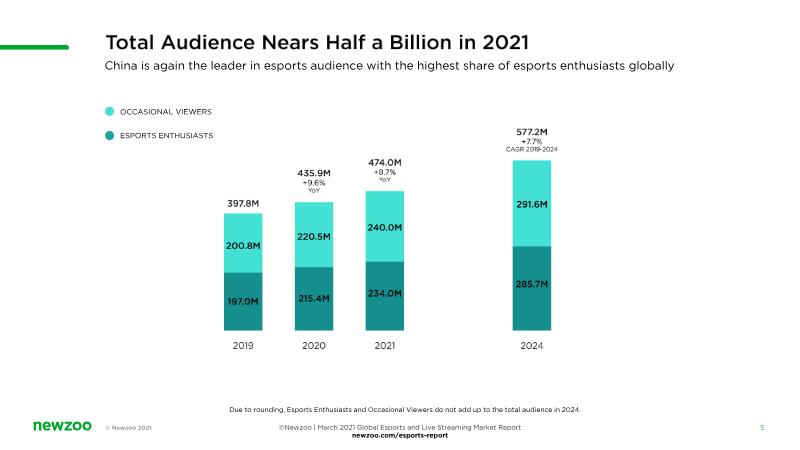
- Total hours watched on major streaming platforms like Twitch and YouTube surged by 76% in 2020, with the global audience expected to exceed 577 million viewers by 2024.
- China remains the dominant market leader, holding the largest share of global esports revenue and the highest concentration of enthusiasts.
What makes Critical Role so Good!? - How the Pro's turn RPG's into compelling tabletop entertainment
The transition of tabletop roleplaying games (RPGs) from private social activities to professional entertainment requires a fundamental shift in design and execution.
- Successful actual-play shows like Critical Role, The Adventure Zone, and Rivals of Waterdeep transition tabletop RPGs from private social activities into professional spectator entertainment by prioritizing the viewer as the primary consumer.
- Production teams treat sessions as performances by utilizing writers, editors, and technical crews to manage pacing, camera angles, and sound design, effectively mirroring the structure of professional sports broadcasting.
- To maintain audience interest, these productions minimize extraneous downtime and focus on narrative flow, moving beyond simple character statistics to prioritize visual presentation.
Global Gaming Industry Update: March 2021
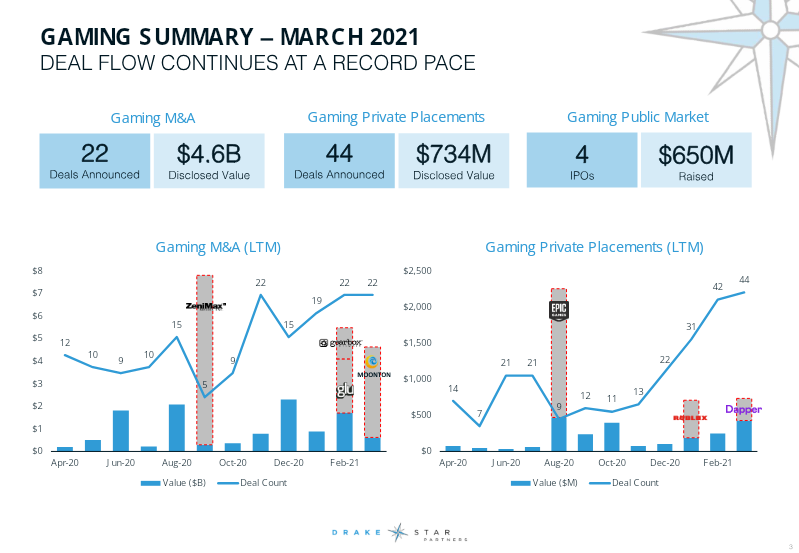
The global gaming industry experienced significant financial activity throughout March 2021, characterized by robust deal flow across mergers and acquisitions, private placements, and public market entries.
- The gaming industry saw 22 M&A deals in March 2021 totaling $4.6 billion, anchored by ByteDance’s $4 billion acquisition of Moonton Technology.
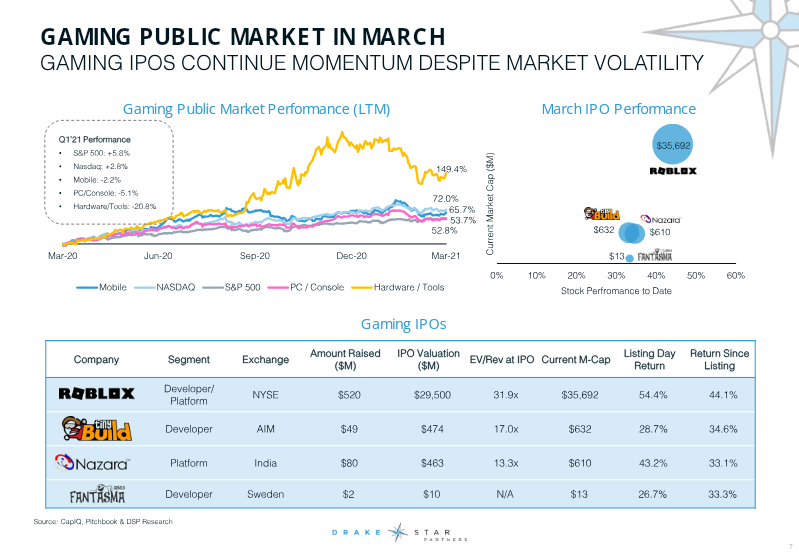
- Roblox entered the public market via direct listing at a $29.5 billion valuation, while companies like tinyBuild and Nazara completed successful IPOs.
- Private placement activity remained robust with 44 deals raising $734 million, highlighted by Dapper Labs securing $305 million at a $2.6 billion valuation.

Stadia Shutting Down | Roundtable News Episode 258
Google’s decision to shutter its internal Stadia game development studios represents a significant strategic retreat, signaling a pivot from content creation toward licensing streaming technology to third-party partners.
- Google is shuttering its internal Stadia game development studios, signaling a strategic pivot away from content creation toward licensing its streaming technology to third-party partners.
- The studio closures resulted in the layoff of approximately 150 employees, highlighting a lack of the long-term commitment required to build developer trust and consumer loyalty.
- Stadia failed to gain market traction against established competitors like Microsoft and Nvidia due to a lack of compelling exclusive content and ineffective pricing and marketing strategies.


Video Game Streaming Trends Report: 2021 Yearly Report
The report establishes that video-game streaming has solidified its position as a core element of global pop culture, with 21% year-over-year growth in watch time during 2021—an increase that, while lower than the 81% surge seen in 2020, still reflects a substantial expansion of audiences worldwide.
- Video game streaming grew 21% in 2021, with Twitch leading the market at 6 billion hours watched and a 31.4% year-over-year increase.
- Facebook Gaming experienced significant momentum with a 59% year-over-year rise, while YouTube Gaming saw a 15% decline in live-stream hours despite growth in its VOD ecosystem.
- Mobile titles including Garena Free Fire, PUBG Mobile, and Valorant accounted for 32% of total viewership, totaling over 5.6 billion hours watched.
Stadia and Cloud Gaming | Unchained Report
Stadia’s market entry and long-term viability as a cloud gaming platform face significant skepticism due to a lackluster content strategy and a poorly executed launch.
- Stadia’s long-term viability is threatened by a lack of exclusive, high-caliber first-party content that differentiates it from established console ecosystems.
- The platform currently lacks a 'killer app' that leverages unique cloud-native features, such as deep YouTube integration, to justify its existence as a fourth console competitor.
- Stadia’s library is perceived as weak because it relies heavily on older, previously played titles rather than the deep, established catalogs offered by competitors like Microsoft and Sony.
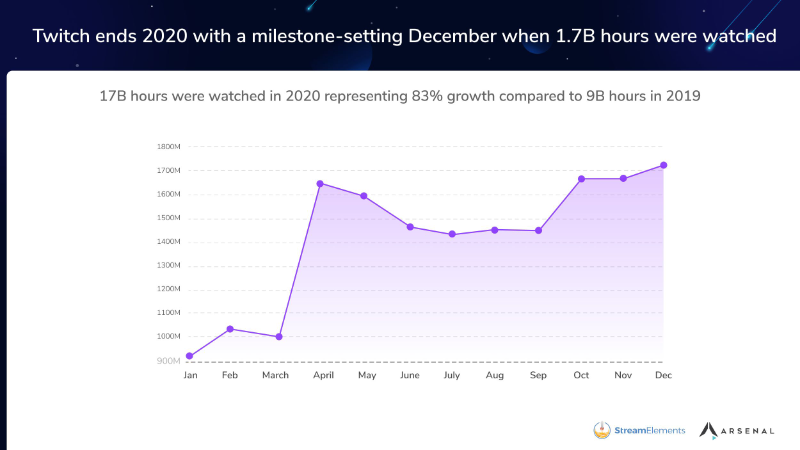

State of the Stream December/2020 Year in Review
The livestreaming industry experienced unprecedented growth throughout 2020, driven largely by global quarantine measures that accelerated viewership across all major platforms.
- Twitch maintained market dominance in 2020, with the 'Just Chatting' category becoming the most-watched content segment at 1.9 billion hours.
- Valorant was the most successful new release of 2020, accumulating 737 million hours watched with a single-month peak of 334 million hours in April.
- Established titles remained central to viewership, with League of Legends and Fortnite generating 1.4 billion and 904 million hours watched, respectively.

Game Licensing for Streamers? | Roundtable News | Game Dev Unchained Episode 241
The modern gaming industry faces a significant structural tension regarding the streaming of intellectual property, characterized by a debate over whether developers should implement formal licensing models for content creators.
- The gaming industry is debating a shift from the current 'wild west' streaming model toward a formal, permission-based licensing framework to ensure developers receive equitable compensation.
- Proponents argue that streaming platforms and creators currently monetize intellectual property without providing a direct financial return to the original developers.
- The lack of industry-wide standards and transparent data prevents developers from accurately valuing their contributions, leading to investment trends that disproportionately favor streaming-friendly titles.

How Games Help People with Disabilities Featuring Hawken Miller | Game Dev Unchained Episode 238
Video games function as a critical medium for social connection and competitive engagement, particularly for individuals with disabilities.
- True accessibility in gaming requires integrating people with disabilities directly into development teams to ensure features are core to the design process rather than treated as an afterthought.
- Developers can effectively dismantle physical barriers to entry by prioritizing adaptive hardware and fully remappable control schemes.
- The industry's shift toward aggressive live-service monetization and casino-style engagement loops risks fostering player addiction and contributing to developer burnout.
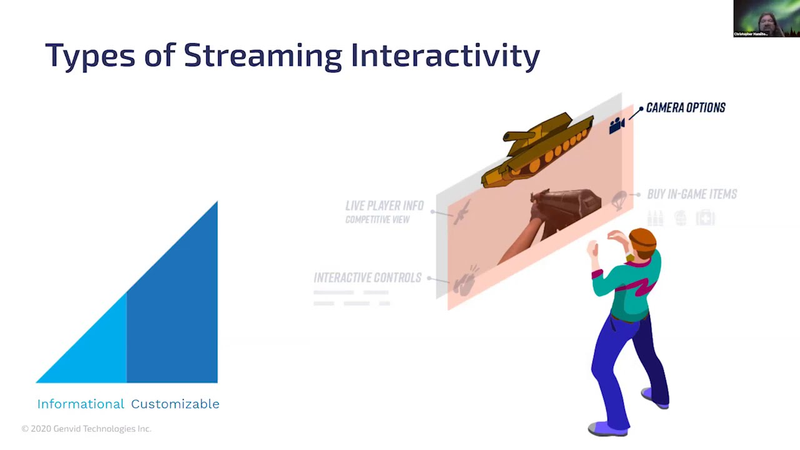
Superstar: Designing for Interactive Game Streams: Incorporating Stream Viewers into Your Vision
Modern game design is undergoing a fundamental shift that treats live stream viewers as active participants rather than passive observers.
- Game developers have historically focused exclusively on the player experience, leaving the massive, growing audience of live-stream viewers as an underserved market for engagement and monetization.
- Interactive streaming technology allows viewers to transition from passive observers to active participants, enabling them to influence gameplay through mechanics like cheering, voting, or purchasing in-game items.
- Massive online events like Fortnite's Travis Scott concert, which reached 12.3 million viewers, demonstrate that games are increasingly serving as social platforms for shared experiences beyond traditional gameplay.

Workshop : How to Implement Video Chat into Unreal Engine
Integrating real-time video communication into Unreal Engine projects requires a structured technical workflow centered on the Agora SDK.
- Integrating real-time video into Unreal Engine projects is primarily achieved by utilizing the Agora SDK, which provides the framework for managing communication channels.
- The implementation requires initializing the Agora engine with a unique App ID and creating custom actor blueprints and UI widgets to render local and remote video feeds.
- Developers must configure specific callback events to manage connection states and bind video streams to dedicated video holder blueprints within the game environment.
GDC Summer Dev Speedrun - Star Wars: Republic Commando With Harley Baldwin
The development of Star Wars: Republic Commando, released in 2005, serves as a case study in balancing ambitious squad-based mechanics with the severe hardware constraints of the original Xbox.
- To address player feedback that the game did not feel like a squad-based experience, the development team implemented a simple code change that defaulted the squad to 'search and destroy' behavior whenever the player entered a new area, ensuring the AI remained visible and active.
- Technical limitations in Unreal Engine 2 and the hardware of the era forced level designers to use short hallways to connect large arenas, as the engine struggled to render expansive environments alongside the necessary connective geometry.
- Early prototypes for vehicle-based or moving-platform gameplay were abandoned because the physics simulation costs were prohibitively expensive for the hardware available at the time of development.