Retention reports and market data
Documents

Understanding the Publishing Funnel | PGC Digital #1
The hyper-casual gaming sector is undergoing a strategic evolution, shifting away from the pursuit of fleeting trends toward a model defined by long-term engagement and sustainable innovation.
- The hyper-casual sector is shifting from short-lived trends to a model focused on long-term engagement and sustainable innovation to combat razor-thin profit margins.
- Hyper-casual titles that rely on replicating fleeting fads typically lose market relevance within a three-month window.
- Publishers are moving away from prioritizing simple download volume, as high acquisition numbers often fail to offset the costs of thin profit margins.

Six Steps Your Competitors are Taking to Grow Their Games | PGC Digital #1
This presentation outlines six strategic steps for mobile game developers to optimize growth through monetization and user acquisition.
- Calculate true user lifetime value (LTV) by integrating ad revenue data with in-app purchase data to enable more accurate bidding per source.
- Transition to in-app bidding to improve performance and reduce manual labor, while maintaining a hybrid model that combines bidding with manual waterfall management.
- Balance system-initiated ads, which drive revenue, with user-initiated ads to optimize the trade-off between monetization and player retention.
Gamification Sucks... - How to Improve Gamification - Extra Credits
Gamification is often criticized for being ineffective or unengaging because many implementations rely exclusively on extrinsic rewards, such as badges, experience points, and leaderboards.
- Successful gamification requires balancing extrinsic rewards like badges and points with intrinsic motivators such as mastery, accomplishment, and social contribution.
- Reliance on extrinsic rewards alone leads to a loss of engagement once the initial novelty of the system wears off.
- Effective gamification should adopt structural game design elements, such as framing tasks as interconnected quests that provide context rather than simple checklists.

Beyond Games as a Service with Live Ops
The transition from viewing video games as discrete, one-time products to the Games as a Service model has fundamentally altered industry priorities, often at the expense of player experience.
- LiveOps should be viewed as an additive, iterative process rather than a sequential development phase, requiring game architecture that supports frequent, small-scale updates rather than just large, pre-planned DLC.
- Designers must identify and support the game's intrinsic motivators—such as social relatedness—rather than focusing solely on optimizing easily measurable KPIs like combat loops or microtransaction funnels.
- LiveOps maturity progresses through three stages: basic iterative updates based on player feedback, optimization through A/B testing and personalization, and finally mastering engagement by extending the game experience beyond the client.
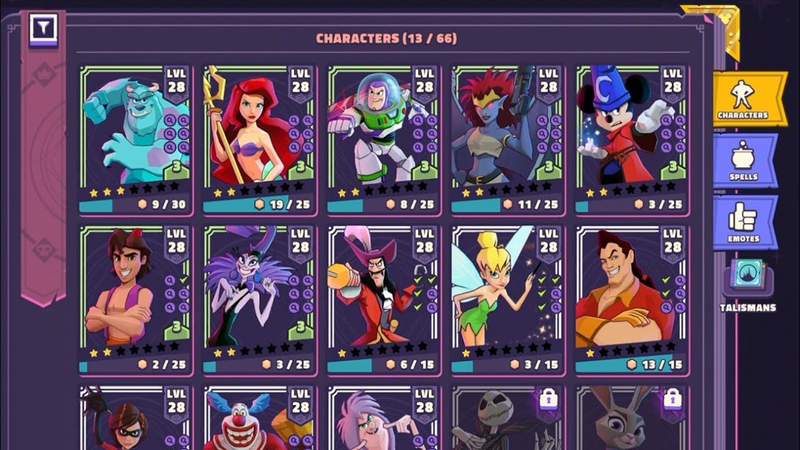
How does DISNEY SORCERER'S ARENA retain, engage and monetize?
Disney Sorcerer’s Arena, a squad-based turn-based RPG developed by Glu Mobile, utilizes a complex, multi-layered monetization and engagement model built upon the broad appeal of the Disney and Pixar intellectual property.
- Disney Sorcerer’s Arena utilizes a shard-based collection system for Disney and Pixar characters, mirroring the core mechanics of Star Wars: Galaxy of Heroes.
- Monetization is driven by an aggressive, multi-layered economy featuring randomized loot boxes, specialized stores, and frequent pop-up offers designed to accelerate player progression.
- The game employs a tiered battle pass system called the 'Pass Holder' season, which incentivizes monthly recurring spending through a premium 'Gold Pass' offering exclusive bonuses.

How does HAY DAY POP retain, engage and monetize?
Hay Day Pop represents Supercell’s entry into the match-puzzler genre, leveraging the established intellectual property and aesthetic of the original Hay Day farming simulation.
- Hay Day Pop is a hybrid match-two puzzle game that integrates base-building and decoration meta-game elements into the established Hay Day intellectual property.
- The game utilizes a dual-currency model, featuring soft currency for construction and hard currency (diamonds) for purchasing extra lives, additional moves, and power-ups.
- Retention is driven by a win-streak mechanic and a progression system that rewards players with stars and seasonal trophies for high-performance level completion.
Matchmaking for Engagement: Lessons from Halo 5
Matchmaking serves as a fundamental pillar of player engagement, functioning as the primary mechanism for balancing latency, wait times, and competitive fairness.
- In Halo 5, team skill gaps are a primary driver of player attrition; a 100-point rating difference doubles the quit rate, and a 400-point gap leads to a near-guaranteed player departure.
- Observational data confirms that minimizing the personal skill gap—the difference in ability between individual opponents—directly correlates with higher match volume and increased player engagement.
- Stacked parties (pre-made groups) significantly degrade the experience for solo or less-coordinated players, often causing them to disengage from the game entirely for the night, even if they do not quit the specific match.
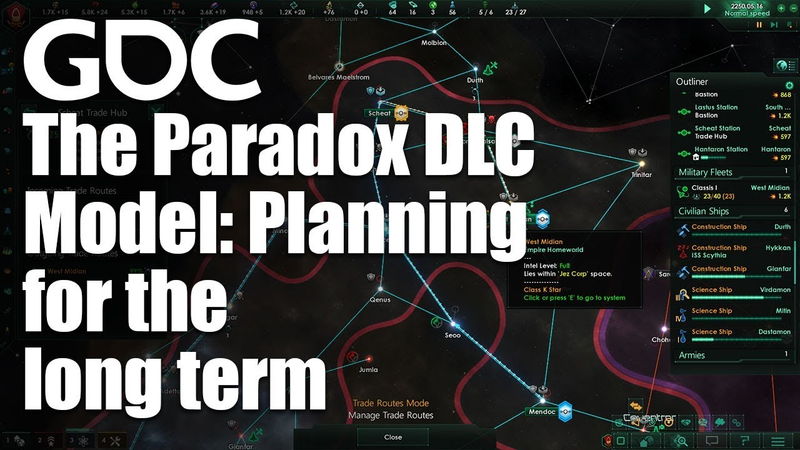
The Paradox DLC Model: Planning for the Long Term
Paradox Interactive achieves long-term commercial success by prioritizing a marathon-oriented business model centered on niche, infinitely replayable strategy titles.
- Paradox Interactive utilizes a modular DLC framework instead of serial expansion cycles to maintain long-term game relevance and generate consistent, multi-year revenue streams.
- The company prioritizes deep, system-driven gameplay and community-driven modding over high-fidelity graphics to ensure high player retention in niche strategy titles.
- Paid content is designed to be atomic, standalone, and additive to enhance the player experience without fragmenting the community or disrupting existing mechanics.
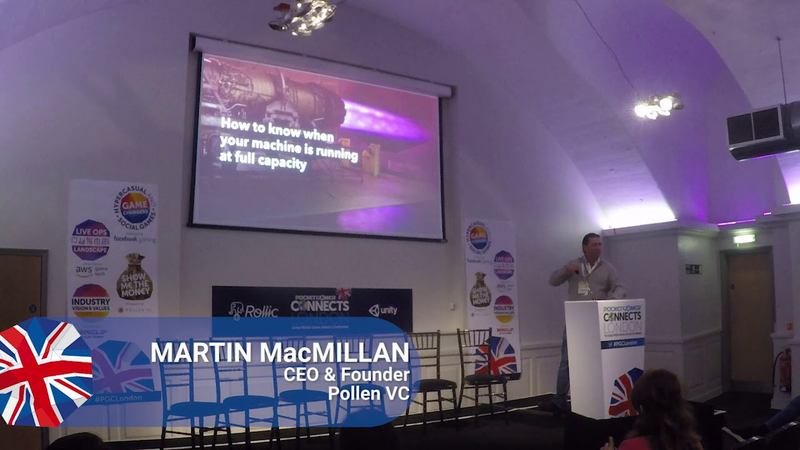
Superstar Session: Ready to Scale? What to Focus on Before Pushing the Button
Scaling a game development business requires a disciplined, analytical approach to user acquisition (UA) and capital management.
- Scaling success depends on identifying the point where marginal revenue equals marginal cost and operating just before that intersection to maximize profitability.
- Developers must transition from rigid budget-based planning to a dynamic model where finance and user acquisition teams are integrated for rapid, data-driven scaling or contraction.
- The core objective is to treat a game as a repeatable 'money-printing machine' where capital invested in user acquisition yields a predictable, positive return.
Beyond Game Economy Design - Increasing Profit Through Intelligent Revenue Optimisation
Revenue optimization in mobile gaming extends beyond core gameplay design, requiring sophisticated, data-driven strategies to maximize player retention and monetization.
- Implementing automated loyalty programs can significantly boost key performance metrics, with one case study showing a 21% increase in day-one retention, a 24% increase in time spent in-app, and a 75% increase in average revenue per user (ARPU).
- For games heavily reliant on ad revenue, loyalty programs can act as a gamification layer that drives engagement, resulting in observed increases of 56% in day-one retention and 93% in total ad revenue.
- Effective revenue optimization requires moving beyond core gameplay loops to analyze thousands of player data signals, allowing developers to predict behavior and deliver personalized 'next best actions' for individual users.
Holistic LTV: A Unified View to Drive Growth & Efficiency
Maximizing user lifetime value (LTV) requires moving beyond fragmented, siloed data to a unified, holistic approach that integrates user acquisition, monetization, and product development.
- Transitioning from siloed metrics like ARPDAU and eCPM to a holistic LTV model is necessary to capture the total revenue generated by a user across their entire lifecycle.
- Fragmented data and reliance on waterfall-based ad reporting obscure true revenue performance, whereas programmatic bidding provides the granular, impression-level data required for accurate LTV calculations.
- Organizational silos between user acquisition, product, and monetization teams often lead to conflicting goals, such as increasing ad load to boost short-term revenue at the expense of long-term retention.
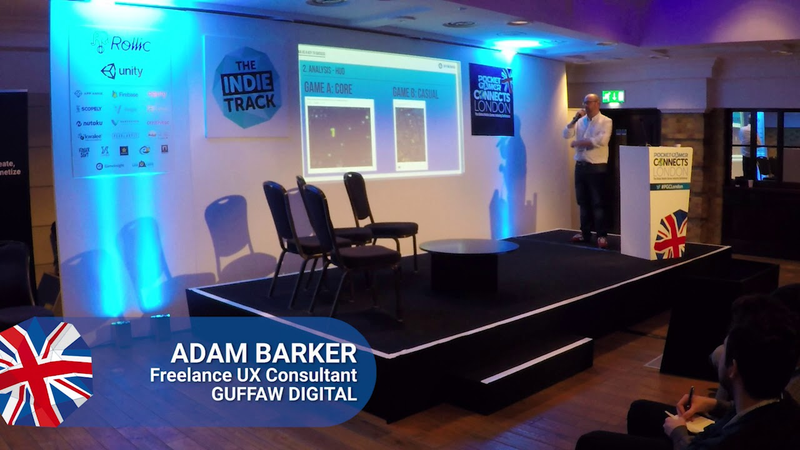
How a Well Designed UX can Improve Monetisation, UA and Retention and Keep Users Satisfied.
User experience (UX) design serves as a critical driver for monetization, user acquisition, and retention in mobile gaming.
- Approximately 30% of users abandon mobile games during the initial onboarding process, highlighting the critical need for optimized tutorial design.
- UX research and testing should be integrated early in the production cycle, ideally before coding begins, to validate design assumptions and identify friction points.
- To reduce tutorial drop-off, developers should use a 'chunking' strategy that delivers essential mechanics in small, action-oriented segments rather than overwhelming players with full system information.