Retention reports and market data
Documents
Keynote: From Live Ops to LIVE OPS PG Connects Digital #2
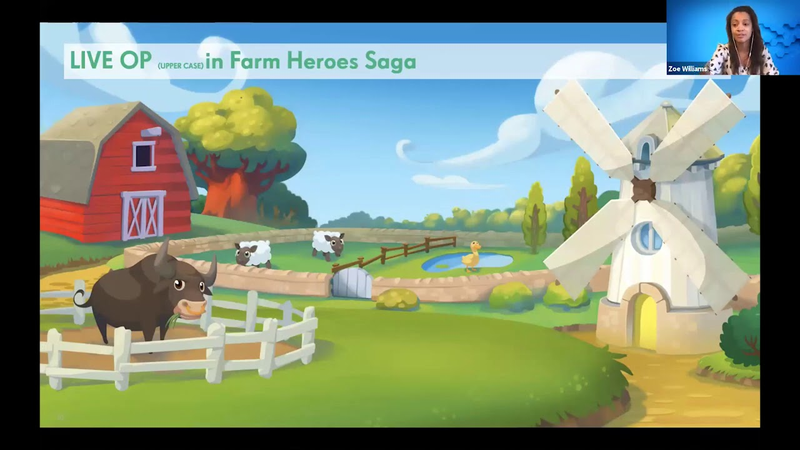
Modern game development requires a transition from basic, recurring content updates to a sophisticated, cross-functional model of Live Ops.
- Modern Live Ops requires restructuring studios into cross-functional, agile pods that integrate event management, CRM, business performance, and UX design.
- Sustainable engagement is achieved by deploying high-impact content that introduces new mechanics and narrative layers without disrupting the core gameplay loop.
- Success depends on a dual-pronged approach that balances rigorous quantitative A/B testing and performance tracking with qualitative analysis of player sentiment.
Promoting Growth Even During Lockdown PG Connects Digital #2
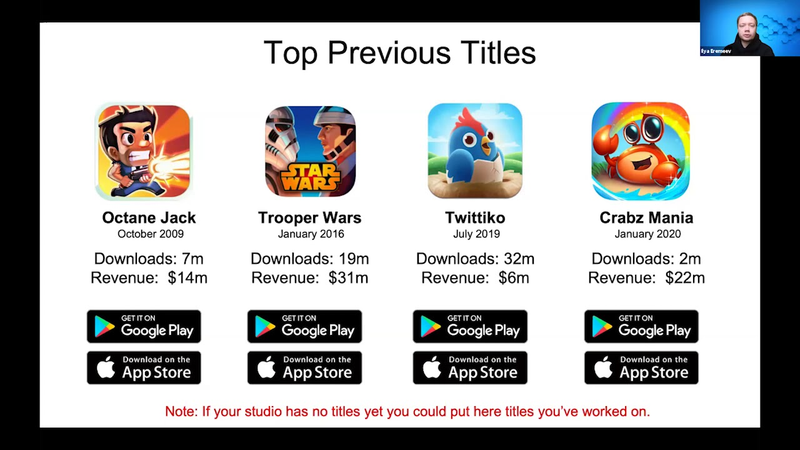
Securing investment in the gaming industry requires a disciplined, ten-slide framework that prioritizes founder credibility and operational transparency.
- Investors prioritize founder credibility and team track records as the primary indicators of a studio's future execution capability.
- A successful investment pitch requires a disciplined ten-slide framework that balances core game mechanics with realistic key performance indicators.
- Founders must demonstrate business acumen by providing transparent financial forecasts, including specific burn rates and projected break-even timelines.
Shark Attack! Thursday at Noon - Variable Ratio & Interval Schedules - Extra Credits
Effective game design relies on the psychological principles of operant conditioning to maintain player engagement, specifically through the strategic application of variable ratio and variable interval reinforcement schedules.
- Variable ratio and variable interval reinforcement schedules are essential psychological tools for maintaining player engagement and preventing fatigue in game design.
- Variable ratio reinforcement involves fluctuating the quantity or quality of rewards to preserve the sense of discovery and prevent gameplay from becoming mundane.
- Variable interval reinforcement randomizes the timing of events or encounters to foster a constant state of tension and anticipation.
Keynote: 2020 so far - How the Mobile Gaming Industry is Changing PG Connects Digital #2
The mobile gaming industry underwent a period of profound transformation during the first half of 2020, driven largely by the onset of global lockdowns.
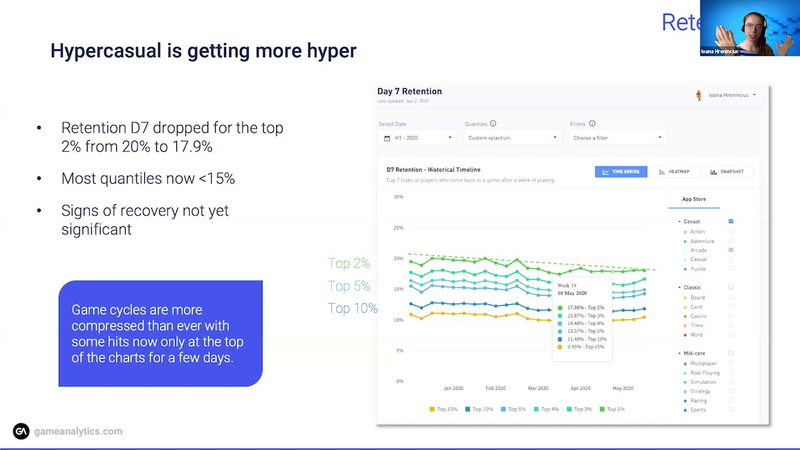
- Mobile gaming traffic stabilized at approximately 10% above pre-pandemic levels following a surge in early 2020, though Day 7 retention rates declined, particularly in the hyper-casual genre.
- Average session length has become the primary metric for driving lifetime value in ad-monetized models, as the gap in session duration between top-tier games and the broader market continues to widen.
- The mobile gaming market experienced a decline in Cost Per Install (CPI) across most genres during the first half of 2020, providing a strategic opportunity for user acquisition.
Panel: Mixing it up - Latest Techniques for Innovating in User Acquisition & Retention PGCD#2
Modern user acquisition strategies are undergoing a significant evolution, shifting from a heavy reliance on established platforms like Facebook, Google, and Apple Search Ads toward a more diversified approach.
- A day-seven retention rate exceeding 30% is the critical benchmark for determining the long-term viability of a mobile game.
- User acquisition strategies must shift from a reliance on the Facebook, Google, and Apple Search Ads duopoly toward diversified channels like TikTok, Snapchat, and influencer marketing to achieve scale.
- Ad creative must be directly aligned with the actual game experience to manage player expectations and reduce churn, as quality of users is more important than raw install volume.
BattlePass Game Design: Q&A With Top F2P Designers and Product Execs
Battle Pass systems function most effectively as engagement and retention mechanisms rather than standalone monetization drivers.
- Battle Pass systems function primarily as engagement and retention tools rather than standalone monetization drivers, requiring a sound core game economy to be effective.
- Developers should target a 70% completion rate for the Battle Pass, as players who finish the progression track show a significantly higher propensity to purchase future iterations.
- Strategic pacing should prioritize accessible early rewards to build player habits, while reserving high-value chase items for the final stages of the progression cycle.
Panel: Live Ops is not a Sprint! - How do You Plan a Recurring Series of Activities Indefinitely?
Live operations function as a permanent, data-driven business cycle essential for maintaining player engagement throughout a game's entire lifecycle.
- Treat live operations as a continuous, permanent business cycle rather than a series of isolated development sprints to ensure long-term game sustainability.
- Prioritize the development of flexible, server-side infrastructure early to enable content updates and configuration changes without requiring constant client-side patching.
- Implement a multi-layered event strategy that balances daily, weekly, and monthly activities to meet specific business objectives like retention, monetization, and onboarding.
Panel: When is the Right Time to Start Thinking, Testing & Delivering Live Ops? PGCD#2
The transition from traditional, static game development to a service-oriented model is essential for long-term commercial viability in the modern gaming industry.
- Live Ops should be integrated into the development process as early as possible, ideally during the pre-launch and soft-launch phases, to effectively balance game economies and validate lifetime value assumptions.
- Automation is essential for effective Live Ops, as it frees up team capacity to focus on new content and sophisticated, personalized player experiences rather than repetitive manual tasks.
- Game developers should treat their titles as 'nightclubs' that require constant management and engagement rather than one-off 'rockstar performances' that end at launch.
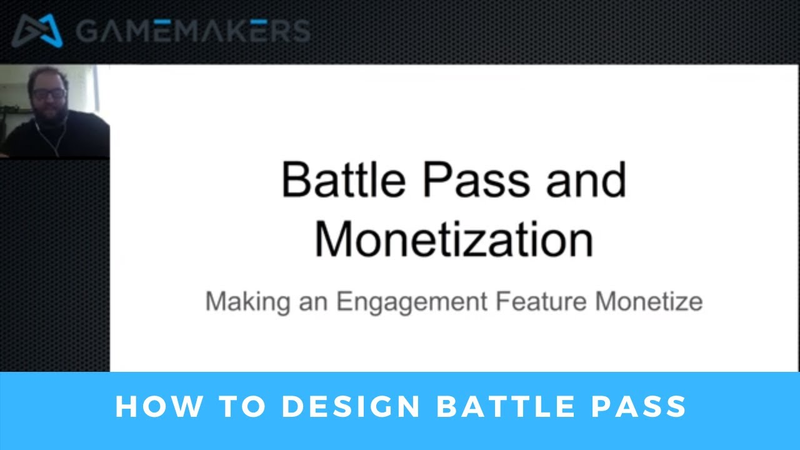
Battle Pass Game Design: Engagement to Monetization
Battle passes function primarily as sophisticated engagement mechanisms rather than standalone revenue engines.
- Battle passes function primarily as engagement and retention tools rather than standalone revenue engines, as they lack the recurring spending mechanics required for primary monetization.
- Developers should transition from passive reward tracks to active monetization drivers by designing progression hurdles that act as strategic stat checks, forcing players to acquire gear or characters to advance.
- Pricing strategies must be aggressive at launch because the rigid structure of battle passes makes it difficult to increase costs later without triggering significant player backlash.

It's About Time: System Design for Mobile Free-to-Play
System design in mobile free-to-play games centers on the universal resource of time.
- System design in free-to-play games must be anchored in time as the universal resource, balancing player progression against energy limits, session frequency, and the time required to acquire content.
- Designers should establish a progression model by defining the desired time-to-level, then calculating the necessary daily payouts based on the number of sessions and actions a player performs.
- When tuning upgrade costs, a common formulaic approach is to increase costs by a fixed percentage—such as 250% per level—while rounding to larger increments to ensure the UI remains clean and readable.
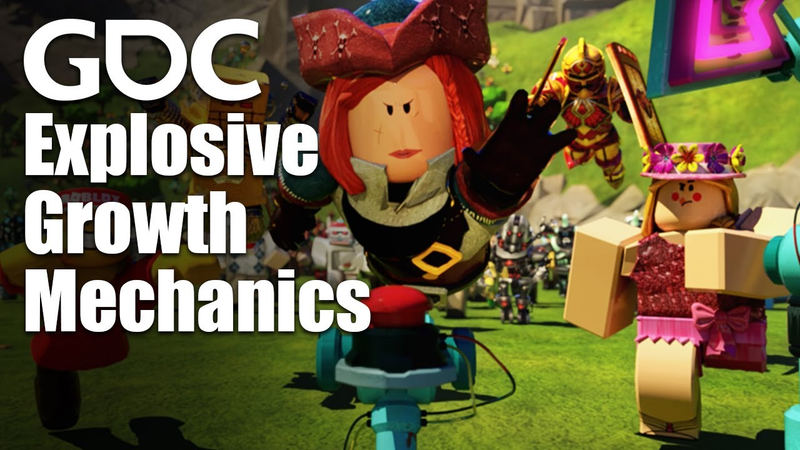
The Mechanics of Explosive Growth
Roblox achieved a transformative inflection point in 2016, transitioning from a decade of steady development to a period of 300% year-over-year growth.
- Roblox achieved a 300% year-over-year growth rate starting in 2016, transitioning from a decade of steady development to rapid scaling.
- The 2014 introduction of the Developer Exchange program incentivized high-quality content, establishing a self-reinforcing cycle where improved creator tools directly drove better player experiences and increased user acquisition.
- Expansion onto the Xbox platform served as a primary catalyst for growth by enabling cross-device play, which triggered powerful network effects and organic word-of-mouth acquisition.
Analytics from a Live Ops Perspective | PGC Digital #1
Successful Live Ops strategy centers on the integrity of foundational data, prioritizing robust server-side tracking to ensure that decision-makers operate on reliable metrics rather than anomalies.
- Prioritize server-side tracking to ensure data integrity, as decision-making based on unreliable metrics or anomalies undermines Live Ops strategy.
- Shift from excessive A/B testing toward the simulation of game mechanics to provide designers with actionable feedback on balance and content updates.
- Utilize Monte Carlo simulations to identify complex feedback loops and progression imbalances that are frequently missed by manual testing.