Retention reports and market data
Documents
The State of App Engagement 2021: An Analysis of Key Global App Usage Trends in 2021
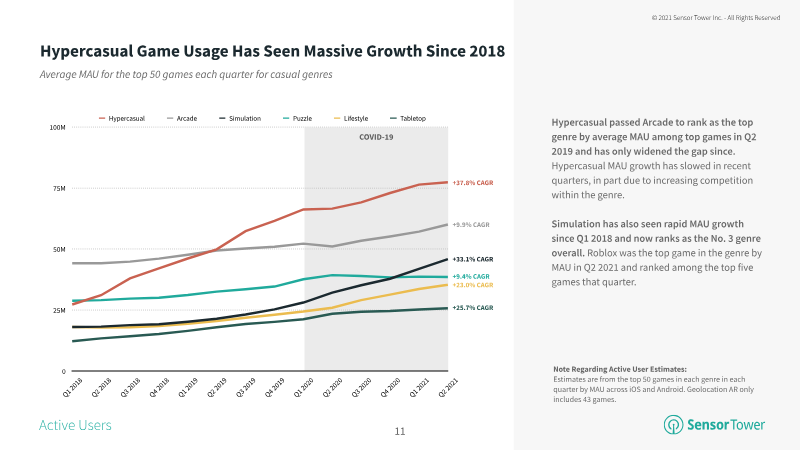
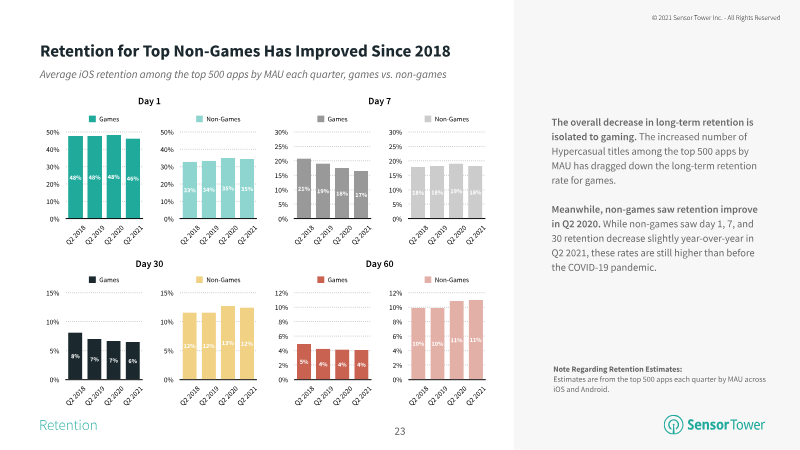
Global app engagement experienced a significant upward trend between 2018 and 2021, catalyzed by the COVID-19 pandemic.
- Monthly active users for the top 500 apps grew at a compound annual growth rate of 12 to 14 percent between 2018 and 2021, with the average top app adding 10 million users annually.
- While pandemic-driven engagement spikes normalized by Q2 2021, overall usage metrics across iOS and Android remain higher than pre-pandemic levels.
- Mid-core gaming genres like Strategy and RPG command the highest engagement, with users averaging one hour of play per day and showing a strong correlation between time spent and revenue per download.

Trolls: The Cost of Doing Nothing
The management of online toxicity and trolling is a critical business imperative for the gaming industry, directly impacting user retention, brand reputation, and financial performance.
- Users exposed to toxic behavior are approximately 320% more likely to quit a game, directly driving player churn and increasing the necessity for costly user acquisition.
- Unaddressed toxicity erodes the player base and damages brand reputation, making effective community management a critical factor for long-term financial performance and user retention.
- Moderation should utilize a tiered system where automated tools filter blatant hate speech while human-led tribunals are reserved for subjective, context-dependent reports.
Superstar Session: Wordscapes: How the World’s Most Popular Word Game Boosted LTV by 40%
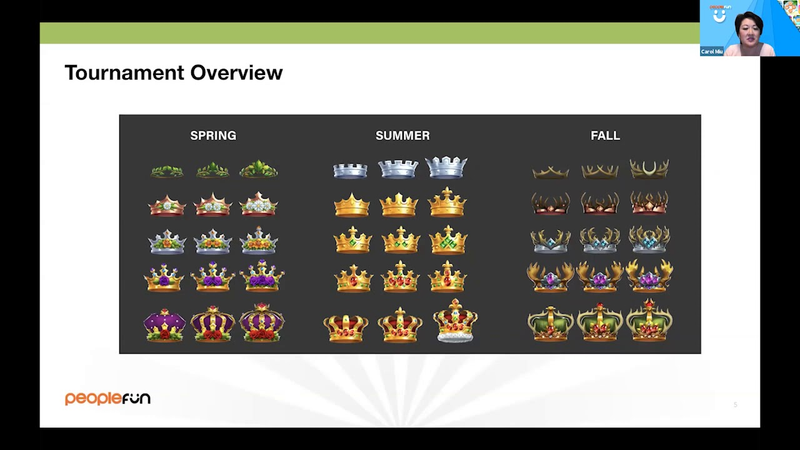
PeopleFun achieved a 40% increase in the lifetime value of the mobile title Wordscapes by shifting toward vanity-driven live operations and seasonal content.
- PeopleFun increased the lifetime value (LTV) of Wordscapes by 40% by shifting to vanity-driven live operations and seasonal content.
- The studio successfully reduced coin payouts by 50% without negatively impacting KPIs by introducing exclusive crown rewards within a 13-week tournament structure.
- Sticker collections increased both in-app purchase and ad-based ARPDAU by over 20% while doubling level completion rates among top players.
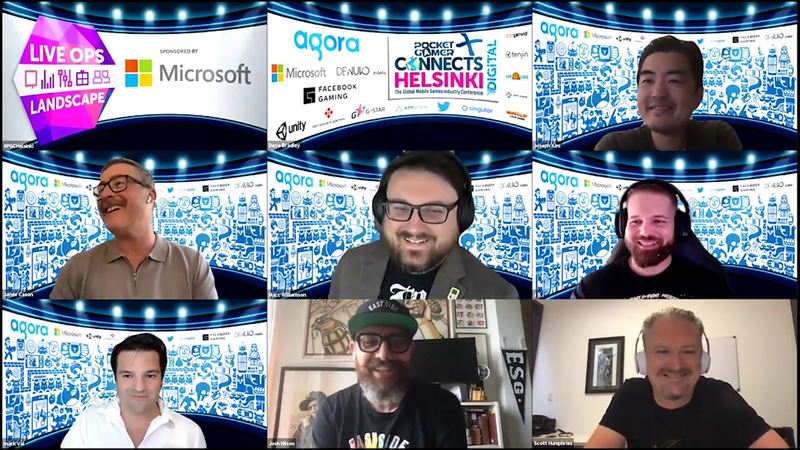
Panel: Live Ops Best Practices: How to Make them more Engaging & Profitable
Successful live operations demand a fundamental shift in development philosophy, prioritizing the post-launch lifecycle as the most critical phase for long-term viability.
- Prioritize early retention by optimizing technical performance, specifically by reducing loading times and fixing crashes, before focusing on long-term content expansion.
- Implement a rigorous testing pipeline by deploying updates to a small subset of players (5-10%) before a full rollout to ensure stability and gather data.
- Adopt a 'restaurant' mindset for live operations, where teams must be prepped for a high-frequency, agile development cycle that often requires weekly content releases.
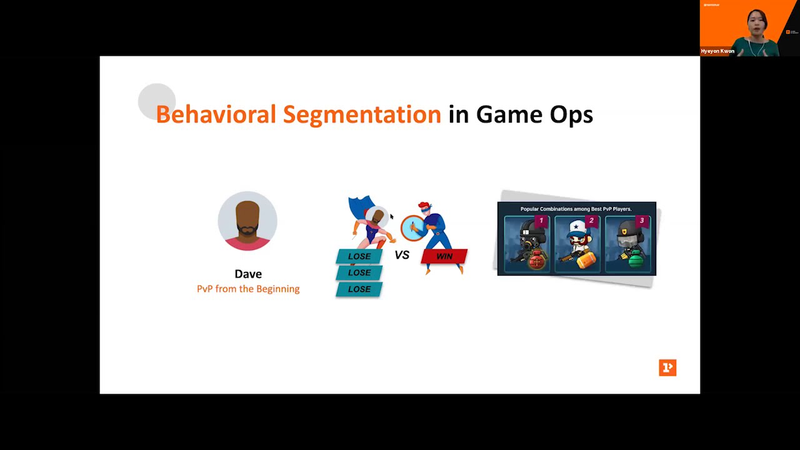
Does Personalisation Exist in the Industry? The Need for a New Segmentation Approach
Traditional player segmentation methods, which rely heavily on demographic data and monetization history, are increasingly inadequate for the demands of modern live-service games.
- Traditional demographic segmentation (age, gender, geography) is ineffective for in-game operations because it fails to capture the primary drivers of player behavior and engagement.
- Monetization-based segmentation, which focuses exclusively on high-spending 'whales,' risks game instability and shortened lifecycles by neglecting the remaining 97% of the player base.
- Successful games achieve high conversion rates through broad engagement, such as Candy Crush Saga at 30% and Fortnite at 70%.
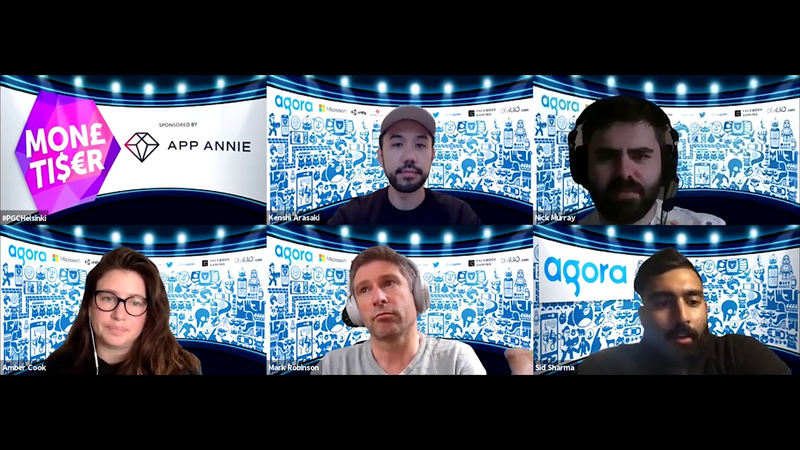
Panel: Doubling Down on Repeat Players- Moving to Retention as a Focus to Making Money
Retention and monetization function as interdependent pillars of long-term financial success in the mobile gaming industry.
- Retention is the fundamental prerequisite for monetization; aggressive ad frequency or excessive in-app purchase pop-ups can degrade the user experience and ultimately destroy long-term revenue potential.
- Return on Ad Spend (ROAS) serves as a critical metric for balancing monetization and retention, as high-performing ROAS models allow for increased investment in user acquisition.
- Ad placements that are player-controlled, such as optional rewards for players who have run out of content, can function as retention features rather than just monetization tools.
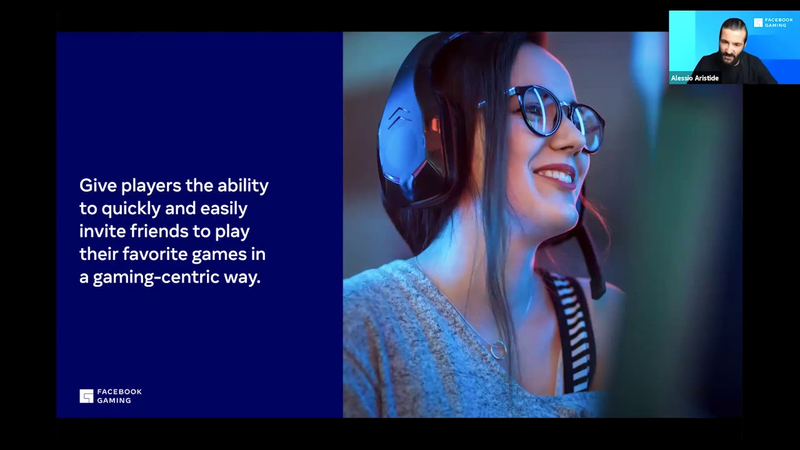
Introducing Gaming Services: Login, Sharing & Player Finder for Games
Facebook is introducing a new suite of gaming services designed to enhance player acquisition, retention, and social engagement through its ecosystem. The initiative focuses on three core pillars: watch, play, and share.
- Facebook is launching a suite of gaming services targeting its community of over 700 million monthly active users to improve player acquisition, retention, and social engagement.
- The revamped Facebook Login for Games allows players to maintain cross-platform progress while utilizing customizable identities like selectable avatars and player names.
- New sharing integrations enable users to post gaming content directly to Facebook and Instagram feeds, stories, and groups to foster organic growth.
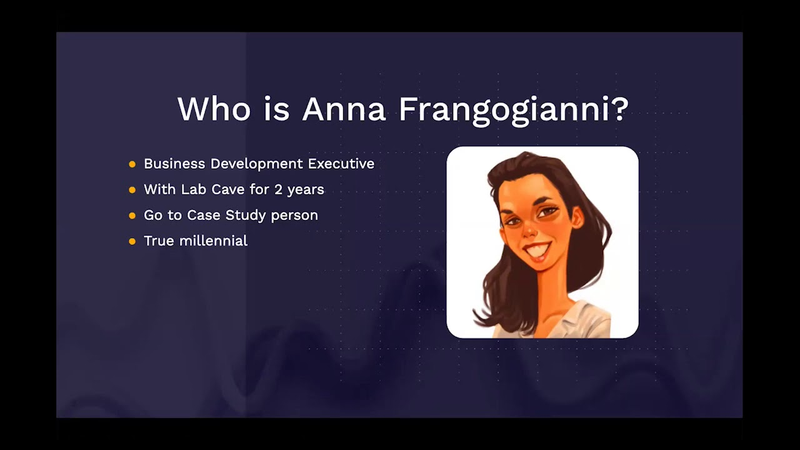
Superstar Session: Bringing New Life to Your Game; A Case Study
Revitalizing underperforming mobile games requires a rigorous, data-driven approach to App Store Optimization (ASO) and conversion rate optimization (CRO).
- Pivoting the art style and call-to-action language of 'Love and Dating Story' to match its actual demographic resulted in a 314% increase in Google Play installs and a 49% increase on iOS.
- Underperforming mobile games can be revitalized by treating store presence as a dynamic asset and using data-driven App Store Optimization (ASO) and conversion rate optimization (CRO).
- Long-term success requires aligning a game’s visual identity and metadata with the preferences of the actual player base rather than the assumed target audience.
Lessons from Duolingo: How to Turn Good Intentions Into Good Numbers
The primary objective of this analysis is to demonstrate how game developers and technology companies can reconcile ethical values and educational missions with the pursuit of profitability and data-driven growth.
- Duolingo scaled from zero to over $100 million in annual revenue within 3.5 years while simultaneously increasing day-one retention fivefold.
- The company maintains a high-volume experimentation culture, having conducted over 3,000 A/B tests to drive growth and product development.
- Organizations can protect core values during rapid growth by implementing 'guardrail metrics' that prevent teams from optimizing isolated KPIs at the expense of overall user experience or company health.

Content and Events Planning for Live Ops Panel | Zynga, Murka, Storm8, Funzio
Live operations strategy centers on the integration of long-term content roadmaps with tactical, data-driven event cycles designed to stabilize game economies and maximize player engagement.
- Live operations success requires separating development teams, who build scalable foundational systems, from dedicated operations teams that manage the daily cadence of content releases.
- Teams must utilize quantitative tools like Sankey charts to optimize user interface flows and balance content consumption rates against currency inflation or resource bottlenecks.
- To prevent revenue cannibalization, developers must define feature-specific KPIs for every event to ensure they drive incremental growth rather than simply shifting existing player spending.
When a Game is Too Long - Respecting the Player's Time - Extra Credits
The core thesis of this analysis is that game developers must prioritize player time as a valuable resource, shifting the industry focus from quantity of content to the quality of engagement.
- Developers must shift their design philosophy from prioritizing arbitrary game length to maximizing the quality of player engagement.
- Excessive content padding, such as repetitive fetch quests and artificial grinds, leads to player burnout and diminishes the overall value of the experience.
- Non-engaging tasks like obtuse user interfaces, unskippable technical hurdles, and tedious inventory management act as barriers that should be streamlined to keep players focused on rewarding gameplay.
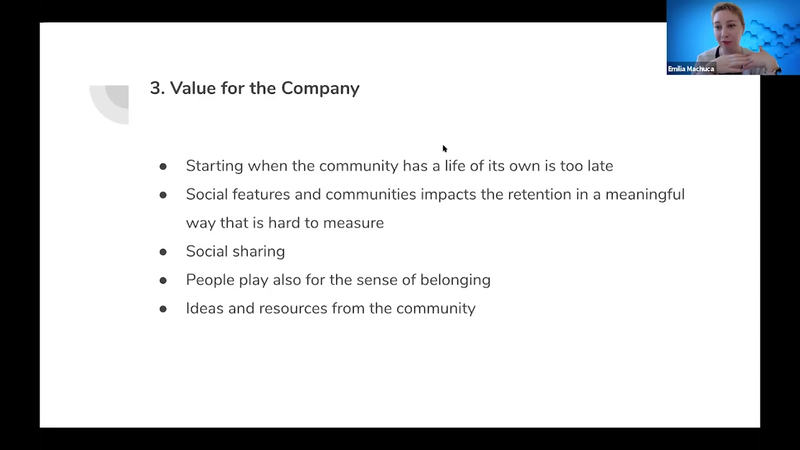
The Secrets of Community Management & Customer Service PG Connects Digital #2
Successful community management in the gaming industry functions as a critical bridge between developers and players, requiring a strategic balance of transparency, emotional intelligence, and technical oversight.
- Community managers must be integrated as essential stakeholders in studio decision-making to ensure that new game features align with actual player feedback and needs.
- Effective community management requires a strategic balance of transparency and emotional intelligence to act as a stabilizing force that fosters long-term player retention.
- Modern community management leverages AI-driven sentiment analysis and machine learning to detect complex behavioral patterns and predatory language with greater precision than traditional keyword tracking.