PC reports and market data
Documents
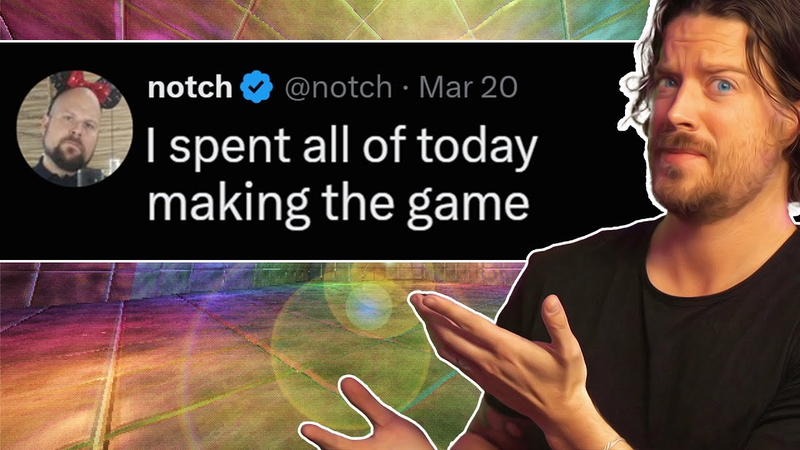
Notch Has A New Indie Game! (Minecraft Creator)
The career trajectory of Markus Notch Persson serves as a primary case study for the challenges of indie game development, the psychological impact of extreme financial success, and the enduring motivation found in the creative process.
- Markus 'Notch' Persson has returned to active game development with the launch of Bitshift Entertainment, a studio currently building a voxel-based dungeon crawler.
- The new project utilizes a custom-built engine rather than industry-standard tools like Unity or Unreal, a strategy intended to achieve a unique visual and technical aesthetic.
- The game is currently evolving into a looter-shooter hybrid, signaling a shift back to the iterative, daily development process that characterized Persson's early career.
'Farming Simulator' Postmortem
Farming Simulator occupies a unique niche in the gaming industry by bridging the gap between hyper-realistic agricultural simulation and accessible, entertainment-focused gameplay.
- The official 'Mod Hub' launched in 2012 to centralize quality control and distribution, resulting in massive growth: Farming Simulator 15 saw 1 million downloads, while Farming Simulator 19 reached over 1 billion total mod downloads across 6,000 mods.
- To incentivize high-quality user-generated content, GIANTS Software implemented contests with prize pools exceeding 50,000 Euros and offered top modders commercial partnerships to create paid DLC.
- The developers prioritized entertainment over strict realism, adopting open-world mechanics from titles like Grand Theft Auto and Battlefield, such as the ability to exit vehicles and interact with the environment on foot.
Why This Halo Developer Went Indie (And Completely Solo!) — Full Time Game Dev Podcast Ep. 010
Transitioning from high-profile AAA studios like 343 Industries to solo indie development represents a fundamental shift from collaborative stability to total personal accountability.
- Solo indie development requires strict scope management, such as utilizing side-scrolling mechanics and miniature prototyping, to mitigate the psychological and financial pressures of total personal accountability.
- Achieving 100,000 wishlists on Steam does not guarantee commercial success, as wishlist decay and a lack of momentum can significantly diminish initial sales performance.
- A successful indie launch can yield approximately $300,000 in profit from 40,000 units, underscoring the need for realistic financial expectations.
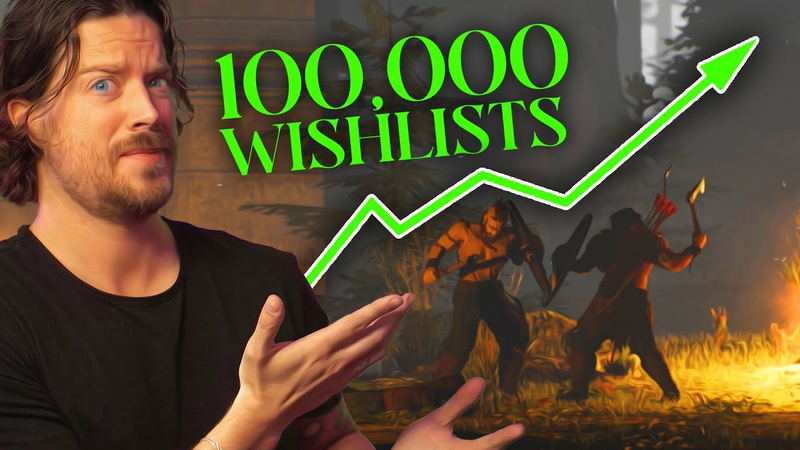
"I Had 100,000 Wish-lists for my game..." and then THIS Happened...
This analysis examines the challenges of independent game development, specifically focusing on the discrepancy between high pre-launch wishlist counts and actual commercial performance.
- Accumulating a high number of wishlists over a long period (e.g., two years) is less effective than gathering them in a short timeframe, as Steam’s algorithm prioritizes recent momentum over total volume.
- Despite achieving 100,000 wishlists prior to launch, the game sold approximately 40,000 units over two years, demonstrating that wishlist conversion rates can fall significantly below industry-standard expectations.
- A gross revenue of roughly $300,000 is heavily reduced by platform fees (30%), taxes (approx. 30%), and living expenses, meaning a 'successful' launch by unit count may still fail to provide long-term financial sustainability for a solo developer.
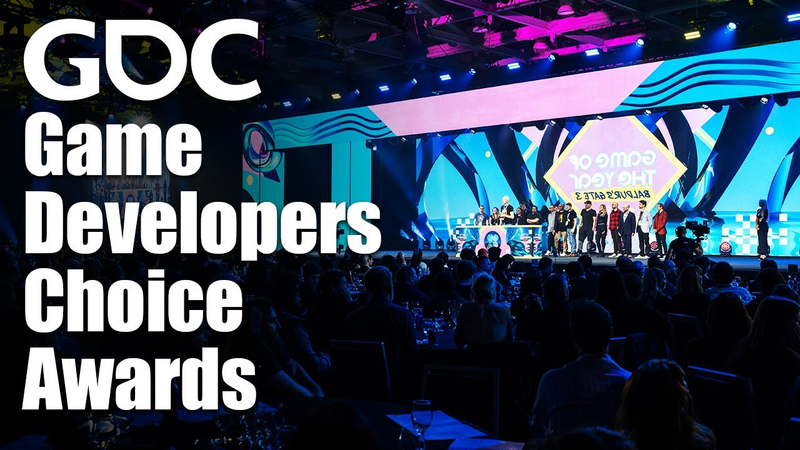
2024 Game Developers Choice Awards Ceremony
The 2024 Game Developers Choice Awards served as both a celebration of creative excellence and a platform for critical discourse regarding the current state of the global gaming industry.
- Larian Studios' Baldur’s Gate 3 won the Game of the Year award at the 24th Annual Game Developers Choice Awards, securing a total of four awards during the ceremony.
- The development philosophy behind Baldur’s Gate 3 relied on a 20-year iterative process, building upon the foundations of earlier titles like Divine Divinity and the original Baldur’s Gate series.
- Successful game design often requires prioritizing player surprise and delight over the technical challenges of implementing complex, labor-intensive mechanics, as demonstrated by The Legend of Zelda: Tears of the Kingdom.
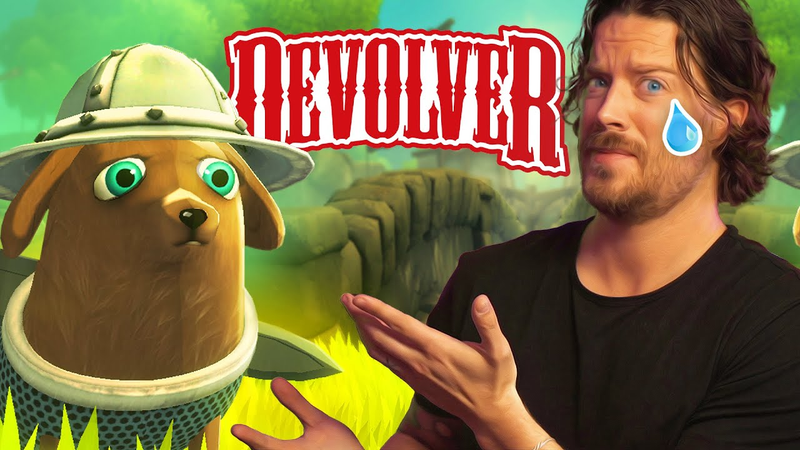
A Huge Publisher Played My Game And.... (Devlog)
The process of securing a partnership with a major indie game publisher requires a combination of professional outreach, industry networking, and a willingness to iterate based on expert feedback.
- Securing meetings with major publishers like Devolver Digital can be achieved through cold emailing, but leveraging long-term industry relationships—such as connections made at events like PAX—significantly increases the likelihood of a response.
- A professional pitch deck should be a simple, accessible website containing a 10-minute polished demo, a video introduction, clear game hooks, and a high-level overview of the team and development schedule.
- When negotiating with publishers, adopt a 'show, don't tell' strategy by proactively developing specific assets—such as updated game design documents, new mechanics, or character cosmetics—to address their concerns before they are formally requested.
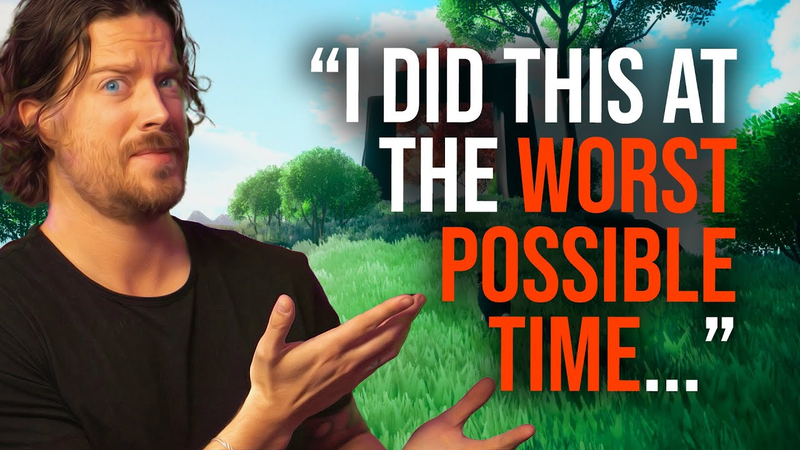
Should You Quit Your Job To Make Indie Games?
The decision to transition into full-time independent game development is characterized as a high-risk endeavor, particularly given the current volatility of the gaming industry.
- Full-time indie development is a high-risk career move due to current market volatility, widespread industry layoffs, and the disruptive impact of generative AI.
- The primary driver for transitioning to full-time development is the need for dedicated time to complete long-term projects that are otherwise stalled by the constraints of traditional employment.
- Solo developers must possess a multidisciplinary skill set, including coding, 3D modeling, shader authorship, level design, and the management of external contractors.
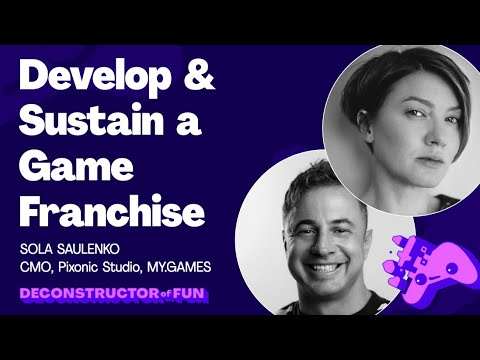
How to Build a Cross-Platform Franchise with Sola Saulenko, CMO of Pixonic
The evolution of the War Robots intellectual property from a mobile-exclusive title into a multi-platform franchise demonstrates the necessity of balancing creative intuition with rigorous, data-driven operations.
- Expanding a mobile IP to PC and console requires specialized marketing units and a shift away from traditional app store reliance, as these platforms operate under distinct user acquisition funnels and trust-building requirements.
- Successful cross-platform growth relies on a symbiotic integration of product, marketing, and analytics teams to ensure game mechanics and creative strategies remain aligned with player expectations.
- Prioritizing high-quality, actionable data from primary markets like the United States is more effective for franchise development than relying on traditional soft-launch models.
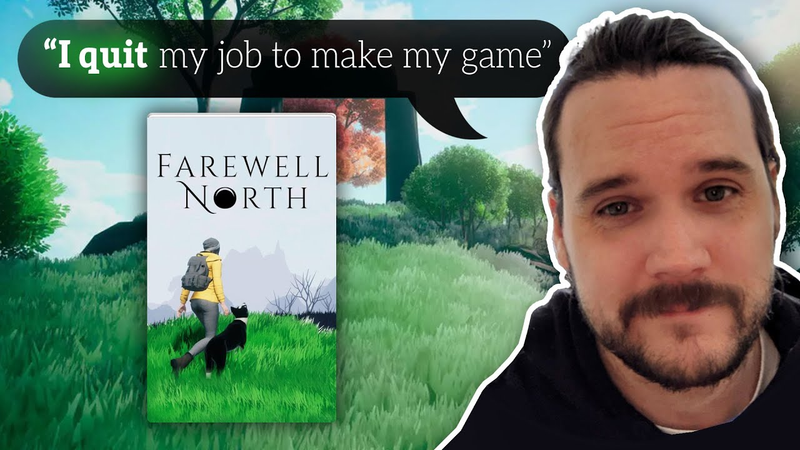
"I Quit My Job To Make My Indie Game" — Full Time Game Dev Podcast Ep. 009
Transitioning from a long-term career in software engineering to full-time indie game development requires a strategic balance between creative autonomy and professional risk management.
- Solo developers should dedicate at least 50% of their time to marketing, as the increasing volume of game releases—reaching 14,000 titles on Steam in a single year—makes discoverability significantly more difficult.
- Predictable content creation on platforms like YouTube can provide a full-time income through sponsorships; securing 10,000 views per video can justify $500 to $1,000 per ad read.
- Publishers serve primarily to de-risk a project, allowing developers to trade a portion of potential revenue upside for financial security and professional support.
Embracer Group Ceases Operations in Russia: Divestment of Selected Saber Interactive Assets
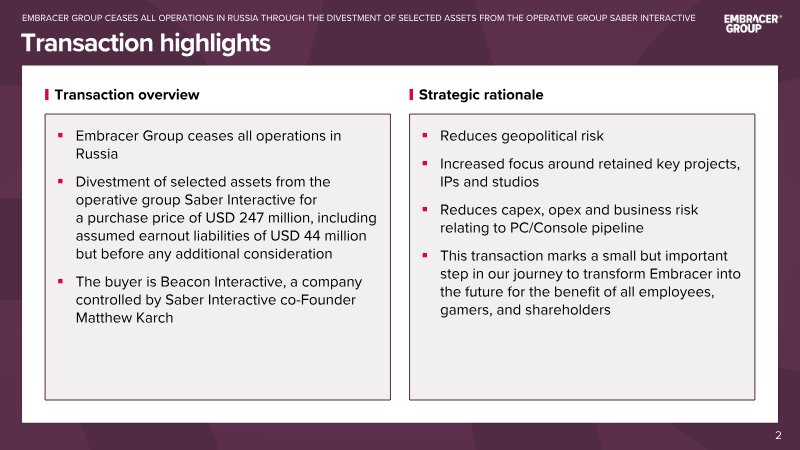
Embracer Group has finalized the complete cessation of its operations within Russia through the divestment of selected assets from its Saber Interactive operative group.
- Embracer Group has exited Russia by divesting selected Saber Interactive assets to Beacon Interactive, a company controlled by Saber co-founder Matthew Karch, for a total transaction value of USD 247 million.
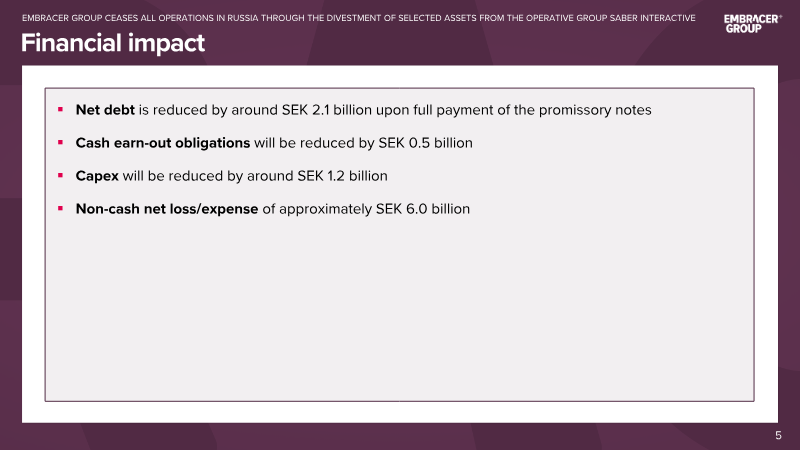
- The deal includes an option for the buyer to acquire 4A Games and Zen Studios, and it is expected to reduce Embracer’s net debt by approximately SEK 2.1 billion and annual capital expenditure by SEK 1.2 billion.
- Embracer anticipates a non-cash net loss of approximately SEK 6.0 billion as a result of the divestment, which is part of a broader corporate transformation strategy to reduce operational risk and expenditure.
Can You Really Make A 2D Game In Unreal?
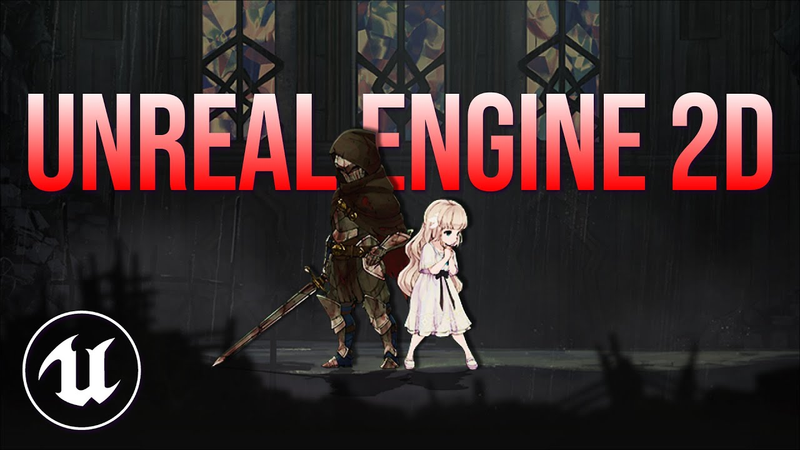
Developing 2D games within Unreal Engine is a viable, albeit often overlooked, path for independent developers.
- Unreal Engine is a viable platform for 2D development, evidenced by the success of professional-grade titles such as Octopath Traveler and Ender Lilies.
- The engine's licensing model is highly favorable for independent developers, requiring no royalty payments until a project generates $1 million in gross revenue.
- Performance testing confirms that 2D projects in Unreal can maintain stable frame rates exceeding 300 FPS on hardware like the Steam Deck, debunking concerns that the engine is too resource-heavy for 2D.
The Past, Present, & Future of Live Service Games
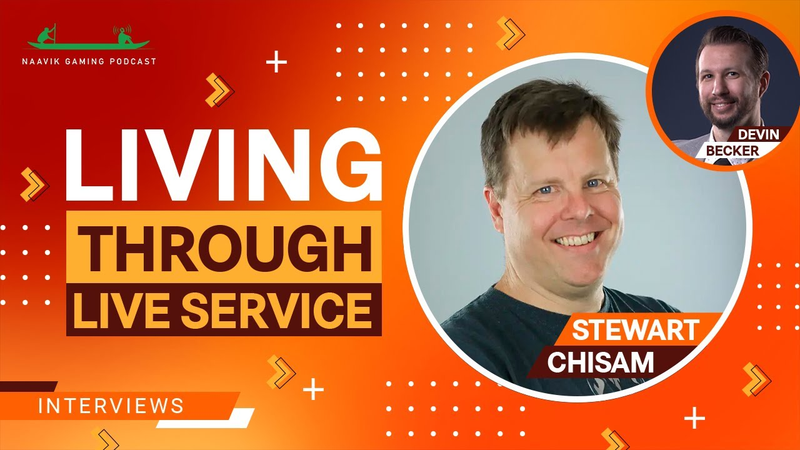
Live service games represent a fundamental shift in the industry, moving away from static, one-time product releases toward an iterative, long-running model that functions more like episodic television.
- The live service market has shifted to a winner-take-all dynamic, where high production costs and barriers to entry make mid-tier profitability increasingly unsustainable.
- Industry growth has stagnated as player acquisition slows and established incumbents dominate, forcing developers to abandon bloated production cycles in favor of leaner, agile models.
- Sustained player retention now depends on superior core gameplay loops and community-driven feedback rather than the sheer volume of content, which is no longer sufficient in a saturated market.