PC reports and market data
Documents

Let's Review Your Games — Ep. 024
Effective game development hinges on the seamless integration of intuitive mechanics, immersive narrative delivery, and rigorous adherence to intellectual property standards.
- Indie developers should avoid using robot protagonists, as they make it difficult for players to project themselves onto the character and lack the emotional resonance required for effective storytelling.
- Game narratives must provide immediate context to the player, such as establishing the character's location and their lack of knowledge about their surroundings, to ground the player in the experience.
- Forcing players to abandon core mechanics, such as jumping, requires a strong narrative or visual justification, like a specific item or environmental change, to avoid feeling unintuitive or restrictive.

Make a Competitive Strategy Game Survive
Competitive strategy games face a persistent threat known as the death spiral, where declining player counts degrade matchmaking quality and jeopardize long-term viability.
- Balancing in strategy games should be treated as an iterative process of educated guesses rather than a search for perfection, acknowledging that some adjustments will inevitably underperform.
- Complexity should be viewed as a design cost rather than an inherent virtue; developers must ensure the fun provided by a mechanic outweighs the cognitive load it imposes on the player.
- When designing units, developers should prioritize filling functional gaps in a spreadsheet—such as specific ranges, attack speeds, or movement profiles—rather than simply creating direct counters to existing units.

Let's Review Your Games — Ep. 023
Indie game development hinges on practical experience and the ability to cultivate a distinct aesthetic identity rather than formal academic credentials.
- A developer's portfolio of tangible projects is more valuable for career advancement and market entry than formal academic credentials.
- Commercial viability depends on balancing atmospheric design with functional clarity, specifically through professional-grade UI and logical progression systems.
- Technical execution must address common failures such as inconsistent audio looping, poor lighting that hinders navigation, and mechanical frustrations lacking a compelling hook.

The Ultimate Guide To Writing A GREAT STORY For Your Game
The current landscape of game development suggests a potential renaissance for narrative-driven titles, as reduced production costs allow small teams of one to five people to create high-quality, personal experiences.
- A compelling game story is built on a strong, unique setting paired with a strange or interesting event, which can then be grounded by a relatable, sympathetic protagonist.
- Game developers should aim to create a 'perfect' short plot summary that acts as a recipe, including only essential story beats and excluding irrelevant details.
- Storytelling in indie games can be cost-effectively delivered through four primary mechanisms: cutscenes, NPCs, artifacts (like newspaper clippings), and audio diaries.

Webinar: Make Your Game Art Look 10X Better With This Trick!
Achieving professional-grade game art requires a disciplined application of the Fabulous Six framework, which centers on composition, depth, scale, color theory, edge detailing, and lighting.
- Professional-grade game art relies on the 'Fabulous Six' framework: composition, depth, scale, color theory, edge detailing, and lighting.
- Artists should validate compositions in simplified, abstract forms before adding intricate details to ensure structural integrity and visual clarity.
- Depth and spatial awareness are achieved by grouping elements rather than uniform distribution, utilizing atmospheric fog, and incorporating size variation.
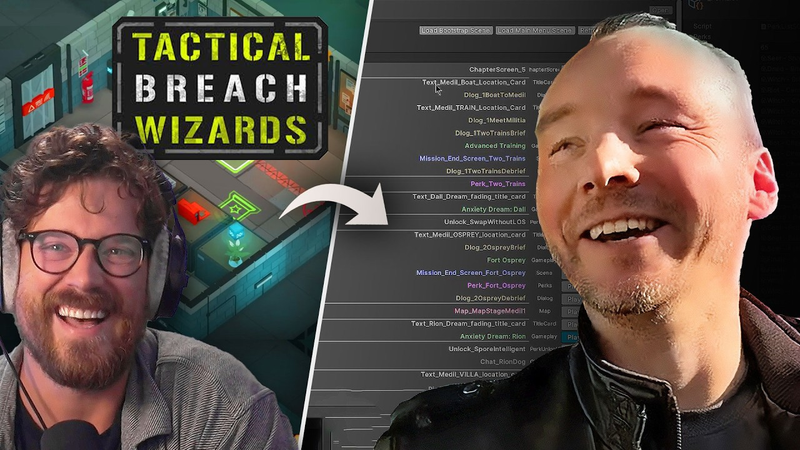
What A $1,000,000 Game Looks Like In Unity (w/ Tom Francis)
The development of the indie title Tactical Breach Wizards serves as a case study for managing complex, long-form game projects within the Unity engine.
- Tactical Breach Wizards utilizes a custom-built, data-driven architecture where game stages are managed via ScriptableObjects that pair gameplay data with specific Unity scenes.
- The development team built a custom level editor that allows for rapid iteration, enabling designers to modify level geometry and enemy placement without needing to manually adjust art assets or scene-specific clutter.
- The project avoids procedural generation in favor of hand-designed levels to ensure that gameplay mechanics align with specific narrative beats and character progression requirements.
Game Dev Recap: Should You Make an MMO?
Developing a Massively Multiplayer Online (MMO) game as an independent developer is a high-risk, high-reward endeavor that requires a fundamental shift in design philosophy.
- MMOs offer a path to consistent, predictable cash flow that breaks the cycle of constant funding rounds, as evidenced by CipSoft’s 'Tibia,' which has been operating since 1997 and currently generates $25 million in revenue with $10 million in profit.
- Persistent worlds are more resilient than session-based multiplayer games because they do not suffer from a 'death spiral' when player counts drop; the game remains playable for individuals even with a smaller active population.
- Developing an MMO requires a 'funnel-based' design mindset, where developers continuously test and optimize user acquisition, retention, and progression metrics—often through early advertising—long before the game is fully released.
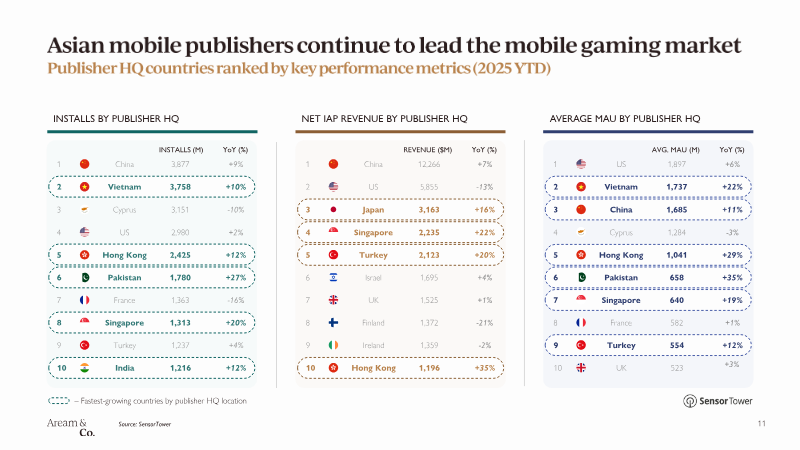
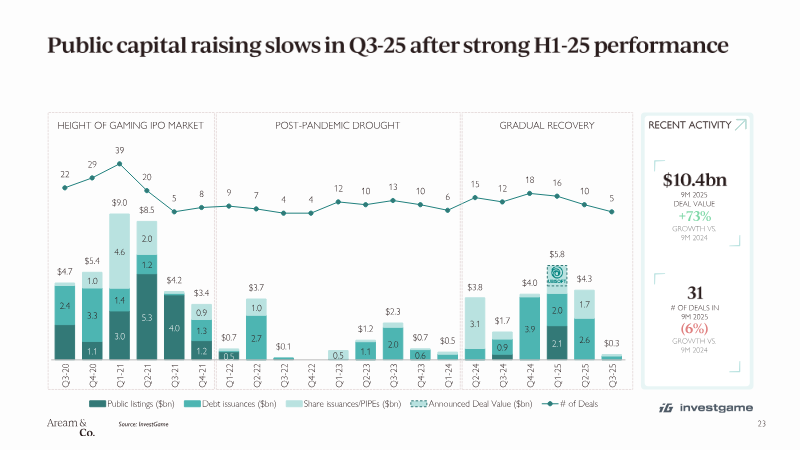

Video Game Market Update: Q3 2025
The global video game industry experienced a notable resurgence in growth during the third quarter of 2025, driven by a rebound in mobile in-app purchases and robust performance across PC and console platforms.
- The $55 billion public takeover of Electronic Arts highlights a strategic shift toward large-scale consolidation as the primary driver of industry growth in Q3 2025.
- The launch of the Nintendo Switch 2 acted as a major catalyst for console sector strength, reinforcing the market value of established intellectual property.
- The global video game industry saw a Q3 2025 resurgence fueled by a rebound in mobile in-app purchases and strong performance across PC and console platforms.

2025 Global Games Market Report
The global games market is entering a period of moderate maturation, with total revenue projected to reach $188.8 billion in 2025, a 3.4% increase over the previous year.
- The global games market is projected to reach $188.8 billion in 2025, a 3.4% year-over-year increase, driven by a player base that has expanded to 3.6 billion people.
- Mobile gaming remains the industry leader with $103.0 billion in revenue (55% of the total), while console gaming is expected to see the highest growth rate at 5.5%, reaching $45.9 billion.
- Average spend per player is declining, forcing a strategic shift toward long-tail engagement and retention rather than aggressive monetization in saturated markets.

Tom Francis: How He Sold 1,000,000 Copies Of His Games | Ep. #052
Successful game development relies on an iterative, experimental process that prioritizes human-led design over rigid planning or data-driven optimization.
- Achieve financial and operational stability by utilizing self-funded business models and small, agile teams rather than chasing speculative market trends.
- Prioritize an iterative, experimental design process that establishes a solid core structure early to facilitate effective testing.
- Utilize large-scale public beta testing with thousands of participants to gather reliable quantitative and qualitative data, avoiding the risks associated with small, anomalous sample sizes.

Can Battlefield 6 Fix Everything Fans Want?
The upcoming release of Battlefield 6 has generated significant industry buzz, positioning the title as a formidable challenger to the long-standing market dominance of Call of Duty.
- Battlefield 6 has generated significant commercial momentum, securing 2.7 million wishlists and approximately $35 million in pre-order revenue on Steam.
- Industry projections estimate total sales for the title will reach 10 to 15 million units, with some analysts suggesting it could potentially outperform Call of Duty for the year.
- Development oversight has been centralized in Los Angeles under industry veterans to improve production focus, moving away from the previous reliance solely on the DICE studio in Sweden.
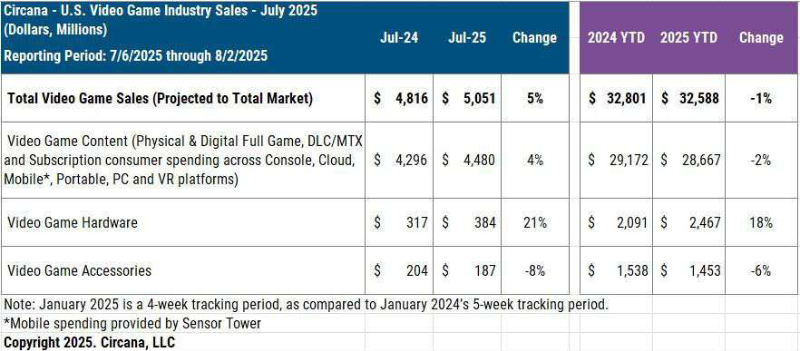
U.S. Video Game Market Highlights: July 2025
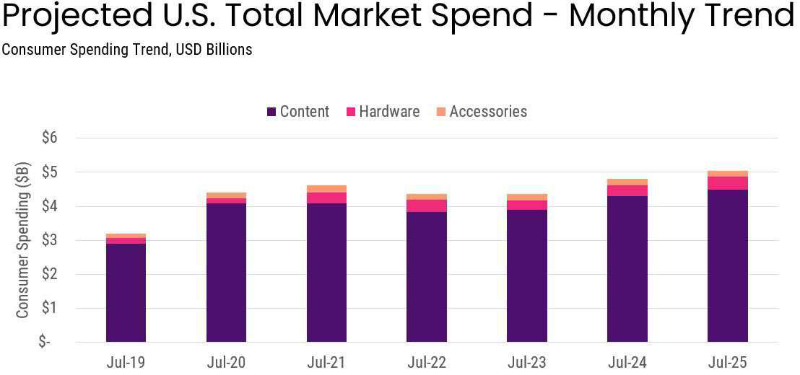
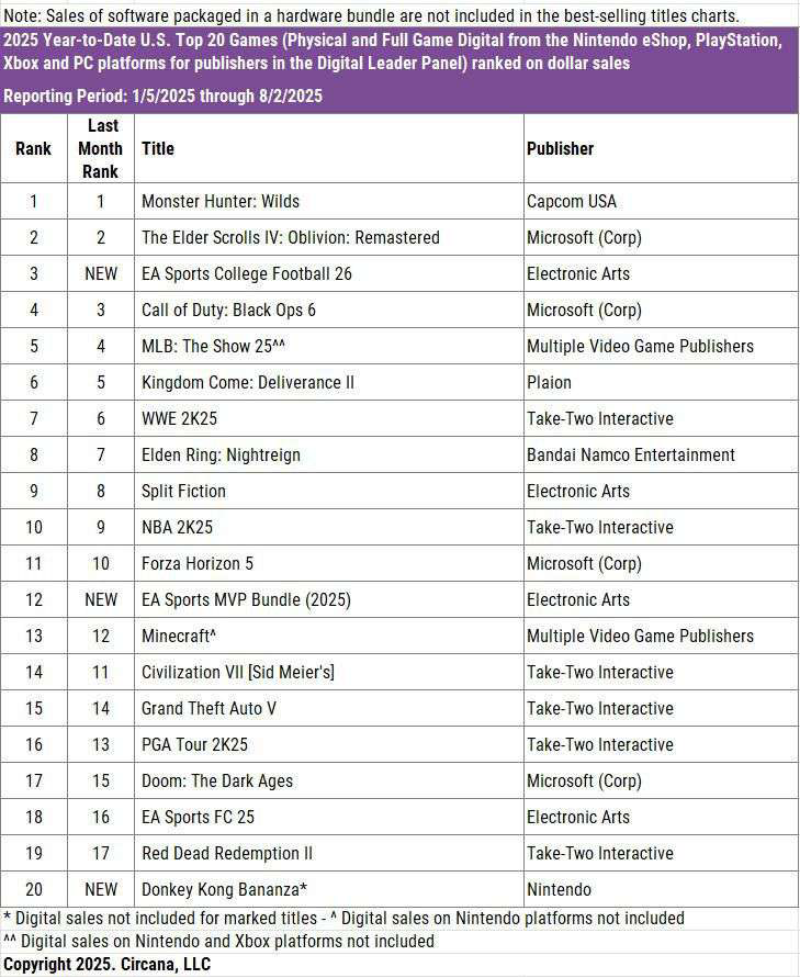
The United States video game market experienced a modest recovery in July 2025, with total consumer spending reaching $5.051 billion.
- Total U.S. video game consumer spending reached $5.051 billion in July 2025, marking a 5% increase compared to July 2024.
- Hardware sales were the primary growth driver, surging 21% to $384 million, while video game content spending rose 4% to $4.480 billion.
- Despite the positive monthly performance, total year-to-date market spending remains 1% behind the figures recorded during the same period in 2024.