PC reports and market data
Documents

Let's Review Your Games — Ep. 029
Indie game development success hinges on the delicate balance between technical polish and intuitive player guidance.
- Prioritize intuitive player guidance and pacing over high-quality visual assets, as technical polish cannot compensate for unclear objectives or poor user experience.
- Replace static menu instructions with integrated, step-by-step tutorials to provide immediate motivation and reduce early player abandonment.
- Streamline opening sequences and maintain tight gameplay pacing to prevent significant drops in engagement caused by vague narrative context or disorienting camera perspectives.

Let's Review Your Games — Ep. 030
Independent game development success hinges on balancing high-quality technical assets with fundamental usability and narrative clarity.
- Game developers should provide a clear 'who, what, when, where, and why' narrative setup early in the experience to orient players, rather than relying on an ambiguous start.
- Intuitive control schemes are critical for player retention, as evidenced by Star Racer receiving positive reviews despite significant user feedback regarding wonky and buggy controller support.
- UI design should prioritize readability and visual clarity; for example, adjusting logo typography can significantly improve legibility and thematic impact.

Goodgis: Switching To Godot, Making A Game For 5 Years While Working A Desk Job | Ep. #054
Independent game development requires a delicate balance between creative ambition and the practical realities of long-term project management.
- Game development is a long-term commitment that requires treating the project as a responsibility or 'debt' to ensure completion, especially when balancing it with a full-time desk job and family obligations.
- Prototyping gameplay loops early is critical for Metroidvania-style games, as the genre's complex interdependencies between level design, ability gating, and boss encounters make mid-development changes difficult and time-consuming.
- Godot is preferred by some developers over Unity for its lightweight, clean architecture and nested node system, which prevents the 'bloat' and organizational confusion often experienced in larger engines.
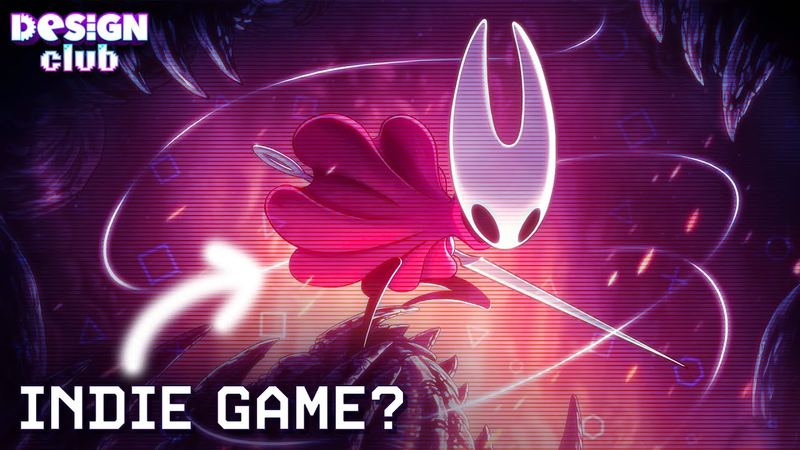
What Does it Mean to be Indie in 2025? | Design Club
The definition of an independent game in 2025 has shifted from a rigid classification based on financial independence or team size to a fluid descriptor of creative philosophy and operational culture.
- The term 'indie' lacks a singular definition, but is most accurately described as a developer-led studio that operates independently of a publisher's authority.
- Budget and team size are unreliable metrics for defining indie status, as small teams often rely on extensive external support from contractors, localization teams, and platform representatives to ship their games.
- The 'indie' label has evolved into a genre or aesthetic tag, leading to confusion where high-budget games with specific visual styles are misidentified as indie, while some small-team projects with massive funding or corporate backing occupy a gray area.
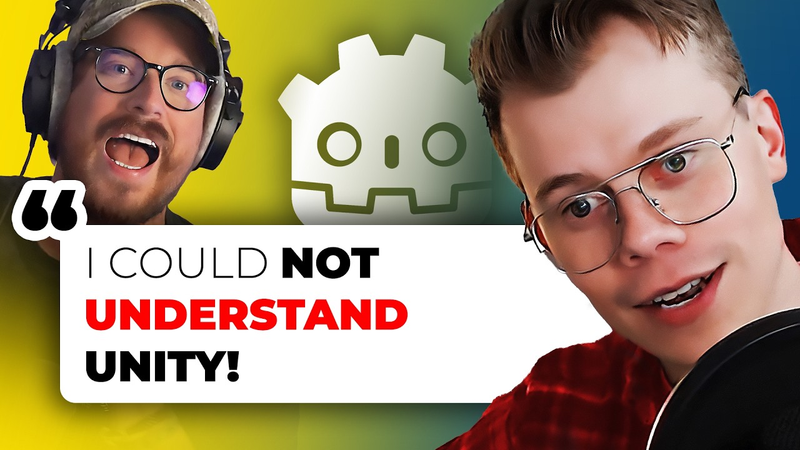
Should You Switch To Godot? (GODOT vs. UNITY vs. UNREAL)
The discussion evaluates the comparative utility of Godot, Unity, and Unreal Engine for independent game developers, focusing on the trade-offs between engine accessibility, technical capability, and production requirements.
- Engine selection should be treated as a functional business decision based on project scope and technical requirements rather than an ideological preference for open-source software.
- Godot is the optimal choice for 2D projects and developers prioritizing a lightweight, efficient architecture and cost-effectiveness.
- Unity and Unreal Engine remain the industry standards for large-scale production, complex 3D rendering, and reliable console deployment.
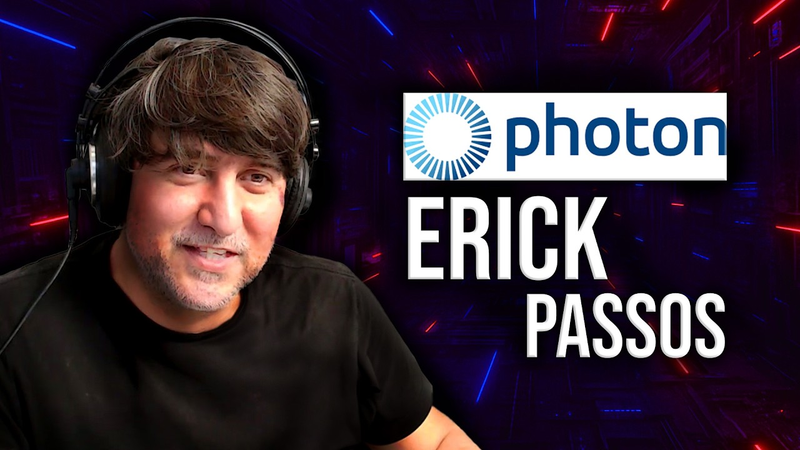
3 Layers Every Online Multiplayer Game Runs On
Modern online multiplayer development relies on a three-tiered architectural framework: a foundational transport layer for data transmission, object synchronization libraries for state management, and high-level SDKs that abstract complex concepts like time and game state.
- Multiplayer game success requires high concurrent user (CCU) counts; for an 8-player game with 10-second matchmaking, a developer needs 500 concurrent players in a single region to maintain consistent lobby filling.
- Photon Engine's 'Quantum' and 'Fusion' products focus on synchronizing game states across multiple devices while minimizing latency through determinism and prediction-based networking.
- Determinism allows developers to adopt a gradual approach to validation layers, saving development time by avoiding the need to commit to complex networking architecture during the early prototyping phase.

Let's Review Your Games — Ep. 028
Indie game development often succeeds in crafting cohesive atmospheres and distinct visual identities, yet many titles struggle to retain players during the critical first five minutes of gameplay.
- Game developers should prioritize early player engagement by providing immediate control, such as walking out of an apartment, rather than relying on static screens that risk player drop-off within the first five minutes.
- Establishing clear character motivation and stakes early in a game is essential; without a defined incentive or sympathetic goal, players are less likely to remain invested in the experience.
- Visual clarity regarding time of day is a critical design element that helps ground the player in the game world, as ambiguous lighting can make it difficult to determine the setting's temporal context.

Kyle Balda: Why This Hollywood Director Is Now Making Games, Why Game Dev Is So Hard | Ep. #053
The creative landscape is undergoing a significant shift as traditional filmmakers increasingly migrate toward game development, drawn by the medium’s democratic accessibility and the ability to bypass the rigid, guild-controlled gatekeepers of Hollywood.
- Filmmakers are migrating to game development to bypass Hollywood's rigid, guild-controlled gatekeepers and leverage the medium's democratic accessibility.
- Game development functions as an iterative, archaeological process where creators must constantly discard and refine mechanics, contrasting with the highly structured, linear approach of film production.
- The primary challenge in game design is balancing developer intent with player agency, which requires rigorous, emotionally taxing feedback loops to ensure the experience resonates.
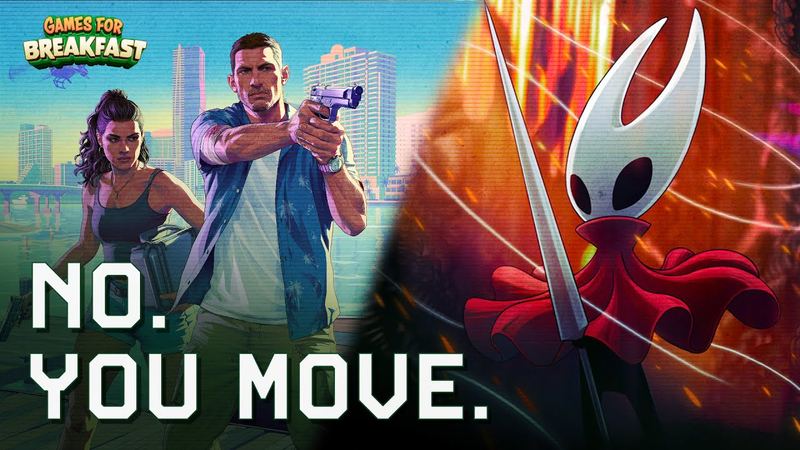
Battle of the Release Dates, Blizzard Sues Turtle WoW & Capcom Blames Sony | Games For Breakfast
The contemporary video game industry is defined by intense competition for player attention, where the release of "juggernaut" titles creates significant market volatility.
- The upcoming 2025 release of Grand Theft Auto 6 is expected to dominate the industry news cycle, forcing widespread recalibration of release calendars across the sector.
- High-demand launches like Silksong, which reached over 587,000 concurrent players, create significant market volatility and infrastructure strain that can overwhelm digital storefronts.
- Unlike the film industry, the high time investment required for video games makes direct competition a major threat to commercial success, forcing smaller studios to adopt agile strategies to avoid being overshadowed by juggernaut titles.

Let's Review Your Games — Ep. 027
Indie game development requires a delicate balance between stylistic ambition and technical execution.
- Indie developers should avoid generic or AI-generated voice acting by hiring professional voice actors who can deliver emotional, unique performances that align with the game's specific narrative context.
- Game developers must ensure that audio loops, such as ambient soundscapes, are seamless and do not suffer from audible clipping or interruptions that break player immersion.
- Narrative-driven games require a clear through-line and motivation for the player, even when the story is abstract or mysterious, to ensure the player understands their goals and location.

Let's Play (And Recreate) Hollow Knight: Silksong
The design philosophy behind the Hollow Knight series centers on the meticulous integration of responsive movement physics and highly intentional visual composition.
- Hollow Knight's character movement is designed for immediate responsiveness, utilizing specific animation transitions at the peak of an arc to convey a sense of weight and physical presence.
- The game uses a deliberate color palette—often incorporating subtle, desaturated tints like creamy grays—to ensure the player character remains visually distinct from the background environment.
- Post-processing effects are likely used in conjunction with base artwork to achieve the game's final aesthetic, rather than relying solely on manual painting in software like Photoshop.

Let's Review Your Games — Ep. 025
Effective game design hinges on the delicate balance between technical polish and the establishment of a clear, compelling player objective.
- Technical polish and high-quality aesthetics are insufficient for player retention if the game lacks a clear, compelling objective or rooting interest.
- Poorly paced or overwhelming onboarding processes act as a primary failure point, often discouraging players before they engage with the core gameplay loop.
- Developers must ensure that UI cues, narrative hooks, and journal entries work in tandem to guide the player, as obtuse design choices lead to frustrating trial-and-error loops.