VideoThe Game Business
The state of Japan's video game industry, plus how GTA 6 influenced Valor Mortis' $40 price point
17 Sept 202655 min video
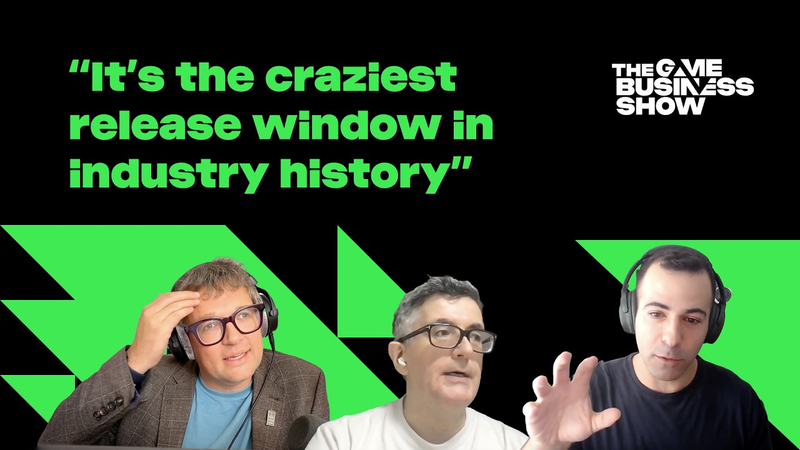
This week, we investigate the Japanese video games market. Lyrical Games explains its $40 price tag for Valer Mortis, and Next [music] Playground secures more funding. Hello and welcome to the Game Business Show. This week's edition is sponsored by Unreal Engine. Were you perhaps too busy making the next hit video game to make it to Unreal Fest Chicago? Don't worry, it's not too late for your team to benefit from the wealth of free technical content that was featured there. There are well over 60 sessions available now on the Unreal Engine YouTube playlist, ready to watch on demand with more arriving every day. Delivered by both Epics devs and your peers in the industry, including Halo Studios, Unknown Worlds, and Riot Games. These sessions cover everything from world building and characters to optimization and profiling, and even more. Plus, you can take a good look at what just arrived in Unreal Engine 5.8 and see what's next for the technology. You can watch more of this on the Armor
Engine YouTube channel or check out the links in the newsletter associated with this show. Speaking of which, let's get back to it. So, you probably can't tell, but I've just landed in Tokyo for Tokyo Game Show 2026. I've never been to Japan before. Um, I've not seen much of it, but it's a lovely country so far. And we've got a bit of a Japan special for you today. We've got Dr. Cirin Toto at Japan Games consultant and analyst from Cananan Games to chat about all things about you know related to the Japanese video games market and industry. Now when I think about Japanese video game companies in 2026, two businesses immediately spring to mind. Capcom and Nintendo. Both of them have become poster children of how to do console video games in 2026. Both of them are growing companies who consistently deliver hit after hit after hit. That's that's no mean feat in this industry. And I think a lot of that comes down to consistency. And let's take Nintendo for a moment. I really love their Zelda Direct they did last week. And I'm bound to say that
because I'm a big fan of Zelda. But what was interesting to me was how similar the plans for Zelda's 40th anniversary are to Zelda's 25th anniversary. I was there during the 25th anniversary of Zelda. I did a special edition Zelda magazine of MCV. I interviewed Zelda Williams, Robin Williams' daughter, who was named after the game during that time. And back then, Nintendo did a big concert. They had a game. They had merchandise. They had a lot of activity around their old Zelda tiles as well. And when I look at what they're doing this time, well, it's sort of the same stuff. There's a concert and there's a game and there's a lot of activity around the old Zelda games, but they've added to it obviously. There's now a partnership with LEGO. There's even more collaborations with other merchandise companies. There's now, of course, a movie. You don't get bigger than that. As well as some stuff around the museum. Nintendo have increased the touch points over the years to become a big organization. it brands have grown, but crucially it's still doing much of the same stuff. There's a consistency to it. The plans it has this time aren't radically different to the plans it had last time. There's just more of it and it goes deeper. And Capcom is sort of
similar in a way. Each of its games are bigger and more ambitious and try new things, but they're also very consistent with what's come before. So fans know what to expect and they know that they're going to typically deliver. And I think there's a safety and a confidence in those businesses as a result of that consistency. Well, as you look at some of the big companies in the west, let's take Xbox, which seem to radly change their strategy year after year. And yes, hopefully the plans they've got now, they're going to stick to for quite some time, but the company keeps changing with each new leadership. And that's hard to sort of get your head around both from my point of view, from an employees point of view, and from a fan's point of view. Now, leadership is part of that. Having people in charge that have been there for a while. Nintendo's leadership hasn't actually changed that much. Many of the top game makers there were there in the 80s. Capcom is still run by the same people. Sony's a bit of an interesting one though and they're also largely a very consistent business with consistent leadership. Although lately fans are starting to feel a bit lost on them and
their message used to always be, you know, for the players. That was their big thing. But right now, whether it's the news around stopping manufacturing discs or the pivot towards and away from live service games or hideima going to Xbox, a lot of fans are feeling a bit unsettled. This isn't the PlayStation. they know that previously consistent company is starting to behave a little bit against what they would expect. Now these a lot of these are temporary issues I'm sure but I think consistency is more important that people give it credit and I think Japan in many ways represents consistency in the video games business but what do I know I'm just a westerner let's talk to somebody who does know his name is Dr. Cirin Toto. He's a video game analyst and specializes in the Japanese video games market. You may have seen his name crop up in various articles down the years, mostly about Japan. And I spoke to him about what's really going on in the country. And here he is. Welcome. Welcome to the show.
Thank you for having me, Chris.
Is TGS a busy time for you?
Uh, one of the busiest times of the year, you can say. Yeah.
What's it look like? What do you do? What do you think up to?
Uh, you know, there's clients coming in
from finance. uh they they're interested in the publicly traded uh game companies that we have in Japan. I think it's a record number globally speaking even including China. 40 to 50 mobile console uh game companies are publicly traded in Japan of all sorts of yeah of all sizes. Um and then the other client group that I have are basically game companies that uh visit Japan uh to make business contacts and uh explore the market etc etc. Why is that a thing? Why so many companies in Japan public? It's just the age of the industry over there.
Uh yeah, that's that's one part one point. I mean, as you as you will know, the game industry in Japan is extremely mature. Um and uh there's been a big mobile gaming boom in the middle of the 2010s that basically spawned like triggered a wave of IPOs. Um, and for Japanese companies, um, uh, one very popular, maybe the most popular exit strategy is actually going to IPO
instead of, um, getting into an M&A for several reasons.
Actually, I'm naive. Well, give me some of those reasons. What's [laughter]
Yeah, I mean, uh, you know, I think the one of the biggest, uh, reasons is probably the very conservative nature of the big Japanese corporations. um they're not as aggressive as um European or especially American game studios that want to grow fast that you know want to make sure that the next uh two three quarters are looking good etc etc so I think that's probably uh the biggest reason uh that um big uh game companies are shying away from investing their money into buying other smaller studios
Japan at least [clears throat] from my perspective it seems to be doing very well at the moment you Capcom is reporting record numbers. Nintendo continues to perform incredibly strongly. Even there's even signs of life at Square Enix. Not really a huge amount of layoffs. In fact, a lot of places seem to be hiring. Is that a fair
assessment? Is it is it all rosy?
Yeah, pretty much. Yeah, I think that, you know, if you look at the top eight, you know, the top two publish game game platform providers, Sony and Nintendo, and then, you know, the six big um ones on the software side. Um apart from Scrainix and Sega um if you you just look at the stock market as an indicator as the stock at the market cap of these companies six out of the 10 were either uh near near the all-time highs or actually um are at the at very very near their all-time highs right now as we um as we speak right now. Uh so the Japanese console game industry um not so much the mobile gaming industry but the console gaming industry is uh doing exceptionally well at the moment.
I thought mobile was doing well as well. Isn't it like 70 you say 17 in every hundred yen is spent on smartphone games.
Yeah. So if you look at the Japanese market, you know, a lot of people think about Sega, Nintendo, Sony, you know,
the big console players uh and the big franchises uh that we have here in Japan. But actually the mobile gaming market is a lot lot bigger. So Japan is a 17 billion dollar market. Um at the moment the the yen is very big. So the dollar um size sounds a little bit small. Um and of that uh I think at the moment it's around 3 and a half billion around about console and over 12 billion are mobile.
So in [clears throat] Japan smartphone is absolutely king.
But is it Japanese smartphone games that are doing the business? Because I think you said something like you know Chinese-made games are starting to really outmaneuver locally made stuff. Yeah, it has become really one of these um stereotypical red ocean markets for the local game makers that that we have on mobile. Uh so the market the addressable market is not really uh growing that quickly anymore as it used to 1015 years ago. Um and now to on top
of that uh the Japanese mobile gaming providers that we have here and we have a couple of of them there are large cap companies they are increasingly threatened or you know you can even say now overtaken especially by Chinese uh smartphone game studios that come here you know guns blazing they take no prisoners um and they not only generate downloads but they also capture a lot of the market share in terms of uh revenue and uh profits. Did you say Japan's number one grossing game over the last 12 months was from China?
Yes, correct. It's it's a so-called like forex game like base building, a little bit action and a little bit strategy called Last War Survival.
Oh, wow.
So, yeah. Yeah,
it's big everywhere.
Correct. Correct. Correct.
Um, it's interesting because the China thing is quite interesting because obviously Tokyo Game Show, they don't seem to be present in the same way they were last year. I'm told there's political reasons because the timings, that kind of stuff, but I don't know
anything more to that.
Yeah, since since last year, there's been a little bit like of geopolitical tension between the two nations. Uh, but I think that it it does play a factor, but um I think uh the bigger factor is that the Tokyo game show is really very much focused on console and PC gaming. And of course, Chinese games, game companies are increasingly getting into these two platforms. also also also in Japan. Uh but I would say though their biggest um uh their biggest uh impact so far is definitely on the on the smartphone gaming side and that side is not really represented at Tokyo game show. I think that's probably the bigger reason. Ah, the topic on the show quite a bit has been um Chinese games made for PC and console and the shift that's happening there and the impact it's having on the global market and I actually assumed because a lot of the games are anime style games um that they would have having a more outsized impact on on the Japanese sector. Is that what's happening? Is something like that happening or is that more of a just a
threat on the horizon?
Yeah, it is happening. It is happening. I mean um you know on the smartphone game side it already happened I think a few years ago and it's still ongoing. I think that more and more Chinese um game studios they look at the limited market that they have in China huge but ultimately even the Chinese market is limited and they look [clears throat] at um you know other markets and one of uh one of the biggest ones in the world is the neighboring one Japan. Uh so that I think was the first wave but I think that you now you see also more and more um uh console and PC game makers from China taking Japan very very seriously. I would say until now probably also in Japan the biggest hit uh multiplatform hit you have to say is still probably I think uh Genchin Impact um you know at at this point in time but there are others too that are getting increasingly popular. Well, see because China was investing in particularly 10 cent in netis were investing quite a lot setting up new Japanese teams with established
talent and it seems they've changed their minds maybe that I mean I know that they might be getting incentivized to support their local industry a bit more but does that create any destabilization because it seemed to happen quite quickly it seems to be a lot of investment and suddenly it disappeared.
Yeah, it's China speed. It's not only when they when they go in, it's also when they get out. Um and uh you know uh you might have seen the news how they uh fired the Marvel Rivals team in the US once the t once the game was up and running and they said hey you know we don't we don't need you anymore and they just fired them. So it's not only limited to Japan I would say but yeah in Japan there was a little bit of a like a kind of how can I say this like a blood trail of uh game companies that have been exited by u Chinese companies and they make very very fast decisions um and uh what is new now is a little bit of um this kind of like cluster phenomenon right so it's a lot of studios in a very very limited uh amount of time and uh yeah so I I think that
it's a it's very very clear that netis and tenscent are as interested in the Japanese market as they used to three or four years ago.
What's caused that? Is it the Because it's, you know, I understand it's quite hard to to sort of fire people in Japan and sort of, you know, it's, you know, you can't necessarily move fast in Japan like you can in other markets. Is that what it is? What's given them cold feet?
Um, yeah. So, I think that it's ultimately the commercial performance of these games that that really didn't convince the higherups at Tencent at Netis. I think they didn't manage the expectations. Uh and it was a lot of uh I would say pedigree chasing uh involved there. You know, don't get me wrong, you know, the people who got poached there are like incredible game makers. Nagoshi, for example, from from Sega, right? I mean, these guys know how to make games, how to ship games, etc., etc. But I think uh the expectations were too high. I think that the China speed that they are ultimately expecting kind of at least from their Asian
counterparts is not really there. Um and uh this uh this led I think uh Netis and Tencent to the conclusion that they better you know um get out of the market quickly instead of like burning burning more money. The games the games didn't perform. That's the ultimate reason.
Does it cause a bit of damage though? These people are probably, you know, to see we've seen people from uh established who've been part of companies for decades suddenly get enticed away by maybe some Chinese money or whatever and then suddenly find themselves and some of the talent they probably bought with them out on their ear and I don't know I [laughter] when you feel about a country like Japan and the the market like Japan where everything's you know people get job for life and all that kind of stuff and then you find people I don't know has it caused any damage in that regard? It's a little bit of a trend, you know, that these that these big big names Haradasan is now working for SNK.
Yeah, that's a big one.
Which is controlled by Saudi Arabia, so
it's not only China. Um, yeah, I mean, I think that now uh people got a little bit sour, I think, when they think about the quick Chinese money or easy Chinese money, so-called easy Chinese money, um, or, you know, things of that nature. But I don't think that it now it ultimately shook the shook the Japanese uh gaming industry. A lot of people are saying well we told you so right the these companies are foreigners they don't really understand uh the Japanese process of uh game making and you know what really drives creators here etc etc. Um but again I think that the effect the overall effect is probably pretty limited.
Yeah. Well, a strange subject. I wasn't planning to ask quite so much about China. It's just become a bit of a topic lately. Didn't you say to me, is PC starting to grow as well in Japan?
Yeah. So, if you look at the overall market, the PC uh has now captured as of last year about 12% 20 12% of the entire
market. And in 2019, uh that number was 5%.
Oh wow. So it's not unbelievably exploding like you know the smartphone game industry exploded in in the 2010s but it's pretty sizable right now and uh what I should also add is that the PC is now finally a respected game platform in Japan whereas before even the big companies like Capcom, Sega etc etc looked at the PC at as a as a little bit of a kind of like a stepson as a little bit of like this kind of like gajun gamer. a platform that is not really popular or not really even relevant in Japan. But uh that um tide has turned. Was has anything particularly triggered that or was just time?
I think one big uh trigger was uh the uh corona um pandemic. The second one was very strongly associated with that uh
the nonavailability of the PlayStation 5 during that time. So if people were to play um high fidelity games um they either would have to reactivate or or continue to use their PlayStation 4 or the the PlayStation 4 Pro and a lot of them started using um gaming PCs instead. Um third reason is PUBG became really really big several years ago uh in Japan and uh the PC was the first platform that particular game was available on and as another reason uh a lot of the Japanese game companies in recent years Capcom with probably being the first among the biggest ones uh started um seeing the potential of the PC uh platform as a games u sales [clears throat] channel and distribution channel And now you have a lot more Japanese games on the PC, which wasn't the case in 2017, 2018 and and and before. Um, and that of course motivated local users to uh to say, "Hey, you
know, before I buy a PlayStation 5, uh why don't um and you know, or chase a PlayStation 5 during Corona, why don't I just go and buy a gaming PC that's readily available?" And that's what a lot of people did.
That's interesting. So, sort of Japanese companies trying to reach Western audiences via PC has in turn had an impact upon player behaviors in Japan as well. That's interesting. Um, okay, let's talk about console. It just seems to be every time I get the Fitz series charts coming, it's just Nintendo. Um, is [laughter] can anyone challenge that?
Not at the moment. I think it's very very difficult. So Nintendo has an iron grip on the Japanese console market uh since uh 2017 when the Switch One came out. And um I would I would actually um you know phrase it a little bit differently. I would say that if Nintendo produced another flop like the Wii U and if the Switch wasn't the super hit it it it turned out to be, I think the Japanese console game market would have been completely completely eliminated.
Oh really? as as as kind of like a a segment of the market. I think that even more people would have turned to smartphones and maybe even the PC. Uh and in that sense, I think Nintendo not only completely dominates the console gaming um segment here in Japan with 70% I think is the market share um for all gaming content, but they also saved it.
Back around 10 years ago. Nintendo fans get very cross with me even though I am quite abundant but obviously a Nintendo fan and um but they they often cuz I always look at the lineup for the Switch too and I think it's missing certain western appealing games Nintendo's biggest western IP is not here when I look at it if I try and take it from a Japan point of view and I look at games like you know Splatoon and Kirby and some of the big brands they've been pushing and it actually feels like the opposite. It feels like actually the lineup for Switch 2 if from a Japanese fans perspective potentially is actually pretty very strong.
Yeah, they know the the Japanese market very well. They know the American market
very well. Nintendo of America is a very very old company and [clears throat] here in Japan I would say that Nintendo has uh has really found the taste of um especially families, younger people, etc., etc. I mean apart from the franchises that you mentioned, Pikmin is really big here, much much bigger than in the west. Uh, Rhythm Heaven was a big big hit in Japan. You know, people don't really take these games so seriously, especially in the West, but these are really big sellers in Japan. They actually move units, too. Another one is Tomodachi Life. I know it's also popular outside Japan, but here in Japan, it's particularly popular. And I think that Nintendo really knows uh very well, especially during this generation and you know the Switch one generation what the average uh mainstream Japanese console user wants.
But isn't it all going to change now that Hideia Kojima is making two games for Xbox. Isn't that going to [laughter] So talk about that because that's been um that's been one of the the stories of the last week. Um I don't know if it's
going to be an Xbox exclusive games or not. It's hard to tell with anything with Microsoft at the moment, but do you think it'd help Xbox in Japan at all?
And they tried so many things in the last um 20 years, but I think it's now it's over 20 years. Um I think uh that one Hideio Kojima game will probably not uh sway Japanese consumers, you know. Don't get me wrong. So I love him. So I know a lot of people, you know, look at him in a certain way, but I love his games. I love Absolutely. I'm a I'm a big Hideio Kojima fan, but I don't think that the average um even the highfidelity hardcore gamer will probably be swayed when a Hideiojima game is exclusive to the Xbox. And it will help, but uh you would probably need a lot more than that.
Yeah, I can't imagine the goal is specifically to win over Japanese players because Kajjima is a global Well, I say big. I mean, Death Stranding didn't do especially well, but then I think Death Stranding was quite a niche
thing. It's a weird game.
Yeah.
You know, and um and I and I and I think Fizzen and and OD I think are probably a little bit more that's the stuff that people when he was coming out of Canonami when he was making a Silent Hill game in Metal Gear Solid. It feels more like that's the stuff that you know fans have wanted from him from the moment he he well from that point onwards really. So, the fact that both of them sort of type of Xbox, but uh brandwise, when I think about the consoles, I think about Nintendo as being very much the family brand. Like, dads love it, moms love it, kids love it, but it's very familyfriendly. And you think about Xbox, I always think very neon green and very online shooters, and I think gamer brand. It's a very gamer brand. And PlayStation's always been sort of like a lifestyle brand, like a cool brand. And um Kajjima for me, if I think about it from a branding perspective, fits very well with PlayStation. He's a cool guy, right? He makes cool games. He's he's he does that kind of thing.
So yeah, I I find there's an audience disconnect maybe with Xbox. So um I'm
more interested in whether or not it can attract some of the cool kids over to to Microsoft or with um rather than let's say the Japanese audience.
Yeah, it will take a few years, but we will see.
Yeah. Um I've actually sort of gone through we rattled through my uh my points I was going to hit in our conversation. Is there anything about the I mean obviously whenever we talk about Japan at the moment tends we tend a lot talking about Nintendo and Capcom obviously who are
sort of become the sort of poster child on how to do video AAA video games in 2026 but is there anything else about the Japanese market that you think's noteworthy in something that's happening at the moment? Um there there's a ton of things. Um but uh I would say that maybe one interesting point is how gamer culture is different here in Japan from everywhere else. you know, in for for instance, you know, the the big waves that we had in the online uh gamer gamer culture um over the last couple of years like, you know, Gamergate, uh Woke Gaming, anti-AI,
um you know, Sony removing physical discs from the from from their offerings. Of course, you know, these things um also play do play a role in in in in the Japanese in the Japanese gaming culture. uh but uh it's much much smaller than in the west. So what I'm trying to say is that the average Japanese gamer is really pretty much disconnected from what uh the from what their western counterparts think about, worry about or or what they look forward to in terms of games or or or anything that is associated with games. So if you are a game developer that is looking at the at the Japanese market, I think it's really um absolutely critical to understand that um Japanese uh mobile gamer, console gamer, PC gamer thinks about the world differently than uh the audience that you're serving in the US and in Europe for instance.
I quite sound like a game of culture I can get on board with to be [laughter] honest.
Yeah. Um the uh is that a media thing? Cuz I always find I always find it quite interesting how um whenever I interview somebody from Japan, there seems to be a level of expectation around me sharing what I'm going to be printing and what I'm going to be including which I think it's quite common practice in in certain Japan media and not so much in the Western media. Is it a media thing?
Yeah, I mean don't get me wrong there are like angry gamers in Japan too, right? I mean you know they they take to X especially. So X is gigantic in in Japan. It's by far the biggest uh social network. Uh there are angry people uh that are that are venting on on X and other platforms. But I think that the media does play a role and the gaming media in Japan uh you know when they write a review for for example they are kind of like more sharing the their view of the game and they're not really rating um the individual like elements of the game if that makes any sense. Of
course, you know, game magazines like Famitsu, they give away scores at the end. So, they do give a judgment, but uh it's much less analytical. I think it's a little bit more emotional and it again it really gets into the personal opinion of of the author. Um and they're trying to not be generally speaking not be too critical unless the game is really really bad. Um and uh so that this kind of like um very uh critical in-depth analysis when it comes to reviewing games is not really there in Japan. I think it's a lot more consensus driven uh than uh than in the west. It's really really a different it's really really different culture also in terms of game media. And there's also the phenomenon of uh paid paid articles. So you can uh try start sponsoring um a certain game media with under a certain financial arrangement and uh they will cover your
games. They will write strategy uh guides for you. Um and they will like make a whole like PR and uh you know marketing and press package for you if you want.
Oh wow. I did not know that. Well um I'm sort of I'm out of time. Thank you. Second and um yeah I I'll see you out there.
Anytime. Cheers. Thank you, Dr. Cirin Toto. Now, before I move on to our next segment, we have a new story for you to share. It's just broken. Next playground, we've featured on the show a couple of times. They've just secured $150 million in its latest series E investment round. The funding is designed to bolster its global expansion. So, the camera based console is currently only available in the US, Canada, UK, and Ireland. There's a German release coming later this year, and a Japan and Korean release planned for 2027. So this investment they're getting is going to help them market the console. It's going to help them sort out the supply chain around launch as well. In addition to that, uh, former Niantic CFO Jeff Shoga is joining Nex in the same role. Shog is also joining the
Nex board alongside games industry veteran Bing Gordon. Now next, they say they've got nearly 1 million subscribers to its game service. So Next Games, you have to subscribe to the service to get hold of them. And they've got nearly a million subscribers. And they signed some big games. They've recently added a Pac-Man title from Bandai Namco. They've added a Sonic game from Sega. It already features IP like Bluey and Teenage Mutant Ninja Turtles and Peppa Pig and Sesame Street. And the series E funding is co-led by Bale Gford and BI Capital with participation from NBA Investments, Logitech, The Rain Group, and Medisci Capital in addition to a new credit facility with JP Morgan. Now, I actually had a b very very brief back and forth with Nex Playground about this deal, and I I was interested a little bit more on how they're going to localize these consoles for these markets. And David Leia, who's in charge of Nex, he said, "We enter every international market with love and respect. That means investing in localization, local IP, local music, local developers, and local teams. Most importantly, it means listening closely to local customers so we can keep making the product better at
serving the needs of their families." That's the next playground there. Just got a big bit of funding as it looks to try and make a name for itself this Christmas. Right now, let's move on to our second interview of the show. What a treat. You've got loads of stuff in this episode. Um, Lyrical Games. You may have heard of them, you may not have heard of them, but they're the publisher behind the upcoming Valer Mortis, which is the first person Soulslike game. It's generating a bit of interest at the moment. It's doing quite well with wish lists. Now, Lyrical Games was founded by Blake Rashkind, the former head of business development at private division with the intention, you know, the studio, this publisher is all about funding mid-tier double AAA or they like to use the term AAI video games. Now, Valerortis was due for release on September 24th, but the firm delayed it due to a number of major titles that are coming out that day, including Control Resonant and Silent Hill Downfall. The game is now due October 13th, and the game business can exclusively reveal the game will be priced at $40. Now, I had the chance to chat with Blake about this price point and trying to find a place
for an ambitious AA new IP in a hyper competitive moment for the video game business, particularly with GTA 6 casting a long shadow over the release calendar. We also had a chat about the potential of those mid-tier video games in general, too. It's a good chat, and here it comes. Hello, Blake. Welcome to the show. Hey, thanks for having me. Big fan.
Oh, thank you. Um, is it a year since Liverpool Games has sort of officially formed?
Uh, we announced ourselves in August of last year, right ahead of Valor Mortis' reveal, which was obviously quite intentional. Uh, we officially started in March of last year. In fact, our first day was GDC of of last year.
That's when I started.
There you go.
There we are. You said at the time you felt there was a a new cycle emerging. Um, I've read some of your pieces. You rejected the idea of the lost middle and how you're seeking a real opportunity with double A. So, sort of I guess over a year now. Um, has those theories held for you?
Yeah, we have two proof points, right?
We've announced two games. Uh, one is Valer Mortise, the other is uh Erosion.
Uh, I would say Valer Mortis is much more of a game in the quoteunquote middle. And, you know, we've had pretty much a dream run since we've announced the game. It was one of the biggest announcements at last year's opening night live. It remains one of the most wishlisted games on Steam and we're gearing up to launch it in about a month from now.
So you're not doubting, you're not going to actually maybe the the middle is more challenging than I than I thought.
No, it's certainly not. If anything, I think I think our experience with Val Mortise has been validating of the the thesis for sure. Yeah.
One thing I'm worried about is when saw clar hang on, look at this. He can spend less than $50 million making a game and it could do really well. Is there a risk we're suddenly going to get an avalanche of these? Uh, I would say no. And not to be argumentative, but certainly this was not a Clare obscure did well and therefore that's going to be part of our strategy. And I I would say of course Clare Obscure is I think one of the better games ever made. One of the more successful independent games ever made,
but there's a bunch of games that are sort of in this what we consider to be middle. I think that's the other thing to think about is like when people talk about the middle, there's like upper middle class and lower middle class, right? And so I think for us, relatively speaking, when we talk about the middle, I guess it's that lower middle class, which is roughly $10 million budget games. Uh I think the Clare Obscure folks have been pretty open about what their budget was, so I don't want to talk about anything sort of private, but I think they've been fairly open about that. Um but there's other games like Stray, Pacific Drive, Hard Space, Shipbreaker. These games that are sort of in that $40 to $50 price point. Maybe they don't do as well as Clear Obscure, which I think, you know, is, like I said, is probably on track to sell over 10 million units, but sell a million, two million, three million units and make a very nice ROI on on that investment. Uh, and I think that's one of the most vibrant places of the industry. I think it has been for the last six or so years. But frankly, and one of the reasons why Lyrical Games is in that space, is money is hard to come by in this industry, and we're
fortunate to have substantial backing from a larger media company um that allows us to play that space. But I'm not that worried about like people all of a sudden like tons of competition being in that area now.
Saber obviously sort of play in that area and they keep their budgets low and you've got um uh Dispatch is one of my favorites. I don't know how where that fits.
I think Dispatch would be a perfect example of the type of game that we would love to be a part of and and I know the guys in ad hoc well and yeah.
Yeah. Well, and they're working with Sony on on Until Dawn 2. But when you're looking for games in that area, I guess these games have to take more risks than than perhaps is that what you look for? or are you looking for games that are quite striking and original or or perhaps things we haven't seen for a while?
Well, yeah, without a doubt. I mean, I think for us, uh it's almost a cliche, but we're looking for I I used to be an agent, uh who represented game developers, and I used to have a client who would uh get frustrated with publishers who say they want like proven innovation, which is of course a bit of an oxymoron. So, I want to be careful to not to not say that we want proven innovation. Uh, but I would say what we are looking for are
are innovative twists on on tried and trueue genres, right? So, we're not chasing trends here. I don't think we're ever going to do, you know, I don't think we're going to be in the friend slap business or anything like that. But there are just like in movies or anything else, right? There are genres in this business that are evergreen. There, you know, just to continue with the movie analogy, there are always going to be science fiction movies. There are always going to be drama movies. there always going to be uh you know there are always going to be horror movies and I think same thing in games right there's always going to be and and sometimes new genres form right so souls like is a relatively new genre in the grand scheme of things for the games business but I would say like it's not a trend there are always going to be souls like so at this point and so when we see a game like valor mortise which is yes it's a soulslike but it is a risk like you said right I would al also argue where the risk is is also where the innovation is which is it's a first person souls like which from the second we announced it that was the big bet we were making right it's not just another souls like it's this innovative twist on
the genre I would say very bold twist on the genre that helped it break through the noise from the second we announced it of course also being from the developers of a game like Ghostrunner uh helped a lot and I think we very intentionally started our trailer for uh Valerus our opening trailer with from the creators of Ghostrunner I think that's something we think about a lot when we look at games and who we're partnering with how can we make in a world where um tons of games are coming out. I don't need to tell you that, you know, I don't know, I think the latest number is like 7,000 Steam games a year or something like that. In in that environment, uh you know, you got to play the cards you've been dealt. In that environment, how can we have something where people immediately snap and take notice? So, for instance, uh from the creators of Ghostrunner, Ghostrunner is not a household name. It's not Call of Duty, but it's sold a few million units. It's probably been played by even more people than that on Game Pass, PlayStation Plus, etc. And so for ultimately for us um that sort of combination of developer that sort of makes you take notice um genre that you
know twist that excites you and then of course one thing that actually has surprised me quite a bit with automotus has sort of been this like Napoleonic theme and how much people
I thought that that was something cool uh but I've been surprised by how much that has been like a pillar of what has made the game exciting to people.
It's interesting my next question is going to be tell us about balamortis but you've just basically done it there. I basically just did. Yes.
And that helionic um uh first person souls like
put that on that put that on the box Chris. Thank you.
Yeah. And then I was going to ask if there's are you are you concerned about souls like fatigue and you've also answered that question. You've just smashed for my next two questions.
Yeah. I mean I would say it is still a concern. I mean it is I think but that's one of the reasons to not just do another Soulslike and I think Mortal Shell 2 just had a lot of success
of course
but they have innovation right with the with the shell system. Um, and so I think the worst thing we can do is be safe. That is by far the worst thing any publisher or developer could do. And candidly, the vast majority of the pitches we see are fairly safe. And I
think we're looking for that combination of um talent, but also risk, excitement, innovation, etc. When we sign a game, it's easier easier said than done. You know, what keeps me up the most at night is not finding enough games that we believe in can break through the noise.
Well, one of the things I guess helps break through the noise. Let's talk about this price point cuz you're going in at $40. Is that right with Anna Mortis?
Yes, we are. That was uh that's one of the reasons why we're talking today. Uh I would say as a publisher, you don't have that much decision-m that's 100%, you know, in your control. Pricing is one of those things. You know, timing is by virtue of uh the development schedule. And of course, you could hypothetically hold a game uh and not release it when it's ready. But generally speaking, you want to release games when they're done. Um, but pricing is is 100% your control and this is something we've really agonized over. I personally agonized over it brley and uh my biggest concern was that it would send the wrong message about the game. So, we wanted to make sure that whether it's this interview with you or whether
you know we're going to be putting out a post on our social feed kind of explaining why this game is $40. uh we wanted to make sure that we sort of send the right message to the consumer about why this is and hopefully help them understand that this is a decision we're making out of confidence for the game. We find ourselves in a situation where we are one of the only new IPs launching in what is I think objectively the craziest fall in the history of this business. Um you know you have not only you have GTA loom and large in November now you have the Zelda remake which I'm very excited for. Uh you've got Control Resonant coming out in a couple weeks. You've got Silent Hill uh Homecoming. You've got um Phantom Blade Zero J. Gears of War.
Yeah, Gears of War. It it we are, you know, again, by virtue of the development schedule, it just is what it is. The cards we've been dealt is we are one of the only new IPs launching
this fall. We are pretty confident in Valer Mortise. Uh it is a great game. I'm very very excited for people to play it. But ultimately, I think the worst
thing we could do is not uh push our chips in and say we want this to be a game that you can pick up alongside these other great games. The idea that people are going to pick Valen Mortise over some of the other games, I'm sure some gamers will. I hope they will, of course. Um, but there was a developer we spoke to recently who had a lot of success with their game. At the time, it was a $30 game. I think if it had launched in today's world, it would be a $40 game. And one of the things they said that really stuck with me and kind of helped me wrap my head around this is we never regretted being an and game. We never regretted pricing our game as something that you can pick up when you're picking up other games. And I think when we're launching in the fall that we're launching in going with this price point will help us be an endgame.
Yeah, I think a lot of people are like that. And actually, you know, we just had two new IPs come out, War Dogs and Blood of the Dawn Walker that all sold both sold a million copies in like
Yes.
a day in two days. So,
well, I'm playing Blood of the Dawn now. It's free game.
Oh, good. This is interesting about the $40 thing because I I always assume it's a good thing. You know, fans will like it. It's a lot more reasonable. But I I
remember somebody from Capcom years and years ago when everyone raised their price to $70 and Capcom didn't immediately. I think they they stuck at 60 for their Resident Evil. And the guy I was talking to was worried that fans would think it's a lesser game because it was 60 while everyone else was 70. And I always don't ever think that's the concern. But it is that is the concern.
I think it is. I think it is certainly the concern for the publisher. If I'm being honest with you, I I think gamers I think gamers like it's brackets, right? So I think 40 and 50 are its own bracket in today's world, right? And and and the difference between 40 and 50 is is relatively small. And so that you may ask, well, Blake, you just said that. Why don't you charge 50 for Balmorris? I think it I think it goes to this sort of idea of like it's this fall specifically. It's crazy.
Yes, you've got a lot of competition.
Yes. I think 60 and 70 is a is its own band. I mean, obviously Dawn Walker is a new IP. They watched the $70. Credit to them. They're crushing it. Um, but I think 70 is reserved for, you know, the titans the titans of this business primarily.
Well, Dawn Walker is is the Witcher folks, isn't it?
Yes. I guess it's got a bit of clout
there, but yeah, carry on.
So, I think it is it is a concern that I think publishers have. I don't know if gamers see it the same way. Now, I do think what they do see, and this is ripple effects, and this is something we think about is like it impacts Steam reviews, right? It impacts how they talk about the game. And so that's something we think about a lot is we want you want as positive a sentiment about your game as possible and there's a relation between sentiment of their game and how much people spent on the game.
They feel they got good value. I mean what do you think what what do you what do fans expect at $40?
I think $40 is when I mean if if if I had like the perfect answer to all these questions, it wouldn't have been a decision that we agonized over as much as we did. So, I think my hope is that at $40 they see Valor Mortise as an incredible value um as a quot like quote unquote full game that just happens to be 40 bucks cuz it is it is this is a 20our known voice cast. I you know we've announced Vincent Cassell as the voice of Napoleon. We have some more announcements coming soon about who's in the voice cast that we're very excited to share. It's from a I would say a
marquee independent studio in this business in one more level. It's beautiful graphics. There's really nothing about it that's like quoteunquote budget. And I think that's always a place that we want to avoid at Miracle Games. I think we want to be careful. There's like AA and there's and there's double A. And I think the line between AA and AA is very very small. The way I think about it is double A is like a lesser than AAA, right? So it's a game in a genre that typically has a lot of budget behind it, but they didn't have the budget for whatever reason. And they're sort of um you can kind of feel it. And I think for us, we want to be in the triple eye business, which is like, "Holy crap, this game's amazing. I can't believe I got this for 40 bucks. I can't believe that an independent developer made this game." That's sort of the space we want to be in. And so, I hope that at $40 people will pick it up this fall. And that's how we'll feel.
I find it fascinating how people work in their brains what double A and I some people some people don't see AAA different either. Correct. I actually have a very specific view on it in that um I use double AAA and indie to sort of
describe budgets brackets very broad budget brackets because and I've honestly people who have listened to this show loads have heard me say this a lot but I often see um for me a good double A game is a game that's not actually DA it's it's AAA at what it does it's just like it's very focused you know when I think about clear obscures I think about Dispatch like Dispatch is the best at what it does there's nothing out there like for that kind of game it's AAA But obviously that game's smaller in scope and and ambition
to you. Is that AAA or is that double A?
For me it's a the term I I I don't use.
It's the same.
But I in my head I say it's just a triple it's a focused AAA game. Like it just does a thing.
I think for me that to me that's the we think about it very similarly. I label that as triple eye. To me, that's exactly the space we want to be in is like this is the best for I mean that happens to be basically the only first person sle but I want people to feel like this is the best first person souls like that exists and therefore it's alle whereas I think double A you feel often times people are striving for something that really maybe I don't want to say they shouldn't be cuz that's the wrong
way of phrasing it but that they don't really have the budget to support. Yeah, I think the terms are I think as we're discovering this conversation sort of meaningless, but I I get I think I think in terms of articulating what it is you're looking for, it
and they are meaningless and but and and I bet you there are many many gamers who don't even know what triple I is. It's an industry that's an industry phrase. Yeah.
Is day and day in game pass, isn't it, Damontis? Is that right?
It is. Yes.
Does that influence the pricing decision at all?
Um no, not significantly. No. Um, I would say it's on the list of things that went into the decision. It was very low on the list. I think we are I I want to be careful cuz Game Pass is Microsoft's business.
Oh, yeah.
We have a great partnership with Microsoft. I want to I want to not say anything about their business. I would say my perception is that Game Pass has reached a maturity point in this business where there are Game Pass gamers and there are people who play games on Game Pass and they're very excited about Game Pass and we were unlikely to sell to those customers
uh uh at least day and day anyway and so we're happy to be in Game Pass.
That's interesting.
But I'm not really that concerned about cannibalization. There's been a lot of discourse about Game Pass over the past few years. I think for every game that is quote unquote cannibalized for G from Game Pass, there's another game that got amazing word of mouth because partially because it was in Game Pass. Yeah. I mean, Clerk launched into Game Pass and you know, we've talked about that a bunch already
and it found his audience. It's interesting. Um I know that we had Alex Hutchinson on talking about um Revenge of the Savage Planet and he talked about how loads of people discovered the game because of Game Pass, but what he found is Game Pass customers don't necessarily spend money. [laughter] So, he was hoping for DLCs and add-ons and stuff to be sold in it, and that isn't actually what happened. People who bought the DLC and add-ons are the people that bought the game in the first place, and wasn't necessarily the subscription, but I find it really interesting. It's like a different psychology of of audience, I guess. Um, I'm conscious I we sort of I I we've really rattled through some topics. I thought we' spend a lot more
time on, but um you've announced two games. How many games can you sort of handle at Lyrical in terms of how many are you looking for?
Yeah, it's a great question. I would
you said you were keeping you up at night trying to find them. Yeah, I think that's that's a really important part of our philosophy is like we you know I worked at private division before I ran business development [clears throat] there and I I don't want to talk too much about private division business, but I would just say generally speaking when you're at a large company that that you can sometimes feel like you're signing games to support your headcount as a publisher and nobody ever says it so explicitly to be clear, but it's it's something that I personally felt pressure on like oh what are we doing Q3 2028 when we have all these people around and I think for us uh at Lyrical Uh, and for me personally, I always want to be feeling like we are building the team here to support games we believe in. So, we don't have we right now we're only seven employees at Lyrical Games. Uh, we can grow. I think we probably will inevitably grow. I'm sure we'll learn a lot in the next few months about how Valer's launch went. And I have no doubt there will be some things where we're like, "Oh, it would have been nice
if we had somebody here. It would have been nice if we had somebody there." We'll we'll figure that stuff out. Um, we've signed six games so far. We've announced two. Uh we can't talk about the other four except for I can say because we've announced that we have a partnership with Blackbird Interactive. Uh we have another partnership with the Chinese room. Uh these are two developers that are uh fairly storied in the independent business and that's that's absolutely part of our strategy here.
Um and the other two very excited to unveil. Uh one's from a new team, one's from an established team a little lesser known. Um, but for us, the thing we say internally is it's not a hell yeah and no. Um, and finding the hell yes is really hard. I mean, if I'm being honest with you, we've probably seen over 500. I don't we don't count. I would guess we've seen somewhere between 500 and 1,000 games since we started Lew Games. And I'm including the pitches that come to our inbox that we ignore, of course, but I would say in that time, we've probably seen eight or nine or 10 that we really believe in and
that were hell yes to us. And then we signed six of those. So yeah, I mean I'm happy to talk about sort of like what the types of games that we that we look for or
Yeah. Tell us well let's let's end on that. You mentioned storage studios, people Chinese room.
I think for us the number one thing with a bullet is to partner with developers who who get it.
Mhm.
We like to say internally who have the sauce. For us the sauce is developers who are that perfect mix of art and commerce. They understand why they're making the game they're making, who it's for, how the game can uh break through the noise and have baked the breaking through the noise dynamic that is so fundamental to today's business. They've baked that sort of into the pitch and into the game design itself. Right? So again, just use Mortis as a prime example. It's from the creators of Ghostrunner and it's a first-person souls like that is those are two pillars that we've used throughout the marketing and has been very successful. Those are hard to find, of course. So that's number one with the bullet is sort of a
strong developer who is sort of a business onto themselves and that business employs artists but is not for the sake of our type of developer.
Mhm.
The other thing that we look for is sort of and that's sort of pressing our advantage. I spoke about earlier being part of a larger media company. We do have a good amount of resources behind us as a label. We are looking to back games that are of a certain budget type because we think that does help us break through the noise by virtue of fidelity, by virtue of ambition. You know, even erosion, the the other game that we've announced besides Val Mortis, it's a rogike, but it's voxilbased. It's it's open world, semi-open world, depending on how you want to look at it. It is a very ambitious rogike. It is not, if you look at some of the stuff we put out, it is this is not like a standard bog indie rogike. there's and and the budget um for the genre is on the is on the higher side. And I think um generally speaking, something we talk about is like we want the games that we back to be games that you would be quite surprised. I don't
want to say it's impossible, but you'd be quite surprised if they were self-published. and also to be games that we can go to a Microsoft, a Sony, a Nintendo, a Jeff Keley, uh, Triple I initiative, some of these great showcases, and with a straight face say these should be alongside, you know, the other big reveals. It doesn't feel like these games that we back would be in sort of like the indie section of those things, right? Sometimes, you know, there's like a
a part of the key stuff where all of a sudden it's like a really really indie game and some those are great. I'm not casting aspersions, but we wanted to be like, oh yeah, like Valer Mortise looks totally fine being the trailer after Gears of War, for instance.
Um,
and yeah, I would say genre. We don't have like we don't have like genres that we are looking to play in, right? Like you I think you're increasingly seeing specialist publishers. For us, it's probably easier to say the genres that we uh would not work in versus the the ones that we would. Um,
yeah,
that's sort of the that's sort of the combination. It's it's a little bit of alchemy I would say like we as a team we
kind of are usually always on the same page like we see a pitch and the ones that we've decided to go for we're all kind of nodding to like you know you kind of see the eyes around the room kind of nodding like yeah this is it.
It does seem to be an interesting space to play and it's where a lot of the more fast big games are coming from at the moment or a lot of the the more interesting ones and I think you know those things can become AAA games in time. I'm sure if phalamortis is a hit photus 2 will probably have a bigger budget.
Oh most certainly. Yes.
Yeah. Blake, thank you so much for your time.
Yeah, thank you.
Good luck with the launch of the game. I know it's a busy time, but I do think it stands out, so hopefully it'll do very well for you. And yeah, thank you for your time.
Yeah, really appreciate it. Thank you, Chris.
Thank you to Blake there. I actually learned quite a lot from that interview. Um, all that's left for us to do is to wrap up the news from the last week. And let's begin with Sega. I've just come from the Sega party and Sega has signed a deal with Netflix for movie and TV series based on Crazy Taxi, Stranger Than Heaven, and Sonic the Hedgehog. The first project will be based on Crazy Taxi with Dan Gregor and Doug Mand. They're the people behind the 2025 Naked Gun reboot. On scripting, they're on
scripting duties. Sonic producers Neil Heritz and Toby Asher and Turu Nakahara will produce it. Blizzard had a big event last week. BlizzCon was on and they loads of stuff was announced there. Um they announced that Diablo 5 is coming out in 2029 as an open world Starcraft shooter coming out in 2030. Quite far away those games. Got a little bit closer. There's a new World of Warcraft variant called World of Warcraft Forever, which will run alongside the classic and the vanilla game. That's due November 4th. The Thurm also announced it is also partnering with Netflix on a Diablo animated series. Uh let's move over to Team 17. They've had a good week with their uh with the game they published, Warog. Um they actually reported halfear revenue being down 8% to 66.9 million. This is for the sixth launch ending June 30th. Profit is down 29% to 23.9 million. However, Team 17 pair and Everplay expect strong fullear results due to the success of yet Bulkheads Warogs and Expression Games is hell let loose Vietnam. Everplay says it actually increased its
stake in Bulkhead. They previously had a 20% stake. They don't know how big their stake is now, but they've increased their stake from the launch of Warogs. Wardogs has of course sold 2 million copies. You can watch our interview with um the Warogs CEO, the bulkhead CEO who made Warogs now on the game business.com. Elsewhere, Valve has opened a waiting list for its new VR system, Steam Frame. There are two versions with a cheaper 250 GB model on sale for just over a grand, $1,000, and the 1 TB model coming in at $1,299. So, pretty pricey as you would expect with the current component challenges. Uh, Roblox creators will be able to publish their games on mobile, PC, and console with the Roblox Everywhere initiative. Specifically, Roblox creators can make their games available as standalone apps on multiple platforms. There's a lot. So, I don't quite know how that's going to work and I'll be talking to Roblox soon to hopefully get a little bit more of an understanding around that. Moss developer Polyart Games will close down after 12 years. The Seattle based company, which also worked in VR, done a lot of stuff in VR, announced on LinkedIn it will be winding down active
development. A shame, Moss is a great game. A couple of final stories. GTA 6 extended look on Netflix generated over 100,000 signups to the service in the US. That's according to Ampair Analysis. And finally, Nintendo Life and Push Square publisher Hookshot has launched Steam Hype, which is a new PC focused media outlet. UK based company also operates Pure Xbox and Time Extension. Time Extensions is a retro games brand that I love very, very much. Wow. Big addition this week. Thank you all for tuning in. We will be back next week for all sorts of interviews and analysis, including one with Ubisoft's Rainbow 6 team. I'm now going to enjoy the sights of Tokyo. But until next time, thank you for tuning in.
Auto-generated captions from YouTube — names and numbers may be misheard.
Japan’s video game industry remains a global powerhouse, anchored by the enduring success of console giants like Nintendo and Capcom. While the domestic market generates approximately $17 billion annually, the mobile sector—comprising $12 billion of that total—is currently navigating heightened competition from Chinese developers. Despite significant capital injections from firms like Tencent and NetEase, these foreign investments have slowed as the aggressive operational pace favored by Chinese companies often clashes with the nuanced, consensus-driven culture of the Japanese market. Simultaneously, the local landscape is undergoing a structural shift toward PC gaming, which has more than doubled its market share since 2019, bolstered by pandemic-era habits and improved publisher support.
Amidst these broader market trends, Lyrical Games is redefining the mid-tier publishing model through its "triple-I" strategy. By positioning its upcoming Soulslike title, Valor Mortis, at a $40 price point, the studio aims to carve out a competitive niche in a calendar year dominated by massive AAA releases like GTA 6. This pricing strategy is designed to frame the game as a high-value, premium experience rather than a budget alternative, effectively targeting consumers looking for polished, innovative gameplay that serves as an accessible addition to their libraries.
Lyrical Games maintains a highly selective approach, having vetted nearly 1,000 pitches to secure a portfolio of six high-fidelity projects. This disciplined growth strategy prioritizes artistic vision and commercial sustainability over rapid expansion. Furthermore, the studio views subscription services like Game Pass as complementary discovery tools rather than existential threats, operating under the belief that their target audience values ownership and premium quality. Ultimately, the success of this model hinges on the ability to bridge the gap between independent creativity and AAA production standards, proving that mid-tier titles can thrive by offering focused, high-quality experiences in an increasingly crowded global market.

The Game Business · 2026

The Game Business · 2026

The Game Business · 2026

The Game Business · 2026

The Game Business · 2026

The Game Business · 2026

The Game Business · 2026

The Game Business · 2026

The Game Business · 2026

The Game Business · 2026

The Game Business · 2026

The Game Business · 2026

Bandai Namco · 2021

Koei Tecmo

CD Projekt · 2026
Capcom · 2026

Deconstructor of Fun · 2026
NEXON Co. · 2026
Naavik · 2024

Nintendo · 2024
Deconstructor of Fun · 2023
Bandai Namco · 2017
Square Enix

Koei Tecmo
Comments