VideoThe Game Business
Beyond Balatro: Why PlayStack doesn’t want a 100% hit rate
16 Sept 202644 min video

Transcript
Before Balacha launched, we knew we had something special. Nobody knows how special that could have been. But there was such a buzz about the game, such an excitement about it, and we all had a little wildest [music] dream forecast for how the game might do, and we were all low on how it did. We are really proud of that. But the 15%'s really important, too, cuz if you only did things that were safe and only [music] did things that were going to be profitable or only things that could work, you don't take as many risks. And I don't think indie publishing is [music] about that. I think indie publishing is and indie development is about taking risks. It's about having an idea that people just genuinely
don't quite see how, but it's become phenomenal and captured people. So maybe 85%'s a really nice number. Maybe [music] 70% would be brilliant, too.
Yeah.
But 100% we're probably making some mistakes there in in what we're filtering out. Hello there and welcome to the game business show. This edition is sponsored by Helpshift, a keyword studios platform. Now, Helpshift says that
players already trust AI to help them. The problem is that most AI in gaming wasn't built to. According to the company, 66% of players are comfortable with AI handling their issue first, as long as there's a human behind it. 74% want it resolved without leaving the game, and 58% will quit over a bad support experience. Now, studios agree as well. 80% see AI becoming the default for player support. Their worry isn't AI, it's AI that doesn't understand games. Now, that's the gap keyword Studios AI native platform, Help Shift, was built to close. One AI agent can handle a lot, but it can't handle everything. A billing query and a self harm disclosure can't share the same tone, rules, or guard rails. Now, Care AI lets you build specialist AI agents, each one of them an expert where it matters. each handing off to a human when it should. You can find out more at helpshift.com. Plus, there are more details, including a video in the newsletter attached with this show.
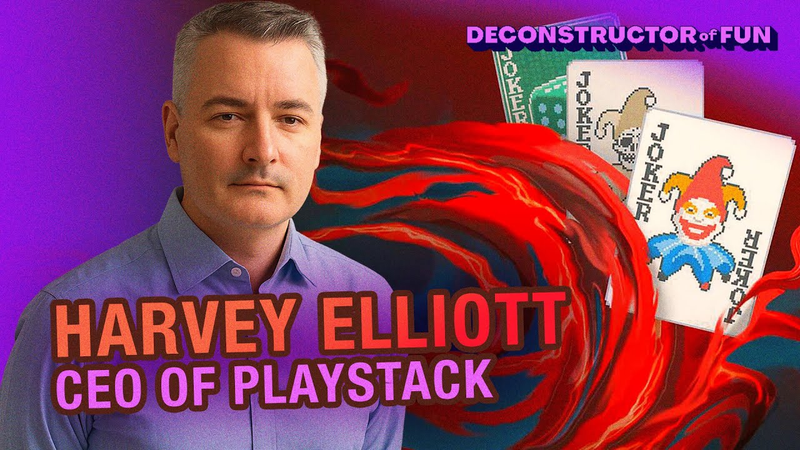
Speaking of this show, let's get on with it. This week, we're talking to leading indie publisher Playstack, which is probably best known for its 2024 smash hit Bilatro, but is also responsible for games like Mortal Shell, Rqueen, and it's publishing the upcoming Star Trek Outpost Unknown. Now, PlayStack celebrated its 10th anniversary this year, and it's done so by changing owners. It was acquired by Integrated Media Company, the owner of Fandm and GameSpot, when it valued Playstack at £125 million. So, we thought this would be a great excuse to catch up with Playstack CEO Harvey Elliot. Now, what you're going to get is actually two interviews because we spoke to Playstack before its IMC acquisition. So, part one is going to be about Bilatro and indie publishing and the market in general, while we'll have a quick mini chat about its new owners after that. Enjoy. Hello, Harvey. Welcome to the show. Thank you, Chris. Nice to be here. You know what? I I haven't caught up with you since Bellatro, which is actually 2 years ago. I know. Two years, three months, which
is just upsetting, but what a seismic release. What a huge success. Has that changed play stack a little bit? Yes. I mean the place out for what we do what we set out to do isn't any different to when we set out 10 years ago but when you have something like Batro happen and you know it it's a once in a lifetime type of game that sort of the reach has had the phenomenon that it is it's just very validating and it makes everyone feel like what we do is worth it that it really matters and we we're so proud of every game that we publish you know we genuinely put our heart and soul into every title but when one like that just sort of catches and catches players in the way you didn't know it was going to. And it just the reach it's had, the success it's had. It's it's very validating and it makes us feel very positive and it gives us a little spring in our step, but isn't change the steps we're taking. We just bounce a little bit more as we take them. Certain games give publishers a unintentionally maybe like a brand or a
vibe or this is the publisher, you know, Team 17 because of Worms for ages or this is the publisher that does sort of quirky multiplayer games. Deolver because of maybe Hotline Miami is the one that does edgy sort of um those sort of games. It's not true because they do lots of different types of games, but have you found that uh you're getting approached by certain developers who make certain types of games? Well, we definitely that's so it's true to an extent. I think on the inside of those companies, I don't know that team 17 feel like the worms company or deolver feel like the hotline man company because they know all the other things they do, but you can't necessarily help how people will perceive you. And for a lot of people, the only thing they will know play stack for is Batro. Hopefully, the nurse for abiotic factor and the nurse for Racoin, nurse for other titles and actually to that point, Recoin is a really good example. There's no way we would have been publishing Racoin if we hadn't published Bellatro because they they saw us publish Batro and oh my goodness they've got to publish this they probably were inspired by Bellatro. So Rcoin probably only existed because
Batro existed and because Rcoin existed and we published Batro they had to bring it to us. So it it created I think Recoin in that in that way. But um and we've got a surprising number of those sort of parlor rogike games being pitched to us and approached and we've got a couple more coming out. Um so yes, it's sort of created a a a sort of a a theme within the games, but there's still a very small proportion of what we do in that that sort of category of game. And really there only is one Batro. We we have other games that sort of capture some of that sentiment, but not not in the same way. So, yes, it changes what we're pitched. Yes, it changes how some people might perceive us, but inside we don't feel like that's all we do.
So, in 2016, a story that I would have definitely have edited was when playback was announced, and it was Gamescom, I think it was a Gamescom edition of MCD. Anyway, it was in um and you said at the time you wanted to fix the word publisher. Um, is that mission complete? Uh, I don't think it's ever complete,
but I think we've made some really good steps to that. Yes. And I think it can never be complete because there are so many publishers out there that mean the publishing means so many things to so many people. But what we set out to do, I think we do deliver that and I really feel very proud of it. And what we try and do is we say every game is unique. Every development team is unique and they will have things that they all need but in different proportions. Some need funding, some need direction, some need guidance. None of them need to be told how to make the game. They know. That's the one thing, you know, we're very aware of. But they still need help and support and structure um and champions and people who believe in them and people who can find audiences for their games. And I think those are missions that we do accomplish for our for our developers and our partners. So, I do think that's that's definitely working. Um, I think there's always more we can do and there's always lessons we take from every game. Even hits like Batro, there are things we could do
differently for the next time around. So, I think it's always going to be a work in progress. But [clears throat] I do feel like we made some really positive steps. Yes,
you teased something there. What did you learn from What did you learn from Bilatro? Well, when you get a game that goes as wild as that went, I mean, the success of Belro happened, actually, before Bacho launched, we knew we had something special. Nobody knows how special that could have been, but there was a there was such a buzz about the game, such an excitement about it, and we all had our little wildest dream forecast for how the game might do, and we were all low on how it did. Um but every time you create an additional version of Elatro like so we have it it was developed for PC and we managed to get it to console for launch and that was fantastic. So we launched on PC and console. Um we didn't have a mobile version ready. I really wish we'd had a mobile version ready. We know when we knew we had something so special so
quickly. The mobile version came in September. So that did brilliantly well and we were very lucky to get Apple Arcade support and to be able to release as a premium game on on Google and and Apple. If those had all happened at the same time together, perhaps that would have given, you know, different kind of moments. So there's some lesson in there, but equally we knew we'd built this sort of fervor for the game. I mean the game built the fervor for itself and really is we we just gave it a voice and we gave it some audience and gave it some reach, but the game just really captivated an imagination and and it it made people feel very smart because you have to be pretty smart when you're getting really really good at the combos and and trying to work out the right way to put your jokers and how you prepare your deck and um I think it was those sorts of those sorts of lessons, the launch planning and timing the game releases and getting it out there and just little things about when you submit a game on multiple platforms all at once. Um, we've done more complicated things since because of Bilatro, but we
didn't necessarily do them all with Bellatro first time. You know, multi a multisq release is complicated, especially with a solo dev driving the creative and driving the game. We can talk about Batro all day, but another very smart publisher told me, you shouldn't look at the breakout hits in terms of judging whether a publisher is a good one to work with. you should look at where the the games have been less successful. Um how did they support those games after that? What did they do if a title didn't deliver uh success or the breakout success? Cuz I think there is an element of truth to the fact you know a balatro is excellent game but in this market you do need a bit of luck. I think it's absolutely right. You can't just judge one game to judge a publisher or to judge any team like you can't judge them by one thing. Um, and I think it's how maybe a different way maybe the question actually is, you know, how do you measure whether you're doing the right things? How do you measure
whether you're you're doing the things you set out to do? You want to do this job and then I can
No, no, cuz you're definitely better at
this your job. Um, uh, but I think so my answer is is obviously sales is the easy answer. How many copies did you sell? What the reviews like? But for us, it's more about, you know, my favorite metrics. I've got two really favorite metrics. One is does that team want to work with us again? You if they come back to us with their next game or their next thing or or are they going to continue to work with us because that's a real testament that they've been through games development is so hard and publishing a game and getting a game out there is such a difficult journey and it's a long journey. So to get to the end of that and say, "Let's do it again everyone. Let's go again." And for me that that's my favorite sort of metric, the repeat attempts we have with people. And we're really lucky. We've got multiple developers who are working with us on their their second titles. Uh we've got one developer who's going into their third uh the color grade team. We've done Case of the Golden Idol and Rise of the Golden Idol and six different DLC packs within it. So
there's already eight SKs in the old skew matrix on multiple platforms. And we've signed up for their next game. So, we've got another game coming from them um in the future. And so, to go around three times with someone, I think is really encouraging. But lots of developers we work with a second time. Mortal Shell developers. We're making Mortal Shell 2 for later this year. Uh we made the Entropy Center uh back in 23. Um we launched Void Breaker into early access last year. It's coming out and hopefully it's 1.0 release this year. Um that's with the same developer, Solo Dev, down in Brighton. And those are very positive and affirming moments for me. That sort of repeat visit. Um the other success that I really like is when we write the first royalty check to a developer. It really means okay it's making money now. Here's some here's a life. Here's a living uh that you can make from what you've put so much effort and and um commitment into. And so I
like those metrics a lot. And then we say to developers when we're talking to new developers who want to sign with a publisher or or not sure if they want to sign with a publisher, we'll talk to someone we've worked with and find out what they say and you know if you need contact details let us know but normally you can find somebody and message them. And when developers come and join us and they say, "Well, you know, asked a few people you'd work with." And they were really positive because someone's always going to say nice things or most the time they'll say nice things to your face. But if they're talking to somebody, you know, over a pint or just at a coffee or
away from things, what would they say out of school? And if they're consistent with what we believe in and they say what we've done for them and people like that, then that's a reason that they'll come and work, you know, developers come work with us. So those are my metrics. Obviously I know that you were the EA back in the day, but it must be quite terrifying to sort of those those decisions to be out of your hands effectively. You could have launched a big hit successful game whether it's any of the titles that you just mentioned and then you don't know if you're going to get the next one. It's a it's a real
role reversal really isn't it? Isn't it from where the industry was 25 years ago? It it is a bit Yes. Yes. Although I've always known that I I never phrased it like that in my head and maybe Yeah. Um, don't you have a hit rate of like 85%. Isn't that what I read? That's
Yes, that's that's quite impressive. The hit rate, what we try and do with every developer is make sure they can afford to make their game, they can afford to get it out, and if they need extra time, we're there to help make sure it's got the money and the support to get it done. But when the game is paying a royalty to the developer, that means the costs have come back, it's recouped, it's now profitable, and the hit rate for us is when we're paying positive royalties out. the games are profitable, you can afford to reinvest in them or you can afford to invest in the next title. And yes, it's 85%. I think it's probably a little bit higher because it just depends how many games we've just released. They may not quite have fully recouped yet. So, we are really proud of that. Um, but the 15% is really important, too, because if you only did
things that were safe and only did things that were going to be profitable or only things that are going to could work, you don't take as many risks. And I don't think indie publishing is about that. I think indie publishing is and indie development is about taking risks. It's about having an idea that people just genuinely
don't quite see how, but it's become phenomenal and captured people. So
maybe 85%'s a really nice number. Maybe 70% would be brilliant, too.
But
but 100% we're probably making some mistakes there in in what we're filtering out.
Yeah. Because I think it's it is this space. I talk about this a lot on the show. This is it is this space where the innovation's coming from the new the new IP creations coming from. And I know a lot of it stays in the indie space or the double A space. Then some of it, you know, potentially could break out from that. The next games could be bigger and then bigger and you can you can scale those sort of things. And you're not really going to get much of this from the AAA end. I think you sort of need to start at whether it's indie or double A. You need to start at that level. And I talk when I use those terms, I'm talking
budget cuz I don't think you can always tell in terms of quality. I think that's fair. I I think big budgets, which we have some bigger budget games, but with a really big budgets, you can't afford to take chances. Yeah.
You know, you need you need that to work in order to get your money back. But it also forces you to make choices that perhaps a little bit compromised. And indie can be quite fearless, you know, and thinking of color gray games in case of Golden Idol, which has a very distinctive 2D art aesthetic and a quite traditional sort of old school point-and-click style gameplay
that could never be a AAA experience because that's a risk and a challenge that people would never take and it's been really successful and it's led to a franchise and actually I was going to pick out on IP and say, "No, no, it's not about IP, they're about individual games." Then I talked about Case of Golden Idol, Rise of Golden Island, 60 LC. So it's actually become an IP,
but um it was fearless and I like the
fact it was fearless and it could afford to be fearless because it didn't have the world's greatest expectation on it.
It's turned out to be brilliant and it's created a studio and created a team and um but it it could afford to take those risks and I think you're right with the bigger budgeted games those risks are harder to take. Yeah, you can still have exceptional games and exceptional, you know, content, but there is something quite refreshing about where indie games can go and what what you can see with indie developers.
You talk to me a little bit about how you think about hit rate and risk, I guess. But what about portfolio makeup? Obviously, I talked earlier about how Batro, so you might be getting pitched certain types of games and therefore you you got you've got certain games that have a certain vibe to them, but how do you think about sort of your portfolio? It's funny because similarly to the way I think about profit and revenue. So they are lovely things to have. A portfolio is lovely to have, but a portfolio will only build from success. And revenue and profits will only build
from success. So the portfolio is sort of the byproduct of doing a really good job of finding great games and building great relationships with developers. So you can look at your portfolio and go, we we feel really good about the games we've got in the lineup and the the titles that we've got. Um, in terms of category or genre, when I started play, so 10 years ago, my kids were quite young. They were 12 and 10 and five. Um, and there's no way I could have a risk of them coming into the room while I'm playing a game and there'd be something really gruesome or horror based on the screen. So, I said, "We can't do horror in case the kids come in while I'm playing that." Um, and I really don't understand American football. So, there's no horror and there's no American football at play stack. The kids are older now. They play games that are definitely on the other edge of things and so horror is fine, gruesome is fine. I still don't get American football, but that really is that really was the restriction on PlayStack. You know what we what we all have learned is
we aren't a genre team like we we do have some games which happen to resonate around certain genres and that just happens. you know, we had um Case of Golden Rise of Golden Isle and we now have another detectiveesque game that we're going to announce later this year. Um we've had Batro which has led to Recoin and two more that we'll be announcing later this year. And so there are categories, but we're really a variety publisher in that our taste as players is all sorts of games
and we want to be able to publish all sorts of games and the diversity is also what makes us work so well. So for me, the portfolio will look its best when it's varied and interesting with a diversified mixture of games inside it. And that portfolio will only build if we're successful in publishing great games from creative developers. And so it becomes a bit of a byproduct of what we do. But of course, we would like to have a strong catalog of games because if we have a strong catalog of games, then we've got a lot of developers who are getting good healthy incomes from
the projects they've made with us, which can then enable them to do more innovative and more creative titles on the other side. I guess there an advantage of being good at certain things. If launching a game like a coin, right, for instance, and you s you sort of you've got an idea now who that audiences, where you can reach that audience, you know, or detective genre, you know, you know where those people are hiding, which which which Discord channels, which Reddit, you know, there must be some advantages to that kind of thing. You you must be every time you go into a new genre, you're kind of going out your comfort zone, right? Yes, you're absolutely right. The thing is really true. But let's say you've got these this group this huge audience love balatro and we say hey would you like racoin and then oh I quite like racoin it's a smaller group within that bellatch a I like racoin and we go here's another one oh and it could be a smaller group will the next game grow the group that bolatro was in could it be a bigger game than bilatro and I would argue bilatro
is a defining game in its category and it it was very unlikely that we would have another game that would reach more people than that. So it's great to be able to go back to those audience say we've got more for you that you might really like but the new successes will be something different and I think that sort of back to India and I remember my time at EA which I genuinely loved and is there for almost 10 years but our investments were so high your games kind of had to have here's our game it's a new game and then we'll do number two then we'll do number three number four and then you'd have a franchise because that helps justify all the investment you put into building it. And the brilliant thing about indie is you don't need that. You don't have to put sequels into your plan. And so you can afford to take chances and build new audiences and take that sort of bold leap with every game that you make and you find a new audience. And there are lots of things that we can we can talk to the same players and say, "Look, we know you love this game. Here's
something completely different we're publishing you may be interested in, but and probably there's not that huge crossover either." So maybe I'm under, you know, but the ability to find an audience and build an audience for any game is something that we should get good at. Not good at just talking to the same audience over and over again because it by definition would automatically shrink each time we talk to them. Hey, you've got another one. Oh, right. You again. Great. Or they get old or they get married or they have kids and they don't have time to play and then Okay, now what? Oh, yeah. Well, we're still waiting for them to get to retire and then come back. That's what we're doing at the moment in this industry. Um so the um [laughter] so well let's talk about this 10 years 10 years have placed there. How do you feel indie publishing has changed compared with when you started? I think the indie market has thrived in that time especially where uh you know steam's been a brilliant platform and a brilliant a brilliant champion for for indie games. It has been for a long time. I really feel like um we kind of talk about AAA and and like you're saying AAA I think you're right AAA definition in 10 years time will be
different to to definition today. They've sort of grown to a size where they're they're such behemoths almost they have to be successful in order to work and the investments are eye watering and it's leaving this gap behind which has given space for indie games to thrive but cutthrough is always the challenge for every game. How do you how do you how does your game get to be the one that reaches audience? How does your game become the one that people have a shot at playing and understanding? And you can never engineer a complete success, but you can give it the very best possible start in life. And I think when we started when I started play 10 years ago, I think a lot of people would say, I'll just do it myself. I'll self-publish. I'll I'll put my own game out there. And I think self-publishing is still our biggest competitor in terms of what a developer is choosing to do, whether to go with play stack or to publish themselves, but I think we've also proven the value of having a strong publishing partner allowing a developer to really focus on
making the game exceptional to allow publisher fill the gaps and do the bit that makes the marketing the reach successful. And I think we've proven that there's a definite role for a publisher. Whereas I think 10 years ago it was sort of a question. I need a publisher cuz I need some funding, not I need a publisher because I want to reach a bigger audience or want to reach more people. It's interest you mentioned self-publishing as being a biggest competitor. I've really like a bipolar sort of reaction to self-publishing because on the one hand I spoke to the eugenics folks earlier in the year. I love the fact that they have full control. They know their audience. They get they see every penny from the success of that. they don't feel trapped in a loop of having to go back to a publisher and ask for money every time. That freedom is just so attractive and I can see it. But obviously from an industry publication, I want to see money the industry because at the moment we're not getting a lot of outside investment. So seeing the industry generate its own revenue and then that revenue being used to fund more games and more projects is is I think really really important. So when I see a really smash hit breakout success
in the indie space from a self-published game, it work like oh that's a lot of nice yachts that those that team might now have or Fast Cars or something like that which is why I love it when you get like a the Phasmophobia folks launch their own publishing label and then they put that money back into the thing. I do love those stories. It's something that just sort of appeals to me. Um I didn't have a question there but it just you talked about self-publishing but I think that's a really good observation and I I agree with you actually. I think what you sort of asked know what's Batro changed about play stack and you it told us we're doing the right things. It gave us that spring in our step. It has given us the ability to fund more projects and back more games and invest in more titles. So we never want to be gigantic. We never want to be publishing oh another week another place that game. It's not not who we are. We probably have eight releases this year. Um which is you know is quite a lot. It's busy. It's healthy. Um
it's competitive year as well. Yeah, it's very competitive year for sure. So I think but it enables us to do
more and I like the fact we can help you know just play a small part in helping the industry grow. Where do you think indie publishing goes in 10 years time? The reverse of the question um I always 10 years is a long time. I'm always wary of saying 10 years. It's do you know what it is and isn't a lot of games a lot of game teams take you know two years to make a game. They can take you know 18 months to make a game. So if you just if you're a studio you might make five games in 10 years might you might make four might make three might not all be successful as a publisher we can work quite fast you know we can work on six to eight games in a year so in 10 years we could publish another 60 80 games so there's a huge journey that's going to happen yes it's a very small number proportionate to the number of games made but I think it can be quite an impactful number we can learn a lot and we do learn a lot and you know I'm really pleased that in all the time we've just been speaking just now we haven't talked about AI we haven't
talked about you know those sort of disruptors in the market and what they're going to do they will be disruptors they will change the nature of some game development I really hope they only become enablers to help us make more of our games
and not the games themselves and I really hope that we can continue to champion even more variety of indie development and indie indie games. And I hope there are genres and categories that we never knew would exist that exist in 10 years time. And I'm not sure how much technology is genuinely going to change, you know, revolutionize the way in which we interact with or play with games. I'm going to there will be a control interface and there'll be a screen of some sort and that's, you know, that's going to be a large part of it. So the innovation whereas, you know, if we go back 20 years, the innovation is in tech, the tech getting faster, the tech getting better. And I don't know that that makes as much a difference in indie game development as it might have done before. So I think what we're going to see is more innovation, more
creativity, perhaps more audience diversification. And so for publishers like ours, I think the work will increase. I think the the responsibility of helping games find increasingly diverse and increasing increasingly interesting audiences and be able to cut through to them and incredibly competitive landscape just for noise of things that people have to see or hear. So I think the landscape's going to intensify but I think you will you know we'll look back and I hope feel very proud of what the foundations we built in these first 10 years of play stack we'll see that coming in the next 10 years and not just for us but across the industry where there's just some genuinely innovative creative imaginative games that everyone gets to experience during COVID I worked at games in the shop business at the time it was owned by Reed Pop and Reed pop or read exhibitions and shown then we're big massive events company so it's the worst time every other games company were having an amazing time except for this this what because events company makes
most of it money from events and they pivoted drastically during that period they decided that digital was the future and they pivoted everything towards digital because they had they got in their heads that when the pandemic ended everyone would want digital and they wouldn't want the events anymore and games events did struggle to come back, but the Comic-Cons and all this sort of stuff they ran came back and they came up with a vengeance. They came back bigger than they've ever been. Turned out we quite liked being with people, but we we could have told you that beforehand, but there was this weird assumption that that actually it's so much more convenient to to work from home and it is, but also you are losing something. We do like being around each other. Gigs are bigger than they've ever been. Music concerts, you know, it's like I know the smaller ones have struggled. So, when people talk about AI and they say, "Oh, everyone's just going to play these sort of AI experiences." So I'm like, do they want to though?
Yeah. Well, so I support you. I went to Comic-Con. I was wearing similar clothes to now. I was wearing a polaro t-shirt and some some trousers and uh I felt
really out of place cuz everyone was in these amazing costumes based on things that I thought I could recognize but didn't want to risk. So is that from this in case I was wrong? And you're exactly right, the fandom and the community and the engagement. And you're exactly right. People love being around people. And I think AI as a communication device is is fun. It's fascinating. Some of it's really I'm really glad you've asked that. I'm really proud of you for asking me kind of sigantic kind of be and it it's interesting but it's a little bit light. It's a little bit vacuous and it's sort of a nice thing to try.
Yeah.
But it isn't our interaction. It's not what we should be doing. So I think AI is a tool. It's an enabler. It enables us to do more of what we're good at. But I don't I don't think we will be playing those those sorts of games. Not from what I've seen so far.
Again, it's just me, but I kind of want We had Troy Baker on the show earlier in the year and he talked about how he thinks people will pivot toward people want authenticity. They want that's what they want to quote a Goldfinger song. The singer wrote the song. You know, I I
want it to I want it to feel relevant. Anyway, going off topic, I'm I'm conscious of the time. I was going to ask because we mentioned I keep using the word indie publisher a lot and I actually feel like this revolution in terms of publishing is sort of it seems to be happening and I you know we talk about exhibition 33 which admittedly wasn't a huge budget game but it looked amazing. It's from Kepler. And then you've got someone like Secret Mode picking up a Star Wars game, right? And I look at some of the games that you've been publishing, right? Do you feel the indie publisher tag has become a little bit redundant? Aren't we just talking, aren't you the publishers of today? The AAA publishers aren't signing games like this, are they? They're working on their big brands. So, isn't this just what publishing is?
I think you're right. And it um I think when I say we're an indie publisher is that we publish games by indie developers.
Yeah.
But we don't necessarily mean we are indie. We are exactly that. We're a publisher and you the first thing we ever wrote for Playstack was to reinvent publishing. Um, publishing reinvented. That was the felt so clever at the time. Um, and it was trying to find another
way of of being a publisher and bringing games to market. And you're right, the definition is an indie. I think the growing market, the growing opportunity is from indie to me is small creative teams that are unencumbered by sort of complicated infrastructures and complicated things where you you kind of have to make compromised choices to ensure you get a commercial return for your project. Whereas indie games are more of a work of passion that have you know somebody's creating passionately and they've created something that's unique and that stands out and they want others just to love what they love. They don't necessarily think about it in financial terms. They think about it in terms of will people see it? Will people enjoy it? Will people play it? And so you're right, maybe the word indie will sort of drift away. We just want to see great games come together that people are playing and enjoying and I think that journey has already started and Expedition 33 is a fantastic game.
Blue Prince was a great game. The Latro is a great game. There are so many of these great games and then they compete at the game awards. They compete at the BAFTAs and people aren't thinking, "Oh, that's an indie. Oh, that's AAA." They just it's a game. They they're games that people see and play. And for us, we were nominated to the game awards for best game with Bolatro. And I'm really proud of that. It's an indie game nominated alongside AAA blockbuster titles.
And AAA by what, you know, this is the this is why I always I I don't like using these terms outside of budgetary discussions because,
you know, what would aa Bellatro look like? Radically different to what it is now. you know, you know, it's I'm not saying that I'm not saying that they more money couldn't have been spent on it in terms of, but I think
you it's a game that does its thing as well as it possibly can. And you give that give the same concept to I don't
know, you know, um the Battlefield team and it won't be much different, right? It's it's just I I don't I I think I think they're just perhaps more focused. They're not quite as they're not fulfilled of as many things. But anyway,
and I think maybe you're right. Maybe AAA is just about investment levels or numbers of people working on it. And
we always struggle how do you call the really successful indie games? What do you call them? Is it you can't call them double A? It's not as good as triple. Is it triple I? But actually in most fonts the triple I just like ll. So it just great you know games from small they're just great. Yeah. I'm pleased things are going well after 10 years at play stack. I just find it really interesting how the industry has changed. When you go to an event like Summer GameFest or the Game Awards and you see the games being announced and the logos at the end of it, it's not just EA and Ubisoft and Konami and whatever. They're in there, too. But it's it's these companies that, you know, didn't exist 10 years ago and and they're the ones that take bringing these games to market. And I find that I
feel like it's happened gradually, but now it's just the norm. And I think that's that's the right thing. you know, we're seeing a really broad group of games from so many categories and so many genres and so many styles and it isn't dominated by one group or one entity or one publisher or one aesthetic or even, you know, one genre. We're seeing such diversity in games and such a breadth of experience that perhaps, you know, 10 years ago you looked to today and you think, well, there's platformers, then there's first person shooters, then there's multiplayer thing. You sort of the categories are nothing like that. They're not they're not defined by a camera position or defined by how many players are in it. They're just there's so much diversity, so much change. And can we were talking about Bellatra a little bit earlier just the audience and you know how each new game in that category would always be a little bit smaller. We expect categories to come and go. You know play stack is
the name way back when was a stack of games you want to play. That's why it's called play stack. It's just a stack of games you want to play and you want to play loads of great games. And the what's in the stacks and what the stacks are categorized as will change. They will evolve every every year or every few years. And that's the excitement bit. That's the bit that the kind of publishing that we do are the hits that we will have in 10 years time will be nothing like the hits we have today. The games will be different, the genres will be different, but they will all have been a work of passion and they'll all have, you know, creative developers behind them who just want to share their great work with somebody else. Brilliant. Harvey, thank you so much for your time. Thank you, Chris. Harvey, welcome back. Thank you. I didn't expect to see you so soon. No. So, um, something happened, uh, which we were sort of expecting, but perhaps not so soon.
Does it change anything? Does this acquisition change anything?
No. The good news is you don't have to do a full re-record. So, everything we talked about before is completely valid. And, you know, we did have this in mind.
So, as we were discussing, I knew what we we thought the business would be. So, no, it doesn't change anything. I've got no earnouts or escape clauses. I'm here, you know, still as committed as ever to the business. So, um, yeah, very excited about what's coming. Does the investor bring anything new that you weren't getting before?
Yes. I mean, they've got they're they've got some experience from the games industry, like proper genuine connections to people in games and having worked in games. So, I think that's that's always good. We really value that. They have a fresh mindset. You know, we work really well with Truin for the last 10 years, but we have grown quite a lot within that. And um it's it's good for us and healthy for us to have a a slightly bigger investor group that we can talk to about things and we can talk to about new directions and things we'd like to do as a business. Everything in games evolves so we've got to keep evolving with it. So I think those are are the things that we're most excited about and they love us for who we are. So uh that's a good thing too. Obviously they've got some connections
to other companies in fandom mainly. Is there is there collaboration opportunities there or is it very separate?
I think it's you know we would we would look at the collaborations with companies like Fandom anyway. So I don't think it's changed a you know a structural thing or anything like that. There's no integrated services. We're not going to oh we're all now in the same office that's going to happen. So I think you know we we were running as a a games publishing business within IMC. IMC happen to have investments in four other verticals and so you know maybe there'll be a mixer and we can talk to them that' be a good idea but it's not an integrated system like that. No.
Um [clears throat] the valuation at is 125 billion. That's all right is it?
Yeah I I think you need to say it the way I like to say it's 1/8 of a billion pounds. [laughter]
Oh that's good. We can all do that.
Did that surprise you? There's always that does that you think perhaps maybe opens a few people's eyes to how big you
are.
I think it's well because we've been profitable and we're consistently profitable. It's a healthy multiple but it's not outside of the realms of normality. You've got some good benchmarks there. I think it's surprised when somebody actually says it out loud and you go, "Oh, that's really quite exciting." But we're not really here for the money. I don't think anyone in games is here for the money really. You that might be a nice thing that happens. We're here because we love games. We love publishing. We love getting involved in titles. So um but it is a nice benchmark and you know we passed 10 years and we talked about this before 10 years in the industry for a company is is a fantastic milestone. We now know 10 years and 125 million pounds and those are great benchmarks. So okay well where can we go next? That's the big question. So to recap nothing changes at all. You know there might be some opportunities. Well, you know, put it very simply, we had a business plan that we signed off with Truin at the end of last year, and that's the exact same business plan we've adopted with uh IMC, our new ownership structure. So, our job is to
deliver the exact same number of games, the exact same revenue opportunities. Um, what it will change is if we have bigger appetites for some things in the future, we've got a little bit more headroom or a lot more headroom with titles we might want to get behind and how we want to support games. But, um, We didn't really test limits of that with Truin. We've had really great support from them. But we do know we're getting close to being a, you know, majority quite a significant majority share of their business. So for us having more headroom is very useful and very important. Um, but we're not changing the standards. You know, the game selection process that we use, the way the team, you know, have to be passionate and get behind a game, the forecasting methodology we use, all of those things are still true. So maybe some bigger games in your future. Yes, but we've got to make sure the numbers make sense for everyone. The developers have to become profitable on the back of their game successes. If we're going to get involved, it's we believe we can help them create something very successful and
profitable. So, we can't just spend this extortionate amount of money and the game that needs to come out before anyone's earning royalties and income and and we only earn from the success when the developers earning from the success. So, uh, we might have appetite for some bigger games, but only if the numbers stack up and if it makes sense. And, um, there are some growth opportunities for us as a business, you know, where we think we could do more. That was already part of our business plan. But, um, the constraint is on us and our ambition, not on, you know, how much money's in the bank and what are we thinking. I'm always going to make sure we're profitable with a a great growth plan. But sometimes you're funding projects for, you know, 2, three years out. So, you want to make sure you've got the cash flow for that, for sure. So you're not getting ahead of your skis. That's good. No, you can't. Not your style. Thank you, Harvey. Brilliant. Thanks, Chris. Congratulations as well. Thank you. That's it for today's episode of the Game Business Show. We'll be back with more news, with more analysis, insight, and interviews in the days and weeks ahead. Please do make sure to put
your email address into our website at thegameus.com. That means every time we put something out, every podcast, every article, you'll be the first to know. But until that time, that's it from us today. Thank you for tuning in. What company, [music] games or otherwise, inspires you? You get different things from different people, but for me, [music] when Apple put something together and when they launch their best products like their phone or their tablet or the TV, they [music] just did it exceptionally well. And so for me, that that's become a mantra for us is quality. So I have to bet Apple. [music] What one indie game do you wish you'd published? Well, I wish there was just see what happened then [music] when you asked that is my brain went oh this one this one this one expedition 33 really good and I'd love to have published that blueprints actually really love the game would have loved to have published uh Silkong would have loved to publish it Hollow Night before I mean just any what is your favorite movie I've got three okay 1989 Batman
although I did watch it the other night and it hasn't aged as well as I remember it but it was the first reinvention of superheroes uh that was was very very high for me. I loved Heat. [music] There was something about the way that was shot, the gunfights, the the character development and Groundhog Day, which is this sort of striving for this perfect day that isn't actually about striving for the perfect day. It's just about reliving those same moments and making little choices. So, any of those I'd happily watch. Obviously, your career goes back to the '9s of a claim in the early 90s with the Electronic Arts. If you could bring back one classic franchise from that period of time, doesn't have to be from MLA or EA, what would you bring back? There are two I really loved that uh when I first joined EA, I was going to get involved with, which was Syndicate that Bullfrog had made and the original [music] theme park games, although the Twooint team do a phenomenal job with reinventing that that genre. So, probably Syndicate. I think that was one that deserves to be retold and [music] was actually a really clever, really innovative game that is
just as relevant today and what it told as a narrative as it was back then. And what one advice would you give to a new independent developer looking to get their game to market? I think every developer needs to know they shouldn't have to do it alone. What's brilliant about games and [music] brilliant about the industry is the industry supports the industry. You know, people will help. People want to share. GDC is a great example. you know, people sharing their knowledge with people to tell them what they've done, why it's phenomenal. And if you're starting out, just don't be afraid to ask for advice and take advice, but equally, don't be afraid to listen to the advice and go your own way and make your own choices. But listen in the first place and make your own opinions. But there's so much free [music] knowledge that the industry is so proud to share. You've just got to listen.
Auto-generated captions from YouTube — names and numbers may be misheard.

















Comments