Monetization reports and market data
Documents

Landscape Shifts in IP Gaming
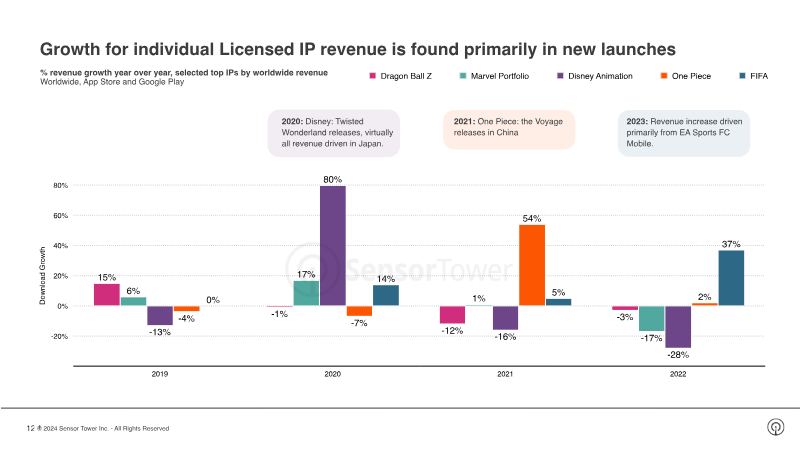
Licensed intellectual property serves as a foundational pillar of the modern gaming industry, functioning as a primary catalyst for user acquisition and long-term monetization.
- Licensed intellectual property is a primary driver of industry revenue, with the mobile sector generating $16 billion in in-app purchase revenue from licensed titles in 2023.
- The most effective market strategy involves pairing globally recognized IP with innovative genre combinations, such as integrating RPG or casino-style mechanics into familiar brand environments.
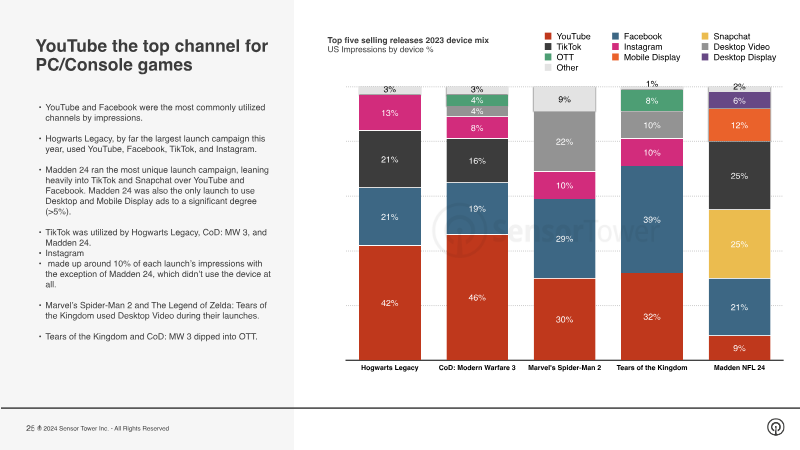
- Success in the current market is highly hit-driven, relying on a combination of high-impact, multi-channel marketing and deep brand loyalty, as evidenced by titles like MONOPOLY GO! and Hogwarts Legacy.

We are Warriors live Review: Ad juggernaut, creative depth, balancing difficulty & progression, UA
We Are Warriors represents a highly successful hybrid-casual title that synthesizes auto-battler mechanics with idle RPG progression.
- We Are Warriors generates approximately $200,000 in daily revenue, with 75% to 80% of that income derived from rewarded ads.
- The game maintains an 81% rewarded ad viewer rate by capping placements to prevent user burnout, which supports high daily active user counts.
- The title has surpassed 10 million global downloads, with its primary market traction concentrated in the United States and South Korea.

The Inner Works of a Game Publisher with John Wright, Kwalee’s Publishing Head
The mobile gaming industry is undergoing a significant structural shift as privacy regulations and capital constraints render traditional hyper-casual models increasingly unsustainable.
- The mobile gaming industry is shifting away from hyper-casual models toward hybrid-casual titles that prioritize deeper player retention and extended lifetime value.
- Rising user acquisition costs and privacy regulation changes have rendered traditional, purely metric-driven testing models unsustainable for long-term growth.
- Kwalee is transitioning to a co-development partnership model that provides developers with technical coaching, advanced A/B testing tools, and long-term strategic guidance.

Karl Knights and Lirui Ding On The Data And Trends Defining Mobile Gaming In 2024
Global mobile gaming revenue is demonstrating resilience, characterized by a 4% increase in consumer spending throughout 2023 when excluding the Chinese market.
- Global mobile gaming revenue (excluding China) grew by 4% in 2023, signaling a stabilization of the market despite plateauing user time.
- Studios are increasingly utilizing predictive analytics and performance scoring to forecast app success and optimize development cycles.
- Industry monetization is shifting toward hybrid models that combine traditional in-app purchases with advertising strategies.
Has Incremental Revenue Ever Sounded This Good - Yiğit Güneri, AudioMob.
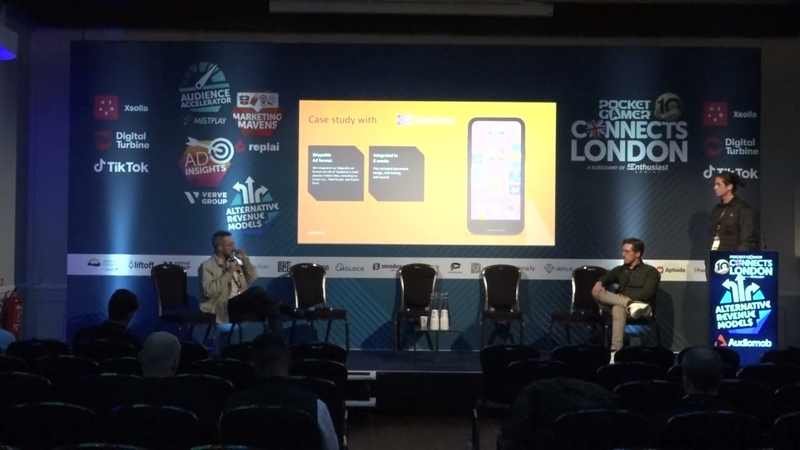
The discussion focuses on the integration of non-intrusive audio advertising as a complementary revenue stream for mobile game publishers.
- Audio ads provide an incremental revenue stream for mobile publishers by utilizing non-intrusive audio clips paired with companion banners, avoiding the disruption of gameplay or cannibalization of existing ad inventory.
- AudioMob’s technology optimizes performance through volume detection, ensuring ads only serve when device volume is sufficient for engagement, with CPMs tiered by volume thresholds.
- In tier-one markets, audio ads generate between $5 and $10 per mille, while tier-two markets yield between $1 and $4 per mille.

Why you should diversify your demand | Eado Hofstetter from Digital Turbine
The mobile gaming industry faces significant economic headwinds characterized by reduced venture capital investment and a decline in consumer in-app purchases.
- Developers must diversify revenue beyond performance-based ad rotations by integrating external capital from brand advertisers, such as consumer goods companies and fintech firms.
- To build economic resilience, publishers should adopt a multi-channel strategy incorporating offer walls, device preloads, and brand-performance hybrid ad formats.
- The industry is shifting from traditional waterfall monetization to in-app bidding, a transition that is essential for maintaining competitive performance throughout 2024.

Panel: Mobile Gaming Revolution: Tackling UA Challenges & Pioneering Future Opportunities.
The mobile gaming industry is currently navigating a critical transition as traditional reliance on device identifiers and probabilistic matching becomes increasingly untenable.
- The mobile gaming industry is shifting away from device identifiers and probabilistic matching toward a privacy-first architecture to comply with mandates like the Digital Markets Act.
- Adopting Consent Management Platforms can increase eCPMs by 10% to 120% by enabling access to premium brand-advertiser budgets.
- Publishers must integrate technical solutions such as Google Consent Mode and Apple’s SKAdNetwork to mitigate policy-driven disruptions and maintain measurement capabilities.

AI Driven Game Monetization in a Post ATT World - Don Reilley, Scuti
The gaming industry faces significant challenges in the post-ATT (App Tracking Transparency) and IDFA (Identifier for Advertisers) landscape, characterized by rising user acquisition costs, declining lifetime values, and player frustration with intrusive advertising.
- The gaming industry is pivoting to 'g-commerce' to offset rising user acquisition costs and declining lifetime values caused by post-ATT and IDFA privacy restrictions.
- The g-commerce model integrates an e-commerce marketplace into game lobbies, providing developers with three revenue streams: retail sales commissions, ad revenue, and in-game currency conversion fees.
- Data indicates that 91% of players are willing to purchase physical goods if they are rewarded for doing so, and 30% of daily active users currently convert these rewards into in-game currency.
Multiplayer to Maximize Creativity & Revenue - Mark Val, Photon
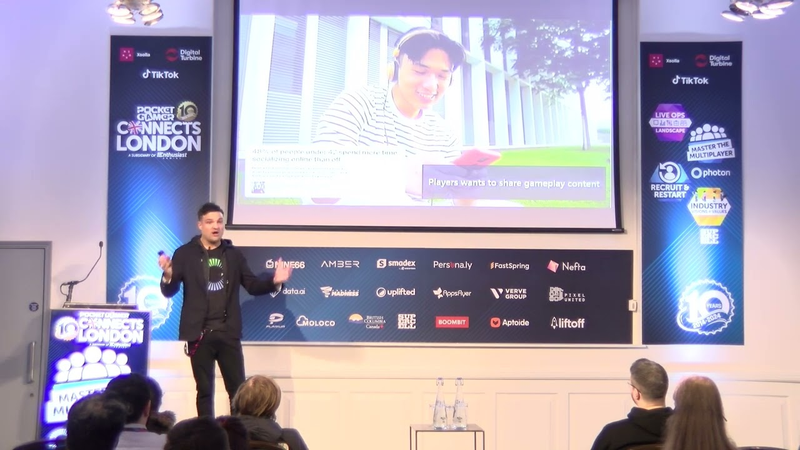
Multiplayer functionality serves as a foundational pillar for success in the contemporary gaming landscape, acting as a primary driver for both player retention and long-term revenue.
- Multiplayer titles dominate the top-performing games across download volume, consumer spend, and monthly active users, as evidenced by the fact that the most popular games on Steam and mobile app stores are predominantly multiplayer-based.
- Successful multiplayer implementation requires deep community integration; developers must treat their player base as a board-level stakeholder to avoid negative feedback and maintain long-term engagement.
- AI tools, such as those integrated into Photon Quantum, provide essential support for multiplayer development by offering out-of-the-box bot systems that balance match difficulty to ensure players experience both wins and losses.

Panel: LiveOps and Support Strategies to Shape the Future of Your Games.
Successful LiveOps strategies depend on the seamless integration of game development, monetization, and player support into a unified operational framework.
- Integrate game development, monetization, and player support into a single operational framework to transform support from a cost center into a driver of product innovation.
- Utilize support channels as a primary source of product intelligence by synthesizing business metrics, player surveys, and community sentiment to inform content updates and live events.
- Deploy AI-driven tools for automated ticketing, sentiment analysis, and machine translation to scale operations, reduce response times, and improve player satisfaction scores.
The Alternative App Store Bootcamp: The 7 Things Developers Need to Know - Itai Cohen.
The rise of alternative app stores represents a significant shift in the mobile ecosystem, driven by evolving global regulations such as the European Union’s Digital Markets Act.
- The mobile ecosystem is shifting from a closed 'walled garden' model to a fragmented, competitive landscape, primarily driven by the European Union’s Digital Markets Act.
- Regulatory changes are enabling sideloading on iOS for the first time, bringing Apple’s distribution model closer to the existing flexibility of the Android ecosystem.
- Developers must expand their strategy beyond payment processing to include device access, storefront management, publishing workflows, and security requirements.

How Will you Create More Value for Your Users in 2024 - Jan Kuhlmann, Xsolla.
The mobile gaming industry currently faces significant headwinds, including rising user acquisition costs, high platform fees, increased market competition, and a post-IDFA regulatory environment that complicates data collection.
- Mobile developers are increasingly adopting direct-to-consumer web shops to bypass platform fees and mitigate rising user acquisition costs in a post-IDFA environment.
- Web shops can drive incremental revenue growth of 12% to 20% while shifting 30% to 40% of total revenue toward developer-owned platforms.
- Implementing a web shop strategy can boost average revenue per paying user (ARPPU) by over 30% and increase player retention rates by up to 62%.