Monetization reports and market data
Documents

Unlocking Global Growth with Google Play's Robbie Hopkins & Romain Mardot
Global expansion represents the most significant growth opportunity for mobile game developers, as consumer spending in international markets currently outpaces domestic growth by a factor of three.
- International consumer spending in mobile gaming is currently growing at three times the rate of domestic markets, making global expansion the primary driver for industry growth.
- Custom store listings that utilize region-specific color psychology and culturally relevant imagery can increase monthly active users by more than 3.5 percent.
- Developers should implement automated pricing tools to adjust in-app purchase costs based on local purchasing power, while using integrity protections to prevent VPN-based price exploitation.

Why 96% Of Indie Games Make NO MONEY
The indie game development landscape is currently defined by extreme market saturation and low financial returns, with the average lifetime earnings for an indie title hovering around $11,000.
- The indie game market is becoming increasingly saturated, with Steam releases growing from 9,000 in 2020 to 14,000 in 2023, leading to an average lifetime earning of only $11,000 for most developers.
- To survive, developers must adopt a 'super indie' model by keeping teams small, utilizing existing assets from platforms like the Unity Asset Store, and leveraging AI tools to drastically reduce production costs.
- Developers should implement a 'Trinity Hook' strategy, which requires defining a specific story, mechanical, and visual hook for every project to ensure the game stands out in a crowded market.

How to get the most value for each ad impression | Geeshan Willink from Nefta
The mobile gaming industry currently faces significant revenue challenges stemming from privacy-centric regulatory shifts, specifically Apple’s App Tracking Transparency (ATT) framework, which has led to revenue declines of 18% to 50% for many developers.
- Apple’s App Tracking Transparency (ATT) framework has caused revenue declines ranging from 18% to 50% across the mobile gaming industry.
- Developers are pivoting from identity-based tracking to first-party in-game behavioral data, such as progression metrics and inventory management, to predict user value.
- In-app mediation solutions are replacing opaque 'black box' ad network models, allowing publishers to stack multiple networks and gain granular insight into which segments generate the highest revenue.

4X (R)evolution part1. Top Heroes: Idle RPG or 4X strategy game? (#99)
Top Heroes represents a significant evolution in mobile gaming by successfully blending idle RPG mechanics with the high-stakes environment of 4X strategy.
- Top Heroes successfully blends idle RPG mechanics with 4X strategy, utilizing a deceptive onboarding process that starts as an accessible isometric action game to lower entry barriers for casual users.
- The game demonstrated rapid financial growth following its January 2024 launch, with monthly revenue increasing from $1.5 million in January to $6 million by February.
- Current daily performance metrics for the title are approximately $300,000 in revenue and 50,000 downloads.
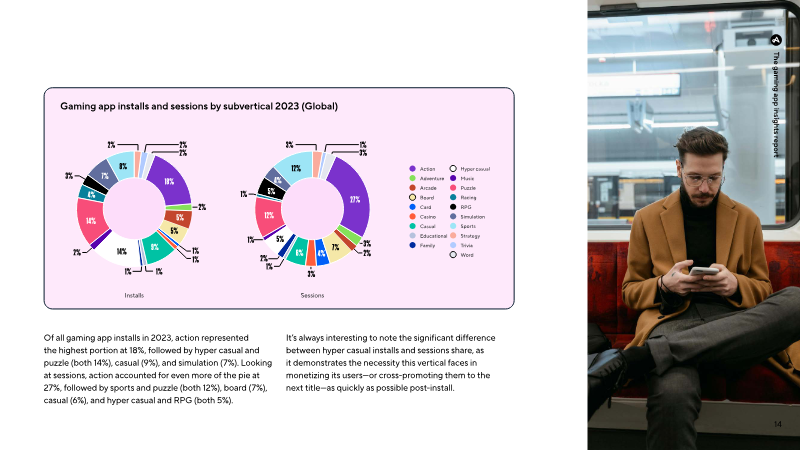
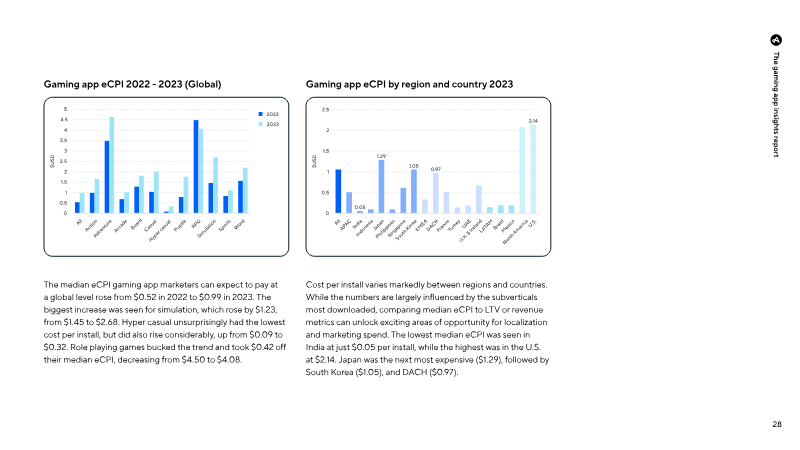

The Gaming App Insights Report: Unlocking Growth Opportunities for Mobile Marketers
The mobile gaming industry is entering a period of stabilization and renewed growth following recent volatility, characterized by a 7% year-over-year increase in global installs during late 2023.
- Global mobile game installs increased by 7% year-over-year in late 2023, signaling a stabilization period following recent market volatility.
- Hybrid casual titles and AI-driven production are fueling a 2024 recovery, with Racing and Simulation subverticals seeing install surges of 61% and 53%, respectively.
- Monetization is shifting toward hybrid models combining in-app purchases and advertising, as in-app revenue grew 6% despite a marginal decline in overall consumer spending.


Turning Organic Success into Long-Term Revenue: A Framework for F2P Mobile Games
This industry guide provides a strategic framework for mobile game developers to transition from initial organic traction to sustainable, long-term revenue growth.
- Developers should treat monetization and user acquisition as iterative, scientific processes, using predictive modeling to forecast ROAS up to one year in advance to ensure profitability.
- Implementing a hybrid ad mediation setup that combines real-time bidding with manual waterfalls can yield an immediate 10% to 20% uplift in ARPDAU.
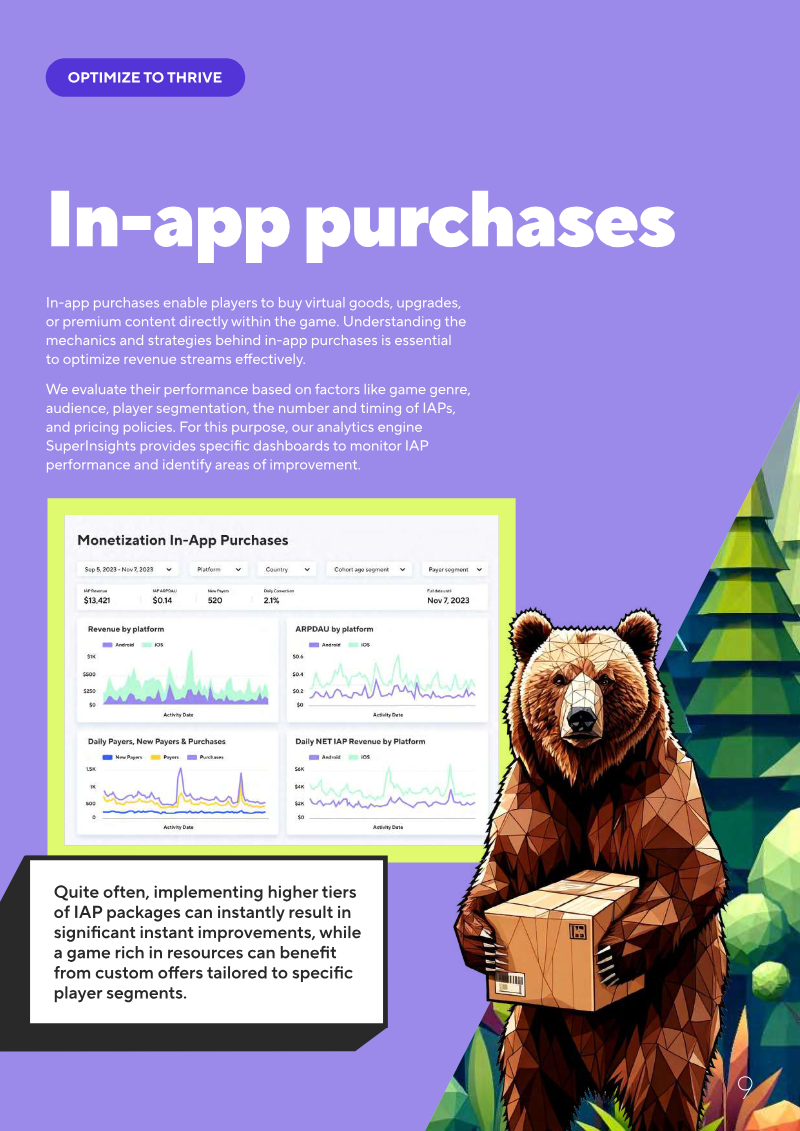
- Personalized, segmented in-app purchase offers can increase player spending by up to 23%, while regional pricing adjustments in lower-purchasing-power markets can boost ARPDAU by as much as 30%.
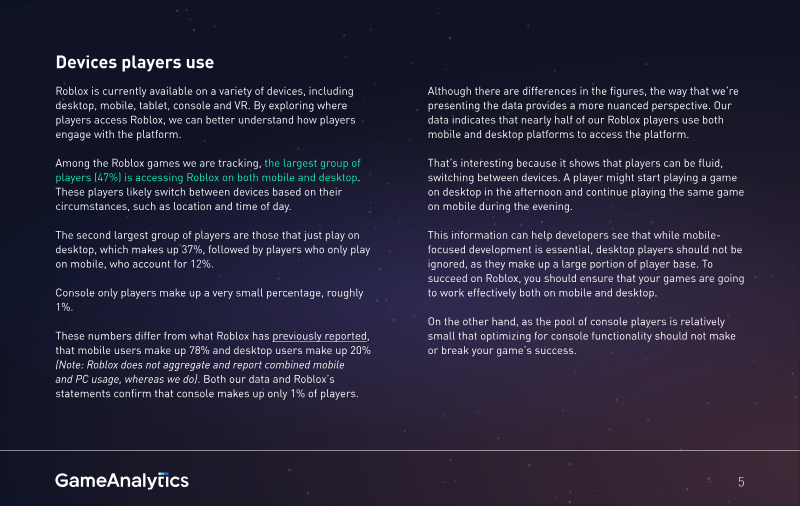

2023 Roblox Report: Behind the Data
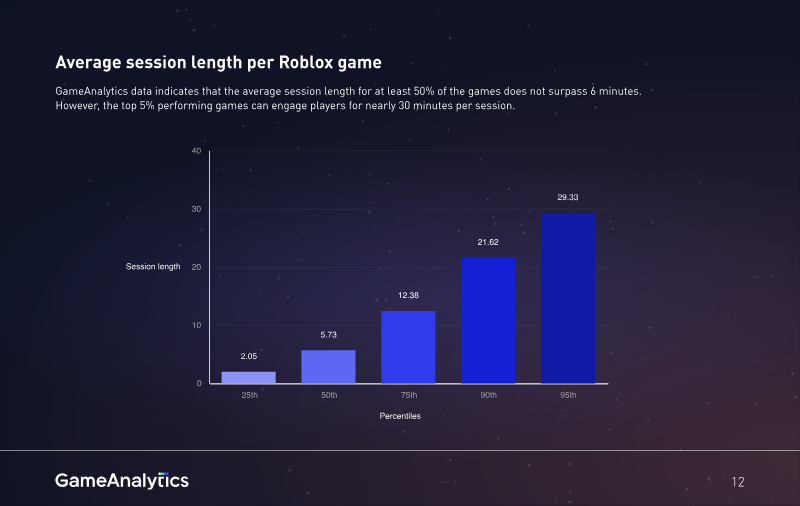
The 2023 Roblox Report, produced by GameAnalytics, provides a comprehensive analysis of player behavior and performance benchmarks across the Roblox platform.
- Retention is a universal challenge on Roblox, with Day 1 retention averaging 12% to 15% and falling to approximately 1% by Day 90.
- Monetization is highly concentrated, as only 4.2% of players spend Robux, with over half of those spenders contributing less than $1 annually.
- Top-tier games in the 95th percentile generate approximately $77 per playing player annually, significantly outperforming the broader platform average.

Mobile Gaming OG Eric Futoran: (Scopely) War stories, Algorithm Manipulation, Growth strategies, ANR
The mobile gaming industry has evolved from the early days of Facebook canvas development into a highly sophisticated ecosystem defined by aggressive user acquisition, data-driven monetization, and complex intellectual property management.
- Mobile game success requires treating technical performance and ad-tech integration as core business pillars rather than secondary development concerns.
- Developers must aggressively manage third-party ad SDKs to prevent App Not Responding (ANR) errors, as these technical failures directly degrade store rankings and long-term viability.
- Growth strategies rely on 'pegging' store algorithms by front-loading marketing spend and utilizing high-quality creative assets to trigger organic discovery.
Unpacking New Consent Rules on Mobile from Google: CMP, TCF
As of February 2024, mobile publishers operating within the European Economic Area and the United Kingdom must integrate a Transparency and Consent Framework 2.2 compliant Consent Management Platform to maintain ad revenue through Google.
- As of February 2024, mobile publishers in the EEA and UK must use a TCF 2.2-compliant Consent Management Platform (CMP) to continue generating ad revenue through Google.
- Simple binary consent mechanisms are no longer sufficient, as the new mandate requires certified platforms capable of generating granular consent strings.
- Mobile developers must choose between Google’s free native consent tool and paid third-party solutions, which offer advanced features like A/B testing and customization to improve opt-in rates.

Voodoo super growth w/ Alvaro Duarte: How to 10x IAP revenue in 2 years? Healthy margin! (#98)
The mobile gaming industry has undergone a fundamental shift as rising user acquisition costs and privacy changes have rendered the traditional hyper-casual model unsustainable.
- The industry is shifting from hyper-casual to a hybrid-casual model that targets a 150% return on ad spend (ROAS) within 120 days.
- Sustainable profitability now requires a balanced revenue mix where in-app purchases and advertisements contribute equally to the bottom line.
- Legacy game catalogs can be revitalized through data-driven live management, with iterative updates capable of quintupling retention rates.

TWIG Jr. (TWIG #271) Real takes on Lego Fortnite and Roblox from Mickey (8) and Rocky (10) Lowenfels
This discussion features two young gamers, Mickey (8) and Rocky (10) Lowenfels, providing a consumer-focused perspective on current trends in the gaming industry, specifically regarding Lego Fortnite and Roblox.
- Lego Fortnite is perceived by the 8–10 age demographic as a derivative, less-engaging alternative to Minecraft that lacks the distinct identity of the core Fortnite experience.
- Roblox serves as a primary social utility for children aged 7–12, who prioritize playing with real-life friends over interacting with random users.
- Young gamers prefer billboard-style, non-intrusive advertising in free-to-play environments over the forced, frequent video advertisements common in mobile gaming.

Webshops, IP In AI, And Avoiding Apple’s Commission Fees: The Full PGC London Wrap-Up
The global gaming industry is currently navigating a period of economic volatility and workforce contraction with a focus on strategic resilience and technological adaptation.
- Studios are increasingly adopting direct-to-consumer web shops to bypass traditional platform commission fees and reclaim ownership of valuable customer data.
- The gaming industry is prioritizing the protection of proprietary data sets and prompts to ensure intellectual property security while using AI to optimize user acquisition and game development.
- The Middle East has emerged as the primary growth frontier for the global gaming industry, driven by significant capital investment and a youthful demographic.