VideoDeconstructor of Fun
The Inner Works of a Game Publisher with John Wright, Kwalee’s Publishing Head
19 Feb 202470 min video
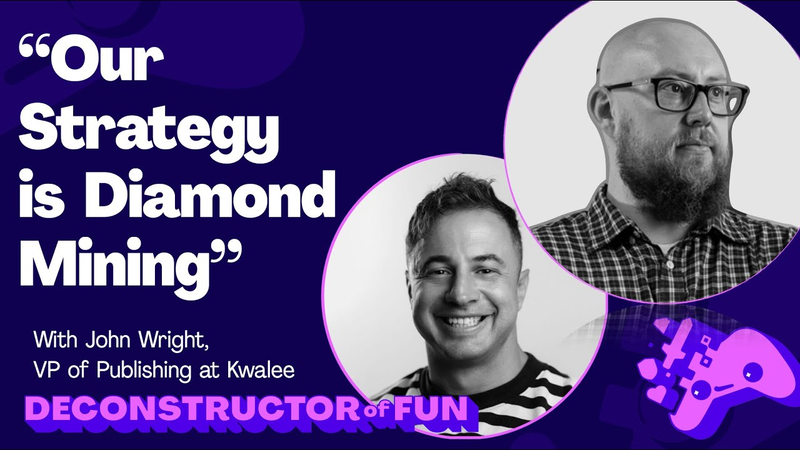
hey folks and welcome to the deconstructor of fun podcast I'm your host Mishi katoff and in this episode I'm joined by my friend John Wright who thep of publishing at quali and you guessed it absolutely right in this episode we are going to talk about publishing because I think publishing has experienced a little bit of a Renaissance so the times of self-publishing are not over but much more limited due to two main things so privacy changes as well as the pinch on overall investment so you have less resources that you can raise to scale now I think this is a super fun conversation as always with John we recorded this onite so sound quality could be a little bit worse than before but the video quality could be a lot better if you're watching this on YouTube and if you want to meet with John you can actually on think games Istanbul 7th of March John will be one of the speakers there's a link in the description below where you can sign up to join us at our annual estable event one of the biggest game events in the
Mia so welcome see you in Istanbul and enjoy the [Music] podcast John welcome to the podcast thank you D we're in beautiful cold city of Helsinki you've been here for a good couple hours and we're going to kick off this podcast right by me reading your quote to you and this is my second time trying this because you wrote in in the in the queen's English which is always in so uh John Wright quoting him you we want to build a place where developers can frequent which in English in the proper English means meet and discuss and come often so for all the Americans uh where developers can frequent where there's information on everything not just around us but also advising them on what to do to be successful if they were going to self-publish we want to coach developers we want want to be the nice
guy y are you competing with deconstructor of fun what is this what is this mission statement No this I mean this is just something that I come up with and I think it's it goes in in line with um what the mission statement of quar is which is making the funnest games for the world to play us right so I think a big part for of us is even though we're we're a publisher we come from an internal development background right and the idea is that Publishers can be quite ruthless and you know there is a lot of people out there that make amazing games that will never see daylight right and it's not because um that the development is bad it's just because um an amount of metrics have been predefined by senior people in a room who have then said okay if this doesn't hit that we're not willing to go in never been in those meetings and actually I left a strategic
part of your quotee it says we want to be the nice guy of publishing otherwise this could have been all about do but you're the nice guys of publishing um yeah so so today it's great to have you here we know of course from the past met multiple times uh in the beautiful trips to uh in the game Fest in the uh we we also did an event here together once if you remember we did yeah we did an event in hel it was a product event in Helsinki this was years ago the on the beautiful that's true second time in Helsinki so actually John before we move forward who are you and what is quali sure I mean that's a very sort of very exal question how long have I got are you going to time me got two minutes 10 uh let me let me uh let me then U then kind of like Center this in or laser this in so John your background is in finance mhm and that makes you pretty good with math I would hope so yes and you also like games love
games and then math plus games equals either product management or user acquisition pretty much and you're not product management not now okay so you wanted do user acquisition Y and then you've had your career I only remember your career from Iron Source y then you went to Luna Labs yep then Luna Labs got acquired by Iron Source correct and then iron Source got acquired by unity correct and then quality did not get acquired by unity yes so so so you're for the first time kind of like out of iron sour in the last eight years it's the first time so that is your career and since then you've been mainly on the sort of a vendor side in the user acquisition so Luna Labs focusing um on playable ads and making playable ads really um easy to to do so that helps with the hyper casual side of business iron source of course is a big um attech company known for many things um
too many of the things how come I don't remember what everything iron source is known for but but all the ad monetization that goes into the video ads it's known for that it's known for as being a hyper casual publisher and of course that's the connection between the Luna labs and iron source and being one of the biggest hyper casual if not the biggest hyper casual Publishers having all the tools and tips and by having all those things by doing it them internally being able to also publish others games and help them to publish them and then you move from Iron source to to Quality which is in kind of similar position where that company started off as a hyper casual publisher by some old school hardcore game developers uh I remember because I've actually interviewed them uh for a podcast a long long time ago and met the founders and so forth I remember the game plank I'm I'm blanking on everything else and since then quali has also evolved it has grown quite significantly it grew first as a very successful hyperal publisher to now going more in to Casual going
into PC I remember there was a PC game there was like a some shooter game published so I don't know what's going on with qual now it's a lot in the news um through the games that it has been publishing through the partnership that is working it's working with multiple different companies and of course since you joined you've been also doing the media tours and now you're at the uh the Pinnacle of your media tour which is deconstruct can't even stra say that with with a straight face I'm actually I'm actually in Forbes tomorrow yeah yeah so so almost at the at the at the tip of the spear so what did I didn't get is that like a I mean wow like uh you know I mean I feel like you just interviewed me for me like no like I mean I think you touched on all the major things dude like again if we if we start off with my background so again I started off in in accountancy actually so I studied you know something called an aat and Association accounting technician diploma I then went into work
at wpp which is one of the biggest sort of companies in the UK it's 150,000 people it's a conglomerate of 150 something different companies and sounds fun it it wasn't I mean working in it was my first experience in the big corporate world right and you know there's certain people that culturally align with being part of Blue Chip corporate worlds and there's certain people that don't um and for me as the this young guy from East London who was like d diet hard sort of gamer um little bit geeky stenham yeah I'm a West Ham fan actually okay I thre it out there I was think but um you know but but essentially I went into the corporate world expecting well if anything I'd say I did it because you know where I grew up was a you know very poor background my parents both very like working class and my mom was was a hospice nurse my dad
was a builder and you know as as all people do want for their children is they want them to be better right and so you know they the from a schooling perspective from an education perspective from a work perspective they're always pushing me to to do better right to go that one step further which I think everyone again who's a parent can relate to Yes um the problem was that I was probably like you know was it a square peg in a circle hole M right and even though I I did really well in in you know in the accountancy thing and I got good grades and I went on to work at one of the biggest companies in the UK there was something that just was just not categorically just wasn't right and I think this is also the later in my career this where the power of culture comes in and actually understanding the people that you work with because you know you need to build an environment where everyone is accepted and very sadly for some of these bigger sort of corporate companies it's like if you're different or sound different or you you
think different in a certain way then you know you're not going to have the the career that you thought but you know again it was a great experience for me I learned a lot you know I had great exposure to very smart people which which was great um but eventually after a couple years of doing that I realized that you know this wasn't what I wanted to be this wasn't who I was and you know you you you end up trying to change the way you are the way you talk the way you act to to basically you know yeah to fit in yeah and and actually man anyone who who tells you that's the right thing through of your life is categorically wrong and you know you need to be yourself and that's how you get your best work done and you know I'll give a caveat to that unless they pay you a boatload then do whatever they say if they're going to get me a yacht then I'll do yeah I'll be who they want to be you let's be let's be realistic over here like but but yes but but yeah this I mean part of it was this entire thing dude it was it was the fact that money was driving me rather than passion yes right and this is why you get into these
companies I don't think many people get into these companies who are passionate about you know big corporate you know conglomerate world you know it's all about bottom line it's all about Bea like it's about money it's the same thing as people choose certain game companies it's their Prestige and being able to say in the pub that I work for this company and being or not in the pub in the uh whatever the uh the public discourse now you got me saying all these English words like the pub but uh but whatever whatever GDC or something you are it's much nicer to say you work at supercell or or you work for Xbox or you know all these sort of a like a Prestige organizations but you know things come with them as that they are quite uniform and they are spokesperson and that's the just a part of being any Corporation they have to be very clear on on how they communicate and how they present themselves and and that's why they limit the amount of voices that can speak it's just normal it's part of the job there's nothing bad in that there's nothing inherently evil in that it's
just the way corporations work yeah exactly and dude look I wouldn't change like that part of my my background for anything right like it it actually I think it's something that I heard you say once actually was like you know like to know what a good boss is you need to know what a bad boss was you know like you need to have good and bad experiences to to basically know what kind of leader you want to be right yeah so and and I've I've actually evolved in in that point as as more as like there are good and bad for sure but then there are your like U somebody well let's put it this way I've had people who I would consider our B Bad Bosses for me but then they have been good bosses for others and they have actually enjoyed working in those and I never went to saying like those are bad people or Bad Bosses because I'm like no it's just not my cup of tea yeah saying these English say to just rubs up like we should have talked for an hour before this but the thing is I think that I
think you've got a point there but I think it also depends if you've got a fixed management style yeah whereas I think like the the best leaders I've ever worked with um actually push the individuals they work with in different ways knowing that you know what the best is for them so know your people know their strengths and weaknesses and then tailor your management style to get the most out of them right like if you so if you're but if you're very fixed in your ways and I also think this comes with a more Junior management style like I think the older you get the more people you manage the more you realize that you have to be a bit agile when it comes down to the to you know ultimately you you still you have to set goals and you have to lead by outcomes and you have to do all these things but you know there's also a case of you also have to be flexible enough to to basically get the most out of the team because you know if you don't bend you break right yeah so yeah I don't know what to answer to that I've been like watching too we're steering way too far but I've been watching these documentaries with the football teams and the managers and whatnot and like with under somebody
they pay play really well under somebody else they don't play really well but the others play really well under one so I think it's just a game of mix and match and I would say that a lot of uh especially leaders that I've worked with under uh who are more experienced they definitely have more breath of leadership style but they still have their leadership style and if you're not you know if that's not your leadership style then you're just a wrong player in this team doesn't make you a bad player but it's not fit and I you could [ __ ] and moan about that that leader but in the end it's just like it's their leadership style and so pick another team yeah and and and you know what dude I agree with you in the sense of I think it's much easier to uh build a team and select the players that you want right from the beginning rather than inheriting one later then you have to adapt change and stuff like but let's talk about let's talk about strategically qual so in an interview mobile gamer Bez shout out to mobile
gamer Bez you had a you presented a three-point plan to grow the mobile business of quality it has also PC business as well correct on Steam and you mentioned three strategic pillars number one build out the existing publishing platform number two seek right games to publish and number three invest into teams mhm so let's talk let's break these down what is qu's existing publishing platform and how does it need to be improved because it seems pretty good like you have what 1 billion installs over year 1.2 1 why fix if it ain't broken so I think the the issue with the current portal or platform whatever you want to call it um is that the functionality and the upkeep were not good enough for where the market is going I think there are much stronger players in the market um if you know if you want to look at some some great Tech look at things what Homer are doing right now right um I think they've
been very much focused on the technology rather than than maybe the uh how do I say that content yeah the content itself but but from our perspective like I said we we obviously built a place where um people can come and submit games for testing right but that was the be all and end all like you you then try and expand you then try and add additional content you try to add things like you know um videos based on certain things that the developer you think would find interesting maybe you know some input on Creative U management or like how to do iterations or you know how to actually look at churn analysis on a level on a level basis so you can start putting some of that really like the those Cliff note things in there but the the portal if it's not the upkeep of it is not regular then eventually it doesn't have the PLL to bring people back time and time again and if you think this if we were looking at this as a SAS business
right and this is where my experience from Luna Labs comes in you're you're looking at adoption right so effectively the developers are our clients and the way you look as a SAS company you would look at the adoption of the individuals so you would say okay how many people are coming back how often how long is the session time and length and what areas of the platform are they integrating and and using the most so for us to actually evolve what we have we have to look at all of that information and start providing things that are going to become useful but the upkeep very very you know is the ability for people to come back time and time again is there so so in in practice terms like if I'm a a publisher let's say I have my fiveman team we make dope hyper casual games I want to interact with your platform MH what what is it like is it like uh like so what am I seeing what am I experiencing yeah so so what it is now is like a very basic environment where
you can go on submit some games and then that would be linked to you know a testing protocol so so basically you know you would upload a few videos you would enter some details the link to the game and then this would you know basically for an API get uploaded as this campaign onto Facebook and then you know we would do some testing and you know we would then evaluate the early stage performance and I think the big difference and one of the big changes in the current lab landcape of publishing is or at least with Hyper casual moving to hybrid and and further to Casual like things like CPI tests are sort of no longer relevant dude you know there like you can do CPI tests but quite frankly you could get an IPM of 40 or 50 and you could still not potentially have like a successful game whereas a couple of years ago you know you could with a 40 IPM you could scale that to the top of the charts because you know that even if your arpo was 30 cents 40 cents 50 cents because the IPM was so strong the
marketability was there to carry the game even though the profitability wasn't so in the last year or two this is why hybrid has evolved right this is why things have happened because we know that we need the depth of game to be able to to compensate for the higher cpis which have been driven by higher ecms which have been driven by idfa deprecation and and privacy okay let me break that down so marketability is not that relevant anymore because ecpm have gone up correct and ecpm have gone up because in order to get your CPI uh I would have to divide the uh uh the amount IPM would be like installs per thousand Impressions and then uh CPM div by CPM so I would divide IPM by CPM right yeah that give you CPI CPI time IPM equals ecpm got it so thousand impressions how many of those tows and Impressions got installed that's divided
then and that's how you get the CPI and then ecpm is the um the one that divides yeah exactly but again ecpm is is how much money per Impressions the Publishers getting paid for the inventory right and what's also happened is with the market has changed and I I mean you do enough analysis to know this but there's not as many new games going into the top of the charts than there was two years ago so what happens when Supply goes down you know gets more expensive so the demand yeah exactly and and this is the thing the demand is if if anything I'd say is as aggressive as it was two years ago but the supply just isn't there in the quantity it was so things have gone back and and and by the way dude the ecms we're seeing now are the same in my opinion as what were before hyper casual ever happened if we go back 78 nine years ago I think you know the $40 iOS US cpms that I'm seeing now are exactly what I was doing and looking at when we
were looking at for things like for King you know and and the big companies back then so you know I feel like the market somewhat you know went on a tangent and it evolved with Hyper casual and it found this you know this you know cash machine to earn loads of money very quickly and now you know the market has evolved again and things are going back to to focusing on the actual it's more than just you know a marketable core mechanic you know you do need depth of game you need to have day 30 day 90 and everything else so so business model has changed because the business model was very attached to marketability and now it's been um it's been going back towards the basic stuff that was that was there before yeah see we don't even we don't even bother when somebody comes in and gets out just we're just professionals got it so ecpm are getting higher that's that's clear and the the improvements to the platform meaning like it has to cater to more than just test marketability because marketability is not important anymore
yeah and and I mean just to correct SL I wouldn't say it's not important I'd say it's not a defining Factor anymore not the important the most important the most important I was trying to use the wrong word important n but but yeah so like that's basically it and I think from a platform perspective you know you need to offer a lot more and you have to be a lot more transparent so you know things like we will be adding will be like AB testing functionality right like it will be how to actually look at changes in game play and what the outcomes will be right and it will also be having a a a true a couple of things a a true sort of educational part where you know content is being updated on a weekly basis and this goes back to the the bigger plan which is you know quar is trying to be the you wants to be the nice guy we're also aware that Studios work with Publishers throughout a necessity yeah and you know if a lot of Studios would
prefer to self-publish if they could but the problem is a lot of these companies don't have the skills the money or the expertise you know that you need and you know in the hyper casual days people crack the coat you know and that's why so many companies were doing it whereas if you look at the top 100 now the same names who were doing this two years ago are not their dude you know and so it's the market is consolidating in the sense of the big publishers the people like quali hom Voodoo Etc these are the ones that are becoming ever more dominant again because the advantage for the small guys has been taken away yeah and this is why again from our perspective there's two ways you can approach this either you can be aggressive and you know it's a buyer's market and use that to your advantage or you can stay true to your values as a company and say actually we just want to launch really cool games with people that we like got it so okay uh building out existing PL platform because it was skewed very heavily towards hyper casual and through that putting marketability above
everything else and now it's just adding more functionality so you can properly test your game uh focusing more on retention metrics probably exact rather than just purely on so when we do testing now um it's whereas um again like a year and a half two years ago you would you know you would build it I would even call it an MVP I would call it a scene in unity right like you would have um enough footage for a level or maybe up to 10 levels right so you know this sort of like 10minute experience which already built in you know not even put into an app form yet just something that you can recall the screen grab from and then you were taking that to Facebook you were testing you know a couple of different sort of like video iterations of the same gate playay you were looking at marketability and then saying okay this this game's marketable we'll take it to to retention now we're actually doing though the retention day one test and the marketability test at the same time so the MVP itself has gone from being like 5 to 10 minutes of
gameplay to being at least an hour because we need to ensure that you know like at least a day one session of at least 60 Minutes to make sure that someone comes back the next day right if you C that and we know that average session times are 20 30 40 minutes so you need to make sure you're covering that that's interesting we're kind of like T taking the steps back in the evolution of the mobile gaming industry because today I watched the uh the talk of Adam Telfer shout out to Adam uh powerful Adam teler his talk on GDC about well about I don't even know what it was about it was about retention really it was about long-term retention but he was talking about new game development and in that talk he said what they learned back then he was at wga so that talk was from like 2014 M uh he said that they have to put out the game like the first version of the game is one month long and only then they realize not only the uh the what are the pitfalls they have in the core gamepl but but also how they do the meta are they able to publish and so forth and so
forth so really like focusing on like can we actually make this into a successful game and so the first version is one month that's crazy are we going towards that cuz you went from 10 minutes to 1 hour that's a big jump I mean yeah look in terms of incrementality it's a big jump right but I think if we look I mean wuga with their particular games I mean I think was it jun's Journey just a billion in Revenue right so yeah he was talking about Jun so so like for me that is very much the super plan right it's you're building if it doesn't make a billion you know it's not worth your time so I think there is a place for that right and I think what Adam said around you know is true in terms of longer content is a necessity now not not a requirement you know that if you want to be successful you need to ensure that the game has the ability to to last for you know hyper casual was 7 days now I would say that I wouldn't put a game to Market where the you know the LTV curve would be less than 30 to 90 days right so again if we're talking
about the jumps from 7 days to 30 days to 90 days you know these These are big sort of landslide through but again I feel like me and you and people of a certain certain experience and age this is what it was you know seven eight years ago you know you were designing stuff like day 90 day 180 God I remember working on Zinga poker you know when I was at iron souls and the guys had day 700 that was that was you know that was when things got paid back cuz the Investments were so high right these were the days of $25 cpis to to get the right users and Mach own 120 and so forth exactly you know like and I'm not saying we're going to go back to this level because you know like I think that was just wild like that was a completely crazy time bidding $100 on a user not knowing that or knowing only one in 100 would actually end up making the money back of the other ones right so but uh but in essence people need to develop games with more content with deeper meta and the ability for to for a user to
come back time and time again in any main uh any any way or means like live Ops events like all of this stuff which again was massive in the past is now becoming even more prevalent now preach all right so that's the uh platform stuff then let's go to seeking the right games and by the way I just want to go hyper casual just to make sure hyper casual died because the ecpm went up so it was more expensive to Market them and because of that because they had such a small margin it became impossible to get your money back because the users didn't stay in those games so you wouldn't get your money back from the ads and so that business model evolved to hybrid casual where you still try to bank on the high marketability but you were trying to increase your monetization by having longer retention and by having microtransactions or inap purchases to uh balance out the uh the Ina ad Revenue completely
yeah exactly well said again it's just an economic compensation right it's a case of if the ecpm double then the CPI doubles and if your if your arpu stays at the same level you've gone from being marginally positive to being grossly negative yes so it it's literally a mathematical calculation and that's and that was hyper casual for you you know like it was literally that was it if you could balance the scales then then it was SU uccessful you launch games right and you knew that eventually your absolute profit because of the scale right so even if you're making 10 10 cents when you've got tens millions of players you're making big money right and that was the whole calculation dude and and the issue is that all of these changes over the last two years flipped the scales and now it's forced companies to evolve dramatically in terms of actually doubling down on game development people are not doing prototypes every week anymore people are having to spend six months developing a game right and again that's another another way that the industry sort of
going back to you know flips on its head again you know back to how it was um all right let's move forward seek right games to publish how do you find the right games you you mentioned the word necessity and you said that the game developers only work with Publishers out of necessity and I reckon there's a lot of necessity going around I think look let's let's be very honest I said the word reckon going to be the Reckoning no it's like keep using these English words yeah yeah I love it I love it you've just been exposed to me for an hour and your dialect completely changed from americanisms to Bridge I I lived in Manchester for a while just a short while yeah yeah it's a secret I don't imagine you like that is not the place I would put you you're I me anyway let's move forward so necessity yeah so so look let's be honest um the current ecosystem the current market um you know depending on who you ask but in my opinion is not in the good State yeah we know that from an
economical perspective you know the globe is [ __ ] you know it's like [ __ ] on fire right in a paper bag on someone's doorstep Nam mine and yours it's a well put you know and you know everyone is is like claing to to stay afloat dude you know like and I think I I've had conversations in the last two months i' I've been on the phone every day with developers of all shapes and sizes and some of these people are people that I've known and worked with for 5 years 6 years 10 years and some of these companies that you know were were were good you know they had games coming in the the cash flow was solid they maybe did a seed raise or or an A and and got like a couple million dollars and they had runway for two years now they've got runway for six months and I think you and I both know when it starts getting your Runway only lasts for 6 months that's when you're in an element of desperate you you're in a desperate place that's when you're staring at the barrel of the uh of the gun 6 months
like nine is is like it's touch and go so I think there's a lot of I and to be honest with you I think we've seen a lot of Studios that have gone under of late right like me and you both know people that have been affected by this which is which is very sad and again it's one of the the missions from Kali is to try and support a lot of these people where possible obviously at the end of the day we are a business yeah right and we're not going to throw money away for nothing there has to be a profitability and there has to be mutual game right for this to work but the fact is there is a hell of a lot of opportunity out there which you know again in the last two years I think Publishers had less opportunity because people doing you know de like self-publishing and now you know the amount of games and the type of games and this is why we've redefined like ourselves in terms of going back to some of our heritage and and I think you spoke about this earlier but David darling who's our CEO he was the founder of code Masters right and eventually that sold to to EA for over a billion and he worked on micro machines
and and col mcra dirt rally and Joon alom rugby and like you know like these these games that for a lot of us I mean for me and you of our generation probably very like iconic right like you played those games you grew up with those games and I think you know David's you know sort of Mission to me is like take more risks because we're in a because of his financial status and the fact we're privately funded and you know all of that it gives us a lot of F ability to be able to to take a few more risks and actually there's a lot of games out there dude that at the early stage won't hit the metrics but if you give them you know a bit more time bit more support bit more stability a bit more Focus bit more expertise then these games can be very very successful games that's a that's a very interesting point that you're making and that's why I'm actually as asking the question is like how do you seek the right games because as you said there there's a lot of of games that even when you look at their numbers early on they look like
they're dead in the water mhm and over time they become major top grossing games I would mention two uh top Drives By Hutch y I believe the early numbers were atrocious and even when it was doing pretty well the early retention rate was horrendous MH compared to their other car games but when you look at the overall curve it's the beginning that looks really bad but then it stays stable and so the long long-term retention is excellent and that's why they're doing so great and then there's another game that is also I think they're you know cross getting closer to 1 billion is probably War robots mhm that also had an absolutely horrendous early retention rates and they were able to figure out kind of like who's the audience and start pinpointing the marketing more towards that and you know eventually launch the game and made a good zillion dollars and so my question is like when you're a publisher and you get a lot of games thrown towards you it would be very easy to say like well
40201 is kind of like the retentions we're looking at and this and that you can come up with Ros numbers you can come up with different things but in my experience a lot of these games that we know now as very successful started from a point where they this was the thing like it's this or die and then they just work them to to uh to have those long-term retention numbers to you know they were forced to launch these games and then they made them work and so how do you find the diamonds in rough or do you just have the sort of a very clear approach of like these are the things that we're looking at there's some leeway like some of the numbers don't have to be green they could be yellow we're going to work for them for a little bit and if we can turn them into green we're going to move on yeah so I think what you've said there is very accurate in the sense of it's not like it's not a fixed number yeah right right so it's not like everyone and you were right by the way
like day one 40% is the Target right but we also know there's balance to this stuff right and it also depends on the amount of time that's been invested into the project so for example like if we're testing a new game off the bat that again in in MVP or alpha alpha being say 4 hours of content rather than 60 minutes so in between that phase there's a lot of changes to the game development right there's a lot of different different tests that need to be done from the game play perspective not you know excluding everything we would do on Facebook and unity so it's about understanding at what stage of of that you know the the game is at when you're testing it and understanding if it's in an allowable Band by Band I mean it could be you know 32 to 40% because you know this is only the first test you've done and this actually is another interesting point about the change from hyper casual when people used to spend money on tests right you used to spend like a couple hundred now for us to test the game it's gone from
like $300 to minimum sort of10 to $15,000 because the number of tests that you have to do are much much more rigorous right because again you can do an early stage test on Facebook but you're looking at day one so you have to be live for a week or two you have to wait for the cohorts to mature right so you're spending you know three $400 per day per OS right so let's say $1,000 make it easy live for two you know two weeks that's that's you know 14k and at that point you'll have a good understanding of your your day one but also your day three and day seven depending on like obviously where you are in that like alpha build right if you've got enough content for people to come back for day three at 4 hours maybe um but yeah you basically you have to continue to test multiple times after different Sprints and I think you know from our perspective again we work on a two twoe Sprint model right same as most tech companies but I don't feel like in
hyper casual this was it was like that you know like it it was very much like again do this if it works doesn't then then not but to go back to the question again it's not about just having a fixed number it's about having some flexibility in that it's about understanding where the project is in that in that road map right if it's at the beginning of the alpha or the end of the alpha or going into like a soft launch ready state right but all of this depends on the number of hours content in the game um and also when the meta gets integrated as well because you know we'll look at the you know the retention early on day one day three but then ultimately you need to get the monetization in as soon as you you feel like that is going to be going to be doable because you know once you start adding RV industial all of this stuff you know your retention is going to come down right which is why a lot of the time for example even though there's a band if it's at the low end of the band you know unless something categoric changes you know in that next build you know it's not going to work and at that point at the monetization stage
this is where things die and so so we're you're primarily looking at hybrid casual games or games that can be turned into hybrid casuals so I think from a strategic perspective there's two ways to look at this one is you're going to go after your safe bets and I think hybrid casual is your safe bets right now um and this is why you again you look at all of the other big Publishers in our area and I'm not I'm not talking your scop Poli and stuff like this right I'm talking about the ones that are similar all of them are doubling down on on hybrid like I said look at everything that that Voodoo is putting out H is putting out superponics cing out everything's hybrid hybrid hybrid so this is kind of like the red ocean approach in my opinion okay so like everyone out there is trying to do this because they know it's a safe bet because you know the the marketability is strong because it's an evolution of hybrid sorry hyper to hybrid and they also know that again the the metrics on the game play side you know session lengths are up so retentions up so you know monetization up so this is the the
safe bet and this is where people are trying to find that that new hyper casual but the problem with that is dude there's a wealth of games out there that are just not that way designed and you can't just put all your eggs in the basket because it's hybrid because you think that's going to have the highest level of conversion for your success that is that is a banker's way at looking at calculation there is no the way I think again gaming is a passion right it's it's something that you get into because you love so you also need to ensure that you're you're open to to other types of games other genres other types of teams like when you're an investor how many times have you met a team right and instantly knew that the team was going to be successful even though the game might not be so yeah there's a lot of people out there that maybe you're not getting the love they deserve which is in my opinion is the blue ocean these are the different genres of games and these these are the ones that are going to be harder to get to Market but I think if you successful
there they're going to be the ones that surprise you the most in terms of you know pure Revenue generation was so trying to diversify in that sense and then and then the third part you mentioned is the investment part so investing into the team so so talk to me a little bit about that yeah so so again I feel like right now there you know everyone's aware of the current VC landscape and and you know the cof everybody's not aware I still get like wait you still really you get people say like oh you know we're going to raise money yeah I mean [ __ ] idiots even well you're talking about my friends okay okay so I apologize to your friends but like active listeners of our podcast as well I was like okay I like cuz I'm like don't do it like now you don't start your company yeah I mean we we had this conversation me and you privately a couple of weeks back right like when when I was talking about you know after the exit at Uni and and like you know getting the the big day payday from from
selling Luna you know there was I had a conversation with myself and I spoke to a few people like you and a few other friends who have done the whole startup thing and you know I made a decision which was I didn't want to do a startup and this is ultimately why I joined quy because my history with the company and you know I've known them for nearly 10 years and I love what they do and all that stuff but timing is everything right and and for me it was case of it would be crazy to start a company now and invest six figure sums of my own money and not be able to match it with a VC round you know so that was I mean that was a a conversation I had have with myself dude you know pretty mature conversation I would say more mature than many do these but but this is the thing so you know VC's again base their their calculations or certain metrics and the idea is that they need to earn what a 10 or 20 multiplier on their investment right right probably 20 or closer to 20 and you know when when
there was a lot of Acquisitions in the market and and you know money was more accessible I remember those times remember those times good times man let's let's hope they come back sometime soon I'm really hoping for the good days to capitalizing those times that's what you do so and and this is the thing so this is goes goes back to you know quali strategy and the third prong which you know I called it diamond mining because I feel like for us right now like we as a priv funded business with with someone as successful as David darling and and someone who you know has been in gaming for 35 years and you seen the evolution from you know the early early days to to now he understands that there's waves and Cycles to everything and he knows that you know in the next couple of years the VC landscape will get back to where it is you know I mean Crest says this all the time right there Peaks and Tru a lot you know no but I agree with him like there's Peaks and troughs right when it comes down to to anything to do with you know the economy or Finance in general and right now we're at a low
point right be yeah it's a bare market and adversity breeds opportunity right and for us like I mean well for certain people it does okay like not s like an American saying always hopeful yeah you're quite as a original okay it doesn't sound like an English saying to be honest thanks for that but but no it does like I mean and sadly it's it's the opportunity for the big guy right and it's the ones who have the money and and this is where you'll find people you know in maybe not in our shoes or in different shoes but there'll be people out there with money who can invest a lot less now and get a lot more than they could have a couple of years ago and the market was more fruitful yes and you know from our perspective you know again qual does have certain amount of funds that we will do in terms of equity
investments into businesses got it let me ask this in in in very like like a very examplary term let's say there's a game Studio they are making games out of moner in south of France good location nice place to travel um actually I don't know I've never been there but looks like a nice location looks ni I've seen I've seen a postcard once orce I digress they're making fun games small company hyper casuals you come in not you come in they come to you m they listen to this interview it's like join very I don't want to going to do French accent very much like edit very much like your beautiful French accent we we very much like your your model qual sounds very interesting we like that you're independent uh we don't want to work with other French hyper casual Publishers um we have this game they go through your platform um it looks like a good game there's uh there's a lot of traction there uh they optimize a little bit
everything keeps going better the team is very agile they complete their Sprints and the the two we Sprints efficiently keep improving keep adding all the sdks everything is working great it looks like this could be a game that if you would put in additional 6 to n months building proper meta because these fellas have not built metas before but you could say hey this with that is Diamond yep what is the investment like what what happens after that so there there's two ways to look at it one is like purely Dev funding right so traditional Dev funding I.E you understand the operating expense of the title or the studio right and then the idea is that you will fund a certain amount of of roadway for that game to be produced right so you do you would look at a Milestones sort of breakdown you would say okay it's going to take two months for MVP two months for soft
launch or or two months at Alpha four months at soft launch and then you know in eight months you've got a hard launchable game yeah so obviously there's there's different ways to break it down but the idea is you would want to sustain the studio for that amount of time to ensure that your investment's going to pay out right because what you can't do is be too cheap yeah and then after four months the studio is like well look sadly we've run out of money right so you need to to assure that the financial investment is large to sustain the studio or the team involved in so let me just do like Milestones all right now you've signed a contract with them M that they're working only for you with this thing and you were going to fund them for let's say Maximum 6 months from now yep you agree on the Milestones you agree on the um the uh the cost of everything they're happy with it you're happy with it what else what's what's next now 6 months later they've completed everything you've said M and it's looking even better yep what are we doing then well hopefully we've got everything all of our ducks in a row to
sort hard launch the game right so during this whole time you would have done again rigorous testing across all of the platforms right you had done Facebook Unity app loving all of the big names yes you would understand the full potential of of um a couple of different markets so probably all of your tier ones and you would start be testing localization at that point um and the idea being that as long as the metrics are holding right you start scaling and and watching the CPI yeah so the idea being that the more scale you require the more expensive it becomes so this is like the whole balancing and I think this is something that's very interesting for me at the moment dude we've launching a game and we Kia launching sort of I think we've got three games in launch at the moment and the launch strategy of of yester year was like you went really big and then the cpis eventually s went down slightly because of creative optimization and then even if you made a loss in your first week or two eventually the long tail would back out and you were forcing
the game to the top of the market and then the K Factor the Organics all of that stuff would keep it there right and this would means that your effective CPI would go down because of the organic users that were associated to the investment now what we're seeing is that because of the change in in the Apple Store and you know the reconfiguration I mean Neil Young Neil long spoke a lot about this and so so you know what what's happening is that the launch strategies are much sort of uh longer and more steady got it so you're not forc gradual gradual exactly so the idea is that you go to market and you launch on different platforms different countries Etc and you steadily see how much you can spend at the right level of profitability and so you predefine you know what a goal is and that could be like 10% profit 20% profit But ultimately the publishing deal also is is a profit share right so the more profitable the game and the more the scale you can get the more money the developer also earns the more money you earn right so this is why it's it's much
more calculative in that way it's more gradu over time now so let me be clear what I'm asking then mhm I understand the dev funding part part mhm and then I understand very much how you get to a hard launch mhm but once you cross that line of a hard launch that means the team is now starting well at some point is starting to make money mhm so there's an investment phase now until they get to the right type of a scale uh you're watching the cpis etc etc you're gradually growing it you're improving the game everybody's excited this game is live MH it's bringing in money everybody can see the revenue and the revenue is increasing every week everybody's happy mhm but the team would not be happy depending on their contract and I've never seen a publishing contract that makes the team happy look I I think ultimately the the publishing business is one of high risk and for every developer success there's
dozens of games that didn't work right of course and it's from our perspective it's about trying to be fair whilst also being balanced in the sense of ensuring that our business is sustained and we're able to make a profit and again whilst you know I want to invest in as many gaming companies as possible this is still a business right it's the business of fun but it's a business yes um so ultimately there has to be some offset from that but I think also the thing is that it also depends on the negotiation power of the the studio and and what we're trying to achieve and you know for us there are things like you know Milestone rewards which would be like you know the profit share might shift Yeah by a couple of points because of hitting certain let me ask you this why don't you just acquire the studio oh God or why don't you acquire the asset so that is a great question and I think it's something that even better because the studio is in France or you maybe just acquire the asset
so let's not talking about French law so I've been looking into this recently it's a [ __ ] mindfield okay so just the oops so so like obviously the a lot of publisher contracts will have a right to buy CLA yeah so like for some of our contracts we do have that and what that could mean is that if the game uh hard launches it generates this amount of Revenue that we would hold the right to actually acquire the studio for oh sorry not Studio the the IP the game yeah for an x amount pre agreed yeah so that could be say a million dollars right and then it that million dollars then goes directly to the TA to the tax man part of it to the tax man for them those poor French tax they got they got a terrible tax okay so these poor French guys I feel sorry for them um to the king yeah but but ultimately again then we would inherit the asset or acquire the asset and then we would have the 100% of the profit would be ours right unless there was maybe like an agreement which
said like they would keep paying them a small percentage on long term yeah but I'm asking this because you qual is a development Studio like you make your own games yes and so for you to acquire an asset seems very natural yeah and we we've actually I can't like openly tell you this now but there's two games that we've signed acquired in the last sort of two to four weeks and and our internal teams are now working on them and it's part of our strategy and I think there's there's a couple of other companies out in the market that have already isolated this but you know um there is a lot of opportunity for games that maybe two years ago were very successful or or you know hyper casual games or games that maybe didn't live up to the full um full potential that can be reworked and part of it this is what you know before we actually kicked off the the meeting so I say I feel like a bit like a VC at the moment because you know I'm getting so many opportunities from people saying hey would you want to acquire this game for 50k 100K or would
you want to invest in our studio and an equity deal and owner percentage and get a seat on the board and you know I don't think Publishers were were getting this kind of offer um two years ago when things were easy yeah right and so for us now like again from a strategic perspective the our ability to to to launch games and publish games is is much wider because it's not just the traditional format you know having you know doing an equity deal with a studio is something that's extremely exciting for me because we then get um an even bigger sort of finger on the pulse of what's going on and also the in terms of the actual strategic Direction and just the involvement of what we do and then eventually again if that studio you know ends up being very successful we would always have like again a right to buy more Equity or or buy the studio in in completely and do the whole m&a and then that then just becomes comes a bigger asset of qual and the internal Studio then evolves and we're then making
better games internally with you know higher levels of profitability for us but also hopefully the people that were developing them the founders and the team with these companies financially were compensated as part of the m&a but also we give them a good enough sort of you know uh compensation to keep them going from years to come so what do you think about Woo's model so their model within H hybrid casual Works in a way that they have essentially two groups making games um the ones who sort of built the core game MH and the ones who do the live operations and those are different teams and the game actually goes from building phase to operations phase where it's fully handed off and the way the publishing works like the challenges with publishing what I was trying to say is that I think always exists is that even even in the best case scenario where you have that grade game that it is scaling that the publisher is putting money to grow the team is working on the updates and
everything is hunky dory at some point I've seen just the relationships cater because the developer wants a piece of the cake and the publisher is saying there is no cake we are spending more on on here and you might get something later and then the uh the excitement of working on it doesn't really pan because X Y and Z and they start working on another game and all the problems I've been seeing happening in games that were even in top 50 grossing being published and so that's why I think the model that that uh sculle has perfected where they do the development contract with the studio they work for it for a long time uh and then if they pass that that Milestone of a global launch then that's that studio is acquired and in case of wodoo what happens is that they might find Studio in the rough or somebody they worked before or somebody new who makes a really exciting core it passes through they're able ble to you know get the proper numbers right they talk to their live Ops Team like hey what if we give
you this and you built this they're like yeah we like that get us get us that game and we'll take it and they might either acquire the asset or they might acquire the entire studio if the studio has a background that they can ship multiple of these fun games then keep doing that in Mia make those fun cores and then once it's ready ship it to lemington Spa we'll put the wheels on this and push it down the uh the hill yeah no dude I like basically what you you've said you've described with scopely is is is actually one of the strategies that we're also operating I think the issue is that live Ops and events and and all of that stuff is is actually in some way more difficult than actually developing the core game yeah um I think once you've you've done the ideation and you understand what the core you know loop is and you know once you've then understand okay the Met for this style of game should be that like there is kind of a Playbook and I think with live Ops like in my opinion it's not I wouldn't say understated but the the value that it brings is tremendous
and how you how I mean look at Royal match with the the live Ops they do they have multiple events at any time with different types of currency and it's basically making people engage with different things at all times right you're you're getting drawn back multiple times a day seven days a week for years to come because of how aggressive the live Ops and event strategy is I think this is a big part of where the industry will have to go and where the development will be and also like I said people were going to have to get better at liveops and I'm telling you now Studios that from the hyper casual days don't know that much about the liveops right done it's something that bigger Studios like scopely have a lot of history in and I think the involvement and the uh the growth that will be needed and the successful Studios that will come out of this whole next wave of hybrid and and Casual will be the ones that actually now live Ops they'll be the ones that really successful and so do you have the capabilities internally at lemington spa
to do live Ops yeah we do yeah yeah so we have obviously the company's like 450 people so we you know we're de half of the Town yeah basically I mean for those who don't know lemington Spar it's literally like a 50,000 person sort of like Town two hours outside of London but it's got a very uh good gaming Heritage and there's many gaming companies that are based there and you know it's it's a really Hub um outside of London um a slightly cheaper rate which is which is good for a lot of companies Sega have a massive Studio there right so but um but yeah that's I think this is one of the big advantages of what quali is and does compared to some of the other big Publishers looking into this area is because at our core our route we are a studio and not a publisher yes you know so we're a publisher with all of the ability experience and skill you know resources of studio and what that also means for us is that the type of deals that we can
offer and and the ways that we work are similar to scopely in in that way and again acquiring games or even coming up with a codev solution right so what we could do is we could actually speak to the developer and say hey like you and remember publishing is the a variety game like I'm talking to people that are one person solo deaths and I'm talking to companies that are 300 people right and some of those smaller code like small smaller solo devs like the road map is very difficult for them to hit because a lot of the time these guys are maybe this is a side project or maybe it's a it's a full-time thing but you know they're one person with one set of hands like you know they can't do everything and having the ability to uh codev with them and use the resources from our internal studio and reallocate resources from that and also in in my team the publishing team I have Engineers I have programmers I have game artists I have game designers and these
people are resources that we you know in the publishing team can allocate based on the right opportunity and this is where a lot of the added value I think comes from and you you might say that that sounds silly but merge Dragon was done by one person mhm and then it took Ram took it over and boom I mean billion dollars later yeah exactly dude and and look don't get me wrong I know that they're rare right but but you shouldn't discount the studio based on the number of people they have or even I think too often especially I think this is one of the things that the VCS fall short at is they read into the background too much no you know really no I I wouldn't know but but look like some people have a pure natural borner talent and some people spend you know 20 years an epic or or or someone else right and and a lot of the time you know the VC will will be like oh okay because of that that Heritage must mean they're going to be successful no it's a I'm
going to defend the good old V's here a little bit there's not a lot of numbers to look at and sometimes the pedigree is one of the few things that helps and if the person has a certain pedigree that fits with what they're about to do I'll give an example Axel bite which is a a backend infrastructure startup MH uh the founder is has built back ends I think full epic back end and I think EA back end and as that person is moving to like I've built these backends of these big companies I know how to service certain Studios I know what we did right what we did wrong and this is the the starting point where we want to be I'm not going to quote the other founder maybe we've talked to him but uh but where they want to be the the the sort of like the Central Tech for all these Studios so that they don't have to go through the troubles and tribulations of building their own back ends I would understand that the background of coming in from
epic and EA is more credible than if they would have been from your mom and pop you know start yeah yeah okay okay you're you're right there right you're right there and so it depends really but I understand what you're saying the background is not everything but if you are from Eden likely you're do well that's it P pip no but but that's the thing I think a lot of the time some of these smaller companies get discredited because you know they they don't have the that Heritage and that background and again I think from a VC's perspective it's about it's it's so calculative you know it's so like there are there are so many things and like these sort of checklists that they have to go through and a waiting system and and a scoring system with a VC with a VC right I mean yes I believe so you you know so or believe so I know so okay so of course there's like an internal scoring system right we have I have an internal scoring system and VCS have also I mean yeah I mean the ones I've spoken to definitely have a way to gauge the quality of the studio
and the you know things like you're saying like the heritage of the studio is is part of that right I think so um but that's the thing so with some of the smaller guys they get discredited because maybe they don't have this but we all know again sometimes you know a young guy with passion yeah will will be better than or g a young guy or girl or they um will be will be better you know or or devel also it depends on what they're trying to develop right like if it's a small but fun game right maybe that's doable but but if it's you know the the guy with Heritage as you said is trying to build something like huge platform and this is like tens of millions of dollars of investment and something Grand right then this is It's horses for courses right like you're going to go for the person that you need course so English saying for you horses for courses that's the first thing and I'm going to end this on the horses for courses for what kind kind of horses is the course of quali like what are the studios you're looking for
yes I I think cuz the the whole conversation was basically I was left with you're very flexible mhm you're willing to take risks you have a lot of resources that you could put in they don't have to be all Financial Resources you have game development resources you are flexible on the type of contracts that you can make uh you're very interested in doing something new yeah same but new I would say that would be the strategy yeah I mean because it's like it's kind of like it's kind of but we want we want like hybrid casual with this and that kind of like all that same but not same but new I think I think it's what it is I think what we are very fortunate enough qual is we have a couple of different bets on a couple of different things and including the PC console stuff that you brought up earlier right so we we have the publishing team we have our internal team we have a casual team who are just work working on soliter and and then games like this which you know hasn't launched yet but things coming out there then we have PC consoles so we have four
like internal startups within the company all focusing on different areas and and luckily for me like being in charge of the the mobile publishing unit you know I I get flexibility somewhat and and obviously it's a discussion of of balance and it's again going after something that you know conversion wise is going to be more likely to be successful but it's also making sure that you're not just stuck in the red ocean all the time and it is trying to find those and those new things and just because you know there's more than just hybrid casual games out in the market right there are a wealth of different drre of games that are even you know being developed now which maybe have never been there before um and it's about ensuring as a business we're not too narrow in focus to ensure that we don't lose those those missed opportunities and missed opportunities kill businesses yeah you know um and so for us it's about making making sure that you know it's going back to your question I think a lot of the time it's understanding the vision of the team
understanding the founders you know their their sort of epos and morals and what they want to achieve as a business if that then sort of interlinks with with quali and our culture our fit and we see a match and ultimately I think it goes back to to what you said about scopely and and maybe seeing like an acquisition at some point and you know that you know if you were if this was to go the dist yeah when stars Aline when the stars Aline you want to make sure that if this company was now part of qual that they would be a good fit right and there wouldn't be that that Clash so I think again culture Vision fear all of that stuff is is super super important to us but I also think that we want people who are you know not risk Avers like we want people that are going to try and do something a bit different try and like redefine something in some way and not just go down the easy Road like we want some someone who's going to try and do something that is going to be defining you know something that's going to be remembered yeah like David darling you
know our founder you know again he's got Legacy because of code Masters and micro machines and all this stuff he built you know Jason falus who's the COO you know was the original um developer on NBA Jam and like we have like this really rich history but a lot of these guys tried and tested you know they they want to continue that Legacy and I feel like because of that you know that that 30 odd years of experience that they're the founders have MH that you know they understand how important that is to bring something new to the table Yeah cuz if you've been in the gaming industry for 30 years you've seen a lot of news right and anyone who if you stay in the past you get left behind and you die yeah so you know you always have to have one foot in in front all right how can developers get in touch with you and your team uh I mean all of the usual channels you know you can come through the you can actually come through the platform and you can a request there that's probably the best way uh I I wouldn't say the best way now because we're we're um sneak sneak peek we're
relaunching the the new platform is going to be launched in January I don't know the date yet but again we we you know we we spoke about this but we've took the old one we have an amazing product person that's been putting you know working with myself and will Cox who's the the head of publishing um to build something that is going to you know create a home for developers to come to like we said you know somewhere to frequent so you know that be that would be the best place from January but um but for now LinkedIn uh email website you know all of the usual stuff horrible amount of pictures that's the live of a of a vpu publishing oh yeah I mean also if you want to you want to message me on LinkedIn feel free I really don't mind oh wow all right people catch John right on LinkedIn send him a video of your gameplay yeah exactly of who you are what you do and um and hopefully get published with quali and get the stars align let's hope
so man let's hope so on that note this one is in the books thank you John thank you [Music] dude thank you for listening to the whole episode if you like this podcast please do leave a comment and share the episode if you want to access the deconstructor of fun Community with hundreds of Senior Games folk go to our website and apply to the slack group and if you want to get notified of all the new content we have coming out every week do subscribe to the weekly deconstructor of fun newsletter finally do remember we love you guys and we appreciate you guys catch you next time
Auto-generated captions from YouTube — names and numbers may be misheard.
The mobile gaming industry is undergoing a significant structural shift as privacy regulations and capital constraints render traditional hyper-casual models increasingly unsustainable. In response, the publishing landscape is moving away from purely metric-driven, short-term testing toward a focus on hybrid-casual titles characterized by deeper retention and extended lifetime value. This evolution necessitates a more collaborative partnership model, where publishers provide not only funding but also technical coaching, advanced A/B testing tools, and long-term strategic guidance to help developers navigate rising acquisition costs and complex meta-game requirements.
Kwalee is positioning itself at the forefront of this transition by prioritizing long-term engagement over immediate performance benchmarks. By leveraging private funding to support developers through iterative testing, the company identifies high-potential projects that may initially underperform but possess the depth required for sustained success. This strategy involves a departure from rigid, ruthless evaluation cycles, favoring instead a supportive, co-development approach that aligns incentives through profit-sharing, milestone rewards, and potential studio acquisitions. This methodology allows for greater risk-taking in a market downturn, enabling the pursuit of diverse genres across mobile, PC, and console platforms.
Ultimately, the goal is to bridge the gap between initial concept and long-term viability by integrating internal development expertise directly into the publishing process. By emphasizing cultural alignment and shared vision over mere industry pedigree, this model fosters innovation that transcends current market trends. As the industry matures, the focus is shifting toward sustainable growth, where publishers act as strategic partners capable of nurturing unique talent and complex gaming experiences, ensuring that developers can thrive despite the tightening economic environment and the deprecation of traditional tracking identifiers.

Deconstructor of Fun · 2026

Deconstructor of Fun · 2026

Deconstructor of Fun · 2026

Deconstructor of Fun · 2026

Deconstructor of Fun · 2026

Deconstructor of Fun · 2026

Deconstructor of Fun · 2026

Deconstructor of Fun · 2026

Deconstructor of Fun · 2026

Deconstructor of Fun · 2026

Deconstructor of Fun · 2026

Deconstructor of Fun · 2026

Naavik · 2025
InvestGame
GREE
Deconstructor of Fun · 2026

Deconstructor of Fun · 2026

Deconstructor of Fun · 2026

Deconstructor of Fun · 2026

Naavik · 2026

Deconstructor of Fun · 2026

Deconstructor of Fun · 2026

Almedia · 2026

Deconstructor of Fun · 2026
Comments