Monetization reports and market data
Documents

Session: From Data To Dollars – How To Crush Your Web Shop’s KPIs - Archie Stonehill, Stash.gg
Web stores for mobile games function best when treated as dedicated e-commerce products rather than simple extensions of in-game monetization.
- The primary KPI for web shops is channel share, which measures the percentage of total player spending occurring through first-party web channels rather than in-app stores.
- Increasing channel share by as little as 2.5% yields higher financial returns than equivalent percentage reductions in payment processing fees.
- Web stores should be treated as dedicated e-commerce products rather than simple extensions of in-game monetization to maximize revenue impact.
Session: 2024 & Beyond – Opportunities & Challenges in Mobile Gaming - Jack Barrett, Sensor Tower
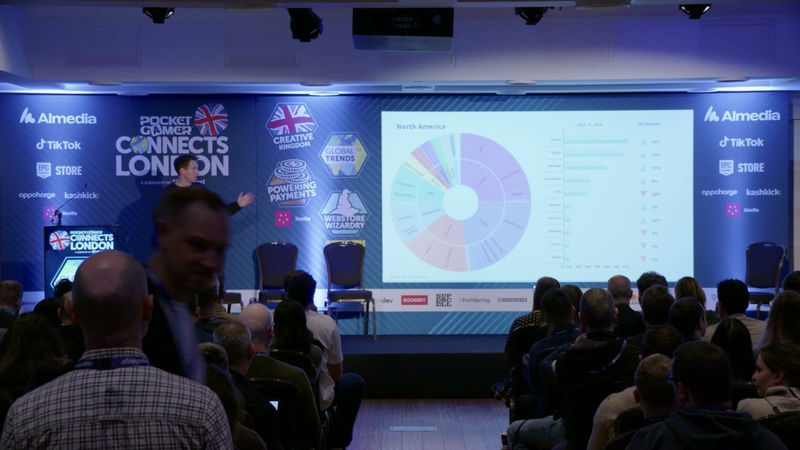
The mobile gaming industry in 2024 navigated a complex landscape defined by a decline in total downloads alongside a resilient increase in consumer spending.
- Mobile gaming publishers are increasingly prioritizing the optimization of existing 'legacy' titles over launching new games, as new releases struggle to compete with established apps that dominate market revenue.
- Total time spent in mobile gaming saw a significant 60% increase in 2024 compared to the post-pandemic lows of 2023, indicating a stronger recovery in user engagement than non-gaming app categories.
- While overall mobile game downloads declined in 2024—partially due to a 16% drop in casual game installs—consumer spending in the casual genre remained a primary driver of market growth.
Session: Web Store Popularity & Adoption – What Does the Data Say? - Gil Tov Ly, Appcharge
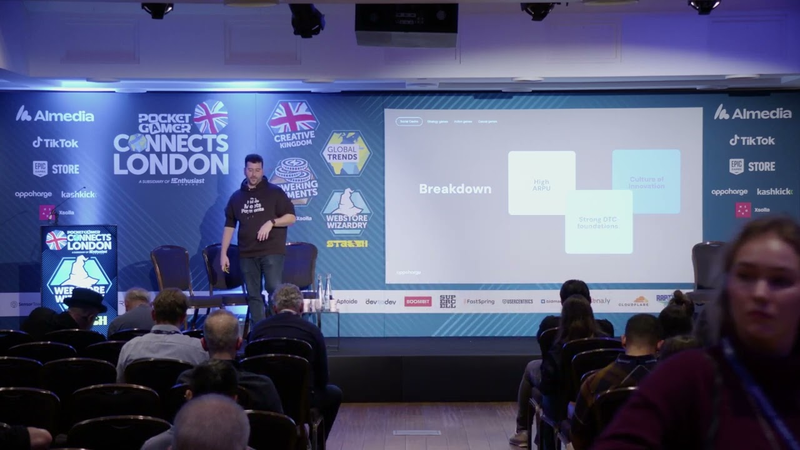
The mobile gaming industry has reached a critical inflection point regarding monetization, as web stores have transitioned from an emerging trend to a standard, ubiquitous revenue channel.
- Web stores have become a standard monetization channel, with 72% of the top 20 grossing mobile games in the United States now operating a direct-to-consumer platform.
- Adoption rates are highly correlated with genre-specific player behavior: social casino games show 100% adoption, followed by strategy (80%) and action (75%) titles.
- Casual games currently exhibit the lowest adoption rate at 30%, as their reliance on impulsive, high-volume in-app purchases is harder to translate to a web-based environment.

The State of Mobile Gaming in Brazil 2025: Data, Trends, and Market Analysis
Brazil has established itself as the largest gaming market in Latin America, characterized by a robust development ecosystem and high consumer engagement.
- Brazil is the largest gaming market in Latin America with 103 million players and approximately 1,000 game studios, ranking fifth globally in total online players.
- Android dominates the mobile landscape with an 83% market share, compared to 17% for iOS.
- Brazil ranks third globally in Android ad spend, fourth in Android ad revenue, and fifth in Android in-app purchase revenue.

Turning Privacy Pop-Ups Into Real Profits with CMPs
Consent Management Platforms have transitioned from basic regulatory compliance tools into essential strategic assets for driving advertising revenue.
- Consent signals significantly increase ad revenue, with InMobi data showing eCPMs for consented users are 150% higher in the US and 200% to 300% higher in the EU compared to non-consented users.
- Implementing a Consent Management Platform (CMP) should be treated as a growth lever rather than a compliance burden, as optimized consent flows can achieve opt-in rates of up to 70%.
- Publishers should avoid defaulting to 'check all' for third-party vendors in their CMP, as listing an excessive number of vendors can overwhelm users and negatively impact opt-in rates.
Can Play-to-Earn Ever Be Sustainable?
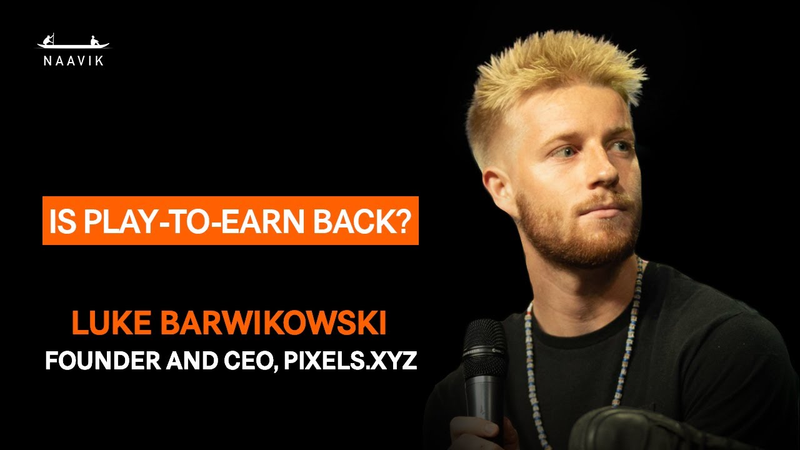
The play-to-earn gaming sector is undergoing a critical evolution, shifting away from volatile, speculative mechanics toward sustainable, data-driven economic models.
- Pixels.xyz has achieved 10 million registered users and $20 million in annual revenue by shifting from speculative mechanics to Web2-style free-to-play economic models.
- Sustainable Web3 gaming models now treat token emissions as a precise user acquisition tool rather than a speculative incentive to ensure long-term stability.
- Long-term viability is being pursued through advanced user segmentation and internal ad-tech to optimize average revenue per user while balancing token incentives with traditional monetization.

Helldivers 2, Warframe, First Descendant, and Once Human - How to Operate a PvE Shooter?
The PvE shooter market currently faces significant volatility, characterized by a reliance on massive initial launches rather than sustained, long-term player retention.
- The PvE shooter market is shifting away from the unsustainable 'Destiny-style' decade-long live service model toward strategies that prioritize upfront profitability and defined product lifecycles.
- Newer titles like Helldivers 2 and The First Descendant demonstrate high viral appeal and strong initial sales, but they frequently struggle to maintain player retention once launch content is exhausted.
- Long-term success in the genre, exemplified by Warframe, relies on deep, aspirational endgame loops and complex RPG progression systems that facilitate continuous theory-crafting and character investment.

The Story of Crunchyroll, GGWP, and Forge
The evolution of digital media and gaming infrastructure is defined by a shift toward community-centric engagement and the professionalization of niche content.
- Developers are shifting toward direct-to-player infrastructure to bypass platform-controlled 'walled gardens' and own their community relationships.
- AI-driven moderation tools are replacing manual reporting systems to address toxic player behavior and foster healthier digital environments.
- Studios are utilizing no-code, self-serve platforms to implement loyalty programs and quest systems that drive player retention and discovery outside of the game client.

TWIG #316 Metaverse Myths, Ubisoft’s Struggles and the Stance for Marketing
The metaverse is increasingly viewed as a hollow, financially incentivized trend rather than a viable technological evolution.
- The metaverse vision of an interoperable digital landscape has failed to materialize, leading major players like Meta and Epic Games to prioritize closed ecosystems and pivot resources toward artificial intelligence.
- Ubisoft is currently experiencing significant internal instability due to the underperformance of major titles and a lack of mobile-specific expertise.
- Marketing budgets should follow an 80/20 split, with 80% dedicated to measurable performance channels and 20% allocated to creative brand stunts to drive organic awareness.
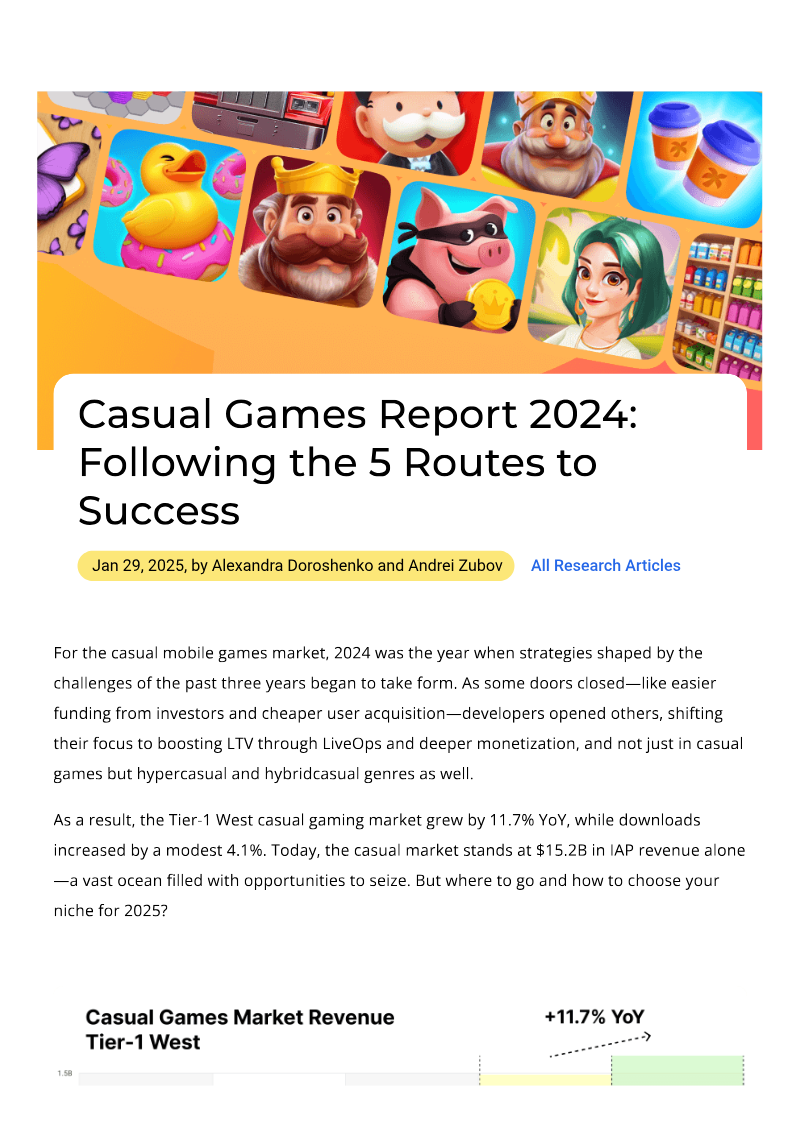
Casual Games Report 2024: Following the 5 Routes to Success
The 2024 casual mobile gaming market across Tier-1 Western nations is defined by a transition toward maturity, characterized by an 11.7% revenue increase despite escalating user acquisition costs.
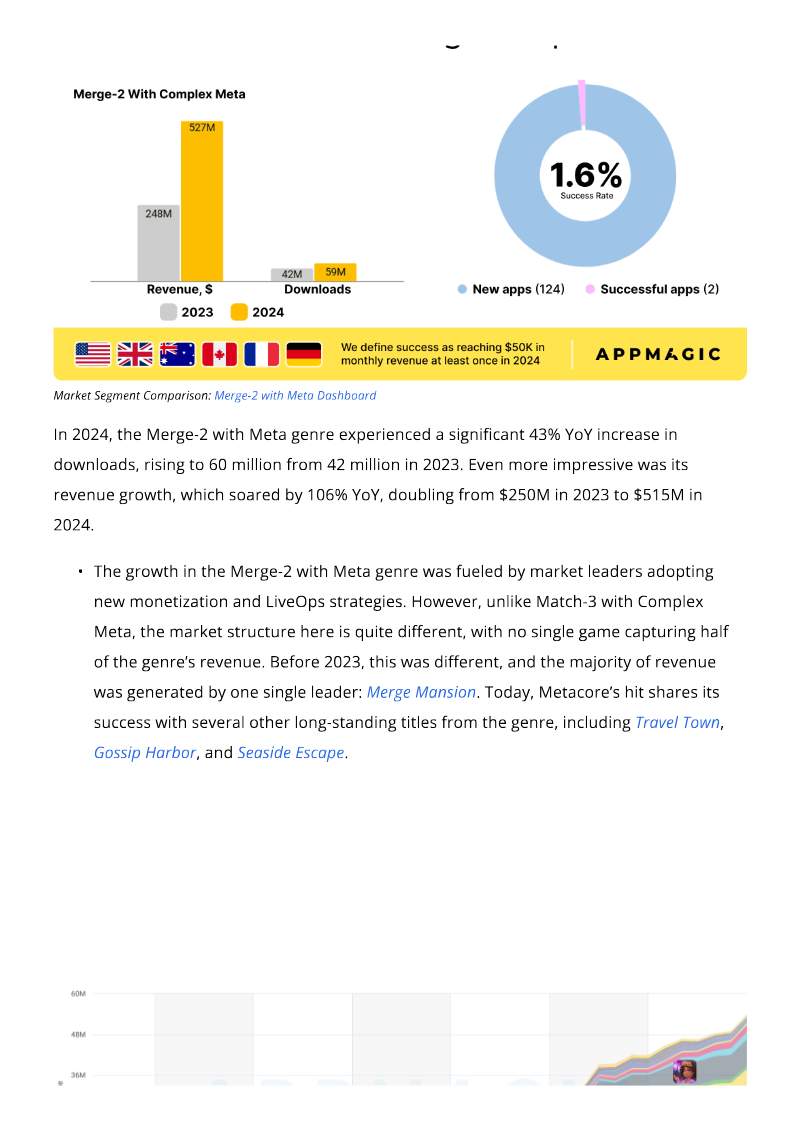
- The casual mobile gaming market in Tier-1 Western nations grew revenue by 11.7% in 2024, despite rising user acquisition costs necessitating a shift toward complex meta-layers and data-driven LiveOps.
- The Merge-2 with Meta segment is the fastest-growing category, recording a 106% surge in growth as competition among top-tier titles intensifies.
- The Casual Casino sector is highly consolidated, with three dominant titles capturing approximately 80% of total revenue and high barriers to entry limiting new releases.

Money, Markets & Disruptive Trends – Xsolla’s Chris Hewish
The global mobile gaming market is entering a period of renewed expansion, with 2024 revenues projected to reach $98.7 billion.
- The global mobile gaming market is projected to reach $98.7 billion in 2024, driven by stable engagement and a strategic shift toward direct-to-consumer web shops.
- Regulatory pressure from the European Commission’s Digital Markets Act and Digital Fairness Act is actively dismantling app store gatekeeper dominance, forcing developers to adopt web shops to retain revenue and player data.
- Web shop adoption is high among consumers, with 81% of mobile gamers aware of these platforms and 77% having completed a purchase.

GOAT: Jakub Remiar on Mobile Gaming, Gacha Mechanics, and Trends | Full Interview
Jakub Remiar, a mobile gaming strategist and co-host of the Two & a Half Gamers podcast, provides an analytical overview of the mobile gaming industry, focusing on the intersection of behavioral psychology, monetization mechanics, and market trends.
- Gacha mechanics function as complex engines requiring sophisticated progression design, with successful implementation often involving a balance between binary drop outcomes and strategic utility, such as the 'rock-paper-scissors' element seen in character collection games.
- Supercell's design approach in Clash Royale represents a major breakthrough in gacha mechanics, moving away from pure randomness toward more structured progression systems.
- The mobile game Whiteout Survival demonstrates high-level innovation in both 4X strategy mechanics and user acquisition (UA) strategies, making it a benchmark for current industry performance.