Monetization reports and market data
Documents

How do Playtika and Wooga nail their Live Ops strategies?
Successful Live Ops strategies in the modern casual gaming market rely on a layered framework that integrates social interaction, engagement mechanics, and data-driven monetization.
- Top-performing casual games now utilize collectible frameworks, such as albums and multi-stage missions, in 75 percent of titles to unify progression and reduce player cognitive overload.
- Successful Live Ops strategies are shifting from large-scale clan structures to intimate, one-on-one partnerships that leverage social accountability and psychological triggers like the prisoner’s dilemma.
- Monetization models have evolved from static purchasing to gamified, effort-based bundles that are dynamically tailored to a player’s specific progression stage.

Project R.I.S.E Alpha Test First Look: Gameplay & impressions! What's next for @supercell?
Project R.I.S.E. represents a strategic shift for Supercell as it explores the cooperative PVE roguelite genre.
- Supercell is diversifying its portfolio by developing Project R.I.S.E., a cooperative PVE roguelite built on Unreal Engine that marks a strategic departure from the company's traditional PVP-focused titles.
- The game features a complex meta-progression system centered on the 'Tower Forge,' which utilizes a currency-based economy and gacha-style mechanics for skill upgrades.
- Technical performance is a critical barrier, with alpha testers reporting severe hardware issues including rapid battery depletion and device overheating.
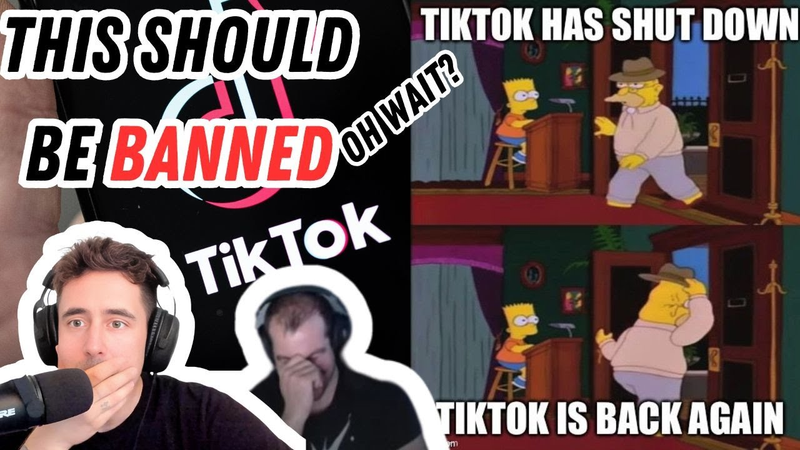
*Emergency Episode* TikTok is Banned in the US! Now what?
The recent legislative and judicial developments surrounding the potential ban of TikTok in the United States highlight the extreme volatility of the current digital advertising and user acquisition landscape.
- The U.S. government’s mandate for TikTok to divest to an American entity or face a total ban creates extreme volatility for mobile game user acquisition strategies.
- A temporary service suspension forced major gaming titles to immediately pause all marketing campaigns, demonstrating the high risk of relying on a single advertising channel.
- TikTok resumed U.S. operations within 13 hours of the initial ban after securing a 90-day extension to negotiate a potential sale.

TWIG #314 Market Predictions, Nintendo Leaks and an Award Ceremony
The gaming industry is currently navigating a period of significant volatility, characterized by a stark contrast between high-stakes venture capital activity and widespread operational instability.
- The gaming industry is experiencing a bifurcated market where speculative capital continues to flow into Web3 and metaverse projects, exemplified by Infinite Reality’s $12.3 billion valuation, despite widespread operational instability and layoffs throughout 2024.
- Success in the hero shooter genre is increasingly dependent on high-frequency content cadences, as demonstrated by Marvel Rivals successfully challenging established titles like Overwatch and Apex Legends.
- Major industry players such as Ubisoft and Embracer Group are undergoing significant reputational and operational damage, signaling a broader market rejection of unsustainable growth models and massive corporate restructuring.
Product trends for Mobile Games in 2025 by Jakub Remiar
The mobile gaming landscape in 2025 is defined by a strategic shift toward adapting proven PC and console mechanics into mobile-friendly formats.
- Mobile game developers are shifting from simple cloning to adapting core mechanics from successful PC and console titles like Palworld and Balatro, focusing on superior UI and sophisticated progression.
- Traditional casual genres such as solitaire and hidden object games are moving away from basic ad-driven models toward high-production, level-based structures with complex meta-game loops.
- Studios are integrating 'mini-game' advertisements directly into core gameplay to improve player retention and lower cost-per-install metrics in response to rising user acquisition costs.
How To Design A Loyalty Program That Players Love
The mobile gaming industry is increasingly defined by the need for sophisticated, experiential loyalty programs that transcend simple transactional rewards.
- IP and brand collaborations are critical for growth, as 20% of players cite them as a factor for installation and retention, while over 50% of those who engage with these events make related in-app purchases.
- Loyalty programs must transition from simple transactional models, like punch cards, to experiential frameworks that prioritize player status, exclusivity, and community building.
- Developers should treat all users as valuable contributors, recognizing that players who provide time, social interaction, and ad engagement are essential to the ecosystem and deserve rewards.
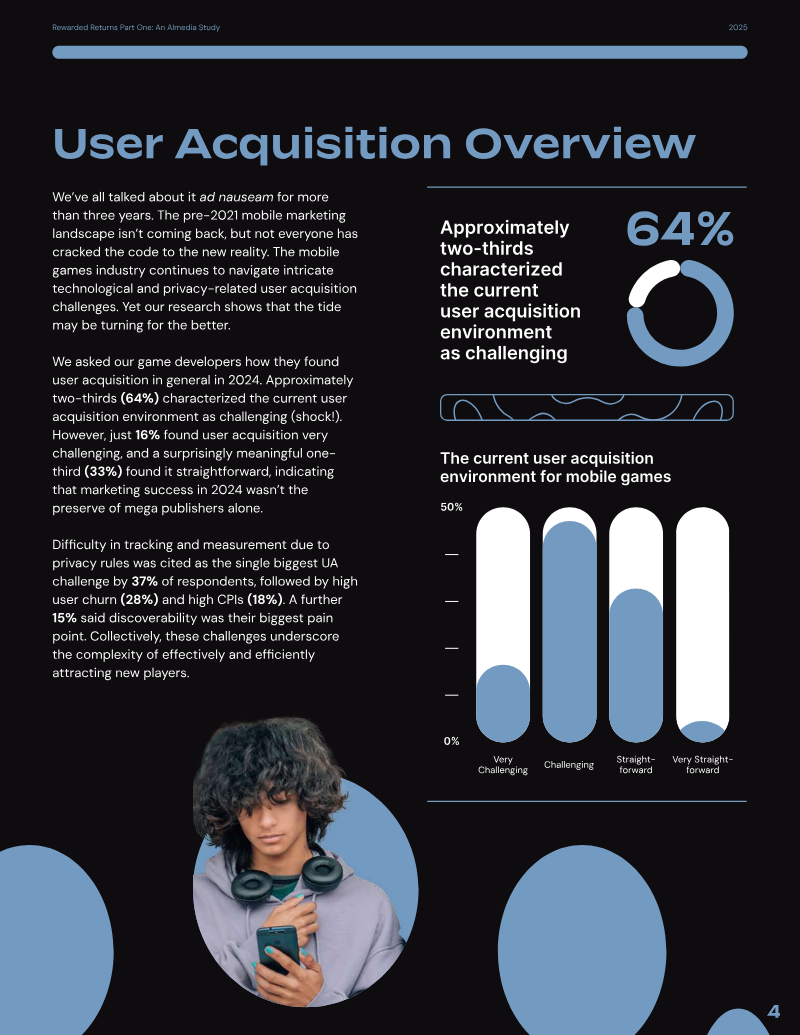

Rewarded Returns
Rewarded Returns explores the evolution of reward-based user acquisition (UA) from its origins as a controversial incentivized traffic tactic to a sophisticated, data-driven pillar of modern mobile game marketing.
- 82% of developers using reward-based user acquisition report that these campaigns outperform traditional channels, with 79% noting stronger long-term retention from rewarded users.
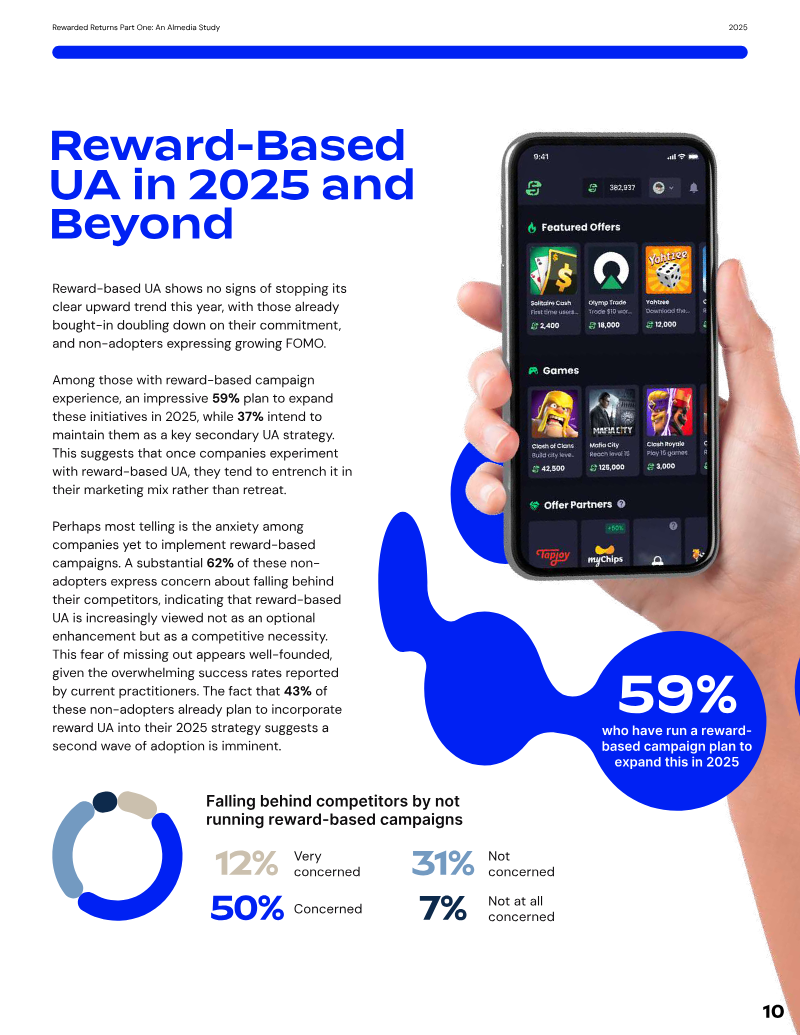
- 77% of mid-sized mobile game developers in the US and UK have integrated reward-based campaigns into their strategies, with 59% planning to increase these budgets in 2025.
- Fraud concerns for rewarded user acquisition have stabilized, with 47% of developers citing risks compared to 46% for traditional UA channels.

The Evolution of Mobile Advertising Explained: How to make Ad revenue by Felix Braberg
The mobile advertising landscape has undergone a significant transformation since the 2008 launch of the App Store, evolving from a nascent ecosystem into a sophisticated marketplace defined by complex mediation platforms.
- Maximize ad revenue by fostering intense competition among ad networks to drive up inventory pricing and capture the highest possible value per impression.
- Integrate six to ten high-performing ad networks through major mediation platforms like AdMob, Unity LevelPlay, or AppLovin MAX to optimize eCPM and fill rates.
- Maintain high inventory efficiency by targeting five to ten rewarded ad impressions per user on a daily basis.

Mobile Gamers Have More Choice Than Ever—Here’s How to Keep Them Loyal, Playing, and Paying
The mobile gaming landscape is currently defined by extreme market saturation, necessitating a strategic shift from aggressive user acquisition toward long-term retention and monetization optimization.
- To maximize monetization, studios must align ad creative and in-app messaging with specific player personas and behavioral motivations rather than relying on generic acquisition strategies.
- Approximately 75% of mobile gamers conduct research, such as checking community feedback and reviews, before deciding to download a new game, making social proof a critical component of user acquisition.
- Direct-to-consumer web shops are a growing revenue channel, with 26% of players open to visiting them for exclusive deals and 8% of spenders having already completed a purchase through these platforms.

Tenjin Update: Callbacks Made Simple
Tenjin has overhauled its callback setup interface to improve user efficiency, accuracy, and overall workflow simplicity.
- Tenjin has replaced its manual, template-based callback system with a streamlined, channel-specific interface to reduce technical complexity for developers.
- Users now input their App ID once per channel, allowing the platform to automatically bundle and activate all necessary event callbacks.
- The new interface reduces the time required for complex callback configurations from over 60 seconds to approximately 20 seconds.

The Evolution of Sports Betting (with FanDuel’s Founder)
The evolution of the sports betting industry reflects a broader struggle between disruptive innovation and entrenched regulatory and financial systems.
- The 2018 acquisition of FanDuel by Flutter Entertainment triggered significant litigation regarding preference stacks, where late-stage investors were accused of stripping founders and employees of equity value.
- The New York Court of Appeals recently cleared a major hurdle in the FanDuel shareholder lawsuit, highlighting the critical need for founders to carefully structure board representation and vet financial partners.
- Daily fantasy sports growth required aggressive legislative lobbying across 22 states to establish a legal foundation, a process that mirrors the current regulatory and banking challenges faced by the cryptocurrency sector.

The Truth About Gaming's Crisis: 2024 Recap & 2025 Predictions
The global gaming industry is currently navigating a profound transition from an era of unchecked expansion to a period defined by operational efficiency and fiscal discipline.
- The gaming industry is shifting from an era of unchecked expansion to fiscal discipline, evidenced by the fact that only 15 percent of Steam playtime in 2024 was dedicated to new releases.
- Chinese developers are successfully capturing Western market share by leveraging sophisticated, quasi-social gaming platforms and high-end production capabilities, putting pressure on established giants like Microsoft, Ubisoft, and Unity.
- Generative AI is transitioning from a simple production assistant to a foundational element of game design and live-ops, which is expected to significantly lower development costs by 2025.