Monetization reports and market data
Documents
Monetizer: Sandstorm: Pirate Wars
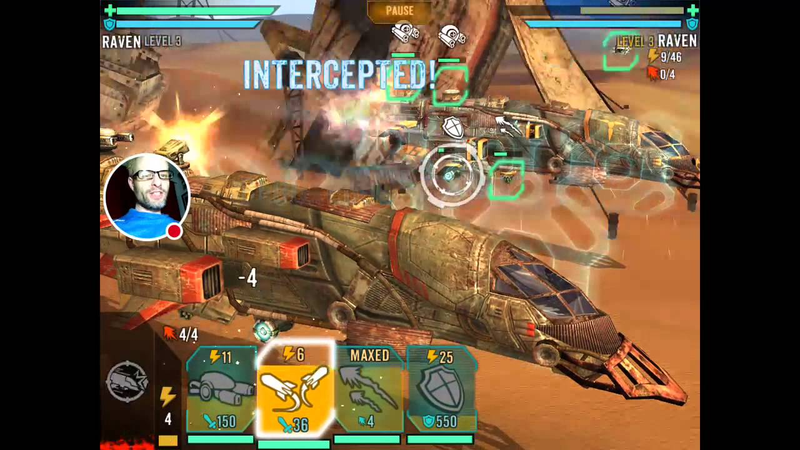
Sandstorm: Pirate Wars, a mobile title developed by Ubisoft, functions as a free-to-play combat game set in a post-apocalyptic, Mad Max-inspired universe.
- Ubisoft's Sandstorm: Pirate Wars utilizes a resource-heavy, grind-focused progression loop that prioritizes meta-game management over active, high-intensity combat.
- The game employs a standard free-to-play monetization model featuring a dual-currency system of soft 'bolts' and hard 'power cells' to gate progression through energy systems and repair timers.
- Core combat mechanics are modeled after drag-racing titles, requiring players to manage power distribution between shields and weapons within a fixed-camera environment.
FTUE: Sandstorm: Pirate Wars
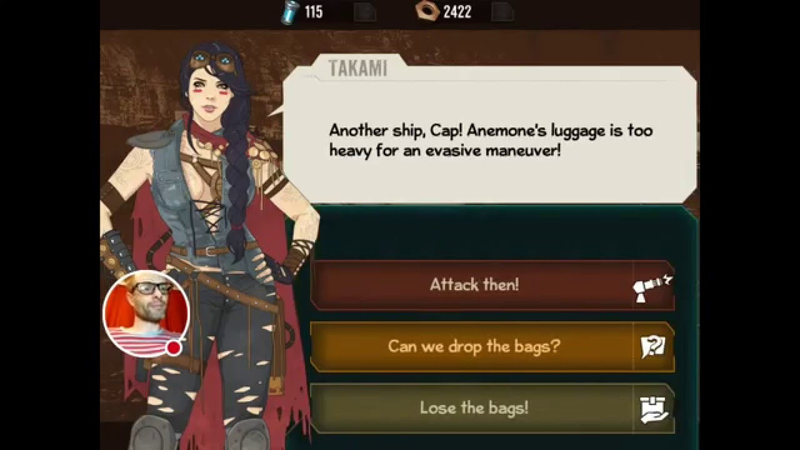
Sandstorm: Pirate Wars functions as a free-to-play mobile title developed by Ubisoft, characterized by a post-apocalyptic, Mad Max-inspired aesthetic.
- Ubisoft’s Sandstorm: Pirate Wars is a free-to-play mobile title featuring a post-apocalyptic, Mad Max-inspired aesthetic and a core loop of tactical ship-to-ship combat.
- The game employs a restrictive energy-based resource system that forces players to balance energy consumption between offensive weapon systems and defensive shield boosts.
- Progression is driven by a cycle of combat, loot collection, and the acquisition of 'bolts' currency to upgrade ship equipment for increasingly difficult encounters.
Free to Play Laws - Can We Stop Predatory Practices? - Extra Credits
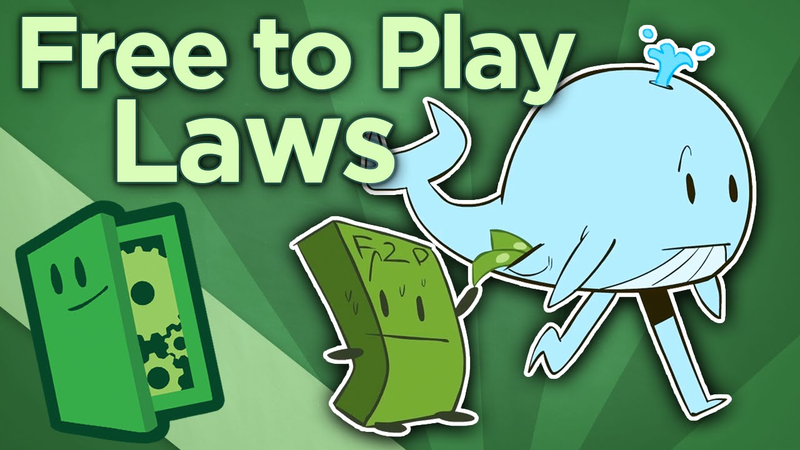
Current regulatory efforts regarding free-to-play (F2P) games, particularly those implemented within the European Union, focus disproportionately on protecting children.
- Current regulatory efforts, particularly in the EU, disproportionately focus on protecting children, which serves as a political mechanism that avoids impacting the core business models of F2P games.
- The primary targets of predatory monetization are vulnerable adults—such as those with compulsive spending habits or social isolation—rather than children, who lack independent access to credit.
- F2P companies actively identify and cultivate high-spending 'whales' through personalized incentives, leading to severe outcomes like financial ruin and significant psychological distress for these individuals.
Monetizer: Downtown Showdown
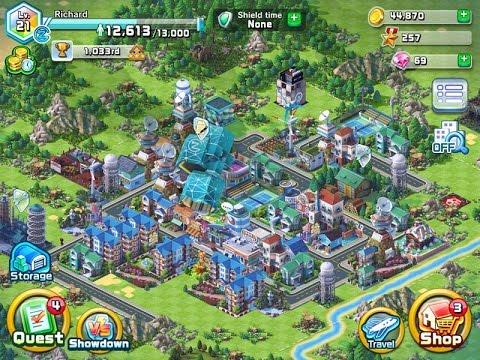
Downtown Showdown, a mobile free-to-play title developed by COLOPL’s North American division, functions as a hybrid experience that blends city-building mechanics with competitive strategy elements.
- Downtown Showdown by COLOPL’s North American division is a hybrid mobile title that merges traditional city-building resource management with competitive raiding and defensive mechanics.
- The game’s core progression is gated by population milestones, which force players to engage with city-building and quest systems to unlock new content.
- The title employs a three-tier currency model consisting of gold (soft currency), specialized metal (earned via competitive showdowns), and premium gems.
Monetizer: Wonder Tactics
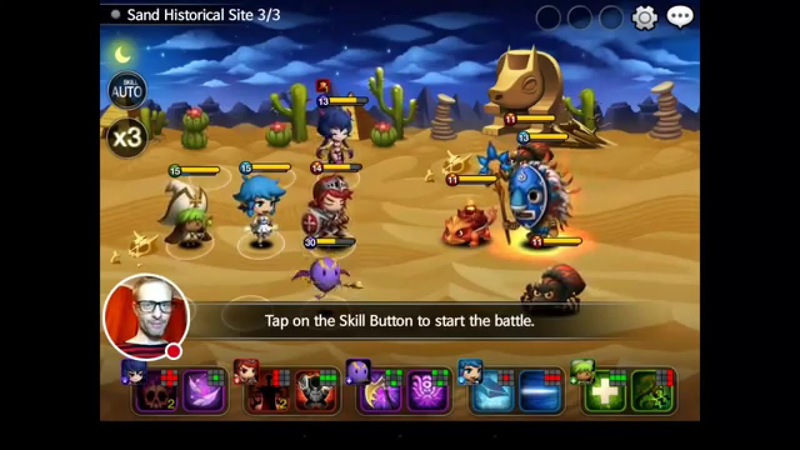
Wonder Tactics, a free-to-play mobile RPG developed by Com2uS, utilizes a super-deformed, cutesy art style to target a specific niche within the mobile gaming market.
- Wonder Tactics by Com2uS utilizes a standard mobile RPG loop centered on hero collection, squad management, and progression through turn-based combat on a three-by-three grid.
- The monetization model relies on randomized hero acquisition via premium currency and tiered scrolls, supplemented by daily login bonuses and starter support kits.
- The game employs a character enhancement system where lower-level heroes are consumed as upgrade materials, a mechanic that includes a risk of failure common in Asian markets.
Zemeho's Kimmo Kuusipalo explains music streaming plug-in Valinta
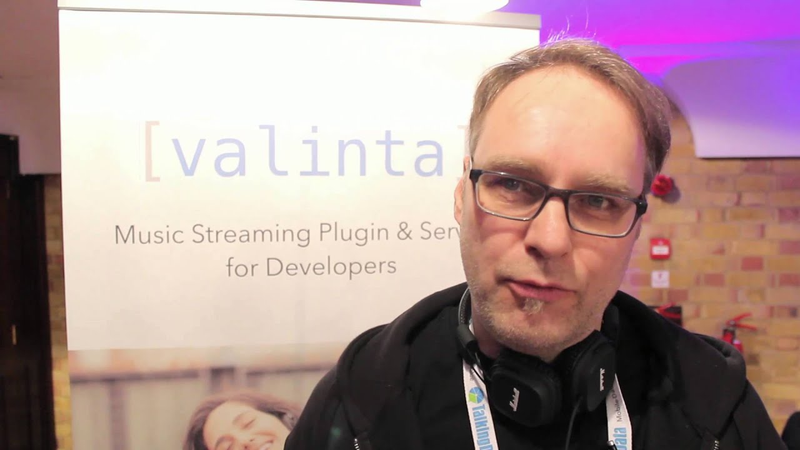
Valinta functions as a specialized Unity plug-in designed to integrate customizable music streaming directly into mobile game environments.
- Valinta is a free Unity plug-in that enables developers to integrate interactive, user-driven music streaming from a library of indie artists into mobile games.
- The tool allows players to select specific genres and tracks, shifting game audio from static soundtracks to personalized, interactive experiences.
- The mobile game Pale Harder, available on the Google Play store, serves as the primary live proof of concept for the plug-in's functionality.
Oscar Clark's Rocky Horror Show Mobile Game Dev Pecha Kucha
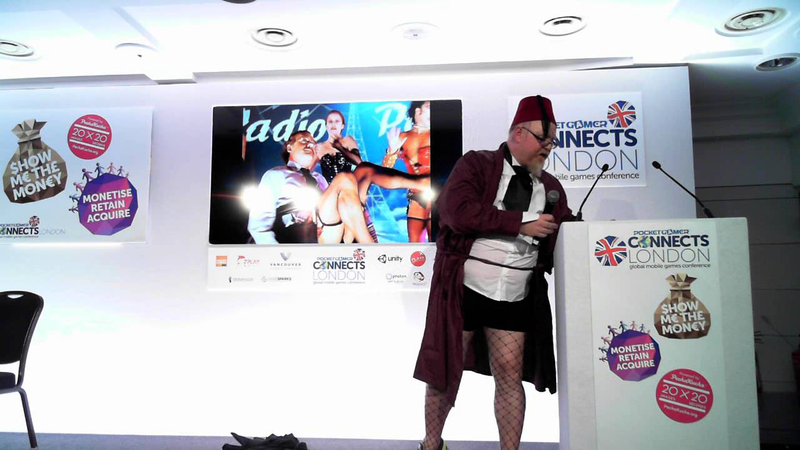
The development of free-to-play mobile games is a complex, often unpredictable process that mirrors the chaotic creative journey depicted in The Rocky Horror Picture Show.
- Long-term mobile game success depends on shifting focus from user acquisition to nurturing player engagement and building a loyal community.
- Developers must balance creative passion with disciplined, data-informed decision-making to navigate the unpredictable nature of the mobile market.
- Aggressive monetization tactics that prioritize short-term revenue over player enjoyment risk alienating the audience and cannibalizing the game's long-term experience.
IAP Inspector: BattleHand
BattleHand, a fantasy-themed card battler developed by Another Place Productions and published by Kongregate, utilizes a monetization model that blends standard industry practices with unique narrative-driven engagement strategies.
- BattleHand prioritizes manual gameplay by requiring players to complete dungeons before unlocking auto-battle features, contrasting with the automated progression models of competitors like Star Wars: Galaxy of Heroes.
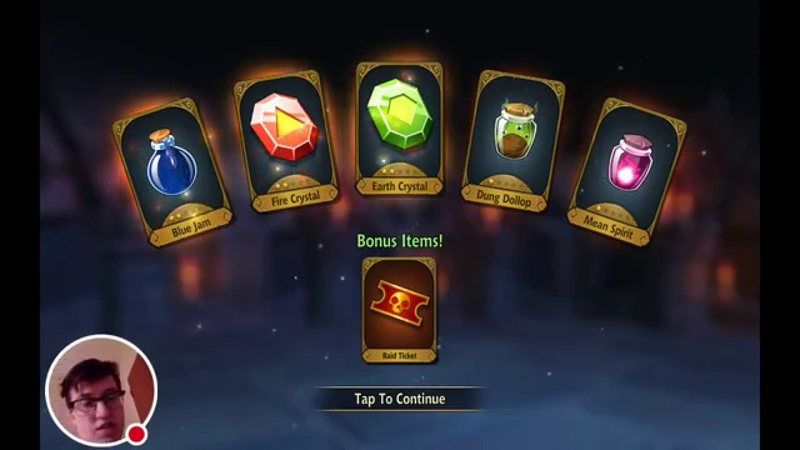
- The game utilizes a multi-currency system comprising keys for energy, gold as soft currency, and gems as hard currency.
- A daily gem subscription service is offered for approximately $13.99, a price point that may hinder its effectiveness as an entry-level conversion tool compared to lower-priced market alternatives.
How to get the most soft currency in SW: Galaxy of Heroes
Managing soft currency, or credits, is a critical bottleneck for progression in Star Wars: Galaxy of Heroes, particularly for players leveling up multiple characters.
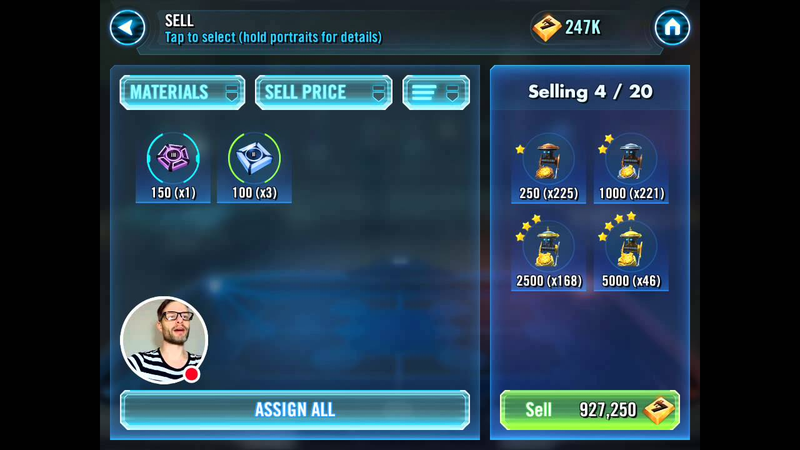
- The primary method for resolving credit shortages is the liquidation of Mining Droids, which serve no functional purpose other than to be sold for soft currency.
- Players can generate nearly a million credits in a single transaction by navigating to the inventory sell menu to convert accumulated Mining Droids.
- Mining Droids are acquired consistently through participation in Cantina Battles and various event challenges.
Games as Travel Guides: A Look at Meaningful Downloadable Content and Its Connection to Locational Context
This paper examines how video game developers and publishers increasingly ground their games in real-world locations, using location-specific downloadable content (DLC), promotional events, and partnerships with local businesses to draw players into travel and local commerce.
- The paper argues that location-based game content can simultaneously benefit the gaming industry, tourism, and local economies, and proposes two design approaches: tying the game environment to a specific real place, or tying game content to a real-world culture that local businesses elsewhere can reinterpret.
- The Monster Hunter Festival at Shibu Onsen drew more than 10,000 visitors during a low season, illustrating how game-linked events can drive tourism outside peak periods.
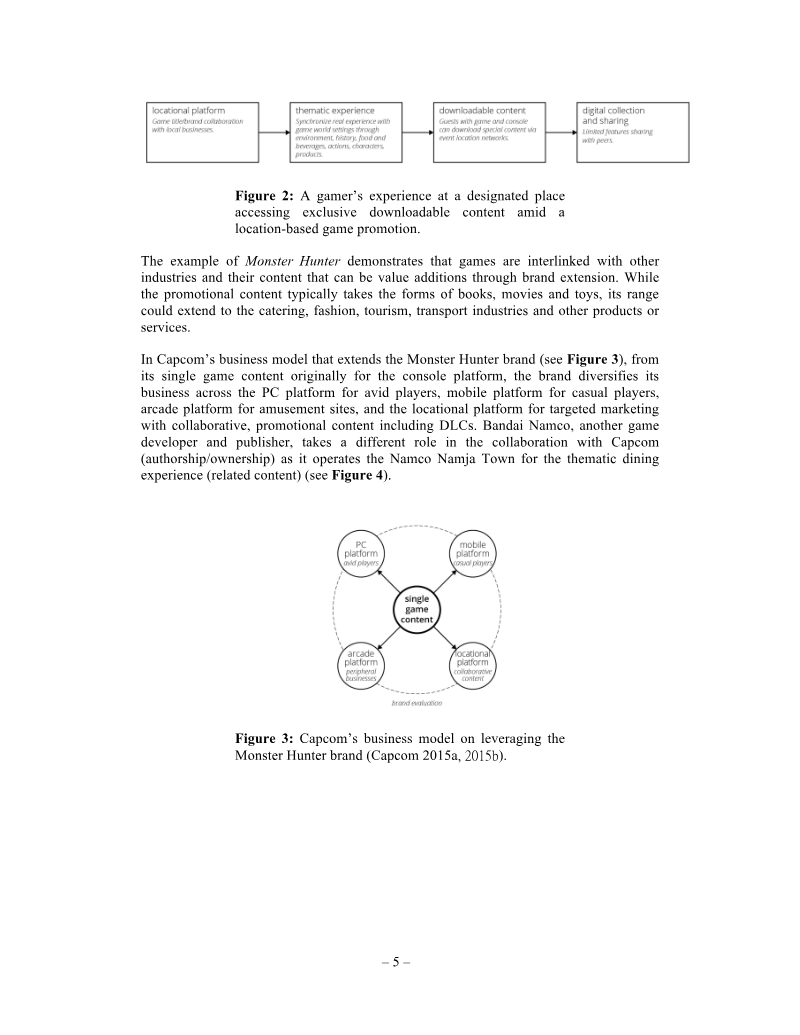
- Collaborations extended the Monster Hunter brand across businesses, including the "Monster Hunter the Real" attraction at Universal Studios Japan and DLC distributed through 7-Eleven stores.
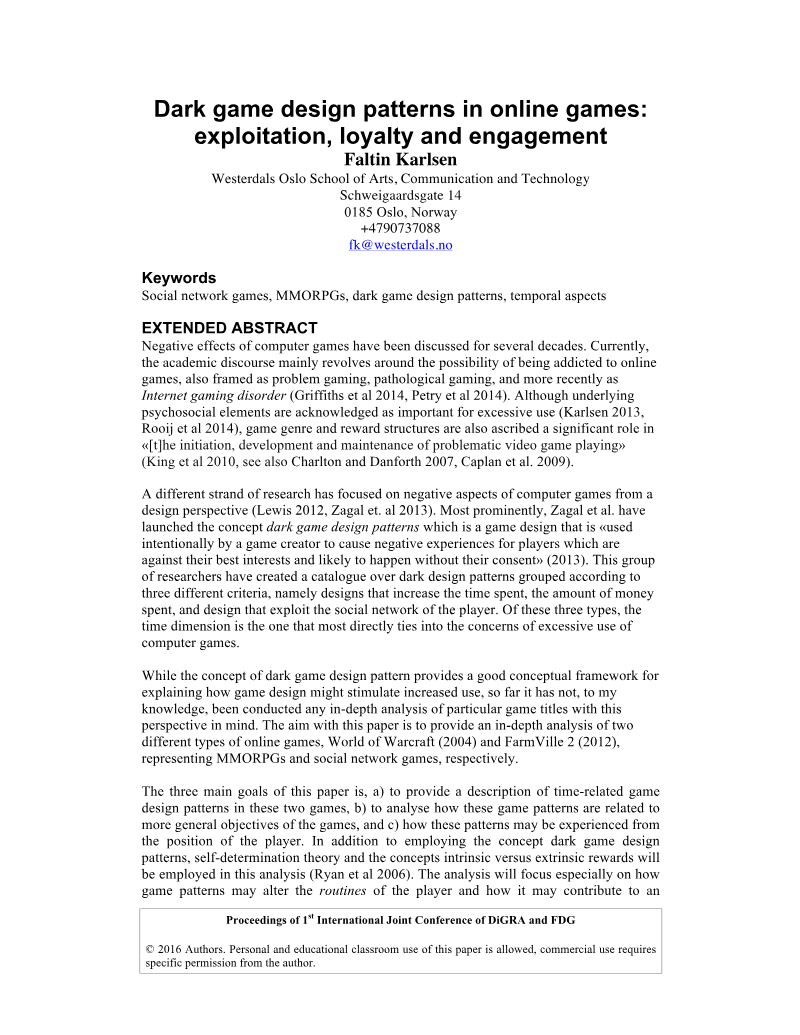
Dark Game Design Patterns in Online Games: Exploitation, Loyalty and Engagement
This paper by Faltin Karlsen examines how "dark game design patterns," a concept introduced by Zagal, Björk, and Lewis, are used to stimulate increased time investment and loyalty in online games.
- Dark game design patterns are intentional design choices that create negative experiences for players against their own interests; this paper focuses on their temporal dimension, the category most directly linked to excessive play.
- The study is a qualitative, conceptual close reading of two titles, World of Warcraft (2004, subscription MMORPG) and FarmVille 2 (2012, social game with micro-transactions), rather than based on player surveys or a large sample.
- The author does not claim these patterns cause severe detrimental effects on players; the aim is to describe how they encourage greater and more routine play across the player base.
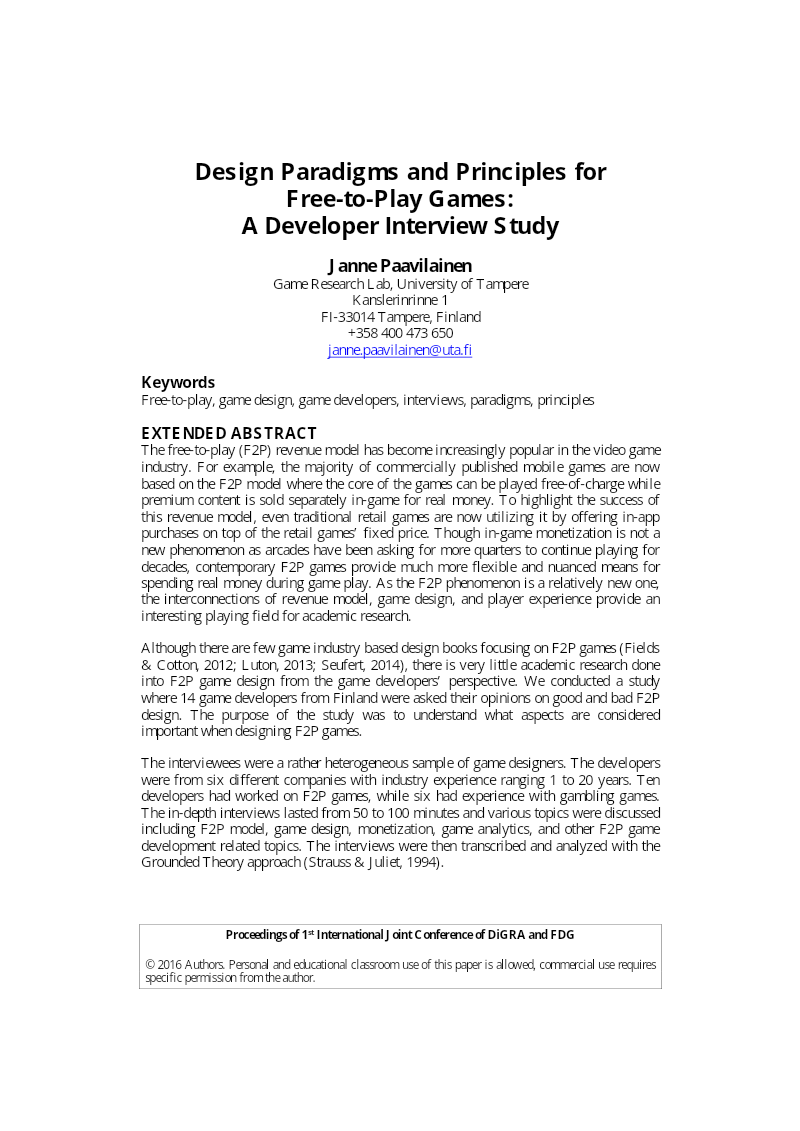
Design Paradigms and Principles for Free-to-Play Games: A Developer Interview Study
This study examines the design paradigms and principles that game developers consider important when creating free-to-play (F2P) games, a revenue model in which the core game is free while premium content is sold through in-game purchases.
- The study is a qualitative interview study of 14 game developers from six Finnish companies (interviews of 50–100 minutes each), with experience ranging from one to twenty years; ten had worked on free-to-play games and six on gambling games.
- Transcripts were analyzed with a Grounded Theory approach and organized into five themes: generic paradigms, F2P paradigms, generic principles, F2P principles, and poor F2P design.
- The report distinguishes abstract design paradigms (e.g., a game must be fun) from concrete principles (e.g., chokedown levels), and separates generic design approaches from those specific to free-to-play.