VideoDeconstructor of Fun
Deconstructing Thetan Arena - the game that combines F2P and P2E
28 Feb 202263 min video
welcome welcome welcome everybody to talk about thetan arena with two powerful game designers slash product managers drop slash crypto maniacs first and foremost we have javier barnes design and product extraordinaire also known as the sergio ramos of gaming though i'm incredibly this dissatisfied that you have you have shaved like this is this is uh i don't know how how do i feel about this anymore so it will grow back don't worry um yeah but um i had to cosplay with my girlfriend uh today so oh interesting uh that's a different podcast that's a different yeah so for folks who haven't seen javier and your picture uh always is the pixelated one but you are tatted up down to fingers like think about the the most bad boy
spaniard you can imagine in your dreams that is javier barnes so what a stretcher with a scruffy beard living in barcelona you know drinking sangria and and eating pinchos and i know about games a little bit as well yeah and then and then we go to ethan aka the crypto kid levy levy goddammit you got it right the first time yeah because i'm now i'm self-doubting yourself unconscious let's just we'll just call me dot a n from now oh no we're not gonna do that ethan uh executive producer on highly can i say incredibly anticipated legendary heroes unchained game coming to all the uh crypto maniacs in your crypto wallets like you got to collect all these heroes so yeah everybody who loves crypto will be on it and everybody who loves loves free to play and has played legendary game of
heroes uh will be on this game so highly anticipated when is it coming out ethan i'm not not announced yet not announced yet but anytime soon you'll be able to invest thousands of dollars before this game even even as long as you can see any images in the current go to market plan we'll have something playable in a really interesting way before we put anything on sale interesting interesting anyways but you're gonna make a bank before anybody plays it right uh no we'll see hopefully yeah that's that's the uh that's the way these games work yeah javier it's really great to uh i feel like i know you even though we're just actually meeting for the first time right now i've been following your work it's okay i've been following your work for a long time and uh really impressed that you put out an indie game recently uh i just bought it can you remind me the name of it uh the song the song out of space yeah yeah it was a kind of a small thing but it was super cool i learned a lot of
things about in the publishing and publishing on console which is its own like just interacting with the stores we're super didactic um so really really cool stuff i need to write about that yeah um i feel like you're being there in the future i feel like you're out there living my best life like you're out there cosplaying as homelander with your girlfriend yeah games releasing games you built yourself on the switch and pc and ps5 and it's just awesome everyone should go buy it support your friend even also also living in the sexy barcelona the gaming hub of europe you know everything is going to javier's direction it's just us two boring dads here in the outskirts of the world just living through javier stop stop messing with me um ethan i have been following your your work i was really impressed on the um tokenamics podcast
you're really really knowledgeable that's actually one of the things that excited me about um about being able to collaborate with you in in an article right because um i would say you're probably a true master of the of the sword of the crypto and i'm more like a fan and a person that is is uh using perhaps a more regular repertoire of tools to to analyze it um i think so yeah you say all this and when when people see the article javier did the much more impressive part of it it was pretty cool we should actually get to it right yeah so so we're referencing the article like most of the people who are listening at least half of the people who are you who are currently listening have either read it or are in between reading it or are planning to read the article that the two of you wrote about thetan arena and just as a leader and they are wolf fun what a great name from vietnam
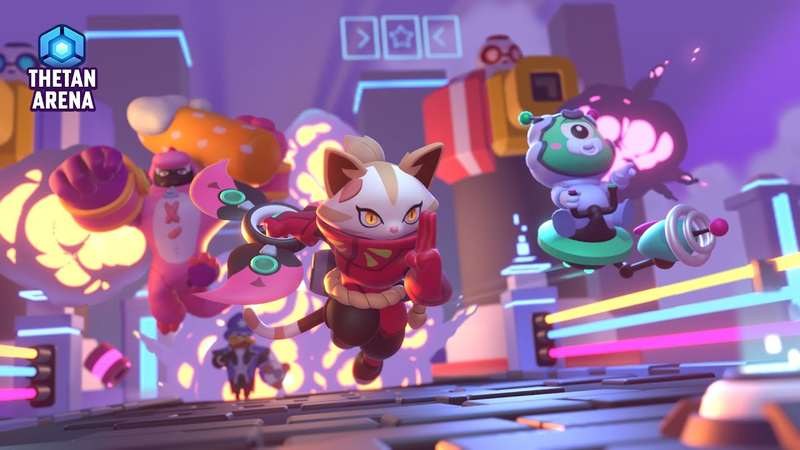
breathed a new life into its top-down moba brawler called hero strike by relaunching this game as a blockchain based play to earn mechanics thetan arena so this is a fascinating case study that you guys did because we're talking about experience free to play developers uh and this was a game this was a free-to-play game those first cult heroes of the strike that ran for years i didn't quite scale up we're going to talk about a little bit later but nevertheless was fully finished in terms of gameplay and market standard level levels of quality it had an in-app purchase source of income that is currently still there but it's fully unrelated to the blockchain revenue and most importantly it has a year's long history as a standard free to play game that we that you guys used as a benchmark when analyzing how the blockchain version of this game performs so overall this is a case of a of a free-to-play blockchain game and and this type of thesis have been
thrown around by by some of the vcs like this could be the way to move forward like you have the accessibility of the free to play game and then you have the blockchain layer from the true fans and the crypto bros to to engage and and drop some ethereum or solana or whatever whatever you're using on it so to kick it off um hero strike to me looks like brawl stars what are the main differences between those games just looking at uh just a pure core gameplay i mean one of the key differences is the fact that in brawl stars the skills belong to the to the to the brawler and they cannot be exchanged while uh in heroes strike only one of the scales belongs to the character the other two skills are exchangeable between the the characters which allows to generate some op combos they also have
uh um this mechanic that makes that the abilities scale up so they upgrade during the match uh which uh browsers doesn't have but uh comes from games like uh league of legends i would say when it comes to gameplay those will be the the two main differences that strike the most to me i'm not sure if ethan i i haven't played brawlstar since launch really so i don't um have too clear of a memory of it but i think just that idea of transportable skills is really um interesting and one worth thinking about if you're doing an nft game because uh what that allows for is if you bought a hero for 800 bucks um and you can move skills you've already leveled up onto it it makes that more valuable right away like it would be kind of a disappointment to um to start with a an 800 character and
then like not not feel like you're as powerful as something else that you've been investing in for a while so definitely an interesting choice definitely makes things harder to balance as you said with with some op combinations i definitely didn't play enough to figure out what the right skills for my hero were i mean at least in my opinion when it comes to the to a game that is so gameplay intensive i would be super scared of having a deep valerie of switch skills like that i think that it can make more sense for a game that has a bigger collection component uh and maybe that the gameplay is more abstracted like an rpg or or a breathing game or something that has like more a layer of collection maybe but um yeah on a game like brow stars if it just like it actually happens in in here's a strike and theta arena there are some
combinations that are op and the developers have removed a lot of the options that they have in order to limit them um so it makes difficult to to make shine specific characters and so on i feel that um in that regard if the developers have more control on the on the gameplay um it works better but uh yeah [Music] to be honest i don't think the relevant uh point of of of uh hitler's strike are these changes yeah i i don't think they generate like a completely different experience um um yeah sophia especially if we're going to yep so if you if you're listening and you haven't played yet just imagine we're talking about brawl stars with nfts you understand exactly 98 basically so so can we talk about how how you know hero strike performed before crypto was was put in it wasn't a
successful game right no it wasn't i mean i don't know what they were there their expectations and maybe uh the performance was good for for their expectations it's a very uh low game i think it was making like 500 uh dollars per day something like that like yeah really something that doesn't allow the game to scale and it was kind of a super niche uh not even a second larger follower of brow stars i would say it's like the bottom of the barrel yeah yeah it's it's a i mean it has been impossible to compete against brawl stars in this category they pretty much owned it and and even when you consider that game despite how big it is and how powerful brawl stars has been it it has had some some challenges to hold on to its position um you know in many countries it declined for example last year and and even the previous year would have probably declined a little bit without
the china launch so it has been kind of like popping in different uh different geos but but then um uh not not maybe holding its its top position kind of like uh you know lowering a little bit i think what is interesting here is at least in my opinion but i would also be interested in knowing what ethan thinks is that the heroes strike and and sit and arena when it comes to gameplay they're they're pretty decent games i mean that yeah the the difference with brow stars when it comes to revenue is not justified by the um difference in quality because although of course browsers is a much better game um it's not the the difference is not be as big to justify such a big difference when it comes to revenue i think that the key power here and the key thing to understand with this is that browsers has a huge brand power has the ability to put the game in front of the eyes of the consumer and what heroes
strike maybe was missing is okay it was a fun game perhaps not as good as brawl stars but but it didn't have the capacity to put itself in front of the eyes of the consumers because they they were not making enough uh revenue from the users to be able to enter into the user acquisition game yeah yeah yeah and the same same type of brand building and same type of like big campaigns that broadcast has been doing and you know uh top of the funnel campaigns mainly um and i would what i'm really yeah go ahead just i would i would uh agree that part of what makes the arena so unique in the blockchain space is that it is like a full fun playable game like you play it it's great it's got good multiplayer quick matchmaking like no fully featured a lot a lot of games that get a lot of ink spilled about them or have me talk about them on podcasts aren't really even games yet right like a lot of these things
that are out there topping dap radar uh charts for sales volume or token volume might be just a website where you stake your nft and they call that a quest and that's it right like uh compared to where most of the spaces by taking an existing game and rebranding it they have one of the most fully featured uh blockchain games on the market and that's what i think makes it like there are two parts that make it a really uh two reasons it's a really interesting case study for the audience of deconstructor of fun right one is like it's a fully featured game so it's not like um [Music] it's not yeah it doesn't have that same well this is just a scam it's not even a game yet feeling to it and the other is is that um it might be a really valid um uh way for other developers to take use
of their uh code base basically right they cloned the game renamed it did they even did they change the hero art no no it's the same same hero got it so that's good just imagine you could um take one of your games uh rebrand it make some changes to allow for blockchain and see more success like that's what they've done um so it's it's really interesting what they've done and they have a real game and and one of my biggest takeaways was like oh this is a fun game like i like playing the arena it's great i'm not good at it but well let's get to the most important part how much are they making in blockchain magic money revenue this was really impressive i was this was we were supposed to write like a 1 000 word article and javier went he fools you on this like he gets everybody on this like let's let's just let's just write a
little little couple of notes on it something and then it's like three-month book okay yeah well um when he got well thank you for the braces when it comes to um to this game i think that it's um also important to to frame frame it correctly um because the game it's not top 100 material it's not making millions per day we're not talking about that type of product yeah i think the numbers are really impressive when if we are thinking uh where they were coming from right um yeah this would not be for for you at king or me at network this would probably not be a big enough success yet absolutely but for an indie for a small team in vietnam this is what they've accomplished is pretty amazing
especially considering what they were making before so uh just to give a few numbers and i'm sitting on my head from the top of my head um they're making about uh 20k per day just in uh iap so that's actual money it's not uh magic internet money it's uh so they're making more in-app purchases than they were before they added crypto a huge increment yeah yeah because they went from making 500 bucks per day to making uh 20k like huge um and then when it comes to the blockchain revenue and maybe the here we will have discussion uh it really depends on how you take it in account uh in the article it's a there's a breakdown of uh what they have collected there's a couple of things that i wasn't able to data mine but um i think it's a pretty good indicator of how much they've made and uh what i estimated that they have made about um 75 of their total money with uh with
blockchain then we can enter in discussion because when it comes to the money that they have made on the blockchain they have obtained it in in different currencies and i feel that the revenue that they have obtained on bmb uh i feel that it can be translated more easily into actual revenue because even if they sell the totality of their bnb um they won't they won't affect the price of bmb they just don't have enough bnb to to affect the market cap of the coin i'm not entirely sure with their own native coins i actually think that they won't be able to sell and they won't be able to monetize their own currency i think that the the um they don't currency i would debate that it's actual revenue but i know that ethan thinks differently well yeah so first let's just break it down what are the inflows of tokens
so the game has it's a it's a brawl stars like moba in the game you can buy gotcha to get premium heroes just like a standard game what are the inflows of tokens into the company treasury right because i think this is kind of worth just breaking down how token can um turn into revenue turn into fiat revenue for for um developers sure so do you want to go on that or um yeah i'll i'll try and get i'll try and get some of them and then correct me if i'm wrong so there's on on their website you can buy gotcha for tokens or you can buy heroes for tokens from other players so if uh let me actually check so the for gotcha they accept bnb which is the
binance token and then they also accept i think for everything on the marketplace they accept bnb and then they also accept um their in-game currency thg or not in-game their game to one of their two game tokens right so if somebody buys the gotcha a hundred percent of that token then goes into the um treasury for um the the team and then on the marketplace if a player lists their nft um again it those two tokens are accepted and some percentage of that token maybe it's five or ten percent goes to um the developer treasury and then there's actually a third thing that i discovered after we wrote the article which is you earn your token in game and then you have to claim it to transfer it to your wallet and there's actually a tax at the moment
that you claim it and i'm not that's probably actually a gas fee um so for a uh you know when they sell iap the money goes to apple some number of days later apple sends them 70 percent of the money right or google when they take these token inflows those go into a treasury and they can choose when they turn that treasury asset into revenue right in my my mental model it's not revenue yet it's treasury holding so part of what javier's saying is that when they get the binance token that token has a huge amount of trading volume every day so they could sell their binance token instantly and never affect the price of the binance token and just always turn that into usd and be happy with it with the tokens that are their two game
tokens if they sold 10 of the trading volume in one day it would naturally depress the price uh of that token because there's not nearly as much volume as a general purpose token like bnb so part of the skill that i think a lot of developers are going to have to learn over time is when and how to turn their treasury holdings especially of their game tokens into actual revenue and i think there's going to be an art to it right like i could imagine one team having a policy that's like we're going to sell one percent of our toke of our trading volume every day no matter you know whatever the trading volume is we'll peg off that we'll sell a small amount we won't affect the price and we'll just have a steady drip of um dollars coming in then i could see a second version where you know we've all been at venture
funded startups where you have to like show the bars increasing in size over time so i could imagine being in a position where like you make iap revenue all month and at the end of the month you're like well uh to show the exact height of bought you know this month we want to make eight hundred thousand dollars we've made seven hundred and twelve thousand dollars in iap revenue so let's go make you know make up the difference by selling our treasury ho holdings um and it's gonna be really interesting right how does that work like like do you like when you make magic crypto money are you making that magic crypto money or do you have to turn it into fiat like how does that work yeah so you know there are every one of the challenges with crypto is that there's an you have to go through regulated on-ramp and off-ramp so if i have whether i'm the player or the company um if i want to turn my
game token into fiat currency it looks like the same process so probably i have an account with kraken or coinbase or you know one of the reg binance one of the regulated exchanges and so um on the exchange there's probably a trading pair like ethan's game token for finance token and so if i want to make usd i would um because binance probably won't allow me to sell ethan's game token for usd directly but i can sell ethan's binance token for usd directly so i would probably trade my token for binance token and then sell that binance token for usd and then initiate a transfer to my bank account um so that's what they thought at the end of the month would you do that at the end of the month or do you like to how much do you have because the values
fluctuate so much right i mean do you like how strategic do you have to be with that i think it depends like what your object objectives are um i think you know if it were if i were running arena i would probably do that thing of saying like every day we trade one percent of our in one percent of the trading up to one percent of the trading volume for finance token and then um we have somebody whose job it is to monitor the price of binance token and sell our binance token hold i mean the easiest thing to do is just sell it every day dollar cost average um or you could you know we're all experienced in having analytics you could have somebody who's monitoring the price and like serving as an in-house trader um of to to maximize your revenue so you might have a back office yeah maybe yeah you could do it that way i i suspect
that um just if you think about your uh time resources that for a lot of studios just having a policy and selling every day is going to result in a pretty good like just close to the best return without driving you insane and distracting you from your core mission which is developing a great game um one thing that is um uh interesting in this regard and just to point out something is is the uh the fact that uh actually they don't they don't allow you to pay on bnb anymore so now they uh probably to sustain the value of their token because now there were i mean if you could pay with their token or you could pay with bmb then that was evaluating their token um they they removed the bmb um but actually what i what i want wanted
to point out is that in reality they don't even have to move their crypto revenue because because they have an inflow that is iap they can afford on just leave out of the iap which is a pretty decent revenue uh in their case and uh use their crypto revenue to foster more their their their audience um even if especially when it comes to their uh to their native tokens i think that the biggest difference between the bmb and their native tokens is that they if they sell the the uh native tokens they are going to trigger a lot of alerts among players because they essentially you're telling the players hey buy my token and hold it but i'm going to not hold it i'm going to be um getting out constantly and that can be con i mean it's it's a kind of uh double standard right so
uh i think that one cool thing that with it and they have afford is that through blocks through the blockchain they have brought players in and those players are interacting within the blockchain ecosystem but in reality wolf fund doesn't really need to extract value out of that of that ecosystem because they can profit directly from the iep yeah this was one of the most insightful um findings in javier's part of the article which was that the revenue per user between the blockchain version of the game and the not blockchain version of the game was relatively the same but the total revenue was much higher because the arena has a lot more users than hero strike and what's super interesting about it is that you could expect and you did a whole analysis of country mix as well that what 60 percent of the players were philippines venezuela and like tier tier
two tier three countries is where the majority of the players are so the revenue per user is holding even though we could guess that the user quality might be lower than what you'd ex than the previous game so simply if you even just think of the blockchain parts of the arena as a marketing mechanic it lifted their revenue you know their iap they left the iap in iap revenue for users is pretty steady but they increased the total pi by bringing more people in so question about that how did the country mix change with the uh with a move from hero strike to thetan arena and more importantly um how many downloads that they got as thetan arena versus hero strike like is it is it the rise of revenue per player or is it the rise of just getting much more players through this blockchain
hype so when it comes to let me break down the question yeah no no no worries don't worry it's like is there more downloads or uh long story short they got a significantly higher amount of um of downloads um more about three years of life they they got in here striker almost not even four million but uh in just two months they have obtained 10 million of dollars with theta arena so the play to earn the whole play to earn angle brought in it was an excellent uh marketing move it brought in a lot of a lot of downloads and gave them a lot of visibility uh sorry i'm just i'm looking at your
charts and you know one thing other developers will say when i talk about blockchain games or actually they'll be like yeah but everybody's in brazil and philippines and venezuela and vietnam are these even players that you want and one of your findings was not only is brazil the top country by downloads it's the top country by iap revenue 39 the iap revenue estimated by sensor tower is is coming from brazil more than united states and philippines thailand are three and four so like the i mean it's just been very healthy for the the game to have added all this blockchain stuff you know i think yeah and i think also one thing that was a bit surprising to me because my uh um first point of view would be oh uh it's bringing so much so many people because they they are purely earners and
uh you know they they're we're seeing money getting into the game but they are going to take it out at some point yeah and and people is going to cry and actually what was very interesting is that to see that uh most of the iab purchases are on products that have zero value for blockchain or for earnings like cosmetics right a lot of the ib revenues generated by by cosmetics that does not give you any advantage on the on the matches so it kind of seems to me that through the premise of being able to earn a little bit of revenue they attracted a lot of a lot of players which then enjoyed the game they discovered that it was a cool game and then they decided to spend on that game for just fun purposes yeah which i feel it's kind of interesting and actually
i feel maybe it highlights something that is interesting know about this uh new model although i'm not as bullish about blockchain and maybe ethan but i find that the classic free-to-play model it's very dolphin and whale-oriented it's actually well-oriented and dolphin-oriented at best and that leaves out a lot of the a lot of players no it leaves out minnows and we we usually treat minnows it's just the means to provide content to players or to uh eventually grow neuter them into becoming uh higher degree paying users um and and that means that even we say no like tier one countries and then tier two tier three it means it we're not that much interested in those countries because we're targeting the countries that has that have the high spending
users and i think that perhaps in this model it can it can allow us to to target and to attract and monetize players that are currently outside of that system even in the in their local variants there are a lot of regional games that work very well in in tier 2 tier 3 countries yeah but they are still targeting the the dolphins and the and the whales i find interesting that the the fact that this game has been able to monetize um our instance that other games would have uh maybe dismissed yeah got it and can can we start talking about like the uh the practical implementation of of play to earn mechanics and and nfts in this game like like how are you able to make bank like that's that's what i'm really interested in like what do i need to do to uh to
sell my stuff on open c and and get quick rich sure so let me let me talk about um how their play to earn is implemented so there's um two types of heroes in the game right there are ones you can buy for iap and they're ones you can buy uh for as nfts not all heroes are nfts and um only those heroes that you buy as nfts have the ability to earn tokens so if i buy a hero on the marketplace it has some limit of premium battles it can fight play per day or token battles it can play per day i think it's 12. so if i buy an nft hero my first 12 battles of the day are the ones where i can earn the native game token which is g there are two tokens but one gthc is what it's called so um
i buy a hero and there are two interesting things to it one is it has a lifetime limit the nft so the nft is only valuable for like you know in the example i wrote about in the article it's like 800 battles so i i was you can see on the marketplace like there will be an nft that has 200 of its 800 token battles used up so it's interesting that there's an expiration date to the value of the nft and that is one of the things that was an interesting experiment but i don't think it's working really and then the second is that there is a number of battles per day where you are have the potential to earn the token so i in my first 12 battles of the day based on what my final position is and my rarity of my nft hero determines my output in game tokens in addition they have a battle pass like mechanic where whether you're using
premium or non-premium heroes you can accrue some token to your account as you as you complete uh challenges but i think the main one is that daily token revenue and you know i um if you read my half of the article i didn't spend eight hundred dollars on an nft uh even though i'm totally willing to i spent eight hundred dollars yesterday on jam city's prime eternal for champions essentially ascension hopefully that how does your nft wallet look like now are you on a plus or a minus or is it still the educational i mean i i still look at it as all like this is just me trying to figure out the space i i have kind of a budget i set for myself and if i lose that much that's fine but i will tell you that uh the market is that the token and nft market is is generally down more than stocks and it's you know it's a little painful if you look at it so so no college for the kids uh that's
as i said that's the separate account i have a very i have a very set don't get yelled at budget but if i lose this amount of money i won't get yelled at or divorced okay but okay so so theta marina you have to buy an nft hero you can buy them in a gotcha for a random chance at a hero and the more you spend the higher rarity is or you can buy a specific hero off another player on the marketplace and then that hero allows you to earn for a set number of matches per day if you are good enough and so basically what i did was i bought a premium here i bought an iap hero i found the equivalent hero on the marketplace and at that time it had a price about eight hundred dollars and then i played 24 matches and catalog what my earn rate would have been
um had i been using that hero and just like assumed that over the next 50 days my skill level wouldn't really increase that much and so for me the way i was playing i i was winning game token maybe 54 or 60 percent of the time but also i was essentially spending token every time i played because once i get to the end of those 800 matches my nft actually has zero value um because it can no longer earn game token the purpose is interesting yeah so nfcs can earn a certain amount of tokens after that there they can earn tokens on a certain amount of matches and after that they're useless and that i thought was a very interesting choice but i don't think a successful one right yeah that sounds bad yeah because basically as as you'll read in the article i said
okay well i can now do the math this is my earn rate because i'm not that good um this is how much it would cost to buy the hero and i calculated at the price when i wrote it that i would have lost basically 40 cents every time i played and then at the end of my run with that hero i would have a useless nft that i can't sell to anybody else because it has no more earn rate um so if i was at the company um my design choices would have been different right i think they were probably trying to set up a system where players need more than one hero that they don't just want to sell you one nft ever in your lifetime um and they all so i would have you know i would if if this were my game i would do much more extensive changes than the ones i write about in the article but just some simple stuff would be no lifetime limit for a hero and limit each hero to a number of daily matches so
maybe a common hero gets one token match per day and an uncommon gets two and a legendary gets three so that way i'm not able to play with one hero all day and earn token if i want you know each match is three minutes long so if i wanted to play for eight hours i would need a giant stable of heroes to play through so i would need to own a couple you know 100 really to cover that much play time and then you just limit the earn rate per day or the number of token matches per day so that way you're not just using one here over and over but those heroes would then retain their value um and be it would be able to sell them on the secondary market so i would basically pair those two changes with um constricting the supply of heroes right now there's an unlimited supply of nfts because every time you open a gacha box it it mints a new one
and i think you know that you know that these it's like trying to focus the energy the purchase energy into buying new heroes and i don't think it's working or i don't think it'll work long term what do what do you think javier um so i think that the game does something that is very interesting um and it's actually what allows them to be compliant uh which is the fact that they uh have isolated the play to earn and the blockchain element from the rest of the game so actually it is possible for the player in this game to play and never interact at all with the blockchain um you obtain the currencies you can that you can use in the game but um unless you do a step that it's done through an external website and and you actually extract those currencies and transform them into cryptocurrencies or their cryptocurrency
equivalent you are playing a totally non-blockchain game which is cool it means that even if you are not if even if you don't invest you can play a little bit earn a little bit of currency and then sell it on the marketplace and maybe you have made like i don't know 20 cents great just for playing uh that's more than maybe other games gave you right but um so i think that when it comes to maybe the general player or the casual earner it's it's it's nice um i also but i think find that the perspective of a player that is actually a serious earner or even an investor that really wants to put buy an nft and so on uh i find the model doesn't work too much like ethan said it has a component of you could even say gambling so if you if you have a very good wind ratio you're going to earn more than what you invested but if you have a normal if
you're a normal person a normal level of skill you're probably going to lose you're going to get less than what you know when you add it which is interesting i mean definitively makes the system sustainable but not very enjoyable because it means that in order for a small percentage of players to be happy the rest are losing and they are subsidizing the entire model and for me that is problematic i find that the game follows a different approach that what i would follow if i had to adapt a free-to-play game to play to earn which is if i had to do that um what i would make is that players generate the hard currency in the game and they become retailers for other players for the game for that hard currency this is not what this game does because actually uh to grade your characters you need to spend i have a job opening uh for uh uh
can i send it i'm not interested i'm not interested but but um [Laughter] in order to grade your characters you need to spend their currency thg and power points which are similar to the power points and all stars but you cannot earn that currency um through the nfts you earn a very small amount so really if you want to grade your characters and therefore be able to win more and so on you need to buy that currency from uh the from the marketplaces and from other from other places but you cannot earn it through um through nfts and for me that kind of breaks the a little bit the point no because at the end of the of the day the way they have struck the the economy correct me from ethan but it kind of seems to me it's
like i spend a lot of money to get an nft uh i'm sorry i spend a lot of thc to get an nft and then playing with that nft i obtain more thc which allows me to buy more nft so it's kind of a loop that it's i have to spend the currency in order to obtain more of that same currency uh but the um points like upgrading and so on where other uses of of of uh that have value and that i would like to be as a play-to-earner i would like to be a retailer for other players i am not able to grind that that second currency and for me that defeats a little bit the purpose no it moves it too much into into gambling and in general i find that uh from the perspective of a player that is an investor or a pure play to earner it's a bad deal because they are
subsidizing the whole operation yeah i kind of suspect that um in order to actually earn out on your investment in nfts you probably need to be playing as a team all the time with the same person and both you at high skill level um because if you were coordinating uh with somebody if you were in the same room with someone or if you were on voice chat with them you would have an advantage over probably 90 percent of the players and i think that's probably the only way to guarantee a win rate high enough to actually profit but again the daily limit of how many matches you can play um it would be hard to make you know it feels like at the end of 50 days you might net two hundred dollars on an nft if you're playing really well like two hundred dollars spread out over 50 days um i think still isn't that much in um
you know in the tier two tier three countries to to make that much of a difference so i don't know it feels like so what's the meaning of this like what's the meaning of the blockchain if it if it doesn't give you that same type of earning potential well i i think if they were able to increase the price the the market price of the tokens it would change the economics of it right like earlier in the game's life when the price was higher um lower skilled players could make more of an earn out and more of a profit and so i think the challenge is if you're if you're constructing a play to earn game how do you maintain the value of your token i mean it's something that axi is struggling with right now and made a bunch of massive changes that actually that dramatically reduced the earn rate of slp and has increased the price uh the market price of it as a result um
how would you compare the uh the tokenomics of this game and the uh overall implementation of of blockchain elements compared to axes is it better or worse like we know the problems with with axis i think it kind of suffers from the same i mean it suffers from the same problem i wouldn't point anyone to the to the arena and say this is a sustainable game economy you can copy this and honestly like when i used to be a free-to-play consultant that was basically the job saying like your game is kind of like mobile strike here are the systems in mobile strike that turn into a sustainable economy that monetizes go copy that or your game most resembles you know uh dungeon and uh puzzle and dragons so go copy these systems and these loops from puzzle and dragons that was what my job was as a consultant essentially and so far in in blockchain we don't
have any answers i don't have the hey go copy this yeah and a lot of companies are essentially copying axey and basically leading to um economies have the same problems as axi yeah i would say i would say that what they have in common is that both suffer currency inflation it's just that they have the element of a maximum cut that you can earn on your on your characters that is influenced by the battle so they have the competition element to diminish the the earnings but they both have the the problem of inflation and i feel that this is what it's making their thc token in particular go down constantly even even after they
have removed uh being able to buy with the finance token they the the thc still still goes down and i find this is because there's a massive influx of thc being injected in the system um so i i actually think that um although obviously having inflation on on those currencies was um a side effect maybe not not which not desired but it allowed on the very early stages of both games it allowed them to uh become very popular because you were b you were generating revenue out of nowhere right the problem is that at some point that catches up with the uh liquidity in the system then you realize oh well we were not creating money from scratch it was actually we were training the the liquidity and the token actually is lowering the value i i i to be honest while writing this this article and this is the one of the reasons why
uh i haven't gone like super kilometric on on it is i i changed my point of view on on this game several times and i actually the conclusion that i that i've reached is that um depending on the perspective of from where you judge this game it's good or not i find that for the developers it has been great incredible success they are making more money than ever for the casual free-to-play player it's great it's a fun game that they have been able to discover and they even connect a little bit but then for the pure paid earners people that invest that real money into it it kind of seems like an unfair deal they're subsidizing the whole operation and and uh seems a little bit not fair that doesn't say that's not to say that the game
has problems that cannot be solved i think that's similar to axi they can do changes and eventually turn it up but right now the economy i think it's it's a bit broken and that kind of also makes it a disappointment to me as a game developer uh because although this is a great case study and so on i feel it's a opportunity i lost opportunity you know that they could have maybe uh pushed the model into generating something that other people could copy and this is really not uh as ethan said it's really not the the solution to the problem but it has um i feel insights that could lead someone else to to go to to reach the the solution perfect um i i will pretend that i understood everything but i will have to re-listen to this about three times so um um one one question that is um apologies
one question that is very interesting is like how are they running this game on ios and google play despite this being a blockchain game so i know based on on the article they are circumventing not circumventing they have essentially two different ones so ethan if you um if you download the game on the app store right now and you play it you will not see the word wallet you will not have the ability to connect your wallet you will not see a marketplace you have no links inside of the game out to the marketplace you basically you wouldn't have any clue that this was a crypto game if you didn't come in with that knowledge so there's no mention of crypto you're not actually using tokens in the game the reason they call it gthc right is game thc thc is the actual crypto token and to turn your game thc into real thc you have to do a process outside that includes paying a a tax
um so essentially they have walled off all mention of the crypto elements from the actual game client and you have to possess this knowledge or be a member of the discord or find out organically outside of it and at least right now that appears to and this isn't the only game that does that this appears to be the acceptable way to get blockchain games onto the app store and onto the play store and i think the unanswered question is is this an actual sanctioned policy this is the way to get a blockchain game onto the uh stores or are none of these games big enough to come under regulatory scrutiny from the platform holders right like i think feeton arena upland uh and others for for all we know are a danger of being rejected any update uh without changing anything right you
could upload an update that changed the splash screen and get rejected because it was reviewed with a different set of eyes than it was before so um right now i would put this into the category of loophole gray area and not something where we're like yes we have an answer from apple and this is how we do blockchain this is how we do you know blockchain on google play it's it's certainly the model i'm looking at in in the uh mobile version of of lhu but we're developing lhu as a cross-platform game and mobile is right now slated to be the final game client we build for these reasons because it's a gray area and we're kind of trying to see how it shakes out with with apple and google interesting so but you would still recommend this way of operating so essentially putting
in a free to play version out there um but but with apple allowing you to do purchase outside your store wouldn't that be able to kind of lead them to a store that does have in-app person but also could offer a little bit of that nft magic i'm not sure and and it's not too the thing it's not two different versions it's basically like they've taken the connect wallet button out of the game client and they've taken a link to the marketplace out so it's basically they've just like removed mention and links to anything related to the blockchain side of it um so it's not two whole different game clients um basically understood and again i i mean an another reason why i'm saying like personally we're taking our time with it is because even the issue of how to do payments for a um iap game on an
external website is still being litigated and not the policy isn't 100 clear as far as i know it's not necessarily as simple like because i think i mean seifer talks about this all the time on twitter right it's not clear yet um how to implement off platform purchases for apple and the way they want to do it doesn't actually seem to i don't know i think it's still being litigated so got it and overall just to you know just to close it so for folks like like you guys seem a little bit tired ethan it's probably 5 am over there it's 6 6 20. i got to go start getting people ready for school exactly and i and i arrived yesterday from uh from a business trip late in the night so so we're kind of slow-ish unlike mr javier uh so so let's close this down with like you know you wrote a beautiful article on this and then folks please do read everything multiple times because it's
quite you know deep as always but is this a successful game and how would you improve it because people will be reading this and they'll be trying to figure out what should they do differently what should they do better like the what's the 1.1 version of this so javier let's start with you like how would you improve it um i think uh what people should look about on this game is um how how they have used uh blockchain in play to earn in order to give a second life to their project they should probably be taking a look at um what has been the distribution of on revenue what had been especially the distribution of the loads and which uh countries they they have attracted um and i also find that on the um specifics of the this uh separation between uh economy a big chunk of the economy happening outside
of the blockchain and then just the trading part like a very small part of the economy happening in the in the blockchain i think it's great i think it's it uh um overrides or avoids a lot of the challenges of the blockchain which is uh the speed uh fees uh environmental challenge a lot of those challenges are avoided in theater arena because the most part of the economy is happening outside of the blockchain and it only interacts on the blockchain when it needs to uh for the for the trading uh and i think those are key learnings that that we can extract uh then my [Music] points if somebody was going to do a similar project is that when it comes to game economy that has to be rebuilt my the model that would work in my head is uh that a free-to-play game trying to become play to earn game needs to make the play to earners their
partners instead of selling directly the hard currency the players the earners need to be the the folks that grind and generate the hard currency and they sell the hard currency to other players so i find it's more like finding a partnership um and that's how you could make it sustainable um i find that right now the the model that it's there it's more like similar to gambling and really it doesn't feel fair for the players because they actually very valuable stuff like upgrading uh is sold uh the only ones getting profit out of that are the well folks there you have it we uh this was like a quick one-hour discussion on on the uh on the beautiful article that you guys wrote um i'm going to listen to this again because i felt like a dummy and i'm also running a little bit slow today
but that's good that we recorded this conversation so i can go back to it unlike me who re-listens to every episode because he's purely an egomaniac oh yeah did you do that well i'm just i'm i'm trying to make sure i'm not saying anything that'll get me canceled was my joke funny enough i don't know uh well we should then uh delete the uh the vaccine episode we did that yeah that was that one's going in the that one goes behind the paywall yeah we should we should really do an episode on geopolitical situation at the moment and uh let's stay in our stay in our lane offer some advices from the uh from the perspective of the game joe rogan over here we gotta stay in our lane [Laughter] anyways uh to everybody everywhere um have a great rest of the day and um love and peace that's all we're here for so on that note uh thanks for listening javier
and ethan thank you so much for for writing this beautiful article and for making a dumb person like myself just a little bit smarter so thank you everybody thank you
Auto-generated captions from YouTube — names and numbers may be misheard.
Thetan Arena serves as a critical case study for revitalizing underperforming free-to-play titles by integrating blockchain-based play-to-earn mechanics. By repurposing the codebase of the struggling game Hero Strike, developers successfully bypassed the typical development hurdles faced by nascent crypto projects. This strategy allowed the studio to launch a polished, competitive experience that achieved 10 million downloads in just two months, significantly outperforming the four million downloads its predecessor accumulated over three years. The primary thesis suggests that blockchain integration acts as a potent marketing catalyst, enabling studios to scale user acquisition in competitive markets like Brazil and the Philippines.
Despite this rapid growth, the economic model faces substantial sustainability challenges. The current structure relies heavily on new capital inflows to subsidize the earnings of early adopters, creating inflationary pressure that mirrors the volatility seen in other prominent play-to-earn titles. Furthermore, the system imposes high entry costs and lifetime battle limits on NFT assets, which often results in net losses for average-skilled participants. This dynamic effectively forces the broader player base to subsidize top-tier players, leading to a model that critics argue functions more like gambling than a sustainable digital economy.
Long-term viability requires a fundamental shift away from developer-led currency sales toward a player-driven marketplace. While the game has successfully navigated app store restrictions by decoupling core gameplay from direct wallet integration, it currently lacks a mechanism to maintain token value and player equity. To transition from a speculative model to a stable ecosystem, the game must prioritize a fair value proposition for all participants rather than relying on the continuous recruitment of new investors. Ultimately, the project demonstrates that while blockchain can successfully scale a user base, it cannot replace the need for a balanced, player-centric economic design.

Deconstructor of Fun · 2026

Deconstructor of Fun · 2026

Deconstructor of Fun · 2026

Deconstructor of Fun · 2026

Deconstructor of Fun · 2026

Deconstructor of Fun · 2026

Deconstructor of Fun · 2026

Deconstructor of Fun · 2026

Deconstructor of Fun · 2026

Deconstructor of Fun · 2026

Deconstructor of Fun · 2026

Deconstructor of Fun · 2026
Deconstructor of Fun · 2022
Deconstructor of Fun · 2022
Deconstructor of Fun · 2021
Deconstructor of Fun · 2025

Deconstructor of Fun · 2024
Deconstructor of Fun · 2024
Deconstructor of Fun · 2024
Deconstructor of Fun · 2024

Deconstructor of Fun · 2024
Deconstructor of Fun · 2024
Deconstructor of Fun · 2024
Deconstructor of Fun · 2022
Comments