Mobile reports and market data
Documents

Week in Mobile Games E67 - The $55bn EA acquisition unpacked
The acquisition of Electronic Arts by Saudi Arabia’s Public Investment Fund, in partnership with Silver Lake and Affinity Partners, marks a transformative $55 billion shift in the gaming landscape.
- Electronic Arts is set to be acquired by an investor consortium led by Saudi Arabia's Public Investment Fund, Silver Lake, and Affinity Partners in an all-cash deal valued at $55 billion, with closure expected in the 2027 financial year.
- EA's mobile division has seen revenue decline for two consecutive years, with recent performance falling below pandemic-era highs despite the company having launched over 50 mobile titles in the last decade.
- Genshin Impact's mobile revenue has declined annually since its launch, with year five generating approximately $500 million, which is half of the revenue recorded in year four.

TWIG #351 EA Acquisition Analysis That Will Shock You...
Microsoft’s gaming division is currently navigating a period of significant strategic recalibration, marked by rising hardware costs, diminished retail presence, and a fundamental retreat from its aggressive subscription-led growth model.
- A consortium led by Saudi Arabia’s Public Investment Fund, Silver Lake, and Affinity Partners has acquired Electronic Arts in a $55 billion leveraged buyout, the largest transaction in gaming industry history.
- The EA acquisition is structured with $19 billion in debt, but is considered sustainable due to EA’s high profitability and the PIF’s capital reserves, signaling a long-term strategy to establish Riyadh as a global gaming hub.
- Microsoft is pivoting away from its 'growth-at-all-costs' subscription model by increasing Game Pass pricing and restricting day-one releases, reflecting the unsustainability of its previous strategy amid hardware stagnation.

Inside Supercell: Old Guard, Rotating GMs, Sparks, Labs, and Silos.
Supercell faces significant internal and strategic challenges as it navigates a period of organizational transition and pressure to deliver sustainable growth.
- Supercell is currently dependent on legacy franchises like Clash of Clans, Clash Royale, and Brawl Stars to drive revenue, raising concerns about the long-term sustainability of its growth model.
- The company has struggled to launch new successful titles, leading to internal frustration regarding the handling of projects like Squadbusters and Clash Mini.
- Internal operations are hampered by a fragmented culture, geographic silos, and an entrenched old guard that is perceived as resistant to necessary organizational change.

Latest Go-To AI Stack For Solo Mobile Developers: Claude Code & Nano Banana
The modern landscape for solo mobile and game developers has been transformed by the integration of advanced AI coding agents and specialized image generation models.
- The primary challenge for solo mobile developers has shifted from technical execution to marketing and user acquisition, as AI tools now handle the bulk of development labor.
- Claude Code functions as a terminal-based coding agent that automates project scaffolding, file management, and real-time debugging, eliminating the need for manual copy-pasting.
- Nano Banana provides high-speed, high-fidelity image generation for game assets and UI components, accelerating the prototyping phase of development.
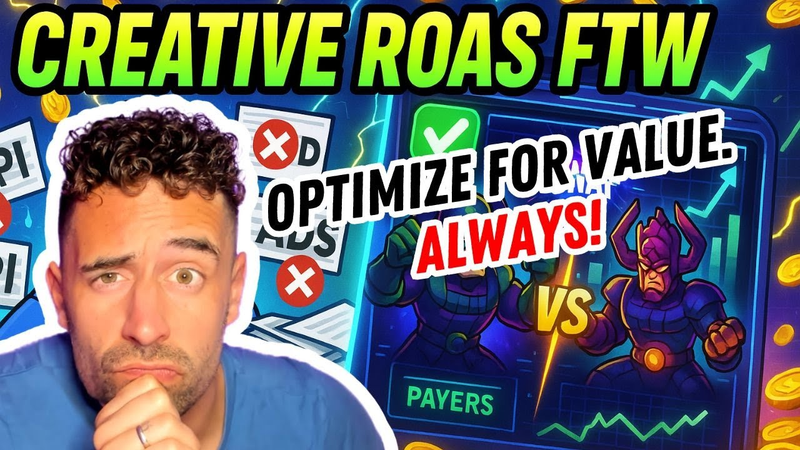
📊 Creative Optimization Masterclass: Creative ROI & Scaling Across Networks
The primary objective of modern user acquisition (UA) is to shift focus from vanity metrics, such as install volume and click-through rates, toward creative-level return on investment (ROI) and lifetime value (LTV).
- Shift user acquisition focus from vanity metrics like install volume and click-through rates to creative-level ROI and long-term ROAS.
- Evaluate campaign success based on high-quality user milestones, such as tutorial completion or reaching level 15, rather than cost-per-install (CPI).
- Implement unified dashboards to map creative assets directly to in-app events and revenue data across networks including Facebook, TikTok, Google, AppLovin, and Moloco.

💰 Ad Monetization Trends - Prison games take over by Felix Braberg
The mobile gaming market is currently experiencing a significant shift in simulation and idle arcade genres, characterized by a widespread transition toward prison-themed titles.
- The mobile simulation and idle arcade genres are shifting toward prison-themed titles, replacing the previous market dominance of supermarket-themed simulators.
- Supercent's 'Prison Life' generates an estimated $38 million annual run rate by combining high-frequency rewarded ads with interstitials and a free-to-premium speed-up onboarding funnel.
- Developers are successfully reskinning existing supermarket simulator mechanics to fit prison settings, as seen in titles like 'Prison Escape Journey' and 'Prison Escape Simulator'.

Masters of Publishing 4: One Viral Ad Won’t Save You (Karen Levy, Creative Operations)
Sustainable growth in the hybrid casual gaming sector relies on a sophisticated, data-driven approach to user acquisition that prioritizes long-term retention over short-term traffic spikes.
- Integrating creative teams into the early development process allows for marketability testing that can reduce cost-per-acquisition by 30% to 40%.
- Sustainable growth in hybrid casual gaming requires aligning marketing creative with authentic gameplay to ensure long-term retention and higher lifetime value.
- Successful user acquisition relies on a dual-track methodology that balances high-volume, AI-assisted testing with high-quality production.
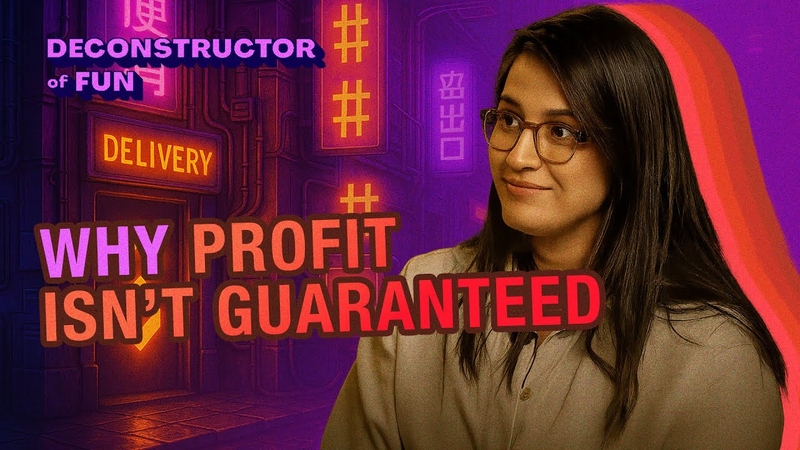
Masters of Publishing 5: Scaling Isn’t a Milestone, It’s a Grind (Samantha Benjamin, Growth)
Scaling hybrid-casual games demands a sophisticated, long-term operational strategy that prioritizes sustainable profitability over the rapid, short-term break-even cycles typical of the hyper-casual market.
- Hybrid-casual scaling requires a long-term financial strategy that accounts for 90 to 120-day break-even windows, moving away from the rapid recovery cycles of hyper-casual games.
- Growth managers must utilize predictive lifetime value (LTV) modeling and continuous product optimization rather than relying on simplistic, plug-and-play user acquisition tactics.
- High install volume is an unreliable metric that can mask poor long-term return on investment; sustainable growth depends on rigorous post-install data analysis.

Masters of Publishing 3: Ads Don’t Kill Retention, Bad Ads Do (Maayan Aharonovitch, Monetization)
Hybrid casual gaming represents a distinct industry segment that requires a sophisticated, integrated approach to monetization.
- Hybrid casual games must integrate monetization into the core gameplay loop during the initial design phase rather than treating it as an afterthought.
- Successful monetization relies on dynamic, automated player segmentation that identifies friction points and offers rewarded video ads as value-driven solutions.
- There is a strong synergy between ad-watching and paying behaviors, as high-value users often engage with both rewarded videos and in-app purchases simultaneously.

Masters of Publishing 2: 3 Signs Your Game Will Be a Smash!
The hybridcasual game market demands a rigorous, data-driven approach to development where success is determined by three primary signals: marketability, stickiness, and conversion.
- Success in the hybridcasual market is defined by three primary metrics: marketability, stickiness, and the ratio of day-one to day-seven retention.
- The development lifecycle for a hybridcasual title is strictly compressed into a six-to-ten-month window, requiring rapid iteration and early abandonment of underperforming concepts.
- Effective game design must provide depth that scales consistently from level five through level 500 to ensure long-term player engagement.
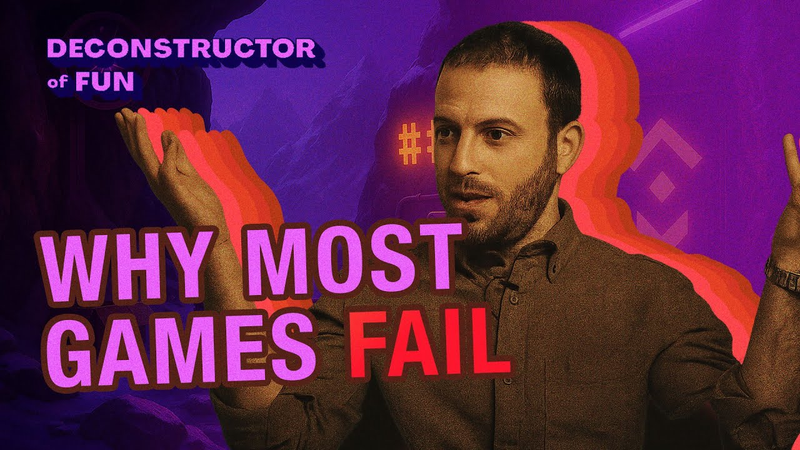
Masters of Publishing 1: Secrets to Getting Signed by a Publisher
The mobile gaming industry has undergone a fundamental transition from the high-volume hypercasual model toward a hybrid-casual framework that prioritizes long-term engagement and quality.
- The mobile gaming market has shifted from hypercasual models to hybrid-casual frameworks that prioritize long-term player engagement and sophisticated progression systems.
- Successful hybrid-casual titles require a dual monetization strategy and robust live operations, as these elements are now essential for scaling in the current market.
- Publishers now act as full-stack partners, providing expertise in game economy design and user acquisition to fill capability gaps within development studios.

🚂 Full Steam Ahead: Steam Games That Could Be Mobile Hits (Q2 2025)
The transition of successful Steam titles to the mobile market represents a significant growth opportunity for developers capable of adapting core gameplay loops to touch-based interfaces.
- Successful Steam-to-mobile migration relies on adapting core gameplay loops like 'unfolding' mechanics, idle simulations, and roguelites for touch-based interfaces.
- Long-term mobile retention for these titles requires the integration of robust economy engines and consumable-based monetization strategies.
- High-potential titles for mobile adaptation include Peak (co-op climbing), The Alters (sci-fi survival), Nine Kings (deck-building), and Rematch (sports simulation).