VideoDeconstructor of Fun
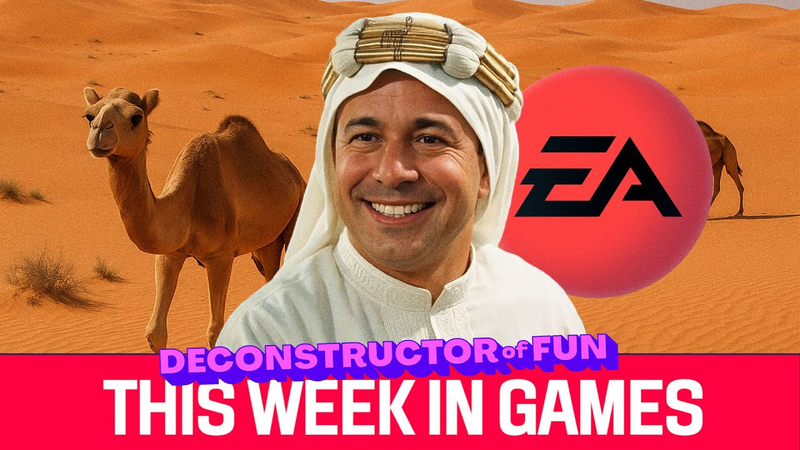
TWIG #351 EA Acquisition Analysis That Will Shock You...
3 Oct 202561 min video
Transcript
When the dinner is over, they told this, "All right, now we go and play." They went back to the palace and there was a gaming hub with esports like trainers and everybody put their hoodie on and played till 2:00 a.m. League of Legends all the games. Like that's why they say, "You know what? Put in 38 billion. We want to have games here." [Music] Welcome, welcome, welcome everybody to this week in games episode 351. Today we have another boys only crew but a very different crew than normally. First chair Mr. Air Crest Strategy and Investing
and second share goes to
Josh Chanley, president and COO of Wildcard Games and due to severe attrition marketing guy.
Yeah, we got a new host today, Josh Chanley from Wildcard Games. You're known for your articles on deconstructive fun. You actually been on
the podcast several times. Good to have you. First time on Twig. Josh, why don't you tell people a little bit more who you are, what you do, and what are you going to talk about today?
Yeah, I mean, thank you for having me on Twig for the first time. So, like I said, I'm president and COO of Wildcard Games. We're a profitable, fast growing mobile publisher focused primarily on ad monetized, highly retentive games. My role is I own the P&L and capital location, strategy, and vision. I set our culture and grow our directors who all report to me. I represent Wildcard externally as you know as we scale a larger portfolio. So really I'm just trying to steer that ship forward as we grow.
Yeah.
And on Twig you're the UA guy. You're the
Yeah. On Twig, I'm the UA guy.
UATE.
And today we're going to put you on a spot with applo and stuff.
Yeah.
Because we can't talk about it.
Oh, that sounds fun. Let's do it.
I think Josh is being a little bit humble. You know, Josh has kind of been the axe on the call about unity these
days. is he's been really on top of the app loving things. He's helped me a lot with some of my clients and getting in front of them and talking to them through this stuff. So, he's been really really up and close with all the things that are going on in the UA environment out there between and he's going to get to it later.
Yeah,
appreciate it. Thanks for joining us, Josh. So, your views are truly truly appreciated this company and updates on our other coast just because people have been asking. So, Jen still recovering from the Neurolink surgery. Laura is somewhere on Greek islands based on her burn on Instagram and people have been asking like where's Laura? Laura started in her new job. Yes, actually people on this podcast do have jobs and and she's been very much focusing on that. She will be back on the podcast when she feels like it, but currently on Creit. Don't worry about Laura. Based on her Instagram, she's doing real good. And then uh Phil is also somewhere on the Greek island of Cypress. So yeah, it's a
lot of people here currently now in Greek. I'm also in Greece. So uh welcome to this Greek episode of Twig. And today of course we're going to talk about Saudis taking over EA. We're going to talk about Applovin's e-commerce play AI generated work slop that is destroying productivity. As a nice easy ending to the episode, I have few shills I need to run by. So number one, we published a master class with Unity's publishing platform, Supersonic. There's five videos from five different experts and your feedback, you the listener, is very much appreciated because this is the first time we're doing this sort of a series that we call master class and we have already recorded another one about data analytics and probably will do another one after that on AI and using AI in development in game studio. So, please check out the first one, DM, send feedback on Slack, let us know how that went so we know how to adjust for the
future master classes. Secondly, the Bosphorus brunch is now open for your signups. That's going to be with heroic labs and game analytics 22nd of October. That's the second day of the Mobictum event, which is the biggest game conference in Turkey. It won't be at Soho House as I said last time. It is going to be a bougie hotel by the water near the event space and I'm not going to tell you which one because it's invite only and you have to sign up and get approved to get there. So, we have quite limited places on that event. It's a nice place, founders mainly. There's going to be a couple of investors and other people, but you can expect strong coffee, better company, and conversations that matter. And then um for both newsletter and Slack to apply to that event. And then last but not least, we got a new partner for the podcast called Vibes VBS. It's built by industry experts. It's a
fastest growing reward platform on mobile. And what makes them sexy, if you ask me, is the AI powered targeting that they have that brings the right players to your game. It's a rewarded platform. We're going to do an episode about rewarded platforms for dummies. So that episode will be dropping in shortly. Those were all my shills. And then I have to run corrections for Phil. So Phil said in the last episode that Boom Beach has been outsourced and there were outrage of this horrific statement. So let me run a correction. The correction is it's complicated because Boom Bish was shipped to Space Ape at some point. Then it was put in on autopilot. Then it was taken out of the autopilot and has since performed better because they actually run live ops. Surprise. Overall, Supercell, like any other large developer, is a massive user of outsourcing. They got entire studios working on content for them, allowing Supercell to keep in their internal
teams compact, nimble, agile, whatever you want to call it. So, Phil was wrong about Boom Beach, but kind of right, but wrong in a timeline. So hopefully everybody can can live their lives from this correction on.
I I think we can live with that mistake.
Yeah. Okay. Phil, you have been probably vindicated for this horrific mistake that you did.
Yeah.
Let's talk about markets and industry.
In the game of growth, everyone is looking for that power up. Vibes is exactly that. It's built by industry people, so they actually get the challenges you're dealing with. As a result, they become the fastest growing gamified rewards platform out there. And the results are kind of nuts. With their AI powered targeting, you're not just buying installs, you're bringing in the right players. And now they've got this new rorowass optimization engine, so your campaigns basically level up automatically. Vibes is built different. It's designed for growth, and I guess
you could say it's powered by good vibes. Check out their DOF exclusive case studies by following the link in the description and go to vybs.co. That's vybs.co. Share your email and join the weight list.
Stay ahead of the competition with Sensor Tower, the trusted source for mobile marketing intelligence. Whether you're tracking trends, benchmarking performance, or scouting the next big hit, Sensor Tower delivers the data that drives strategy. Dominate the charts with Sensor Tower.
Yeah. So, um I am wearing my Electronic Arts in memorandum. So, just so you know, I'm wearing my little sweatshirt here. But before we get into the big topic of the day, there's been big news on Microsoft. one that just landed today, this morning. So, there are three
stories. One, they're increasing price of hardware again. Two price hikes in six months. And to put in perspective, this piece of [ __ ] Xbox Series S is $450. Like, they are out of their gosh darn minds. Like, they need to figure out a way of getting these pricing down, right? I don't give a [ __ ] what their strategy is. This doesn't make any sense. two, the Rogue Xbox Ally came in at $61,000. Again, this isn't beyond even my insane expectations on the price of this thing, but the $600 device is a piece of [ __ ] right? There's no reason to own that thing. So, we're talking about a $1,000 entry into a device that actually makes sense. Again, enough. And if you didn't know, this is not the Xbox OS. This is a PC OS. So, for instance, if I buy a FIFA game on my Xbox, it's not playable on this device. You have to buy the PC version. And then finally, and this is
actually a real indication of where things are going, is that Costco removed all of Xbox's software and hardware out of all their stores. Now, this by itself is not a big deal. They are very small account, which is actually kind of ironic because it takes nothing to manage this type of account, my understanding. But it's indicative of a disturbing trend in retail both for North America but primarily for Europe that they are removing all of Xbox's stuff from their stores which basically pulling support from the platform altogether and that is bad bad bad juju. So what does this all mean? Look, Microsoft is basically surrendering one of the most important advantages of owning hardware control over distribution, software distribution, right? The Xbox Anywhere approach, they're basically weakening the very gatekeeping function that the hardware actually provides them, right? So, every other content companies out there is trying to find ways of securing distribution, right? And trying to deepen that relationship with the customer directly. Xbox is doing the
actual opposite by pricing out people out of the hardware and losing distribution at retail, right? They're basically losing control over their own ecosystems. And this really path leads to nowhere but bad things and likely to relevance out there. Um, that was what I really wanted to cover. But this morning, what came out was an absolute vindication of everything I've been saying about Xbox anywhere, Xbox like premium subscription, right? So this morning they announced that they were increasing the price of Ultimate by 50 [ __ ] percent up to $360 a year. That is absolutely just proof positive that this thing was never working on the P&L, right? Like to increase it by that much, it's insane, right? They have a premium subscription at 15 and another essential subscription at $10. This is where it should have been all along, right? This makes so much more sense. And this is kind of where it was before all this [ __ ]
happened the last three years to begin with. It's basically like Sony, you know, with a god tier subscription of 360 bucks. And for the record, for the record, I am going to be paying $360. Like, I actually get the value out of $360 from the subscription between my son and I. So, I'm not saying it's not a great deal for people like me, but it's a shitty deal for the company, for everyone else, right? Because it's not profitable. So finally, this is a good move by Microsoft and again a capitulation subscription strategy for day one content was [ __ ] dumb and not working objectively that the subscription for day one games was not growing fast enough to be sustainable or profitable. Right? Having said that, the $15 sub was really funny because it includes all Xbox published games one year after launch except Call of Duty. Like dude, it's just like a big [ __ ] you, dude. like all the promises that they made about Call of Duty part of subscription, this completely pulled
out, right? Which makes sense cuz Call of Duty is the title. Anyway, I guess at the end of the day, the $10 to $15 subscription does open up Xbox to a broader audience, but the price point on the hardware remains way too [ __ ] high. They're continuing to lose distribution, and even though the subscription makes a lot more sense, it's still maybe likely too late to matter.
Yeah. Aren't you um a little bit concerned about like some pretty material subscriber loss from the reduction in value? Like for an example, like at this point, I'm a I'm a PlayStation gamer. I do have Game Pass for an Xbox that hasn't been on in like over a year. I've been paying for it. Now, this is a reminder for me to cancel it because I literally don't use it. Aren't you concerned at all about like subscriber loss?
Oh, 100%. 100%. They're going to lose a lot of their premium subscriptions. like people are not there are many people that are not going to pay $360, right? Like myself, but it does create an entry point for a lot of others people to perhaps get involved in the ecosystem,
but get out of this day one [ __ ] right? Sony is a better price point on the hardware and a better value from the customer in terms of software, right? And so like people know that and they're likely going to continue to use Sony until Microsoft kind of figures out what they're doing on the platform side. So, they may actually be able to increase subs, but just reduce the amount of money they're making from subs, but they're also going to make it up on selling software in theory. Right. Right. In theory, you know,
I don't know. We'll see.
I think we're just edging the listeners now because everybody wants to hear about the the EA acquisition.
So, so let's just get into it. So, let me let me just kind of like drive us in there. So, gaming giant Electronic Arts was bought in an unprecedented $55 billion deal. It's understood to be the largest leverage buyout in history, $36 billion with the remaining amount being financed by loan. That's $19 billion of debt in this deal. And for those who
don't know what leverage buyout is, it means that the assets of the company are being acquired along with those of the acquiring entity are often used as collateral for the loans. The goal is to use the company's future cash flows to service an eventual repay of the debt. This is classic private equity deal making. This is the second most valuable gaming purchase in history following Microsoft's $69 billion deal to buy Activision Blizzard, which went through after significant battles with global regulators, which in this case did not happen. Seems like this was bought through a text message. The consortium of buyers include Saudi Arabia's public investment fund PIF, Silver Lake, which is not to be confused with the hippie neighborhood in in LA, and of course, Affinity Partners. So, to go a little bit deeper, PIF is a sovereign wealth fund of Kingdom of Saudi Arabia. Silver Lake is a private equity firm that focuses on large-scale investments in
technology. They have $110 billion in combined assets under management. And Affinity Partners, for those in unknown what this interesting little private equity firm is, is first of all funded by PIF and headed by Jared Kushner. You be like, who's that? Well, he's the son-in-law of the president of the United States, Donald Trump. So, no wonder this deal got real quickly signed. Anyway, the purchase price puts a 25% premium to the market value of EA. And according to Deote, it's on average there's a 30% average premium across all deals. So this is not on the high end. It's kind of like on the low end of the premiums of the deal. So there's a bunch of questions for Mr. Eric Crest who's who's wearing in memory hoodie on this podcast. Uh and some of them include is is selling of EA surprise? Is selling of EA so quickly an anomaly? Is this a fair valuation? because again the uh the
multiplier is 19.6 or 20 and the multiplier for Activision was 22 for Ebido. I'm interested to know is this good for EA? Is this good for EA employees? I've been getting some DMs. I told them like welcome to Scopely. I mean all of my friends are basically mobile.
Yeah, exactly. EA Mobile is like you're Scopely.
All right, so first off this one really hits close to home, right? First of all, it's another publicly traded company that's off the table, which is not good for Mr. Crest, just to be clear. Two, if you didn't know, well, most people know, I I actually worked at EA for a long, long time, seven years of sick. But what you might not know is I actually lived in grew up in Saudi Arabia. I actually went back to Saudi Arabia in 200. My boss in Saudi Arabia was one of the guys that was held against his will at the Ritz for six months. So, in 2017, so and I still have some Saudi friends. So I am actually relatively familiar with the kingdom. So first off to be clear this
is not good for the industry as a whole. Right? Full stop. Right? This is not good when big companies get taken off the table. Like it's just not good. Right? But it's not as bad as some of the people that are saying like everyone has an opinion on this. Like LinkedIn has been just littered with opinions on this deal. And I'm also a little bit uncomfortable as being one of the more positive people on this particular deal because everyone seems to be like doom and gloom right now. And I'm actually not quite that doom and gloom as as many others. So I think the fundamental thing that if I want everyone to get out of this is that this is not a PE deal, right? It may look like a PE deal. It may smell like a PE deal, but it's not a private equity deal. this is not really an LBO at all. Right? And without that fundamental understanding, you just basically go down the rabbit hole of wrong analysis on this thing. And I think Jason Shrier was guilty of this as well when he basically expected to have
mass layoffs at EA is what the way he put it on LinkedIn, right? And I I think that's actually fundamentally wrong. Like I just don't think that this is actually the the LBO of old, right? This is not KKR, you know, like the barbarians at the gate, right? Just coming in and just annihilating the company. That's just not what what is happening, right? And I do appreciate the fact that Jason did reach out on LinkedIn about this particular subject. I don't think I convinced him on this, but this is just my kind of take on this thing. So, so anyway, some people are saying there's like be 25% 30% layoffs in order to like service the debt. And I think Jason's in this category. And that is typical for some a lot of PE transactions. But I just don't think that this is the case. First of all, as much as I criticize Andrew for his lack of vision, lack of strategy, mismanaging non-sports gaming, mobile, etc., etc., etc., his BMI, he's is it fancy talk, all that other stuff. I don't think he
would ever sign a deal in which it required him to lay off 25 to 30%. I don't think that's within him. Everyone I talk to says that that that is not who he is, right? So, there's that thing, right? But the fundamental thing is that this deal is Saudi driven. Right? Silverlake is just acting as a face of this transaction to make it easier for regulators to get behind. Right? Affinity is dealing with the politics because Jared Kushner is like obviously in with the Trump administration, right? And on their own, Silverlake would never buy a company like this. They wouldn't take this kind of risk. And I think Saudis would have a tough time doing this on their own as well, right? with the regulatory scrutiny around this. And again, as we know, this was a goal for the Saudis from the very get-go, right? They wanted to get this deal done. They wanted to have a big presence in gaming. They bought Scopi, but they also wanted to have AAA publishing on the console side. I think the one thing I did get wrong on my particular LinkedIn post was the premium, right? The post said that they should get 65 billion. In a typical
PE transaction, they should get 65 billion, right? But this is not a PE transaction really. This is a coalition of the willing, right, of of the management that's willing and the buyers that are willing and the management team that is willing. And this is not hostile deal in any way at all. So the reason I think kind of this is bad is taking a publicly traded name off the table is really bad, right? It's less transparency, fewer public comps, and just weaker liquidity across the board. you know, when Activision was taken out, that removed the ability for them to do a lot of acquisitions, particularly, you know, EA's out now. Like, it's just not good for the industry as a whole. So, here's the good. I think, you know, it is a capital infusion in a way into the industry. The Saudis have been very active and aggressive and they likely will continue to be that way. So, that's actually good. Silver Lake actually could relist their equity stake in this business. We don't know what the Silverlake piece is, but nonetheless, they could actually go public 3 years from now and in theory and bring this
thing out again is what the typical thing would be for a private equity firm, but they don't need to do that either, right? So anyway, job stability, I do think that there will be just job stability amongst the core assets of EA for the next three years, which is good. You know, they require that talent. And the one thing that people keep mentioning is that as a private company, they have much more freedom to do different strategies, right? So, cut the bureaucracy, streamline operations, reinvents in long-term growth things initiatives. Now, I think this is kind of [ __ ] [ __ ] Honestly, I think it'll be I think it's hard for a company to pivot after doing this for so many years. But I think what people don't understand out there is that the restrictions you have of medium-term planning beyond two to three years in a publicly traded company where you have to deal with quarterly earnings every quarter, it is [ __ ] hard. it is really really hard to justify investments in in longer term thinking. So nonetheless this this could open them up the bad. So what's clear is that there will be cuts. Like I'm not
suggesting there are not going to be layoffs. There are certainly going to be layoffs on this central functions that don't make sense. The underperforming studios like honestly if I was at Boware I'd start getting your resume together. mobile roles like with Scopely even though Savvy owns Scopely and Piff owns EA and so they're anyway I would be worried a little bit on some of the mobile operations clearly there is some cultural mismatches and what I meant by this that wasn't very clear in what I wrote is that I think there's just some people that don't want to work for a Saudi company right full stop right then that may be show some attrition at the top the other thing is that like there's no stockbased comps so you're going to basically have to reincentive all these people who have made a [ __ ] ton of money in theory on all the stock that they're selling. That may be actually really challenging to do and be competitive because there's not unlimited upside like there is with stock. And from an industry perspective, and this is more challenging to understand, is that this privatization
just means less transparency like reduced visibility of the gaming space as a whole, right? There's only one main left. There's only take two that's left on the market. Roblox doesn't count because it's a platform, right? And also fewer public exits make it uh limit like liquidity in generally for developers and investors. So I want to be clear on this. I do think this is a far better outcome than like Microsoft's like slow motion train wreck with Activision, right? And the Nepacside at Ubisoft, right, which is an absolute disaster. And obviously Embracers like absolutely reckless acquisition spree and inevitable value destruction. Those three things are far worse than this deal. Like 100%. Like no doubt in my mind.
There's a voice on LinkedIn called Simon Pullman. He's an entertainment lawyer. So he had some interesting takes. I don't agree with most of them, but I'm going to let you disagree on these ones. So first of all, there's going to be layoffs. 25% of the workforce is getting
laid off. You're saying [ __ ] This is not a typical PE acquisition. And we have Scopi as an example that grew after the acquisition. didn't get smaller, right?
That's not part of the plan. And I think Andrew will be there for at least three years. And I don't think he would allow that kind of uh frankly.
Uh the second point on his list was I'm not going to go through all of them, but just the most interesting ones, AI stuff. So, Financial Times was saying that a lot of thinking here is that the purchases believe they can use AI to create efficiency.
No, no, no, no. Dude, that guy in Toronto, dude, he's going to be looking for a job, dude. Like, the AI is Yeah, he's going to be He's got to get his resume dusted off and go back to [ __ ] McKenzie, dude. Like, no way. No way, dude. No [ __ ] way, dude. AI.
Oh, you mean the the EA Mackenzie guy? Like the the strategy guy?
I mean, he's he's he's fine. He he got his stock.
He pontificated for like three years on [ __ ] Right now he's made his money.
Now he can go like live his life up in Toronto. Yeah, he's going to get hired by Meta or Google or whatever, you know, trillion dollar company pushing AI.
Dude, I'm sure that guy is the nicest guy. I apologize for being a jerk. I just It's just so funny. Like these these type of roles in these companies just crack me up.
EFC goes free to play.
No, no, dude. That is the stupidest take I've heard. Like that. Why would you give that up? That's a billion dollars a year. That's crazy,
right?
Predictable. You know what's really crazy though
is that the Saudis are [ __ ] in bed with FIFA, dude. FIFA is coming back, baby. FIFA is back next year for the [ __ ] World Cup. Is it next year for World Cup? Whatever the world we'll get FIFA back, dude, cuz like those guys are like totally tight, you know?
Yeah.
He I know the FIFA guy knows he made a [ __ ] mistake. Like it was so stupid what he did, but I think with that relationship, we're going to get FIFA back and we're going to pay nothing for it, right?
Yeah. Yeah.
Let the Saudis pay.
Yeah. No more EFC. Let's bring FIFA back. Like, let's bring the other guy.
Yeah. Yeah. FC is stupid. Let's bring FIFA back.
Hey, we all call it FIFA anyway, right?
Exactly. None of these Costco names for a game. Let's put in the premium back. So, then another part was there's going to be fewer franchises.
I mean, you're going to divest out of the things that don't make sense, right? Like again, Mass Effect, Boware, Dragon Age, like all that stuff.
Dragon Age. Uh EA will be divided into EA Sports and the other shenanigans.
Okay. Yeah. I mean that's the way it is now. So I don't know why that that's not a big big
and it kind of makes sense for a PA perspective. If you want to sell this company after three or something years then it makes sense to
again that is not the goal. That's the whole pro part. Like the minute you start thinking in those terms you're going down the wrong road right that they want to build. They don't want to sell.
Saudi doesn't want to sell this thing. They want to own it and they want to build it. Period. Like that's their goal. They've said that. Like it's not
like I'm making this [ __ ] up, you know?
They're going to have studios in in in Riad and Jedha and so forth. Okay. Mobile will be a bigger focus after this acquisition for EA. That's a stupid That is the stupidest take ever.
Well, okay. Okay. Mobile will be a focus for the PIFF or the Saudis and the Savvy, but I don't know if it's a they may move it all over to Scopely, right? That would be the make most sense, right? Like none of it belongs within EA, right?
Yeah, that would make all the sense. EA like EA shouldn't be doing mobile.
Scope is at such scale now that everything that EA does is vice nuts for them.
Oh, except for FIFA. Sorry. Yeah. Yeah, right. You're right. FIFA mobile is amazing. Like, they're doing really well, but everything else is completely a rounding error, right? So, that's a tough one. I think that's going to be the hardest decisions that they have to make is is to figure out how how to do that, right?
We should have EA's head of mobile on the podcast. He's ex Scopely.
Oh, yeah. Right. Like he would ever come
on this podcast. Give me a
He would like to He would like to. The question is EA allows him. Um, IP sales at a bargain after this acquisition. So, basically EA will be unloading, like you said, second tier IPs. No, that's what he said.
Yeah,
that they would sell IPs, dude. They haven't sold an IP in their entire like history.
I know
that's a stupid take. That's a sub that's someone that doesn't know anything about gaming.
It's coming from a perspective of this is how PAs operate and so this is how this will be done.
This is the problem.
This is the problem.
You're going to love the last one. Ideology imposed on EA creatives.
No way he said that. Oh my god. I gotta read this thing. This guy's an idiot. This guy's doesn't understand at all. He certainly doesn't understand the Saudis.
Yeah. Like like Scoply Games are now fully idealized and and Nintendo, by the way, with their Anyways, I'll give my
quick take. I think there's two main drivers for this acquisition. Number one is economic diversification where the country is hedging against oil dependency. This is what Saudi Arabia has publicly informed as their strategy. It reads clearly and they see entertainment and gaming as an important way to diversify. The number two is actually they earmarked 38 billion to make Riad a gaming hub. 38 billion. So they already have the East Worlds World Cup, Scoply, Niantic, Nintendo, Take Two investments, EA. They interestingly sold some of the stakes in Asian gaming giants like like NCOF and Nexon, but that's a different story. Anyway, that's part of it. So, that's their strategic goal. They want to diversify and they've earmarked 38 billions to do it. And then the second thing is the powers that be, the rulers have genuine interest towards gaming. I've heard stories from very credible sources, big-time investors who are in Riad meeting with, you know, the
powers at B having the dinners and so forth. And when the dinner is over, they told this person, "All right, now we go and play." They went back to the palace and there was a gaming hub with esports like trainers and everybody put their hoodie on and played till 2 a.m. League of Legends on the game. Like this is the people who make the decisions, they actually love games. That's why they say, "You know what? Put in 38 billion. We want to have games here."
Exactly. That that's actually what I tried to explain to uh Jason as well is like yeah they're in it to win it. They
just like it. They just like it.
They just they just love this business. They love this this industry. They want to build. They don't want to destroy, you know. So
they have gaming chairs and hoodies and coaches like
coaches
coaches. There was a professional coach when he went in. There was a League of Legends coach waiting for them in the gaming house and everybody put their
hoodies on and sat on the gaming chairs and started playing League of Legends. This is a true [ __ ] story. I'm not going to name who, but
yeah, I I truly believe that there will be studios opening in key Saudi Arabian cities after the second.
Well, that's the other thing. It's like you're not you're not going to build an EA Sports hub in [ __ ] Riad for Christ's sakes. And now I'm getting doing
it's going to be like they're going to start somewhere. They already opened up a Scoply studio.
Let's move on.
It's part of the strategy. It's part of the strategy.
Anyways,
all right.
Josh Shanley, give us your UK take.
My UK take I have I have I have no sake. I got questions. I got questions for especially for Eric.
19 billion in debt on a on an EBIT a tenth of that. I just want to understand I mean like interest isn't free. How crippling is this debt burden? you know, how much cash flow is actually like left for reinvestment. How important are these cuts? And then I just want to learn, you said running out of comps is a negative. What does it do? Because my
first thought was, well, couldn't it actually raise multiples for the industry if you're running out of public comps?
Yeah. So, this is the big thing about like having $19 billion in debt. Like, how are you going to service that debt? But I think what people don't understand is that EA makes like 2.5 to three billion dollars a year in free cash flow, right? They they are very profitable business generally speaking. That is enough in essence to service the debt. And if they remove like 300 to $500 million in spend potentially like that even adds more to that as well. And so that should be plenty, right? And they also have all the rest of the companies within their ecosystem, Scopely and Nchech, etc. that could help service this debt as well. But I actually would make the argument that it doesn't really [ __ ] matter. Dude, this is Saudi Arabia, dude. They got a billion dollars under the couch, dude. Like, if they if if they want to help them out, if they run into any type of cash flow problems, they'll just pay it off, dude. They don't give a [ __ ] right? They got money coming out of
their ears over there. You know, this is more speculative in my part. Like, I think the 35 million was like set by the prince or someone then basically say, "Hey, this is what we got we have for you to spend." and then make up the rest of it other ways. But that doesn't mean going forward they won't pay it down themselves, right? Like this is Saudi Arabia, dude. JP Morgan like just wants Saudi's business, you know? Eric Kushner's two billion, 50 60% of their business was being funded by the PIFF, right? I don't know what Silverlakes's involvement is or if Saudi is an LP in Silverlake. Maybe. Who knows? We don't know
if Saudis are LP in Silver Lake.
We don't know. I don't know for sure. But I No. We don't we don't know for sure, but I'm pretty [ __ ] sure that they are right. So, like this is all like a circle jerk between these like big finance years. Goldman Sachs, dude. That [ __ ] has made more money on this industry at Goldman Sachs than anybody, dude. He
shout out to him. Shout out to him, by the way.
That guy is a bad ass, dude. That guy is a bad ass [ __ ] dude. He should [ __ ] retire, dude. He has made so much money in this space. to sell take two and then he's cleaned the house. Once he sells take two, he's cleaned the house.
Drop the mic and move the [ __ ] on, dude. What are you doing? You know, like, oh, it's killing me, this guy. I met him. Oh, anyway. All right, moving on. Okay, now I'm going to come bring it down a little bit. Actually, let's just leave it at that. Look, at the end of the day, it's very esoteric how to describe why not having publicly traded names is bad for the industry, but it's less v visibility, less value benchmarking. The retail and public equity space is huge, trillions of dollars of investment, right? And if you don't have access to these names or publicly traded names that you can see what's happening on a quarterly basis, you lose visibility into the industry as a whole, right? So it's just not good for other companies going forward to go public for instance, right? And also creates less liquidity, right? Less IPO tracks, less acquisition currency, etc.,
etc., etc. So, it's just not good in the space to have these companies taken off the up off the board.
Chris, what would have happened if Disney would have acquired EA because that could have been the case as well, right?
I think that would have been far more value destructive. I would have been far far more negative on Disney acquiring EA than the Saudis because I think Disney doesn't know [ __ ] all about video games and they they would have [ __ ] it all up, right? Easily, right?
But the one question that no one was really seem to be asking is why is EA sell? because it seems like they have like a good pipeline. Battlefield looks strong. Beef is going to be really good this year. Sports football's good. So, it looks like they have some runway and they were at an all-time high and so they got a premium on the all-time high. So, that's actually pretty good. I think one of the things you have to appreciate about EA is that the majority of the board has been in there more than 10 years. Dude, Andrew has been CEO for 12, right? That's a long [ __ ] time to be a CEO and dealing with this [ __ ] right? Dealing with people like me
talking trash about Andrew. like I could even I I could even perform at that level, right? Like anyway, but but the point is is like what they want is their legacy to mean something and that and having a graceful exit is great rather than leaving in some kind of like you know sham or something like that getting acquired and getting destroyed or getting pushed out or whatever. So this gives him ability to actually get out in a meaningful way, stay somewhere for 3 years and then go on to be like a private equity guy at some sports firm or something like that like is probably what Andrew will end up doing. They've been trying to sell, you know,
according to the vape vine to like big tech like Microsoft and Disney and and Amazon even. It didn't work out for a variety of reasons, but I think this gives them the board a way out and to leave as heroes, right? And again, that's the other reason I don't think there's going to be mass layoffs after these transaction because that would not be a good way of going out, right, after 12 years of being at the helm. You know, this is not as negative for the indust.
This is still negative for the industry, but not as negative compared to like Activision, Ubisoft, and Embrace, right? Which were just complete absolute train wrecks for this industry.
Yeah. Who do you think PIF acquires next?
I think they got to digest this [ __ ] for a while, dude. I think they're off to acquisition for a while. I think they've gotten all the pieces that they need in order to grow
own a huge share of this industry.
[ __ ] Maybe should they should acquire Microsoft Xbox
that when when Xbox goes to sale? Yeah, that's true. Cuz now the private equity could actually chop it up and take that. Do you think EA will be acquiring anything after this? Like because Scopley's M&A team is hunting still. They're as aggressive as ever. They acquired Niantic. So EA Corpdev can just go and take a break.
No, Corpdev is going to be Yeah, they're out to lunch, dude. They probably will help with integration and help with the strategy. They'll help the guy in Toronto, whatever. But they're not doing any acquisitions anymore.
Partnerships, have good meetings.
Actually, someone that knows something about video games, they'll go up there and start helping the guy in Toronto.
Okay. Okay. Corpdev takes a break. Web stores. You've seen what good looks like, but have you seen great? Appch charge is the direct to consumer platform backed by the likes of Supercell and built by monization pros from Moonactive, Platika, Huge Games, and others, people who know the difference. App charge powers over half a billion dollars in transaction a year for top studios, optimizing every detail. deeply personalized web store offers custommade design, industry-leading monetization features, in-game payments SDK, and more. 70% of top grossing games already have a web store, but the one scaling fastest, they're doing it with app charge. Learn more at appcharge.com. In today's hyperco competitive digital landscape, understanding your app's
journey from discovery to download isn't just insightful. It's the difference between scaling and stagnating. Enter Appslier, the undisputed leader in mobile attribution and marketing analytics. They've mastered the science of making every ad dollar work harder by revealing exactly where your players come from and how they interact with your app. Their platform transform mountains of complex data into clear actionable intelligence that separates winning campaigns from budget- draining experiments. And I know that many of the top game companies leverage Appsier and are a key partner in their success. Appslier, where your app's potential meets performance. Game devs. Here at Heroic Labs, we know that great gameplay is what players love. But integrating metagame features like challenges, progression, and rewards is crucial for retention and monetization. But coding them is a tedious and timeconuming process. That's why top studios have turned to hero from heroic collabs. Hero
provides a complete suite of battle tested metagame features that are quick to implement, letting you spend more time on the core gameplay experience. Ready to ship fully featured engaging games? Check out her today at heroiclabs.com. [Music]
Well, let's talk about Apploven's ecom and selfserve expansion going live today.
So, Apploven is, I guess, opening the floodgates with a a huge bet on ecom. After about a year, they're ending the US e-commerce restrictions. What does that mean? It means we're going to see more clothing, you know, makeup, home improvement ads, not just on Instagram and and YouTube, but in games as well. This is a a pretty big TAM unlock for them. It's an international market expansion and a new market, like an adjacent market expansion at the same time. They're trying to transition themselves from gaming to a broad adtech play to
increase their scale and hedge against the cyclicality of mobile gaming. Basically, Adam wants to be meta. They believe they can hit 20 30% year-over-year growth for the next several years. You know, an App1ven stock is up like almost 60x almost 60x from I sold it at like 100% return. And I was like, "This was gut." Like, "You should have just kept it."
Dude, this this stock has been a career maker from some of these hedge fun analysts, dude. Like, this is like this is like field of dreams for hedge funds, you know, to own something like this.
So, yeah, I get the feeling that Wall Street buys it. I get the feeling that Wall Street buys this story. Yeah,
dude. It's like 100 times even or
Yeah.
So, what's my take? I mean, Apploven hasn't gone fully allin, but damn, they're going really hard on ecom. Instead of fortifying Max or expanding
their ad rorowass kind of gaming mode, they've built a self-service platform to attract and sustain ecom demand. The actual ecom targeting product is mostly new people, but it's not like there was no picking between A and B. Yeah, that's forward-looking and increases upside, but it has left a lot of Max's features. For instance, ad quality pretty outdated. Unity has been able to exploit that gap by unbundling their ad quality product from Level Play, the competing mediator, making it free for Max customers and getting high adoption. Essentially, because AppLeven prioritized ecom, the strategic trade-off is Unity now essentially has a Trojan horse bolted onto Macs, sucking up data on what ads are running in which games and what ads are running to which players.
That's targeting data. That's the real tradeoff. The risk isn't that ecom is a bad bet. The risk is whether Applovven made it before locking down their base fully.
Wait a minute. Wait a minute.
Adam is not an idiot, right? He's not going to give up
what he owns in order to go after something else, right? He's going to
He doesn't own the inventory.
He can't shut this [ __ ] down and block Unity doing this [ __ ]
He already has. There are multiple companies doing this already, including like App Harbor's been doing this for years. Unity's move is they just had the best one. It was gated behind level play. They're doing it now. Was integrated into the Unity SDK or the Iron Source SDK. They went to customers and they just said, "Hey, push this button. It's already in the SDK. If you push this button, we will tell you which ads are causing more churn than revenue." App doesn't have that service. And so,
who wants to know what 10% of ads are showing in their games that are causing very little revenue and really, really high retention loss, aka LTV drag? I do. We turned it on straight away. And we were able to make material LTV gains immediately. If they were to Well, it's like banan. Well, first of all, bro, it's my inventory. I'm showing ads in my video game. You're serving them. I own my inventory. Are you really going to tell me I'm not allowed to put an SDK in my game that looks at what's showing on the screen in my game? You don't own the inventory.
But what I'm trying to say is that Adam will protect his revenue on the UA side in gaming at all costs, right? Like
he's ruthless and he knows more than what you know about this stuff. So he must be aware
or his team must be aware and so they will ultimately figure out a way of closing that gap, right? there are some things that are hard to hard to do.
Um and so I mean look at the data that
we're seeing right now. You know Q3 just closed and word on the street is that Apploven may be softening. You know Meta appears to be growing on Androids. Vector is growing everywhere and if they're gaining share, odds are Apploven is is giving it up. And that's certainly, you know, what the early signal suggests. Now, the the counterpoint to this is that every penny of data that we see right now, we're hearing on the street is from publishers. Apploving could just be dramatically increasing their yield expectations, aka they're winning a little bit fewer bids to make a lot more money per impression. That could be happening. We don't know. We have to wait until we see earnings come in.
But the real question is whether AppL can grow ecom and defend gaming at the same time because Meta and Unity are gaining signal. Their biggest advantage
obviously is Macs, but also Apple 11 has iOS all to themselves and it has iOS ecom all to themselves. Uh Meta and Google, they can't bid effectively without what we call probabilistic attribution and they haven't had it since IDFA was deprecated. The impact is like [ __ ] massive. On Android, Meta and Google add up for 40% of the revenue that we see on Max on Android. On iOS, it's [ __ ] seven.
40 versus seven. That's the impact of of Meta and Google being starved for probabilistic attribution.
Are you talking ecom or you talking about UA? Like
all UA. This is all UA.
All UA. All UA. Okay. You just said that Meta and Google are actually making headway in terms of idea probabilistic attribution or fingerprinting.
Yeah,
they could gain share on Applo.
Yeah, I mean Applov, they've been winning and beating these guys because
mommy and daddy aren't home, but they're coming. Meta has solved and shipped probabilistic attribution. They're only running
probabistic attribution means fingerprinting. They are tracking your IP address, which is the same [ __ ] thing as the IDFA was back in the day.
Okay. All right.
So, first, actually, ju just to just to follow Eric down this this rabbit hole. We had the IVFA. We had this thing called probabilistic attribution. We were probabilistically estimating who caused the install. And the feature like the ML feature like the variable that was the most impactful was called IDFA. We took it away and it turns out the model still works fine. But now the Apple very successfully branded it in this like fingerprinting steelely way. And so now the thing that we've been doing since I entered mobile in 2011. It's still the same. We just have a little bit less data now. And MMPs like apps flyier and adjust are just crushing it finding ways to measure anyway. But here's the thing. Meta has solved
probabilistic attribution. marketers know like today you can run iOS UA on Instagram and and Facebook. You can measure probabilistically. They're just not really bidding on IAA yet on Macs. We don't know why. And Google is close. I think both could be back bidding on Max on iOS like in 6 months or less. That means AppL has limited time to scale ecom on the biggest platform for them with no competition. And if they don't scale it before things return, things become much harder. And so that might partially explain why they've been willing to make strategic tradeoffs to risk some of the gaming product with less investments to make sure that they execute as fast as possible on ecom because that's the bottom line. They have to do both. Yet gaming is a lot more locked down for them than ecom. So it makes a ton of sense to shift resources there. But if
gaming stagnates, Meta and Unity and probably eventually Google will take share. If ecom is slow to scale, Google and Meta could challenge the the story itself. And right now, after the S&P inclusion, which kind of an artificial bump, they're posting 100 times PE. There's not that much room for disappointment. Compared to Meta and Google, Apploven is an elastic band. If Meta and Google, if their CPM, their targeting is 5% worse, there's no one bidding for their inventory. They own Instagram, they own YouTube, their revenue drops 5% if CPM drop 5%. Apploven, no matter what they imply on CNBC, they don't actually own any inventory. They're only out bidding others. And so if their CPMs fall 5% either literally or relative to the competition, that's an elastic band. It will be more
than a 5% decrease to their revenue. So they will not just lose revenue per impression. They will lose impression counts. Do I think they can do it? Actually, I do. I think it's totally possible. I don't think it's guaranteed. I think 100 times earnings for that.
So sell. Are you saying sell?
I I don't own any any AFL stock. I don't I don't want any ad tech stock talk for the record. I I I have chosen to not participate in that while I'm talking about it publicly.
I'm going to reiterate what I've said a million times. These two names, Unity and Apploving, are hedge fund hotels. People are trading in and out of this stuff a lot. And buyer beware and people like Neibu out there doing
anyway. Stop it. Just stop. Just you should buy the [ __ ] BTI, dude. That's the best advice anybody can give you. Anyway,
I think he just got renamed.
I really don't want to ask this question, but I'm going to ask it anyway because I know this is important and I
know you've been actually very bullish and it's actually worked out quite well. But
can Unity really rise from the ashes right now? Does Bramberg have what it takes to turn this thing around? Are they always going to be like face down in the dirt like the last 20 years? you know, and and the key seems to be at at the end of the day after all this work I've done on this stuff is that do they have access to engine data? Without access to engine data? It doesn't seem garbage in, garbage out. If they have access to this data, this would be huge for them. And are the publishers actually willing to provide that data for access to Unity? I've actually heard some rumors that they're trying to sell the Unity engine, which makes no [ __ ] sense if what I said earlier was true. It doesn't make sense for them strategically to get rid of the engine if they really want to embed it within the adtech, collect data for the ad tech. So, not only do they have app loving to deal with now, but they actually have Facebook and Google that are coming at them with better probabilistic attribution. How in the [ __ ] can Unity compete in this environment? That's what I want.
So, from my point of view,
Unity can absolutely 2 and a half, 3x our current scale if they execute. Historically, that company has always had execution problems and I I don't think that Bramberg is some magic pill that you you change that spot out and things are just going to magically get better. So, regarding the data, I want to stress kind of two things. What really matters is data quality and data uniqueness to differentiate an adtech. And Unity has three tiers of data that they can unlock. The lowhanging fruit is level play data, any ad quality data, any kind of data that's already owned by grow garbage.
Yeah. Okay. Uh it's going to have some moderate impacts, especially when they're collecting data directly from Max. In fact, there are a lot of ad tech
plays that are just getting funded now. And the whole business model is we're just going to harvest max data from under them.
Okay. Um, it's definitely the easiest in terms of effort. It's definitely the lowest in terms of impacts. But if you want to prove out that you can pipe data from not vector to vector, the shortest path is level play and this ad quality data. It won't be the biggest, but it's definitely that that first easy layer. Okay,
the second layer splitting engine data into two is the AP data. Those are nice, clean events. They come from essentially Google and Apploven. So they're very standardized and they can ingest that easily. That has massive impacts. If they have unique data on every purchase or or most purchases that are happening, assuming they can get the data, app doesn't have that, that's a huge
advantage. And the majority of UA spend on mobile isn't on ad rowass, it's on AP. You know, imagine imagine a world where we spend more money on games showing ads and on games creating actual like top ofunnel like AP revenue. The final thing, and this is what they've teased, and I'm very suspect on whether or not they can actually execute, but that is the engine engagement data. That is like even if app were to do this, this would be like insane Dark Souls level difficulty. I don't even know if Apploven could do this cuz APA is just a bunch of clean events. But they don't collect that now is what you're saying.
In Unity 6.2, to they have claimed to have built all the pipes so that they can collect it if publishers consent. Here's what Unity's message should be. Apple is taking unprecedented margins that directly impacts your business. If
you share this data with us that you are already sharing with Google via Firebase, we will a grow your performance and yield with Unity by about 25%.
And B, we will directly increase competition with AppLovven, forcing them to lower their margins. This isn't about your UA today. This is about the fact that Apploven owns 60% of inapp ads on iOS. And if we you don't create competition, your margins in the future are at risk. And again, we're asking for what you're already giving Google via Firebase. That that's that's the pitch. Sure. Yeah.
And it costs nothing and it's a button press.
10 years ago.
10 years ago.
Yeah. Yeah. Yeah. Um
they could have collected this data as well, right?
If they believed that they were an ad tech company and if they could execute Yeah. And I think you're keying on the exact concern. It's like they need to hurry up. Like what? They've been
talking about this since the IPO, right?
And I'm just like, [ __ ] off, okay? Like, you're not that you haven't done it by now. You're not doing it. And and and the fundamental problem is that Apploving for every dollar spent is still going to be better than spending on on Unity, right?
Like, no.
No.
Dollar for a dollar. Right now, their performance, you know, for Dream games, I'm roughing this in. People I know at Dream, like, don't get mad at me for getting this way wrong. But if they can spend $1 on Unity, they can probably spend four or five on Apploven and get the same performance. So yeah, the scale is very different. The UA market is not like podunk games companies making the the where the real dollars are are Monopoly Go and Stream and and all these like Turkish games that are spending with two-year paybacks and stuff like that. You can't scale that right now on Unity.
Correct. scale on an app level
for now
because Unity is such a low base. They still can grow two to three times to where they are right now because they're in such a [ __ ] hole that they are right even on the best scenario for the next couple years they can't scale to even close to where apploven is.
Clarifying question to where apploven is today or to be appleven at that time.
No, to be in app level where app is today.
Yeah, there's no [ __ ] way. That's completely unrealistic.
Okay. That is completely unrealistic. In essence, the publishers still need to spend the majority of their budget with apploven for the foreseeable future because Unity is just not big enough to to move dollars to in that at that scale.
I would say the way we have observed inapp ad SDK deltas over the last 10 years is that changes happen slowly slowly slowly and then just like apploven like rise almost all at once. Oh
okay. And that is because unlike with like apploven versus meta, if apploven gains share, you don't just
stop spending on Instagram. But if you're spending on Unity and Apploven, you're buying the same inventory. Apploving does not own any inventory. If Unity wins one additional impression, it goes away from Apploven. So it's not just that the denominator changes, the numerator also changes. And that's why I'm talking about this elastic band. It's very it's uniquely important to Apploven versus Meta and Google that they defend their base because unlike Meta and Google, they don't own their inventory. They have no O and O. I I I can hear Mate in my own brain saying, "Eric, shut the shut the [ __ ] up. You don't know anything about adte. Stop talking or UA." So, let's just move on.
All right. I for the record, I am actually relatively bullish on Unity because I do believe what Josh is saying. I just think there's some limitations to their their ability to actually execute on this [ __ ]
I think this is enough beef for one episode. We've covered Xbox, we've
covered Saudis, we've covered EA, and we chew on Apploving and Unity. So Josh, an absolute pleasure to have performance marketing expert on this podcast that has been lacking since Eric Suford or Syford or however you want to pronounce it. Cruz has been has been absent from this. So, thank you for for joining.
Yeah, thank you so much for having me. Thanks, Josh.
Give Josh a shout out and let us know if you demand him back on Twig because he will be coming in on other segments. So, thank you everybody for listening. Take care. You did it. You made it to the end of the episode. As a fan of the show, it would help us out if you'd subscribe and leave us a review on the podcast service of your choice. Those stars and likes, while small action on your part, mean a lot to us and help to grow the show. More importantly, are you a member of the Deconstructor of Fund Slack group? If you have 5 years or more of games industry experience, go to
deconstructorofund.com/slack and apply to join. Join the games industry best professional community filled with peers always willing to lend a hand or subscribe to our newsletter to get all the latest insights from the deconstructor of fun content creators. Thanks for listening.
Auto-generated captions from YouTube — names and numbers may be misheard.

















Comments