VideoDeconstructor of Fun
Masters of Publishing 4: One Viral Ad Won’t Save You (Karen Levy, Creative Operations)
30 Sept 202539 min video
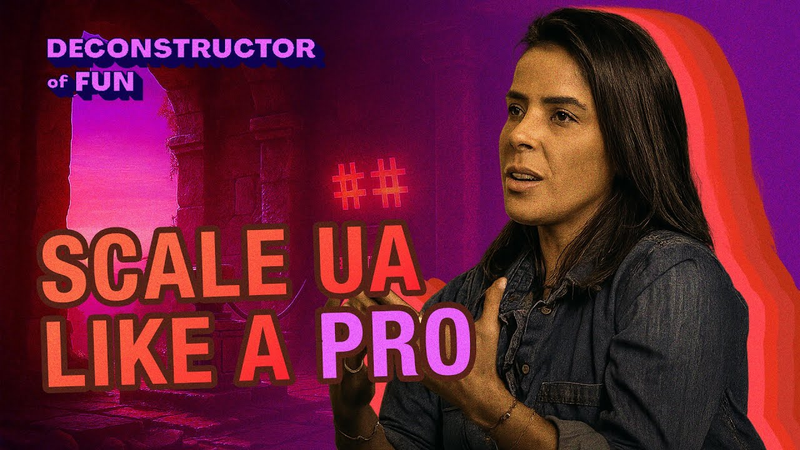
Karen Levy, director of creative business operations. Thanks for having me at your office.
Thank you, Mishka. Nice to have you here.
So, let's just jump right into it. The way I understand is a good creative is not the same thing as great traffic. Can you ex like explain that?
Right. I think we wish it was because then it was very easy. Um, but a good creative um is not perhaps what will help you uh scale or bring the users that you need uh into your game. Uh when we build a creative, one of our goals is basically to first goals, let's say, not the only and and uh goal is is to drop the CPI. And by dropping the CPI, I'm able to um buy more profitably and and get more users, of course. Um, and CPI is a combination of CPM, IPM, right? So, I'm trying to basically get users install
more on on the impressions I'm I'm getting from from the uh creative. Uh, but it doesn't mean that if I do that, I'm getting the right users. Um, and this is something that we you need to continue and track on your creative and understand if the direction you have taken with your creative eventually in the posting. So brings you um those users that are good for your game.
All right. So let me try to explain to to myself and correct me if I'm wrong. So cost per install comes from cost per thousand impression of the ad divided by installs per thousand impression. And creative is really that thing that affects the installs per thousand impression because the cooler it is, let's say I'm using some hot IP or some well-known thing like a Spider-Man and now I get more installs because I have Spider-Man and then it can be a bad thing because if I don't have a Spider-Man in my game, then I've just misadvertised and they come in and there's no Spider-Man and that way I
drove a lot of traffic. I decreased the CPI, but I didn't promise what the users wanted to see.
Exactly. So, um, if you're not using the right strategy,
you're bringing the wrong users, you're either misleading them,
uh, because they thought they're coming to a certain game or a certain theme um, and they're not getting it. Uh so obviously you're harming your retention um and your potentially uh lifetime value of users that you're bringing into the game uh and the potential to earn the revenues that you need in order to return your investments um and and on the other hand either you're just not bringing only those that are okay with the game and spending X time but you're not spreading and being more
marketable. um to reach also those that are not the highest potential but does have some potential to balance your uh return on
investment uh that you're looking for.
Well, can you explain me then how why does misleading ad then work? I it seems to work. I don't know like in theory it shouldn't work but they they do they work.
They work. Um I think that uh in marketing um one of the major things is how to attract the user. It doesn't matter if it's in mobile, in TV, right? On billboards, you're trying to attract somehow. Um, and usually it will touch some emotion or it will touch um like it will be something very exaggerated that you're um really exaggerating, for example, a feature or exaggerating a feeling or a situation um to pull that attention of that user. Um, and in games it's not that you have those points of exaggeration or those points of extreme things that you're pulling the attention. Today, a user in the media is like billions, you know, of of things that he's seeing.
He's scrolling through posts, scrolling through different website apps, jumping here and there. It's like really crazy. And tracking the the attention, it's very hard. So you need to use something that is very unique that is uh not something that you're showing exactly in the game when he installs and opens it. So that that excitement
is just dropping and um and then it can either it can go two ways. Either he continues to explore the game, likes it and plays it or he's like really frustrated in what happened right now. And it's funny because I had a taxi driver uh lately that the taxi driver was complaining to me about misleading ads and how um
and he knew that you're uh you're the the source of misleading ads.
Yes. He asked me what I do. I had a work call on on my phone and he was asking what am I doing? And he said, "Ah, you guys like it's so frustrating. Stop doing it, please." Uh, so I really felt him and uh I told him it's really nice to see this emotion
um in real life from a person that sees an ad uh thinks that he's going to play something or see uh what he just saw in the ad in the game and feel the same excitement, but then he doesn't. And it's frustrating because you just download to your device another app. Uh you open it, you spend your time on it and it's not what you've seen. So it works because you're using techniques of marketing that is working. Um but uh so it works in terms of marketability.
Yeah.
Um and this is for the stages when you want to scale up, you want to attract more users to your game. So it is a strategy that you can take if you have a certain goal or you put aside your post install goals uh a bit because you need to scale. But uh you need to understand that it's not a long-term uh uh strategy that you can go with.
Isn't it so that in hybrid casual the creatives are typically showing the gameplay like is it's either a playable
or very much around the gameplay and through that there's less of that misleading advertising and it seems like a lot of the misleading advertising is actually showing hybrid casual gameplay but actually you're ending up in a 4x game.
You're talking about hyper casual.
Yeah. or even hybrid casual like let's say screw master like I've played multiple playables with screw master where you just open up and start breaking down the house
and that's actually the game
and so do you have these type of a same challenges or are you able to get through with just having creatives about the core gameplay? So the I think that the the thing is in creative in creative teams is to know how to balance because um and to understand the status of the game and where does it stand now and what do you want to achieve. Um, most of the time in the hybrid casual games, um, you would want to stick to your gameplay because you would, it probably would not bring you very good results for the long term.
Um, if you go with something that is misleading, that is showing something that is not in the game and will not be in the game. Um because you can work on techniques together with live op for example to insert things uh that in marketing you see works but don't exist in the game but if you know that it's completely off. So um it wouldn't be a strategy that uh would work for a long term and probably will bring you to very low margins and even uh losing on profit. So um usually we would want to stick to the game play. You want the user to really understand what the game is um what are you supposed to do as a user and the thing is that the user needs to understand it very very quickly. Um because if he understands it very quickly and it attracts him. So probably this game is for that user and he will be a high retention user um that
will continue play the game, continue progressing in the levels and wanting to know more and and and seeing more of that game. And uh once we do want to scale a bit and go a bit off of the strategy of um staying profitable, buying the right users, we will go a little bit on the side and go off game. Let's say a bit misleading, not too much. Um
it's a touch of misleadingness.
A touch I would say that um lately you can see that misleading stop stop to be the whole creative. If in the past we have seen misleading creatives that are completely like
from the first second to the 30 second of the video you're seeing something that's completely off. Yeah.
Today um you won't see that much. You will see those misleading uh actions or like scenes coming right at the beginning of the ad.
Um the first three to five seconds um
that we call a hook.
Yeah. Um and hooks are becoming like the thing. This is like the everyone's talking about the hook. The hook. Um so, uh it is really important because
3 seconds is your golden time to shine and attract the user. As I said before
in marketing, you need to attract the user somehow. You want to show something that is exaggerating. you have three seconds to do it and then continue to your real game play because if the user the user will not remember those three seconds he will see the rest of the game play and then he will have a very reasonable you know flow uh to the store and to install and to play.
So the 3 seconds meaning that since a lot of the channels have sort of a shorter ad units if you will like YouTube shorts or Tik Toks or or um reals and other ones so that's why you don't get swiped away. You have to like hit them with the music and the right type of cut. You got three seconds, two
seconds, probably one second.
Yes. I don't I don't know if your kids are scrolling through reals, you know, shorts. No, not
not allowed.
Um but I think it changed the industry and the way that you look at creatives completely. Yeah.
Um because you are observing so much media in a very short time. Uh and the that's your only way to attract um the right like the a user in general and then there are more chances they will continue to see the rest of it if you did a really good job at the beginning
um because of those Tik Tok and shorts YouTube um kind of type of uh ads and and media.
All right. Well, then let's talk about quantity versus quality. What's the uh what's the strategy these days? cuz like it feels like there's two different versions. It seems like some studios, especially on the casual side, are more
focused on quality where they get the celebrities and really pump out these like superb marketing campaigns with narrative and humor and whatnot. And then there's essentially AI driven super fast development of thousands of iterations of ads.
Yes. So, um it'll be annoying, but you need to do both.
Celebrities too. No, celebrities is another genre of games. If we're talking about hybrid, uh hybrid, hyper casual, um we're still not in celebrities, but we are in a world of using creators. Um so so this we can talk about uh separately but um in general quantity versus the quality is um two ways of managing your operation and creative strategy when you're um coming to build your your team or your creative strategy of the game. Um and
you need to do both. Okay. you need to understand when one benefits your game and when you need to shift to the other one um to benefit a little bit more. And uh what drives me when I'm looking at uh my strategy and how I do it is really my the value I'm getting. Okay, because when you're working on a quantity mode um you're looking to to find basically a direction. Okay, so you you want to test your real gameplay, for example, but you have different levels that you know are working well with the users in the game. Um, and you want to test several of them, but you also want to iterate on each level. Um, add some things that can impact CPI, uh, but not give you a complete off direction, um, that will mislead you in your strategy and optimization. So um you will do a mass
production and you can test 20 30 40 videos on a campaign test. So you just it will help you to focus on what is your direction. Once you found the direction, you have a good balance between the marketability and the performance of the users that you're driving to your uh to your game, then you need to go to the quality and you need to focus on that and understand where do I invest my time because quality takes more time. You need more uh people to work on on a on a certain creative. you're putting more time on ideiation, on strategy, on on your thoughts on how to do it, how to execute it. Um, so you want to invest in the right thing and not just, you know, shoot in the air and say, "Okay, I think that's a nice creative. Let's invest in that." In both cases, AI is something that um works on both and is helping us to use both and balance ourselves on
both side because if in the past we didn't use AI and it was very hard to go into quality so we were mass production and testing a lot today AI helps us in the quantity okay in terms of uh generating like images and helping us to create better images in in mass production obviously and in quality create assets that will take us more time um that will look good higherend production uh in less time than it would take without AI. So um
interesting uh actually there's two things that I wanted to kind of go through. The first one is, is there still a concept of a hero creative when we're talking about hybrid casuals? Meaning there's certain creative that is just so under overperforming and just driving incredibly good traffic compared to the others or or is it typical that that there's multiple creatives that are essentially of the same quality?
As a creative performance, when you're
looking at it, you don't want to have one.
It's not healthy,
but it's typical.
It's It can happen. Yes, it can happen. Um, but most of the focus of the team would be to change that picture.
Um, because also in hybrid casual, the fatigue is there. It happens. Um, and it's very hard to to to catch that if you don't have those others in the campaign that can give the air and, you know, the campaign to breathe. Um and and uh the fatigue is very hard to change. Like when you have just one that is working, you need to it would be very hard and a more struggle to to find the other creatives. So you need to always be on top of it. Iterate your hero.
Yeah.
Okay. If that's your hero, that's that's really really good that you found it. You will need to iterate. You'll need to find those other directions that are keeping the same theme and story of your
creative but using more um iterations around it. you can use a lot of AI to do it and and test it like voice overs and um UGC's and and a lot of other things uh changing textures and elements in the game like very quickly just to find those other directions that that will be more healthy
but still lead that hero concept.
Yeah. So
yeah. Okay. Understand. And plus if you have a specific hero creative that's also the creative that all of your competitors will be copying. So the fatigue is even faster because not even how many players you drive through. No one's copying.
Yeah. No, of course not. Especially not creatives that they just pull out a sensor tower and make their own versions with AI.
I don't know what you're talking about.
So talking about AI and you said there's benefit both in terms of increasing the quality uh but also increasing the quantity. How how much has AI changed your job and your team's job in
relatively short amount of time? I think that um if in the past creative teams would really avoid going into the quality area um AI has a really good like done a good job there
um to remove those fears of creative teams to go into those areas that are more quality um by creating assets that are they look better um that um are more fine-tuned or going over like uh ideations and and and things that uh you would not go before. Okay? Because with AI, you basically can do anything.
Um and if you had like an idea in the past, you say, "Ah, no one will go with me. It's too crazy. It's off completely. Today, it's like you just do it. You show it on your brief or like ideation meeting." And uh everyone's like, "Oh, that's really cool. Like, how did you do it that quick?" And and then from there, it's really easy. So it cracked up I
think that quality area that a lot were afraid of uh to use and um in the quantity obviously just reach much more uh from your portfolio or like if you would uh think of if you're focusing on two games that you have but you have maybe four or five or six and you don't have time to design a new icon on screenshots for the store or have like a new textures for the uh creatives to test iterations. So their AI is completely has changed the picture.
Um and you can go and and get a set of 20 30 new iterations for your hero creative let's say in one day. So
and when it comes to different creatives are there specific creatives that specific type of creatives that work really well with hybrid casual uh and specific ones that don't work? So maybe the question is more like I know on other type of games there's hybrid
creatives where you essentially add a UGC and a gameplay or animation and UGC or animation and gameplay. Uh is there a specific type of ad units that are spec that good with hybrid casual and and some ones that are not? Um the I think like most of the games so obviously video playable would be the top uh type of creatives inside those
though you you will go and see um that in videos um there is different directions that you can
take uh some of them work okay some of them uh work better um and there you can see difference So we have the voiceovers for example which came in uh I think as well as part of the change of reals and Tik Tok and everything if in the past always we were told as creative people
no one uh uh looks at like or plays with
the voice on right the volume is always off and like you don't have to spend your time on putting uh um music or audio on your creatives. So today it's completely the opposite like if you don't have a voice over then probably your your ad will just be skipped.
Uh so so this is something that you know you have to have. Okay. So you found the good gameplay video now you have to put a sound on it. If it's music, if it's voice over and subtext like also today you know people are hearing it they want to read it as well. Wow.
Uh so you can see that when you put the subtext it works better. uh these things in hybrid hybrid hyper casual um works really really well. Um UGC as well is a direction that uh we have uh seen uh evolving with time. Um I think started I don't know two years ago where it was it's real actors and you had to do like
a really big um you know um production day of filming and everything. Um it it wasn't that cheap. Uh and you had to plan it and you had to have someone to copy the text and everything and you can't change it afterwards.
Yes, you can change it and you can mix it with other videos. Uh so this world really really evolved I think because it works and you can see that it is working especially on social channels for games because in the past you would see it working mainly for products that you're like buying right like maybe e-commerce or other uh areas and then it came into gaming and it was questioned like we were not sure if it's going to work or not. um the productions are expensive like gaming are not going to put on it too much if unless it's like famous you know in uh those areas but um but then something evolved there and then AI came in too
and today we can just generate uh like
UGC uh from AI that it looks real but it's not a real person there's no one uh that is real like that on earth uh speaking on a text that was generated with I after you have inserted your video and it read it and and knows exactly what to say created the subtext as well
on whatever language whatever
whatever language it takes around
all the takes 30 minutes to generate and then you have the video. Um and I think this is a big game changer that we will see more and more UGC coming in uh for the like game industry especially especially on socials
which there people are looking for those people that are influencers that are
that's scary I'll be honest
when somebody's recommending me something and that somebody is not even a real person
on the other marketing.
Yeah. But on the other hand that somebody could be an actor that is paid to recommend me something. So it's like
what's the difference?
It's like
but okay a little dystopian. So let's move up from from that into uh different types of ad unit maybe not ad units but more like what are the type of a channels that work really well with hybrid casual because we've been talking about UGC and UGC is of course related to social media channels. Are those the uh the primary channels now or is it still advertising in other hybrid casual games kind of moving in between and or like what are the main channels?
Um I think that we we can divide it into three. So we have the social channels uh we still have the networks like SDK networks
um that are around and uh and we have also I think the incentivized uh uh networks as well where in the incentivized network we're not really focusing on creatives but it they are channels that are important for games um but there usually it will be like offer wall so your icon would be very
important in that case okay which um It is something that you need to think about uh when you're designing your icon.
Um how does it look? How will it look on a device? How will it look when it's on an offer wall? Um because these channels can drive a lot of revenue for your game.
Uh and the icon does impact. So you can see it uh in that and you can see it also for example on Google. So uh they are running uh your campaigns also on uh on Google browse and on Google brows it's only your icon but um if your icon will be play like will will pull a lot of attention and users will get in so your placement will be better and uh the quality is really really good of those users. So I really suggest like invest in your icon.
Interesting.
Uh do a very good job there so you'll attract from that and all the others are really the social and the SDK that are focusing on the videos and on the playables.
Um there's no one that works better. I think both are important in order to have a holistic uh you know approach and also uh I think some channels are really incremental because they're not in any way uh correlated with the others and they will drive you more new users and you would want to push that. So I would not give up on any of them. I would really uh I would look at it at at those three groups to understand how are you strategizing your creatives based on that. So on social you need to focus on social things that are the hooks that are really important and the UGC's um a lot of videos mostly videos playables are starting but like it's not the main as we see on SDK um and on SDK invest in the playables because they are incremental and they are important and they really give the user the chance to play your game. So it's really really
important uh to invest in those.
And h what time like in what phase does your team start working with an external team? So a team that you're publishing, do you come in really early on to help out with maybe figuring out what the game plan could be or what's the early marketability or do you come in more at later stage maybe towards soft where the team is already looking to perhaps start scaling and at that point they're looking to start optimizing their creatives.
So we're in the picture from day one.
Okay. Um our we have a there's a team that works on new games. Um and we are really going with them from the first day. We're uh launching it for um just a marketability test and understanding the first metrics of the game. Um and it's important that you put the focus on creatives from the first day of your game.
Uh because
with that you can understand where to
focus. Also you it's a it's a very good like um uh connection of live ops and creatives and both can really help each other to understand what is a good strategy or live ops can take from marketing things that um will help them develop and go to through through directions that can help the game grow as well um in terms of ARPO and and others. So I think that um it is important from the start to always find your best creative that brings you either dropping your CPI at the beginning of course because you need to just find a lot of users and then optimizing it to find the best game play and those that are having a nice retention uh that are returning very nice in your game. Maybe you're finding like paying users as well from the
beginning and understanding with that how to develop more your strategy of inapp purchases. Um, so it's very very important and then we go through the whole lifetime of the game until we decide to launch it and of course
strategies change throughout this uh whole lifetime and for launch and then
what's the biggest reduction of of CPI you've seen that has come through creative optimization?
Wow.
Like how many hundred percentages? Um I think okay we can talk about hyper casual versus the hybrid casual.
I'm just I'm just curious to see
because it's very different.
Okay. Well let's say hybrid casual. So that's more of a late numbers. It's like when you've optimized the creative you've been able to decrease the cost per acquisition by by how much? I understand this is just a number. It's not
it's not going to stay there forever but it's still a result that you achieve through iteration.
Yes. You can like um you can see in
hybrid casual I would say um we are around like the 30%
deduction
40 is like very extreme unique. You go to 4050 is like numbers we had you know hyper casual numbers but um but like the 30 is a very good deduction. Okay. Very good. Yeah. It's a it's a nice deduction.
Interesting. Okay. We've seen bigger in at least on on midcore size because when you start changing settings and themes then you start seeing pretty big changes over time.
Yes. But in the in the hybrid casual I think the game play is very clear. Yeah.
So like uh it's very it's not that if you're launching your game and this is the game play, it's very simple, you know, either it's a puzzle board or it's um like a tycoon that has a mission to create um I don't know, clean the city or whatever. Um so it's not that
complex. The users are very quick. They need to understand quick and then the reactions uh are very quick. So
the features are the boosters, the features, the levels are I I don't think users are very
you know um surprised from like a new booster that will be there can help of course and that's the the strategy that we're looking to always develop and have have them stay in the game more and and but um this is like from what we have seen um
sizable amount still.
Yes. Um, so that was my misconception is how much you can reduce the uh the price in a Volva CPI. What other misconceptions do people have in terms of creatives in hybrid casual games?
Might go with like high quality is what works.
You know, uh I think it's a misconception. Uh if you're if your strategy just looks
to get high quality creatives, I think you're going to miss a lot of things. Um, high quality creatives are great and they're important at certain stages of the game, but they're more expensive. Yeah.
Like the more quality you go probably you're going to compete with like uh more expensive advertisers out there and it it's going to cost you. So um it depends what's your in-game metrics, you know. Um but
so I think this is one of the misconceptions of it. So we're going hybrid. We need like a high-end studio. Yeah. and Disney productions,
Pixar level productions.
Um, so I feel that at least for the the start of a game and the first year of the game when you're trying to really stabilize your your strategy and in-game strategy and everything like keep it simple and keep it like uh to true to the game and um build the story together with the live ops team. So it will be built in a very reasonable way and not
something that is like extreme. So invest like bigger investment into creative doesn't mean better return.
No.
Okay.
It doesn't.
What what other type of misconceptions people have?
Um I think the other misconception is uh having just one good creative.
So I think we talked about it. Uh the hero creative.
Yeah. You said don't trust the hero creative.
Like it's a fading. It's a fading. trust it and and let it lead you, but don't like don't feel comfortable with just one creative that has most of the share of spend of the campaign. It's not healthy. Um, and you'll you'll just be impacted from fatigue much quicker than if you be able to have a healthy distribution of a few creatives. It's not it's not that healthy to rely on one. And I think it's not only on creatives, you know, it's don't rely on one media source. don't rely on one type of creative, right? So, um you need to be distributed um much more healthier.
Uh so, even if you're in your first stages of developing a game and you're testing and you have just one video that is taking all the share of spend, work more to find more and have a better distribution.
Hedge your bets.
Yes.
As anyone would say.
Yes.
Um any any other ones
when you're trying in your creative to just test all of the things in your game. Uh so this is like a misconception I think uh that some people are um sometimes taking this approach.
They have a lot of features and all the UI and explosions and you know and and they want to test it all.
So it can look either way. Either you have a very messy creative that is trying to test everything or you have a very messy strategy that you're like oh this uh this this competitor did this. I'm going to do it and let's copy that idea and uh take this and oh this feature would just went out. We have to put it in the creative and your strategy is just a mess.
Um it's not good to like you need to
test most of the things but you have to test it in a very smart way. So if you want to test a certain level or a certain uh uh game that you have in the game, um you want to understand what works uh in that and and what pulls the user attention more. So if you're using an emotion of um urgency or you're using an emotion of relaxation, then um it can impact very very different on your results eventually. Um and if your strategy will not be focused and clear and um built very very well. So you'll just not be able to even understand what works because you it was not organized enough.
You're testing too many things at the same time.
Yes, you're testing too many. Test relaxation with that one game play.
See the results. Test urgency with that
game play. See the results. And then you can really compare and say urgency works better than relaxation because if you won't do that, you cannot say it. It's not right. And then you're just missing a lot of things in your strategy and your approach.
Uh one one last question is like how important is to understand player motivations when you are building um your creative strategy? It's the most important thing um when you're taking a game and building a strategy especially in hybrid casual uh where you have more depth in the game and like you are thinking more of a long-term strategy.
Um so you need to understand what is the motivation that brings those users that are driving the return you're looking for. um if if most of the users that are driving this good Ross for you um coming from creatives that are showing relaxation so you need to understand that audience and what they're looking
for and what are you going to show them in the creatives because if if
those are your users most of your users okay
um and then you'll go out with a really extreme creative that is explosions and urgency and like so probably it's not going to work that well they're not looking for that and it won't attract them too much and um so so it is important and it is important in your strategy to really look at those motivations and understand when have you tested them on which creatives how did you test them because I can test relaxation through music through voice over through visuals I can test relaxation in many other like many ways uh so I need to be very structured and and understand what was my best way. So it
interesting.
Yeah.
So basically you're saying that because the way your team works, you and your team works is not that you get into a colorful room with a lot of creative things on the wall and you come up with nice cool ideas. You actually have to have a strategy that thinks about not
only what's happening in the market, what type of gameplay, how you want to put it out, what kind of a channels, what kind of ad units. Uh but also you need to think about what motivations you're tapping in and then following how does that creative perform so that you can get more of specific type of uh users that are really enjoying your gameplay and they're coming through these type of creatives.
Yes, it's uh complex.
Uh the creative team is not in a pink room as you said. they can sit sometimes on excels and tables and build their strategy to understand really
uh what uh is driving the performance. As a team of creative you want to bring value and your your goal is really to um bring growth
and healthy growth into the game. So uh you have to optimize every step of the way that you're doing and and and really challenge your strategy all the time. Did I go to the right direction? If not, what is the new direction? How am I
going to test it again? And if you're not like um building it right, so can be a mess.
Well, thank you Karen so much. Uh
thank you Mich
avoiding everybody for not building a mess.
Auto-generated captions from YouTube — names and numbers may be misheard.
Sustainable growth in the hybrid casual gaming sector relies on a sophisticated, data-driven approach to user acquisition that prioritizes long-term retention over short-term traffic spikes. While misleading advertisements may generate initial interest, they frequently fail to convert users into long-term players. Modern acquisition strategies instead focus on authentic gameplay representation, utilizing high-impact three-second hooks to capture attention before transitioning into genuine game experiences. This alignment between marketing creative and post-install performance is essential for maintaining healthy user cohorts and maximizing lifetime value.
Achieving this balance requires a dual-track methodology that combines high-volume, AI-assisted testing with refined, high-quality production. By integrating creative teams into the development process from the outset, studios can conduct marketability testing early, often reducing cost-per-acquisition by 30% to 40%. Continuous iteration on hero concepts—incorporating elements like user-generated content, voiceovers, and varied subtext—is necessary to combat creative fatigue. A holistic distribution strategy across social channels, SDK networks, and playable ad platforms ensures that these assets reach the right audiences effectively.
Success in this competitive landscape is not determined by high production values or reliance on a single viral advertisement, but by the systematic testing of player motivations. By isolating psychological drivers such as urgency or relaxation, developers can derive actionable insights that inform a diversified creative portfolio. Ultimately, the most effective strategy involves aligning ad content with the core motivations of a game’s most valuable users, ensuring that creative operations remain agile, iterative, and deeply integrated with the broader product development lifecycle.

Deconstructor of Fun · 2026

Deconstructor of Fun · 2026

Deconstructor of Fun · 2026

Deconstructor of Fun · 2026

Deconstructor of Fun · 2026

Deconstructor of Fun · 2026

Deconstructor of Fun · 2026

Deconstructor of Fun · 2026

Deconstructor of Fun · 2026

Deconstructor of Fun · 2026

Deconstructor of Fun · 2026

Deconstructor of Fun · 2026

Naavik · 2026

Deconstructor of Fun · 2026

Deconstructor of Fun · 2026

Deconstructor of Fun · 2026
Moloco · 2026

SocialPeta · 2026

SocialPeta · 2025

Deconstructor of Fun · 2025
Deconstructor of Fun · 2025
Deconstructor of Fun · 2025
Naavik · 2024
Deconstructor of Fun · 2024
Comments