VideoDeconstructor of Fun
Masters of Publishing 3: Ads Don’t Kill Retention, Bad Ads Do (Maayan Aharonovitch, Monetization)
30 Sept 202524 min video
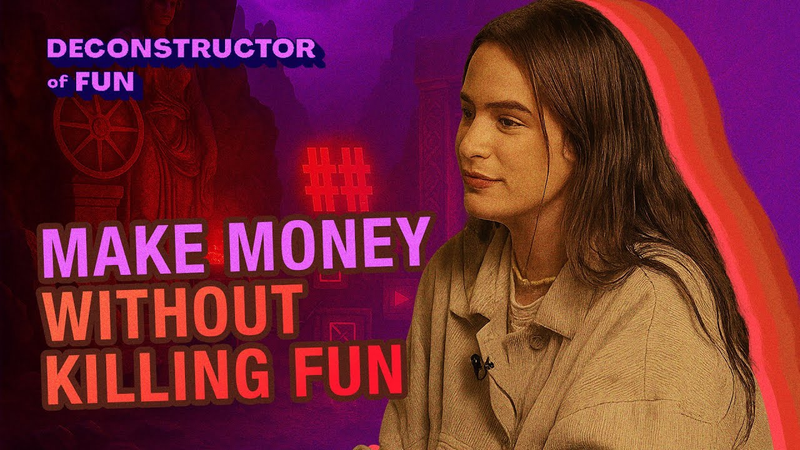
May Aneshkall, monetization economy lead, Supersonic. Let's talk about how to monetize games.
Okay, then let's talk.
All right.
So,
first thing I want to like I know you want to go already, but I want I want to tee it off. Like I'm really curious in like what works in today's environment. Has that changed over time? Because it feels like hybrid casual games are just evolving so quickly.
That's definitely true. And I think when it comes to talk about monetization and what works, first of all, we need to understand that the first thing we need to have in the game is the motivation of the player, right? The motivation to win, the motivation to complete a level in a puzzle game or win a battle in a simulation game. We have to have a motivation for the player and he needs to understand that. And I think that combining that with players maturity, it's what's makes us makes the monetization work.
So basically like by maturity you mean how long they have been playing the game, right?
Yes. Exactly. So first when a player starts to play the game, you want to make sure that they are feeling capable and they are able to win very very early on. So once they understand the game,
you know, they're starting to understand the core loop and what's motivate them, then that's the right timing to start slowly slow things down gradually of course and make sure that there are frictions of points when you can startly slow startly showing them what they need in the game in order to beat the first level for example or to win in a strike. And this is where we're coming in basically. So maybe I can give just give you an example.
Yeah, sure.
Let's say you have a game that the mechanic there is to unscrew screws.
Oh, I've heard about it. You've heard about you want to be like a screw master.
Yeah, exactly. So if you want to be a screw master, listen to that.
Well, that's a longterm determination.
That's a great game, I have to say.
Okay,
so let's say you're starting to play the game and you already completed 200 screws out of 250, right? You're already very invested, very deep in.
That's where I start to slow you down. and maybe offer you a booster or extra move to finish the game. At that point, it feels like very naturally to offer you something in order for you to win the level. And that's where the players feels really comfortable once he understand understood the game and
learned the game. Now, you really want to finish because you're already very invested. So, we usually show at those friction points something that feels more embedded, less than aggressive or interrupted.
Got it. So, basically in in short, I'm playing a game. I'm getting closer to the goal, whatever is being set in that goal. And it requires either more skill or more time involvement to get there. Or you can alternatively choose a monetization method. And in case of hybrid casual games, that could be inapp purchases, but that could also be watch and ad.
Of course, that can also be watch and ad. And I think that in hybrid casual, we need to understand that it's really important to balance balance the boat. Whether in casual game, right, you're mostly relying on revenue generated coming from in a purchase and RV has a small role in that sense. In hybrid casual, you want to make sure it's embedded into the core loop ad monetization already from the beginning. What's interesting about hybrid casual games again is is because of there's two monetization models and the goal is to increase the retention of a players but
at the same time if you when you have a game that retains players for a longer time the effect of ad monetization decreases because there's less value in showing ads to a player that is not converting to those.
True. But you don't want to look at this those users in just two different segments whether you're an ad watcher or an inner purchase user and those the only ways we can direct you in a tweet because ad watcher can become a paying users but also in hybrid casual ad watchers can be ad whales and it's we can also we can all always all the time let's say adjust the economy adjust the events so the ads that they are watching every day would still be meaningful. We have players that watch 20 ads a day.
Wow.
But we also have paying users who watch 20 ads a day. So in hybrid casual this actually synergy is what makes it work.
Huh. So so oh that's interesting part. So the segmentation in hybrid casual games is it ever so that like in more casual games or like match games let's say for example once you start paying
you're not really seeing ads because they don't want to lose the payer to another game. But you're saying that in hybrid casual games that type of a distinction doesn't exist and you can become an ad whale and a regular whale at the same time.
That's true. Definitely. And we adjust econ the economy according to it. Yes, we will make sure
that the distinguish or let's say the differentiation between watching and adding pain would be very clear to the user, right? for example, you do want to make sure that the users the users understand that money gets you more and money will get you a much more sustainable experience and a much more let's say permanent experience. What's really important in hybrid casual game is the fact that we always show to the users that yeah maybe he can grind grind the game through rewarded video but paying will give him more and pain will get him to much more better points
and I if I will let's say give an example then let's say I'm having a simulation game
and I'm a player that plays versus this huge monsters that I really want to defeat
at a moment that the players feel like he's about to get defeat I'll watch I'll
offer him an ad
watch an RV to summon this one time dragon that will help you beat the monster. I watch the ad, I get the monster, I feel super excited. I understand this value of the dragon, right? And what he did for me. And then after a few levels, when the player actually experienced that, I can tell him, "Yeah, listen, take this dragon for $4.99 forever. You can use it anytime you want in this match against this crazy monster." I'm showing to the user, and this is a powerful moment because I'm showing to the users that what he already experienced within an ad, which was only 30 seconds of his time or whatever, he can get forever in just $4.99. So the important part I think when having a game that has to have both ads and in a purchase is to make sure that the player hits some in somewhat of a ceiling wall right it can only get you to a certain point. You can keep watching ads, but money will give you much more than that. Much more sustainable experience and much more value experience.
And and the reason for that is just so if I understand correctly is that you want to emphasize the value you get from
inapp purchase because that's a more long-term monetization strategy.
As the retention goes, the value of the ads decreases and so forth, right?
Definitely. Definitely eventually pen users will be worth more.
What's an what's an ad whale then? Because like correct me if I'm wrong like if the value per watched ad decreases over time then how can you be an ad well like does it go to me watching 250 ads or like to even keep the same amount of
it depends on the it depends on the game of course and how many how many ads a user can watch in a game but in that sense I think an ad will is someone that is willing to watch 20 30 RVs a day and he does it every day on and on and on and we should keep making those monetization moments of watching in an ED still be valuable for the users but we keep on showing them in a purchase I think opportunities.
What do you think about like some of the casual games like the differences between casual game monetization and hybrid casual monization just from from the perspective of let's say there are marketing campaigns that are showing
that hey in this game there is no ads like like that's an actual unique selling point for them. They want to advertise. they state to the player as they're acquiring players
that there will be no ads in this game. So there's clearly a perception or a marketing study that shows them the players don't like ads
and then again your business model is half of the ads and players watch them
willingly like they actually you know do a rewarded video. So how do you balance this off like like how does and and overall like what's the difference between casual game monetization
and hybrid casual because they're getting so close. That's true.
That that maybe the production quality is the only difference right now.
No, not at all. Basically, because even to have a successful hybrid casual game, you do want to make sure that it drives long-term long-term term engagement, right? And users will come back to play every day. So, it's not about production value at all. I think it's about first of all, it's getting let's say the lines are very blurry as you said at that sense, right? The same monetization
tools and the same monetization mechanics stay the same. You have
similar genres.
Exactly. You have to have a solid retention. You have to have solid economy. You have to have an addictive core gameplay. In that sense, it's no different. And I think
the main different is the type of users we're getting, right? Because casual games get, I think, users that are more AP oriented. And in hybrid casual, we are not a mass production because that's hyper approach, but we are definitely taking users from both sides. The audience is really really a there is a variety, let's say, of audiences. And yes, users definitely willing to spend their time on watching ads versus to pay and they're still enjoying the game. And we really really need to understand that we have to give them this experience in hybrid casual game. You have to support both ad watchers and and AP payers, but the experience will be different.
Do you feel like the the lines are just going to get blurred to a point where there's no difference between what we call a casual game and hybrid casual?
No, not at all. Because eventually, as I said, it's really different audience.
It's not really different audience but they have a variety of audience in in hybrid casual game
I think could be a child, it could be a mom, it could be a dad, it could be a grandpa and they no they don't win to will to pay never but you still get a lot of money from them. In hybrid casual games there are games that generate most of the revenue from ad and I don't think that's going to change.
Interesting. Um, we talked about segmentation briefly
and you said that there's really not that kind of a strict segmentation where oh you're not a paying user hence we will just start bombarding you with with ads in c in hybrid casual it just kind of continues the same way. What kind of a segmentation do you do then? Mhm. I have to say we do a lot of segmentation and as I said AP and ad it's the easiest part and of course we do that right when you talk about direct monetization
showing offers to the users then definitely we segment payers versus non-payers but that's the easiest and let's say the the smallest part in that sense we take all users behavior into account and I think maybe what I would
like to say that is a smart segmentation is segmenting the core gameplay and if you talk about a level-based game that's the easiest example I can get Then you want to make sure you give different experience to different type of users. For example, let's say there is a game and you're super skilled player. You win
all the games
and you're super skilled player. You win all the levels very very fast. I don't want the game to be boring for you and I want to make sure you're challenged and you're monetized. So for users like that, we definitely make sure that the level is a bit more difficult and we increase the difficulty as well as as according to the player behavior. But when a we have a player that the game is very frustrating because it's too difficult for them, we want to make sure we segment those users as well. So first it's about segmenting the core game play. Now take that if I give you a good experience as a very skilled player and also a good experience for the very weak player and I add to the point and I add the near miss feeling. So both of you are monetized, both of you are enjoying the game and that's core segmentation.
You can give a few difficulties right of a level to all type of audiences you have
and when you do segmentation so
do you create those segments like I'm just curious in on on like a very detailed level like are those segments created by hands in a way like that on the back end you put it in your live ops platform and you create different segments based on the data you're seeing or are you in a point where you're getting closer towards personalization so based on the user behavior that dynamically tunes the difficulty 100% the second one. Definitely a personalized experience. It's not something that is handmade, handcrafted at all.
I've seen that it looks like a circuit board.
Exactly. And we don't want to do it. And we don't want to avoid it and and we we are avoiding it. And actually, we're doing it from the start. Meaning we we understand what's the value of of core segmentation. For example, we have economy manager that works like an it's an art, right? To segment in a core loop of a game. We have the data analyst who's helping the economy manager creating those models and those
experience to the users and it's definitely definitely automatically and personalized.
Okay. So let's talk about game economists like
in my experience there are like these magicians that are that are always missing. It's like oh we just need to balance it. Let's just bring in game economist and like like what does a game economist do? Like what what is what is their role really?
Magician. Yeah, that's how they sell themselves. I understand that's how they command the higher payments. But but in practice like and and at what point you really need a game economist?
Mhm. That's a really really good question. So first of all, the job of a game economist is first of all creating a balanced and a solid core gameplay that they that the game would be rewarding and fun, but also scalable and profitable, right? So they have to balance those things together all the time and it's a really really work of art and it's actually starting from the beginning let's say especially like you know when we work with developers and you think you one might think you know a developer might think I see a game in the top charts right is a really good
game I have the same core mechanic let's copy paste their economy and that's it I have well balanced
yeah same levels let's go but that's far from being truth because economy is something first of all that needs to be attached as I said earlier to the audience you have and the type of audience you have will definitely affect the economy you're doing in your game. And it's not just to balance the core loop as I mentioned before. It's the prices and the events and the the live ops that we're doing that should fit different type of audiences. And that should come very very early on because it's not just a something that lives in a spreadsheet, right? It's evolving with the game according to evolution of the game. When you add a new feature, when you have add a new event, when you add a new thing to the core loop, add another currency when the player is progressing. you have to always evolve the e the the economy. So it's something that is evolving and is it's always living in the game and it's definitely a work of art in that sense.
How many like when does a game economist come to a project because you work with external studios?
True.
Is it the first thing? Is it the second
thing? Is it towards the end? Like when do you start the balancing process? as early as possible. But I tell you like that
we work with different type of developers, right? And different type of studios and they are very different in their sizes, let's say, but also different in their skills. So some developers have a great skill to create a really good game, but they're lacking a UIUIX. So we help them with that. And also some developers can have a really good draft of economy and then we can get that and we can start putting layers of monetization, but eventually we'll have to walk hand in hand. And in supersonic we started very very early on and just actually we work together with the developers and we think together about the things and sources and about the currency. So the earlier the better because that would be a part of the validation once we even just do a small small soft launch of a game. Oh, well, how about um talking about soft launch? Um, a lot of the times when when I worked on games or when I'm working with game teams that work on games, they like to think the stepbystep approach of building a game
and not building a game, but launching a
game. So, they start off with like, okay, we're going to put the game out first. We want to focus on day one. We're going to work on the tutorial. We're going to work on this. We're going to work on that. Then, we're going to go day one to day three drop drop rate. We're going to fix that. Then, we're going to focus on day seven. Then, we're going to focus on day 13. and then day 30 and then we're going to add monetization and then we're going to add marketing. What's wrong with this type of a thinking of like step by step which is easy for the game team to to f because there's only one thing you focus on at the same like only one problem to solve. Is this a wrong approach?
Definitely. Yes. And and but I totally understand why this approach even exists because it makes sense, right? It's the right order. First have a great game, addictive game, great core mechanic, then monetize. First get the validation that your game is fun. But monetization is not just about fun. It's about validation of the even potential of the game. Let's say if you have a game without monetization. If you have a game that spins is the should be the main drive of users. If you won't have that need for extra spins, then the game would be boring. So it has to be embedded from day one. And in that sense
in hybrid casual, we don't have the luxury of doing this slow pacing as you described. We need to understand if the game is valid and if the game CPI would be just a number, right, without having LTV. So imagine yourself a game that has no monetization. At the beginning, you wouldn't even understand what does that mean? If this is my CPI, then
there's no rorowass.
Exactly. There is no ROS. And once there is no ROS, there is no reason to understand what's the potential of the game. Can it be profitable? Can it scaled? And we have to make sure that it's embedded from day one in order to understand that because that's the luxury that hybrid casual doesn't have, right? You need to understand the potential first and you need to see signs early on of where the if the user is able to monetize.
So you're basically working on all the problems at the same time
like all the choke points of a of a of a game.
Definitely we it's not working on all the problems at the same time. It's building them correctly from the beginning. So it's not like we get we try not to get to a point when we solve a problem. Obviously that's that that would be a the dream is to build it together. And this is what we do. We
actually have monetization manager for example an economy manager and a data analyst. Those three things together with the game designers together with the developers from the very beginning.
What's the difference between monetization manager and uh economy designer?
Ah huge one.
Yeah.
Yeah definitely because even though the the monetization manager is maybe the one who's coming up with the strategy and the events, the economy manager has to support and he has to support it. He has to balance and to make sure that the offers that the monetization offer is offered at the right time to the right segments in the right trigger points in the right way in in the let's say in the right place when we need to tackle the the the user the economy managers know to tells you when the player is about to lose or when did the player abandoned the game when he's about to when the balances are off when syncs and sources come in then definitely it's very different
how do you know that the game economy is working well like I know when it's not working when there's an abundance of a currency that we can't put anywhere. Like we all know those points or where
it doesn't make any sense to to do something because you just have too much of that reward. But when do you know that it's it's like it's really really good.
You know when it's not good first of all when the game is flat, right? And nothing happens. And even if you have let's say a certain run rate of a game, it doesn't change at all. So you know the collaboration is not working well. It's definitely no one's fault. No, not just one person. But you know when it's working well when you see that not just the revenue goes up but the conversion of players is going up and the amount of user and the amount of ad let's say ads a user watch is getting up or the amount of paying users that not watching ads anymore or paying more than once twice or third time. The really important thing is to understand that it's not just one time conversion and a good economy manager will know to tackle this ide this point right of a one-time depositor versus multiple time. And last one on this one like how do developers work with your team? They didn't just come in okay core loop is good. Uh we got a good engagement on this now monetize.
No
no
usually no we work together because we built the game together and the point basically in that sense let's say is to have a layer of monetization on top but again we work together because we have to design the game experience with the economy and monetization. So it cannot work let's say as two different departments
just like build and then market.
Exactly.
Interesting. Okay. So just to summarize everything, what are the three misconceptions that people usually have about the monization of hybrid casual games.
I think the first one that I really like and I've came to learn like myself that it's like a huge miscon misconception is the fact that a game successful game has to have a hybrid successful game has to has a ratio. sort of a ratio, right, between in a purchase and and an IA 50/50 will work best. No, 7030, 6040. That's like all of that like doesn't matter at all. There is no formula of what works in that sense of the ratio. It's about knowing your audience and and knowing the game mechanic and what works
for that game. And in some cases, you can have a huge revenue coming from ads and that's okay if the if the balance works.
What else?
I don't know. I think hybrid casual have is generating low value payers, right? The payers could be it's just a one-time payer or a two-time payers and that's it. And you still going to relay all your money on those one-time purchases and that's far from being true and we cannot even build a game like that or even think about it as a goal because otherwise we will only rely on new users like right like hyper casual.
The really really important thing is to build a game that have a long re long long engagement let's say right a long-term engagement. So you do want to make sure and our goal is always to make the player the paying users not to pay just once or twice. We want to make sure that there are multiple purchase payers. So no no low value in that sense.
I can add a third misconception that I just had which was that uh that pay players can be either ad watchers or payers. But you're saying that essentially there can be both at the
same time and on even on a higher level.
Definitely. And you want to live with that synergy, you know, you want to live with that because this is about this is all about hybrid casual. Paying users can watch ads and still pay a lot. And that ad watchers can eventually become a paying users. And if we would put those users in a box, right, you are paying users and you are ad watcher and that is it and we will miss the option to overlap.
Yeah. One thing that I'm still can't like I'm just stupid. I can't understand this. How can how can somebody be an ad whale? Because the way I understand, I think I've said this before, is the more ads you show to a player, the less valuable valuable they will be over time because you're just not seeing that person converting. But you're saying ad whale. So please explain to me what is an ad whale.
Okay. So the strategy we use for ad whales, right? Because we do want them to watch ads, but definitely as you said to a certain point, it's maybe not as generating revenue as it is. So we cap the RV. Basically what we do for specific placements by the way that we know that those placements are generating the most like the highest ad
whales possible then we cap it. We make sure that the user experience would be yeah I can watch this and that amount of hours but at a certain point we cap the RV and then a user needs to decide whether I'm waiting or paying in the store and this is a great conversion point by the way. So you can be an ad but it's also a great mechanic in order to convert you to become a pain user.
Got it. So in a as a simple example from a game, let's say it's an RPG type of a game and it's a level based and I'm fighting every if I die, I can revive myself by watching a video ad. But what you're doing is like you can watch once,
maybe twice, and now you're run out of rewarded videos to watch to to resurrect yourself. So you can buy premium currency to continue doing this.
And that way you're throttling the rewarded videos. you're basically using it as a as a way to convert players to go to uh payments
or you are essentially increasing their retention because they come back the next days when the rewarded videos have again picked up and they're not allowed
to watch that many videos which doesn't decrease their value.
You said it amazingly.
I could be a member in your team.
You could. All right.
Well, now I understand it. Okay. Thank you so much for for the explanation.
You're welcome.
Auto-generated captions from YouTube — names and numbers may be misheard.
Hybrid casual gaming represents a distinct industry segment that requires a sophisticated, integrated approach to monetization. Unlike traditional casual games that often rely heavily on in-app purchases (IAP) or hypercasual titles that prioritize ad volume, hybrid casual games succeed by embedding both monetization models into the core gameplay loop from the initial design phase. The primary thesis is that monetization should not be an afterthought or a separate layer; rather, it must be a fundamental component of game design that balances player motivation, retention, and revenue generation through personalized, data-driven experiences.
Key findings emphasize that player segmentation in this genre is dynamic and automated rather than manual. Successful monetization relies on identifying friction points—such as a player struggling to overcome a challenge—and offering value-driven solutions, such as boosters or extra moves, via rewarded video ads. A critical insight is the synergy between ad-watching and paying behaviors; players are not strictly categorized as either ad-watchers or payers. Instead, high-value users, or "ad whales," often engage with both models simultaneously. To maintain this balance, developers must implement caps on rewarded video placements, which serves the dual purpose of preventing ad fatigue and creating natural conversion points that encourage players to transition to IAP for a more sustainable, permanent experience.
The role of a game economist is central to this process, as they must balance game difficulty, currency sinks and sources, and live-ops events to ensure long-term engagement. Rather than following a rigid formula or a specific revenue ratio between ads and IAP, developers should focus on creating a personalized experience that adapts to individual skill levels. By integrating these monetization strategies during the early stages of development and soft launch, studios can better validate a game's potential for profitability and scalability, ensuring that the economy remains robust as the game evolves.

Deconstructor of Fun · 2026

Deconstructor of Fun · 2026

Deconstructor of Fun · 2026

Deconstructor of Fun · 2026

Deconstructor of Fun · 2026

Deconstructor of Fun · 2026

Deconstructor of Fun · 2026

Deconstructor of Fun · 2026

Deconstructor of Fun · 2026

Deconstructor of Fun · 2026

Deconstructor of Fun · 2026

Deconstructor of Fun · 2026
Sensor Tower · 2023
Deconstructor of Fun · 2025
Deconstructor of Fun · 2025
Deconstructor of Fun · 2024
Deconstructor of Fun · 2024

Tenjin · 2023
Pangle
Sensor Tower

Deconstructor of Fun · 2026

Deconstructor of Fun · 2026

Deconstructor of Fun · 2026

Deconstructor of Fun · 2026
Comments