Mobile reports and market data
Documents


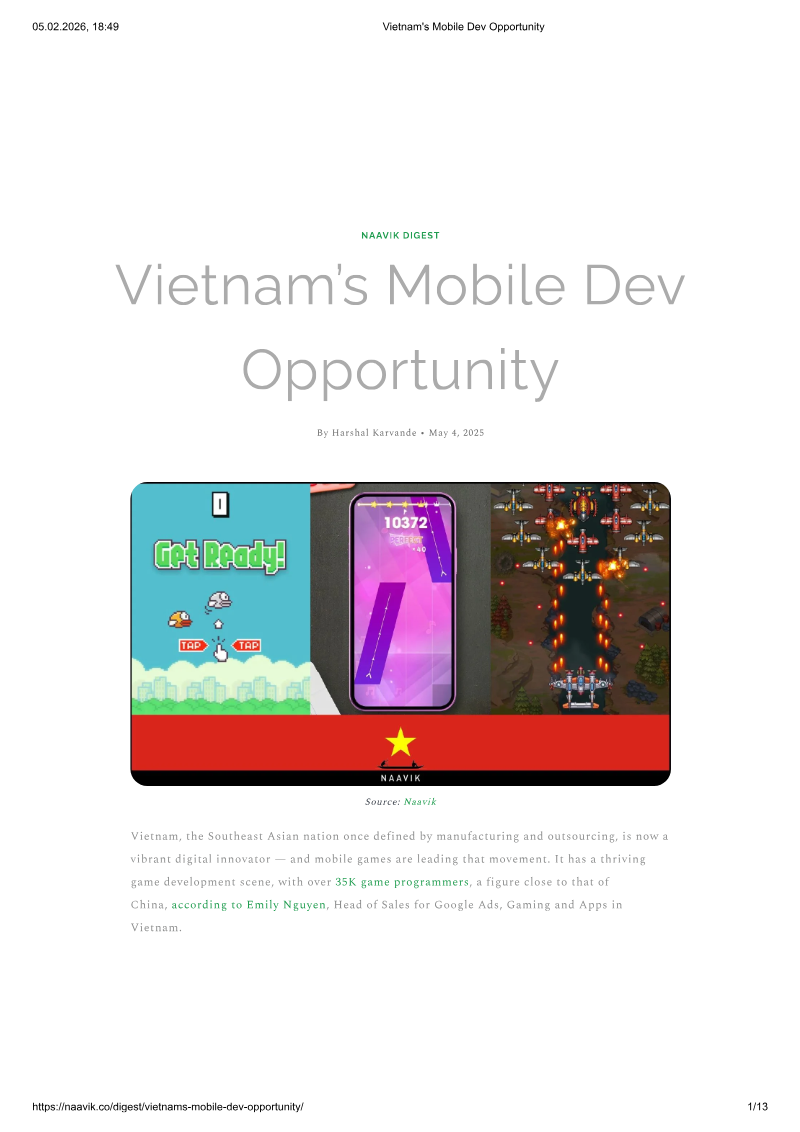
Vietnam's Mobile Dev Opportunity
Vietnam’s mobile game sector has evolved from a consumer-centric market into a burgeoning production hub, driven by a skilled talent pool forged through outsourcing, stringent regulatory frameworks that forced local publishing entities to emerge, and the explosive rise of mobile gaming.
- Vietnam has emerged as a major global mobile development hub with over 35,000 game programmers and more than 300 active local publishers.
- In 2024, five Vietnamese studios ranked among the world’s top 25 publishers, generating 2.4 billion downloads and $133 million in revenue.
- Since 2020, the sector has experienced significant growth, marked by a 67% increase in downloads and an 82% rise in earnings.
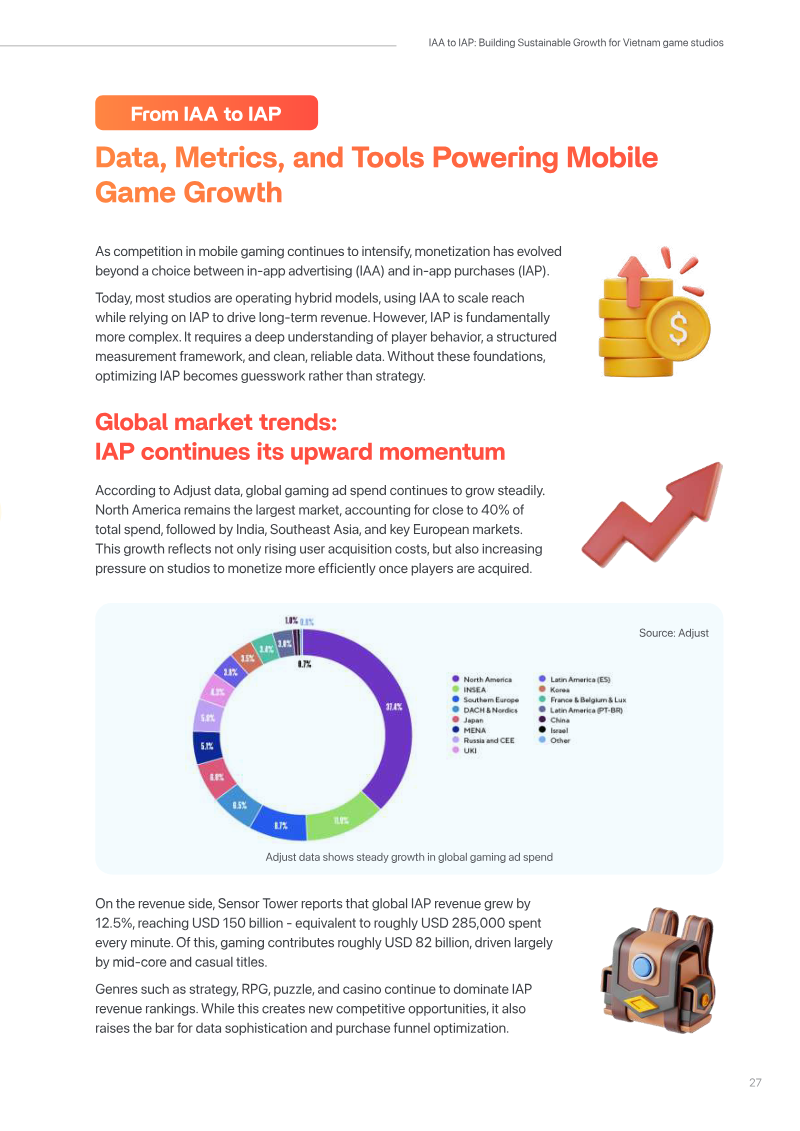
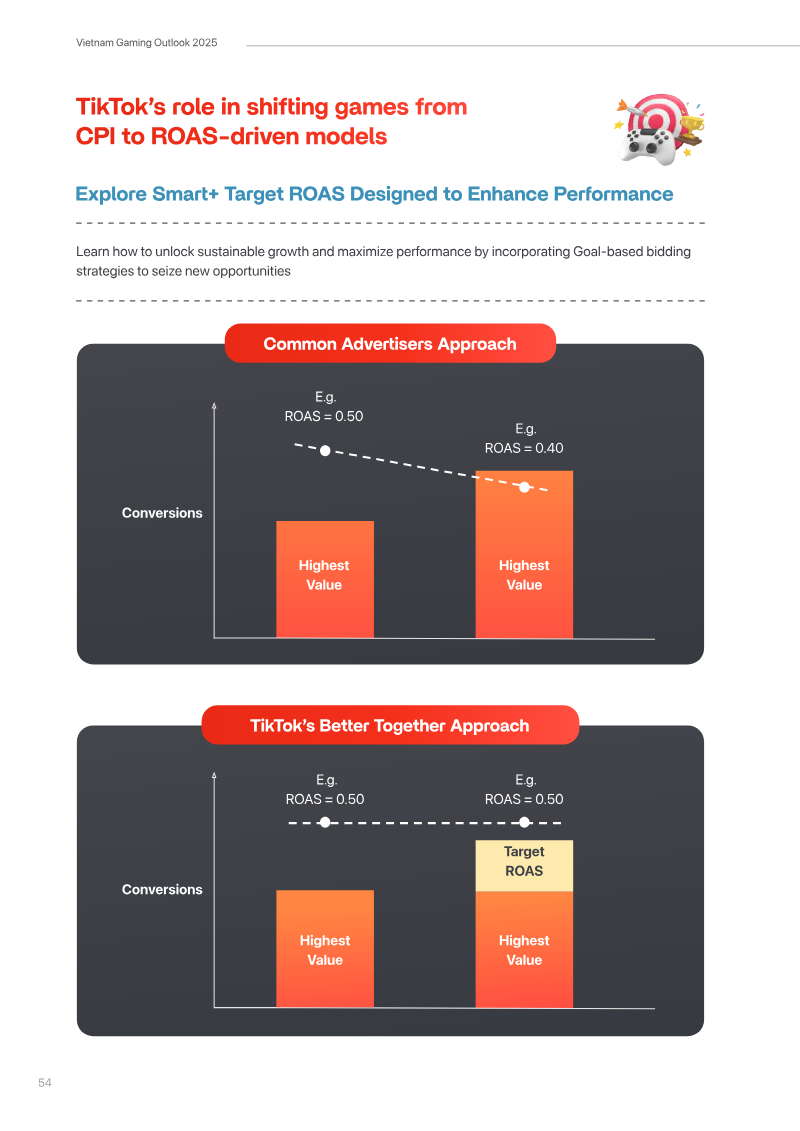
Vietnam Gaming Outlook 2026: Building Sustainable Growth
Vietnam’s mobile gaming landscape is rapidly evolving from a download-centric, ad-driven model to a hybrid ecosystem that prioritizes in-app purchases (IAP) and subscription revenue.
- Vietnam’s mobile gaming sector is shifting from an ad-driven model to hybrid-casual titles prioritizing in-app purchases (IAP) and subscriptions, following a 65% surge in local IAP growth in 2025.
- While Vietnam led global Google Play downloads with 6.1 billion installs in 2024, the market generated only $430 million, highlighting the profitability ceiling of pure advertising models.
- Localized pricing strategies, including purchasing power parity tiers and one-tap tokenized payments, can increase conversion rates by over 20% and reduce checkout abandonment by up to 30%.

The soft launch checklist everybody needs to follow by Matej Lancaric
A successful soft launch in the mobile gaming industry requires a rigorous technical and operational foundation to ensure that subsequent data analysis—such as CPI, retention, and ROAS—is accurate and actionable.
- Prioritize a dedicated 'technical stage' during soft launch to verify that tracking, attribution, and monetization infrastructure are accurate before scaling, as flawed data leads to unreliable performance metrics.
- Implement a Mobile Measurement Partner (MMP) and Firebase to track core events, including installs, sessions, purchases, and ad impressions, while ensuring revenue deduplication across SDKs to prevent double-counting.
- Maintain app stability by keeping crash and 'App Not Responding' (ANR) rates below established thresholds to avoid platform penalties and ensure a reliable user experience.
Unit Economics for Free-To-Play Games
Transitioning from hobbyist game development to a sustainable commercial enterprise requires a rigorous, data-driven approach to unit economics.
- Transitioning from a hobbyist to a professional game developer requires treating game development as a business model where revenue generation, scaling, and profitability are forecasted before or during development rather than hoping for success post-launch.
- Use an LTV (Lifetime Value) calculator to model financial assumptions, such as targeting $1.2 million in revenue, to determine if a game concept is viable before committing significant resources.
- Pricing strategies must align with the required LTV; for example, setting an 'Ad Removal' IAP at $3.99 may fail to meet business goals if the model requires a higher average revenue per paying user to achieve profitability.
Aream & Co. Gaming CEO Survey 2025
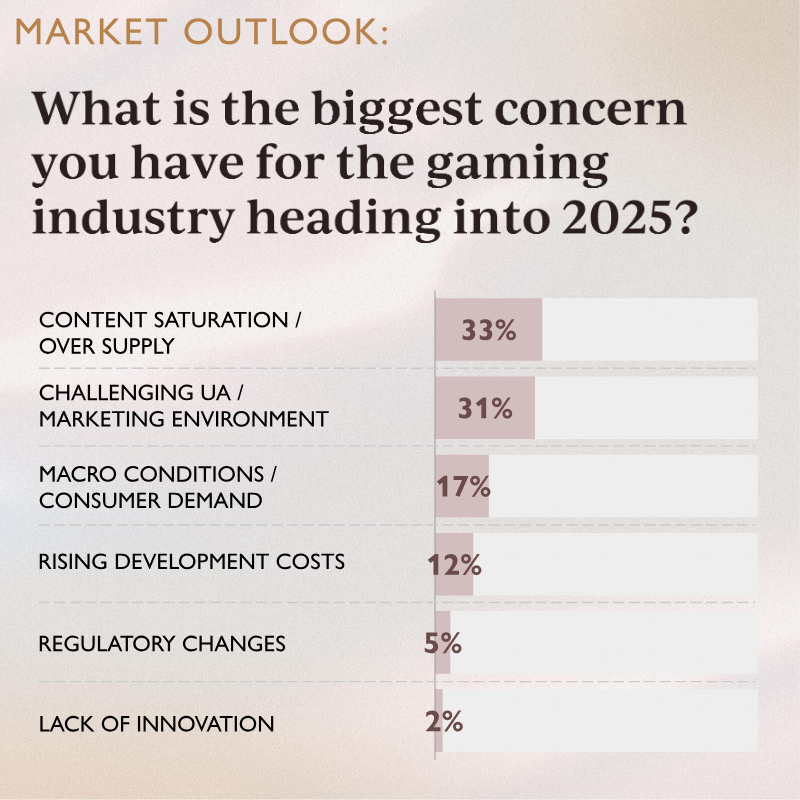
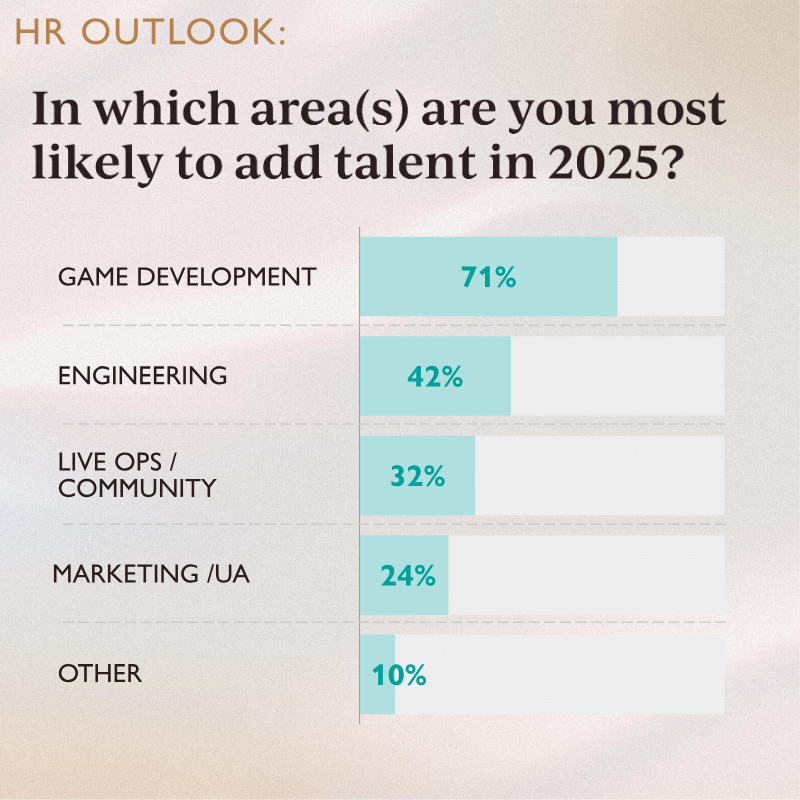
The survey, conducted by Aream & Co., gauges executive optimism regarding consumer spending on gaming in 2025 across multiple channels and functional areas.
- Industry sentiment for 2025 is largely stable or positive, with 98% of CEOs reporting that consumer spending will be either unchanged (49%) or more optimistic (49%).
- M&A activity is expected to accelerate, with 71% of executives anticipating an increase in deal-making throughout 2025.
- In-app purchases are the primary revenue driver, with 80% of respondents optimistic about growth compared to only 41% for in-app advertising.

From Drumming to Downloads: Why ASO Is All About Discipline
Sustainable organic growth in the mobile gaming industry depends on treating app store presence as a dynamic, live channel rather than a static asset.
- Sustainable organic growth requires an 'always-on' discipline rather than sporadic efforts, treating the app store as a live, evolving channel that demands consistent maintenance.
- Teams should move away from manual, repetitive tasks by leveraging AI and automation tools, which can reduce manual workflow time by up to 40%.
- To prove the value of organic growth to stakeholders, teams must measure incrementality by establishing clean baselines and cross-referencing console data with Mobile Measurement Partner (MMP) metrics.

State of Mobile 2026: 9 Trends That Matter
The mobile ecosystem is undergoing a fundamental transition from a volume-based growth model to a monetization-first strategy.
- The mobile market has shifted from volume-based growth to a monetization-first model, evidenced by a 1% stagnation in global downloads contrasted with an 11% surge in in-app purchase revenue.
- Non-game applications are currently outperforming the gaming sector, recording a 21% year-over-year revenue increase compared to the 1% growth seen in gaming.
- The United States remains the dominant revenue driver, accounting for 35% of global totals, while Western Europe and Brazil are identified as the most critical emerging growth regions.

🤬 Meta is NOT back on iOS. We have been FOOLED!
Meta’s recent, transient surge in iOS advertising revenue does not represent a technological breakthrough or a successful circumvention of Apple’s App Tracking Transparency (ATT) framework.
- Meta’s recent spike in iOS advertising revenue was a temporary anomaly driven by aggressive ad formats rather than a circumvention of Apple’s App Tracking Transparency (ATT) framework.
- The performance surge lasted only 48 hours, as the use of intrusive end-cards and double-ad templates led to a sharp decline in user retention that neutralized initial gains.
- Meta has failed to regain its pre-2021 market dominance on iOS, as the underlying signal loss issues caused by privacy-centric restrictions remain unresolved.

Ubisoft turmoil and what happened to Big Fish Games? | Week in Mobile Games podcast
Aristocrat Leisure has effectively dismantled Big Fish Games, opting to divest its assets through multiple transactions after failing to secure a buyer for the company as a whole.
- Ubisoft is facing significant internal instability, including a 40% drop in share price following restructuring announcements and a proposed 200-role voluntary termination plan at its Paris headquarters, which has triggered a three-day strike by labor unions.
- Aristocrat Leisure has effectively dismantled Big Fish Games, a company it acquired for $990 million in 2018, by divesting assets into a new entity called BFG Entertainment and ceasing the development of new titles.
- Netflix is shifting its gaming strategy to prioritize cloud-first experiences centered on TV play rather than mobile downloads, a move industry analysts suggest is primarily intended to reduce subscriber churn.

PUBG Never Died. Krafton Just Forgot Why It Worked
Krafton faces a strategic crossroads common to companies defined by a single massive success.
- PUBG remains a massive commercial anchor for Krafton, maintaining approximately 40 million daily active users across its global platforms.
- Krafton is shifting its strategy from speculative, disparate acquisitions toward a disciplined focus on expanding the PUBG ecosystem through new titles like the 5v5 shooter Blindspot and the extraction-based Black Budget.
- The company is adopting a platform-based model for PUBG that incorporates user-generated content to drive long-term engagement, similar to the strategies used by competitors like Fortnite and Roblox.

🚨📢 BREAKING NEWS: Mobile Stagnates, Monopoly GO Hits $6B, Liftoff Files for IPO
The mobile gaming industry experienced a period of divergence in 2025, characterized by a slight rise in global revenue to $81.8 billion while traditional app store metrics suggested stagnation.
- Scopely’s Monopoly Go became the fastest mobile game in history to reach $6 billion in lifetime revenue, achieving the milestone in 1,275 days and currently generating approximately $200 million per month.
- Global mobile gaming revenue reached $81.8 billion in 2025, though traditional app store metrics show stagnation due to a massive shift toward web stores that bypass platform fees.
- Industry observers estimate that 40% to 50% of revenue from large-scale developers is now excluded from standard iOS and Google Play tracking, meaning official reports likely underrepresent actual market performance.

TWiG #368: Ubisoft Cuts, TikTok Slips, and Gaming’s Next Distribution Crisis
The global gaming industry is currently navigating a period of significant structural volatility, characterized by widespread workforce reductions and evolving regulatory pressures.
- Ubisoft has reduced its workforce by over 3,000 employees within the last two years, reflecting broader structural volatility in the gaming industry.
- Valve is facing an $897.7 million legal challenge regarding its Steam commission structure while implementing new AI disclosure rules that only require transparency for content used in gameplay, store pages, or marketing.
- TikTok’s mobile advertising share has dropped from 21% to 12% amid stagnant daily active user growth and ongoing efforts to decouple from its parent company, ByteDance.