Mobile reports and market data
Documents
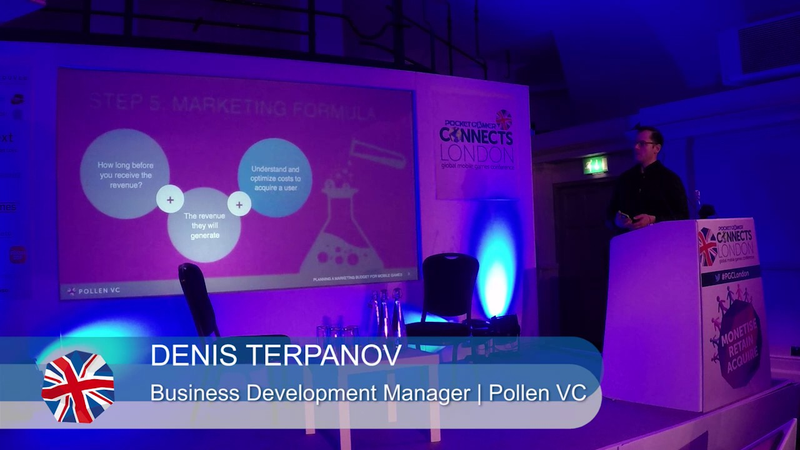
How much is enough? Planning a marketing budget for mobile games
Effective mobile game marketing requires a strategic approach to budgeting that prioritizes cash flow management and capital efficiency.
- Developers must bridge the 'cash gap' caused by the delay between marketing expenditures and platform payout cycles by treating uncollected revenue as an accessible asset.
- Accelerating growth cycles requires reinvesting trapped revenue into user acquisition more frequently rather than waiting for standard app store and ad network payout schedules.
- Sustainable scaling is achieved by moving away from 'pay-and-wait' models toward a revenue recycling strategy that avoids equity dilution or reliance on external fundraising.
Forging successful cross-industry partnerships
Eden Games, a French developer with two decades of experience in the automotive racing genre, utilizes cross-industry partnerships to offset the high costs of vehicle licensing and enhance the authenticity of its mobile title, Gear.Club.
- Eden Games is shifting from paying high licensing fees to a revenue-generating model where strategic brand collaborations drive user acquisition and offset costs.
- A successful partnership with McLaren demonstrated that leveraging a brand's social media reach to promote a game alongside a car's debut can fully offset the cost of the licensing agreement.
- Successful brand integration requires treating licensed assets as high-fidelity 'jewels' that strictly adhere to the manufacturer's brand identity.
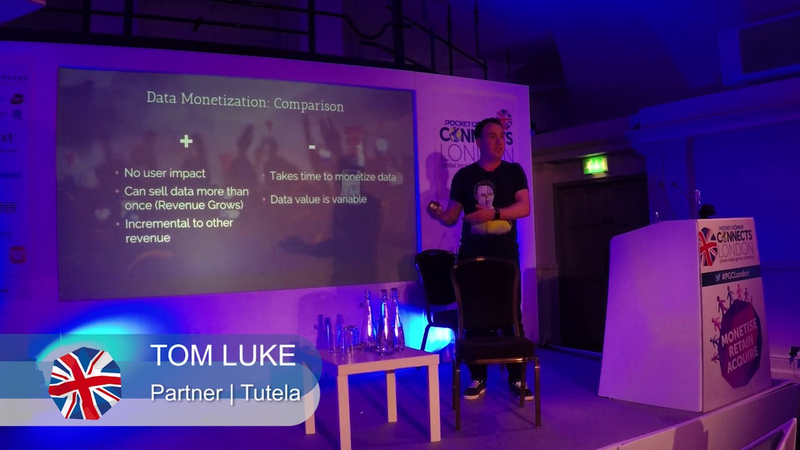
The anonymous data monetisation opportunity
Mobile game developers can generate incremental revenue by monetizing anonymous background data for the mobile signal testing industry, a sector currently valued at $6 billion and projected to reach $25 billion within five years.
- Mobile game developers can generate $300,000 to $500,000 in annual incremental revenue per one million daily active users by monetizing anonymous background data for the mobile signal testing industry.
- The mobile signal testing data market is currently valued at $6 billion and is projected to reach $25 billion within the next five years.
- Developers monetize by integrating a lightweight SDK (under 600 kilobytes) that collects non-identifiable network performance metrics like signal strength and latency without accessing personal identifiers such as IP or MAC addresses.
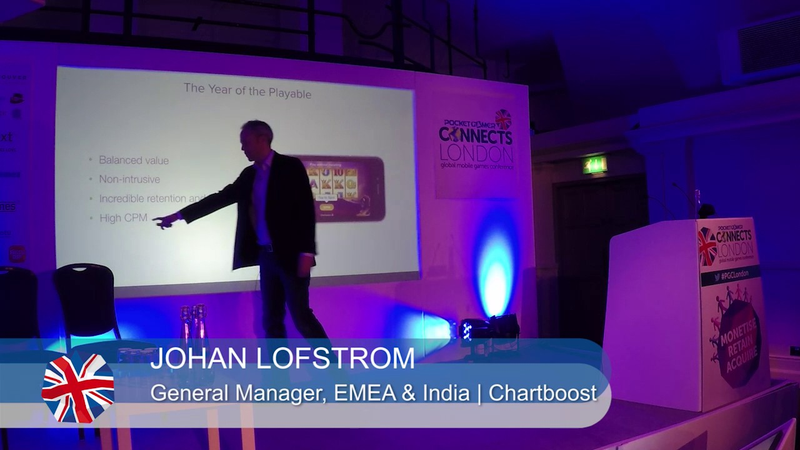
How to harness the power of playable ads
Playable ads represent a significant evolution in mobile user acquisition and monetization strategies, offering a high-engagement alternative to traditional static banners, interstitials, and video ads.
- Playable ads function as HTML5-based mini-games that allow users to experience gameplay before installation, resulting in higher retention rates and increased lifetime value (LTV) for the advertised product.
- Simplifying ad interfaces and highlighting primary interaction points can significantly boost performance; one case study showed engagement rates rising from 42% to 70%, which nearly doubled the ad's eCPM.
- Playable ads provide granular data analytics that exceed static or video formats, enabling developers to track user behavior through every stage of the ad funnel.
2017 Advertising Megatrends
The digital advertising landscape underwent a significant shift in 2016 as digital spending surpassed television, a milestone previously not expected until 2017 or 2018.
- Digital advertising spending surpassed television in 2016, a shift accelerated by mobile-first audience migration in the Asia-Pacific region.
- Mobile advertising is forecast to grow from $28 billion in 2016 to $50 billion by 2018, while desktop advertising growth remains stagnant.
- Facebook, Google, and Snapchat captured 70 percent of the $77 billion U.S. mobile advertising market in 2016 by utilizing closed-loop ecosystems that eliminate intermediaries.

Designing for AR: A Postmortem on the Development of 'Woorld'
The development of the augmented reality title Woorld centers on the challenge of creating cohesive virtual experiences within unpredictable, user-defined physical environments.
- Successful AR design requires abandoning fixed, developer-controlled camera perspectives in favor of intuitive guidance systems that allow users to navigate unpredictable physical environments.
- To manage volatile surface data, the development team utilized custom edge-detection algorithms and smoothing processes to ensure virtual objects interacted naturally with noisy real-world spaces.
- Performance optimization for mobile hardware was achieved through low-poly asset modeling, texture atlasing, and asynchronous audio loading to mitigate battery drain and thermal output.
Making a global hit - The road to Six!
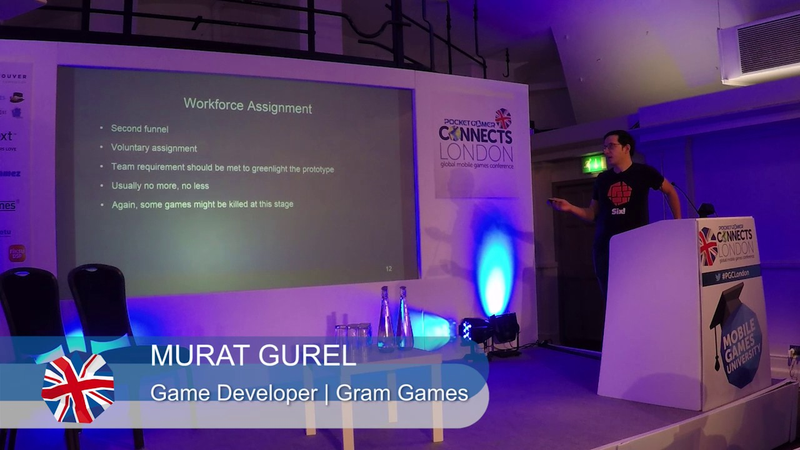
Gram Games utilizes a structured, rapid prototyping methodology to identify and develop global mobile gaming hits, as evidenced by the success of titles like Six!, Merged, and 1010!.
- Gram Games validates potential hits by targeting a day-one retention rate of 40% to 45% during a 'fake launch' phase on app stores.
- The studio enforces a strict two-day time limit for all prototypes to prioritize core gameplay mechanics over high-fidelity art or complex animations.
- Development teams are formed voluntarily and must include at least one developer and one artist to ensure the production of a functional, playable demo.
Developing culture as product: How Gram Games sets itself apart
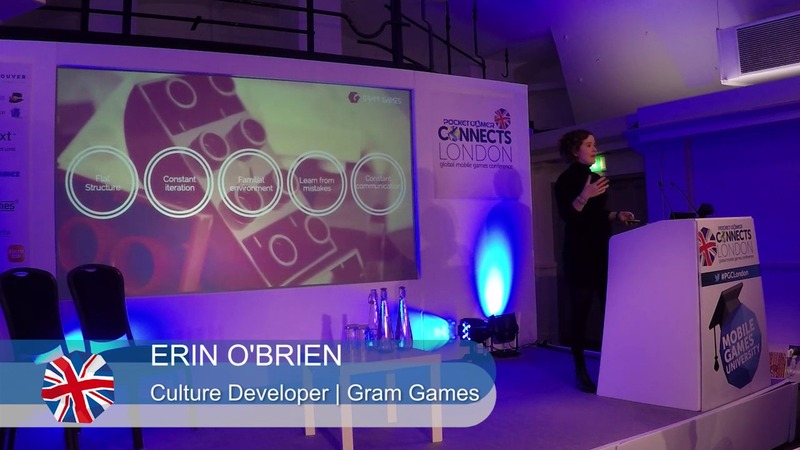
Gram Games operates on the core thesis that organizational culture should be treated as a live, iterative product rather than a static set of rules.
- Gram Games treats organizational culture as a live, iterative product by applying the same rigorous development and maintenance cycles used in their game production.
- The company utilizes a flat organizational structure that replaces traditional hierarchies with fluid responsibilities to encourage innovation and agility.
- To foster creative risk-taking, the studio mandates weekly prototype days where all employees, regardless of role, pitch and develop new game concepts.

One Up: How Our Game Saved a Life
Pixelberry Studios operates on the core philosophy that mobile gaming can function as a powerful vehicle for social change without sacrificing commercial viability or entertainment value.
- Pixelberry Studios successfully integrated anti-cyberbullying narratives into 'High School Story' by partnering with the Cyber Smile Foundation, reaching over 5 million players.
- The initiative generated $350,000 in charitable contributions, demonstrating that socially conscious content can drive significant philanthropic impact.
- Data shows that embedding social impact features and support resources into gameplay bolsters player engagement and retention rather than alienating the user base.
Reclaiming My Soul: Why I Quit Making F2P Social Games
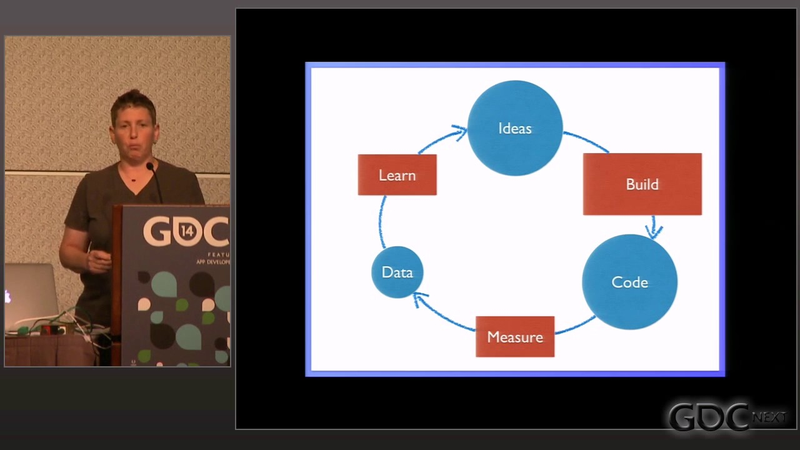
This analysis examines the transition from free-to-play (F2P) mobile social game development to AAA production, focusing on the ethical and creative challenges inherent in the F2P model.
- The F2P mobile model frequently prioritizes 'whale' monetization, where development resources are disproportionately allocated to satisfy a tiny fraction of high-spending players rather than the broader user base.
- Data-driven design in F2P often shifts focus from artistic innovation to managing financial funnels, where metrics like retention funnels and user acquisition costs dictate development priorities.
- The industry's reliance on 'fast follows' and cloning successful mechanics undermines creative integrity and incentivizes the release of incomplete or buggy 'minimum viable products.'

DCMN on why mobile game TV advertising is something for everyone
Television advertising serves as a highly effective performance-based user acquisition channel for the mobile gaming industry, offering a viable alternative to traditional digital marketing.
- Television advertising functions as a performance-based user acquisition channel that delivers higher-quality users with faster monetization and longer retention compared to social media or search engine advertising.
- Developers can track television ROI by using proprietary systems that measure organic traffic baselines and analyze organic uplift on both a spot-to-spot and campaign-wide basis.
- While television advertising requires a higher initial financial commitment to generate sufficient market pressure, it remains a cost-competitive alternative to traditional digital marketing.

Gram Games on its open company culture and prototype Fridays
Gram Games, a developer known for puzzle titles like 10/10 and Merged!, is currently undergoing a strategic expansion by establishing a new studio in London.
- Gram Games is expanding beyond its Istanbul-based ad-driven puzzle roots by opening a London studio focused on mid-core, strategy-management, and IP-based titles.
- To maintain its flat organizational culture during international expansion, the company is relocating core team members from Istanbul to London to serve as cultural ambassadors.
- The studio fosters innovation through 'prototype Fridays,' a weekly initiative that allows employees of any job title to experiment with new game concepts.