Mergers & Acquisitions reports and market data
Documents

Inside Scopely: Monopoly Go, Stumble Guys, & Its Future
Scopely has emerged as the leading mobile gaming company in the United States, achieving significant scale through a combination of strategic acquisitions and the development of high-performing titles.
- Scopely has tripled its revenue over the past 30 months and now employs over 2,000 people following its $4.9 billion acquisition by Savvy Games Group.
- The company is shifting its strategic focus from mobile-only development to cross-platform expansion, specifically targeting PC and console markets.
- Monopoly GO! serves as the company's primary growth engine, utilizing social mechanics to achieve industry-leading player retention and organic virality.
Game Pass Growth / FaZe Acquired / Netflix’s Game Plan
Microsoft is recalibrating its strategic focus for Xbox Game Pass by removing subscriber growth targets from executive compensation packages.
- Microsoft has removed subscriber growth targets from executive compensation after Xbox Game Pass achieved only 28% growth against an aggressive 73% goal.
- Netflix is currently seeing only 1% of its total subscriber base engage with its gaming library on a daily basis.
- GameSquare acquired FaZe Clan for $17 million, signaling a strategic shift in esports toward influencer-led content models rather than traditional tournament-focused team structures.
Microsoft’s Done Deal / Predicting Holiday Hits / When Will Layoffs End?
The gaming industry is currently navigating a significant strategic reset following the finalization of the Microsoft-Activision Blizzard acquisition.
- The Microsoft-Activision Blizzard acquisition marks a strategic shift away from mega-deals toward internal studio integration and operational efficiency.
- Macroeconomic pressures and the end of cheap capital have triggered widespread industry layoffs and the cancellation of long-term projects to focus on proven, high-performing titles.
- Future consolidation is expected to focus on smaller acquisitions and private equity-led streamlining, with EA and Capcom identified as potential targets for media conglomerates.
ESL FACEIT Group: Growing Beyond Play
The 2022 merger of ESL Gaming and FACEIT, backed by Savvy Games Group, marks a strategic pivot toward long-term ecosystem stability within the global esports industry.
- The 2022 merger of ESL Gaming and FACEIT, backed by Savvy Games Group, aims to transition the esports industry from a publisher-led marketing model to a sustainable, long-term ecosystem.
- The organization is shifting away from hype-driven growth cycles toward a model focused on sustainable monetization and deeper stakeholder alignment following recent industry-wide valuation resets.
- The 'Beyond Play' strategy integrates digital competitive platforms with physical event infrastructure, such as DreamHack, to create unified user flows and data sets across the gaming lifecycle.
Riccitiello Resigns / Diablo IV On Steam / FC 24 Scores
The gaming industry is currently navigating a period of significant structural and leadership volatility, characterized by executive turnover, widespread workforce reductions, and shifting distribution strategies.
- The gaming industry is undergoing a significant contraction, marked by over 6,100 layoffs in 2023 at major firms like Epic Games and Embracer Group due to inflation and rising capital costs.
- EA Sports FC 24 successfully navigated its rebranding, reaching 11 million players in its first week and demonstrating that exclusive licensing remains a powerful barrier to entry against competitors.
- Activision Blizzard’s move to bring Diablo IV to Steam indicates a strategic shift toward broader accessibility and a likely future consolidation of Battle.net into the Microsoft/Xbox ecosystem.
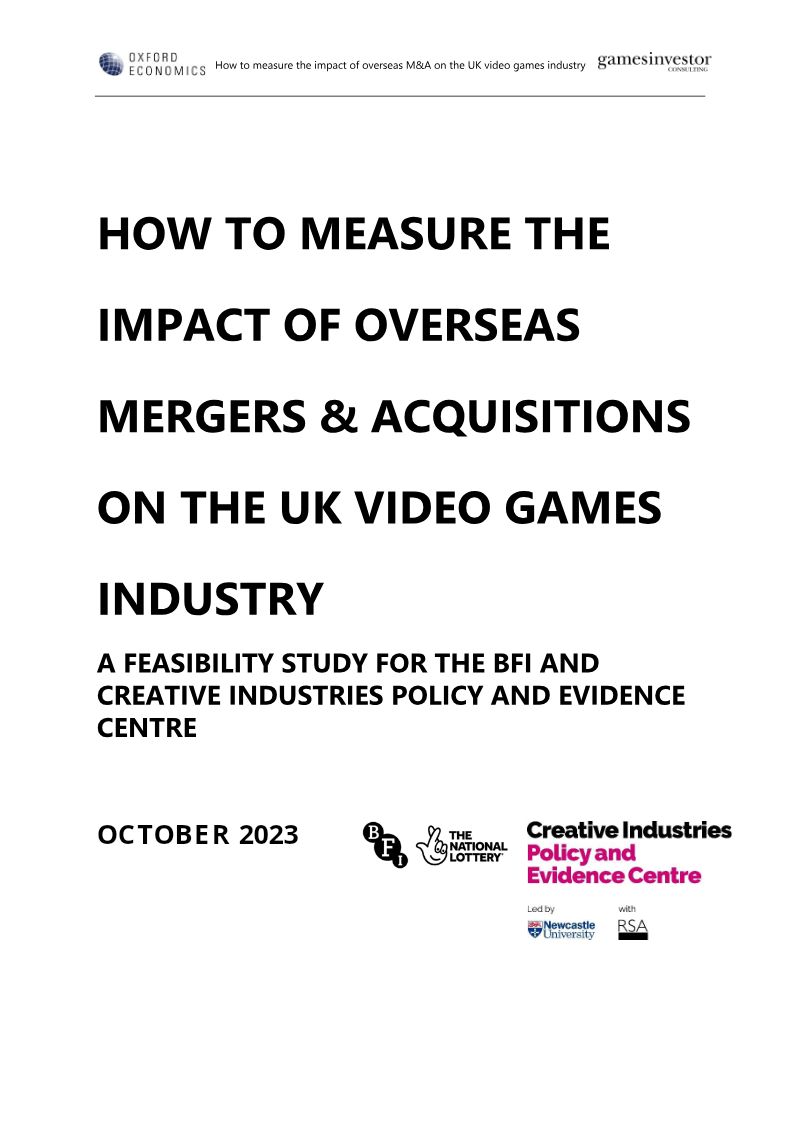
How to Measure the Impact of Overseas Mergers & Acquisitions on the UK Video Games Industry
The UK video games industry has experienced a significant surge in overseas mergers and acquisitions between 1993 and 2022, with activity peaking sharply from 2018 to 2021.
- Overseas M&A activity in the UK video games industry surged significantly between 1993 and 2022, with a distinct peak in transaction volume occurring between 2018 and 2021.
- US-based entities are the primary drivers of UK studio acquisitions, motivated by the strategic acquisition of established intellectual property and experienced development talent.
- Measuring the impact of these acquisitions is hindered by structural data limitations, as standard industry classification codes are unreliable and many target firms are private, rendering traditional share-price event studies unfeasible.
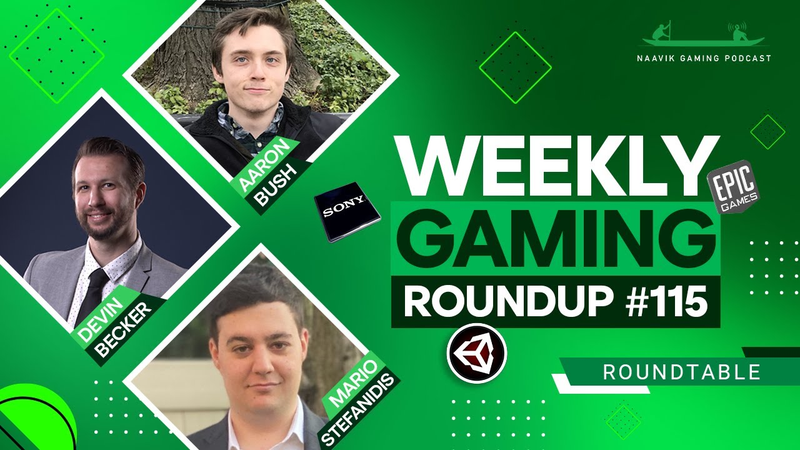
AAA’s Future / Epic Layoffs / Winners, Losers & Hidden Gems
The global gaming industry is currently navigating a period of profound structural instability characterized by ballooning production costs, shifting developer loyalties, and significant corporate restructuring.
- AAA development budgets have ballooned from approximately $2 million to over $200 million, forcing publishers to prioritize established intellectual property and aggressive monetization to offset financial risk.
- Corporate growth strategies are collapsing, evidenced by significant layoffs and divestitures at Epic Games and the failure of acquisition-led expansion at Embracer Group.
- Unity’s attempt to implement a controversial per-install fee has damaged developer trust, triggering a migration toward alternative engines like Godot and Unreal Engine.
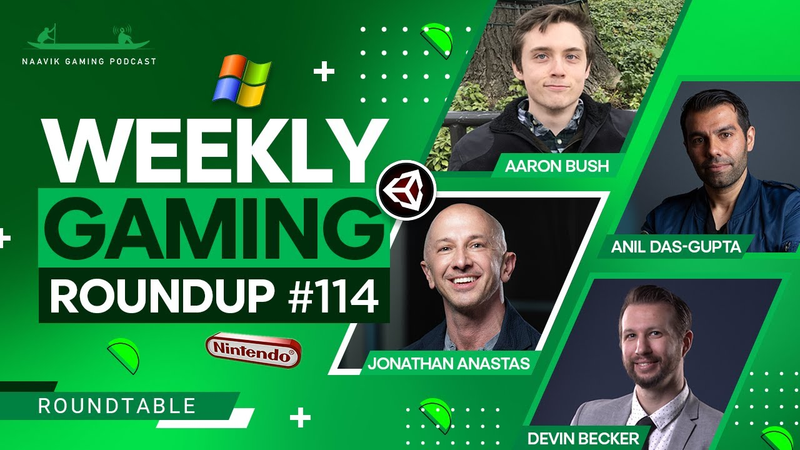
Unity Backpedals / Playtika Acquires / Next-Gen Console Leaks
Unity’s recent attempt to implement a controversial runtime fee policy has triggered a profound crisis of confidence within the game development community.
- Unity's attempt to impose retroactive runtime fees has damaged its reputation, prompting developers to explore alternatives like Godot to prioritize platform stability over Unity's mobile ecosystem.
- Unity has attempted to mitigate developer backlash by capping its new runtime fees at 4% of revenue and limiting the policy to high-earning developers.
- Microsoft is shifting its strategy toward a hybrid ecosystem that integrates local hardware with Azure cloud infrastructure to centralize user data and services via Game Pass.

Supercell Cancels Floodrush / Gamescom Highlights / Epic’s Revenue Boost
Supercell’s decision to cancel the battle royale title Flood Rush underscores the company’s rigorous commitment to quality, as the project failed to achieve the strategic depth necessary to compete with established hits like Brawl Stars.
- Supercell canceled its battle royale title Flood Rush because it lacked the strategic depth required to compete with established games like Brawl Stars, reinforcing the company's focus on iterative quality over volume.
- Epic Games launched the 'First Run' program to challenge Steam by offering developers 100% revenue retention for six months of exclusivity, though the strategy faces skepticism regarding the potential loss of launch-day momentum on larger platforms.
- Sony is pursuing a dual strategy of hardware ecosystem expansion through the acquisition of Audeze and aggressive revenue extraction via increased PlayStation Plus subscription prices.


Global Gaming Report Q3 2023
The third quarter of 2023 marked a pivotal turning point for the global gaming industry as major strategic players resumed large-scale consolidation efforts following an extended period of relative inactivity.
- The global gaming industry saw a significant resurgence in consolidation during Q3 2023, with 120 deals totaling $11 billion in value, headlined by the Microsoft-Activision merger.
- M&A activity was concentrated in PC and console segments at 40% of deal volume, while mobile accounted for 21%.
- Tencent emerged as the most active strategic buyer with five deals, including the majority acquisition of Techland, while Goldman Sachs made a $1.72 billion offer for Kahoot!.



Gaming Deals Report: 2023 Q3
The gaming industry experienced a significant market correction during the first three quarters of 2023, with deal activity falling to its lowest levels since the pre-pandemic era.
- Gaming deal activity in the first three quarters of 2023 hit its lowest level since the pre-pandemic era, with private investment value falling to $2.3 billion across 325 deals.
- M&A activity totaled $8.5 billion, excluding the Activision Blizzard acquisition, while public offerings saw a 29% year-over-year decline due to a closed IPO window.
- Late-stage venture capital funding plummeted to $300 million as investors shifted focus from growth-at-all-costs to companies with proven financials and clear exit paths.
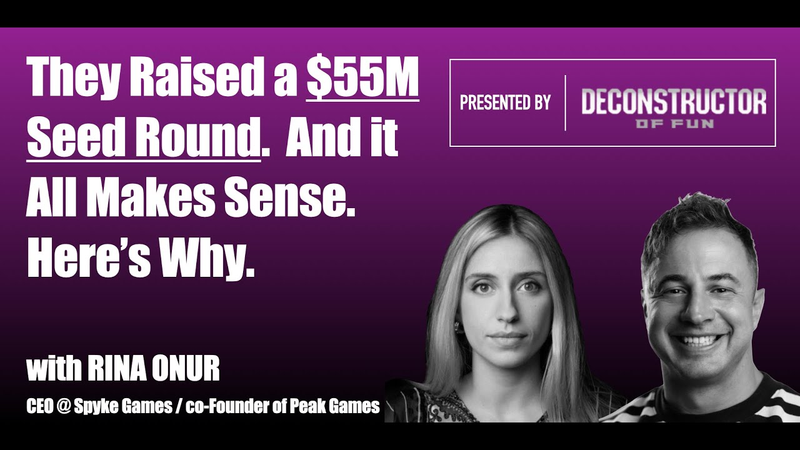
ISTANBUL CONFIDENTlAL with RINA ONUR , CEO @ Spyke Games / co-Founder of Peak Games
The Turkish mobile gaming sector has evolved into a high-velocity, disciplined ecosystem, largely catalyzed by the success of foundational companies like Peak Games.
- Spyke Games maintains a competitive advantage by utilizing a centralized, on-site workforce in Istanbul, which avoids the inefficiencies of decentralized development while leveraging high compensation to attract top-tier talent.
- The studio’s success with 'Tile Busters' demonstrates a shift toward high-velocity iteration and the refinement of existing genres rather than relying on radical, unproven innovation.
- Spyke Games employs a modular, data-driven platform that enables rapid prototyping and seamless genre pivots, a strategy that allowed the team to successfully transition from social casino experiments to puzzle-mechanic games.