Market Analysis
Documents
Landscape Shifts in IP Gaming: An Analysis of How the Competitive Landscape of IP in Gaming Has Shifted in 2023
The global gaming landscape in 2023 was defined by the overwhelming commercial dominance of established intellectual properties, which accounted for every top launch on PC and console. Licensed mobile titles generated $16 billion in gross revenue, driven largely by the unprecedented success of Monopoly GO!, which reached $1 billion in revenue in under seven months. This performance propelled Hasbro and Scopely to the top of the corporate and publisher rankings, respectively. While video game and anime IPs continue to command the largest market share—particularly in Asia where they account for 70% of downloads—board game IPs experienced a significant revenue surge within the United States.
Strategic integration of IP serves as a critical driver for both monetization and marketing efficiency. Role-playing games remain the most lucrative genre for licensed content due to the effectiveness of gacha-based monetization, while cross-platform collaborations and limited-time events continue to expand audience reach. Furthermore, established franchises demonstrate superior cost-efficiency compared to original titles, achieving high sales volumes with significantly lower marketing expenditures. This suggests that leveraging recognized brands provides a vital competitive advantage in an increasingly crowded marketplace.
Despite the high visibility of major hits, the mobile IP market remains largely unsaturated, with licensed titles currently accounting for less than 20% of total revenue across most genres. While RPGs and social casino mechanics have proven successful, casual categories such as puzzle and simulation games represent significant untapped opportunities for future integration. Growth in the sector is increasingly dependent on high-profile new launches rather than the expansion of legacy titles, indicating that the strategic selection and execution of new IP partnerships will dictate the next phase of industry expansion.
- Established intellectual properties dominated the 2023 market, accounting for every top-performing launch on both PC and console platforms.
- Licensed mobile titles generated $16 billion in gross revenue in 2023, with Monopoly GO! reaching $1 billion in under seven months to drive Hasbro and Scopely to the top of industry rankings.
- Video game and anime IPs dominate the Asian market with a 70% share of downloads, while board game IPs saw a notable revenue surge in the United States.
- Established franchises offer superior cost-efficiency over original titles, achieving higher sales volumes while requiring significantly lower marketing expenditures.
- The mobile IP market remains largely untapped, as licensed titles currently account for less than 20% of total revenue across most genres.
State of Mobile 2024
The global mobile economy experienced a significant recovery in 2023, with consumer spending rising 3% to $171 billion and daily engagement surpassing five hours per user in leading markets. While mobile gaming faced a slight 2% contraction in spending due to economic headwinds and a shift toward longer title life cycles, the broader industry was bolstered by a resilient non-gaming sector. This growth was primarily driven by social media "tipping," video streaming subscriptions, and the rapid emergence of generative AI. Mobile advertising also remained a cornerstone of the ecosystem, reaching $362 billion with projections to exceed $400 billion in the coming year.
The landscape is increasingly defined by a shift in consumer behavior and monetization strategies. Non-gaming apps reached a record $64 billion in spend, led by TikTok, which became the first non-game app to surpass $10 billion in lifetime revenue. In contrast, the gaming market saw a decline in new hit releases, with the industry consolidating around established high-fidelity IPs and social multiplayer genres like Creative Sandbox and Battle Royale. Despite this consolidation, breakout successes like Monopoly GO and Honkai: Star Rail demonstrated that high-quality debuts can still disrupt saturated markets.
Across various sectors, mobile integration has reached unprecedented levels. Travel and ticketing apps saw record-breaking demand as consumers returned to in-person events, while the finance sector experienced a surge in personal loan apps and "Super Apps" amid global inflation. Retail also underwent a structural shift as China-based platforms like Temu gained significant global market share. Ultimately, the 2023 data reflects a mature mobile market where growth is increasingly tied to sophisticated AI integration, creator-driven economies, and the transition of traditional services into comprehensive digital hubs.
- The global mobile economy grew 3% to $171 billion in 2023, supported by a $362 billion advertising market projected to exceed $400 billion in the coming year.
- Mobile gaming spending contracted by 2% as the industry consolidated around established high-fidelity IPs and social multiplayer genres, though titles like Monopoly GO and Honkai: Star Rail proved that high-quality debuts remain viable.
- Non-gaming apps reached a record $64 billion in consumer spend, highlighted by TikTok becoming the first non-game app to surpass $10 billion in lifetime revenue.
- Daily user engagement in leading markets surpassed five hours, driven by social media tipping, video streaming subscriptions, and the rapid integration of generative AI.
- The finance sector saw a surge in personal loan apps and 'Super Apps' as a response to global inflation, while travel and ticketing apps experienced record-breaking demand.

Paving Ways to the Games Industry: 2024
The Swedish games industry stands at a critical juncture, balancing rapid expansion with systemic structural challenges that threaten its long-term competitiveness. As of 2022, the sector encompasses 939 companies and over 8,400 employees, yet it remains heavily reliant on international labor to compensate for a persistent domestic skills gap. The primary thesis posits that sustainable growth depends on transitioning from a reliance on traditional recruitment toward a more inclusive, flexible, and collaborative ecosystem that integrates diverse talent, including newly arrived immigrants and individuals from non-traditional backgrounds.
To bridge the gap between current educational outputs and industry requirements, the sector must overcome significant bureaucratic and social barriers. While a robust network of regional incubators and innovation hubs provides a foundation for entrepreneurship, the industry is hindered by restrictive migration policies, a lack of standardized skill validation for international applicants, and insufficient senior mentorship for junior staff. Addressing these issues requires the implementation of innovative educational models, such as micro-credentials and intensive reskilling programs, which prioritize professional potential over rigid, legacy hiring requirements.
Ultimately, the industry’s future success hinges on a unified effort between public sector agencies, educational institutions, and private studios. By fostering greater awareness of game development as a viable career path and dismantling administrative hurdles, the sector can cultivate a more diverse and psychologically safe workforce. Prioritizing inclusive hiring strategies, language flexibility, and targeted outreach to underrepresented groups is not merely a social imperative but a strategic necessity to ensure that Sweden maintains its position as a global leader in game innovation and economic development.
- As of 2022, the Swedish games industry comprises 939 companies and over 8,400 employees, but it faces a critical skills gap that necessitates a heavy reliance on international labor.
- Sustainable long-term growth requires shifting from traditional recruitment models toward an inclusive ecosystem that integrates immigrants and individuals from non-traditional backgrounds.
- The industry is currently hindered by restrictive migration policies, a lack of standardized skill validation for international applicants, and a shortage of senior mentorship for junior staff.
- To align educational outputs with industry needs, the sector must adopt innovative models like micro-credentials and intensive reskilling programs that prioritize professional potential over rigid hiring requirements.
- Maintaining Sweden's position as a global leader in game innovation requires a unified strategy between public agencies, educational institutions, and private studios to dismantle administrative and social barriers.
Gaming Report: Q1 2024
The gaming venture capital landscape in the first quarter of 2024 reflects a market reaching a steady state, characterized by a shift away from speculative Web3 and metaverse investments toward more sustainable development and content-focused funding. Global venture activity during this period totaled $1.3 billion across 153 deals. While deal count remained largely flat compared to the previous quarter, total deal value increased by 22.1% quarter-over-quarter. Despite a 17.3% year-over-year decline in deal volume, the market is currently on track to exceed 2023’s aggregate funding levels, suggesting a stabilization of capital deployment within a more realistic valuation environment.
Development-focused companies, particularly those specializing in blockchain infrastructure and developer tools, captured significant attention in early 2024, momentarily outpacing content-focused investments. However, the broader industry remains highly competitive, with PC and console gameplay increasingly concentrated in established "forever titles." New content faces a challenging landscape, as only a small fraction of total playtime is dedicated to non-annual franchise releases. Investors are increasingly prioritizing high-quality content and scalable infrastructure, creating a more selective, investor-friendly environment.
The report also highlights the growing importance of in-game advertising as a critical monetization strategy. With major industry players and brands integrating programmatic ad solutions, the sector is seeing increased utility for both developers and advertisers. Companies like Anzu exemplify this trend, leveraging technology to bridge the gap between brand reach and measurable return on investment. As the industry moves past the hype-driven cycles of the pandemic, the focus has shifted toward long-term operational efficiency and proven monetization models, with exit activity expected to improve as market conditions stabilize.
- Global gaming venture capital reached $1.3 billion across 153 deals in Q1 2024, marking a 22.1% quarter-over-quarter increase in total deal value.
- The market is trending toward stabilization with a shift away from speculative Web3 and metaverse funding in favor of sustainable development and infrastructure-focused investments.
- Despite a 17.3% year-over-year decline in deal volume, current funding levels put the industry on track to exceed the total aggregate capital deployed in 2023.
- New content faces a difficult market entry as PC and console player engagement remains heavily concentrated within established 'forever titles' and annual franchises.
- In-game advertising is emerging as a critical monetization strategy, with companies like Anzu utilizing programmatic solutions to bridge the gap between brand reach and measurable ROI.
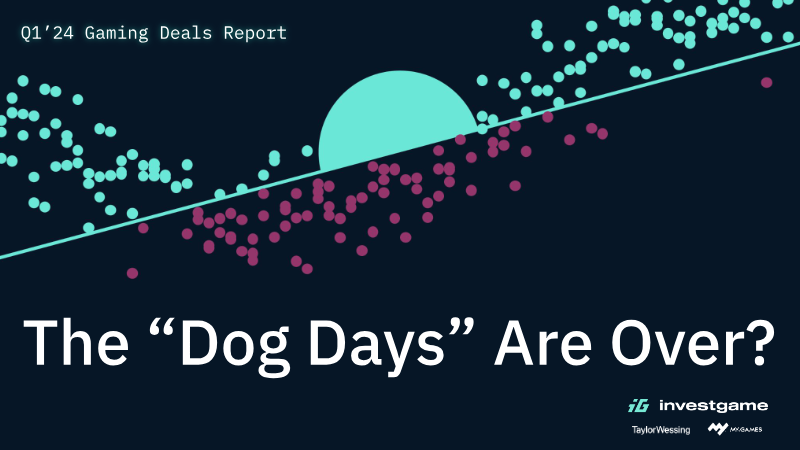
Q1 2024 Gaming Deals Report
The gaming industry is currently navigating a period of strategic stabilization defined by cautious capital deployment and a pivot toward long-term profitability. High interest rates and broader macroeconomic pressures have dampened late-stage financing and public listing activity, leading investors to prioritize capital efficiency over aggressive expansion. Despite these headwinds, the ecosystem remains supported by a robust foundation of over $15 billion in dry powder held across more than 65 gaming-focused funds, which continues to fuel a healthy pipeline of early-stage seed investments.
Market performance is increasingly bifurcated across platforms. The PC and console sectors demonstrate notable resilience, bolstered by the consistent success of independent studios and sustained engagement on digital storefronts like Steam. In contrast, the mobile gaming market is undergoing a necessary contraction following post-pandemic volatility and the persistent impact of privacy-related advertising headwinds. While mobile startups currently face significant barriers to entry and a decline in late-stage venture interest, the sector is expected to initiate a gradual recovery by 2025 as business models adjust to the new regulatory and acquisition landscape.
Looking ahead, the industry is transitioning away from the speculative growth patterns of previous years toward a more disciplined investment environment. Syndicate-based funding has emerged as a primary mechanism for risk mitigation, reflecting a broader trend of collaborative investment. As the market stabilizes, expectations are shifting toward an uptick in midcap merger and acquisition activity throughout the remainder of the year. This evolution underscores a fundamental industry-wide commitment to sustainable growth, with investors increasingly favoring established platforms and proven development teams over high-risk, late-stage ventures.
- The gaming industry is shifting toward disciplined, long-term profitability as high interest rates and macroeconomic pressures reduce late-stage financing and public listing activity.
- Over $15 billion in dry powder remains available across more than 65 gaming-focused funds, ensuring a steady pipeline for early-stage seed investments despite broader capital constraints.
- PC and console sectors show resilience through strong independent studio performance and consistent engagement on platforms like Steam, while mobile gaming faces a contraction due to privacy-related advertising headwinds.
- Mobile gaming is projected to begin a gradual recovery by 2025 as business models adapt to new regulatory and acquisition environments.
- Syndicate-based funding has become the primary mechanism for risk mitigation, reflecting a market-wide trend toward collaborative investment strategies.
Levelling Up: State of India Interactive Media and Gaming Research FY24
The Indian interactive media and gaming sector has emerged as a significant economic force, reaching a market valuation of $12.5 billion in fiscal year 2024. Within this landscape, gaming stands out as the fastest-growing segment, contributing $3.8 billion to the total market. Driven by a 20% compound annual growth rate, the gaming industry is projected to reach $9.2 billion by fiscal year 2029. This growth is underpinned by a massive user base of 590 million gamers, which expanded by 23 million individuals over the past year, and a 30% increase in average weekly engagement time, now reaching 13 hours per user.
Monetization trends reveal a shift toward midcore gaming, which experienced a 53% year-on-year revenue increase. In-app purchases remain the primary growth driver, with the average revenue per paying user rising 15% to $22. While real-money gaming continues to be a major contributor, it faces margin compression due to recent regulatory and taxation adjustments. Despite these challenges, the sector benefits from high user sophistication, with significant overlap between real-money and midcore gaming audiences.
The findings are based on a comprehensive mixed-methods study conducted between May and October 2024, incorporating primary survey data from 2,269 smartphone users across 16 Indian cities alongside secondary market analysis and industry expert interviews. The research highlights a maturing ecosystem supported by government recognition of gaming as a "sunrise sector." Policy developments, including the establishment of Centers of Excellence for Animation, Visual Effects, Gaming, and Comics, and the formal classification of esports as a sport, signal a transition toward a more structured and mainstream industry environment.
- The Indian gaming sector reached a $3.8 billion valuation in FY24 and is projected to grow at a 20% CAGR to reach $9.2 billion by FY29.
- India’s gaming ecosystem now includes 590 million users, with average weekly engagement increasing by 30% to 13 hours per user.
- Midcore gaming is a primary growth engine, recording a 53% year-on-year revenue increase, while average revenue per paying user rose 15% to $22.
- Real-money gaming remains a significant market contributor but is currently experiencing margin compression due to recent regulatory and taxation adjustments.
- The broader interactive media and gaming market in India is valued at $12.5 billion as of FY24.
Mobile Gaming Benchmarks: Q1 2024
The Q1 2024 mobile gaming benchmarks provide a comprehensive analysis of player engagement metrics, specifically retention rates, session lengths, and session counts across 15 game genres. The analysis is based on data from over 10,000 games utilizing the GameAnalytics platform, representing 1.67 billion monthly active users across North America, Europe, the Middle East, and Asia. The primary objective is to offer developers a standardized framework to evaluate game performance, identify areas for optimization, and refine mechanics to improve long-term player retention and engagement.
Key findings indicate that global median retention rates for the first quarter of 2024 were 22.91% for Day 1, 4.20% for Day 7, and 0.85% for Day 28. Classic games—encompassing board, card, casino, and trivia titles—consistently outperformed other genres across most regions and metrics. While North America and Europe generally exhibit higher retention averages, the Middle East shows a distinct preference for classic games, which achieve their highest regional performance there. Puzzle games also demonstrate notable stability, maintaining consistent engagement metrics across all monitored territories.
Regarding session behavior, the global median session length is 4.45 minutes, with most genres averaging 4 to 5 sessions per day. Europe leads in session duration, while the Middle East records the highest frequency of daily sessions, particularly within the puzzle and word genres. The analysis suggests that session length and frequency are highly correlated with game pacing and social features. To optimize these metrics, the findings recommend a data-driven approach involving A/B testing, funnel analysis, and the implementation of LiveOps to adapt to player behavior in real-time.
- Global median retention rates for Q1 2024 were 22.91% for Day 1, 4.20% for Day 7, and 0.85% for Day 28.
- Classic games, including board, card, casino, and trivia titles, consistently outperformed all other genres across most regions and metrics.
- The global median session length is 4.45 minutes, with most genres averaging between 4 and 5 sessions per day.
- The Middle East records the highest frequency of daily sessions globally, particularly within the puzzle and word genres.
- Europe leads all regions in average session duration, while North America and Europe generally exhibit higher retention averages than other territories.
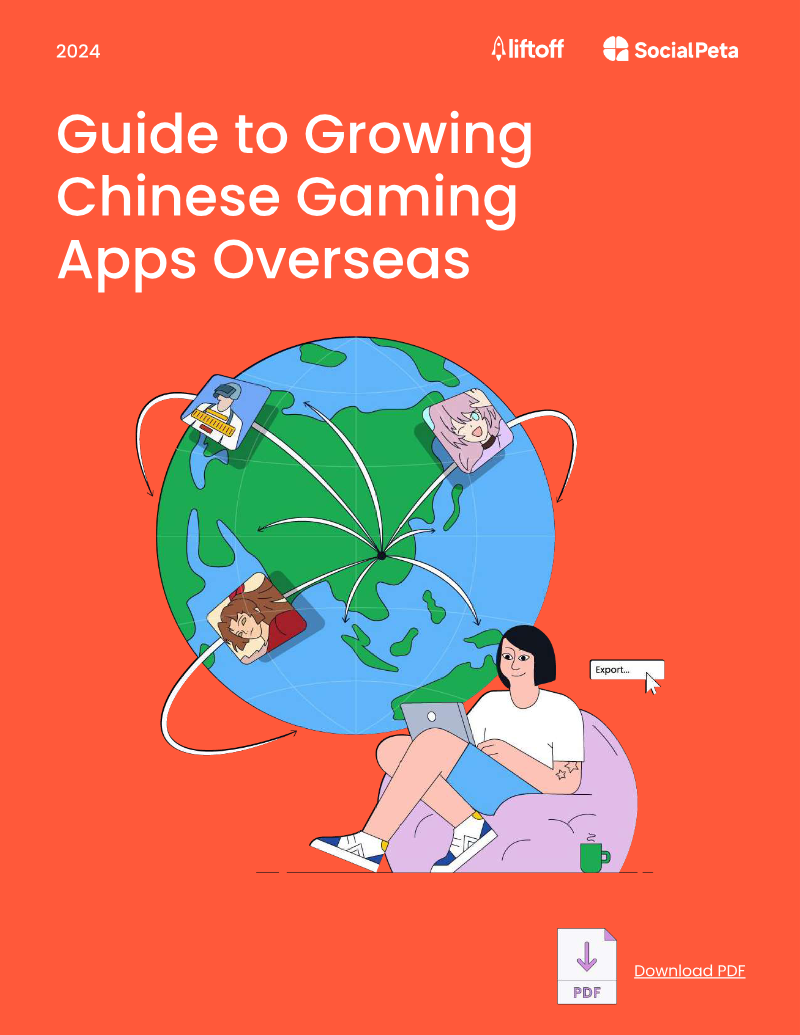
Guide to Growing Chinese Gaming Apps Overseas: 2024
Chinese gaming applications continue to exert a dominant influence on the global stage, particularly within the strategy and role-playing game segments in mature markets such as the United States, Japan, and South Korea. While these regions offer substantial revenue potential, they are characterized by intense competition and elevated costs per install. To navigate these challenges, successful publishers are shifting toward hyper-localized strategies that tailor art styles to regional aesthetic preferences—favoring manga-inspired visuals in Japan and realistic or cartoon aesthetics in Western markets—while utilizing local influencers to establish brand credibility.
Technological innovation serves as a primary driver for operational efficiency and user acquisition. The integration of generative AI has become essential for the rapid localization of ad creative, voice-overs, and marketing copy, ensuring both speed and brand compliance. High-performing titles currently leverage high-volume, innovative campaigns that incorporate minigames and AI-enhanced visuals to capture player attention. Beyond acquisition, long-term retention is increasingly supported by the implementation of social hangout spaces, home-building systems, and character trial models that balance accessibility with monetization.
Monetization strategies have evolved to prioritize engagement through sophisticated, time-limited mechanics. Publishers are frequently employing box gachas, pull-milestone rewards, and gamified event structures such as diceboards and bingo to incentivize spending. Furthermore, the consistent deployment of diverse live events remains a critical requirement for maintaining player interest and competitive viability. By combining these aggressive monetization tactics with a commitment to continuous content updates, Chinese developers are effectively sustaining growth and deepening their footprint across the global gaming landscape throughout 2024.
- Chinese publishers are maintaining global dominance in strategy and RPG segments by shifting to hyper-localized art styles, specifically manga-inspired visuals for Japan and realistic or cartoon aesthetics for Western markets.
- Generative AI is now a core operational requirement for rapid, compliant localization of ad creative, voice-overs, and marketing copy to manage high costs per install in mature markets like the U.S., Japan, and South Korea.
- High-performing user acquisition campaigns are increasingly utilizing minigames and AI-enhanced visuals to capture player attention in highly competitive environments.
- Long-term player retention is being driven by the integration of social hangout spaces, home-building systems, and character trial models that balance game accessibility with monetization.
- Monetization strategies have shifted toward sophisticated, time-limited mechanics such as box gachas, pull-milestone rewards, and gamified event structures like diceboards and bingo.

From Volatility to Stability: Q3 2024 Gaming Deals Report
The third quarter of 2024 marks a period of stabilization for the global gaming industry, signaling a transition from post-pandemic volatility toward a new, normalized market environment. The industry has moved past the extreme fluctuations of the COVID-19 era, with capital deployment for private investments settling at approximately $1 billion across 120 rounds. While public markets remain under pressure, the quarter saw the first initial public offering in two years, suggesting a cautious but potential thaw in public listing activity.
Key findings reveal a strategic shift in investor focus, as capital increasingly flows toward platform and technology sectors rather than traditional gaming content. This trend is evidenced by a sharp uptick in private investments for infrastructure, payment, and development tools. Within the gaming segment, early-stage venture capital remains consistent, while late-stage fundraising continues to face significant headwinds. Corporate venture capital has emerged as a vital component of the ecosystem, frequently co-investing with traditional venture firms to support studios and tech providers.
Geographically, North America and Western Europe remain the primary hubs for investment activity, though the mobile market continues to rely heavily on Asian developers for new top-performing releases. Steam sales data reflects a divergence in performance, with AA and indie publishers driving a 35% year-over-year growth in gross revenue, while AAA titles have experienced stagnation.
The analysis relies on tracking closed transactions within the video game industry, excluding pure gambling, betting, and non-gaming blockchain entities. By monitoring deal types—including control and minority mergers and acquisitions, venture capital rounds, and public offerings—the data provides a comprehensive view of capital flows. The findings emphasize that while the gaming sector faces ongoing challenges in late-stage funding, the broader ecosystem is finding stability through diversified investment in gaming-adjacent technologies and a resilient indie development scene.
- The gaming industry has transitioned to a normalized market environment, with Q3 2024 private investment totaling approximately $1 billion across 120 rounds.
- AA and indie publishers are outperforming the broader market, driving a 35% year-over-year growth in gross revenue while AAA titles remain stagnant.
- Investor capital is shifting away from traditional content toward infrastructure, payment systems, and development tools.
- Public market activity shows signs of a thaw with the first initial public offering in two years, despite continued pressure on public listings.
- Early-stage venture capital remains consistent, but late-stage fundraising continues to face significant headwinds.

Global Mobile Gaming Industry Outlook 2024
The global mobile gaming market experienced a period of stabilization in 2023, with total in-app purchase (IAP) revenue reaching $76.7 billion. While this figure represents a 2% year-on-year decline, it remains 22% higher than pre-pandemic levels recorded in 2019. The industry outlook is positive, with revenue projected to rebound to $78 billion in 2024 and surpass $100 billion by 2028, reflecting an anticipated average annual growth rate of approximately 6.8%.
Market performance in 2023 was characterized by a shift in consumer preference away from mid-core and hardcore genres toward casual and hybrid-casual titles. Casual gaming revenue grew by 8% to $28.6 billion, now accounting for 38% of the global market. Within this segment, puzzle and board games performed exceptionally well, with both genres reaching $10 billion in revenue. Notable titles such as Royal Match and MONOPOLY GO! were primary drivers of this growth, with the latter emerging as a significant revenue contributor in the board game category. Conversely, traditional powerhouses like RPG and strategy games saw revenue declines of 10% as the pandemic-driven stay-at-home demand subsided.
Geographically, the United States remains the largest mobile gaming market, generating $22.2 billion in 2023. While the U.S. market remained stable, other key regions experienced varied results; the Chinese iOS market held steady, whereas Japan and South Korea saw revenue contractions of 13% and 7%, respectively. Despite broader genre declines, high-quality new releases—particularly in the RPG sector—continued to secure top positions in growth rankings. The analysis relies on estimated IAP data from the Apple App Store and Google Play, excluding advertising revenue and third-party Android marketplace income.
- The global mobile gaming market generated $76.7 billion in IAP revenue in 2023, a 2% year-on-year decline, but is projected to rebound to $78 billion in 2024 and exceed $100 billion by 2028.
- Consumer preferences shifted toward casual and hybrid-casual titles, with casual gaming revenue growing 8% to $28.6 billion, now representing 38% of the total market.
- Puzzle and board games were primary growth drivers, each reaching $10 billion in revenue, bolstered by the success of titles like Royal Match and MONOPOLY GO!.
- Traditional mid-core and hardcore genres, specifically RPG and strategy games, experienced a 10% revenue decline as pandemic-era demand subsided.
- The United States remains the largest mobile gaming market with $22.2 billion in 2023 revenue, while Japan and South Korea saw significant contractions of 13% and 7%, respectively.
Save Point 2024: Recapping the Year's Biggest Trends in Live Streaming
The live streaming industry in 2024 underwent a fundamental transformation characterized by decentralization and the diversification of content beyond traditional gaming. As platforms like Kick experienced explosive growth and new services emerged to fill regional voids left by Twitch’s departure from Korea, the ecosystem shifted toward a multi-platform approach. Creators increasingly utilized simulcasting to expand their reach, while high-production marathons and global IRL content became the primary drivers of audience engagement. This evolution reflects a broader move away from platform exclusivity toward a creator-led model where individual influence dictates viewership patterns.
Esports and competitive gaming remained central to the industry’s success, though the nature of consumption changed significantly. Co-streaming emerged as a dominant force, accounting for nearly 45 percent of all esports viewership, while mobile esports solidified its status as a global powerhouse, particularly during the Esports World Cup. Simultaneously, the industry benefited from a strong synergy between transmedia adaptations and gaming, as film and television projects like Fallout revitalized interest in specific titles. The rise of VTubers and the enduring popularity of RPGs and nostalgia-driven remakes further sustained high levels of viewer retention throughout the year.
Beyond gaming, the landscape expanded to include political commentary, music-focused programming, and massive independent events that rivaled traditional broadcast media. Large-scale spectacles, such as La Velada del Año 4, demonstrated the potential for creators to command millions of concurrent viewers outside of established gaming frameworks. Brands successfully capitalized on these shifts by integrating directly into the viewer experience through strategic initiatives like Twitch Drops. Ultimately, the industry in 2024 proved that long-term growth is now tethered to the ability to blend interactive community engagement with diverse, multi-genre content that transcends the traditional boundaries of the gaming sector.
- The live streaming industry shifted toward a creator-led, multi-platform model in 2024, characterized by widespread simulcasting and the rise of alternative platforms like Kick following Twitch’s withdrawal from the Korean market.
- Co-streaming has become a dominant force in competitive gaming, now accounting for nearly 45 percent of total esports viewership.
- Large-scale, non-gaming spectacles like La Velada del Año 4 demonstrated that independent creators can now command millions of concurrent viewers, rivaling traditional broadcast media.
- Mobile esports solidified its status as a global powerhouse in 2024, highlighted by the significant viewership performance of the Esports World Cup.
- Transmedia adaptations, such as the Fallout series, proved highly effective at revitalizing interest in specific gaming titles and driving viewer retention.

Gaming Report 2024: Meet the Moment
The global video game market, valued at $196 billion in 2023, is entering a period of sustained expansion with a projected annual growth rate of 6% through 2028. This upward trajectory is primarily fueled by younger demographics who increasingly utilize gaming environments as essential hubs for social interaction, creative expression, and commerce. To capitalize on this shift, industry leaders must pivot away from traditional, siloed development toward immersive, cross-platform ecosystems that prioritize interoperability and the integration of user-generated content. Expanding intellectual property across diverse media formats is now a critical requirement for maintaining relevance and maximizing consumer engagement.
The industry is simultaneously undergoing a structural transition toward a hardware-agnostic model, necessitated by the rise of cloud-based distribution and the demand for seamless, multi-channel experiences. As market saturation intensifies, the high failure rates observed in mobile gaming underscore the need for more rigorous operational discipline. Companies are increasingly required to align product development, finance, and marketing functions through data-driven strategies. By leveraging artificial intelligence to optimize user acquisition and retention, organizations can better navigate the volatility of the current landscape and address the growing disparity between headcount expansion and actual revenue growth.
To secure long-term viability, gaming organizations are modernizing their internal structures by standardizing development tools and fostering entrepreneurial autonomy. This evolution includes a holistic integration of generative AI into core workflows to improve operational efficiency and scale production capabilities. Furthermore, as competition for specialized talent intensifies, firms are refining their compensation and support models to align with broader technology industry standards. These combined technological and organizational shifts are essential for navigating current market turbulence and ensuring that gaming entities remain competitive in an increasingly complex and interconnected digital economy.
- The global video game market reached a $196 billion valuation in 2023 and is projected to grow at an annual rate of 6% through 2028.
- Industry growth is driven by younger demographics treating gaming environments as primary hubs for social interaction, commerce, and creative expression.
- Market leaders must transition from siloed development to immersive, cross-platform ecosystems that prioritize interoperability and user-generated content.
- The industry is shifting toward a hardware-agnostic model, requiring companies to adopt cloud-based distribution and seamless multi-channel experiences.
- Organizations must integrate generative AI into core workflows to improve operational efficiency, scale production, and address the disconnect between headcount growth and revenue.