ReportStream Hatchet
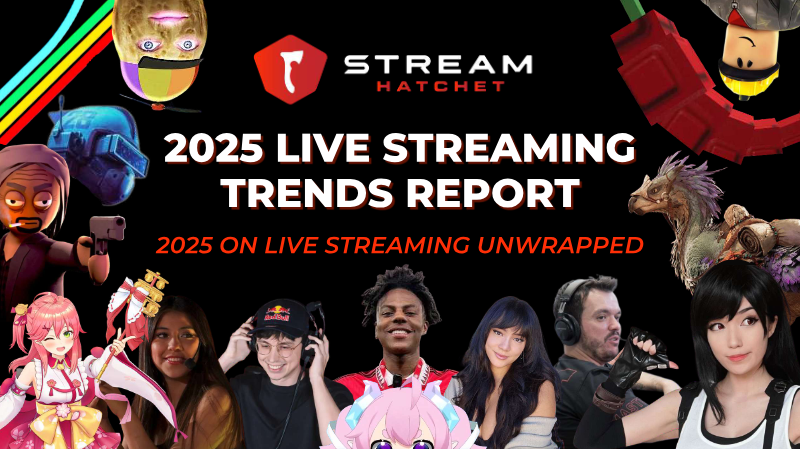
Save Point 2024: Recapping the Year's Biggest Trends in Live Streaming
202454 pages~27 min full read
Key insights
7 slides
What changed
The industry moved toward a creator-led, multi-platform model in 2024.
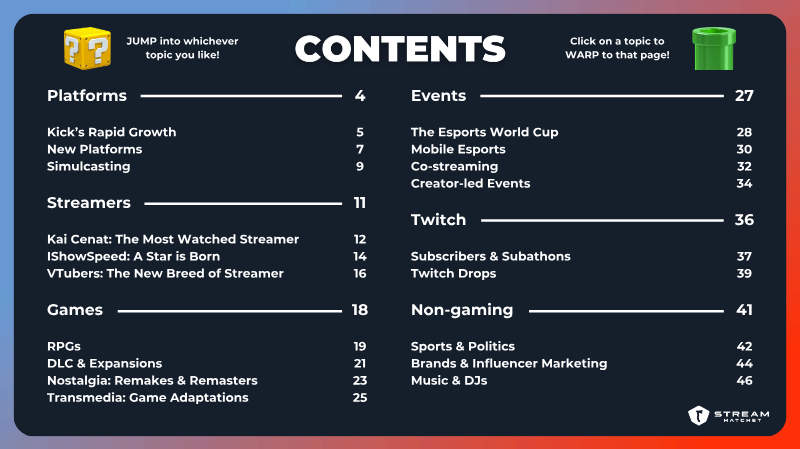
Widespread simulcasting and the rise of alternative platforms like Kick followed Twitch’s withdrawal from the Korean market. Creators increasingly utilized simulcasting to expand their reach.
Multi-platform model. The live streaming industry shifted toward a creator-led, multi-platform model in 2024.
Key number
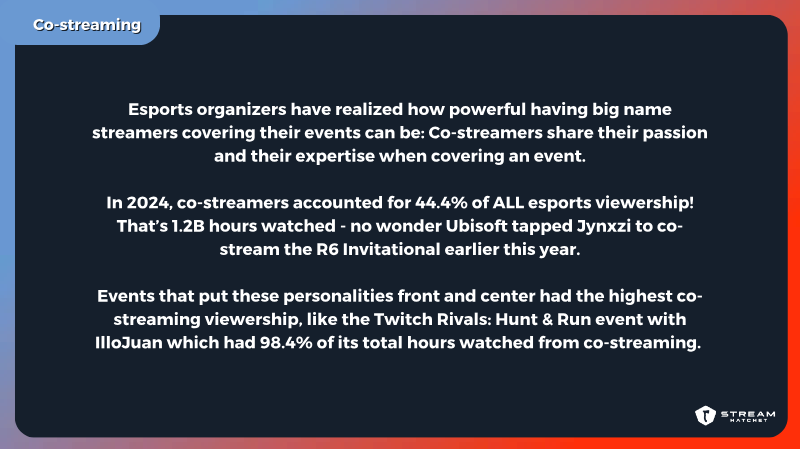
Co-streaming accounted for nearly 45 percent of total esports viewership.
Co-streaming emerged as a dominant force in competitive gaming. It now accounts for nearly 45 percent of all esports viewership.
What changed
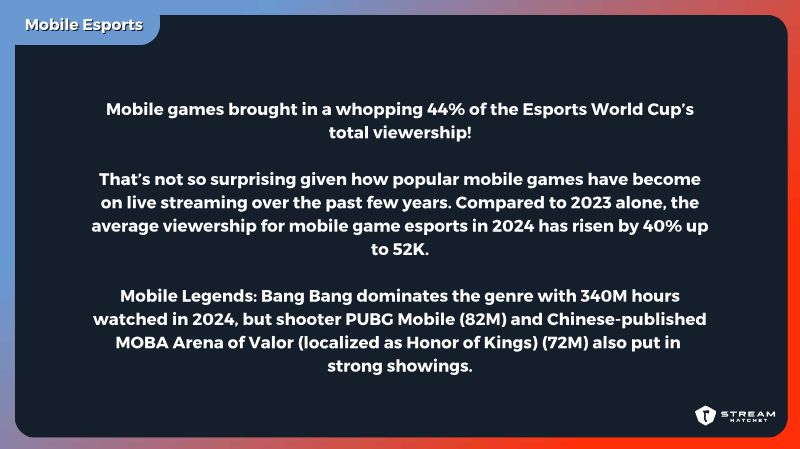
Mobile esports solidified its status as a global powerhouse in 2024.
The industry benefited from a strong synergy between transmedia adaptations and gaming.
What changed
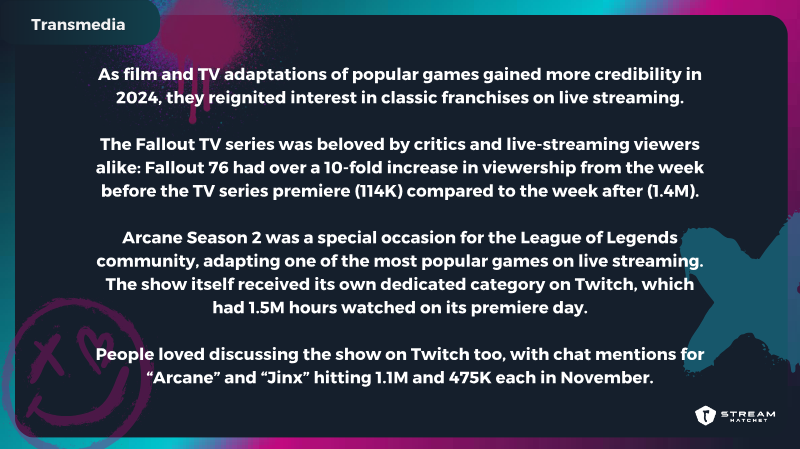
Transmedia adaptations like Fallout revitalized interest in specific gaming titles.
The rise of VTubers and RPGs further sustained high levels of viewer retention.
Transmedia effect. Transmedia adaptations, such as the Fallout series, proved highly effective at revitalizing interest in specific gaming titles.
What changed
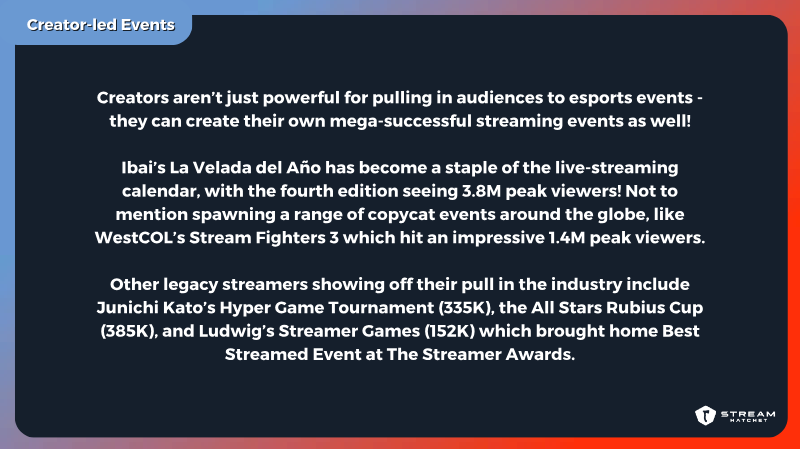
Independent creators commanded millions of concurrent viewers for non-gaming spectacles.
Large-scale spectacles like La Velada del Año 4 demonstrated the potential for creators to rival traditional broadcast media. This occurred outside of established gaming frameworks.
Non-gaming spectacles. Independent creators can now command millions of concurrent viewers, rivaling traditional broadcast media.
What changed
Content diversification beyond gaming became essential for sustaining long-term audience growth.
The landscape expanded to include political commentary, music programming, and high-production IRL events. Long-term growth is now tethered to blending interactive community engagement with diverse content.
What changed
Brands leveraged direct integration strategies like Twitch Drops to embed into viewer experience.
Brands successfully capitalized on these shifts by integrating directly into the viewer experience.
Brand integration. Brands are increasingly leveraging direct integration strategies, such as Twitch Drops, to embed themselves into the interactive viewer experience.
Page 45 of the reportDIABLO IV1,353
RUST872
HUNT: SHOWDOWN454
WORLD OF WARCRAFT132
HEARTHSTONE118
MINECRAFT47
1 / 7
Ask AI about this report