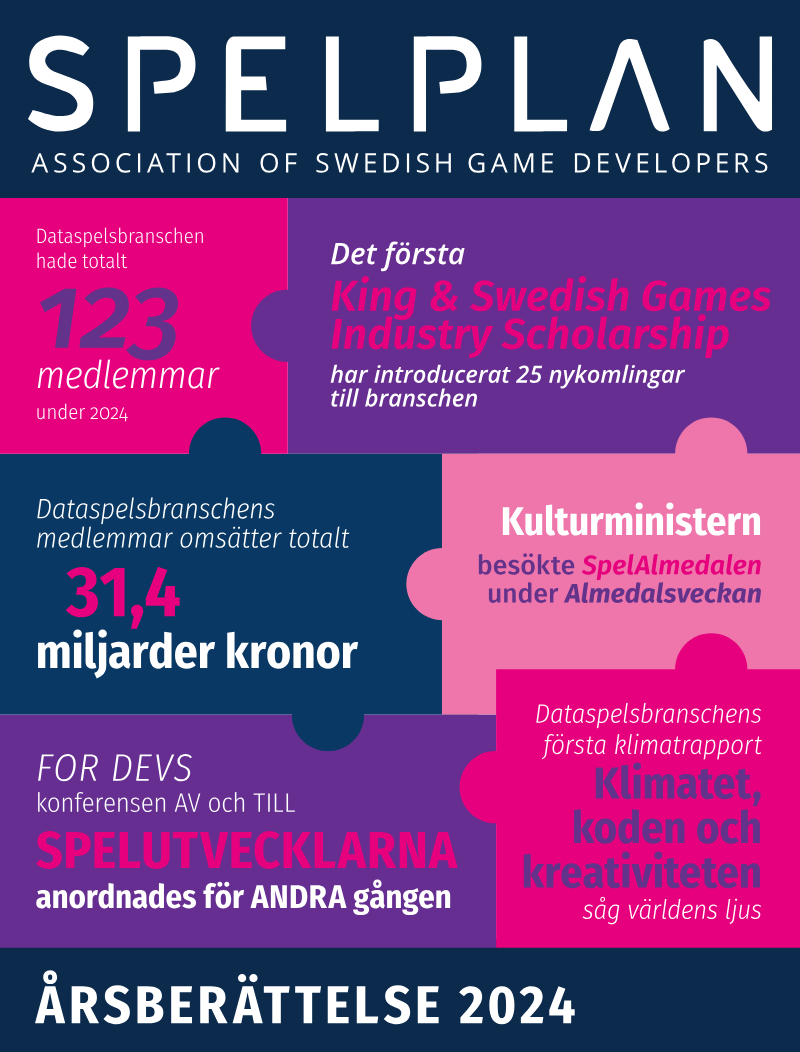
Paving Ways to the Games Industry: 2024
15 Jan 202456 pages~118 min full read
Key insights
4 slides
The scale
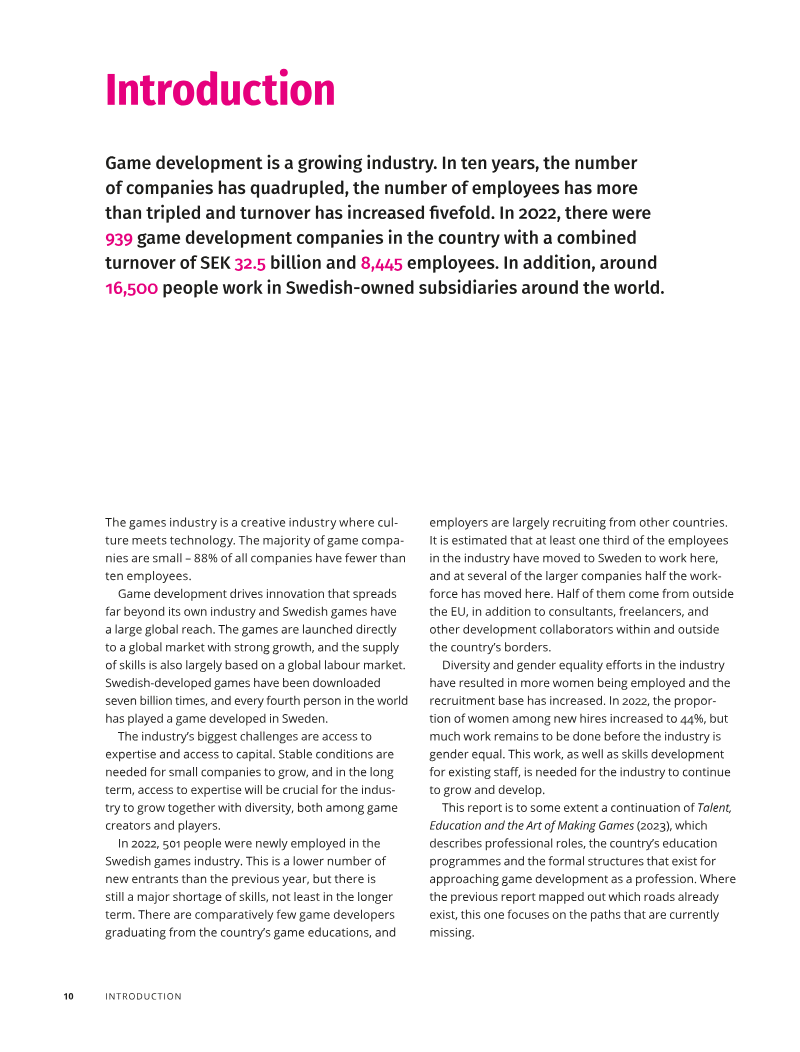
The Swedish games industry has 939 companies and over 8,400 employees.
As of 2022, the sector encompasses 939 companies and over 8,400 employees. It remains heavily reliant on international labor to compensate for a persistent domestic skills gap.
The gap
A persistent domestic skills gap drives reliance on international labor.
The sector faces a critical skills gap that necessitates a heavy reliance on international labor. It is hindered by restrictive migration policies and a lack of standardized skill validation for international applicants.
The shift
Sustainable growth requires shifting toward an inclusive talent ecosystem.
Sustainable long-term growth requires shifting from traditional recruitment models toward an inclusive ecosystem. This ecosystem integrates immigrants and individuals from non-traditional backgrounds.
The solution
Innovative educational models can align outputs with industry needs.
The sector must adopt innovative models like micro-credentials and intensive reskilling programs. These models prioritize professional potential over rigid, legacy hiring requirements.
Page 31 of the report- 01Adopt micro-credentialsThe sector must adopt innovative models like micro-credentials.
- 02Launch reskilling programsThe sector must adopt intensive reskilling programs.
- 03Prioritize potentialModels prioritize professional potential over rigid hiring requirements.
1 / 4
Ask AI about this report