Market (Mobile)·Updated Mar 17, 2026 by data.ai
Report · January 16, 2024
Published by data.ai
The global mobile economy experienced a significant recovery in 2023, with consumer spending rising 3% to $171 billion and daily engagement surpassing five hours per user in leading markets. While mobile gaming faced a slight 2% contraction in spending due to economic headwinds and a shift toward longer title life cycles, the broader industry was bolstered by a resilient non-gaming sector. This growth was primarily driven by social media "tipping," video streaming subscriptions, and the rapid emergence of generative AI. Mobile advertising also remained a cornerstone of the ecosystem, reaching $362 billion with projections to exceed $400 billion in the coming year. The landscape is increasingly defined by a shift in consumer behavior and monetization strategies. Non-gaming apps reached a record $64 billion in spend, led by TikTok, which became the first non-game app to surpass $10 billion in lifetime revenue. In contrast, the gaming market saw a decline in new hit releases, with the industry consolidating around established high-fidelity IPs and social multiplayer genres like Creative Sandbox and Battle Royale. Despite this consolidation, breakout successes like Monopoly GO and Honkai: Star Rail demonstrated that high-quality debuts can still disrupt saturated markets. Across various sectors, mobile integration has reached unprecedented levels. Travel and ticketing apps saw record-breaking demand as consumers returned to in-person events, while the finance sector experienced a surge in personal loan apps and "Super Apps" amid global inflation. Retail also underwent a structural shift as China-based platforms like Temu gained significant global market share. Ultimately, the 2023 data reflects a mature mobile market where growth is increasingly tied to sophisticated AI integration, creator-driven economies, and the transition of traditional services into comprehensive digital hubs.
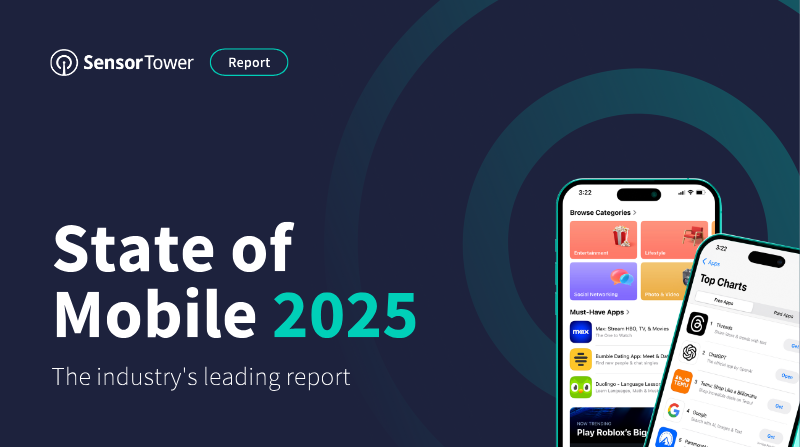
data.ai STATE OF o TEMU Disnep MOBILE 2024 4 The Industry's Leading Report OI The Industry's Leading Report G prime video BeReal.
data.ai | EXECUTIVESUMMARY 1 AI is Everywhere 2 Social is the Battleground 3 Mobile Goes IRL for Generative AI Chatbots and Art Generators dominated Consumers are shifting their spending habits. Demand for revenge travel, Swiftie and Bey-Hive fans, attention. But AI functionality is ubiquitous across nearly Popularized by TikTok, they are opting to spend directly and live sports booms — consumers seek real life every app industry. in app via 'tips' to their favorite content creators, experiences... but always with their phones in tow. opening the door for subscriptions and IAPs. Learn More > Learn More > Learn More > 4 Non-Gaming Apps Power 5 Mobile Gaming Growth Mobile Economy in 2023 Spending Rebound Lags, But Still Leads Gaming Industry App Store Non-gaming apps underpin mobile growth. Up 11% YoY, Demand remains steady. App store spend dips slightly. Billion consumers can't live without streaming, dating and User Market is bolstered by new releases and APAC 533 Billion Generated Content (UGC). publishers making inroads in western markets, similar to Ads the ecommerce sector with the rise of Temu & SHEIN. 362 Learn More > Billion Learn More >
data.ai | EXECUTIVESUMMARY 2023 Mobile Landscape at a Glance New App App Store Daily Time Spent Mobile Total Hours Downloads Spend Per User Ad Spend Spent 257 171 5 362 5.1 Billion Billion Hours Billion Trillion +1% +3% +6% +8% +6% YoY Growth YoY Growth YoY Growth YoY Growth YoY Growth iOS, Google Play, Third- iOS, Google Play, Third- Android Phones; Weighted Android phones Party Android in China Party Android in China Average Among Top 10 Mobile-First Markets >489,000 apps > 325,000 spent per 1/3 of daily Larger than the total 14 Billion hours downloaded per minute in 2023 waking hours economies of countries collectively per day minute in 2023 including Colombia, Finland in 2023 and New Zealand
Contents 01 Macro Mobile Trends 08 Food & Drink 02 AI & Mobile 09 Travel 03 Gaming 10 Health & Fitness 04 Finance 11 Sports 05 Retail 12 Other Industries Embracing Mobile 06 Video Streaming 13 Top App & Games of 2023 07 Social
data.ai | Our Customers 80 out of the 100 top publishers trust data.ai insights to grow their business Gaming Media Retail & Entertainment Technology & E-commerce Gig Economy QSR EA Disney Googie Wainart. uber 2ROVIO amazon macys DOORDASH DQ SEGA SONY Microsoft ebay DiDi ELEVEN C Meta Rakuten Pizza AADA CVS BB Note:Top publishers by app store revenue |Source: data.ai Intelligence
data.dl See Your data.ai Powered Potential First-Hand, For Free. Get the top mobile app performance data for over 1 million apps with data.ai’s10 Day Free Trial. Claim your free trial with no commitment.
The global mobile economy experienced unprecedented expansion in 2021, characterized by a 19% year-over-year increase in app store spending to $170 billion and a 23% rise in mobile advertising to $295 billion. This growth was underpinned by a fundamental shift in consumer behavior, as users in leading markets now average 4.8 hours daily on mobile devices. Social, photo, and video applications dominate this engagement, accounting for 70% of time spent. The ecosystem's vitality is further evidenced by the release of 2 million new apps and the emergence of 233 individual titles that each surpassed $100 million in annual consumer spend. Mobile gaming remains the primary engine of monetization, reaching a record $116 billion in spend. While hypercasual titles drive download volume, core gaming experiences like 4X March-Battle strategy and creative sandboxes drive the highest revenue. Beyond gaming, the finance sector saw a 28% increase in downloads, propelled by the rise of neobanks in emerging markets and a surge in cryptocurrency adoption. Similarly, retail engagement surpassed 100 billion hours, while the food and drink sector reached record sessions through the rapid expansion of ultra-fast delivery services. The landscape also reflects a recovery in travel and sports, with engagement returning to pre-pandemic levels alongside a 95% increase in dating app spend since 2018. Emerging trends such as live streaming and avatar-based social platforms indicate growing consumer interest in the metaverse, with live streaming engagement outpacing the general market by nine times. Geographically and corporately, the market is led by U.S. giants like Google and Meta in general utility, while Chinese firms like Tencent dominate the gaming sector. This data illustrates a mature yet diversifying mobile industry that has become the central platform for finance, entertainment, and social interaction globally.
The global mobile economy reached a significant milestone in 2024, with consumer spend hitting $150 billion. This growth was primarily propelled by a 25% surge in non-gaming app revenue, particularly within the entertainment, productivity, and generative AI sectors. While total app downloads declined for the fourth consecutive year, indicating a maturing market, user engagement reached a record 4.2 trillion hours. The rise of generative AI served as a primary catalyst for this engagement, with AI chatbot downloads increasing by 635 million and the subgenre generating nearly $1.3 billion in revenue. The mobile gaming sector demonstrated a robust recovery in 2024, reaching $80.9 billion in internal purchase revenue. Although total game downloads fell by 6%, the market shifted toward high-quality, core genres. Strategy and RPG titles dominated monetization, while the "hybrid-casual" model—combining simple mechanics with midcore progression—emerged as a vital growth driver. Established franchises continue to exert dominance, with titles older than two years accounting for over 80% of revenue. Notably, the industry saw a record eleven games surpass $1 billion in annual revenue, signaling a concentration of wealth among top-tier performers. Beyond gaming, the landscape was defined by the continued dominance of social media, which accounted for 2.4 trillion hours of global usage. TikTok became the first non-game app to reach $15 billion in lifetime spend, reflecting a broader trend of social platforms diversifying revenue through in-app purchases and subscriptions. In the retail sector, Chinese e-tailers like Temu and SHEIN expanded their global footprint, while the finance sector saw a resurgence driven by cryptocurrency and digital wallets. Despite signs of "digital fatigue" in traditional streaming, the mobile ecosystem remains resilient, characterized by strategic shifts toward ad-supported tiers, meaningful AI integration, and incentivized health and fitness platforms.
The mobile industry reached unprecedented milestones in 2019, characterized by 204 billion app downloads and $120 billion in consumer spending. This growth represents a doubling of the market since 2016, establishing mobile as the primary platform for global commerce and entertainment. Mobile-centric companies now command significantly higher IPO valuations than their traditional counterparts, a trend driven largely by the emergence of Gen Z as a dominant demographic. This generation engages with mobile content 60% more frequently than older cohorts, signaling a permanent shift in consumer behavior across global markets, with particularly high engagement levels in the Asia-Pacific region. Mobile gaming continues to anchor the ecosystem, accounting for 72% of all app store spending and outperforming the combined revenue of PC, console, and handheld gaming platforms. While casual games lead in total downloads, core titles such as RPGs and Action games generate 76% of total consumer spend and capture the majority of user engagement time. This monetization success is mirrored in other sectors; for instance, dating app expenditures doubled to $2.2 billion, and health and fitness apps saw a 130% increase in spending as users migrated from physical gyms to digital wellness platforms. Beyond entertainment, mobile has become essential to finance and retail. Global finance app sessions surpassed one trillion in 2019, with fintech startups increasingly outperforming traditional banking institutions. In retail, a strong correlation exists between time spent in-app and total sales, exemplified by record-breaking mobile transactions during major shopping events. Furthermore, the rapid rise of short-form video platforms like TikTok and the 240% increase in food delivery sessions since 2017 underscore a broader transformation where mobile serves as the central hub for daily logistics, social interaction, and professional services.
The Indian mobile ecosystem is undergoing rapid transformation, driven by a convergence of gaming, financial services, and entertainment applications. Hyper‑casual titles, primarily action‑puzzle games, have surpassed five billion downloads worldwide, while 4X march‑battle strategy games commanded the highest consumer spend in 2021, generating roughly ten billion dollars. This surge in gaming activity coincides with a 28 percent year‑over‑year increase in finance‑app usage, pushing total downloads beyond one billion and reaching 1.2 billion installations. Cryptocurrency platforms such as Binance, WazirX and CoinDCX recorded the strongest gains in sessions per user, signalling a growing appetite for digital‑asset services. Retail and video‑streaming applications also expanded markedly, with shopping apps alone accounting for 7.57 billion hours of user engagement. The market in 2021 was dominated by a blend of global and domestic firms. Google, Meta, Reliance, the Times Group, ShareChat and Bharti Airtel led both download and spend rankings across categories. In the gaming segment, Chinese and U.S. publishers—including Tencent, Jinke Culture (Outfit7), Voodoo, ironSource and Supercell—held top positions, with popular titles such as Carrom Pool and My Talking Tom Friends driving user acquisition. This competitive landscape underscores the importance of cross‑border content while highlighting the rising influence of Indian platforms. Overall, the data illustrate a diversified mobile market in India where high‑growth sectors—hyper‑casual gaming, strategic spend‑heavy titles, and fintech services—are reshaping user behavior and revenue streams. The coexistence of strong domestic players with leading international publishers suggests a dynamic environment poised for continued expansion throughout the coming years.