Key insights
9 slides
Market context
Chinese gaming apps hold dominant influence in mature markets.
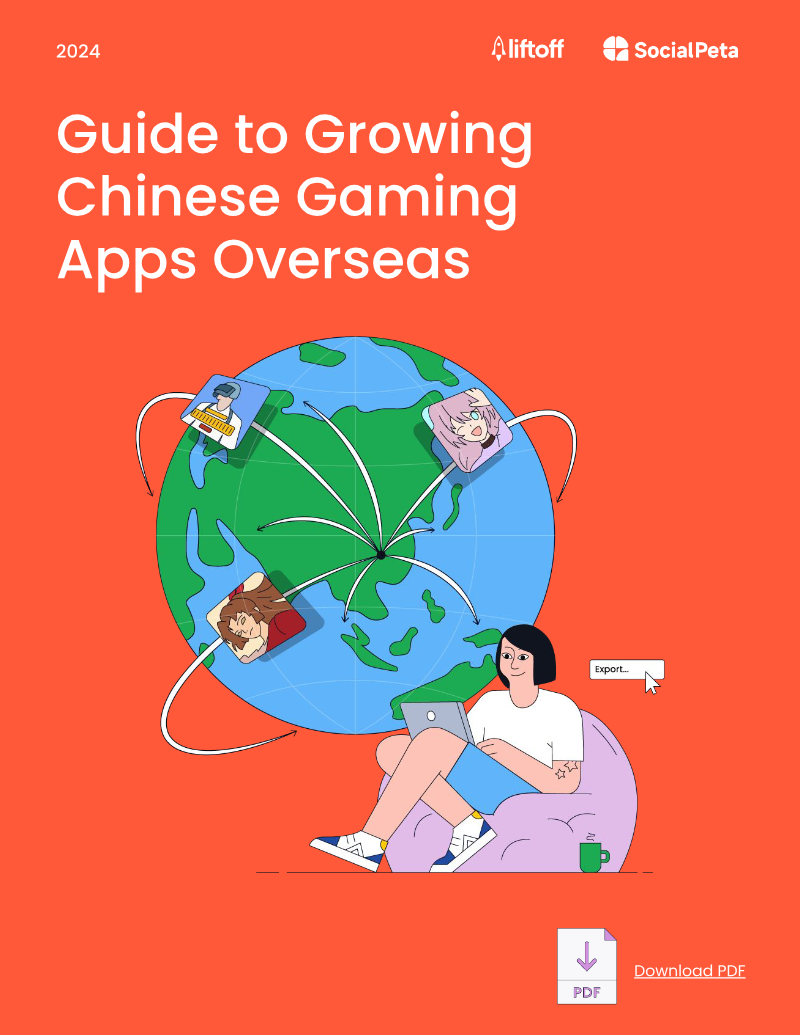
Chinese gaming applications exert a dominant influence on the global stage, particularly within strategy and role-playing game segments. Mature markets such as the United States, Japan, and South Korea offer substantial revenue potential.
Cost pressure
Mature markets feature intense competition and elevated costs per install.
While regions like the United States, Japan, and South Korea offer substantial revenue potential, they are characterized by intense competition.
Art strategy
Publishers shift to hyper-localized art styles for regional preferences.
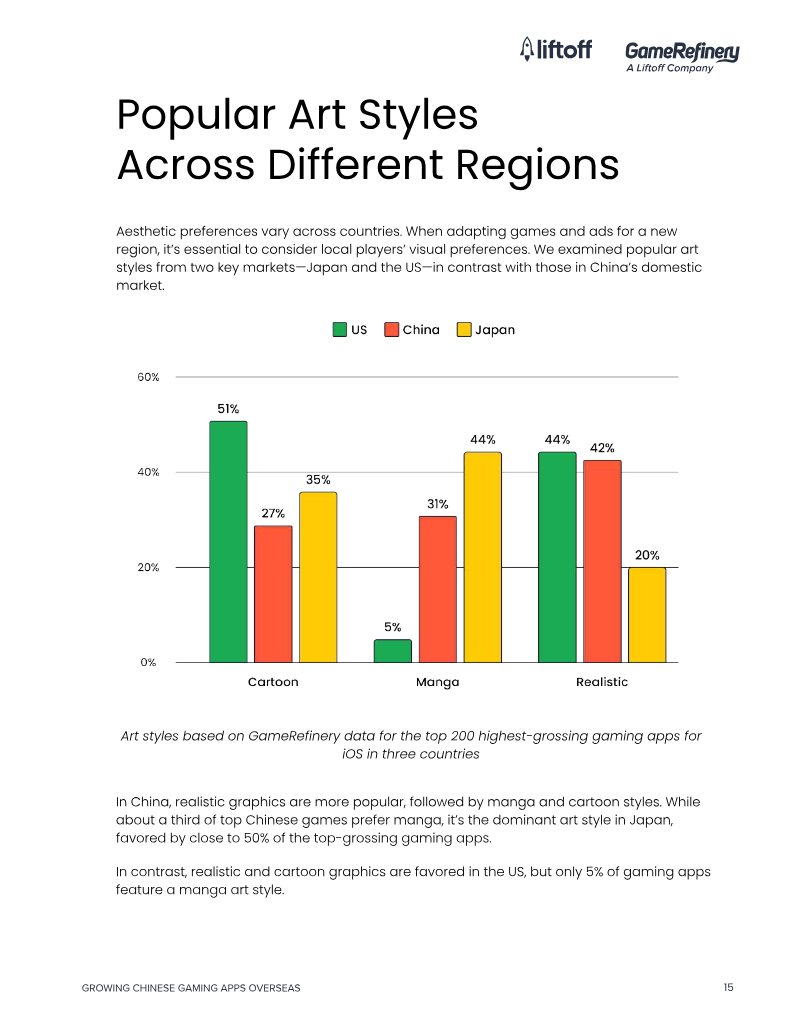
Successful publishers tailor art styles to regional aesthetic preferences, favoring manga-inspired visuals in Japan. They use realistic or cartoon aesthetics in Western markets to establish brand credibility.
Page 15 of the reportCartoon51
Manga5
Realistic44
AI integration
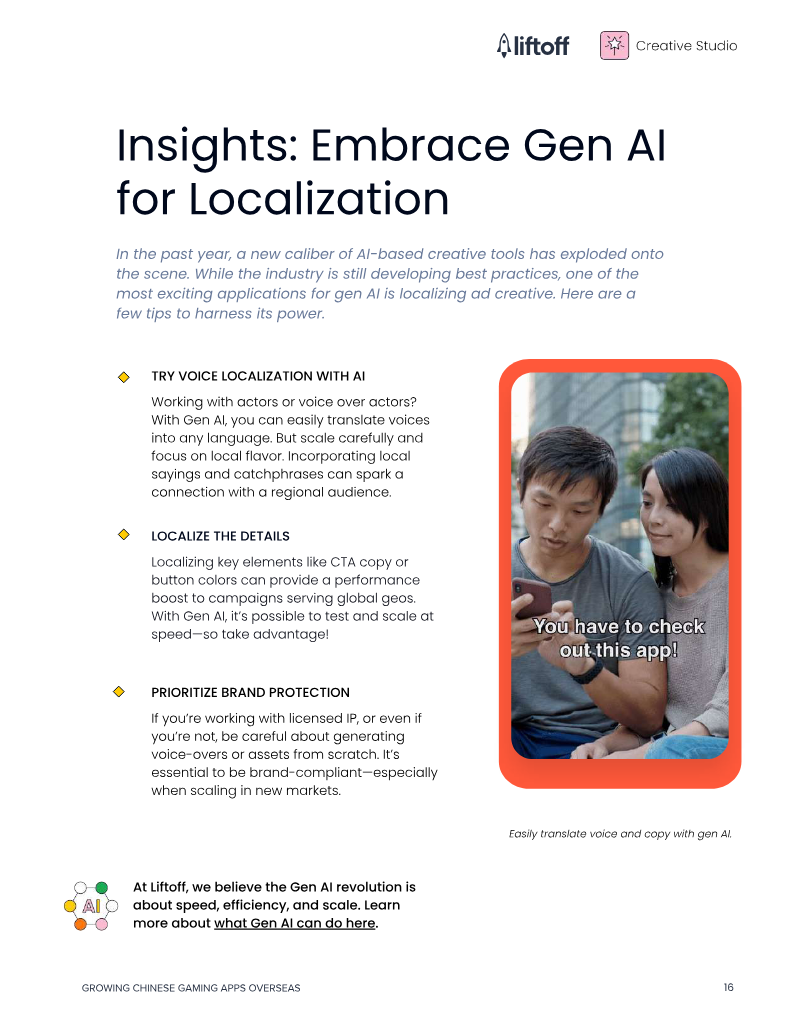
Generative AI is a core requirement for rapid localization.
Generative AI integration is essential for the rapid localization of ad creative, voice-overs, and marketing copy.
Creative formats
High-performing campaigns utilize minigames and AI-enhanced visuals.
High-performing user acquisition campaigns increasingly utilize minigames and AI-enhanced visuals to capture player attention.

Player retention
Social features and character trials drive long-term retention.
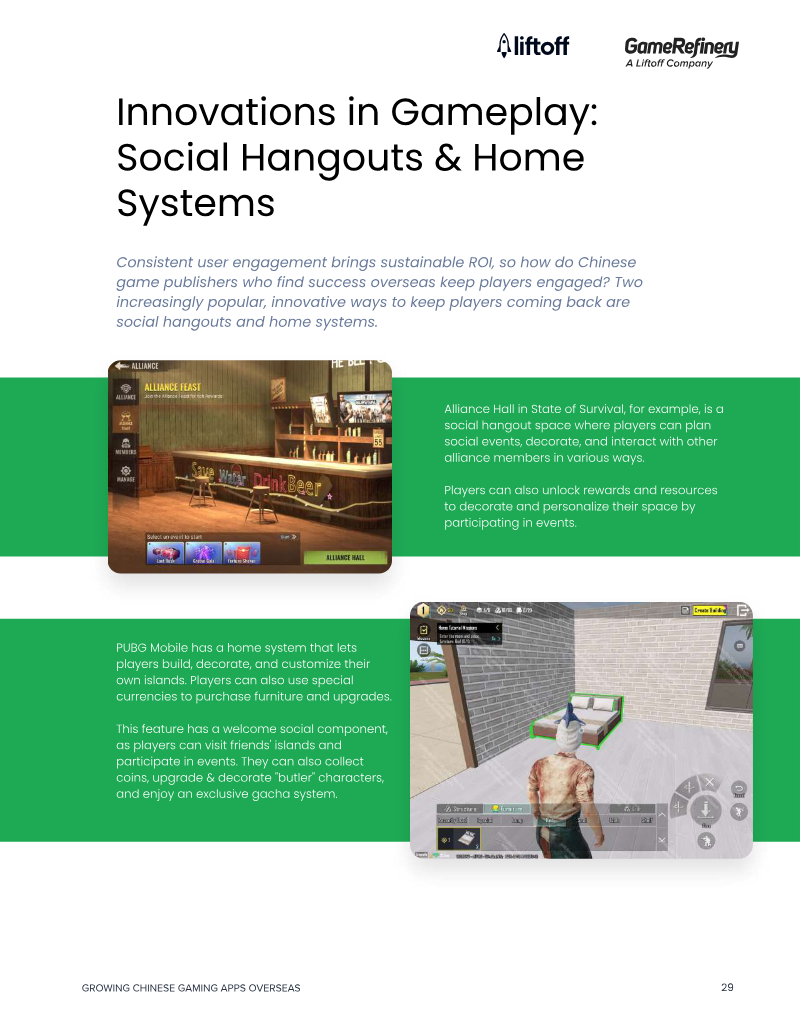
Long-term player retention is driven by the integration of social hangout spaces and home-building systems. Character trial models also balance game accessibility with monetization.
Monetization shift
Monetization prioritizes engagement through sophisticated, time-limited mechanics.
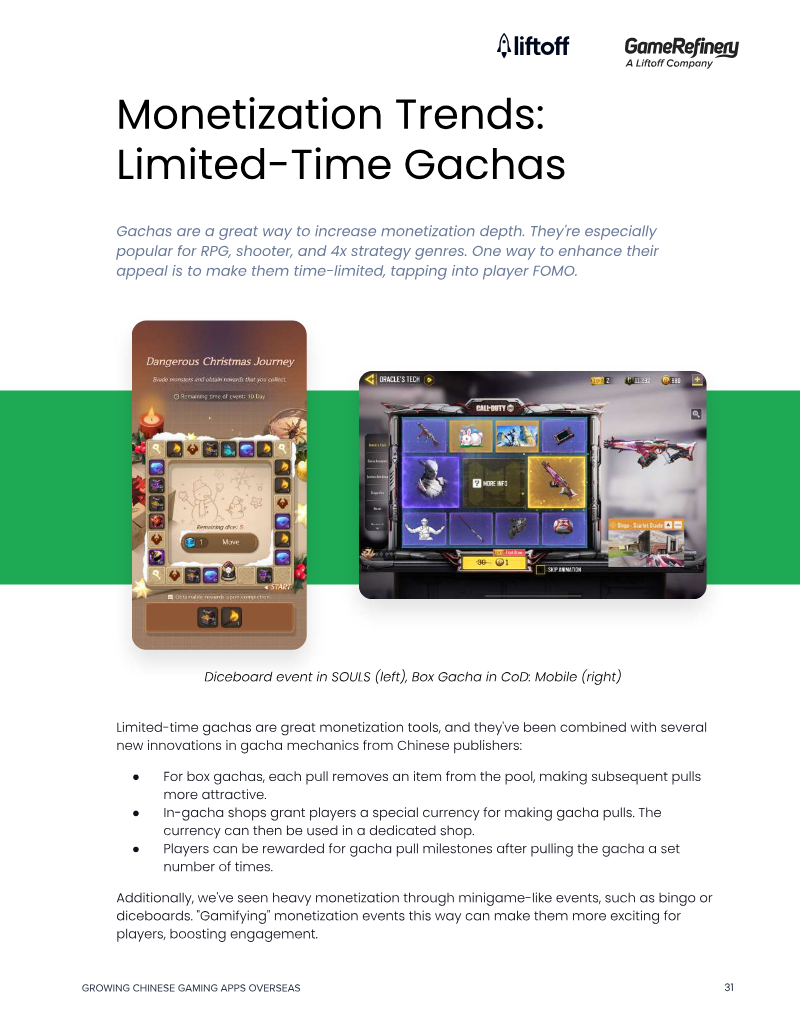
Publishers employ box gachas, pull-milestone rewards, and gamified event structures like diceboards and bingo.
Growth sustainability
Continuous content updates and live events sustain 2024 growth.
Sustained growth for Chinese developers in 2024 depends on the consistent deployment of diverse live events. Continuous content updates are also required to maintain player engagement and competitive viability.
Strategic synthesis
Aggressive tactics and continuous updates deepen global footprint.
Chinese developers combine aggressive monetization tactics with a commitment to continuous content updates. This approach effectively sustains growth and deepens their footprint across the global gaming landscape throughout 2024.
1 / 9
Ask AI about this report