Market Analysis reports and market data
Documents

What is Monetizer?
The Monetizer initiative provides a structured framework for analyzing the monetization strategies of free-to-play mobile games.
- The Monetizer initiative evaluates free-to-play mobile games by analyzing the first five to ten minutes of gameplay to assess the integration of engagement mechanics, social requirements, and spending prompts.
- Games are assigned a quantitative 'Monetizer ranking' based on a 50-point scale to standardize the comparison of monetization tactics across different titles.
- The project maintains a comparative database of approximately 500 mobile game titles to benchmark commercial viability.
Monetizer: Infinity Blade III
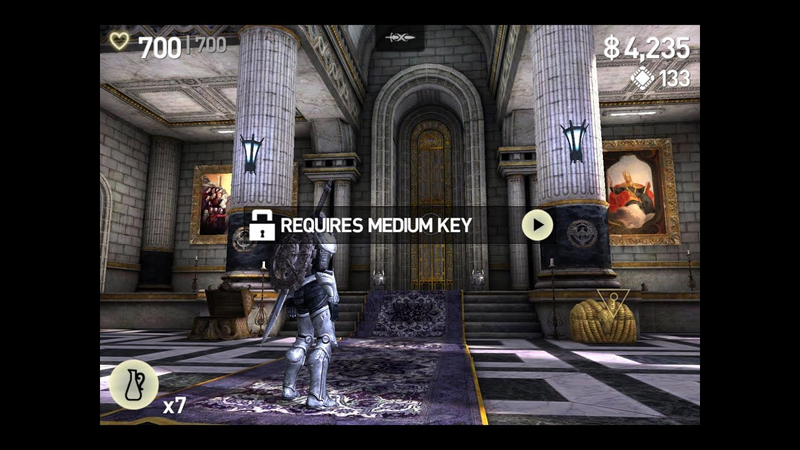
Infinity Blade III serves as a notable case study in the integration of sophisticated free-to-play (F2P) monetization mechanics within a premium, paid-entry mobile game.
- Infinity Blade III utilizes a hybrid monetization model that combines a $7 upfront premium entry fee with an aggressive in-app purchase (IAP) ecosystem typical of free-to-play titles.
- The game employs a dual-hard-currency system using gold and chips, which are non-interchangeable and serve distinct functions like equipment acquisition and time-based crafting acceleration.
- Monetization is driven by a layered architecture featuring inventory stores, consumable items, time-based crafting mechanics, and randomized rewards through prize wheels and key-based chest unlocking.

News roundup: Opinions on GTA V and the rise of iOS 7
This industry analysis examines the shifting landscape of mobile monetization and platform adoption as of September 2013, contrasting the traditional console model with the prevailing free-to-play (F2P) paradigm.
- Top-grossing mobile titles like Candy Crush Saga achieve an average revenue per paying user of approximately $40 annually, matching the upfront retail cost of many premium console games.
- Mobile developers such as GungHo Online and Supercell are demonstrating that high-frequency monetization strategies often outperform the traditional one-time purchase model used by console releases like Grand Theft Auto V.
- Mobile gaming is increasingly adopting complex monetization mechanics, including dual hard currencies, randomized item drops, and time-gated progression, even within premium-priced titles like Infinity Blade III.

Monetizer: Codemaster's Boom! Tanks
Boom!
- Codemasters adapted proven monetization mechanics from the racing genre, specifically CSR Racing and Fast & Furious 6, and applied them to a rhythm-action tank combat framework.
- The game utilizes a dual-currency system of soft currency (cash) and hard currency (gold), with gold available through direct purchase or third-party incentivized offers via Tapjoy.
- A time-limited VIP offer is triggered immediately upon tutorial completion to drive early conversion, while any real-money purchase grants permanent VIP status for ongoing bonuses.

Monetizer: Glu Mobile's Odyssey: Age of Gods
The mobile role-playing game Age of Gods, developed by TalentWalker and published by Glu Mobile, serves as a case study in the challenges of cross-market game localization.
- Age of Gods, developed by TalentWalker and published by Glu Mobile, fails to bridge the design gap between Asian market complexity and Western player expectations, leading to an inaccessible onboarding experience.
- The game’s tutorial is ineffective at explaining core mechanics like turn-based combat, squad management, and resource cultivation, leaving players without context for basic objectives or item quality tiers.
- Monetization is hindered by an unconventional pricing structure that features a steep jump from a $1 entry point to an $8 tier, while aggressively pushing a $20 recommendation over smaller options.
Monetizer: Kabam's Puzzle Trooper
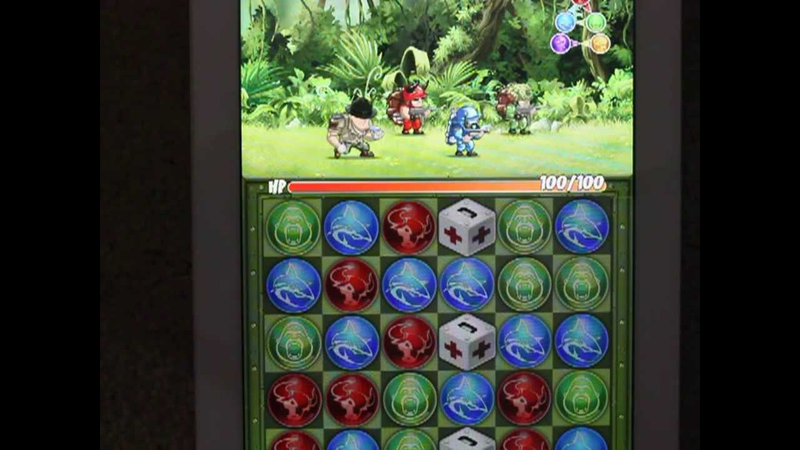
Puzzle Trooper, a match-3 action RPG published by Kabam and developed by Gumi, utilizes a standard free-to-play mobile architecture designed to onboard new users through a guided tutorial and immediate incentivization.
- Puzzle Trooper utilizes a dual-currency system featuring soft currency and hard currency (diamonds) to drive a gacha-style troop acquisition loop.
- The game employs a six-tier store structure for microtransactions, with price points ranging from small purchases up to a $100 high-end tier.
- To reduce user friction, the game allows players to engage as guests before requiring social media integration, facilitating an immediate entry into the core gameplay.

News roundup: iPhone 5S/C and PS Vita TV discussed
The mobile gaming industry is currently navigating significant shifts driven by Apple’s latest hardware releases and Sony’s experimental entry into the microconsole market.
- Mobile gaming platforms have significantly eroded the market for casual, late-adopter console gaming by capturing a larger share of consumer time.
- Sony’s $99 PS Vita TV microconsole represents an attempt to bridge the gap between legacy PlayStation titles and the living-room experience, though its market viability is threatened by potential brand confusion during the PS4 launch.
- Apple’s iPhone 5C faces significant penetration challenges in the Chinese market due to high price points and a lack of carrier subsidies, leaving the region dominated by Android’s open ecosystem.

Five minutes with Ubisoft Mobile MD Jean-Michel Detoc
Ubisoft is positioning itself as a platform-agnostic entertainment company, expanding its focus from traditional PC and console markets to mobile devices.
- Ubisoft is transitioning from a console-centric model to a platform-agnostic strategy, prioritizing the development of standalone, high-quality mobile games over simple companion apps.
- The mobile development strategy rests on three pillars: leveraging existing IPs like Assassin’s Creed and Rayman, creating original mobile-first properties, and developing games based on external licenses.
- Ubisoft is shifting away from its historical reliance on external partners like Gameloft by bringing mobile development and strategic oversight in-house.
Nordic Game Sales 2013: Retail & Digital
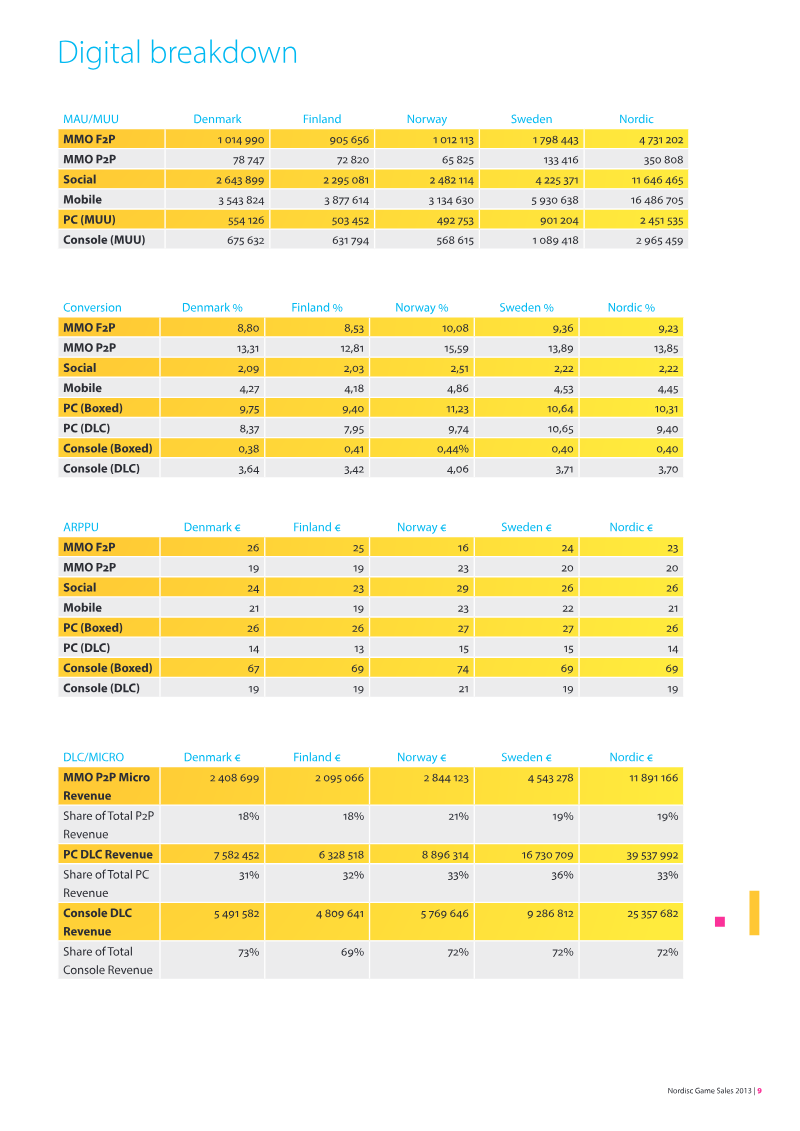
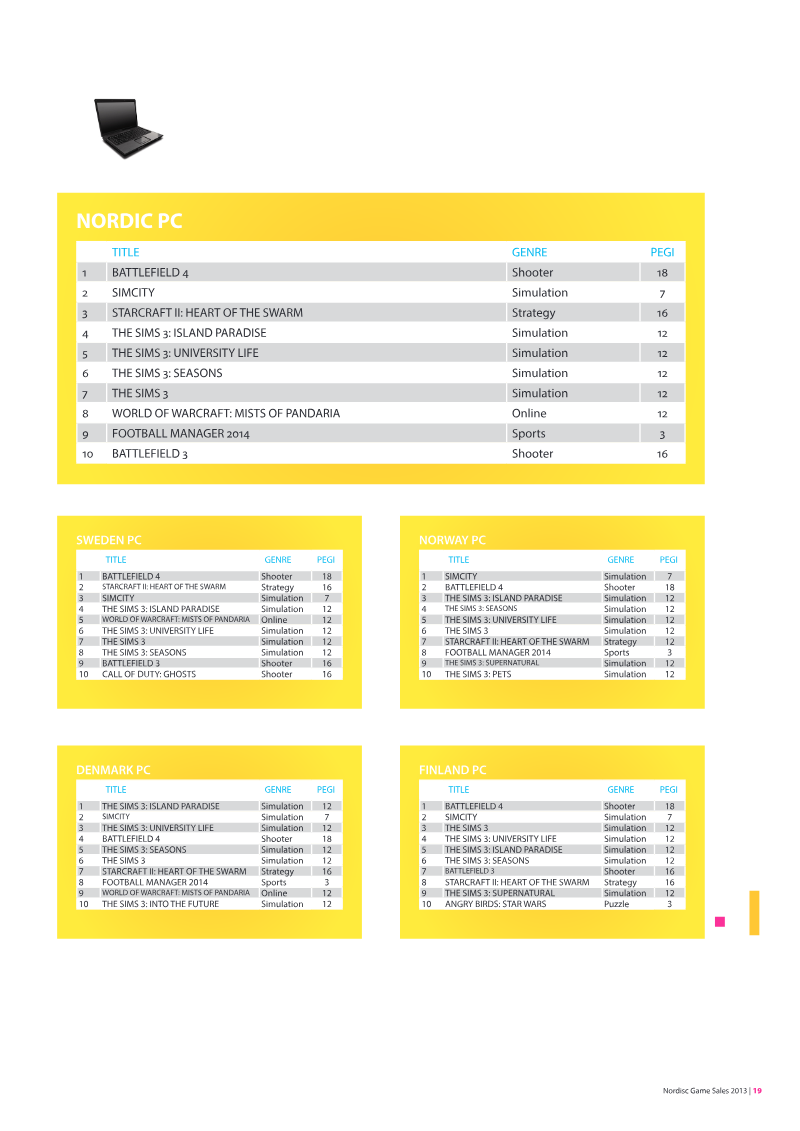
The Nordic gaming market underwent a significant structural transformation in 2013, characterized by a pivotal shift from traditional physical retail toward digital distribution.
- The Nordic gaming market reached a total value of nearly one billion euro in 2013, driven by a structural shift from physical retail to digital distribution.
- The PlayStation 3 dominated the hardware market with a 46.91% share of total value, while the PlayStation 4 launch was constrained by supply issues.
- Action titles were the most popular genre, capturing approximately 30% of total sales, followed by Shooters at 12% and Sports games at 11%.

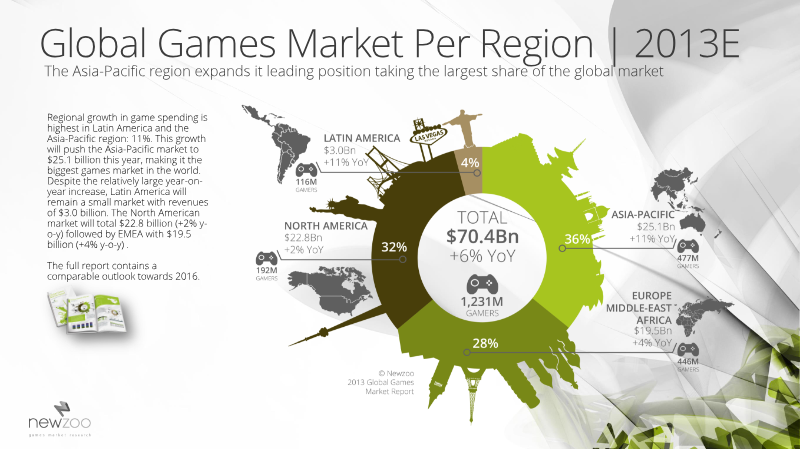

The Global Games Market: Key Facts & Insights 2012-2016
The global games market is projected to experience steady growth between 2012 and 2016, with total revenues expected to reach $86.1 billion by the end of the period.
- The global games market is projected to reach $86.1 billion in revenue by 2016, reflecting a compound annual growth rate (CAGR) of 6.7%.
- The Asia-Pacific region will solidify its market dominance, accounting for 37.9% of total global game revenues by 2016.
- Computer gaming remains the largest platform with a projected 35.8% market share by 2016, supported by a 10.4% CAGR in the MMO sector.

Mobile games industry news (w/e 30 August 2013)
The mobile games industry in late August 2013 was defined by significant shifts in hardware strategy, developer tool accessibility, and the evolving role of platform holders in publishing.
- Unity Technologies expanded its business model to include game publishing, leveraging its developer base to curate and distribute titles while forming a strategic partnership with Facebook for social integration.
- Nintendo launched the 2DS to address hardware costs, despite the 3DS platform reaching 32 million units sold, highlighting the company's ongoing struggle to adapt its hardware-centric model to the modern mobile market.
- Autodesk released Maya LT, a streamlined and affordable version of its 3D software, signaling a trend toward making professional-grade production tools accessible to independent mobile studios.

Mobile games industry news (w/e 16 August 2013)
The mobile games industry in mid-August 2013 was characterized by significant capital investment, strategic consolidation, and a focus on data-driven advertising models.
- Baidu acquired the Android app distribution channel 91 Wireless for $1.85 billion to strengthen its position in the Chinese mobile market.
- Millennial Media bid $225 million to acquire JumpTap, a move aimed at consolidating gaming-focused mobile advertising networks.
- The Japanese mobile games market reached a valuation of $5.1 billion in 2012, with feature phones still maintaining a significant 50% share of the market alongside smartphones.