Market Analysis reports and market data
Documents

Apportable's Tisa Vo on the need to go cross-platform
The mobile gaming industry is undergoing a fundamental shift in development strategy, moving away from the traditional iOS-first approach toward a model that prioritizes simultaneous cross-platform releases.
- Mobile game developers must shift from an iOS-first strategy to simultaneous cross-platform releases to remain competitive in an increasingly fragmented market.
- Integrating cross-platform development tools at the start of production prevents the technical debt and resource strain caused by post-launch porting.
- Prioritizing simultaneous launches on both iOS and Android is essential for maximizing audience reach and neutralizing the risks of ignoring significant global user segments.
Formalizing Casual Games: A Study Based on Game Designers' Professional Knowledge
This study, presented at DiGRA 2013 by Laureline Chiapello, examines the persistent definitional confusion surrounding casual games.
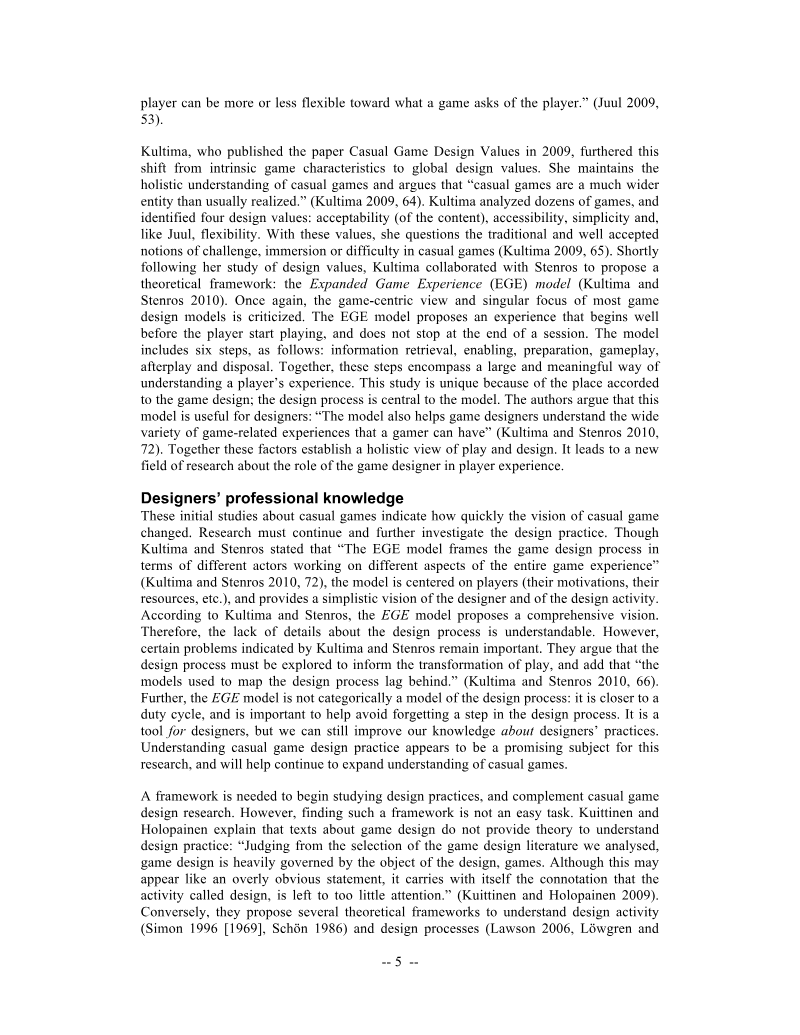
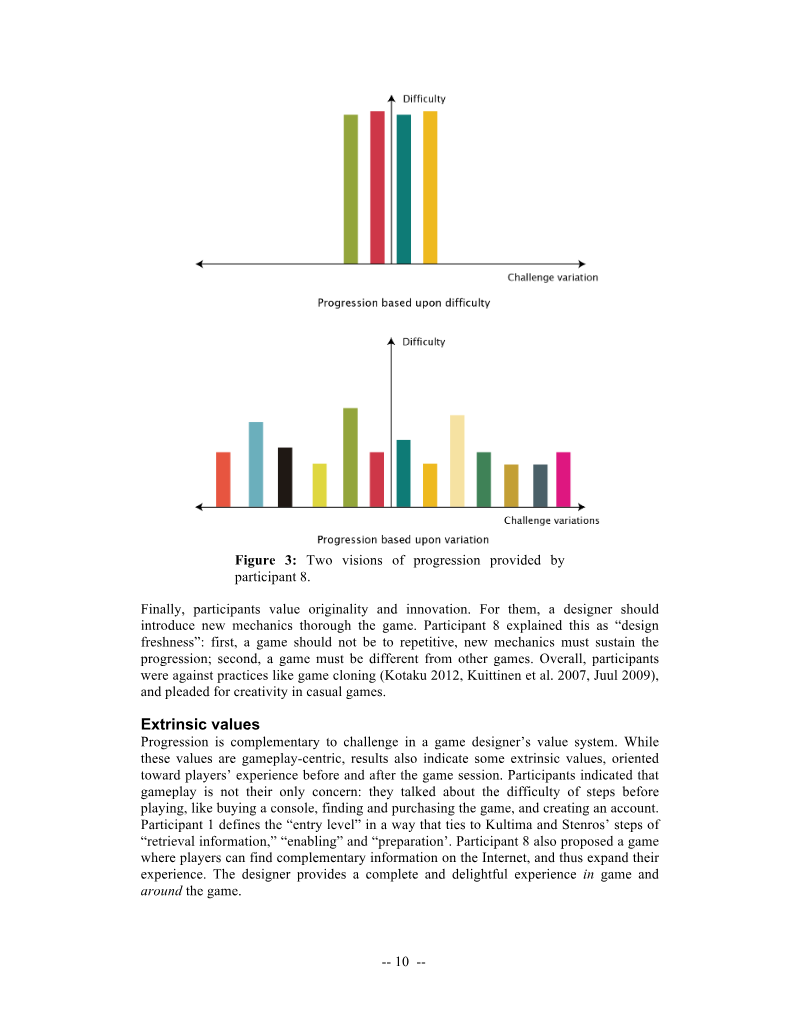
- Casual game definitions remain contested across five points: the genre's place in game culture, the role of challenge, the nature of difficulty, typical session length, and the function of fiction.
- Rather than proposing another top-down definition, the study argues the field should move toward holistic models grounded in design values, player experience, and the professional knowledge of designers, which has remained largely unexplored.
- Using a phenomenology-inspired qualitative method based on Schön's reflective-practitioner framework, the author interviewed eight casual game designers via sensitization booklets and semi-structured post-mortem interviews.
Dossier de Prensa: España 2014
En 2014 nace la Asociación Española de Videojuegos (AEVI) tras la refundación de aDeSe, con el objetivo de convertirse en la voz común de toda la cadena de valor del sector (editores, desarrolladores y comercializadores) y de posicionar al videojuego ante la sociedad y las instituciones como un referente industrial y…
- AEVI was established in 2014 as the unified industry body representing companies controlling over 90% of Spain’s video game distribution market, including major publishers like Sony, Nintendo, Microsoft, and Ubisoft.
- Spain is a top-five European and top-ten global gaming market with 19 million players, generating €762 million in total consumer spending during 2013.
- The 2013 market revenue comprised €401 million in software, €275 million in hardware, and €86 million in accessories, with physical sales declines slowing to 7%.


Essential Facts 2014: Canada
Canada's video game industry is presented as one of the world's largest and a leading force in the country's digital economy.
- Canada’s video game sector directly employs 16,500 people, representing 27,000 full-time equivalent jobs.
- The industry contributed $2.3 billion to Canada’s GDP and generated $1.6 billion in direct spending, marking a 12.5% increase since 2011.
- Employment in the sector grew by 5% between 2011 and 2013, with 40% of firms projecting a 25% staff expansion within two years.



Faits Essentiels 2014
Faits essentiels 2014, produit pour l'Association canadienne du logiciel de divertissement (ALD), dresse un portrait statistique du secteur canadien du jeu vidéo, de son poids économique, de sa main-d'œuvre et de ses joueurs.
- The Canadian video game sector employs 16,500 people directly, creates 27,000 full-time equivalent jobs, and contributes $2.3 billion annually to Canada's GDP. It is the world's largest producer of video games per capita (by employee count).
- Canadian video game companies spent $1.6 billion directly, a 12.5% increase from 2011. The sector comprises 329 companies, with 53% identifying as independent developers, and 910 projects were completed in 2012.
- The average age of a Canadian video game worker is 31, with an average salary of $72,500 per year in 2012. 97% of new graduates hired are recruited within Canada.

The future of F2P mobile gaming with Kabam's Andrew Sheppard
Kabam is strategically pivoting from its historical focus on strategy-based mobile games toward higher-fidelity, immersive, and interactive experiences to meet evolving consumer demands.
- Kabam is shifting its development focus from strategy-based games to high-fidelity, 3D, and AAA-quality experiences to align with evolving consumer demands.
- The company is diversifying its portfolio beyond traditional strategy titles into genres like tower defense and synchronous multiplayer action, as seen in upcoming releases Dark District and Blast Zone.
- Leveraging intellectual property through partnerships with major studios like Warner Bros. and NBC Universal has proven successful, with the Fast & Furious 6 tie-in achieving 33 million installs.

The Game Industry of Finland: 2013
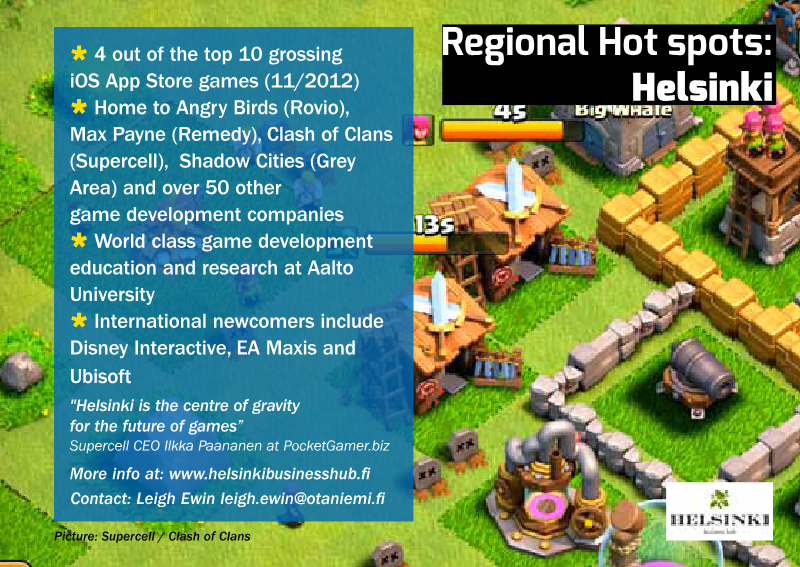
The Finnish game industry experienced a period of rapid expansion between 2009 and 2013, establishing itself as a significant global player.
- The Finnish game industry experienced explosive financial growth, with core turnover rising from 87 million euros in 2009 to an estimated 800 million euros in 2013.
- The sector achieved a compound annual growth rate of 39.5% between 2004 and 2013, significantly outperforming the global game market.
- By the end of 2013, the industry comprised over 180 companies, with more than 50% of these entities founded within the previous two years.

Monetizer: Gameloft's Total Conquest
Total Conquest, a mobile strategy title developed by Gameloft, functions as a Roman-themed iteration of the established Clash of Clans formula.
- Total Conquest utilizes a standard six-tier monetization model ranging from $2.00 to $99.99, explicitly highlighting that larger currency bundles offer up to 50 percent more value than the entry-level tier.
- The game employs a dual-currency system that allows players to convert premium 'crowns' directly into soft resources, creating a friction-free path to bypass construction and training wait times.
- Monetization is prioritized early in the user experience by aggressively incentivizing the use of hard currency to accelerate initial base building and resource accumulation.

Monetizer: GREE's Dragon Realms
Dragon Realms, a city-building card-based RPG developed by GREE for Western markets, serves as a case study for analyzing free-to-play monetization strategies and user experience.
- GREE’s Dragon Realms utilizes a hybrid genre approach by combining Western-style city-building mechanics with Asian-market card-based combat systems.
- The monetization model employs a dual-currency system where gold manages resource progression and gems facilitate premium actions like speed-ups and summons.
- To drive revenue, the game utilizes transaction bands ranging from $2 to $100, incorporating a discount currency ratio to incentivize larger real-money purchases.

News roundup: Gamevil buying Com2us, Kabam and GREE reorg and Kixeye's mobile entry
The mobile gaming industry experienced a period of significant structural realignment during the first week of October 2013, characterized by tactical downsizing at established firms and aggressive expansion by others.
- Gamevil is acquiring its primary competitor, Com2uS, marking a major consolidation in the South Korean mobile gaming market.
- Kabam closed its Austin studio and GREE offered voluntary redundancies to 200 staff members as part of a broader industry shift toward smartphone-centric platforms.
- Established developers including Kixeye, Stardock, and Jagex are pivoting toward mobile-first strategies to target the core gaming demographic.

News roundup: BlackBerry bought, King preps IPO and EA's Apple payoff?
The mobile gaming industry is currently navigating significant shifts in corporate stability, market entry strategies, and regulatory oversight.
- King is preparing for a NASDAQ IPO with an estimated valuation of approximately $5 billion, highlighting the significant growth potential for successful free-to-play developers.
- The UK Office of Fair Trading (OFT) has warned that many free-to-play games may violate consumer protection laws by pressuring minors into in-app purchases, mandating that developers provide non-paid alternatives to ensure compliance.
- BlackBerry is being acquired by a Canadian venture group for $4.7 billion following a $1 billion write-down on its Z10 device, signaling its exit from the consumer smartphone market and its decline as a viable gaming platform.

Monetizer: CastleVille Legends
CastleVille Legends represents a strategic shift for the franchise, moving toward a character-driven narrative while maintaining the core mechanics of a free-to-play simulation game.
- CastleVille Legends utilizes a dual-currency model featuring soft currency (coins) and hard currency (crowns) to facilitate in-app purchases.
- In-app purchase pricing is tiered, with coin bundles ranging from 69 pence to 39.99 pounds and hard currency bundles reaching up to 69.99 pounds or 99.99 dollars.
- The game employs HTML5-based dynamic retail strategies, enabling real-time adjustments to pricing and bundle content based on player behavior and market demand.