Key insights
5 slides
Market Growth
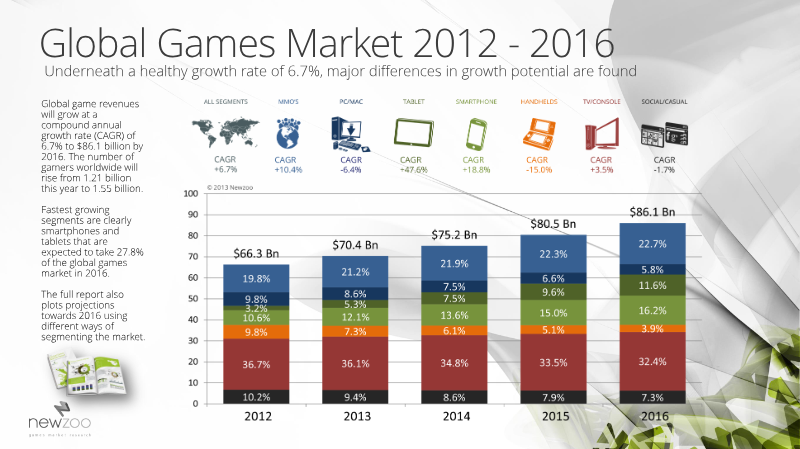
The global games market is projected to reach $86.1 billion in revenue by 2016.
This represents a compound annual growth rate (CAGR) of 6.7% between 2012 and 2016. The industry is undergoing significant transformation.
Platform Share
Computer gaming remains the largest platform with a projected 35.8% market share by 2016.
The market is segmented using a 'Screen Segmentation Model'.
Page 6 of the report35.8%
Projected market share for computer gaming by 2016.
- CAGR in the MMO sector
- 10.4%
Growth Engine
Mobile gaming is a primary growth engine, expected to capture a 27.8% share of the global market by…
The industry is shifting towards free-to-play models and games-as-a-service.
Revenue Concentration
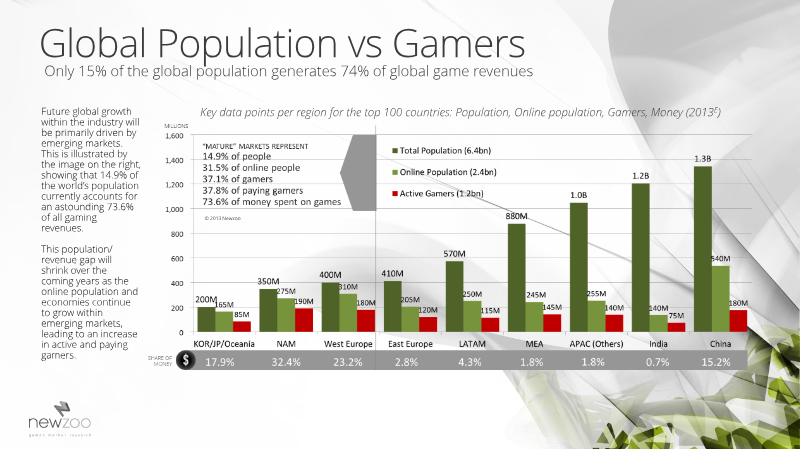
Approximately 15% of the global population generates nearly 74% of total game spending.
Emerging markets are critical for future expansion.
It's like a small group of avid collectors driving most of the sales in a niche hobby.
Concentrated Spending. Industry revenue is currently highly concentrated, with approximately 15% of the global population generating nearly 74% of total game spending.
Regional Dominance
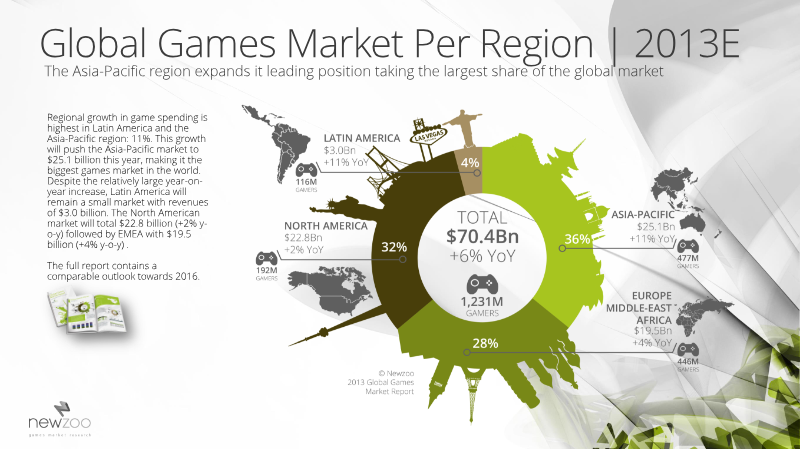
The Asia-Pacific region will solidify its market dominance, accounting for 37.9% of total global game revenues by 2016.
Emerging markets are identified as critical drivers of future industry expansion.
1 / 5
Ask AI about this report