Market Analysis reports and market data
Documents

Glu Mobile vs Gameloft
The mobile gaming industry is currently defined by a stark divide between legacy publishers struggling to adapt to the free-to-play (F2P) model and agile developers achieving rapid growth through breakout hits.
- Glu Mobile achieved 56% year-over-year revenue growth in Q1 2015, reaching $69.5 million, by successfully pivoting to a high-monetization free-to-play model.
- Gameloft reported $71 million in Q1 2015 revenue, representing a 17% year-over-year increase, but continues to struggle with sustaining long-term hits in Western markets.
- Glu Mobile’s revenue is heavily concentrated, with the 'Kim Kardashian: Hollywood' title accounting for one-third of the company's total quarterly earnings.
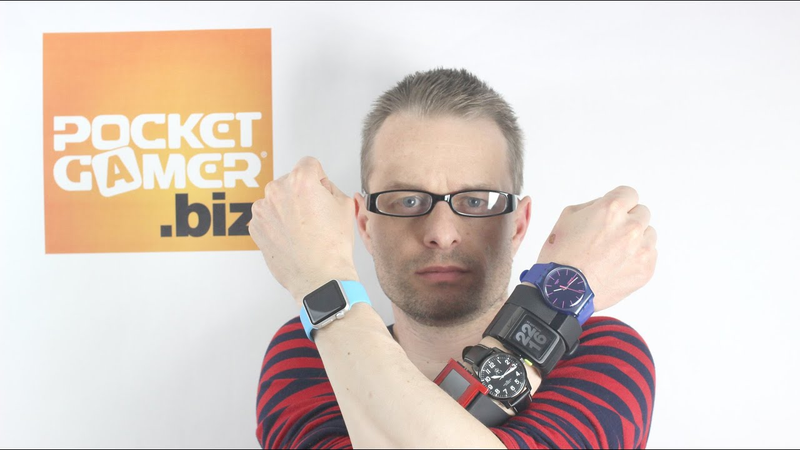
Does Jon have space on his wrist for Apple Watch?
The Apple Watch launch in April 2015 marks a significant shift in the wearable technology landscape, transitioning from niche fitness trackers to a broader consumer product.
- The Apple Watch, launched in April 2015 in 38mm and 42mm sizes, currently functions as an iPhone-dependent extension rather than a standalone platform.
- Gaming on the device is in an experimental phase, characterized by a split between mobile companion apps from companies like Gameloft and native wearable-first titles like Runeblade.
- Practical utility is currently limited to real-time notifications and health monitoring, which prevents the device from being viewed as a mass-market essential.
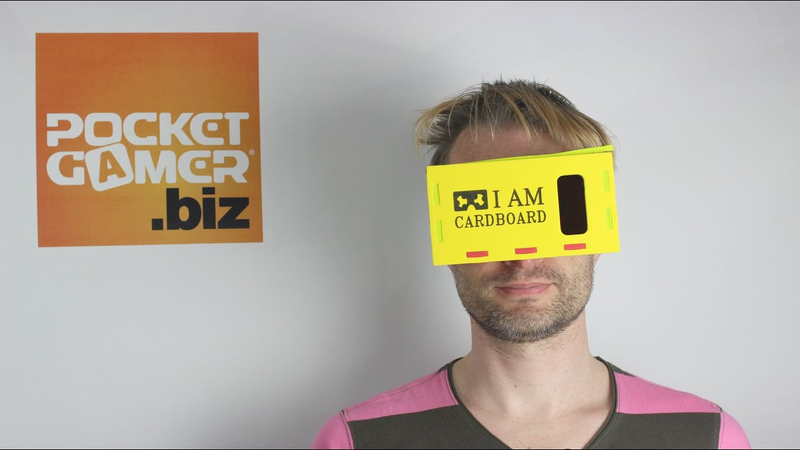
Google's visionary move with Cardboard VR
The emergence of budget-friendly virtual reality (VR) hardware, exemplified by Google Cardboard, represents a significant shift in the accessibility and adoption of immersive technology.
- Google Cardboard established a low-cost, open-source VR ecosystem by leveraging existing smartphone technology to bypass the high entry barriers of premium headsets like Oculus Rift, Sony’s Project Morpheus, and HTC/Valve solutions.
- Google implemented a certification process for third-party manufacturers that uses QR codes to calibrate software performance based on the specific lens properties and dimensions of mounts ranging from $10 to $100.
- The Unity SDK provides the necessary technical standardization to ensure a consistent user experience across diverse hardware iterations, including cardboard, foam, and plastic devices.

Zynga's CEO rebound, Amazon's CryEngine move and Apple Watch gaming
This analysis covers three significant developments in the gaming industry during the second week of April 2015: Amazon’s strategic investment in Crytek, the sudden leadership transition at Zynga, and the initial market reception of the Apple Watch.
- Mark Pincus has returned as CEO of Zynga following the departure of Don Mattrick, who failed to improve the company's stagnant share price and quarterly losses despite a $500 million acquisition of Natural Motion.
- Amazon has secured a licensing deal for Crytek’s CryEngine, with estimated investments between $50 million and $70 million, signaling a strategic effort to strengthen its internal gaming infrastructure.
- Amazon’s investment in Crytek follows its $940 million acquisition of Twitch, reinforcing the company's aggressive, capital-intensive expansion into the gaming sector.

Monetizer: Compass Point: West
Compass Point: West, a mobile strategy title developed by the Finnish startup Next Games, serves as a case study in hybridizing established genre mechanics.
- Next Games developed Compass Point: West as a hybrid mobile strategy title that merges Clash of Clans-style base-building with card-collection mechanics for unit management.
- The game replaces traditional unit training with a card system where players collect, upgrade, and merge cards to improve combat effectiveness.
- Monetization relies on a dual-currency model using gold/goods as soft currency and diamonds as hard currency to accelerate timers, bypass wait times, and purchase card-draw boosters.
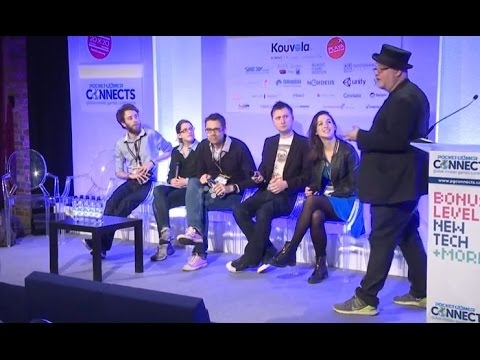
What's the point of the games media anyhow?
The role of games media in the modern digital landscape is defined by a shift from traditional gatekeeping to a diverse ecosystem of cultural analysis, community building, and specialized information sharing.
- Games media has evolved from a traditional gatekeeping role into a diverse ecosystem where professional journalism provides critical depth and authorial context that complements personality-driven influencer content.
- The media landscape is now segmented by audience demographics, with younger users favoring immediate, gameplay-focused video content while older, more engaged audiences prioritize the in-depth industry and cultural analysis found in established outlets.
- A multi-channel communication strategy is now essential for developers, utilizing social media for discovery, YouTube for community engagement, and traditional outlets for authoritative analysis.

Implications of Supercell's $1.7 billion 2014 revenue
Supercell’s 2014 financial performance serves as a primary indicator of the current state of the mobile gaming industry, characterized by extreme market concentration and high barriers to entry.
- Supercell generated $1.7 billion in 2014 revenue with $580 million in profit, marking a threefold increase over their 2013 performance.
- The mobile gaming market is characterized by extreme concentration, where a small group of elite firms including Supercell, King, Machine Zone, and Gung-Ho dominate the top of the charts.
- Top-tier developers maintain their market position by reinvesting 20% to 30% of their revenue into aggressive user acquisition and high-profile marketing campaigns.

Monetizer: World Zombination
World Zombination, a tower defense title developed by Proletarian Inc., utilizes a traditional free-to-play mobile monetization model centered on unit collection and time-gated progression.
- World Zombination by Proletarian Inc. utilizes a traditional free-to-play model centered on unit collection and time-gated progression.
- The game features a three-tier currency system: two soft currencies (supplies and food) for upgrades and one hard currency (coins) for accelerating timers and purchasing unit packs.
- Core monetization is driven by players spending hard currency to bypass time-based bottlenecks in unit training and base construction.

Four Realistic Predictions - What the Future Holds for Games - Extra Credits
The gaming industry is currently undergoing several subtle yet significant structural shifts that are reshaping development and distribution.
- The gaming industry is shifting toward the widespread adoption of third-party licensed engines like Unreal and Unity to reduce the high costs and training burdens associated with maintaining proprietary, in-house technology.
- Studios are increasingly maximizing return on investment by aggressively reusing digital assets, such as models, textures, and audio, across spin-offs, mobile titles, and back-catalog projects.
- AAA developers are redesigning game structures to accommodate shorter, more satisfying play sessions, reflecting a strategic response to modern players who have less time for long, uninterrupted gaming blocks.

Top 50 Developers of 2015: #2 GungHo Online
GungHo Online Entertainment secured the number two position on the 2015 Top Developers list, primarily driven by the sustained dominance of its flagship title, Puzzle & Dragons.
- GungHo Online Entertainment’s 2015 market position was anchored by Puzzle & Dragons, which at its peak accounted for 50% of all consumer spending in the Japanese mobile gaming sector.
- The company is actively diversifying its revenue streams by using cash flow from Puzzle & Dragons to acquire console developers, including Grasshopper Manufacture, and investing in brand extensions like theme parks.
- GungHo is expanding its global footprint through strategic partnerships with Tencent and equity stakes in Chinese developers such as Chukong to penetrate the Chinese market.

Will Nintendo be successful making mobile games?
Nintendo’s March 2015 decision to enter the mobile gaming market through a partnership with DeNA marks a significant strategic shift for the company.
- In March 2015, Nintendo shifted its long-standing policy of exclusive hardware development to enter the mobile gaming market through a strategic partnership with DeNA.
- The move was prompted by the declining performance of the Wii U and 3DS consoles, which led to Nintendo’s first period of financial losses in decades.
- Nintendo aims to leverage its iconic intellectual property, such as Mario, Donkey Kong, and Pokémon, to reverse its financial trajectory on smart devices.
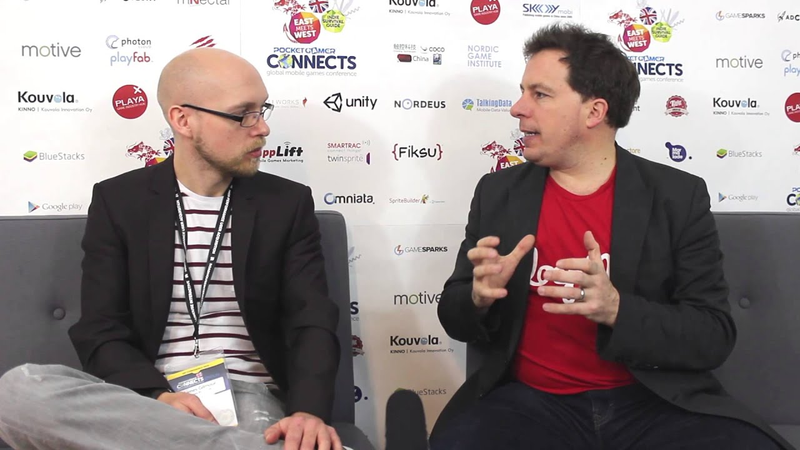
LoopMe CEO Stephen Upstone on the rise of mobile video advertising
Mobile video advertising is undergoing a rapid transformation driven by the shift toward full-screen formats and programmatic buying.
- Mobile video advertising is shifting from traditional ad networks to programmatic demand-side platforms to better leverage real-time data for targeting specific user behaviors.
- The industry now processes approximately 30 billion full-screen ad impressions monthly, requiring infrastructure capable of handling 30 billion data points daily to optimize delivery.
- The Chinese market is a primary growth driver, supported by data sets tracking 800 million smartphone devices and a high concentration of globally competitive game developers.