Looter Shooter reports and market data
Documents
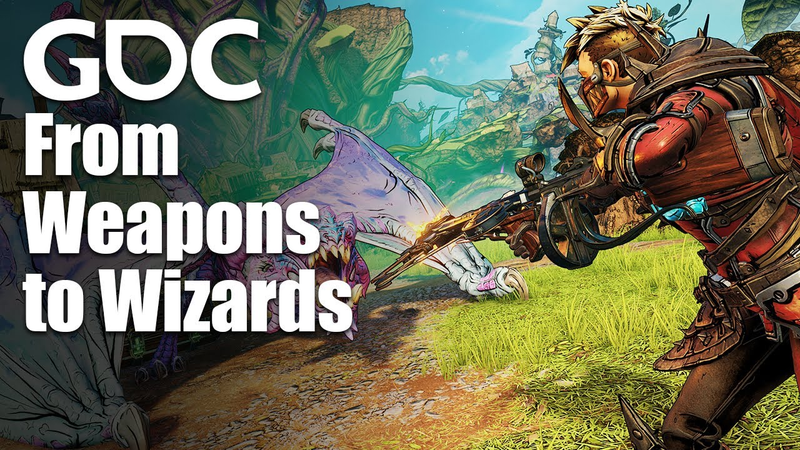
From Weapons to Wizards: Transforming Aesthetic and Modularity in 'Tiny Tina's Wonderlands'
The development of Tiny Tina’s Wonderlands represents a significant evolution in audio production, transitioning from the established industrial aesthetic of the Borderlands series to a high-fantasy soundscape.
- Gearbox Software expanded its audio department significantly, growing from four staff members in 2009–2010 to 21 personnel by the release of Tiny Tina's Wonderlands in 2022.
- The studio utilizes a modular sound design philosophy where weapon audio is constructed from distinct layers—such as transients, bodies, and tails—assigned to specific components like muzzles and grips to ensure sonic clarity and prevent frequency clashing.
- To support the high-fantasy aesthetic of Tiny Tina's Wonderlands, the team remixed the Borderlands 3 weapon system by integrating crossbow behaviors, replacing grenades with complex spell systems, and introducing melee weapons as a lootable category.
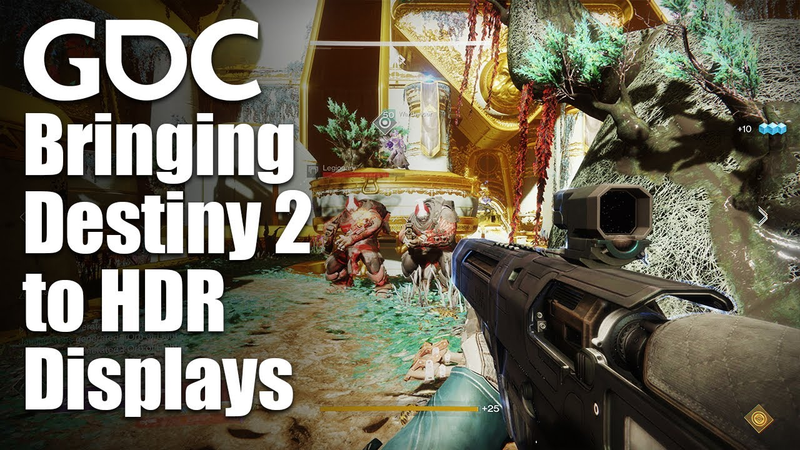
Not-So-Little Light: Bringing Destiny 2 to HDR Displays
The integration of High Dynamic Range (HDR) into Destiny 2 represents a strategic effort to modernize a legacy rendering pipeline without requiring a complete overhaul of existing art assets.
- Bungie successfully retrofitted Destiny 2’s legacy SDR rendering pipeline for HDR by implementing custom tone-mapping curves that extrapolate existing assets into 10-bit and 16-bit color spaces.
- To maintain UI legibility, the team utilized a reversible tone-mapping process that converts the back buffer to SDR for interface rendering before inverse tone-mapping it back to HDR.
- The implementation of FP16 back buffers and deferred tone mapping effectively mitigated color banding and hue shifts across diverse hardware configurations.
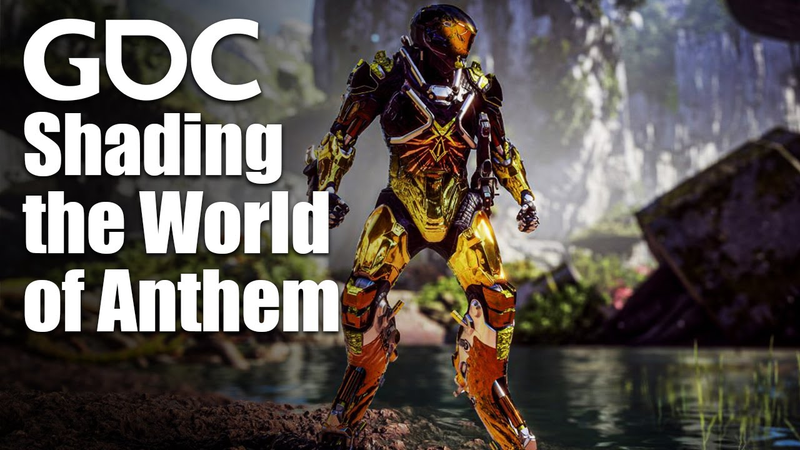
Shading the World of Anthem
The development of Anthem required a sophisticated approach to environmental rendering, necessitating a balance between high-fidelity visual complexity and the rigid performance constraints of the Frostbite engine.
- The development of Anthem utilized procedural shaders to simulate dynamic environmental phenomena like lava flows and precipitation while maintaining performance within the Frostbite engine.
- Lava rendering combined photogrammetry-derived textures, height maps, and flow maps to accurately replicate fluid movement and temperature-based color gradients.
- Weather systems achieved environmental reactivity by using world-space normals and layered ripple nodes to dynamically adjust surface properties like reflectance and porosity for rain and puddle accumulation.
Destiny, The Traveler & How to Fix Planets - The Science of Destiny - Extra Credits
The analysis examines the scientific feasibility of the planetary environments featured in the video game Destiny, specifically focusing on why the game’s mechanics treat the Moon, Venus, and Mars as having Earth-like gravity and atmospheric conditions.
- The Traveler serves as a narrative device to justify the uniform gravity and atmospheric conditions required for consistent combat mechanics across different planets.
- Lunar combat in reality would be hindered by one-sixth Earth gravity, which would cause extreme weapon recoil and erratic projectile trajectories.
- Venusian surface activity is physically impossible under real-world conditions due to atmospheric pressure that is 90 times greater than Earth's.
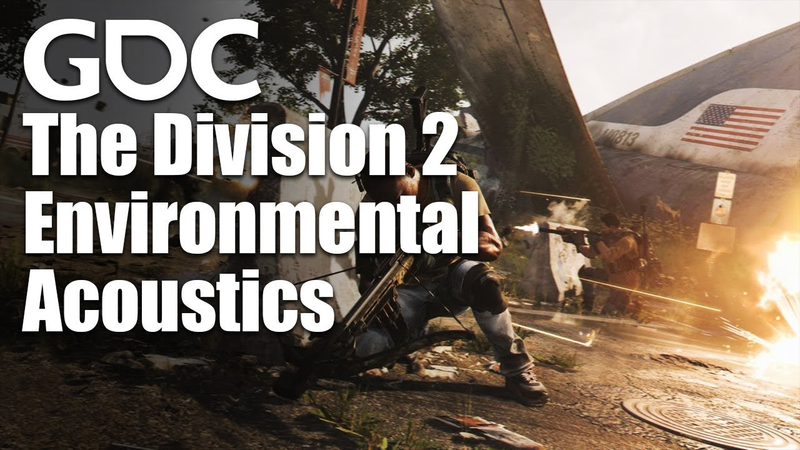
Finding Space For Sound: Environmental Acoustics in Tom Clancy's The Division 2
The development of Tom Clancy’s The Division 2 prioritized a sophisticated approach to environmental acoustics, leveraging the Snowdrop engine to create a dynamic, responsive soundscape.
- The Division 2 utilizes a real-time, raycast-based acoustic system within the Snowdrop engine to replace resource-heavy, material-filtered audio processes.
- This streamlined collision model enabled the procedural generation of impulse responses and ambient room tones across more than 2,500 distinct interior spaces.
- The system employs 'bubble space' metrics, using rotating raycast patterns and a double-buffered broadcast module to adjust weapon audio and reverb based on horizontal and vertical clearance.
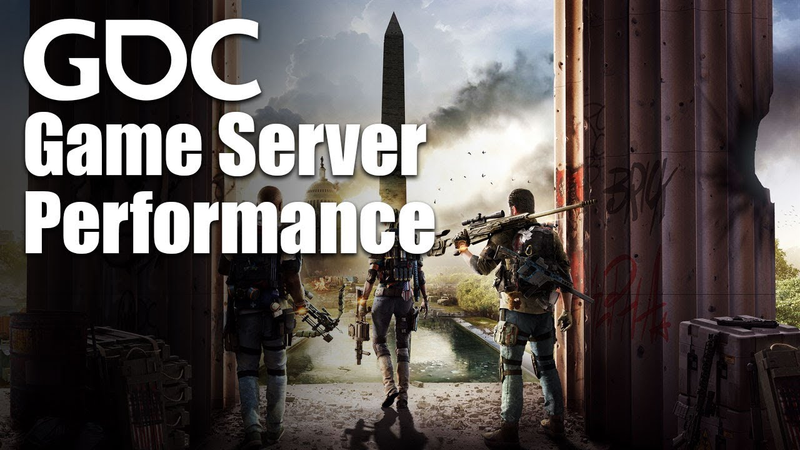
Game Server Performance on Tom Clancy's The Division 2
The Division 2 relies on an authoritative server architecture designed to manage massive instances containing up to 1,000 players and 20,000 non-player characters.
- The Division 2 utilizes an authoritative server architecture capable of managing massive instances with up to 1,000 players and 20,000 non-player characters.
- The simulation runs at 20 to 30 frames per second by distributing workloads across 36 dedicated threads on 40-core hardware using a parallelized task framework.
- Engineers mitigated CPU thread starvation and memory contention by replacing global mutexes with a lock-free heap and commit cache to reduce lock contention.

Scumbag Randy Pitchford Keeps Borderlands 3 Bonuses | Games ReCAP
Gearbox Software, a Texas-based game developer, has faced significant internal backlash following a decision to drastically reduce royalty bonuses for employees who worked on the commercially successful title Borderlands 3.
- Gearbox Software significantly reduced royalty bonuses for Borderlands 3 employees, despite the game achieving billion-dollar status as a global brand.
- The studio historically utilizes a compensation model featuring below-average base salaries supplemented by quarterly revenue-sharing bonuses.
- Leadership attributed the reduced payouts to increased development costs and an expanded headcount, specifically citing a mid-development transition from Unreal Engine 3 to Unreal Engine 4 that necessitated restarting production work.

Baked in Accessibility: How Features Were Approached in Borderlands 3
This analysis examines the integration of accessibility features into the development of Borderlands 3 at Gearbox Software.
- Integrate accessibility into the development culture by maintaining dedicated communication channels, such as internal chat rooms, to keep the topic in the foreground throughout the entire production cycle.
- Empower cross-functional teams to experiment with accessibility solutions; for example, Gearbox’s effects director independently developed a tiered loot beam system that used varying heights, bloom intensities, and particle densities to convey rarity information.
- Prioritize direct user testing with the target audience, as the lack of thorough focus testing was identified as the primary flaw in the Borderlands 3 accessibility implementation.
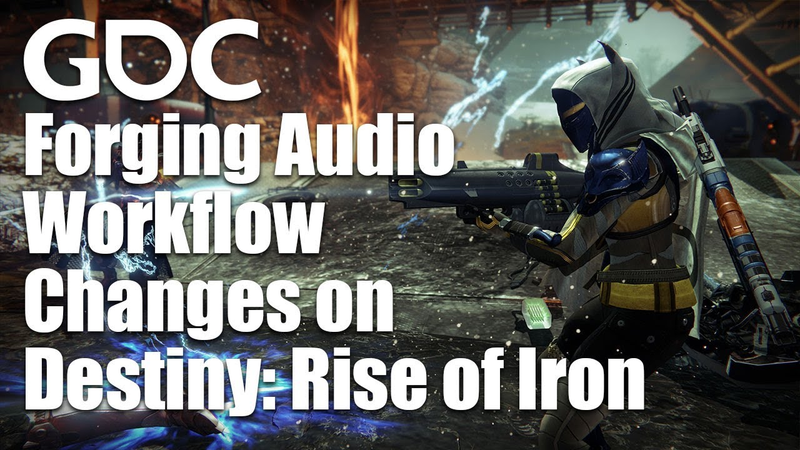
Forging Audio Workflow Changes on Destiny: Rise of Iron
The development of audio for Destiny: Rise of Iron necessitated a fundamental shift in production methodology to overcome inefficiencies inherent in traditional, isolated testing environments.
- The development team reduced individual audio mix-testing cycles from fifteen minutes to mere seconds by shifting from manual testing to an automated, intuitive workflow.
- Transitioning from siloed, solo testing to a collaborative framework where audio leads participated in design and balance sessions ensured mixes were informed by complex, real-world multiplayer gameplay.
- The implementation of 'Guardian,' a centralized PC-based development tool, replaced cumbersome platform-specific debug menus with a streamlined command assistant interface.

This is Amazing! Writing the Supportive Space Coach in Destiny
The evolution of the Crucible announcer in Destiny demonstrates a strategic shift from utilizing generic, dystopian drill sergeants to crafting a fully realized, supportive character.
- Transforming a functional announcer into a compelling character requires shifting from objective-based, repetitive dialogue to a persona with a distinct backstory, motivations, and a personal relationship with the player.
- The 'supportive space dad' archetype for Lord Shaxx was achieved by replacing generic drill sergeant lines with enthusiastic, reactive commentary that acknowledges specific player achievements and class-based identities.
- Competitive game modes should utilize characters rather than disembodied announcers to serve as a narrative channel, ensuring that even in modes without a traditional plot, the dialogue remains grounded in the game's fiction.
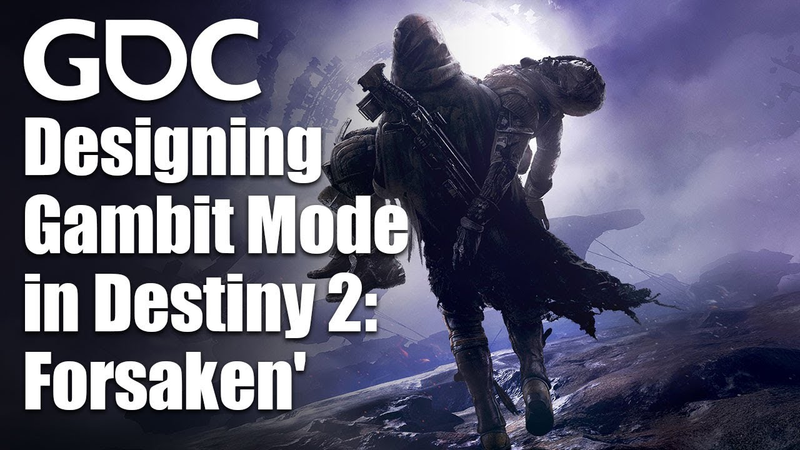
Designing Gambit Mode in Destiny 2: Forsaken
Gambit serves as a hybrid PvE-PvP mode for Destiny 2, designed to offer a fresh, replayable endgame ritual by blending AI-focused combat with competitive tension.
- Gambit was designed as a PvE-focused end-game ritual for Destiny 2: Forsaken, utilizing a core design philosophy of 'Firefight meets Super Puzzle Fighter' where players send 'blocker' AI units to hinder the opposing team.
- The development team implemented a 'ready room' to allow teams to see each other before matches, facilitating social interaction, loadout adjustments, and the introduction of an in-game announcer.
- To balance the risk-reward mechanic of carrying motes, the team reduced the penalty for dying during an invasion from five motes to three, encouraging more players to engage in PvP combat.
Destiny vs. Warframe - $500 Million in Free Marketing - Extra Credits
The core thesis posits that a lack of cohesive vision and tonal consistency in game development can lead to significant market failure, effectively allowing competitors to capture a dissatisfied player base.
- A lack of cohesive vision and tonal consistency in game development creates market vulnerabilities that allow competitors to capture dissatisfied player bases.
- Destiny’s failure to define its identity, oscillating between a standard console release and a service-based MMO, resulted in a disconnect between marketing promises and actual player experience.
- Warframe successfully captured the looter-shooter market by maintaining a consistent, communicable core identity as a fast-paced, dark sci-fi action game.