1 free read left. Create a free account for unlimited reading + AI research.
Create free account
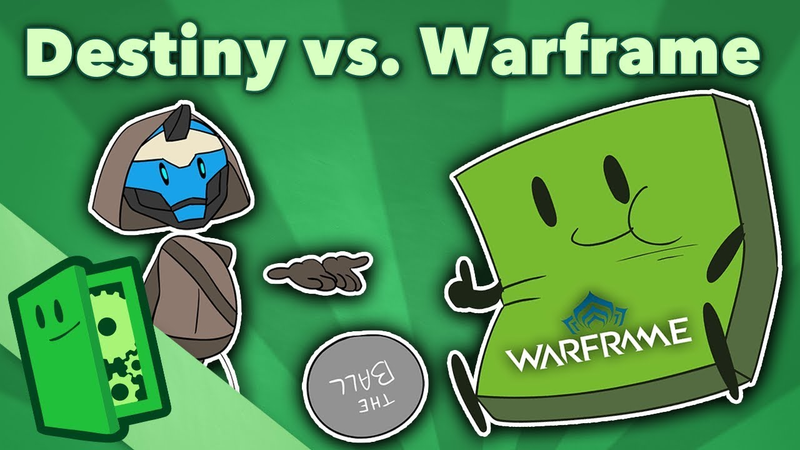
Destiny vs. Warframe - $500 Million in Free Marketing - Extra Credits
Key insights
6 takeaways- 01Warframe successfully captured the looter-shooter market by maintaining a consistent, communicable core identity as a fast-paced, dark sci-fi action game.
- 02Destiny’s internal identity crises and shifting development goals caused significant player attrition, which inadvertently served as a catalyst for Warframe’s growth.
- 03Destiny’s failure to define its identity, oscillating between a standard console release and a service-based MMO, resulted in a disconnect between marketing promises and actual player experience.
- 04A lack of cohesive vision and tonal consistency in game development creates market vulnerabilities that allow competitors to capture dissatisfied player bases.
- 05Despite Bungie’s technical proficiency in shooter mechanics, the absence of a unified vision led to a fragmented product that failed to meet long-term player expectations.
- 06High-budget titles are susceptible to market displacement when they fail to align their aesthetic, narrative, and mechanical elements under a singular, stable vision.
Ask AI about this video
Transcript
Over the last 4 years, Activision has probably dropped about a half a billion dollars in marketing for Warframe. Yep, you heard me right. And they didn't mean to. They, of course, meant to be marketing Destiny. And sure, they did that in the process. But when you look at the growth numbers for both games, it kind of looked like their chief competitor benefited more. You may think it's hyperbolic, and admittedly, it is a little bit. Mhm. But not that much. In an age where most MMOs have bled users, and Activision has taken to giving away copies of Destiny 2, Warframe's user number continues to rise. And part of that's on the back of Destiny players who have burned out and wound up looking for something to scratch that same itch. And there is a lot to learn from that, whether you're a developer, a publisher, or just interested in how the games business works. Because a couple of fundamental things had to have happened for this to be true. First, the marketing they did
had to have a compelling enough message to get people interested in what they were selling. Second, Destiny had to kind of fail to deliver on that message. And third, there had to be another game out there that could get a lot closer to fulfilling that desired experience for players. But each of these steps originates from the same place, from the problem of not really knowing what your game is. Now, that may seem like a simple thing, and it may seem like the most basic aspect of game development, but you would be shocked how often developers and publishers push games out the door without really having a solid communicable idea of what experience, at its core, they're giving people. And Destiny, for as much as I loved it, had this problem from day one. So, let's compare Warframe and Destiny side by side. Starting with Warframe. For the player who cares about the feel of the game, Warframe is basically ninjas in space. For those who care about what the long-term goals or gameplay will be like, it's a free-to-play crafting-based looter shooter. For those who want to know what category the game fits into, it's an instantiated MMO. And for those
who care about narrative or world building, it's a dark sci-fi future. For Destiny, making those distinctions is a lot harder. And it's because it seems as though all throughout development, no one could make up their minds about what the game was actually supposed to be. Not only were there seismic shifts in the game's direction during the development process, but all the way through launch, what the game was seemed ultimately unclear. Now, if you go back into some of the early interviews about the game, you'll hear the developers talk about it as if it's a 10-year game. A game which will never have a sequel. Or a game you'll play for the rest of your life. Now, of course, us with the benefit of being in the future from said interviews, we know that Destiny 1 only made it 3 years before Destiny 2 came out. Meaning within a year or so of those interviews, they had to be working on the next one. But more telling still is something else that stands out in all those interviews. While talking about it as if it's a forever game, they insist it wasn't an MMO. Now, you say you have a perpetual multiplayer based game, yet
you're adamant that it isn't an MMO. Okay. Then what is it? And it's this sort of conflicted message that impacts the development. If you're thinking of your game as an MMO, then you're thinking about it as a service. You're thinking about the continuous release of content, end game features that players can grind on perpetually, or special events and holiday surprises. And if you're thinking of it as a standard console release, then you're thinking about expansion packs. And neither of these are wrong by any means, but both can be disastrous if you just flip-flop between the two. Or if how the development team is thinking about the game doesn't match up with how the game feels to its players. And the same is true of the narrative. Often the Destiny marketing talked about it almost like Mass Effect, an epic space opera with depth, meaning, and a dramatic narrative arc. But in that same marketing, you've got Cayde-6, voiced by the charming as heck Nathan Fillion, stopping to tell you a story at a crumbling bar in the middle of a war zone. And these types of dueling tones, when not used very carefully, can undercut your world seriousness. Because
if a main character can't even take their own world seriously, how are we, the audience, supposed to? And this tonal uncertainty shows in everything from the confused voice direction for Peter Dinklage to the hiring of David Cross to write jokes for the series, then using none of the material, all the way to the song by Sir Paul McCartney. Not exactly the clearest stage being set here. And of course, Warframe story isn't perfect, either. But even at its most convoluted, the tones it uses to tell said story is consistent throughout. If you don't know where the heart of your story is, whether it's a serious emotional tale with lighter moments or a light-hearted romp through a wacky universe, you're going to have disconnects everywhere. Beyond the narrative, it affects the visual aesthetics of the game, the sound design, even enemy behavior. Each of those has to match the tone of the game. But if no one's really pinned down what the tone is, it's going to be all over the place. Having a cohesive vision of your game is one of the most important things to game development. Early on, it should dictate development. And later,
it should be realistically assessed against play test to understand how to market your game and help craft ongoing content. Of course, this doesn't mean that vision shouldn't be flexible or can't shift with iteration. It absolutely should. But there should always be a vision. And there should never be multiple visions conflicting with one another. And sadly, that's a place where Destiny failed. And it's why Warframe got to eat their lunch. While Destiny didn't have a cohesive message for players, and therefore, by definition, couldn't meet their expectations, Warframe's simple offer of fast-paced action and things to grind for in a perpetual dark sci-fi future just happened to be everything the Destiny marketing campaign ended up promising. While no one can argue that Bungie has always had some of the finest tuned shooter gameplay and some of the best feeling guns in the business. Their issue with Destiny was that no one knew exactly what the heart of it was. And without a solid, focused idea of the game you're working on, your team will end up floundering. Players will end up disappointed or confused, and someone else will profit off your hard work and
hemorrhaged players. Even if you're one of the biggest developers in the business. All this isn't to say that the Destiny franchise is simply bad, or that Warframe doesn't have problems itself. I am looking at you, new player experience. And personally, I've pumped hundreds of hours into Destiny 1 and 2. But when Activision hands back a franchise they've spent a billion dollars on, something has gone deeply wrong. And when players are looking for an alternative that costs a tenth as much to make, something is clearly missing. It's our hope though, that with their publisher out of the picture, they can find the core of their game, right the ship, and transform Destiny into the game everyone knows it could be. And until then, Zoey and I are off to go farm us some of our prime blueprints. What do you mean they don't exist? Wait, who you calling a noob? Well, that hurts my feelings.
Summary
The core thesis posits that a lack of cohesive vision and tonal consistency in game development can lead to significant market failure, effectively allowing competitors to capture a dissatisfied player base. By comparing the development trajectories of Destiny and Warframe, the analysis argues that Destiny’s inability to define its identity—fluctuating between a standard console release and a perpetual service-based MMO—created a disconnect between marketing promises and the actual player experience. This ambiguity, coupled with conflicting narrative tones and shifting development goals, caused player attrition that ultimately benefited Warframe.
Key findings indicate that while Destiny struggled with internal identity crises, Warframe succeeded by maintaining a consistent, communicable core identity as a fast-paced, dark sci-fi, looter-shooter. The analysis suggests that Destiny’s marketing campaign inadvertently served as a catalyst for Warframe’s growth, as burned-out Destiny players sought an alternative that better fulfilled the promises of a persistent, action-oriented experience. Despite Bungie’s technical proficiency in shooter mechanics, the absence of a unified vision led to a fragmented product that failed to meet long-term player expectations.
The scope of this analysis covers the competitive landscape of the looter-shooter and MMO genres during the period surrounding the releases of Destiny and Destiny 2. The findings emphasize that a clear, singular vision is essential for guiding development, informing marketing strategies, and ensuring that aesthetic, narrative, and mechanical elements remain aligned. Ultimately, the analysis concludes that even high-budget titles are vulnerable to market displacement when they fail to establish a stable, recognizable heart, leaving an opening for more focused competitors to thrive.













Comments