Live Ops reports and market data
Documents
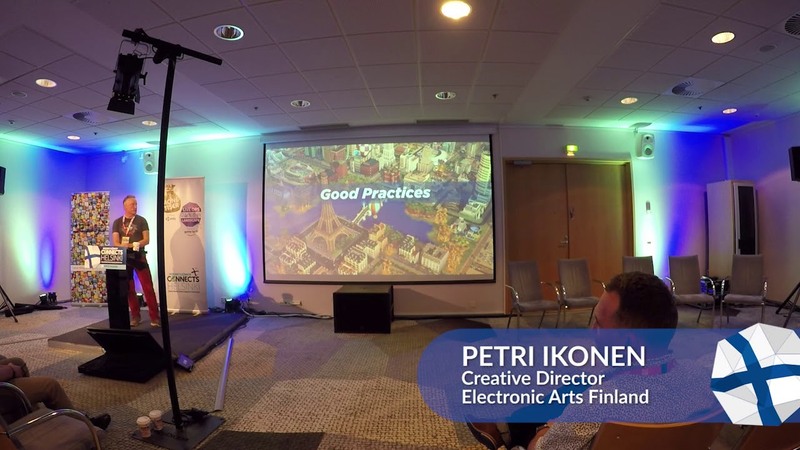
EA Finland on live services game design with SimCity BuildIt
The transition from initial game development to live service operations requires a fundamental shift in organizational structure and design philosophy.
- Successful live service management requires transitioning from a product-based mindset to treating the game as an evolving entity that relies on continuous monitoring and iterative design.
- Development teams should be divided into three specialized units: a reactive team for troubleshooting, a live operations team for weekly content and A/B testing, and a development team for long-term roadmap execution.
- Studios must invest in robust live tools during the initial development phase to effectively track player behavior and optimize key performance indicators post-launch.
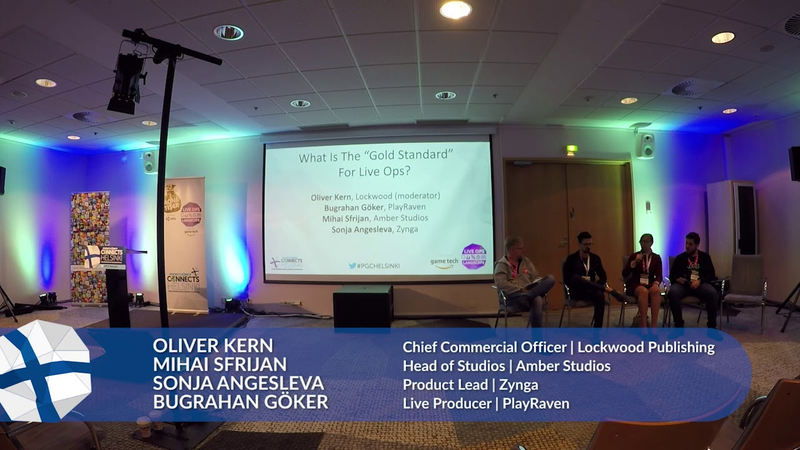
What is the 'gold standard' for live ops?
Live operations represent a fundamental, cross-functional strategy essential for maximizing the lifespan and performance of modern mobile games.
- Live operations must be integrated into the core development process from the start rather than treated as a reactive post-launch function to prevent technical debt.
- The optimal structure for a live ops team is a lean, agile group of five to seven core members, prioritizing automation and efficiency over large, bloated staffing models.
- Success requires sophisticated player segmentation based on specific behaviors and motivations to deliver personalized experiences that drive long-term retention.
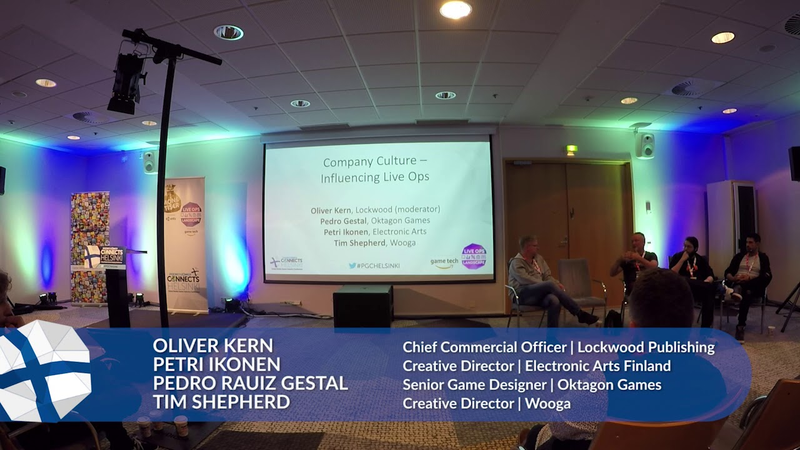
Company culture - Influencing live operations
Live operations function as an adaptive, player-centric framework that relies on continuous data feedback to refine the user experience.
- Long-term success in live services requires a cultural shift from the perfectionist pace of initial development to a model prioritizing rapid delivery, proactive communication, and collective ownership.
- Studios should transition from genre-based silos to lifecycle-based models, rotating staff between development and live operations to leverage diverse expertise and eliminate redundant workflows.
- Operational teams should be divided into distinct units that separate new feature development from ongoing event management and content updates.
Classic Game Postmortem: Ultima Online
The development of Ultima Online represents a foundational shift in the gaming industry, marking the transition from traditional tabletop and MUD-based social experiences to the graphical massively multiplayer online genre.
- Ultima Online demonstrated the viability of the massively multiplayer online (MMO) market when 50,000 users signed up for a paid beta, far exceeding the initial internal sales projection of 30,000 units over the game's entire lifetime.
- The development team utilized a 'seamless server' architecture to distribute map data across multiple servers in real-time, a technical innovation that allowed thousands of players to inhabit the same virtual space.
- The game was managed through a 'shard' system where individual servers evolved distinct cultures based on player behavior, such as role-playing versus player-killing (PK) tendencies, which provided valuable data on emergent community dynamics.
Fortnite: An Unconventional Launch
Fortnite represents a fundamental shift in game development and distribution, moving away from traditional, long-lead retail cycles toward an agile, community-driven model.
- Epic Games successfully pivoted from a niche, paid early access model to a mainstream cultural phenomenon by developing and launching the free-to-play Battle Royale mode in just two months.
- The transition to an agile, community-driven development model allowed Epic Games to treat the game as an evolving conversation, prioritizing iterative feedback over the traditional, long-lead retail release cycle.
- Marketing strategy shifted away from cinematic trailers toward digital-first campaigns and influencer partnerships, utilizing short video vignettes to maintain consistent player engagement.
What does live ops mean for your indie game?
LiveOps represents the essential practice of managing the player lifecycle post-launch, a phase that often accounts for 80% of a game’s total workload.
- Post-launch management accounts for 80% of a game’s total workload, necessitating a shift from a product-based mindset to a sustainable service model.
- Predictable, scheduled updates—such as rotating content or price changes—are the primary drivers of player retention and increased revenue.
- Developers should implement automated content pipelines and templated assets to maintain engagement without requiring constant manual intervention from the team.
Selling live games – A new strategic option for studios
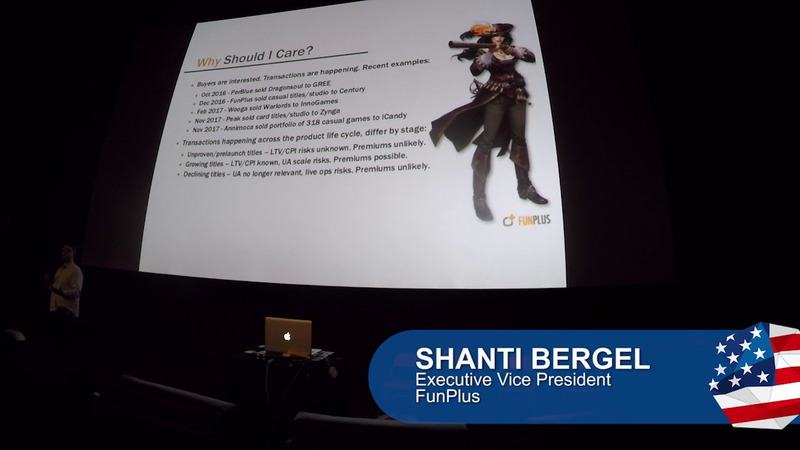
Selling live game assets has emerged as a sophisticated strategic alternative to traditional corporate acquisitions, allowing studios to raise capital, pivot their focus, or divest from aging titles without the friction of equity dilution or full-scale restructuring.
- Selling live game assets provides a strategic alternative to corporate acquisitions, allowing studios to raise capital or divest from titles without equity dilution or full-scale restructuring.
- Asset viability for sale is primarily determined by data transparency and the predictability of revenue streams, which buyers use to forecast long-term profitability.
- Successful asset transfers require a rigorous operational audit that covers infrastructure, ad-buying accounts, revenue-sharing obligations, and personnel management.
Data-driven optimisation for in-app purchases and gameplay
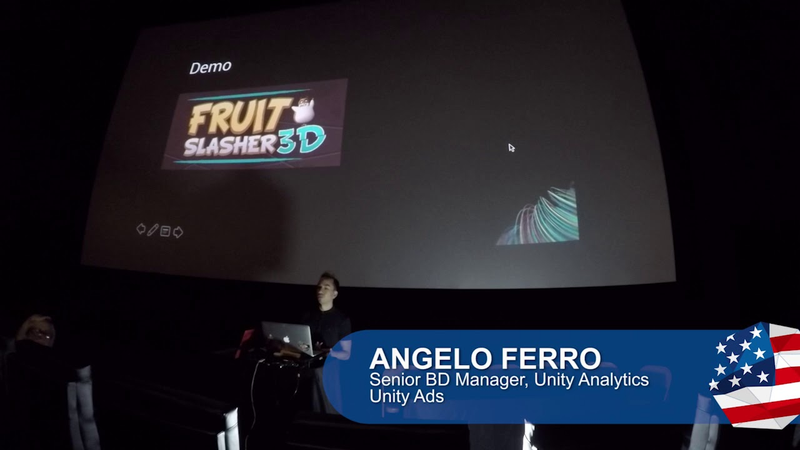
The primary objective of this presentation is to demonstrate how data-driven analytics tools can optimize in-app purchases (IAP) and player retention within mobile games.
- Lifetime value (LTV) is directly optimized by integrating automated analytics to improve both player retention and monetization.
- Unity IAP Promo increases conversion rates by using algorithmic targeting to surface relevant purchase opportunities during natural gameplay.
- Remote Settings allow developers to dynamically adjust game variables like difficulty and item distribution without requiring new application builds or engineering overhead.

How to Build Nightly When There is No Night
The transition to globally distributed development teams has rendered the traditional nightly build cycle obsolete, as continuous, 24-hour check-in patterns create constant integration conflicts and degraded branch health.
- Global development teams have rendered traditional nightly build cycles obsolete because continuous, 24-hour check-in patterns lead to constant integration conflicts and degraded branch health.
- Large-scale projects like the FIFA franchise, which manage game assets exceeding 150GB, must abandon traditional branching in favor of a single-branch model supported by high-speed infrastructure.
- To maintain productivity in a single-branch environment, engineering teams must implement local proxies, snapshot-based backups, and strict sync-size limitations to prevent network saturation.
Rocket League: Language Ban System Postmortem
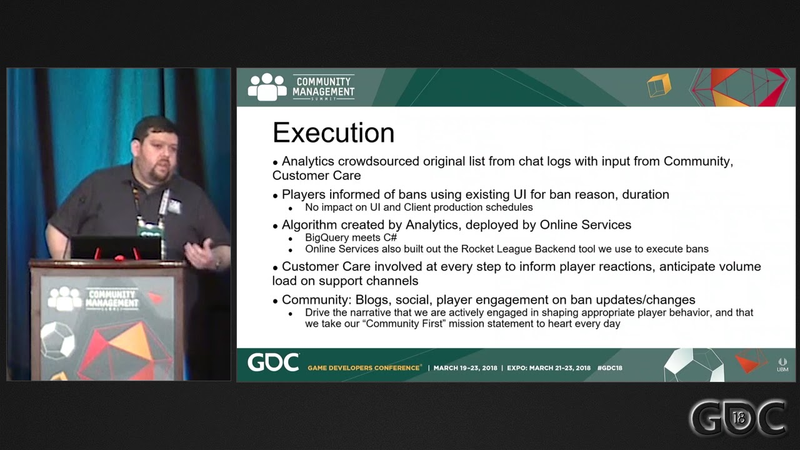
To combat rising toxicity within Rocket League, Psyonix implemented an automated, data-driven moderation framework designed to enforce community standards through tiered, escalating penalties.
- Psyonix implemented an automated language ban system for Rocket League that uses a data-driven 'gram' threshold, where players are escalated through a penalty ladder starting at 24 hours up to two weeks for repeated offenses.
- The system relies on active player reports rather than proactive chat scanning, allowing for context-dependent moderation that avoids penalizing friends who use informal language within private parties.
- To encourage behavior modification, the system includes a de-escalation mechanic where players who maintain good conduct for 30 days see their strike count reduced, preventing long-term accumulation of penalties for one-off incidents.
For Honor: From a Great Launch to a Challenging Live Period
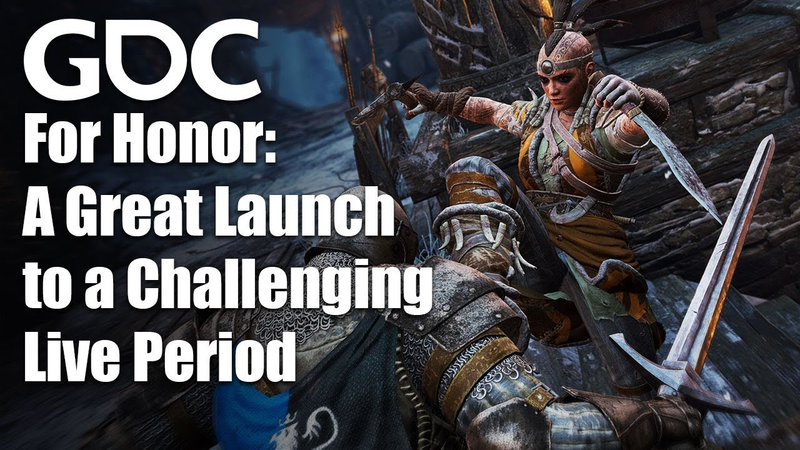
The transition from traditional game development to a games-as-a-service model requires a fundamental shift in mindset, moving from the delivery of a static product to the ongoing management of an evolving ecosystem.
- Transitioning to a games-as-a-service model requires shifting from static product delivery to managing an evolving ecosystem, necessitating a move from intuition-based design to rigorous, data-driven balancing.
- Maintaining competitive integrity in live services depends on tracking granular metrics, such as win rates and move-usage patterns, across diverse player skill levels.
- Infrastructure stability is critical to long-term viability, as evidenced by the necessity of transitioning from peer-to-peer networking to dedicated servers to resolve post-launch performance vulnerabilities.
Wappier on improving mobile game monetisation by up to 50 per cent
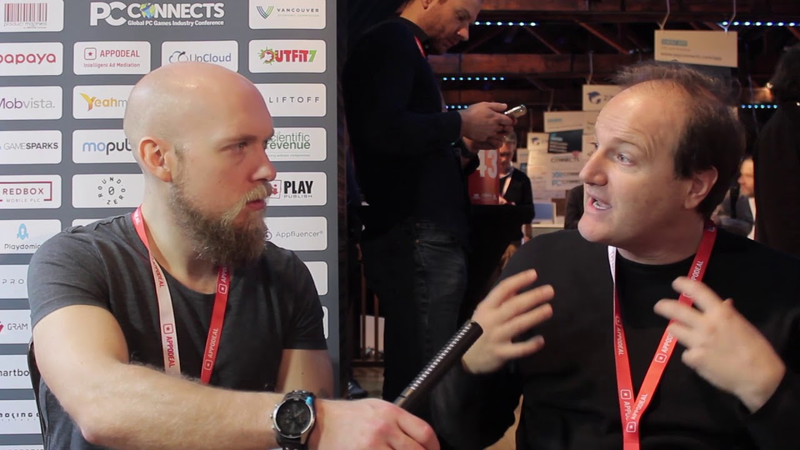
Wappier provides a cloud-based platform designed to optimize mobile game monetization through machine learning, dynamic pricing, and loyalty programs.
- Wappier’s machine learning platform claims to increase mobile game revenue by 30 to 50 percent by replacing static pricing with automated, data-driven engagement strategies.
- The platform processes over one billion data points daily to automate real-time store provisioning, regional price adjustments, and personalized bundle offers.
- Dynamic bundling strategies are used to increase revenue without destabilizing in-game economies, avoiding the risks associated with traditional single-item discounting.