1 free read left. Create a free account for unlimited reading + AI research.
Create free account
What does live ops mean for your indie game?
Key insights
6 takeaways- 01Post-launch management accounts for 80% of a game’s total workload, necessitating a shift from a product-based mindset to a sustainable service model.
- 02Predictable, scheduled updates—such as rotating content or price changes—are the primary drivers of player retention and increased revenue.
- 03Selling consumable assets, such as health potions, is more effective for revenue generation than selling new content because players have a clearer understanding of their value.
- 04Developers should implement automated content pipelines and templated assets to maintain engagement without requiring constant manual intervention from the team.
- 05Integrating community feedback loops directly into the development process is essential to ensure that ongoing updates remain relevant to the player base.
- 06Small teams must implement tiered support systems and automated processes to manage the operational burden of community management, legal compliance, and technical support.
Ask AI about this video
Transcript
[Music] [Music] so how many of you are actually making games our services at the moment yeah cool cool so maybe you'll maybe this would be a bit low level you know feel free to push back if you disagree with any of this stuff this is kind of years of me running stuff and trying to communicate to people quite often who've never had to do it so you know so given 20 minutes hopefully we'll be running through this quite fast peace peace fast pace even again please talk to me I don't bite because I think in order to really understand games the service you have to understand what things you're gonna have to build and quite often we focused only on building the game we're
not thinking about the tools that we need in order to be sustainable post release and the old adage is 80% of the work starts after you launch that's not an exaggeration in my experience something I've had to deal with many a time so what is LiveOps it's juggling lots of different plates I actually think it's probably easiest to think about it's actually about managing the player lifecycle it's not just about your game it's about understanding the journey of your player and I think if you focus on that as a mindset you'll find it a lot easier to get your head around what LiveOps is about I think events is one of the key factors of that it's any number of shapes and forms but essentially what I think it is is predictable excitement you know something that's I can actually do well you know you made that what happen well there's a whole bunch of things that you need to think about what is appropriate for your game I can't tell you what
events will work for your game maybe you want to have made the full Star Wars day for some reason what would you do what would why would that be appropriate to you maybe a simple a case of I'm gonna have a tournament every week that's gonna last for three to five days and at the end of the three to five days there'll be something that happens that people get a prize for you know I will always say go look at golf clash as a as a way of looking at away games work because it's a clever way of using tournament systems to create long term engagement but it's not just about a tournament they'll have the prize fund for something crazy the Maui Cup why the Marriott because it's cool yeah there's no real reason it has to be it could be timely it could be a sponsored thing there's a whole bunch of things that can happen but idea of tying in real world or in-game events that become meaningful and predictable for a player predictability is key so knowing that this thing is going to happen so I
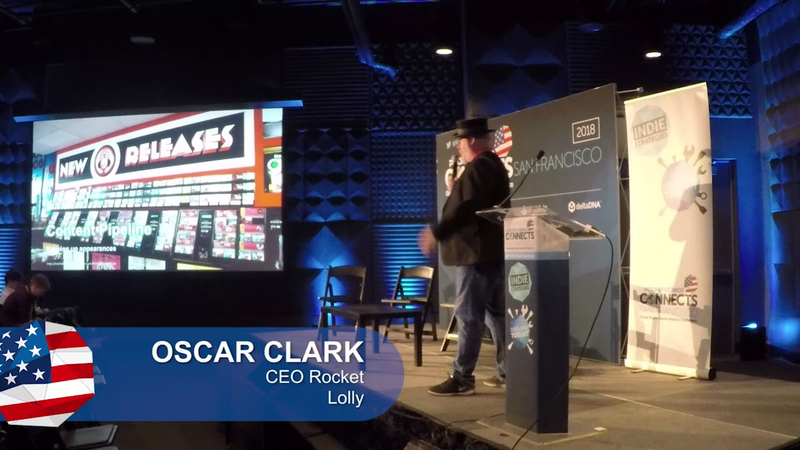
can look forward to it matters one of the lessons I try and get people to understand that I learned back in the days of running an operator deck when I was told off for saying this when I was at 3 the mobile operator and we learned this thing well basically if we had a change of the deck every week people came back every week when we changed it so we updated the deck every day guess how often people came back every day when we change it to every four hours they came back every four hours I know it's stupid but that kind of predictability absolutely is key and if you're not thinking about that and how you can make it the least work possible so you don't have to have a person sitting there pressing a button every time you do an event having a
person there too but if you can avoid them having to be there even better promotions want to sell things in our game dirty word for some people but actually I'd like to make some money your one day maybe lessons again remember we did free to play on PlayStation 3 in 2008 about truth to play on mobile so we were doing this stuff already actually I was doing the first ever mobile in-app purchase we think in 2003 I feel at a huge amount from that because we had this method called but you had a renter game for 50 pence and you've got access to that game for three days and when they expired you in the game bought more you know another 50 P worth and it was a complete failure except what we found out later on when
we rushed and panicked and got new by games we saw games at five pounds or you could play the game for 50 P for three days a lot of games just had by some games had rent and buy the games that had rented by add three times the sales and most of it came from the buy not the rent but the back of the rent made people more willing to pay and that's just the star of the story we release content eventually that price changed to six pounds I took 60% revenue share by the way I was evil so I increase the price of games six pounds and six weeks later but twenty games are released each month were reduced to three pounds and six weeks later those games were reduced to one pound and one week later those games were removed from the deck and we told
people this and the revenue we got on the day of release we got again on the day we made the price change to three pounds and we've got the same money again when we reduced it to one pound and we became so predictable that we had changes on every day of the week which we're representing a change of price or a change of game or a new game and therefore we just ramped up the cash which is why we are nine times the revenue of any other mobile operator at the time understanding of what promotion is and packaging and what you're what you're doing in terms of you know making sure that the experience was that how you can promote and it can communicate how you can be predictable in the way you communicate and understanding that you're in-game experience is no different for me running an operator deck because you're servicing an audience and
you need to be able to do that without having to have someone sit over a button every time they need to do it to make that possible to release new content over time I hope so otherwise your game is dead the nice thing about content is I can release it particularly on some of the rules of applets on and so forth exactly how you did generally these new content as part of the online part of your experience generally and if you plan it you can use a whole bunch of content and over time release it on a regular basis you can maybe produce you know how many things many levels you can make you know in a month all right let's see make 30 level of the month 30 you
did today you do the 30 you did last month cuz you then got 30 a day you're making another 30 every day therefore you've got this ongoing capacity to continually release on a regular basis back to my every four hours don't think we actually changed the deck every four hours we just resorted it that was it there was no manual intervention at all and we've got the increased revenue as a result of it so thinking about what you're building in order to make sure you can consistently release on ongoing basis with the least possible effort means you can be really scalable and you can produce new assets and you can streamline the asset production process for example if you can classify the kind of assets your game needs into categories that you can build templates for your economy of scale or building new
content goes up which means it's cheaper it's desirable and somebody is going to play more and pay more even if that paying more is in the form of ads so you have to think about what is the value of those assets one of the biggest problems with content is people assuming it's only about making more money that's often wrong but it clearly with levels and gameplay release content like you're doing a narrative art story thing and you're going to reduce releasing new you know it's better to make people pay for that subplot or maybe it's better to make people to give it to everybody spend more money on health potions I'd much rather people spend money on lots of health potions than a piece of content because the likelihood is that
if you see a piece of content I can't guess the value of it therefore I won't buy it but if I do play it I know the value of a potion already so many more people spend money on assets but they understand necessarily about content but my point here is how are you managing your pipeline are you even thinking about your content is a way of building a game that has an efficient distribution method of a patient delivery method can you outsource it there's lots of places where you can get much cheaper development of content assets but maybe you could afford in Oracle to Hometown there's lots of options here and exactly the same thing applies to features except it's a lot harder to upgrade your game without taking a long period of time to do that you can't really update the game features every week because it's a bit complicated and
messy and you can always do damage to the audience if you happen to make a mistake but if you don't ever update that game people will assume it's dead people have played dead games if you're not investing in the game and seem to be invested in the game it's over but this is my favorite thing about games the service because as a designer I never have to give up my favorite feature because when I don't prioritize a favorite feature because it doesn't fit yet I can always make it part of a tempo big you know newsworthy item in my later release so I can actually keep a simple game when I first release and have these really interesting things that make gameplay richer and deeper or more exciting assuming they're still valid over time that can then make it easy for me to talk about the new features sort of got in an exciting way that players
care about but you've got to think about what that means you're gonna have the processes in place to be able to release those things you understand what it means if you're going to take the current game you know and upload it and change it and improve it you know there have to be you know sustainable you've got to have a thorough process for testing it so you know that adding the new feature isn't gonna break the game for everybody else and you have to be you know identify you know that those feature callers do need to be communicated to the platform in quite a lot of cases particular Apple so think about what that means in terms of your holdover it process remember we've talked about content release we talked about eventing we could compartmentalize all of these pieces of work and if you've got a small team it's really hard to do so that's why I talked about earlier trying to make sure you don't have to do it yourself I have to press the button every time you want an event or press the button every time gonna do a promotion line it up shake jewel things but the funny thing is when I you know but some
of the stuff we did even in PlayStation Home is a case of weird a spreadsheet hosted on a server and had a time on it and that event would take place well in that time stamp was there if that time wasn't valid seriously I cannot tell you how many times I've worked with people and that's not thought about this is going to do find a bug part the problem worse case finds a somebody blocking somebody the kind of offensive behavior that can happen particularly in social games you know we had the most difficult one of these I first encountered when I was working at British Telecom with a system called wire play which is
an online gaming service and we had to have a single point of contact with the Metropolitan Police Authority in London why because people who share video and images so if somebody were to share illegal material for example child pornography it would be illegal for our Community Managers to hold that information actually they would be responsible for that if they did something with that that asset file so we had processes in place that were cleared by the police authority so that we could help them gather evidence against people who were actually inappropriate fortunately it never happened but we had to be prepared for that in case it did I mean how many people are thinking about what happens if somebody posts something completely offensive and inappropriate and how you deal with that legally without actually
putting your staff at risk that's a really fundamental question so thinking about those kind of things problematic how you gather information through community management how you gather your game data user reports you have responsibility for your community even if you don't realize it even if you're using external tools you can't necessarily use that as a defense you have to make sure you think about this how you deal with those problems as they occur and you process it and there's amazing things out there already use it to do this kind of stuff to get automated you know processes but you don't want the guy who's going to do the coding answering every one of those problems if it's a technical problem because you've basically stopped functioning seriously a number of people we just I cannot tell you how many times some of our senior coders that Sony got called out for something which turned out to be trivial until we worked out how to fix it it's just it sounds so obvious in hindsight but there's a reason why a lot of these big companies have tier 1 tier
2 and tier 3 support it's not because they want to formalize things and make things scary it's because do one deal with people they don't have to answer the question they just have to know it's a question that's worth answering who's going to answer it think about if you don't build it into your into your plans into your processes it kind of screw this it's kind of my attempt at a joke I'm not really sure it's a good one but you'd have to know the TV show to get it some TV show by the way even if Chevy Chase was a little dubious to the latest series and but the point of community I mean your community management is not separate from your game or its I would argue it shouldn't be and you know I don't cover you in this talk by the way the user acquisition I don't cover in the live walks but there is an argument that it should be but I think it's a different different function but I think
community management is part of this process because actually how you deal with a lot of the issues and problem management as it occurs it's a lot of how it's key and pivotal to how you make sure that the events and the promotions and all the content releases and all the feature releases are effectively communicated to the audience and importantly how we get feedback to make sure we do the right content feature event promotions that matter to that audience so understanding how you integrate your community tools in with your proper management in with your events in with your feature releases your content when it is is I think critically important but it doesn't have to be complicated you have to sit down and think of what can I do given the resource and the team and the skills that we've got in-house do we have to do this all ourselves do we have to build it what can we use something you know chilli connector apart the different makes now there's so
many different like game sparks for example out there that we could use could they help solve a problem could we apply the way that we use them to make that process a lot simpler see Andrew sitting there and looking at me because I'm helping working with them on on fathom and the analytics tools that these guys are doing but and again that should definitely be integrating what you do but to get across here is that if you don't think about these things before you finish building your game it's too late the real value I think at the moment is understanding that we can use service delivery to be able to make sure that whatever game we release we can improve and we can maximize the returns on that doesn't happen if you don't think about the operational side and it's a virtuous
circle LiveOps is about managing constant change by putting your thought into the structure of how you bring this together you can save a lot of pain and actually deliver a huge amount of value you know these are the things to think about who is the LiveOps team you know what is their objective in each of these parts how are they going to deal with these things think about that there are motives and opportunities in building these tools either directly yourself or by applying tools which you're available off-the-shelf right now and obviously happy to take any questions there's a question back I'm gonna I'm gonna be my own microphone boy so what's the fun if I don't get talk to everybody so what
are your thoughts on customer support as opposed to community right now I do both mobile and console games but on the mobile game I work on the publishing side and there's been kind of a a push and pull of whether or not to have that with the live up steamed outsource I'm of the mindset that having them with the LiveOps to live up steam is better yeah it's difficult because trying to make this generic it's a right question to ask it and it kind of saves me in some ways because I otherwise I'd skip it you're absolutely right there is a difference between you know customer relationship management and community because essentially arguably cuz my CRM is basically damaged imitation to a certain extent but it's also about kind of supporting the that purchase process but also the more kind of commercial aspect of the experience with the with the player I include management in
general so when I'm told my prom manager I'm often talking about dealing with those kind of issues it's more complicated when you're talking about physical goods that also made available because they're different light returns and all this other stuff which is way less here and especially if you don't Kickstarter we are still people who didn't get my t-shirts two years ago if you didn't two years ago when we asked you I mean in a bad way but obviously we have to find a way to get them that issue and we want to because we want them to get their goods but we look like we're the bad guys because we didn't get them filling in the form at the time we asked him anyway but that's why I think it's really difficult to get that right balance any last questions before I move on and on that note I am going to thank you
very much for me it's weird hosting myself [Applause] [Music] [Music]
Summary
LiveOps represents the essential practice of managing the player lifecycle post-launch, a phase that often accounts for 80% of a game’s total workload. The primary thesis is that developers must shift their mindset from merely building a game to creating a sustainable service. By implementing predictable, automated systems for events, content updates, and promotions, studios can maintain player engagement and maximize revenue without requiring constant manual intervention from the development team.
Key findings emphasize that predictability is the primary driver of player retention. Data from early mobile operator experiences demonstrates that frequent, scheduled updates—whether changing game prices or rotating content—directly correlate with increased user return rates and higher revenue. Effective LiveOps requires a structured approach to content pipelines, where assets are categorized and templated to allow for scalable, regular releases. Furthermore, the strategy suggests that selling consumable assets, such as health potions, is often more effective than selling new content, as players better understand the value proposition of consumables.
The scope of these operations extends beyond technical updates to include community management, legal compliance, and customer support. Developers are urged to integrate community feedback loops into their development process to ensure that updates remain relevant to the audience. Because managing player issues—ranging from technical bugs to inappropriate behavior—can overwhelm a small team, the implementation of tiered support systems and automated processes is critical. Ultimately, the goal is to build a "virtuous circle" where operational planning allows for continuous improvement, enabling developers to refine their games, introduce new features, and sustain long-term profitability through efficient, scalable service delivery.














Comments