Live Ops reports and market data
Documents
Live Ops in Small Teams PG Connects Digital #2
The presentation outlines a strategic framework for implementing Live Ops within small game development teams, emphasizing that success relies on iterative product development, data-driven decision-making, and a commitment to long-term sustainability.
- Koron Studios achieved a 40 percent increase in average daily revenue per update by transitioning to a structured, monthly, objective-focused release schedule.
- Small teams can achieve profitability by prioritizing disciplined, objective-based updates over simple content expansion to balance revenue growth with cost management.
- The post-launch phase requires defining specific key performance indicators (KPIs) to accurately assess product health before initiating design iterations.
Keynote: From Live Ops to LIVE OPS PG Connects Digital #2
Modern game development requires a transition from basic, recurring content updates to a sophisticated, cross-functional model of Live Ops.
- Modern Live Ops requires restructuring studios into cross-functional, agile pods that integrate event management, CRM, business performance, and UX design.
- Sustainable engagement is achieved by deploying high-impact content that introduces new mechanics and narrative layers without disrupting the core gameplay loop.
- Success depends on a dual-pronged approach that balances rigorous quantitative A/B testing and performance tracking with qualitative analysis of player sentiment.
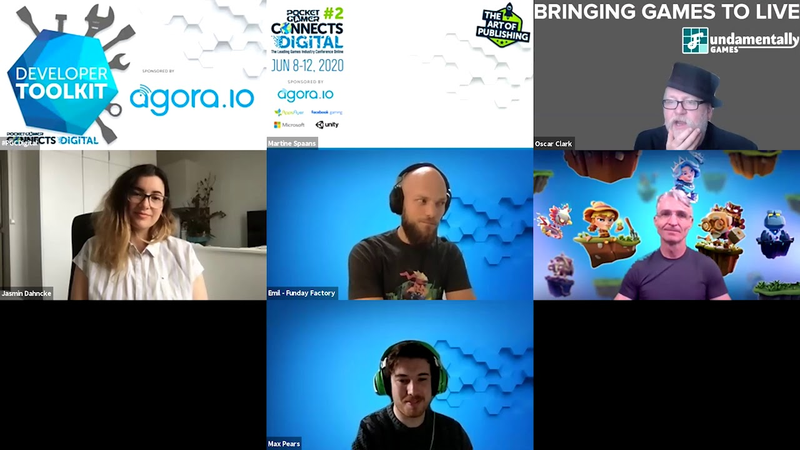
Panel: What are the Best Ways to use Tools to Bring Data into Design? PG Connects Digital #2
Data serves as a critical instrument for informing game design, functioning as a catalyst for collaborative problem-solving rather than a replacement for creative intuition.
- Data should be used as a tool to inform and validate creative intuition rather than as a replacement for the designer's vision.
- Effective design analysis requires synthesizing quantitative metrics, such as heat maps and player flow data, with qualitative insights gathered from direct playtesting.
- Studios must foster a culture of cross-disciplinary communication where designers, artists, and product managers collectively interpret data to solve engagement problems.
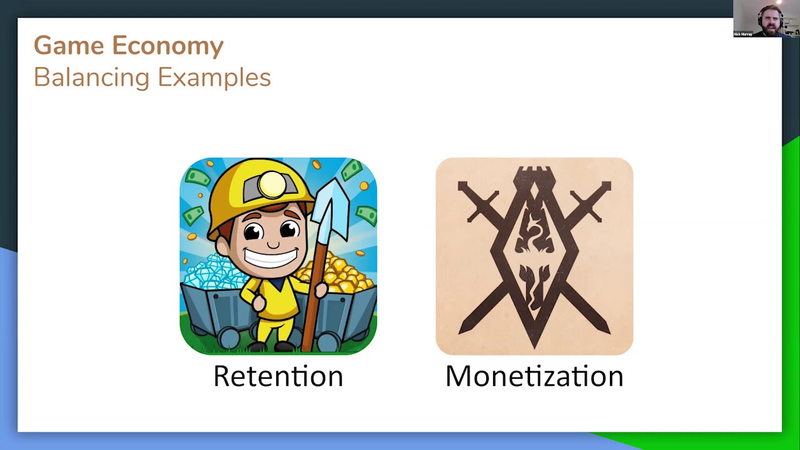
Building & Running Game Economies PG Connects Digital #2
Sustainable game economy design hinges on the strategic balance between player retention and monetization, with long-term engagement serving as the primary foundation for financial success.
- Sustainable game economies rely on a dual-currency framework where soft currency drives gameplay progression and hard currency is reserved for time-saving mechanics or exclusive cosmetics.
- Developers should anchor hard currency value in real-money equivalents to manage inflation and ensure that in-app purchases remain the primary acquisition method over free rewards.
- Resource management requires balancing sources and sinks by monitoring cumulative currency gains against spending objectives to identify and resolve progression bottlenecks.
Panel: Best Practices for Keeping Your PC Game Relevant PG Connects Digital #2
Sustaining relevance in the PC gaming market requires a fundamental shift toward treating live operations as a long-term commitment rather than a secondary post-launch consideration.
- Treat live operations as a core, long-term commitment integrated into the initial design phase rather than a secondary post-launch activity.
- Secure six to twelve months of dedicated post-launch funding to ensure operational stability and the ability to maintain consistent content updates.
- Implement data-driven monetization strategies that allow for flexible transitions between business models, such as free-to-play or tiered subscriptions, to match evolving player spending habits.
How to Use Machine Learning, Live Telemetry Analysis, and Computer Vision to Manage Communities
Modern game development requires a fundamental shift toward integrating community management as a core design pillar rather than a reactive support function.
- Integrating in-game social features like chat systems can double player retention by providing a space for social interaction and peer-to-peer assistance without leaving the game environment.
- Successful game communities rely on 'social loops'—mechanisms where social notifications, such as clan messages or shared tactics, trigger further gameplay and engagement, mirroring the core game loop.
- Developers should implement lightweight replay systems that record event data rather than raw video, allowing for easier analysis and the automated generation of highlight reels for player sharing.
Panel: Live Ops is not a Sprint! - How do You Plan a Recurring Series of Activities Indefinitely?
Live operations function as a permanent, data-driven business cycle essential for maintaining player engagement throughout a game's entire lifecycle.
- Treat live operations as a continuous, permanent business cycle rather than a series of isolated development sprints to ensure long-term game sustainability.
- Prioritize the development of flexible, server-side infrastructure early to enable content updates and configuration changes without requiring constant client-side patching.
- Implement a multi-layered event strategy that balances daily, weekly, and monthly activities to meet specific business objectives like retention, monetization, and onboarding.
Panel: When is the Right Time to Start Thinking, Testing & Delivering Live Ops? PGCD#2
The transition from traditional, static game development to a service-oriented model is essential for long-term commercial viability in the modern gaming industry.
- Live Ops should be integrated into the development process as early as possible, ideally during the pre-launch and soft-launch phases, to effectively balance game economies and validate lifetime value assumptions.
- Automation is essential for effective Live Ops, as it frees up team capacity to focus on new content and sophisticated, personalized player experiences rather than repetitive manual tasks.
- Game developers should treat their titles as 'nightclubs' that require constant management and engagement rather than one-off 'rockstar performances' that end at launch.
Superstar Session: The Live Ops Readiness Checklist PG Connects Digital #2
Long-term success in the modern gaming landscape depends on transitioning from a static product development mindset to a dynamic, service-oriented operational model.
- Live operations must be integrated as a foundational pillar of game design from the start rather than treated as a post-launch afterthought.
- Operational success requires building technical pipelines that support iterative updates, staging, and rollbacks without requiring constant client-side version pushes.
- Teams should shift organizational culture toward a 'never done' philosophy that prioritizes predictable, consistent content cadences over the pursuit of perfection.
Battle Pass Game Design: Engagement to Monetization
Battle passes function primarily as sophisticated engagement mechanisms rather than standalone revenue engines.
- Battle passes function primarily as engagement and retention tools rather than standalone revenue engines, as they lack the recurring spending mechanics required for primary monetization.
- Developers should transition from passive reward tracks to active monetization drivers by designing progression hurdles that act as strategic stat checks, forcing players to acquire gear or characters to advance.
- Pricing strategies must be aggressive at launch because the rigid structure of battle passes makes it difficult to increase costs later without triggering significant player backlash.

It's About Time: System Design for Mobile Free-to-Play
System design in mobile free-to-play games centers on the universal resource of time.
- System design in free-to-play games must be anchored in time as the universal resource, balancing player progression against energy limits, session frequency, and the time required to acquire content.
- Designers should establish a progression model by defining the desired time-to-level, then calculating the necessary daily payouts based on the number of sessions and actions a player performs.
- When tuning upgrade costs, a common formulaic approach is to increase costs by a fixed percentage—such as 250% per level—while rounding to larger increments to ensure the UI remains clean and readable.
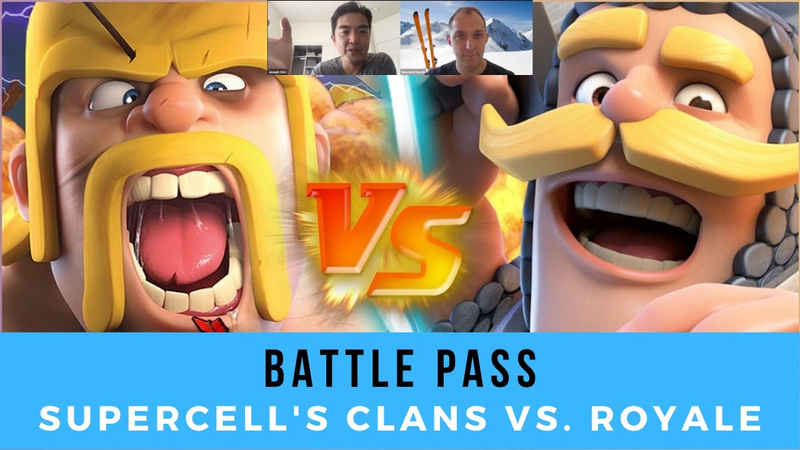
Battle Pass | Supercell's Tale of 2 Cities: Clash of Clans vs. Clash Royale
The implementation of Battle Passes within the mobile gaming sector reveals that monetization success is inextricably linked to the underlying economic architecture of a title.
- A Battle Pass's effectiveness is determined by the game's underlying economic architecture rather than being a universal engagement tool.
- Clash of Clans successfully leverages a deep, scalable economy that requires constant investment across a broad spectrum of units, maintaining high Battle Pass value.
- Clash Royale’s rigid, card-based progression limits players to mastering a single deck, which reduces the perceived value of collecting new items through a Battle Pass.