Live Ops reports and market data
Documents
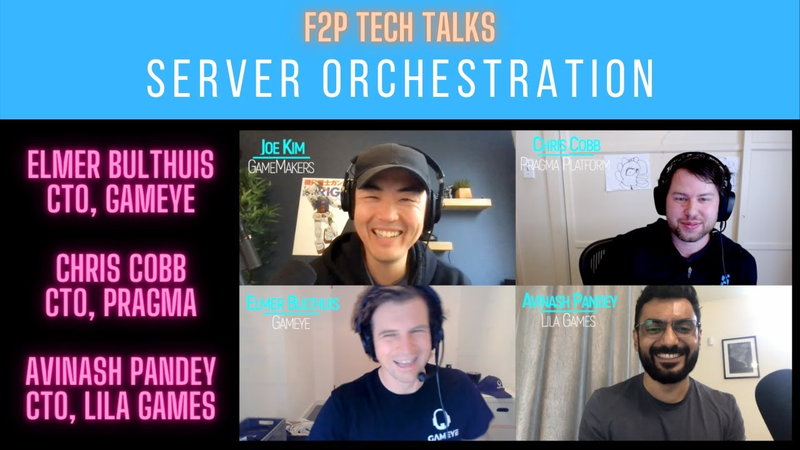
F2P Tech Talks: Server Orchestration
Server orchestration serves as a critical foundation for modern live-service games, ensuring that players receive low-latency experiences through the efficient deployment and maintenance of dedicated server instances.
- Outsourcing server orchestration to specialized providers mitigates the operational risks of global bare-metal management and allows studios to focus resources on core gameplay and matchmaking logic.
- Server-authoritative architecture is a mandatory requirement for live-service games to prevent fraud and protect the integrity of the in-game economy.
- Dynamic scaling capabilities are essential for preventing player attrition caused by launch-day failures, as player demand remains inherently difficult to predict.
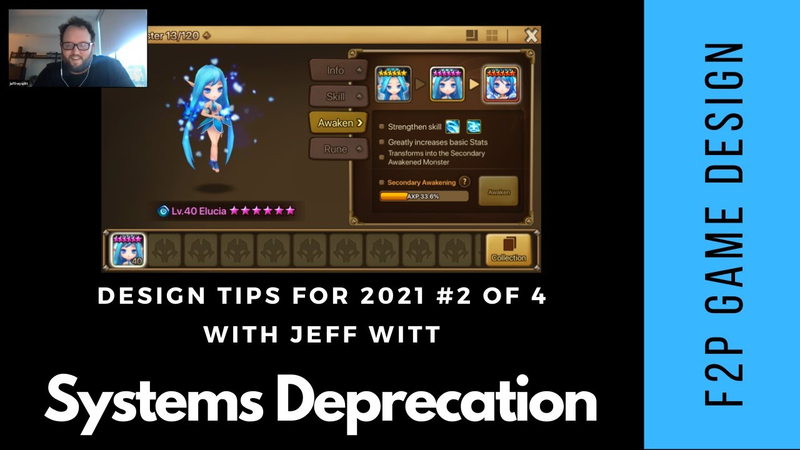
F2P Design Tips for 2021, Embrace System Deprecation (2 of 4) Ft. Jeff Witt
For developers managing long-running free-to-play games, the strategy of system deprecation is essential for maintaining economic health and player engagement.
- Developers of long-running free-to-play games should use system deprecation to reset economic balance when veteran players accumulate resource stockpiles that render original progression systems ineffective.
- Instead of inflating costs or adding incremental tiers, developers should introduce entirely new currencies or inputs to regain control over the game economy and reset player expectations.
- The mobile title Summoners War successfully implemented this strategy by introducing a 'second awakening' system that required new energy and boss-fight materials, bypassing the obsolete resources held by long-term players.
Live Ops in Star Wars: Galaxy of Heroes
The live operations strategy for Star Wars: Galaxy of Heroes centers on maintaining a durable, character-based economy within a mid-to-hardcore mobile RPG framework.
- The game maintains a durable economy by treating individual characters as the primary units of value, ensuring long-term player investments remain protected against power creep.
- To manage a roster of over 170 characters, the development team employs a 'nesting utility' strategy that creates specific faction-based synergies rather than relying on static power hierarchies.
- The ecosystem approach forces players to utilize their entire collection by revitalizing legacy characters, preventing new releases from rendering older units obsolete.
Balancing Community and Business: Walking the Tightrope of Needs
Effective community management in the mobile free-to-play sector requires balancing the often-conflicting needs of players and business stakeholders.
- Community managers should transition from reactive buffers to proactive product partners by aligning player feedback with business KPIs like revenue, engagement, and retention.
- Vocal community members often represent less than one percent of the total active, spending player base, meaning they are not always representative of the broader audience.
- Threats to quit are poor predictors of actual churn, as 65 percent of users who threatened to leave remained active in the game.
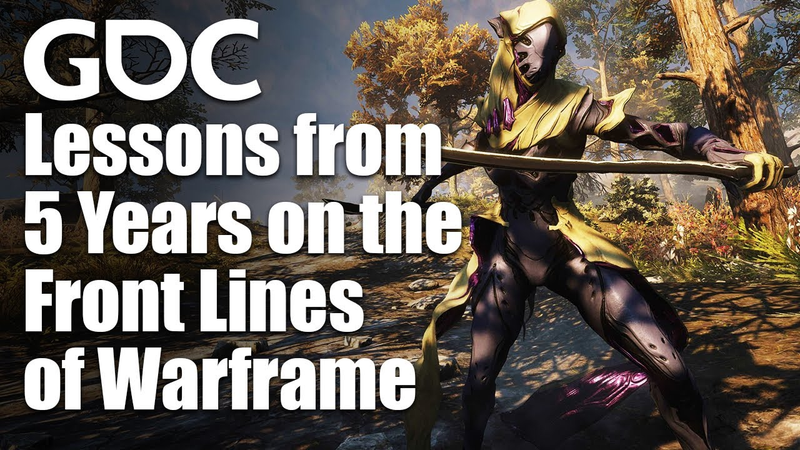
Whose Game Is It, Anyway? How Community Relationships Shape Games: Lessons from Warframe
The long-term success of the free-to-play title Warframe is rooted in a development philosophy that prioritizes radical transparency and a collaborative partnership with its player base.
- Digital Extremes maintains community trust by consistently communicating the status of updates, even when delays occur, ensuring players always have a reliable source of information regarding the game's development routine.
- The studio avoids 'pay-to-win' pitfalls by strictly separating monetization from gameplay mechanics, such as their 2013 decision to remove stats from cosmetic items to ensure fair play.
- When community feedback indicates a feature is failing—such as the 2016 console-friendly navigation system that negatively impacted retention—the team prioritizes player preference by reverting to more effective, nostalgic designs like the original star chart.
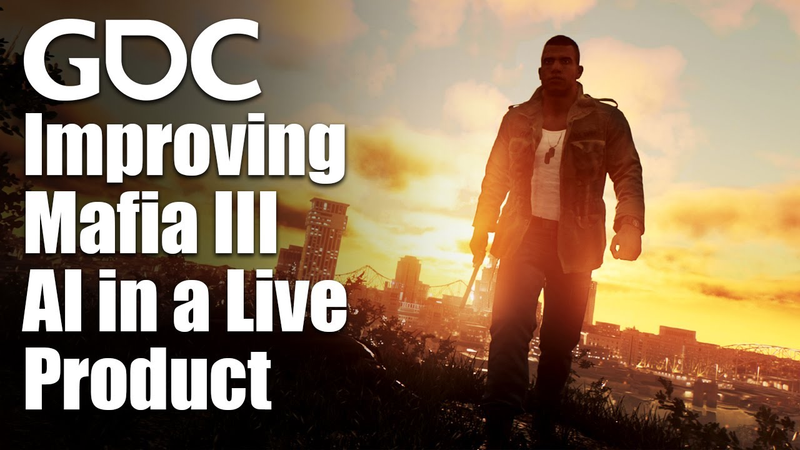
Triage on the Front Line: Improving Mafia III AI in a Live Product
The post-launch improvement of artificial intelligence in the open-world crime drama Mafia III serves as a case study for managing live product updates under strict resource and time constraints.
- Hangar 13 utilized a cross-functional 'strike team' consisting of engineers, animators, designers, and QA to execute a three-month post-launch AI improvement patch for Mafia III.
- Prioritization of AI fixes was determined by a three-factor framework: impact (player experience), complexity (potential for unintended knock-on effects), and cost (time and resource allocation).
- The team addressed AI responsiveness by refining event-based reaction systems, such as increasing the detection range for gunshots beyond the original 40-meter limit to ensure enemies properly escalated to combat.

What Successful Product Managers Do Differently in Free-to-Play Games
Successful product managers in the free-to-play mobile gaming industry distinguish themselves by mastering five core competencies that bridge the gap between creative design and business performance.
- Successful product managers own the business side of a game by prioritizing metrics like LTV, retention, and monetization to balance the internal tension between CPI and LTV.
- Product managers can drive significant revenue growth through minor data tweaks; for example, allowing players to repeat events in Angry Birds Match increased baseline revenue by 20% without requiring engineering-heavy updates.
- When data is insufficient to justify a major feature, successful product managers use storytelling to sell the vision to leadership, such as when Clash of Clans successfully entered the Japanese market through culturalization and local partnerships despite a lack of initial localized data.
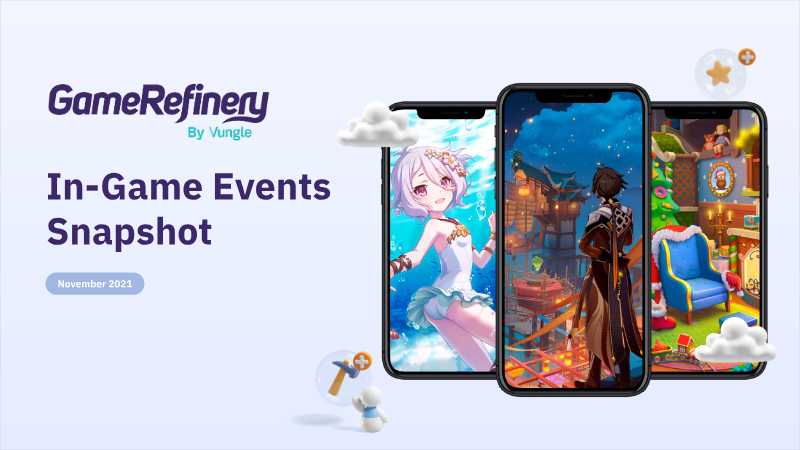
In-Game Events Snapshot
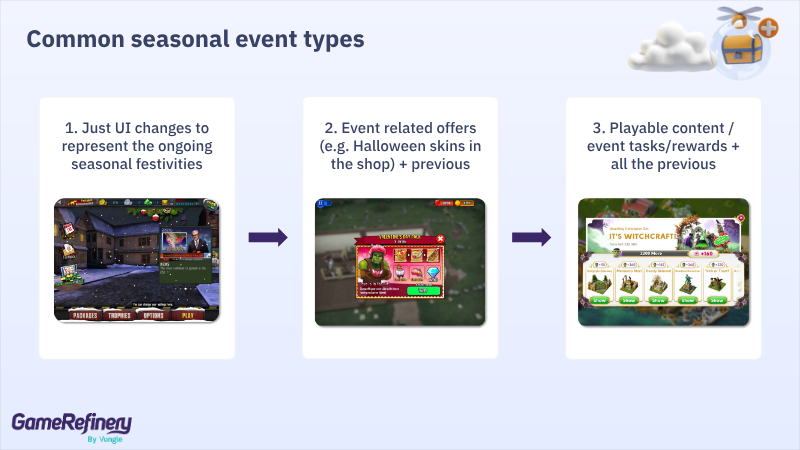
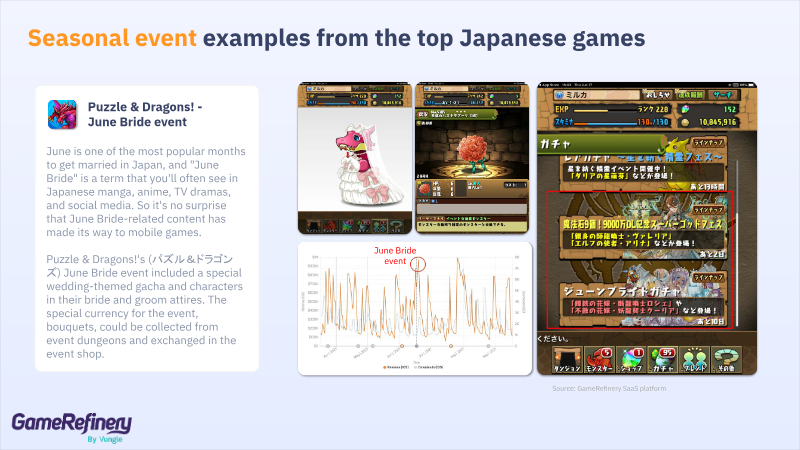
The snapshot presents a comprehensive overview of in-game event strategies across the global mobile gaming market, focusing on seasonal and promotional collaboration events.
- Seasonal events are a standard industry practice, utilized by 90% of the top-grossing 100 mobile games to drive player re-engagement and revenue spikes.
- Brand collaborations are a significant growth lever, appearing in 62% of top-100 games in Japan, 51% in China, and 42% in the US.
- High-profile collaborations, such as Sky: Children of the Light’s Kizuna AI partnership and Genshin Impact’s Lantern Rite, have demonstrated the ability to generate multi-million dollar daily revenue surges.
Closing Down Game Communities: How to Plan a Dignified Breakup
Closing a game community requires a meticulously coordinated strategy that prioritizes empathy and transparency to transform potential player hostility into a sense of shared nostalgia.
- Synchronize messaging across all internal departments to prevent conflicting automated communications and ensure a unified, transparent narrative during the shutdown process.
- Unlock all premium content for the entire player base during the final month of operation to serve as a gesture of goodwill and foster a positive final experience.
- Disable new user registrations immediately upon announcing the closure to focus resources on the existing community and prevent further influxes.
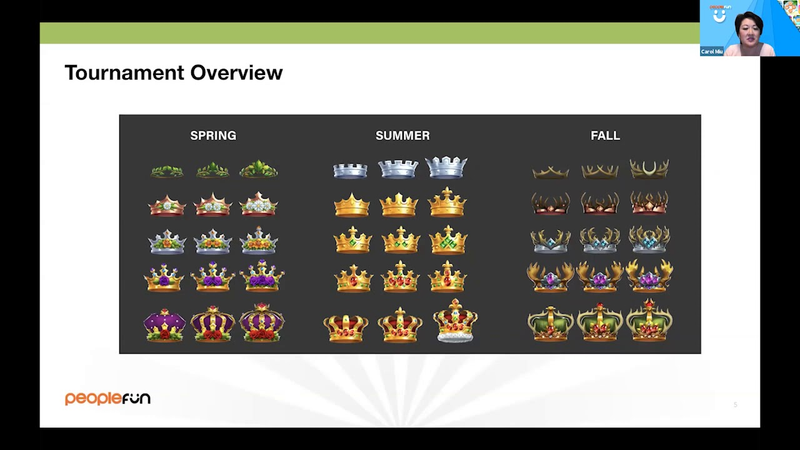
Superstar Session: Wordscapes: How the World’s Most Popular Word Game Boosted LTV by 40%
PeopleFun achieved a 40% increase in the lifetime value of the mobile title Wordscapes by shifting toward vanity-driven live operations and seasonal content.
- PeopleFun increased the lifetime value (LTV) of Wordscapes by 40% by shifting to vanity-driven live operations and seasonal content.
- The studio successfully reduced coin payouts by 50% without negatively impacting KPIs by introducing exclusive crown rewards within a 13-week tournament structure.
- Sticker collections increased both in-app purchase and ad-based ARPDAU by over 20% while doubling level completion rates among top players.

Superstar Session: Hypercasual Live Ops- Building a Data-driven Growth Machine
Hypercasual game development relies on a systematic, data-driven growth machine to optimize performance and extend product lifecycles.
- Hypercasual studios should transition from intuition-based design to a systematic, data-driven growth machine that utilizes automated A/B testing across the entire user funnel.
- The core growth strategy relies on running hundreds of A/B tests in parallel to isolate variables in game mechanics, monetization, and user acquisition for cumulative, exponential performance gains.
- Internal scoring algorithms should be used to evaluate potential updates, ensuring that every product decision is backed by empirical evidence to maximize engagement and lifetime value.

Panel: Alternative ways to Monetise Your Games
Modern game monetization is undergoing a fundamental shift away from traditional, intrusive display advertising toward models rooted in player motivation, aspiration, and long-term engagement.
- Sustainable monetization now requires a multi-faceted approach that integrates in-app purchases, battle passes, and subscriptions alongside non-invasive ad formats.
- The industry is shifting away from intrusive display advertising toward models based on player motivation, such as competitive ambition, social interaction, and time management.
- Repeat usage is the primary key performance indicator for assessing long-term game health, superseding short-term revenue gains.