Investment reports and market data
Documents
How mobile will boost the games market to over $100 billion
The global games industry is projected to exceed $100 billion in revenue by 2017, a milestone driven primarily by the rapid expansion of the mobile sector and significant growth within Asian markets.
- The global games industry is projected to surpass $100 billion in revenue by 2017, fueled primarily by the mobile sector and rapid growth in Asian markets.
- Mobile games generate over 70% of total global application revenue, outperforming traditional console and subscription models in profitability and development efficiency.
- Multiplayer and player-versus-player mobile games generate up to 13 times the revenue of single-player titles due to superior engagement and retention metrics.

Why Malaysia is looking to supercharge its ICT sector
Malaysia is aggressively pursuing a strategic shift in its national economy, aiming to increase the ICT sector’s contribution to its GDP from 12 percent in 2012 to 17 percent.
- Malaysia is targeting an increase in the ICT sector's contribution to national GDP from 12 percent in 2012 to 17 percent.
- The government is scaling its mobile app developer talent pool from an initial 700 trained individuals to a core community of 7,000 developers.
- The Malaysian Multimedia Development Corporation is driving this growth using a private-sector staffing model to ensure agile, market-oriented policy implementation.
2014 will be difficult for indies. We need to work together, says Adrian Adamiak
The mobile gaming market is undergoing a significant period of consolidation, creating a challenging environment for independent developers.
- The 2014 mobile gaming market is experiencing significant consolidation, where a small number of dominant publishers control the majority of revenue and consumer attention.
- Visibility has become the primary barrier for independent developers due to the high volume of daily game releases and a lack of resources to compete with major players.
- Independent studios must shift from solitary operations to strategic partnerships, investor backing, or publisher alignment to achieve the scale necessary for survival.
There'a a lot of investment for social mobile game companies says Retora
The mobile gaming sector is currently experiencing a significant surge in capital investment, driven by a strong industry-wide pivot toward social mobile experiences.
- The mobile gaming sector is experiencing a significant surge in capital investment driven by a strategic industry-wide pivot toward social mobile experiences.
- Industry events throughout 2013, including GDC, E3, Casual Connect, Slush, and Game Connection Europe, confirm that mobile social gaming is the primary driver of current market activity.
- A high volume of B2B meetings at major international gatherings reflects an intense industry-wide effort by both startups and established entities to secure partnerships and funding.
Dossier de Prensa: España 2014
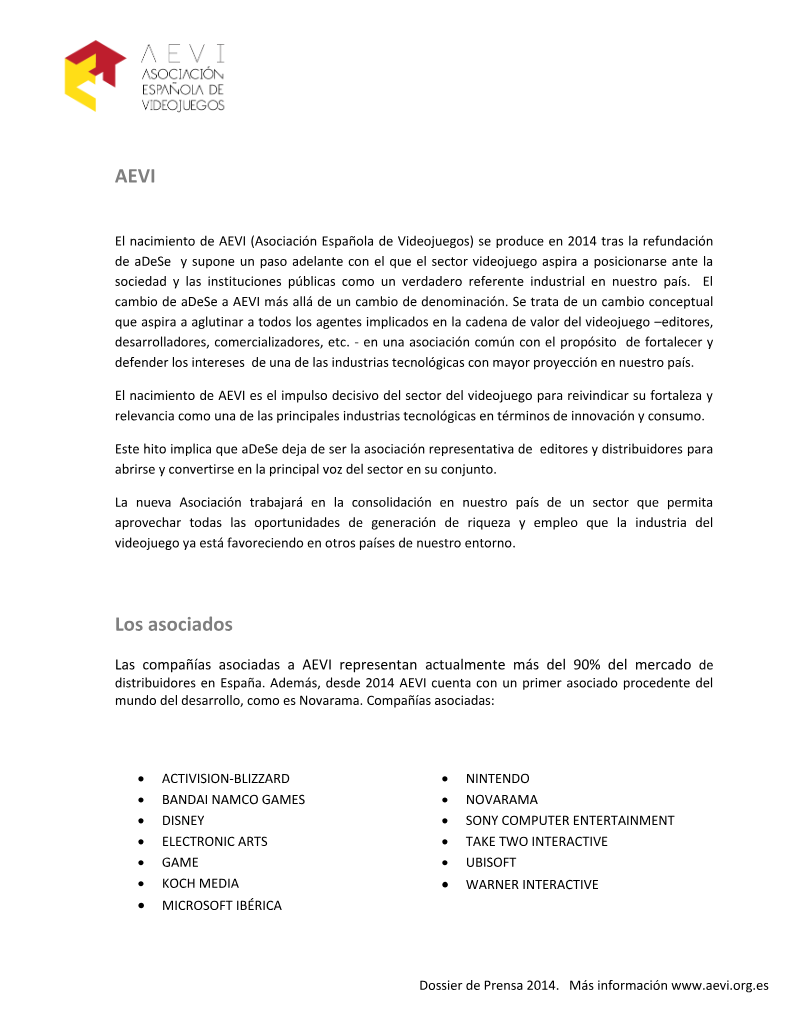
AEVI was created in 2014 to replace aDeSe and to serve as the unified voice of Spain’s video-game ecosystem, encompassing publishers, developers, distributors and related agents.
- AEVI was established in 2014 as the unified industry body representing companies controlling over 90% of Spain’s video game distribution market, including major publishers like Sony, Nintendo, Microsoft, and Ubisoft.
- Spain is a top-five European and top-ten global gaming market with 19 million players, generating €762 million in total consumer spending during 2013.
- The 2013 market revenue comprised €401 million in software, €275 million in hardware, and €86 million in accessories, with physical sales declines slowing to 7%.

Mobile games industry news (w/e 16 August 2013)
The mobile games industry in mid-August 2013 was characterized by significant capital investment, strategic consolidation, and a focus on data-driven advertising models.
- Baidu acquired the Android app distribution channel 91 Wireless for $1.85 billion to strengthen its position in the Chinese mobile market.
- Millennial Media bid $225 million to acquire JumpTap, a move aimed at consolidating gaming-focused mobile advertising networks.
- The Japanese mobile games market reached a valuation of $5.1 billion in 2012, with feature phones still maintaining a significant 50% share of the market alongside smartphones.

Mobile games industry news (w/e 2 August 2013)
The mobile games industry as of early August 2013 is characterized by a strategic shift toward platform-led distribution and the maturation of monetization models.
- Facebook’s mobile game distribution initiative generated 25 million downloads in the second quarter of 2013, signaling a move toward high-volume distribution alongside major partners like Gameloft and Gamevil.
- WeChat is leveraging its 330 million user base to enter the mobile gaming market, launching with four titles including international franchises like Fruit Ninja and Plants vs. Zombies 2.
- Puzzle & Dragons reached one million users in the United States, driving global daily revenues to approximately $5 million.

Mobile games industry news (w/e 19 July 2013)
The mobile gaming industry in mid-2013 is characterized by rapid growth in user acquisition and significant consolidation, particularly within Asian markets.
- Baidu’s $1.9 billion bid for 91 Wireless highlights intense competition among Chinese tech giants like Tencent and 360 to control Android distribution channels.
- The Korean messaging platform Kakao generated over $300 million in revenue during the first half of 2013 through its integrated games platform.
- Kabam reached a $700 million valuation following a private share placement, signaling strong investor confidence in the scalability of free-to-play business models.

GameFounders' Kadri Ugand explains the power of an accelerator
GameFounders serves as a specialized startup accelerator dedicated exclusively to the gaming industry, operating with a global reach from its headquarters in Tallinn, Estonia.
- GameFounders operates as a specialized accelerator in Tallinn, Estonia, that has invested in 14 companies across nine nations after receiving applications from 47 countries.
- The program focuses on bridging the gap between creative development and commercial viability by helping startups transition from functional titles to sustainable, profitable business models.
- A core challenge identified in the applicant pool is that developers often track basic metrics but lack the expertise to interpret data to inform effective monetization strategies.
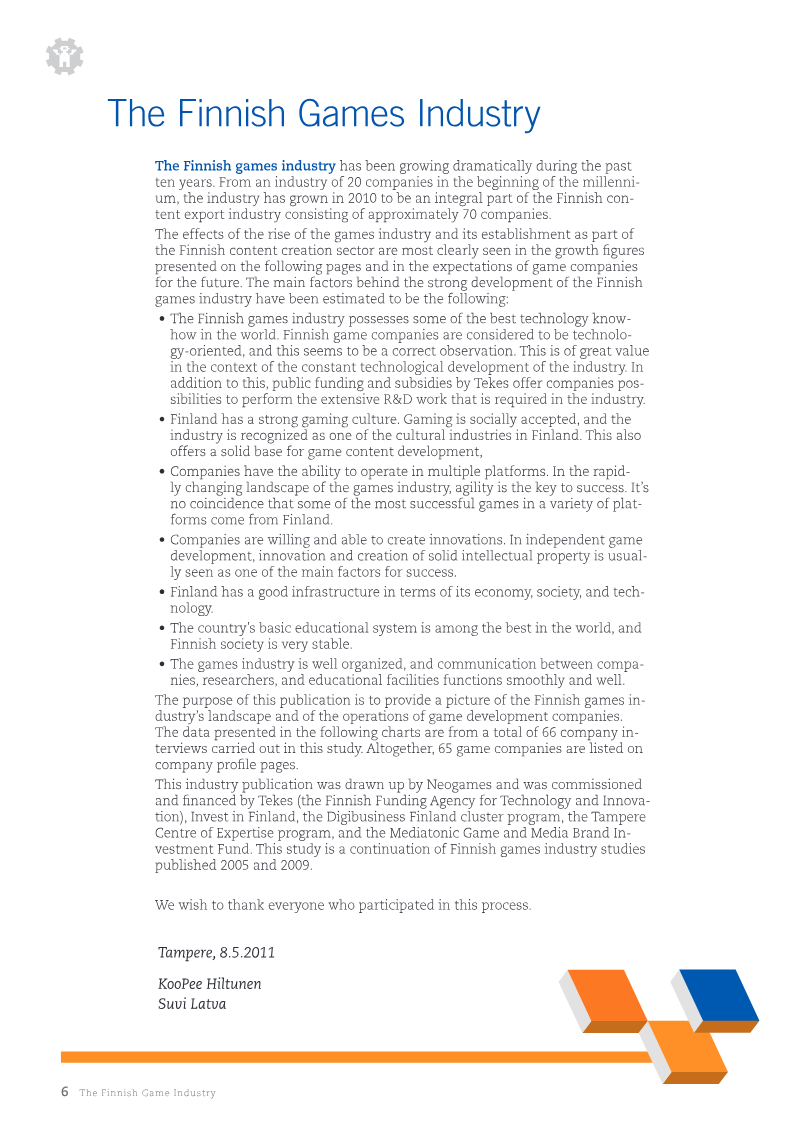
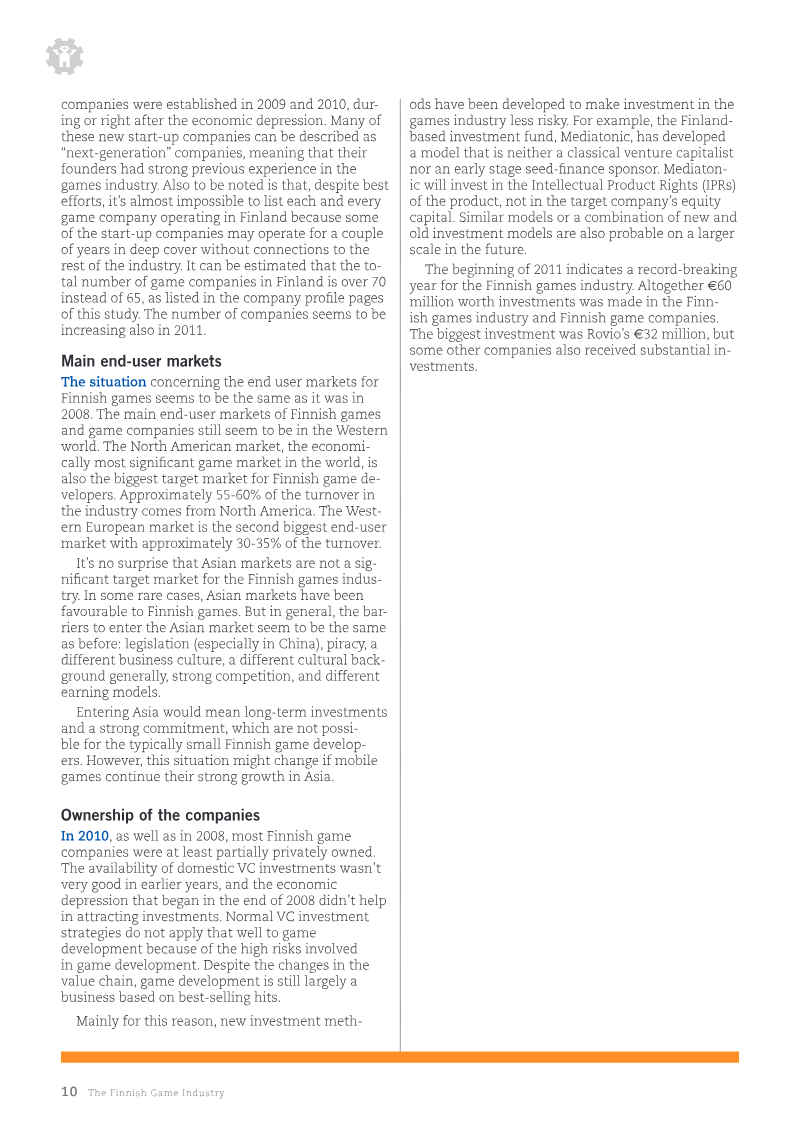
The Finnish Games Industry 2010-2011
The Finnish games industry underwent a period of rapid expansion between 2010 and 2011, transitioning from a post-recession recovery phase into a state of hyper-growth.
- The Finnish games industry experienced rapid growth between 2010 and 2011, with annual turnover increasing from approximately €105 million to €165 million.
- The sector's economic expansion was primarily driven by a strategic pivot toward mobile platforms and digital distribution, highlighted by the global success of Angry Birds.
- The industry is highly export-oriented, with 85 to 95 percent of total revenue generated from North American and Western European markets.
Finnish Gaming Industry: 2007
The Finnish gaming industry in 2007 stands as a rapidly expanding sector, characterized by high technical proficiency and a strong international orientation.
- The Finnish gaming industry generated approximately EUR 70–80 million in net sales in 2006, supported by a workforce of over 1,200 professionals.
- The sector is shifting from a mobile-centric focus toward a diversified portfolio that includes PC, console, and online platforms.
- Industry growth is being driven by a strategic transition toward digital distribution and service-oriented models, specifically utilizing micro-payments, in-game advertising, and user-generated content.

Sana Choudary talks about the Yetizen accelerator
YetiZen operates as a specialized accelerator and innovation hub based in San Francisco, designed to scale mobile gaming companies and platforms.
- YetiZen is a San Francisco-based accelerator that focuses on scaling post-product, post-traction mobile gaming companies rather than early-stage startups.
- The program is highly selective, accepting a maximum of 10 companies per cohort twice a year out of approximately 1,500 annual applicants.
- YetiZen operates a dual-purpose model that combines a collaborative co-working space with an industry hub that hosted over 150 events for 7,000 participants last year.