Investment reports and market data
Documents
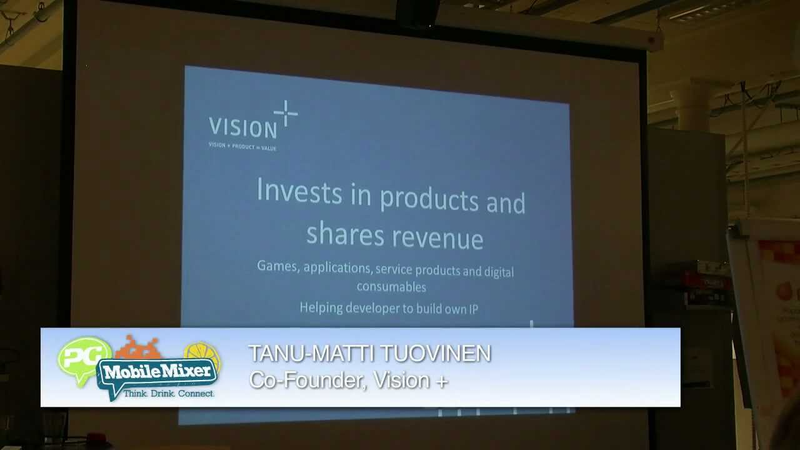
Pocket Gamer's Mobile Mixer 2012 - Tanu Matti Tuovinen from Vision +
Vision+ operates as a strategic investment firm focused on supporting game developers by providing capital while allowing creators to retain full ownership of their intellectual property.
- Vision+ utilizes a revenue-sharing investment model that allows game developers to retain full ownership of their intellectual property without diluting their equity.
- The firm provides individual investments ranging from 50,000 to 500,000 euros, typically covering 50% of a project's average one-million-euro production budget.
- Backed by Microsoft and Nokia, the fund is designed to support up to 200 distinct intellectual properties across web, mobile, PC, Mac, and console platforms.

EC Fund Update - Indie Game Publishing - Extra Credits
The initiative to establish an indie game publishing entity, funded through community crowdfunding, was launched to test the viability of a more equitable publisher-developer relationship.
- The initiative to establish a community-funded indie publishing entity was ultimately discontinued due to the operational complexities of balancing legal requirements, professional commitments, and high project failure rates.
- The project aimed to test a sustainable, equitable publishing model by focusing on small-scale game development with budgets ranging from $20,000 to $30,000.
- To mitigate risk, the selection process mandated a functional demo as a prerequisite, prioritizing tangible proof of concept over abstract creative pitches.

Let's Talk About Publishing - EC Indie Fund - Extra Credits
The EC Indie Fund was established in 2011 to utilize surplus funds from a community-driven fundraiser to support independent game development.
- The EC Indie Fund was established in 2011 with $50,000 in surplus capital from a community fundraiser to provide an alternative to predatory game publishing models.
- The fund mandates that developers retain full ownership of their intellectual property, rejecting the industry-standard practice of forced IP transfer.
- To ensure equitable partnerships, the fund utilizes a transparent 50/50 net profit-sharing model rather than traditional, developer-unfriendly revenue splits.
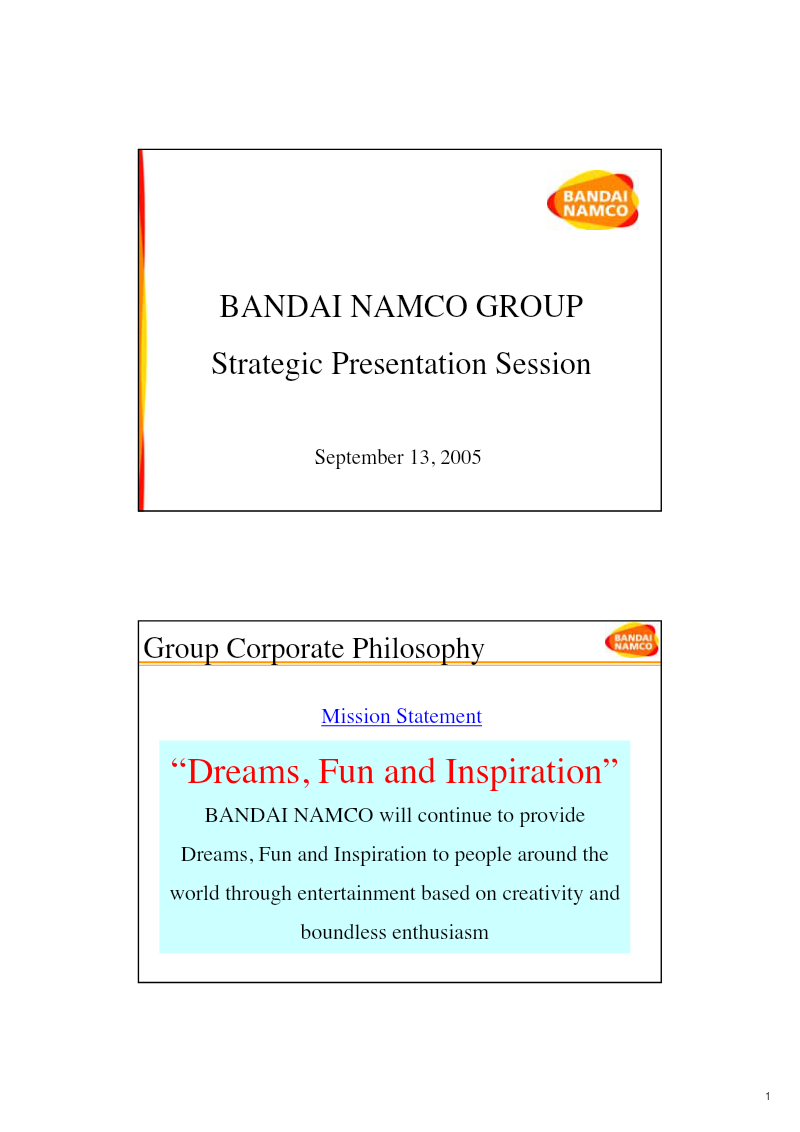
Bandai Namco Group Strategic Presentation Session
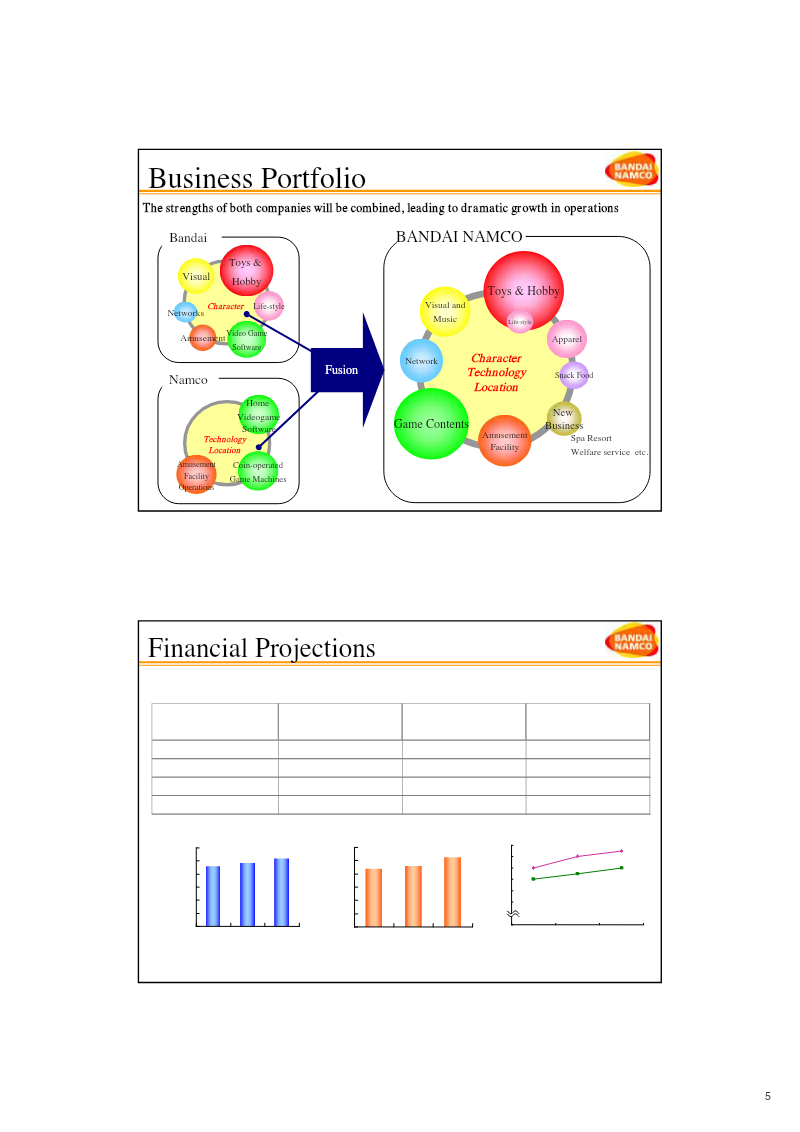
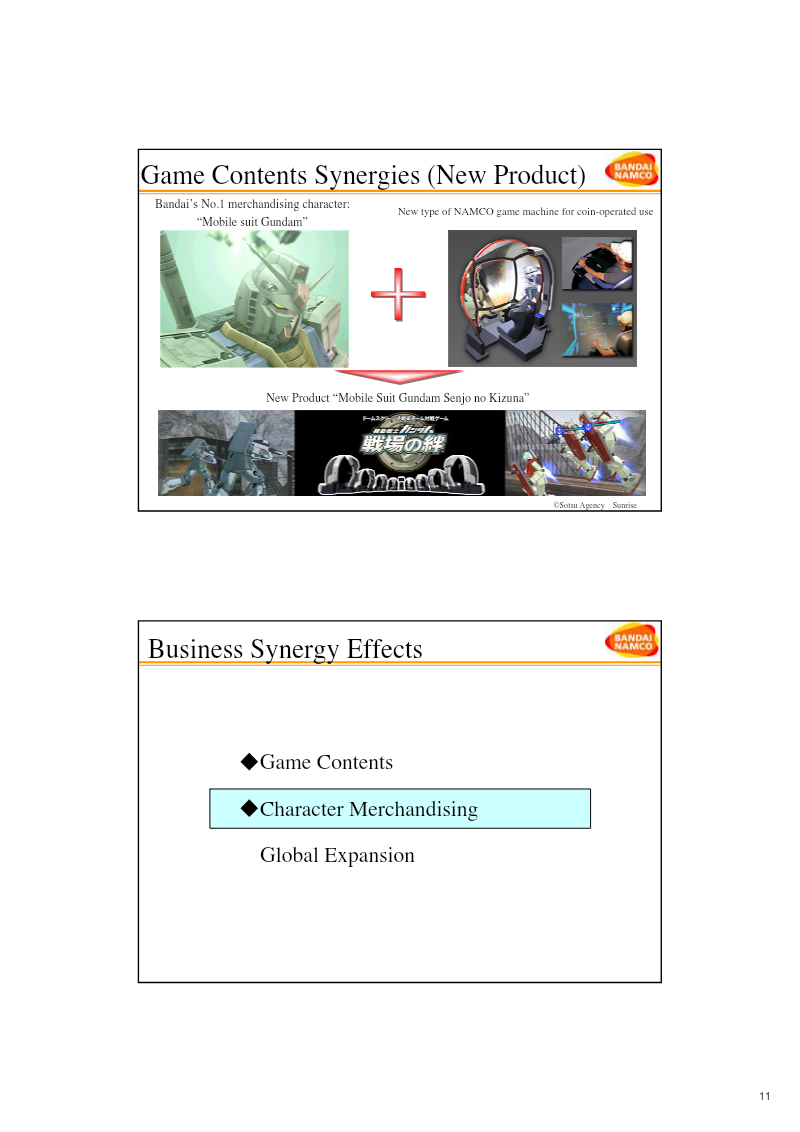
The Bandai Namco Group strategic presentation outlines the formal integration of Bandai and Namco following their merger, establishing a unified corporate structure designed to foster global growth through the fusion of their respective entertainment portfolios.
- Bandai and Namco are merging to form NAMCO BANDAI Holdings Inc. by April 2006, creating a unified corporate structure organized into six strategic business units.
- The group forecasts total sales growth from 475 billion yen in fiscal year 2006 to 550 billion yen by fiscal year 2008.
- Operating income is projected to increase from 44.2 billion yen to 55 billion yen over the two-year period following the merger.
Integrated Report 2017: Sega Sammy Holdings
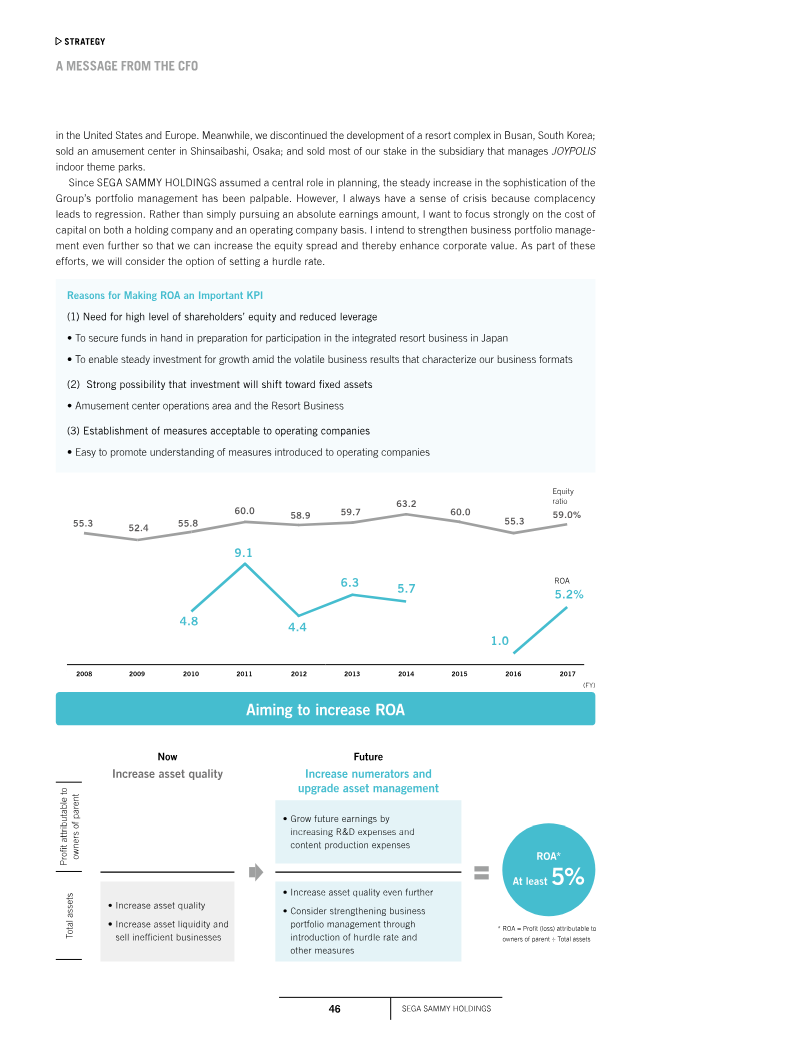
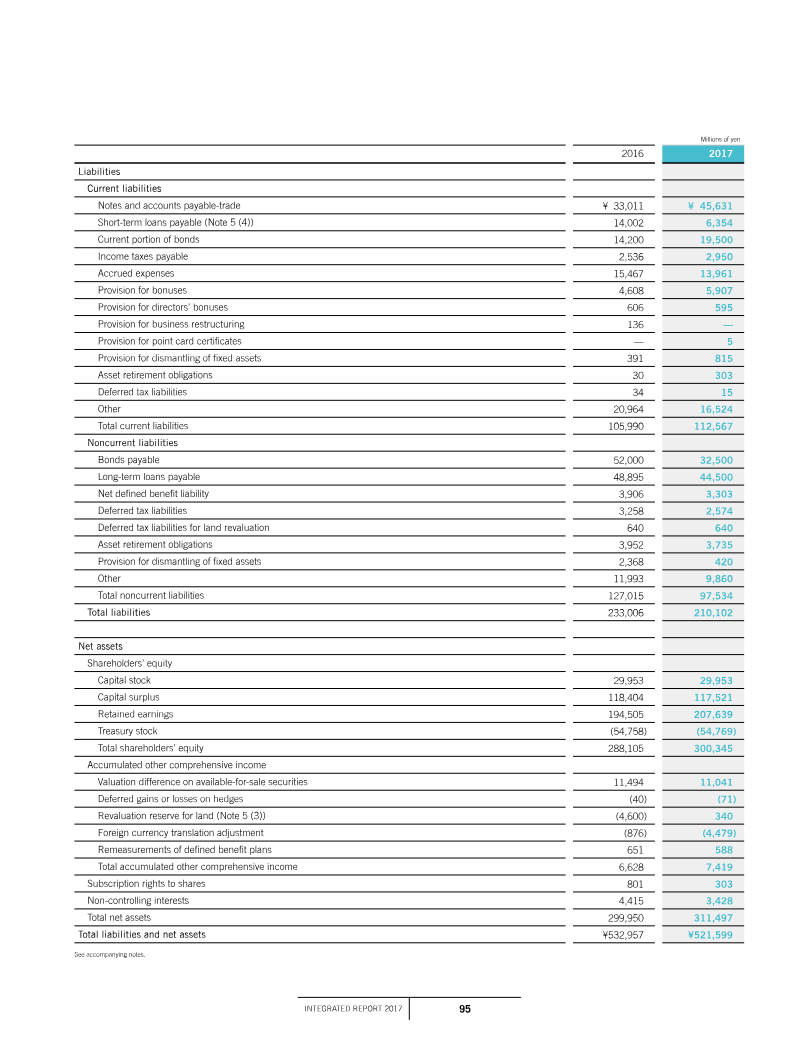
The Sega Sammy Holdings 2017 Integrated Report outlines the company’s strategic transition from a period of structural reform to a phase of sustainable growth, encapsulated by the "Road to 2020" initiative.
- Sega Sammy is executing a 'Road to 2020' strategy to transition into an IP-centric organization, targeting a 15% operating margin and 5% return on assets by fiscal 2020.
- Fiscal 2017 financial performance showed strong growth, with net sales increasing 5% to ¥366.9 billion and operating income rising 68% to ¥29.5 billion.
- The company is diversifying revenue streams away from the declining domestic pachinko market by expanding into global digital gaming and integrated resort development.
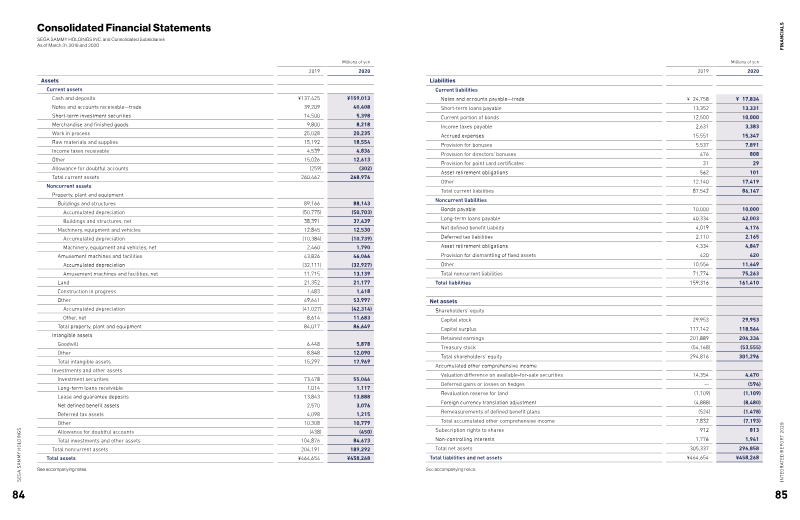
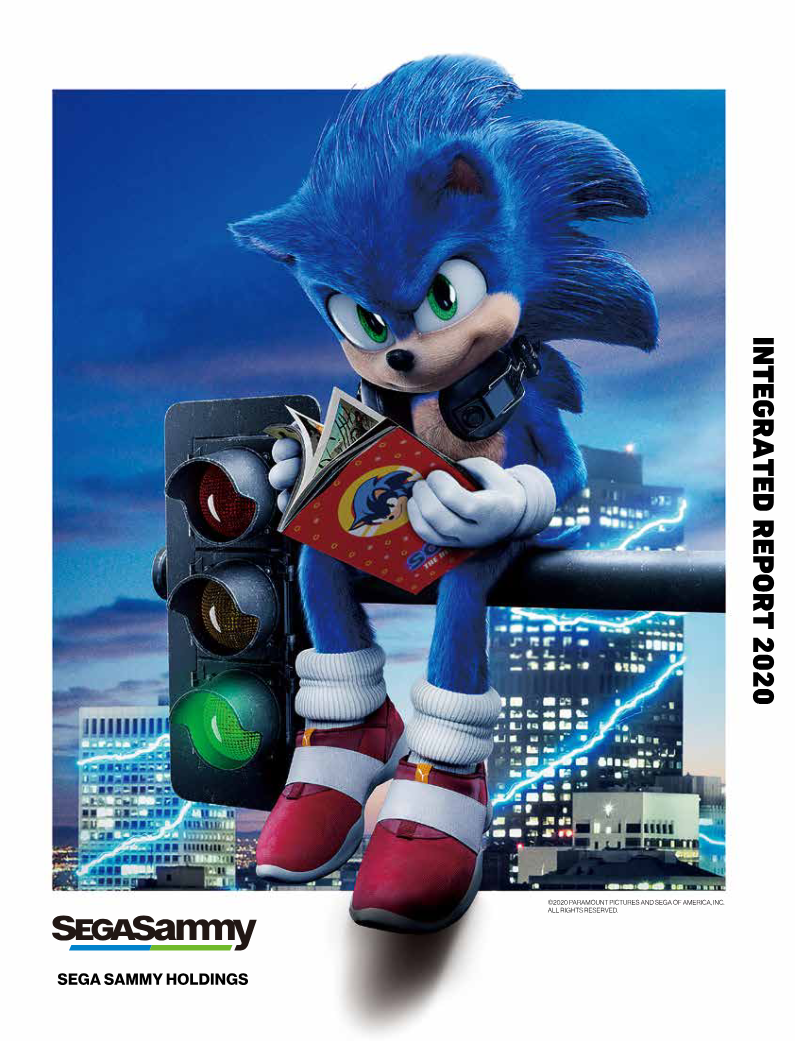
Sega Sammy Integrated Report 2020
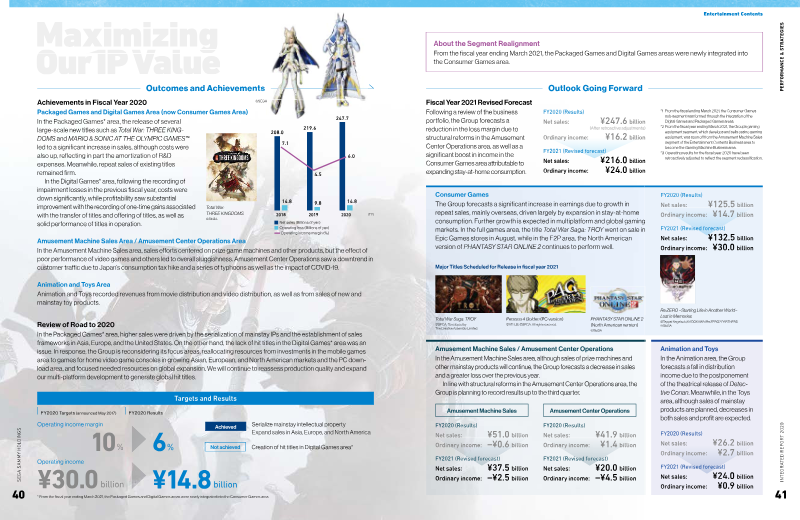
The Sega Sammy Integrated Report 2020 outlines a strategic pivot toward structural reform and global expansion in response to the COVID-19 pandemic and shifting market dynamics.
- Sega Sammy is pivoting from a reliance on domestic pachislot and pachinko operations toward a diversified, globalized business model centered on a unified consumer games division.
- For the fiscal year ending March 31, 2020, net sales grew 10.5% to ¥366.5 billion, while operating income more than doubled to ¥27.6 billion.
- The company is implementing ROIC-based management to improve capital efficiency and is prioritizing the development of global hit titles to enhance long-term corporate value.
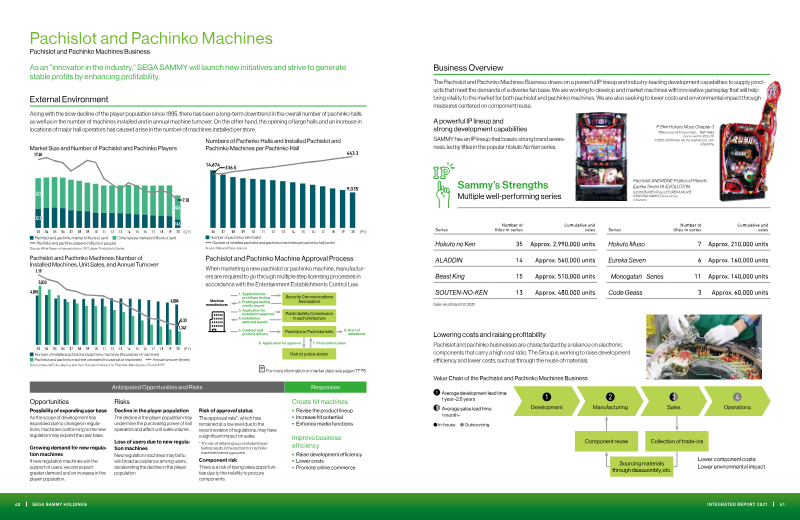
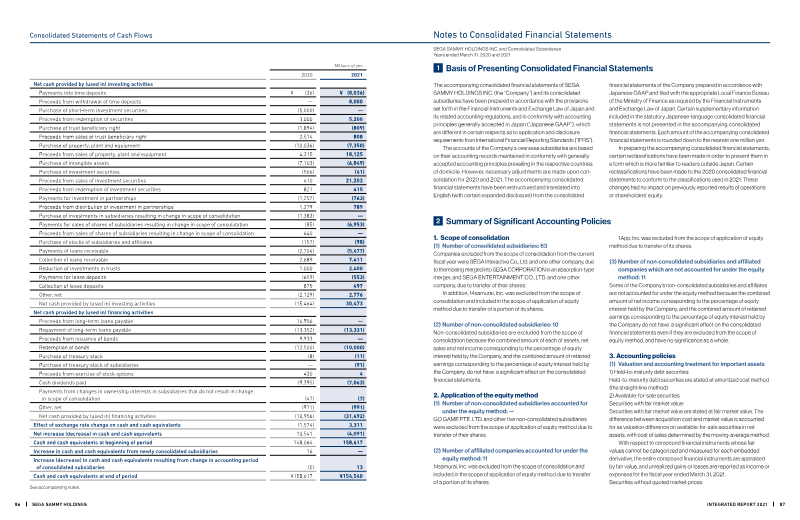
Integrated Report 2021: Sega Sammy
Sega Sammy’s 2021 Integrated Report details a comprehensive strategic pivot designed to restore profitability and drive long-term corporate value following a challenging fiscal year marked by the COVID-19 pandemic.
- Sega Sammy is targeting ¥500 billion in long-term net sales and an ROE exceeding 10% by fiscal year 2024 through a strategic pivot to become a 'Global Leading Contents Provider'.
- Fiscal year 2021 financial performance saw consolidated net sales decline 24.2% to ¥277.7 billion and operating income drop 76.4%, driven by contractions in the Pachislot/Pachinko and resort segments.
- The company executed aggressive structural reforms, including workforce reductions and the divestiture of amusement subsidiaries, resulting in ¥34.19 billion in reform-related expenses.
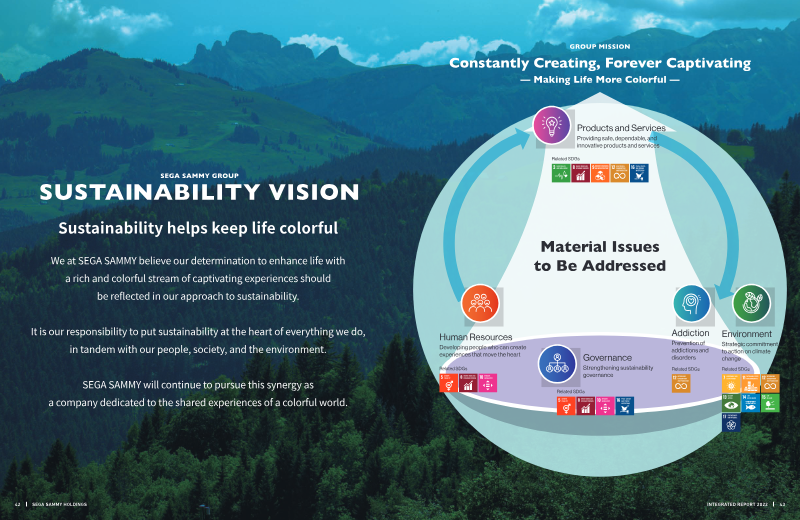
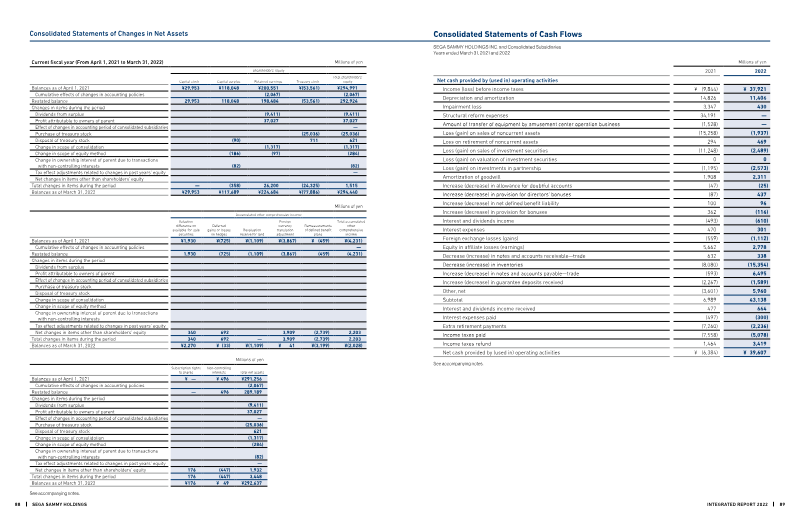
Sega Sammy Integrated Report 2022
Sega Sammy Holdings’ 2022 Integrated Report outlines a strategic pivot toward becoming a global contents provider, underpinned by a medium-term plan to maximize the value of existing intellectual property and develop a flagship "Super Game" by fiscal year 2026.
- Sega Sammy achieved a significant financial recovery in fiscal year 2022, reporting consolidated net sales of ¥320.9 billion and a 389% year-on-year increase in operating income.
- The company has set a medium-term target to achieve an ROE exceeding 10% and ordinary income above ¥50 billion by fiscal year 2026.
- A ¥250 billion investment plan is allocated through 2026 to strengthen development pipelines and transition to an ROIC-based management framework.
Sega Sammy Holdings Integrated Report 2024
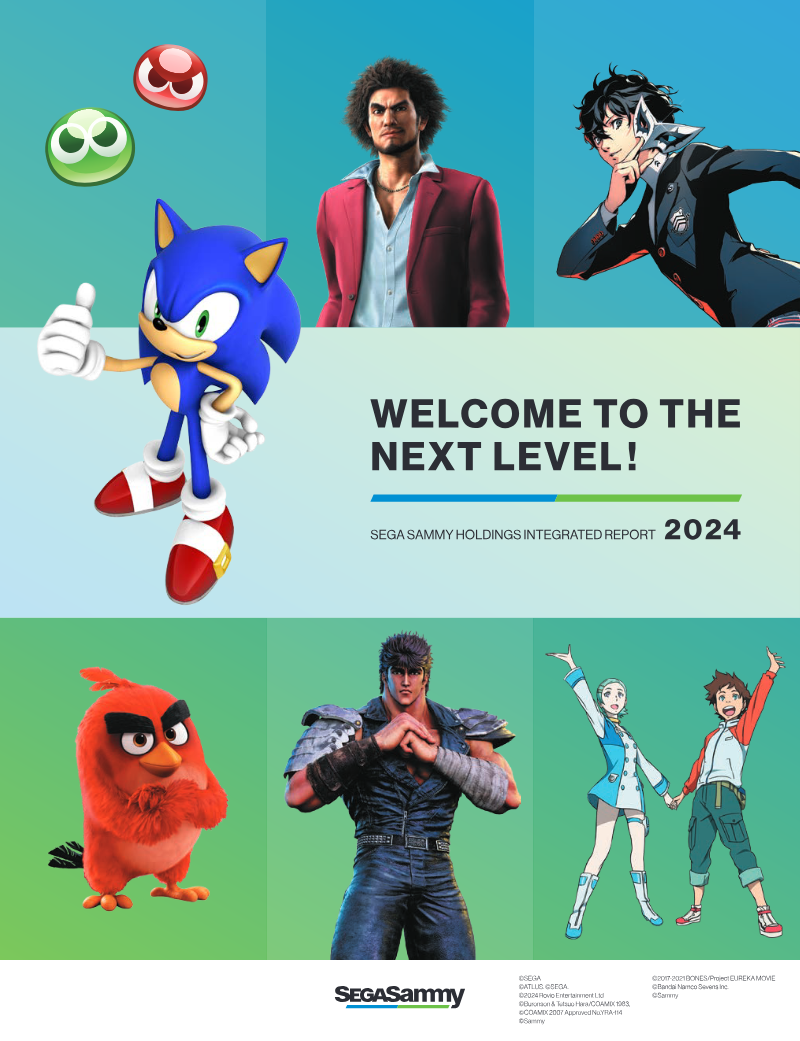
Sega Sammy Holdings’ 2024 integrated report outlines the "Welcome to the Next Level!" medium-term plan, a strategic roadmap spanning fiscal years 2025 through 2027.
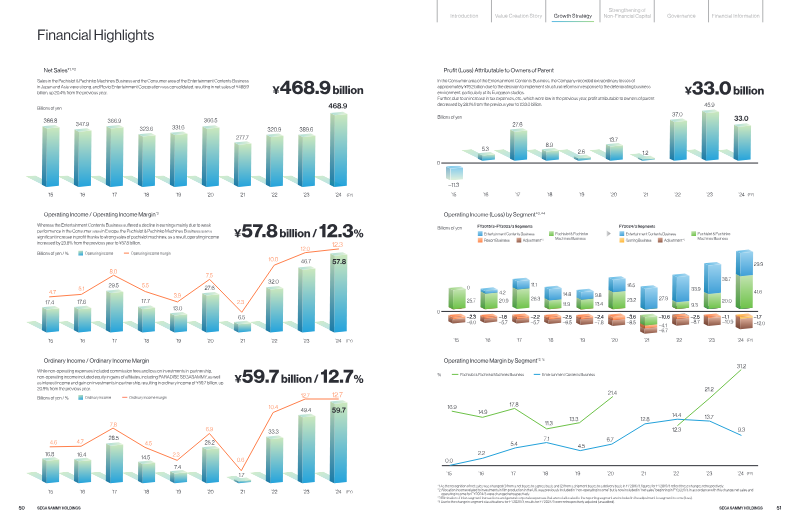
- Sega Sammy aims to achieve a three-year cumulative adjusted EBITDA of over ¥230 billion and an average return on equity exceeding 10% under its 'Welcome to the Next Level!' plan for fiscal years 2025–2027.
- Fiscal year 2024 financial performance showed strong growth, with net sales rising 20.1% to ¥467.8 billion and operating income increasing 21.6% to ¥56.8 billion, driven primarily by a recovery in the Pachislot and Pachinko segment.
- The company is allocating over ¥120 billion for development and ¥100 billion for strategic M&A, following recent acquisitions like Rovio and GAN and the divestment of its resort business.
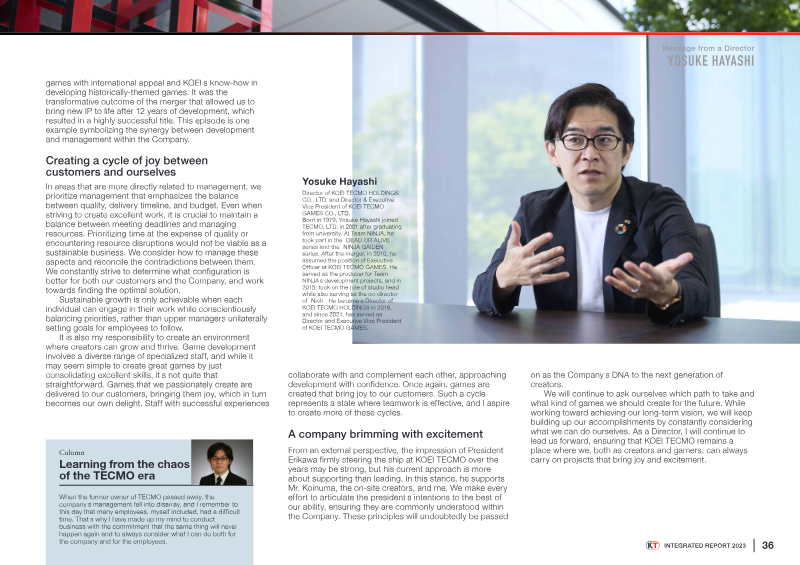
Koei Tecmo Holdings Integrated Report 2023
Koei Tecmo Holdings aims to establish itself as the world’s leading digital entertainment company by synthesizing creative innovation with disciplined financial management.
- Koei Tecmo achieved record-high sales of 78.4 billion yen in fiscal year 2022, more than doubling the 37.6 billion yen reported in 2013.
- The company maintains a 50% total distribution ratio for shareholders, supported by a conservative financial policy of expensing all development costs as they occur to avoid future impairment losses.
- Operational stability is bolstered by an industry-leading 4.6% employee turnover rate, attributed to competitive compensation and comprehensive training programs.
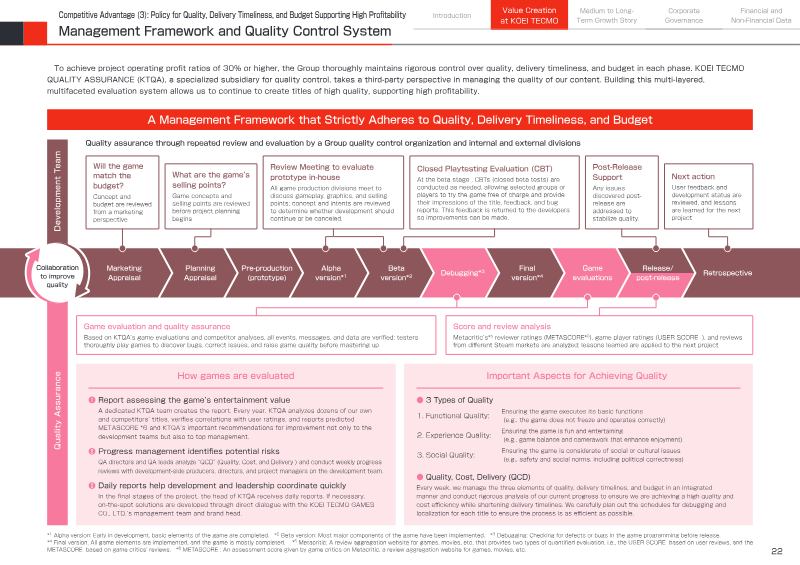
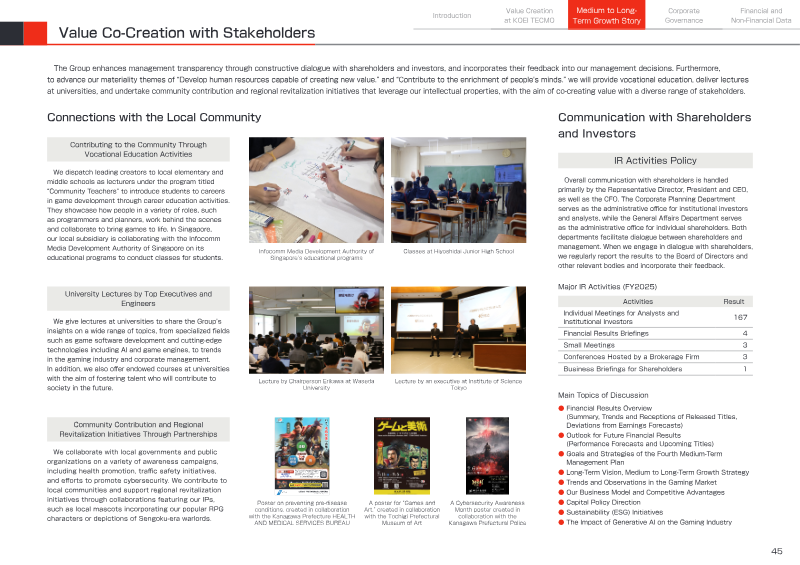
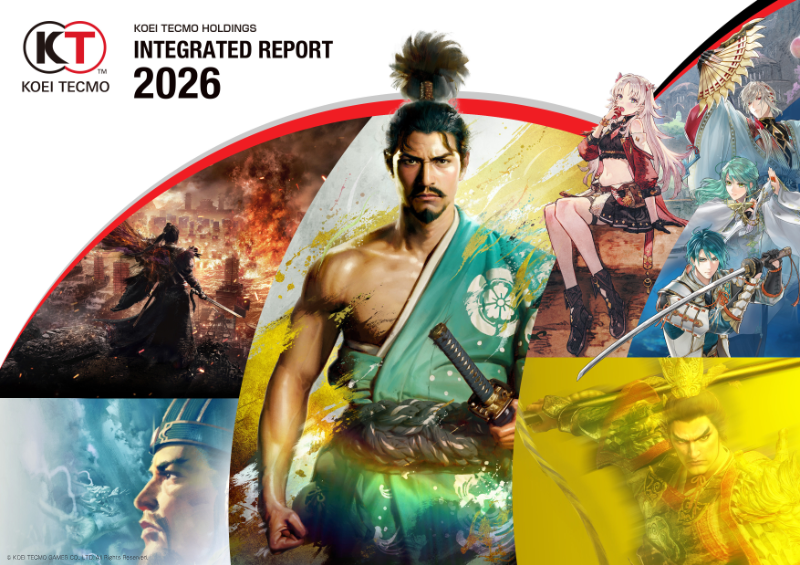
Koei Tecmo Holdings Integrated Report 2026
Koei Tecmo Holdings is executing a comprehensive long-term strategy to ascend into the ranks of the world’s top ten digital entertainment companies within the next decade.
- Koei Tecmo aims to become a top-ten global digital entertainment company within a decade, supported by a portfolio of over 300 intellectual property assets.
- The company maintains high financial performance with operating profit margins exceeding 30 percent, recording 88.4 billion yen in net sales and 37.2 billion yen in operating profit for fiscal year 2025.
- The core growth strategy involves transitioning to a self-publishing model, underpinned by investments in global infrastructure and the proprietary KATANA ENGINE technology.
MTG Capital Markets Day 2025: Spotlight Session AI
Artificial intelligence is fundamentally reshaping the game development lifecycle at MTG, transitioning from initial creative ideation to the management of global live operations.
- MTG is integrating generative AI across its studio network to accelerate production timelines and improve developer productivity.
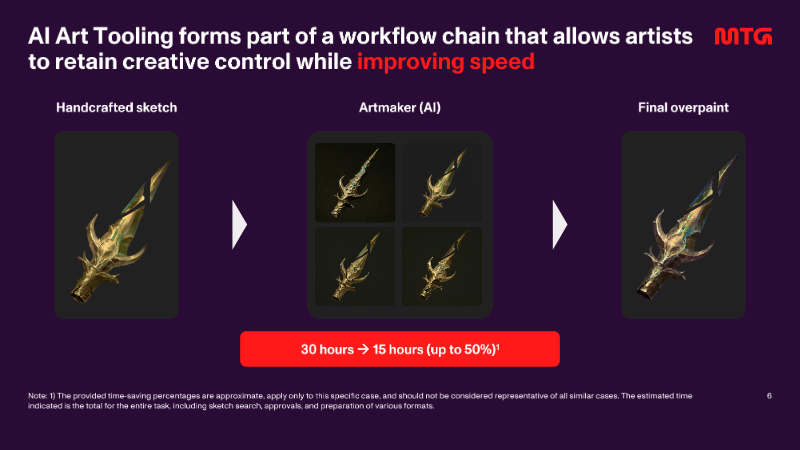
- AI-assisted art production has reduced 3D modeling time by 20% and improved sketch-to-final workflows by up to 50%.
- Engineering teams at MTG have increased code writing speeds by 10% and accelerated documentation creation by four to five times.