Investment reports and market data
Documents
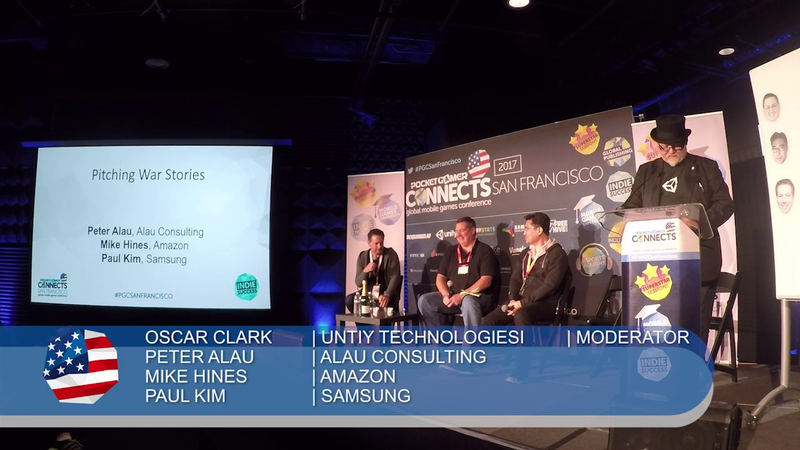
The best, worst and funniest pitch stories in games
Securing investment and publishing support in the gaming industry requires a transition from abstract conceptualization to tangible, playable proof.
- A functional, playable prototype is the most critical asset in a pitch, as it allows stakeholders to experience core mechanics directly rather than relying on speculative presentations.
- Technical competence and stability are non-negotiable, as experienced evaluators can easily identify performance issues or attempts to mask broken mechanics.
- Successful proposals must be grounded in realistic timelines, transparent budgets, and a clear value proposition that distinguishes the title in a crowded market.

Stillfront Group Presentation: Q1 2017 Report
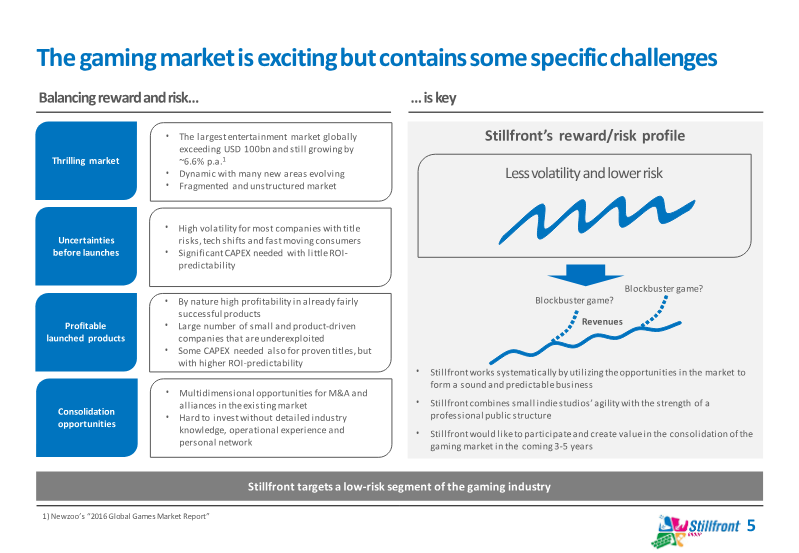
Stillfront Group’s Q1 2017 report outlines a business model centered on acquiring and managing a portfolio of small, independent gaming studios to achieve high-growth, low-risk profitability.
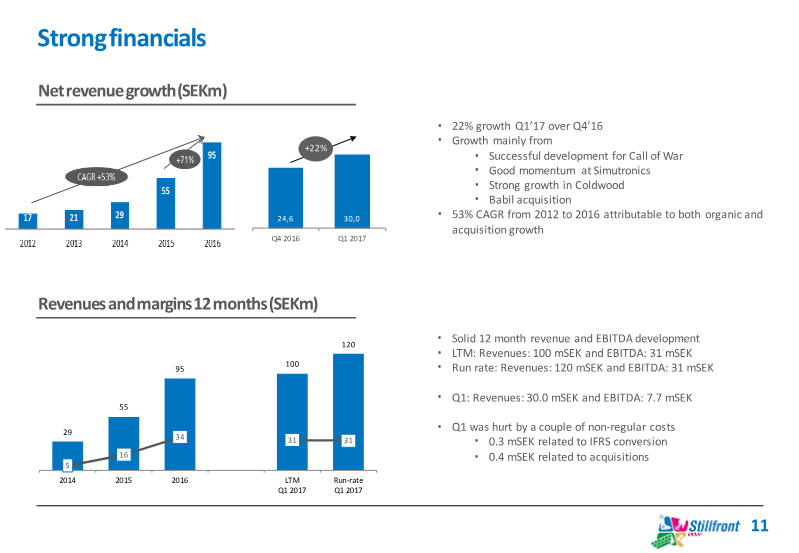
- Stillfront Group achieved a 53% compound annual growth rate between 2012 and 2016, maintaining EBITDA margins between 25% and 35% since listing.
- Q1 2017 net revenues reached 30 million SEK, marking a 22% increase over the previous quarter driven by acquisitions and existing title performance.
- The business model focuses on acquiring independent studios to manage a portfolio of long-lived, free-to-play strategy games, mitigating the volatility of blockbuster-driven development.
UK games tax relief: How do you get it?
UK-based video game developers can access significant financial support through the creative industry tax relief program, which allows companies to recover approximately 20% of their core development expenditure.
- UK-based game developers can recover approximately 20% of core development expenditure through the creative industry tax relief program.
- The relief is calculated by applying a 25% rate to core development costs, which are capped at 80% of a project's total expenditure.
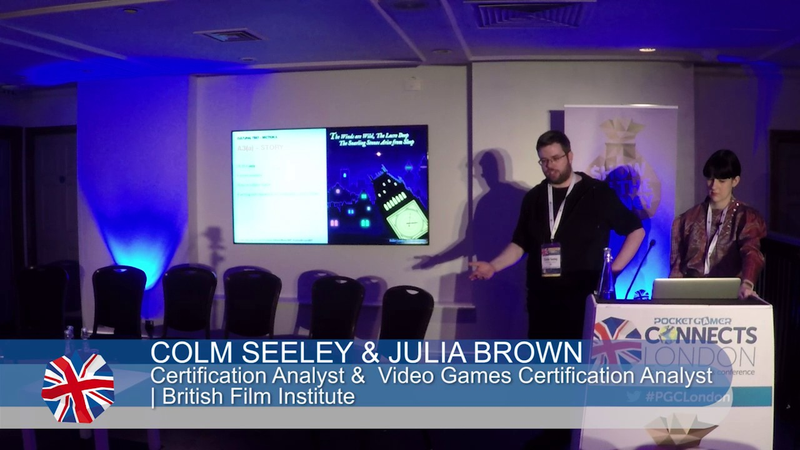
- To qualify, companies must obtain a 'British' game certification from the British Film Institute (BFI) by scoring at least 16 out of 31 points on a cultural test.
The current M&A market for games & predictions for 2017
The mergers and acquisitions landscape in the games industry experienced a record-breaking year in 2016, characterized by an unprecedented volume of mega-deals.
- The 2016 games industry M&A market reached a record $24.1 billion in disclosed deal value, nearly doubling the previous 2014 record of $12.5 billion.
- Four mega-deals, including Tencent’s acquisition of Supercell and Activision’s purchase of King, accounted for over 80% of the total 2016 market value.
- Market consolidation is being driven by a 'land grab' strategy where large publishers acquire studios to combat rising user acquisition costs and leverage live-ops capabilities.
Why investors say “No” to game studios when they come asking for investment
Securing investment for game studios requires a clear understanding of the fundamental differences between equity investors and publishers.
- Equity investors prioritize the long-term scalability and exit potential of the studio as a company, whereas publishers act as royalty investors focused on the commercial viability of individual projects.
- Studios often face rejection by misaligning their funding requests, such as approaching equity firms for project-specific funding or publishers before a project reaches the beta or soft-launch phase.
- Equity investors view business models based on CPI arbitrage as unsustainable, preferring studios that build technical or IP-based advantages through a 'scaffolding' series of projects.
Mergers and acquisitions in games: Lessons from the field
Mergers and acquisitions in the gaming industry function as complex, long-term partnerships that require rigorous preparation, realistic expectations, and carefully aligned incentives.
- Successful M&A in the gaming industry depends on strategic alignment of product portfolios, operational synergies, and human capital rather than raw financial deal value.
- Acquisitions are most effective when they leverage complementary strengths, such as centralizing shared services like marketing and quality assurance, rather than merging studios with direct operational overlap.
- The M&A process typically requires a six-month timeline, during which the acquirer must conduct extensive due diligence and the target firm must provide comprehensive legal and financial documentation.

U.K. Road Show Material: February 2017
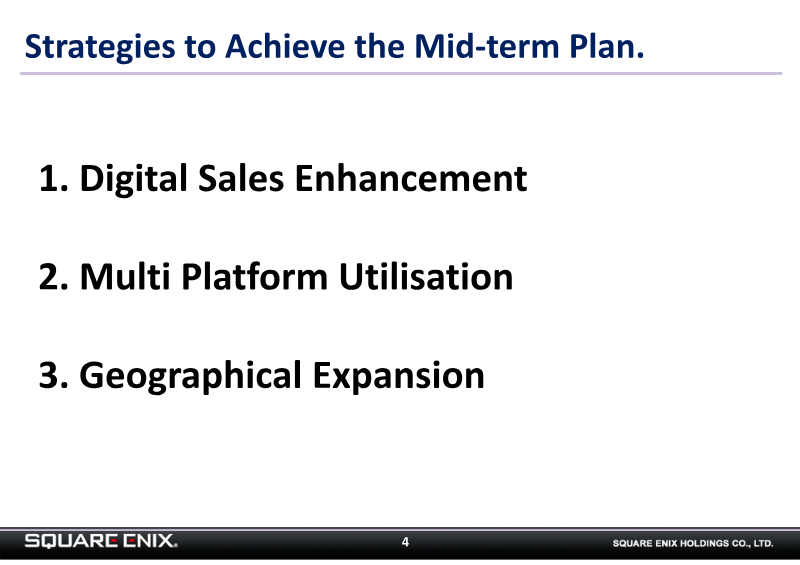
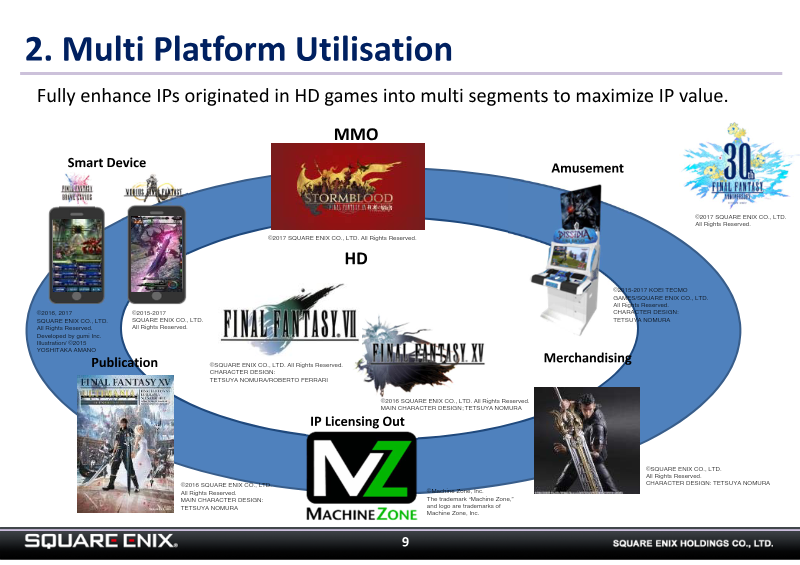
The February 2017 investor presentation outlines a mid-term growth strategy for Square Enix, centered on achieving six consecutive years of sales growth through the expansion of its Digital Entertainment segment.
- Square Enix aims to reach 400 billion JPY in sales by fiscal year 2019, targeting six consecutive years of growth in its Digital Entertainment segment.
- The company is prioritizing profitability in its high-definition (HD) gaming division while maintaining a stable revenue foundation through MMOs and smart device games.
- Strategy focuses on three pillars: enhancing digital sales via a new global website, maximizing multi-platform accessibility across consoles, PC, and mobile, and expanding IP into merchandising and publishing.
Who will be the next $10 billion games company after Supercell?
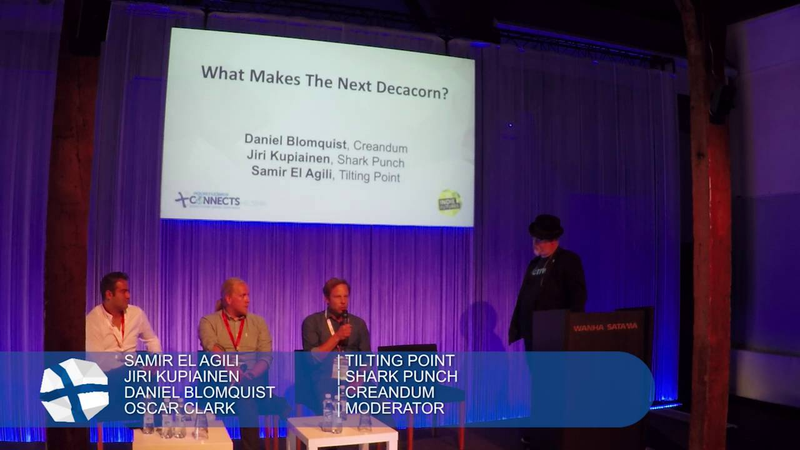
Achieving a ten-billion-dollar valuation in the gaming industry represents a critical milestone that validates the sector’s maturity for mainstream investors.
- Reaching a $10 billion valuation requires transitioning from a hit-driven creative studio to an agile, scalable platform builder that prioritizes operational structure over isolated game output.
- Future industry leaders must move beyond replicating the Supercell model, instead focusing on pioneering new gameplay mechanics and platforms to disrupt existing market dynamics.
- Sustainable long-term growth at the $10 billion scale depends on integrating advanced technology and robust live operations to maintain consistent player engagement.
The Golden Rules for games developers looking to raise funding from institutional investors
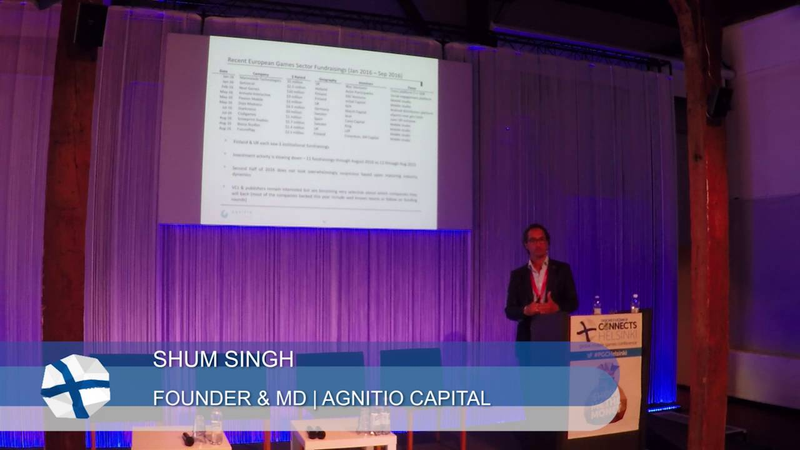
The mobile gaming industry has reached a state of significant maturity, characterized by high barriers to entry, rising user acquisition costs, and intense market consolidation.
- Institutional investors have shifted from prioritizing growth at any cost to requiring a proven track record, a world-class management team, and strong soft-launch performance metrics.
- Securing Series A funding now mandates a dedicated senior leader focused specifically on monetization and revenue generation strategies.
- The current investment climate is highly risk-averse, making professional financial documentation and a history of successful game operations essential prerequisites for capital.
The Finnish and Nordic games industry from an investor’s perspective
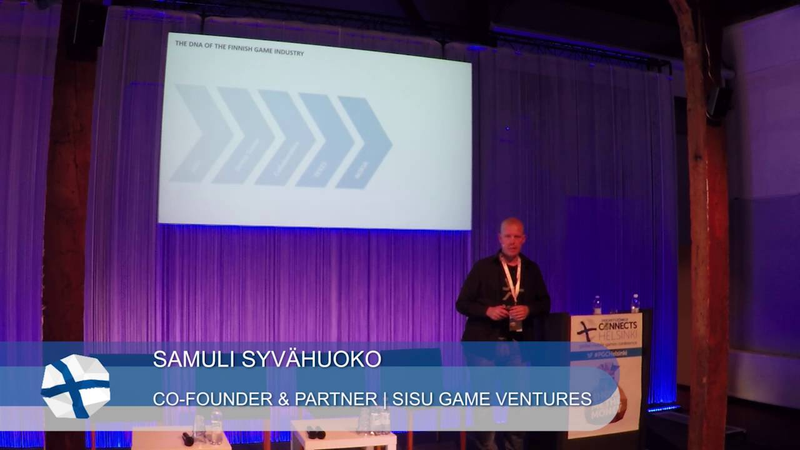
The Finnish games industry stands as a dominant force within the Nordic region, underpinned by a mobile-first strategy that leverages a unique cultural heritage of collaborative development.
- The Finnish games industry generates over €2.6 billion in annual revenue and commands approximately 3% of the $90 billion global mobile gaming market.
- Industry revenue is projected to grow significantly, reaching between $4 billion and $6 billion within the next five years.
- The ecosystem is driven by a mobile-first strategy and a cycle of entrepreneurship where alumni from established companies like Rovio frequently launch new ventures.
Libro Blanco del Desarrollo Español de Videojuegos 2016
The 2016 White Paper on the Spanish Video Game Development Industry serves as a comprehensive analysis of the sector's economic health, growth trajectory, and strategic importance within the national economy.
- The Spanish video game industry generated 510 million euros in revenue in 2015, marking a 24% year-over-year increase with projections to reach 1.14 billion euros by 2019.
- The sector supported nearly 8,000 jobs in 2015, establishing itself as a significant contributor to national employment.
- The industry is highly atomized, with 71% of companies employing fewer than 10 people and a significant portion of these firms reporting zero revenue.
White Paper on Video Game Development in Spain: 2016
The 2016 White Paper on Video Game Development in Spain provides a comprehensive analysis of the domestic gaming industry, utilizing data collected through an exhaustive survey of Spanish development studios conducted in April 2016.
- The Spanish video game industry generated 510.7 million euros in 2015, representing a 24% year-over-year growth with projections to reach 1.14 billion euros by 2019.
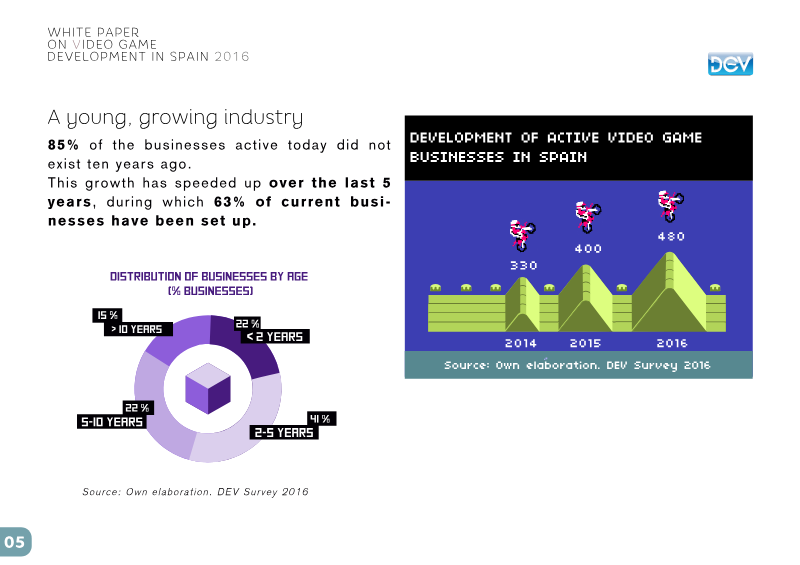
- As of 2016, there were 480 active development companies in Spain, a 20% increase from the previous year, with 85% of these firms established within the last decade.
- Direct employment in the sector grew by 32% to 4,460 professionals, yet 55% of companies report significant difficulties in recruiting appropriately skilled staff.