In-Game Advertising reports and market data
Documents

Speed Panel: How to Get Brands to Advertise in Your Apps
This panel discussion explores strategies for mobile game developers and publishers to attract brand advertising, emphasizing the shift in brand perception toward mobile gaming as a primary engagement channel.
- Brands now view mobile gaming as a primary engagement channel, a shift accelerated by the COVID-19 pandemic that has moved interest beyond blockbuster titles to include mid-core and smaller games.
- To attract brand budgets, developers must provide standardized data flows, robust attribution, and viewability reporting to satisfy demands for measurable outcomes.
- Developers should prioritize direct integrations with major omni-channel demand-side platforms (DSPs) such as The Trade Desk and Google’s DV360 to increase accessibility for brand advertisers.
CTV's Recent Surge & How Gaming Fits in
Connected TV (CTV) is experiencing significant growth as a primary advertising channel, with global ad spend projected to rise from $8.11 billion in 2020 to $18.29 billion by 2024.
- Global advertising spend on Connected TV (CTV) is projected to more than double, rising from $8.11 billion in 2020 to $18.29 billion by 2024.
- Gaming has emerged as the fastest-growing content category within the CTV ecosystem, alongside traditional video-on-demand services.
- Between 85% and 90% of CTV viewers utilize mobile devices while watching, creating a dual-screening behavior that allows marketers to drive direct user acquisition through QR codes, vouchers, and push notifications.
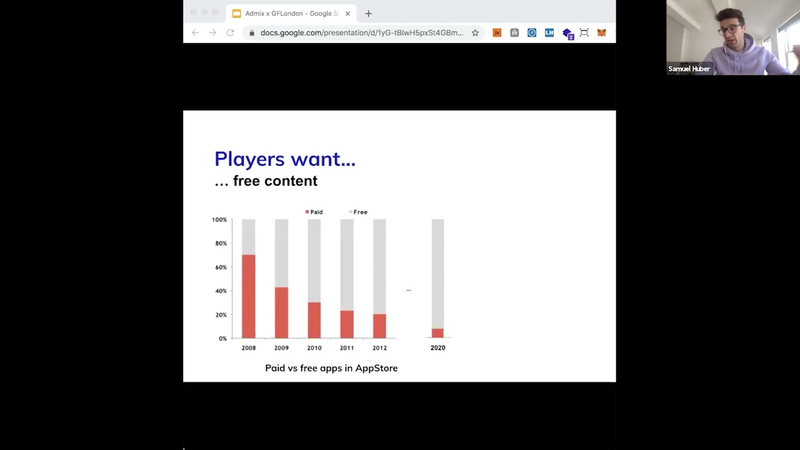
How to Build a Player-centric Business Model (That's Resilient Enough for the Next Decade)
The primary objective of this analysis is to provide a framework for building resilient, player-centric business models in the gaming industry.
- Approximately 98% of mobile gamers are non-paying users, a figure expected to rise as the global gaming audience grows toward three billion monthly users.
- In-play monetization, which dynamically integrates branded content into the game environment, serves as a resilient alternative to traditional, intrusive ad formats like interstitial videos.
- Traditional interstitial ads negatively impact player retention once a specific threshold of impressions is reached, necessitating a shift toward non-disruptive advertising models.

Fireside Chat: Is it Time to Rethink the Ad Monetisation Waterfall
The mobile advertising landscape is undergoing a fundamental transition from manual, waterfall-based mediation to fully automated, real-time bidding.
- The mobile advertising industry is transitioning from manual waterfall mediation to fully automated real-time bidding, with full adoption expected within the next two years.
- Privacy-related changes, specifically the deprecation of IDFA, have triggered a 20% to 50% decline in eCPM across the industry.
- Developers must move beyond eCPM and fill rates to incorporate payment terms and opportunity costs into their financial models to accurately assess the net value of ad networks.

Panel: What Changes in Ad Monetisation Post-IDFA - The Good, the Bad & the Ugly
The removal of the Identifier for Advertisers (IDFA) and the implementation of App Tracking Transparency (ATT) have fundamentally restructured the mobile advertising ecosystem.
- The removal of IDFA and the implementation of ATT have forced a shift from granular, user-level tracking to fragmented measurement strategies, rendering traditional metrics like D7 ROAS less effective.
- Developers are pivoting to contextual intelligence and behavioral modeling, utilizing on-device data such as session depth and game category to identify high-value users without personal identifiers.
- The loss of deterministic data and effective retargeting capabilities has necessitated a move toward hybrid monetization models to maintain revenue efficacy.

Superstar Session: Critical Traffic Patterns & Insights to Monetise Your Game in Japan & SEA Markets
Maximizing monetization in Japan and Southeast Asia requires a departure from standardized global strategies in favor of deep culturalization and region-specific engagement tactics.
- Success in Japan and Southeast Asia requires moving beyond basic translation to deep cultural integration, as superficial localization fails to resonate with local audiences.
- Japanese gameplay must be optimized for short, one-handed sessions to align with structured daily commuting habits.
- Southeast Asian markets show consistent mobile usage throughout the day and a higher propensity for video-based ad interactions compared to other regions.
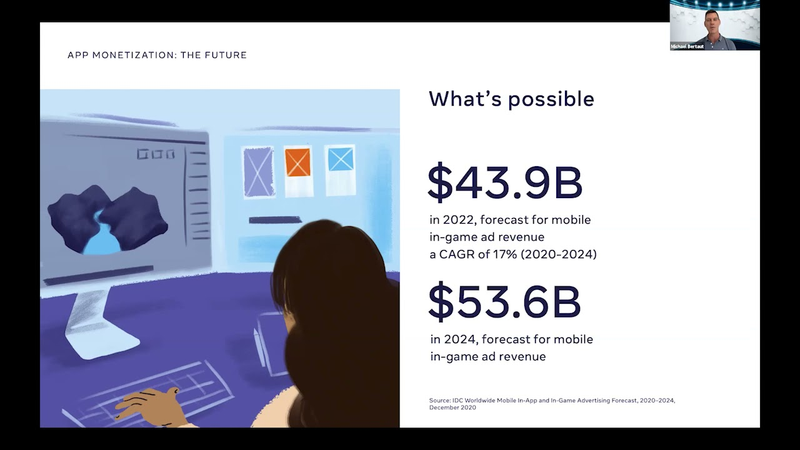
The Future of App Monetisation: An Industry Outlook
The mobile gaming industry is currently navigating a period of significant disruption and opportunity, driven by evolving privacy regulations and shifting consumer behaviors.
- Mobile game in-app ad revenue is projected to exceed $53 billion by 2024, with a forecasted compound annual growth rate of 17%.
- Developers are shifting toward hybrid monetization models that integrate both in-app purchases and in-app advertising to mitigate the impact of privacy regulations like Apple’s iOS 14.5.
- In-app ad revenue for games saw a 21.3% increase in 2021, significantly outpacing the growth of non-gaming applications.
Panel: The Truth About Ads: Is it a Disruption, a Requirement or an Opportunity for Game Makers?
Advertising in the modern gaming landscape functions as a strategic exchange mechanism rather than a mere disruption.
- Modern game advertising functions as a strategic exchange where rewarded videos and context-aware placements provide a sustainable revenue model that supports free-to-play access.
- Integrating ad experiences directly into the core game loop can improve player retention rather than acting as a disruptive force.
- Studios can mitigate financial risk by using early-stage video ads and playtests to validate core mechanics and monetization strategies before full production.
Huawei Ads - All About Quality
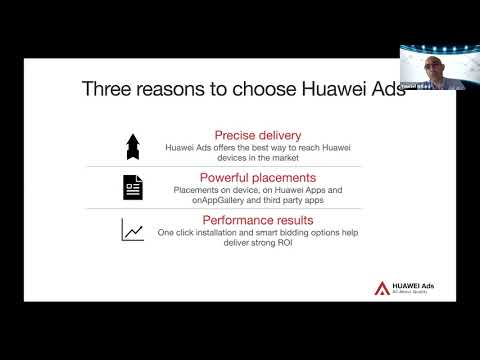
Huawei Ads functions as a strategic advertising ecosystem designed to bridge the gap between developers and a vast global audience of over 700 million smartphone users and 540 million monthly active users on the AppGallery.
- Huawei Ads provides access to a global audience of over 700 million smartphone users and 540 million monthly active users on the AppGallery.
- The platform utilizes a competitive 80/20 revenue-sharing model designed to incentivize developer participation and publisher monetization.
- The ecosystem is built to address industry challenges such as tightening privacy regulations, market saturation, and the transition to 5G technology.

Superstar Session: Unlocking Gaming's Potential as a Media Channel
Gaming has evolved into a dominant global media channel, currently reaching an audience of over three billion players.
- Gaming has reached a global scale of over three billion players, positioning it as a primary media channel for long-term brand building.
- The industry is shifting from fragmented, custom brand activations toward a scalable, automated infrastructure that integrates ads natively into gameplay.
- To ensure sustainability, the model prioritizes non-intrusive, native ad formats over disruptive, performance-based advertising to protect user retention.
Superstar Speed Panel: Rethinking InGame Advertising
The gaming industry is undergoing a fundamental shift in monetization, moving away from intrusive, disruptive ad models toward immersive, non-interruptive integrations.
- The gaming industry is shifting from intrusive, disruptive ad models toward immersive, non-interruptive integrations to protect player retention and long-term revenue.
- Monetization strategies must be integrated during the early stages of game design rather than treated as an afterthought to ensure placements feel native to the virtual environment.
- Measurement frameworks are evolving beyond basic viewability metrics to prioritize meaningful engagement, attention, and tangible real-world impact.

Exploring The Opportunities of In-Play Advertising - PG.Biz Roundtable
In-play advertising represents a strategic evolution in mobile game monetization, shifting away from disruptive interstitial and rewarded video formats toward immersive, context-aware brand integrations.
- In-play advertising provides a non-disruptive revenue stream by embedding brand content directly into game environments, such as billboards or signage, rather than relying on interstitial or rewarded video formats.
- The primary barrier to scaling in-play advertising is the current lack of standardized measurement frameworks, which prevents risk-averse media agencies from shifting budgets into gaming.
- While rewarded video currently generates higher eCPMs, in-play advertising serves as a vital complementary revenue stream that protects player retention by avoiding gameplay interruptions.