In-Game Advertising reports and market data
Documents


Mobile Ad Creative Index: 2022
The 2022 Mobile Ad Creative Index analyzes performance trends and benchmarks across four major mobile app verticals: gaming, e-commerce, entertainment, and finance.
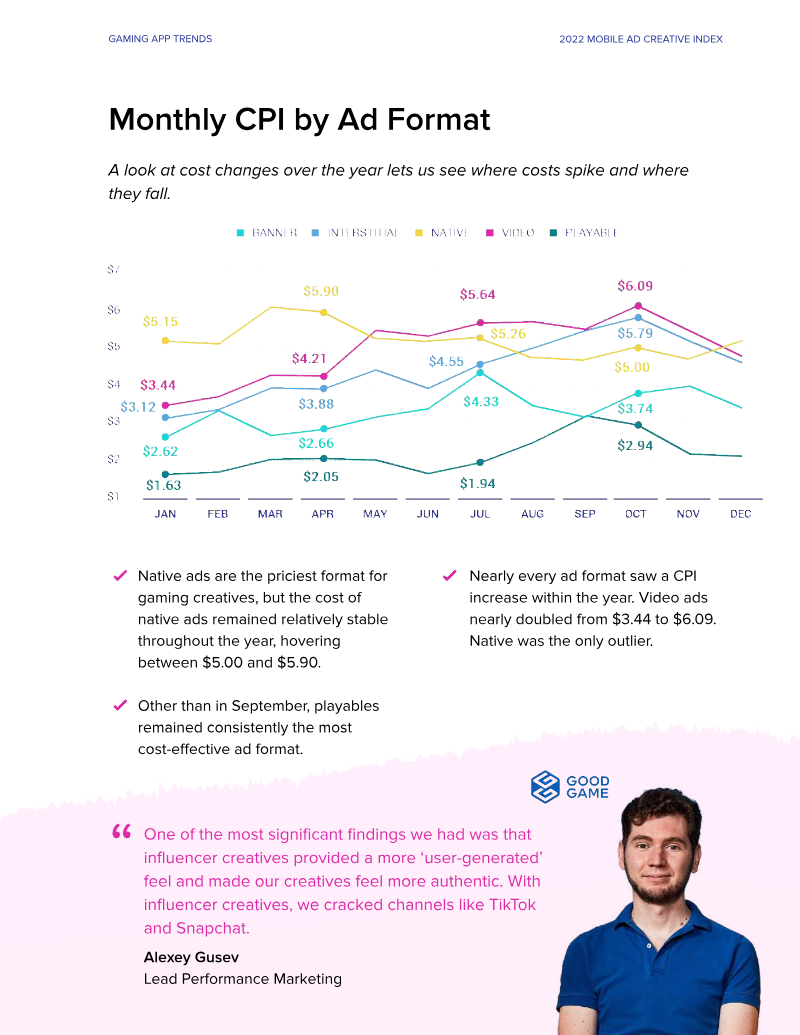
- Playable ads in the gaming sector achieve the lowest cost-per-install (CPI) at $1.98, while banner ads generate the highest 30-day return on ad spend (ROAS) at nearly 22%.
- iOS advertising costs are frequently double those of Android, making Android the more cost-effective platform for mobile user acquisition.
- There is a significant disconnect between player psychology and creative execution, with only 4% of casual game video ads and less than 1% of midcore ads successfully targeting specific player motivations.

Modern Mobile Consumer 2022: App Discovery Report
The Modern Mobile Consumer 2022: App Discovery Report examines the evolving journey of mobile users from initial app discovery to daily usage and long-term engagement.
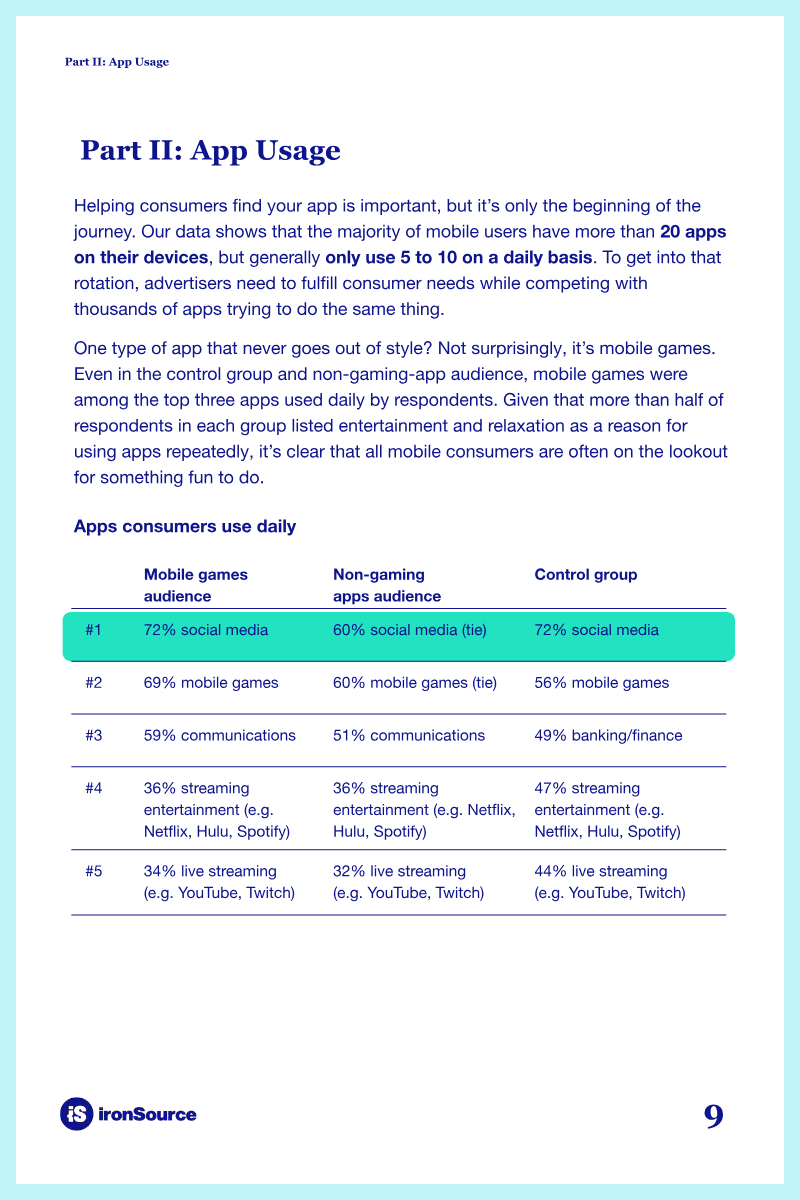
- Mobile gaming has become a universal behavior, with 60% of non-gaming app users playing mobile games daily, matching social media as the top usage category.
- In-app advertising is a primary driver for app discovery, leading to downloads for 70% of gaming audiences and 78% of non-gaming control group users.
- While users typically maintain over 20 apps on their devices, the majority limit their daily engagement to only five to ten apps.
Betting Big on the Metaverse: Are You Ready?
The metaverse represents a significant evolution in digital interaction, shifting from flat, two-dimensional web experiences to immersive, three-dimensional, and persistent virtual worlds.
- The metaverse is evolving from 2D web experiences into persistent, 3D virtual worlds that integrate social interaction, commerce, and entertainment.
- Free-to-play models are the industry standard, accounting for 78% of total digital gaming revenue in 2020, a 9% year-over-year increase.
- Cross-platform functionality is critical for metaverse development, with over 100 top-grossing titles already supporting it to allow seamless movement of users and assets.
Panel: Indie to Empire: Growing Your Game Through New Monetisation Models
The modern mobile gaming landscape has transitioned from traditional premium pricing toward sophisticated hybrid monetization models.
- To achieve statistical significance in casual gaming monetization, developers should reach a minimum threshold of 5,000 daily active users and 10,000 ad requests.
- Modern mobile monetization relies on hybrid models that combine in-app purchases, subscriptions, and diverse ad formats to lower entry barriers while maximizing average revenue per user.
- Monetization must be integrated into core game design from the earliest stages of development rather than treated as an afterthought.

Panel: The Truth About Ads: Is Disruption, a Requirement or an Opportunity for Game Makers?
The mobile gaming industry is undergoing a fundamental transformation as privacy regulations, most notably iOS 14, dismantle traditional identity-based targeting.
- The mobile gaming industry is shifting from deterministic, identity-based targeting to probabilistic, contextual modeling due to privacy regulations like iOS 14.
- To maintain revenue, developers are prioritizing non-intrusive, brand-focused advertising and verifiable auction processes over traditional tracking methods.
- User acquisition strategies are diversifying beyond standard mobile ads to include influencer marketing, cross-platform campaigns, and traditional media channels.
Panel: How Have New Ad Formats Changed Mobile Gaming?
The mobile gaming industry is undergoing a fundamental transition toward non-intrusive advertising formats designed to monetize user bases without compromising the integrity of the gameplay experience.
- The mobile gaming industry is shifting toward non-intrusive ad formats like blended billboards, spatial 3D ads, and rewarded audio to replace disruptive full-screen interstitials.
- Rewarded audio ads have achieved a 90 percent user acceptance rate, demonstrating that seamless integration significantly improves player retention compared to traditional formats.
- Developers are increasingly adopting hybrid monetization models that combine native ad inventory with in-app purchases to balance profitability with long-term player engagement.
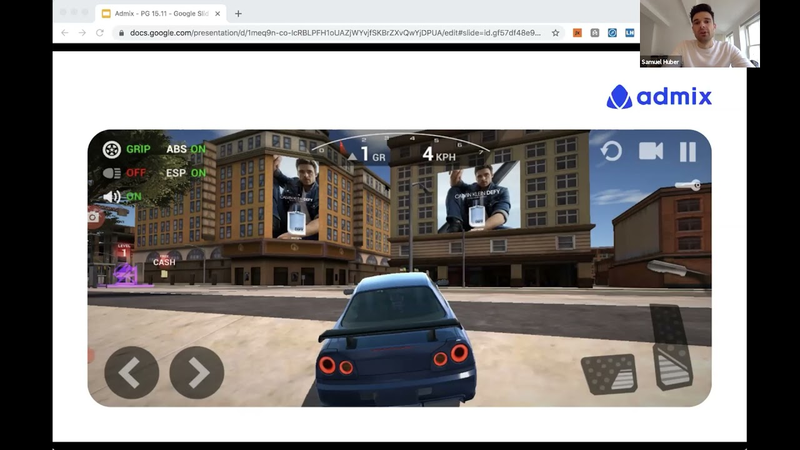
Superstar Session: Real Estate for Game Publishers: How to Monetise Your Virtual World
The monetization of virtual environments is shifting toward a real estate model, where game developers treat digital spaces as commercial property to host native, non-intrusive advertisements.
- Brand spending in the gaming industry currently lags 50 to 70 times behind social media platforms, representing a significant untapped revenue opportunity for publishers.
- Game developers are shifting toward a real estate monetization model that treats virtual spaces as premium, brand-safe commercial property for native advertising.
- Integration is facilitated through no-code plugins for Unity and Unreal engines, allowing developers to monetize high-traffic areas without relying on disruptive, interruptive ad formats.
What will be the Winning Monetisation Mix in 2022? | PocketGamer.biz RoundTable
The mobile gaming industry is undergoing a fundamental transition toward hybrid monetization models, which integrate in-app purchases, subscriptions, and diverse advertising formats into a single, cohesive ecosystem.
- The mobile gaming industry is shifting toward hybrid monetization models that integrate in-app purchases, subscriptions, and diverse ad formats to capture value from both paying and non-paying users.
- Developers are increasingly treating ad engagement as a form of in-game currency, allowing players to choose between spending capital or time to progress.
- Rewarded videos and surveys have become standard, non-intrusive monetization tools that generate incremental revenue without negatively impacting player retention or immersion.
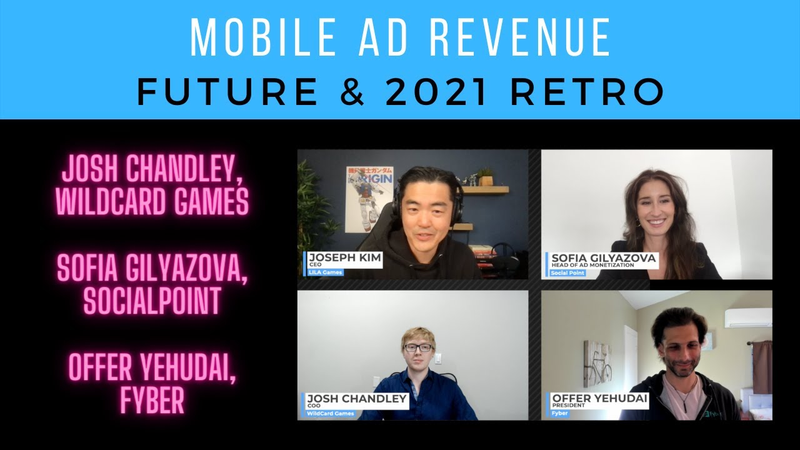
Mobile Ad Revenue 2022 | Future and 2021 Retrospective
The mobile advertising industry has demonstrated remarkable resilience following the deprecation of the Identifier for Advertisers (IDFA), successfully navigating a transition that many initially feared would trigger a market collapse.
- The mobile advertising industry successfully adapted to the deprecation of IDFA by shifting to contextual targeting and on-device signals, avoiding the feared market collapse.
- Facebook’s dominance in the iOS ecosystem significantly declined, with its revenue share dropping from 25–30% to 3–5% following privacy changes.
- Monetization teams have evolved into highly technical, product-focused units that manage complex attribution requirements and act as strategic intermediaries between development and ad partners.
Fireside Chat: Ad Monetisation - Best Practices with Wooga
This discussion outlines best practices for mobile ad monetization, emphasizing the strategic balance between revenue generation and user experience.
- Prioritize user engagement and retention over aggressive ad tactics to ensure long-term success in free-to-play titles.
- Target an engagement rate where 80% to 90% of daily active users interact with at least one ad.
- Implement a robust mediation strategy using three to five ad networks from the start to maximize fill rates and eCPMs.
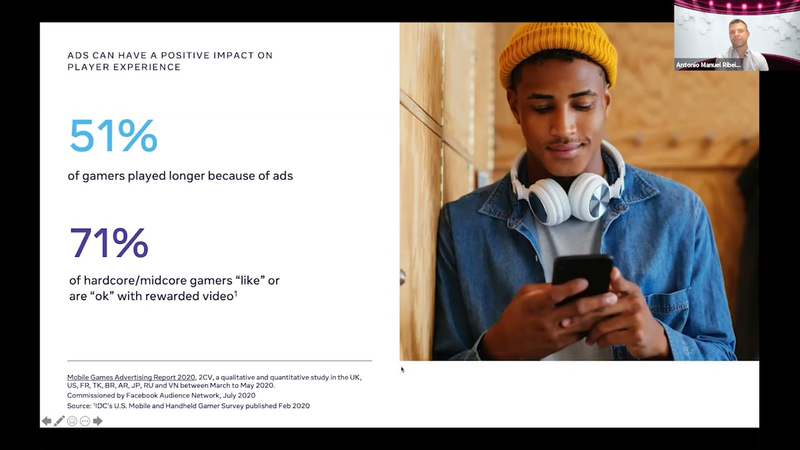
Balance Your Game’s Monetisation Mix for Greater Retention
A hybrid monetization strategy that integrates in-app purchases with in-app advertising is essential for maximizing both player retention and long-term revenue.
- A hybrid monetization model combining in-app purchases (IAP) and in-app advertising is necessary because only approximately 5% of a typical player base engages with direct sales.
- Diversified monetization strategies are driving a 17% year-over-year growth in industry revenue.
- Incorporating opt-in rewarded video allows developers to monetize the remaining 95% of non-paying users without cannibalizing existing IAP revenue.
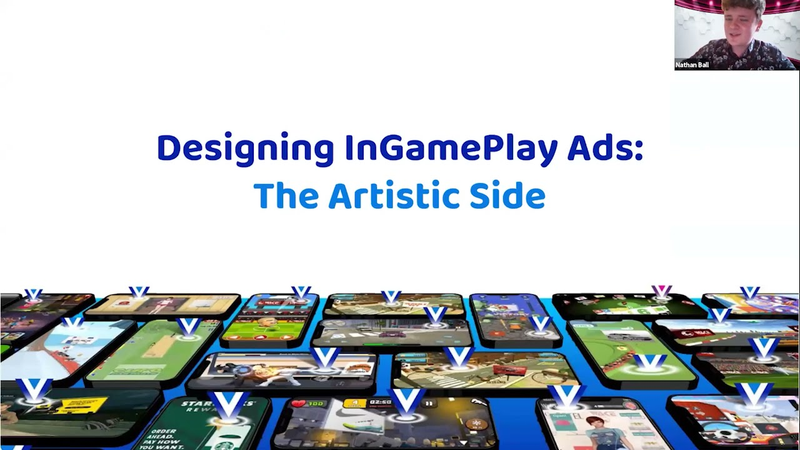
How to Design In-game Ad Placements
In-game brand advertising offers a monetization strategy that integrates ads directly into the game environment as native objects, providing a non-disruptive alternative to traditional banner or interstitial video ads.
- Integrated in-game advertising is preferred by 70% of consumers over traditional banner or interstitial video ads because it maintains immersion.
- Revenue for in-game ads is driven by viewability metrics—based on screen duration, size, and angle—rather than traditional click-through rates.
- To maximize impressions, developers should prioritize high-traffic static environments such as main menus, character customization screens, and level selection screens.