In-Game Advertising reports and market data
Documents

Superstar Session: Bidstack x MadSkills Motocross 3: Tech Drives Effective In-game Advertising
The session explores the integration of native in-game advertising as a sustainable, non-intrusive revenue stream for game developers.
- Native in-game advertising can serve as a significant revenue driver, with a partnership between Bidstack and Turborilla demonstrating that these placements accounted for 30% of the studio's monthly revenue.
- Integrating ads as native environmental elements, such as trackside billboards or branded gear, enhances player immersion and realism rather than disrupting the user experience.
- Developers must avoid generic programmatic backfill to prevent contextually irrelevant or poorly cropped ads that degrade game quality.
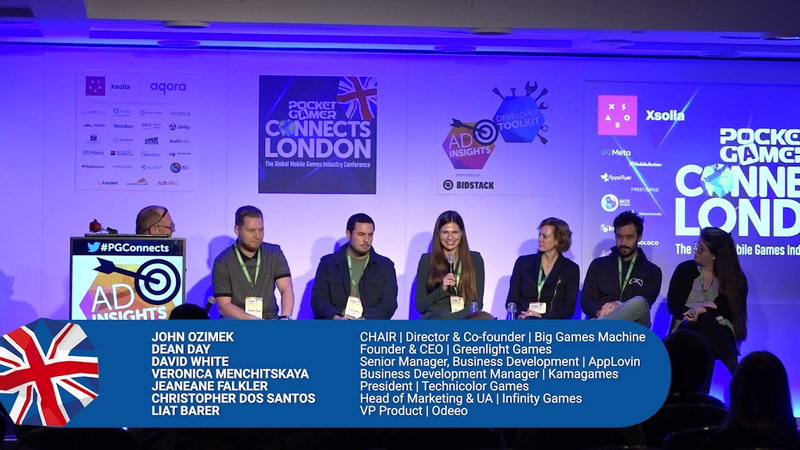
Panel: How Can We Create Authentic & Engaging Ads?
Mobile gaming advertising is undergoing a critical transition away from deceptive, high-frequency tactics toward strategies rooted in authenticity and user-centric design.
- Mobile gaming advertising is shifting away from deceptive clickbait toward authentic creative content that accurately reflects the actual gameplay experience to improve long-term retention.
- Developers are increasingly prioritizing opt-in engagement formats, such as interactive playables and rewarded videos, to replace forced, intrusive ad interruptions.
- Synthetic audio ads and sonic branding are emerging as effective, non-disruptive alternatives that maintain the game's atmosphere while ensuring high brand memorability.
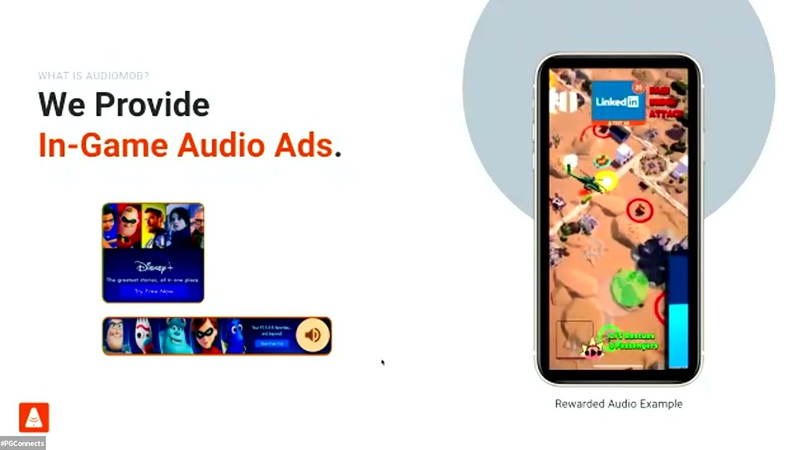
Why are Audio Ads Here to Stay?
Audio advertising has emerged as a significant monetization strategy for the gaming industry, offering a non-intrusive alternative to traditional video and banner ads.
- Audio advertising provides a privacy-compliant monetization alternative to traditional ads by relying on contextual data like game genre and geography rather than granular user tracking.
- The format is highly viable for mobile gaming, as 61% of players keep their audio enabled during gameplay.
- Audio ads offer a robust revenue stream for developers with CPMs ranging from $5 to $15.
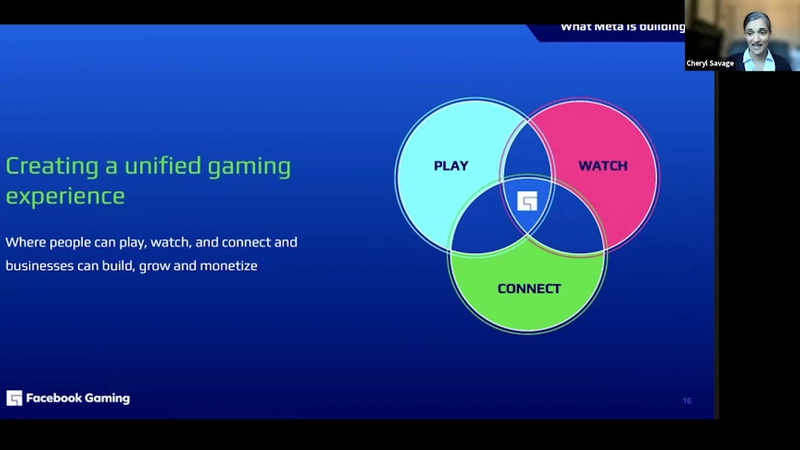
Reimagining Games Advertising
The gaming industry is currently navigating a significant inflection point driven by evolving privacy regulations, shifting consumer data expectations, and a changing advertising ecosystem.
- The gaming industry must pivot away from third-party data reliance due to stricter privacy regulations, such as Apple's tracking permissions and the phasing out of browser cookies.
- Meta is mitigating attribution and reporting challenges by deploying the Conversions API, which establishes a direct, secure link between first-party marketing data and its systems.
- To maintain performance optimization, Meta is investing in privacy-enhancing technologies including secure multi-party computation, on-device learning, and data de-identification.
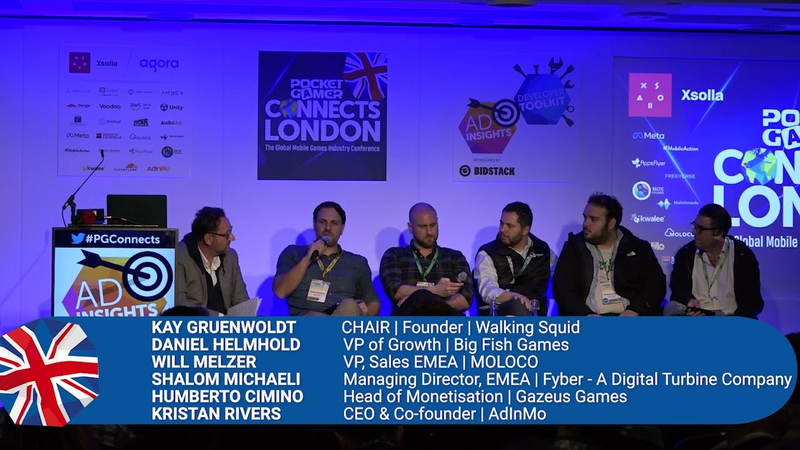
Panel: What is the Future of Mobile Advertising?
The mobile gaming industry is undergoing a fundamental transition, moving away from intrusive, performance-only advertising toward a hybrid model that prioritizes brand integration and user retention.
- Mobile gaming is shifting from intrusive performance-only advertising to a hybrid model that integrates monetization into the initial game design phase to protect user retention.
- Rising user acquisition costs and stricter privacy regulations are forcing a move away from traditional waterfall models toward header bidding and seller-defined audiences.
- Ad formats are evolving from standard video toward high-fidelity playable ads and immersive, avatar-based brand experiences within virtual environments.

Smarter in-game ad integration with Tony Deane from AppLovin
Mobile marketing platforms play a critical role in the gaming industry by enabling developers to scale user acquisition while simultaneously maximizing revenue through efficient ad monetization.
- Machine learning tools like AppLovin’s Axon platform, launched in 2020, have driven significant industry growth, including a reported 400 percent increase in platform performance over the past year.
- Developers are increasingly leveraging first-party data from internal game development to maintain effective, privacy-compliant targeting in response to tightening global data protection regulations.
- The primary objective for mobile game developers remains achieving profitability by optimizing return on ad spend (ROAS) through advanced user behavior prediction and campaign matching.

Matching big data analysis with KPIs with Shalom Michaeli from Fyber
The mobile gaming industry is currently undergoing a significant shift toward programmatic monetization and data-driven transparency.
- The mobile gaming industry is shifting from manual waterfall optimization to real-time bidding (RTB) systems to increase competition and publisher revenue.
- Real-time bidding enables more precise user valuation, replacing historical reliance on less accurate estimated cost-per-mille (CPM) metrics.
- Transparency in publisher-network relationships is being improved through granular auction audits, which allow publishers to verify the true market value of their ad inventory.

two & a half gamers session #4 - How to soft launch a mobile game Ad monetisation Perspective
The mobile gaming industry is undergoing a significant transformation, with ad spend projected to reach $130 billion by 2025.
- Mobile ad spend is projected to reach $130 billion by 2025, forcing developers to shift budgets from traditional platforms like Facebook toward emerging channels like TikTok.
- Developers should target at least five rewarded video ad impressions per daily active user during the soft launch phase to meaningfully increase lifetime value.
- Hybrid monetization models are essential for resilience, with a balanced 50/50 split between in-app purchases and ad revenue providing the flexibility needed for value-based user acquisition.


User Motivations to Hit Your Target Audience
Effective mobile user acquisition requires a strategic shift from basic performance metrics toward a deep alignment between ad creative and core player psychology.
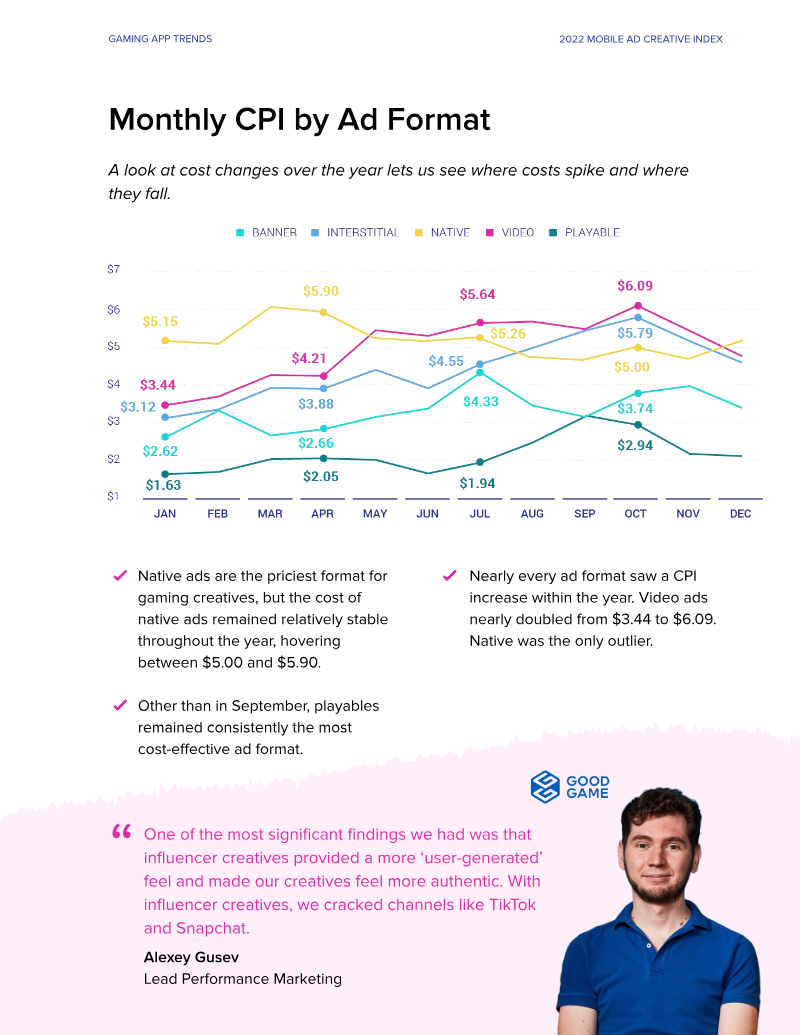
- Only 4% of casual game advertisements currently leverage the twelve primary psychological drivers necessary for effective user engagement.
- While playable ads offer the lowest cost-per-install, banner ads consistently deliver the highest return on ad spend across the gaming, e-commerce, entertainment, and finance sectors.
- Casual gaming acquisition strategies should prioritize highlighting player milestones, whereas midcore titles require creative content focused on excitement and thrill.
Data for Mobile Gaming 2022-2024
Mobile gaming maintains its position as the primary driver of industry expansion, fueled by widespread smartphone adoption and consistent engagement across both emerging and established markets.
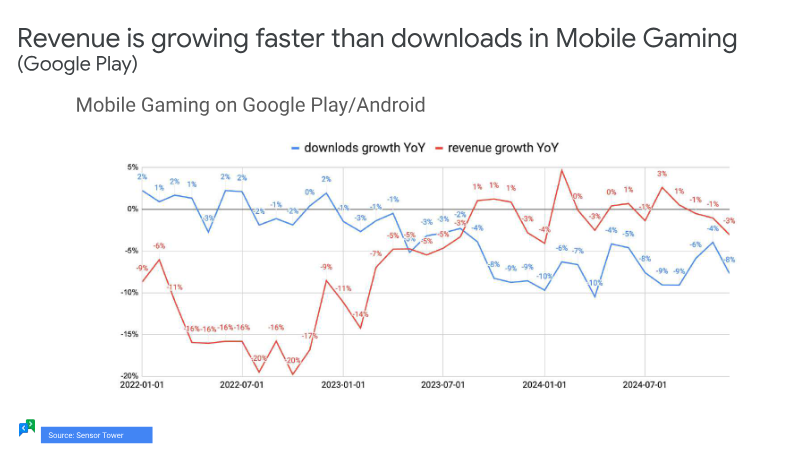
- Mobile gaming revenue growth is consistently outpacing download volume across iOS and Android platforms between 2022 and 2024.
- In-game advertising has overtaken traditional in-app purchases as the primary revenue stream for mobile developers.
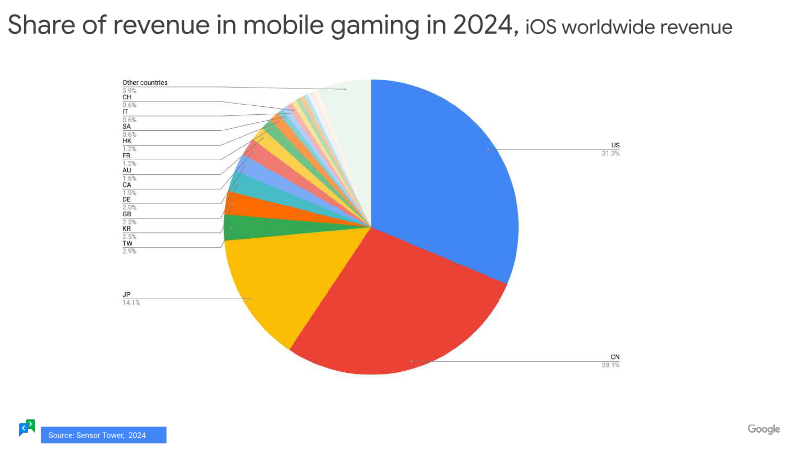
- The United States, China, and Japan remain the dominant global revenue generators, while Brazil has reached over 90% smartphone gaming penetration across all demographics.

Games: India Plays!
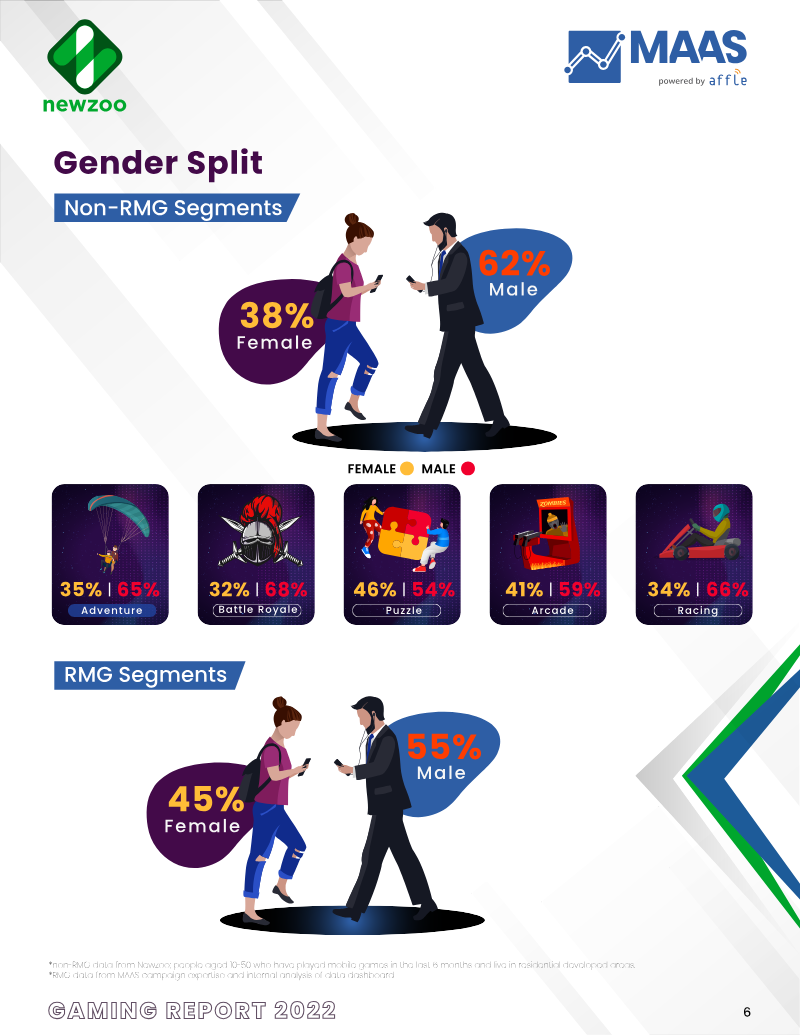
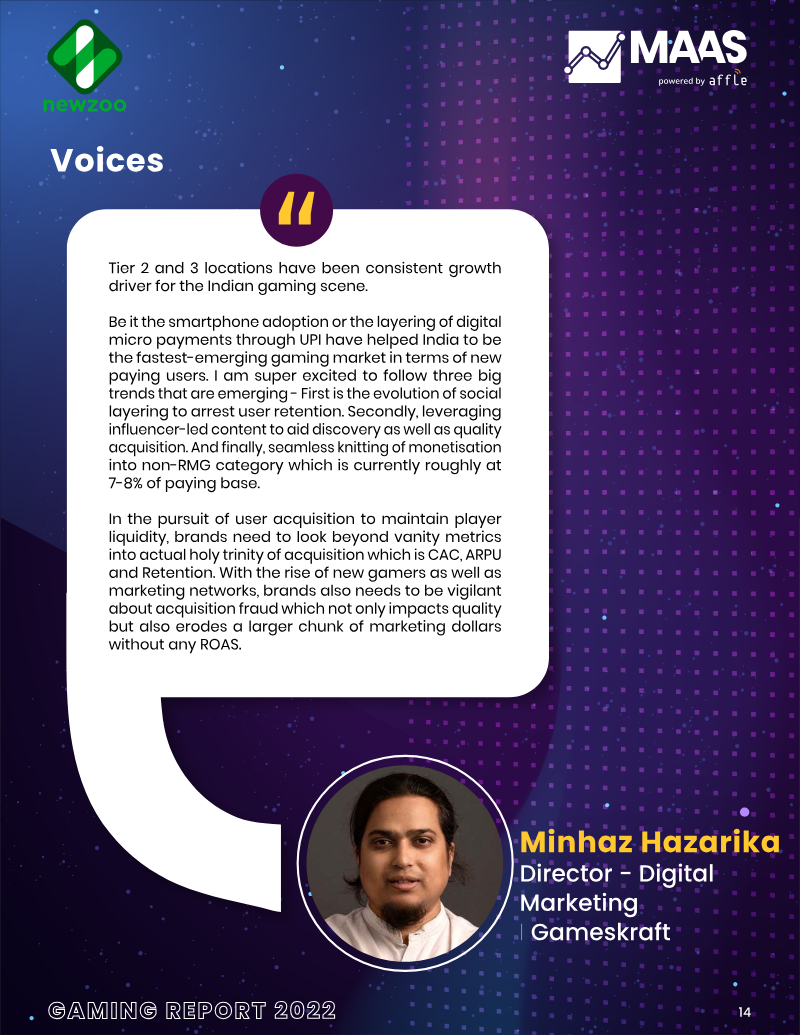
The report examines the rapidly expanding Indian mobile gaming market, highlighting a projected 91% share of online gamers playing on smartphones and an estimated revenue of US$2.2 billion in 2022, with a projected average revenue per user of US$1.5 by 2027.
- The Indian mobile gaming market generated US$2.2 billion in 2022, with smartphones accounting for 91% of the online gaming audience.
- Non-real-money gaming (non-RMG) is dominated by Adventure, Battle Royale, Puzzle, Arcade, and Racing genres, while real-money gaming (RMG) centers on card games and sports-fantasy.
- Demographics skew young, with 55% of Adventure and Battle Royale players falling into the 13–27 age bracket, and 62% of non-RMG gamers being male.
The State of Mobile Game and App Markets: Global Report on App Marketing for H1 2022
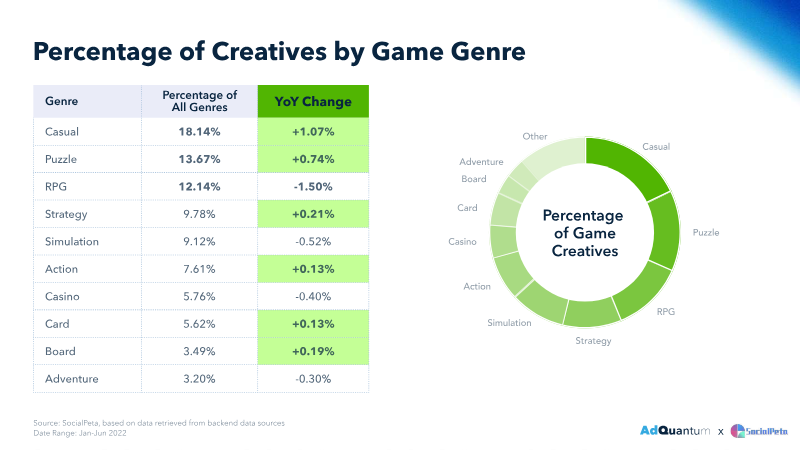
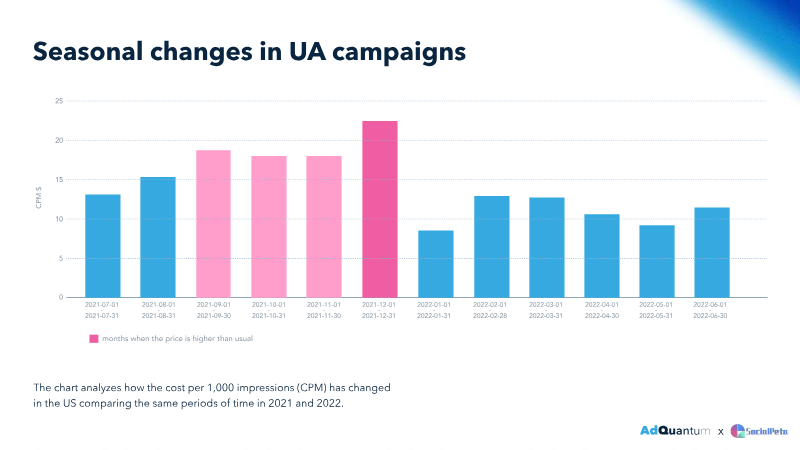
The mobile app and gaming landscape underwent a significant strategic pivot during the first half of 2022, characterized by a transition from high-volume advertising to a quality-centric model.
- App Store search accounted for 64.7% of all mobile app installs in H1 2022, cementing search visibility and ASO as the primary acquisition drivers.
- The mobile ecosystem experienced a contraction in mature regions, evidenced by a 6.2% year-over-year decline in advertisers and a 27% drop in total creatives.
- Tier-2/3 markets, specifically Hong Kong, Macau, and Taiwan, bucked the global trend with a 37% year-over-year increase in advertiser counts.