1 free read left. Create a free account for unlimited reading + AI research.
Create free accountWhitepaper International Journal of Serious Games
1 free read left. Create a free account for unlimited reading + AI research.
Create free accountWhitepaperInternational Journal of Serious Games
PCG reduces production timelines from months to minutes, significantly cutting the high costs of manual asset creation.
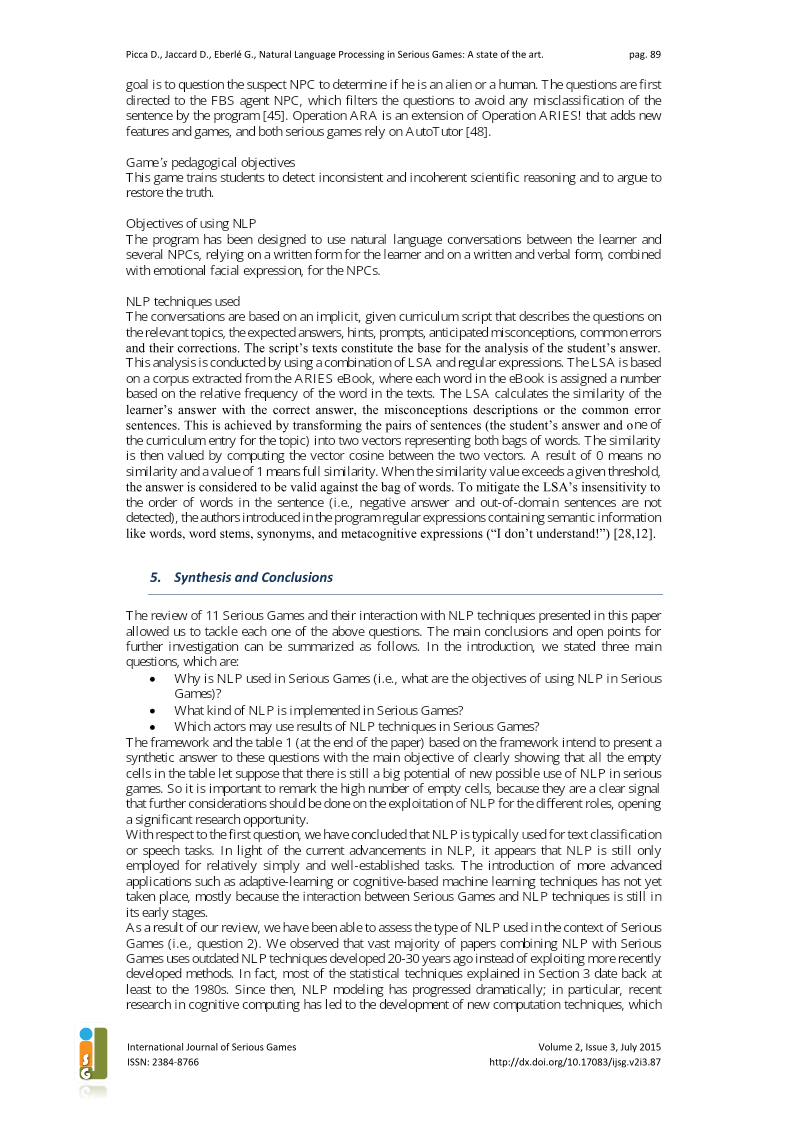
Procedural content generation serves as a critical framework for the rapid development of complex, populated virtual cities, aiming to reduce production timelines from months to minutes. By synthesizing advancements in algorithmic design, the field provides a comprehensive toolkit for constructing immersive urban environments. The primary thesis emphasizes that while foundational elements such as architectural structures and vegetation are effectively managed through established technologies like shape grammars and L-systems, the industry must prioritize the integration of dynamic, populated elements to achieve fully realized virtual spaces.
Current research highlights a significant shift toward mixed-initiative design, where human creativity is augmented by computational efficiency. Techniques such as Interactive Evolutionary Computation and WaveFunctionCollapse allow designers to collaborate directly with algorithms, fostering a more intuitive workflow. Despite these advancements, procedural animation for virtual humans and autonomous vehicle traffic remains a primary bottleneck. These components require more sophisticated behavioral modeling to match the high fidelity already achieved in static environment generation.
The scope of these developments spans the global academic and technical landscape between 2001 and 2015, focusing on the intersection of computer graphics and game development. Future progress depends on the democratization of these tools, specifically through the development of user-friendly interfaces that enable non-programmers to leverage complex procedural systems. Enhancing meta-level communication between human designers and generative algorithms is essential to ensure that virtual cities remain both highly customizable and thematically consistent, ultimately bridging the gap between automated generation and artistic intent.
Each row is a game or company this document names, each column a document, oldest first. A mark means that document names it. Select a row to see those documents.
International Journal of Serious Games · 2023
International Journal of Serious Games · 2022
International Journal of Serious Games · 2020
International Journal of Serious Games · 2020
International Journal of Serious Games · 2020



International Journal of Serious Games · 2020
International Journal of Serious Games · 2020
International Journal of Serious Games · 2020
International Journal of Serious Games · 2020
International Journal of Serious Games · 2020

International Journal of Serious Games · 2020
Air Force Institute of Technology · 2020
Naavik · 2026