1 free read left. Create a free account for unlimited reading + AI research.
Create free accountWhitepaper Press Start
1 free read left. Create a free account for unlimited reading + AI research.
Create free accountWhitepaperPress Start
Players must balance the survival of their in-game family against the ethical implications of enforcing oppressive border policies.
It's like a job where every decision has a personal cost, not just a score.
Design Intent. The game functions as an 'anti-fun' intervention that prioritizes political and social reflection over traditional entertainment.
Papers, Please serves as a primary case study for the concept of critical making within the digital humanities. By placing players in the role of an immigration officer in the fictional, totalitarian state of Arstotzka, the game utilizes expressive design to force engagement with complex moral, social, and political realities. The central thesis posits that such serious, anti-fun game design functions as a critical intervention, moving beyond traditional entertainment to foster an ethical awareness of bureaucratic power, national security, and the dehumanizing effects of state-controlled environments.
The game mechanics require players to cross-reference documents under strict time constraints, creating a sense of monotony and pressure that mirrors the actual experience of border control. While the gameplay is intentionally repetitive, it succeeds in generating an affective, embodied experience that challenges players to weigh personal empathy against state-mandated duties. Key findings indicate that the game’s value-sensitive design effectively prompts reflection on moral dilemmas, such as separating families or accepting bribes, thereby transforming the act of document processing into a medium for political inquiry.
Although the narrative structure and repetitive nature of the tasks can lead to fatigue, the game remains a significant contribution to independent game development. By integrating material and conceptual practices, it demonstrates how digital tools can be used to explore humanistic concerns. Ultimately, the game provides a model for creative critical media that encourages an ethical turn within the digital humanities, suggesting that interactive experiences are uniquely capable of evoking the felt sensations necessary to contemplate systemic injustice and the complexities of modern border politics.
Each row is a game or company this document names, each column a document, oldest first. A mark means that document names it. Select a row to see those documents.
Press Start · 2026
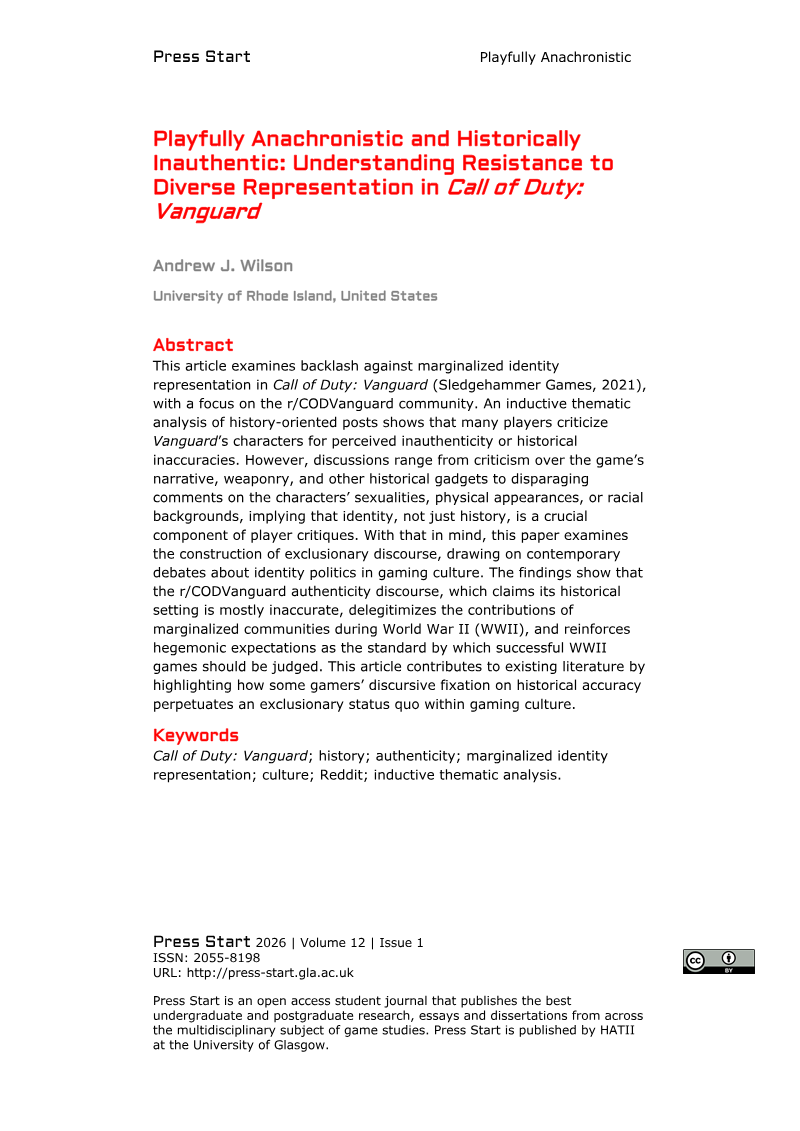
Press Start · 2026
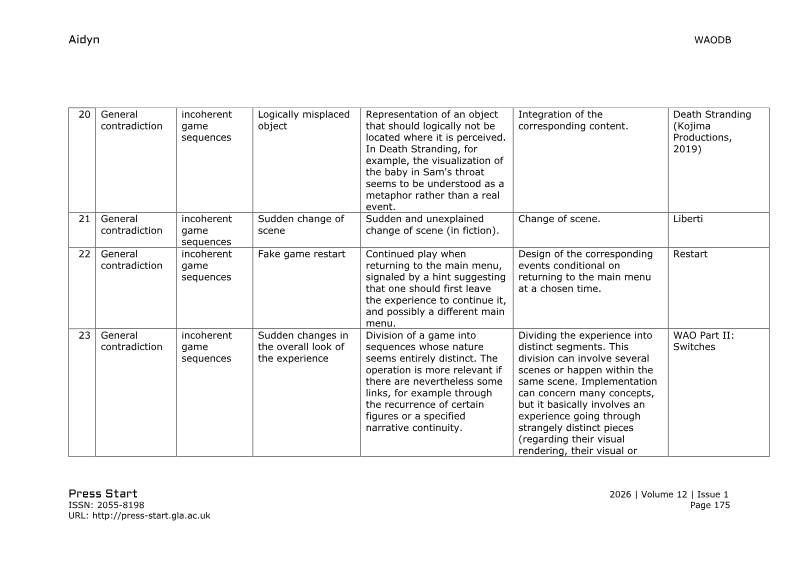
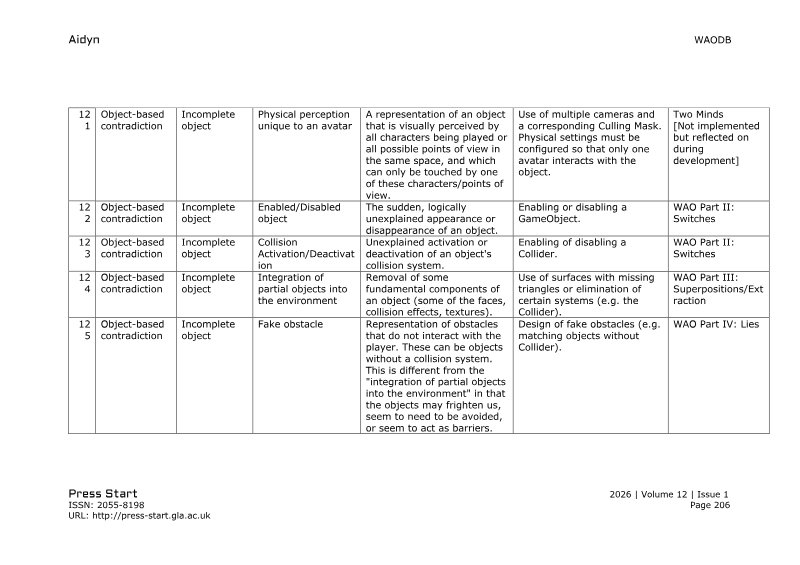
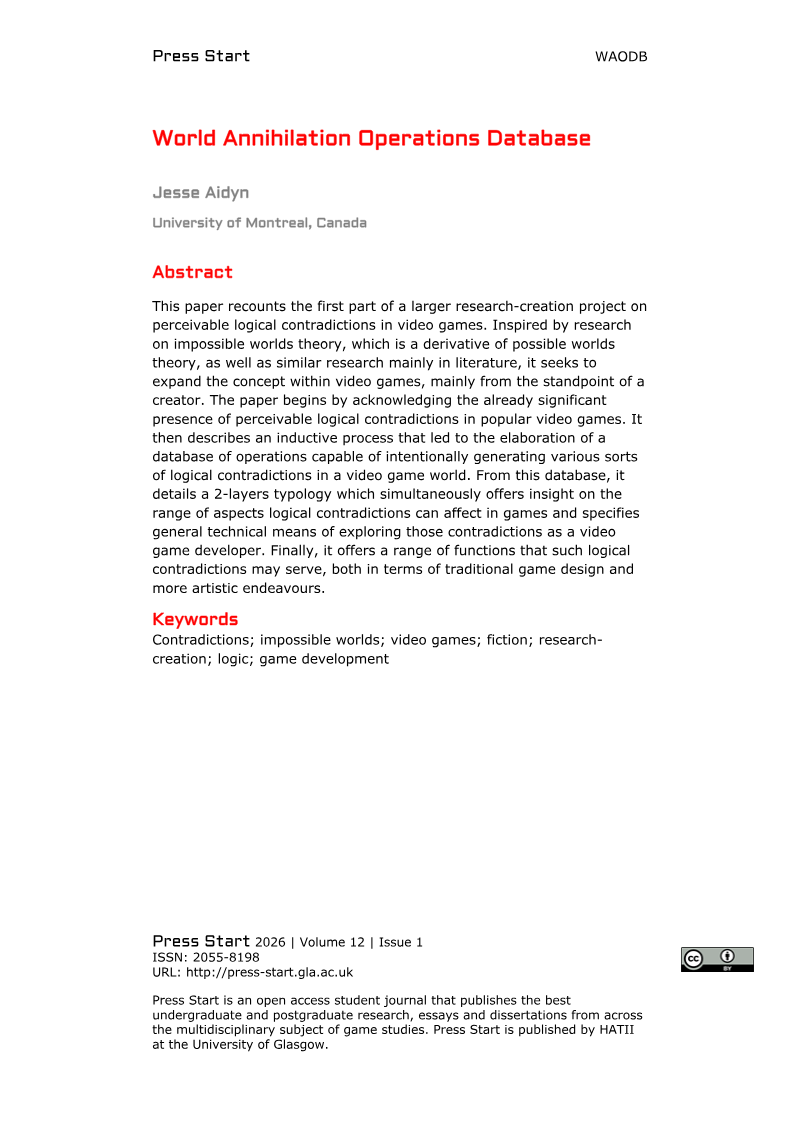
Press Start · 2026
Press Start · 2026
Press Start · 2026
Press Start · 2026
Press Start · 2026
Press Start · 2026
Press Start · 2025
Press Start · 2025
Press Start · 2025
Press Start · 2024



DiGRA · 2026
Spiel|Formen · 2021
Loading... The Journal of the Canadian Game Studies Association · 2020