Game Studies reports and market data
Documents
We Are All Fishes Now: DiGRA, Feminism, and GamerGate
The 2014 Digital Games Research Association (DiGRA) conference Fishbowl event, titled "The Playful is Political," serves as a focal point for analyzing the intersection of feminist game scholarship and the GamerGate movement.
On Chairing a Games Research Conference
This analysis explores the multifaceted responsibilities and strategic considerations involved in chairing an academic games research conference, specifically drawing on experiences from the Digital Games Research Association (DiGRA) and the Foundations of Digital Games (FDG) conferences.
World of Warcraft Dramaturgical Approach: A Drama That Plays with Its Own Limits
World of Warcraft functions as a sophisticated, evolving dramatic system designed to facilitate infinite expansion through a unique synthesis of rigid structural rules and player agency.
- World of Warcraft maintains long-term engagement by balancing rigid, developer-controlled narrative arcs with player agency, ensuring the game can expand indefinitely without breaking established lore.
- The game utilizes a modular, quest-based system derived from tabletop role-playing traditions to allow players to construct non-linear narrative experiences.
- Specialized instances are used to isolate cooperative and competitive encounters, allowing developers to maintain control over key narrative beats while providing players with localized agency.
Bridging the Gap between Game Designers and Cultural Institutions: A Typology to Analyse and Classify Cultural Pervasive Games
Cultural Pervasive Games (CPGs) represent a transformative approach to visitor engagement within heritage sites, blending digital narratives with physical environments to foster deeper educational and cultural connections.
- A new typology for Cultural Pervasive Games (CPGs) provides a standardized framework to align game design mechanics with the pedagogical and institutional goals of heritage sites.
- The research evaluates 12 distinct case studies within heritage and tourism contexts to identify how digital narratives can effectively overlay physical environments.
- Successful CPG implementation requires balancing technological immersion with an institution's specific mission, using elements like ambiguity and apophenia to encourage novel visitor interactions.
Welcome to the Dollhouse: Constructing Bodies in Crytek’s Crysis and Mattel’s Kiddle Dolls
Video games and traditional toys share a fundamental lineage as constructed, prosthetic bodies that shape human subjectivity.
- Digital avatars in games like Crytek’s Crysis and physical toys like Mattel’s Liddle Kiddles function as prosthetic bodies that actively shape human subjectivity and identity.
- Both video games and traditional toys act as affective ecosystems that use hypernormal models of interaction to structure user agency and narrative immersion.
- Crysis reinforces a masculine power fantasy by mapping player agency onto a hyper-militarized, technologically augmented avatar within an economy of fear.

Century of Play: 18th Century Precursors of Gamification
Gamification is not a modern digital innovation but rather a historical practice with deep roots in the eighteenth century, an era frequently characterized as the Century of Play or Spielsaeculum.
- Gamification is not a modern digital innovation but a historical practice rooted in the 18th century, an era known as the 'Century of Play' or 'Spielsaeculum'.
- 18th-century society integrated rule-based mechanics and aleatoric systems into non-game sectors—including luxury furniture, religion, and science—to influence human behavior and social habits.
- The historical use of play as a tool for managing power and knowledge mirrors contemporary digital strategies that use ludic elements to increase engagement with repetitive or functional tasks.
Penguins, Hype, and MMOGs for Kids: A Critical Reexamination of the 2008 "Boom"
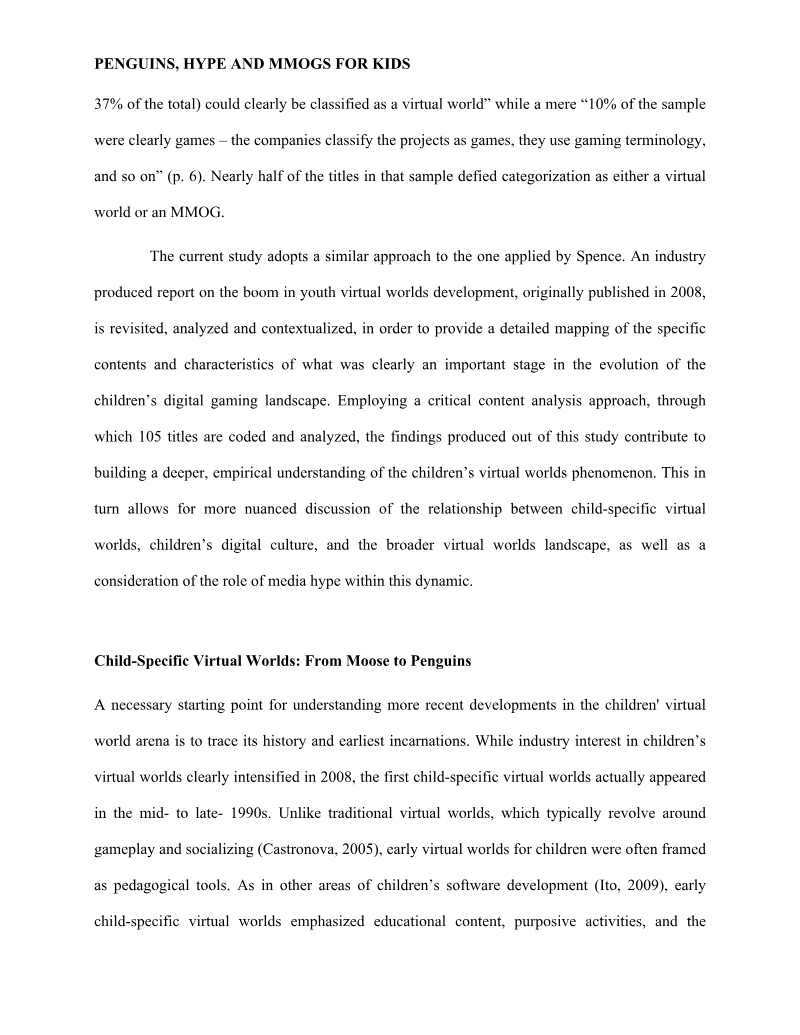
The 2008 surge in children’s virtual worlds was largely a product of industry-manufactured hype rather than organic market growth.
- The 2008 'boom' in children’s virtual worlds was largely artificial, as only 57 of the 106 cited projects were functional and just 42 specifically targeted users under age 13.
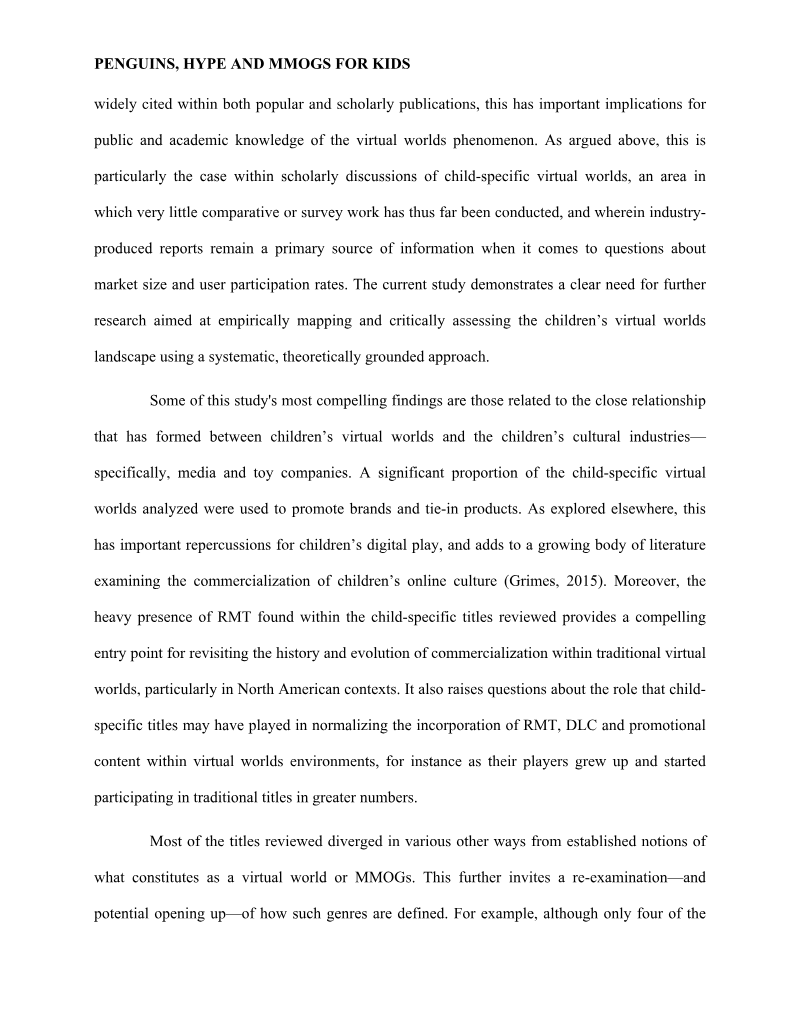
- Industry growth during this period was driven by corporate marketing and brand tie-ins rather than organic market demand or innovative game design.
- Platforms in 2008 functioned primarily as gated, commercialized spaces designed to facilitate micro-transactions and promote corporate interests.
Investigating the Winner's Curse Based on Decision Making in an Auction Environment
The construction industry frequently grapples with the winner’s curse, a phenomenon where contractors secure projects by underbidding costs, ultimately resulting in negative profit margins and long-term financial instability.
- The 'winner's curse' in construction occurs when firms secure projects through underbidding, leading to negative profit margins and long-term financial instability.
- Aggressive, low-margin bidding is primarily driven by the pressure to maintain market share and the desire to prevent resource idleness.
- Incomplete information and inaccurate cost estimations significantly impair a firm's ability to assess project risks and competitive dynamics accurately.
Enhancing Surgical Team Performance with Game-Based Training
Medical errors in surgical environments are frequently linked to breakdowns in team communication and hierarchical power imbalances.
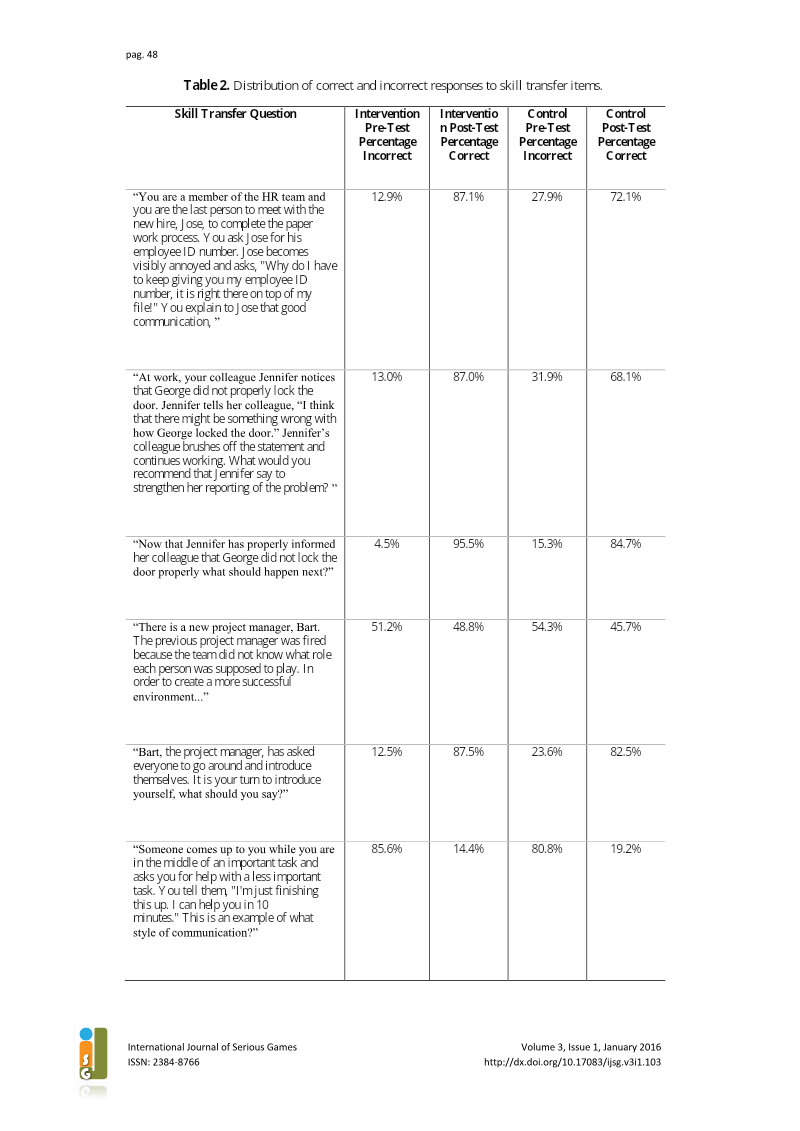
- The Safe Surgery Trainer (SST) game significantly improved both declarative knowledge and the transfer of communication skills in a study of 141 participants compared to a control group.
- Participants who played the SST game demonstrated a superior ability to apply communication strategies to novel clinical scenarios, indicating the development of accurate mental models for team interaction.
- The study utilized a randomized controlled design to evaluate the game's efficacy in addressing surgical errors caused by communication breakdowns and hierarchical power imbalances.
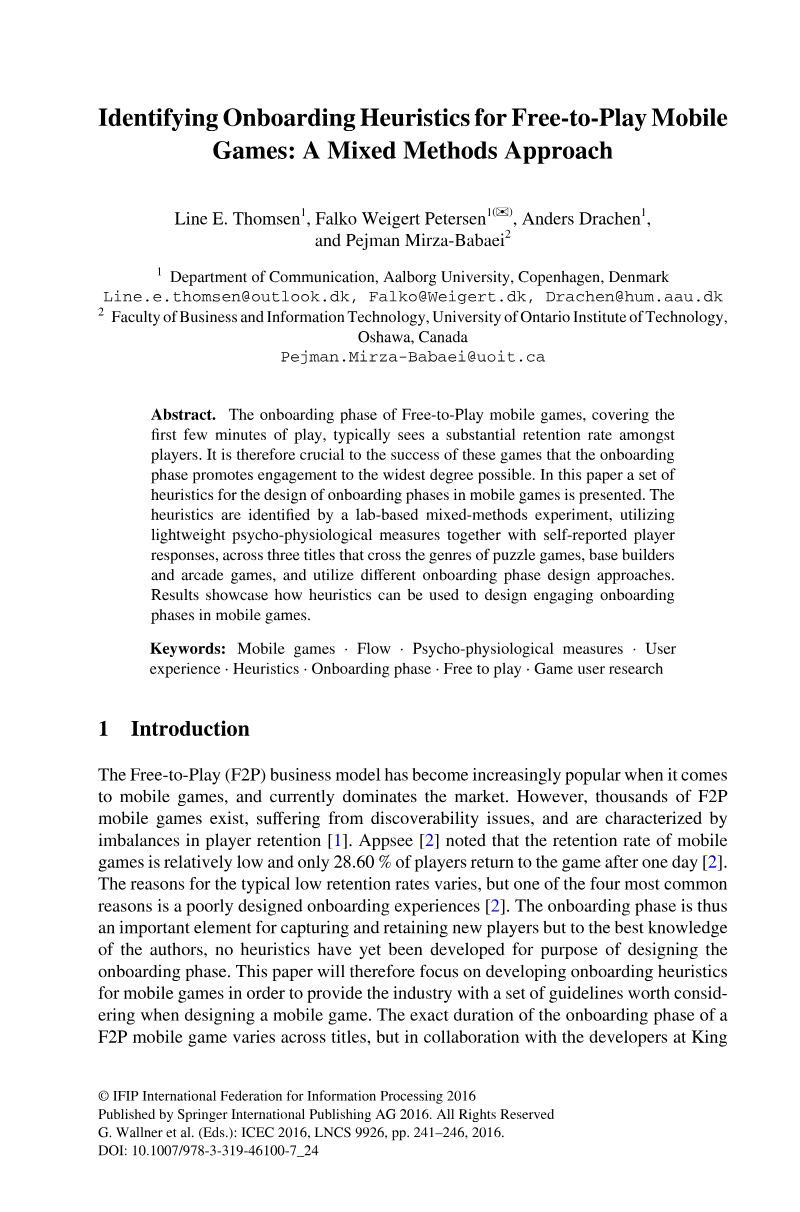
Identifying Onboarding Heuristics for Free-to-Play Mobile Games: A Mixed Methods Approach
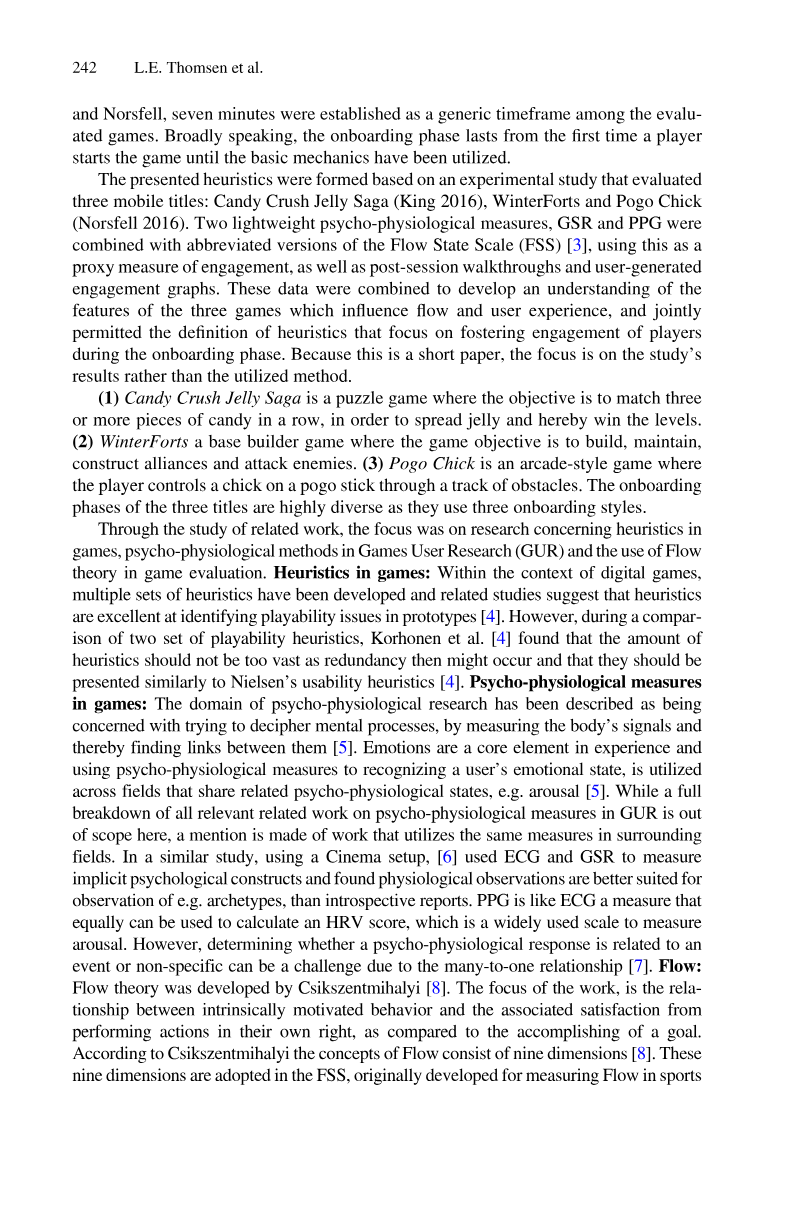
The onboarding phase of free-to-play (F2P) mobile games is a critical determinant of long-term player retention, yet the industry has historically lacked standardized design guidelines for this initial experience.
The Serious Games Ecosystem: Interdisciplinary and Intercontextual Praxis
The serious games ecosystem represents a complex, interdisciplinary landscape where academic research, commercial development, and clinical application increasingly intersect.
- The serious games sector must transition from isolated academic research to a collaborative model that integrates industrial and non-commercial expertise to ensure practical, context-sensitive implementation.
- A lack of standardized terminology and conceptual ambiguity currently hinders the industry's ability to accurately evaluate the efficacy of serious games.
- Development cycles frequently prioritize superficial engagement metrics over the rigorous, evidence-based learning outcomes required for professional and educational advancement.
A Brief History of Serious Games
Serious games represent a contemporary evolution of centuries-old theories regarding the utility of play, rather than a modern invention.
- Serious games are not a modern invention but a contemporary application of historical theories on play, with foundational concepts dating back to Plato.
- The field transitioned from early analog simulations to a formalized academic discipline following Clark Abt’s 1970 codification of rule-based, experiential learning.
- The industry underwent significant diversification after 2002, expanding its reach from military and corporate training into healthcare, advertising, and social activism.