Key insights
5 slides
Core concept
Digital avatars and physical toys are prosthetic bodies that shape human subjectivity.
Both video games, such as Crytek’s Crysis, and traditional toys, like Mattel’s Liddle Kiddles, serve as extensions of the self.
1 / 5
- 01Digital avatars in games like Crytek’s Crysis and physical toys like Mattel’s Liddle Kiddles function as prosthetic bodies that actively shape human subjectivity and identity.See it on page 1
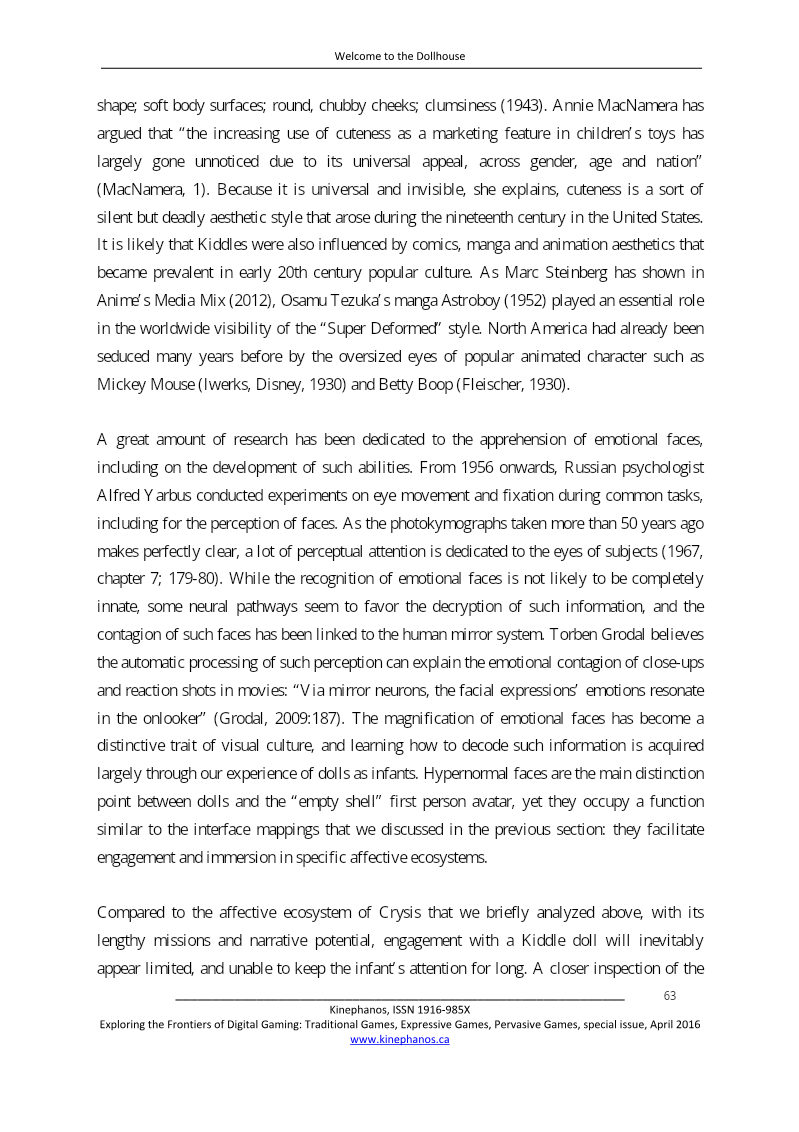
- 02Both video games and traditional toys act as affective ecosystems that use hypernormal models of interaction to structure user agency and narrative immersion.See it on page 11
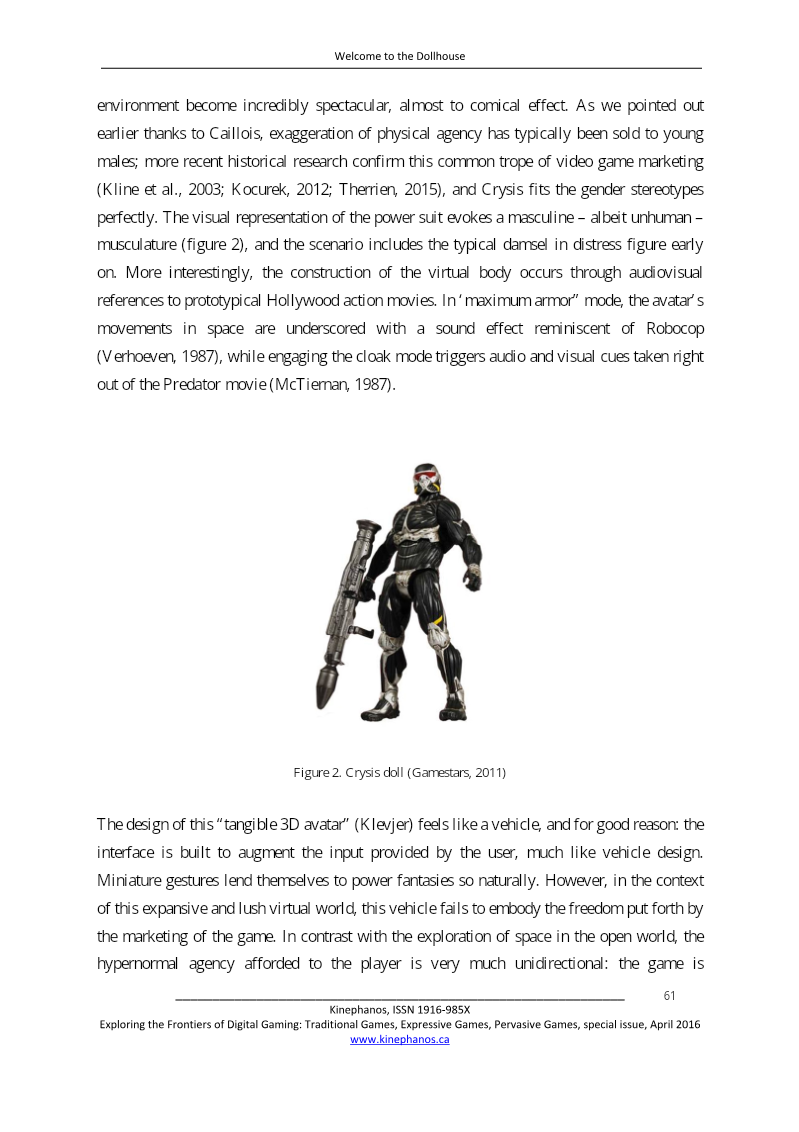
- 03Crysis reinforces a masculine power fantasy by mapping player agency onto a hyper-militarized, technologically augmented avatar within an economy of fear.See it on page 9
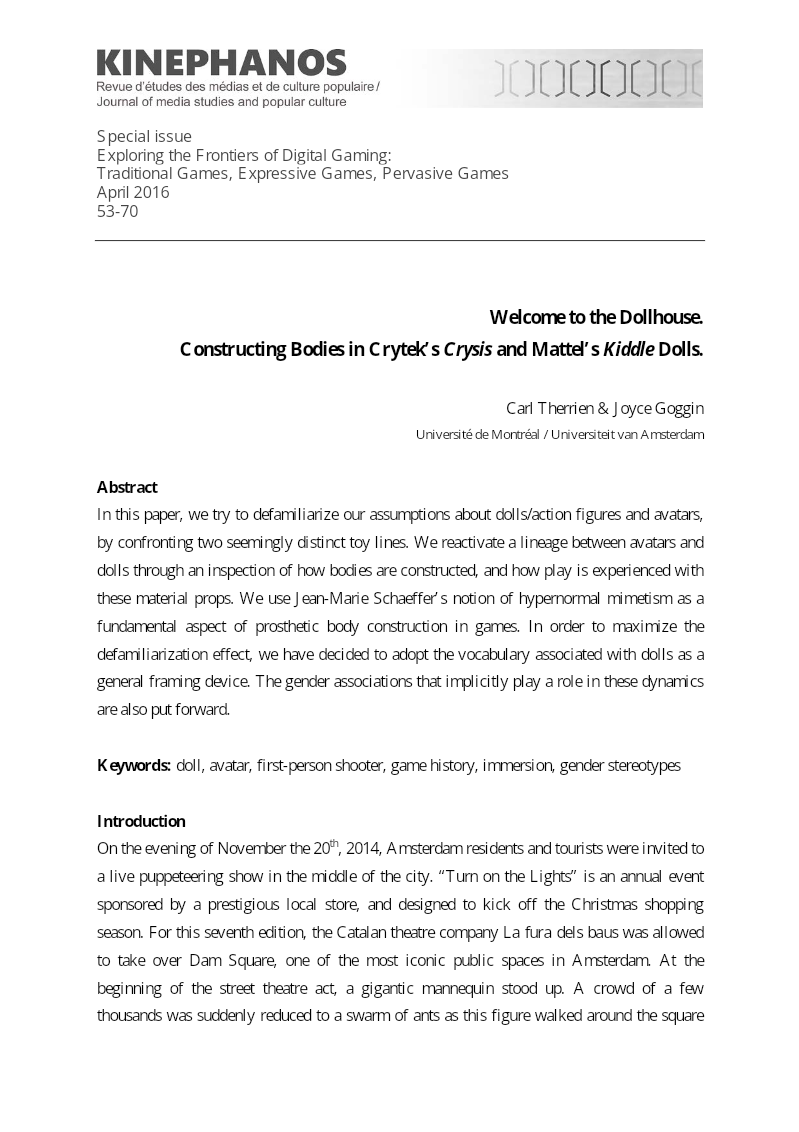
- 04The Liddle Kiddles line utilizes exaggerated, cute aesthetics to elicit nurturing responses and reinforce social conditioning related to domestic care.See it on page 10
- 05The concept of the avatar as an extension of the self is not unique to modern gaming but is a continuation of long-standing gendered design practices in the toy industry.See it on page 6
- 06Despite differences in technical medium, both shooters and dolls serve as mechanisms that dictate how users engage with virtual or physical spaces to reinforce cultural norms.See it on page 1
Ask AI about this report
Summary
Video games and traditional toys share a fundamental lineage as constructed, prosthetic bodies that shape human subjectivity. By bridging the gap between digital avatars in the Crysis shooter series and the physical design of Mattel’s Liddle Kiddles, it becomes clear that both mediums function as affective ecosystems. These tools do not merely provide entertainment; they act as material props that structure agency, narrative immersion, and identity formation through specific, hypernormal models of interaction.
The design strategies employed by these disparate products reveal a shared reliance on gendered conditioning. Crysis utilizes technological augmentation and an economy of fear to facilitate a masculine power fantasy, mapping the player’s agency onto a hyper-militarized, prosthetic avatar. Conversely, the Liddle Kiddles line leverages exaggerated, cute aesthetics to elicit nurturing responses and social conditioning. Despite the technical differences between algorithmic digital environments and the relative physical freedom of doll play, both systems utilize hypernormal mimetism to reinforce cultural norms and dictate how users engage with their respective virtual or physical spaces.
Ultimately, the avatar-as-extension ideal is not a unique byproduct of modern gaming but a continuation of long-standing practices in toy design. By deconstructing the gendered biases inherent in these interfaces, it is evident that both the shooter avatar and the doll serve as mechanisms for constructing the self. Whether through the lens of combat-oriented power or domestic-oriented care, these objects function as essential components in the ongoing development of subjective identity within contemporary society.