Game Studies reports and market data
Documents

Welcome to the Dollhouse: Constructing Bodies in Crytek’s Crysis and Mattel’s Kiddle Dolls
Video games and traditional toys share a fundamental lineage as constructed, prosthetic bodies that shape human subjectivity.
- Digital avatars in games like Crytek’s Crysis and physical toys like Mattel’s Liddle Kiddles function as prosthetic bodies that actively shape human subjectivity and identity.
- Both video games and traditional toys act as affective ecosystems that use hypernormal models of interaction to structure user agency and narrative immersion.
- Crysis reinforces a masculine power fantasy by mapping player agency onto a hyper-militarized, technologically augmented avatar within an economy of fear.

Century of Play: 18th Century Precursors of Gamification
Gamification is not a modern digital innovation but rather a historical practice with deep roots in the eighteenth century, an era frequently characterized as the Century of Play or Spielsaeculum.
- Gamification is not a modern digital innovation but a historical practice rooted in the 18th century, an era known as the 'Century of Play' or 'Spielsaeculum'.
- 18th-century society integrated rule-based mechanics and aleatoric systems into non-game sectors—including luxury furniture, religion, and science—to influence human behavior and social habits.
- The historical use of play as a tool for managing power and knowledge mirrors contemporary digital strategies that use ludic elements to increase engagement with repetitive or functional tasks.

Penguins, Hype, and MMOGs for Kids: A Critical Reexamination of the 2008 "Boom"
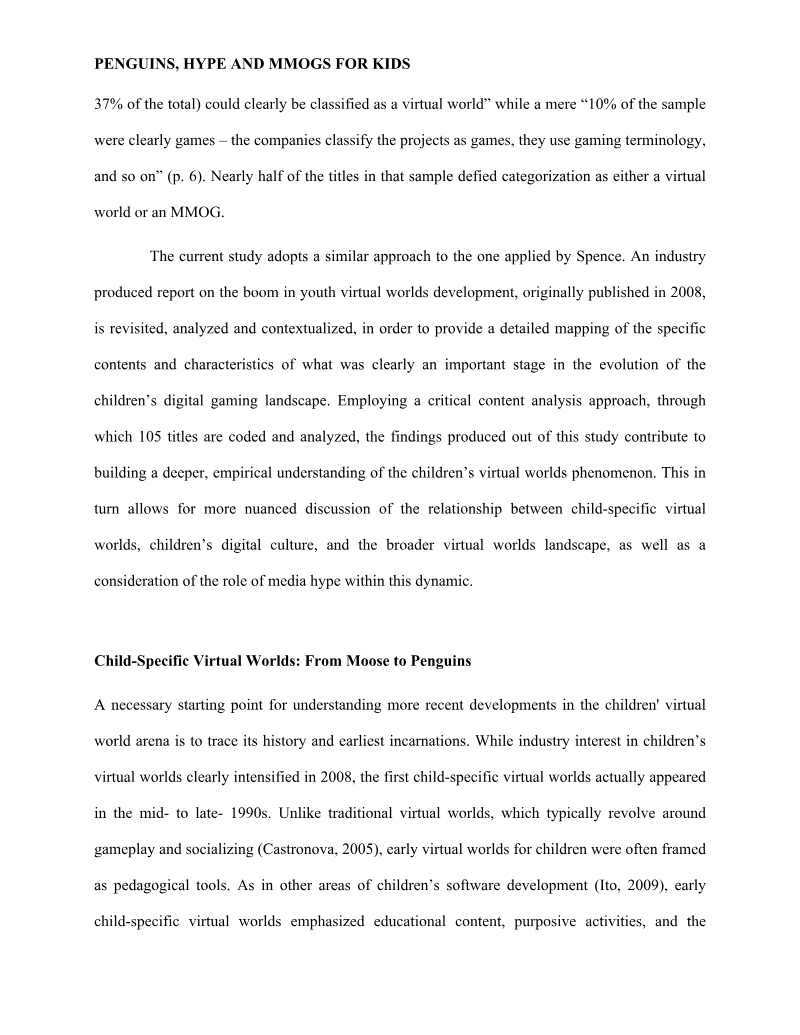
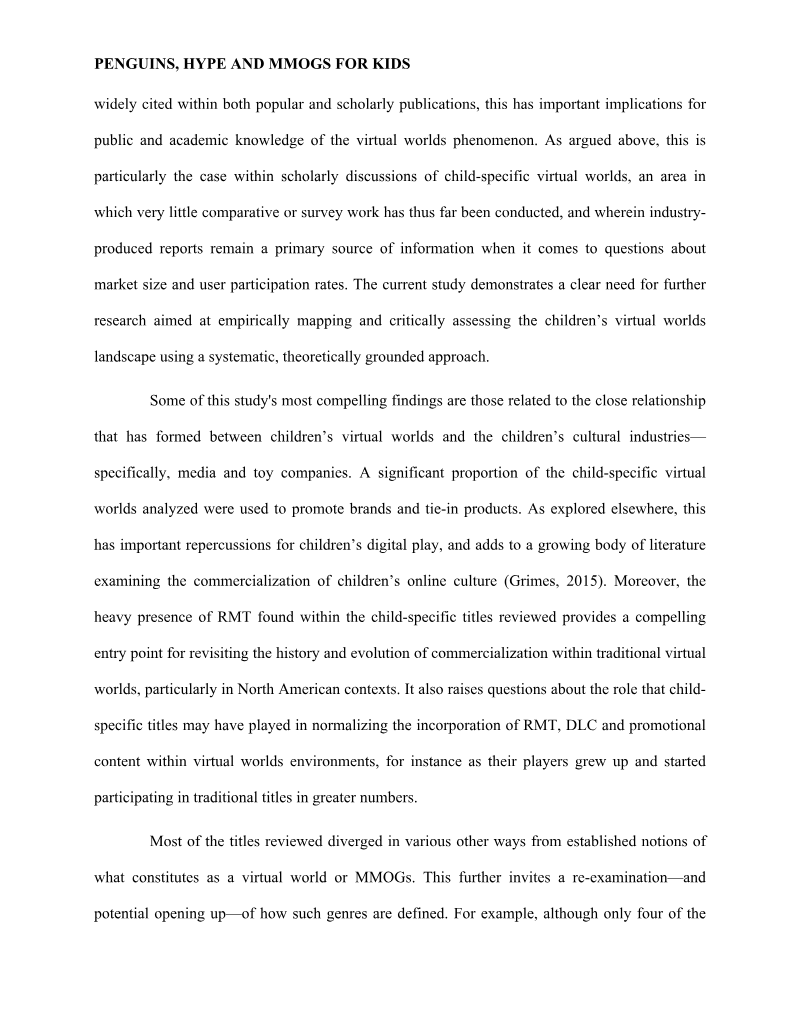
The 2008 surge in children’s virtual worlds was largely a product of industry-manufactured hype rather than organic market growth.


Enhancing Surgical Team Performance with Game-Based Training
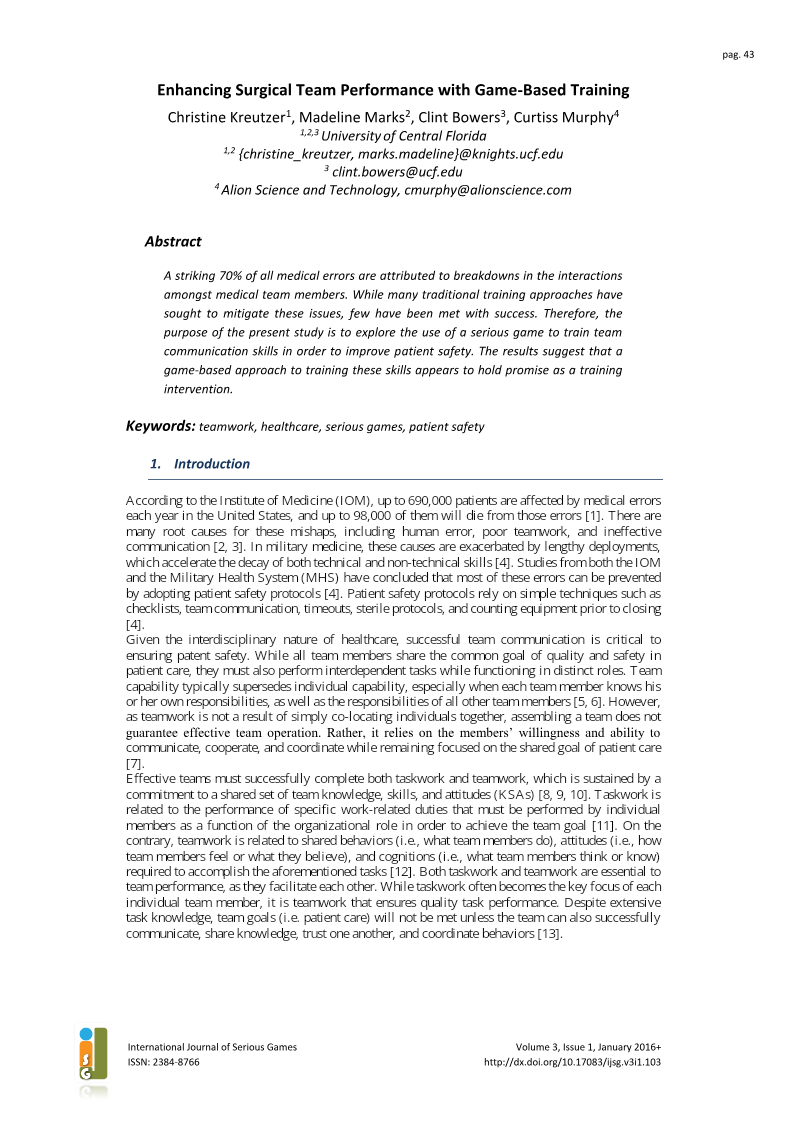
Medical errors in surgical environments are frequently linked to breakdowns in team communication and hierarchical power imbalances.
- The Safe Surgery Trainer (SST) game significantly improved both declarative knowledge and the transfer of communication skills in a study of 141 participants compared to a control group.
- Participants who played the SST game demonstrated a superior ability to apply communication strategies to novel clinical scenarios, indicating the development of accurate mental models for team interaction.
- The study utilized a randomized controlled design to evaluate the game's efficacy in addressing surgical errors caused by communication breakdowns and hierarchical power imbalances.

The Serious Games Ecosystem: Interdisciplinary and Intercontextual Praxis
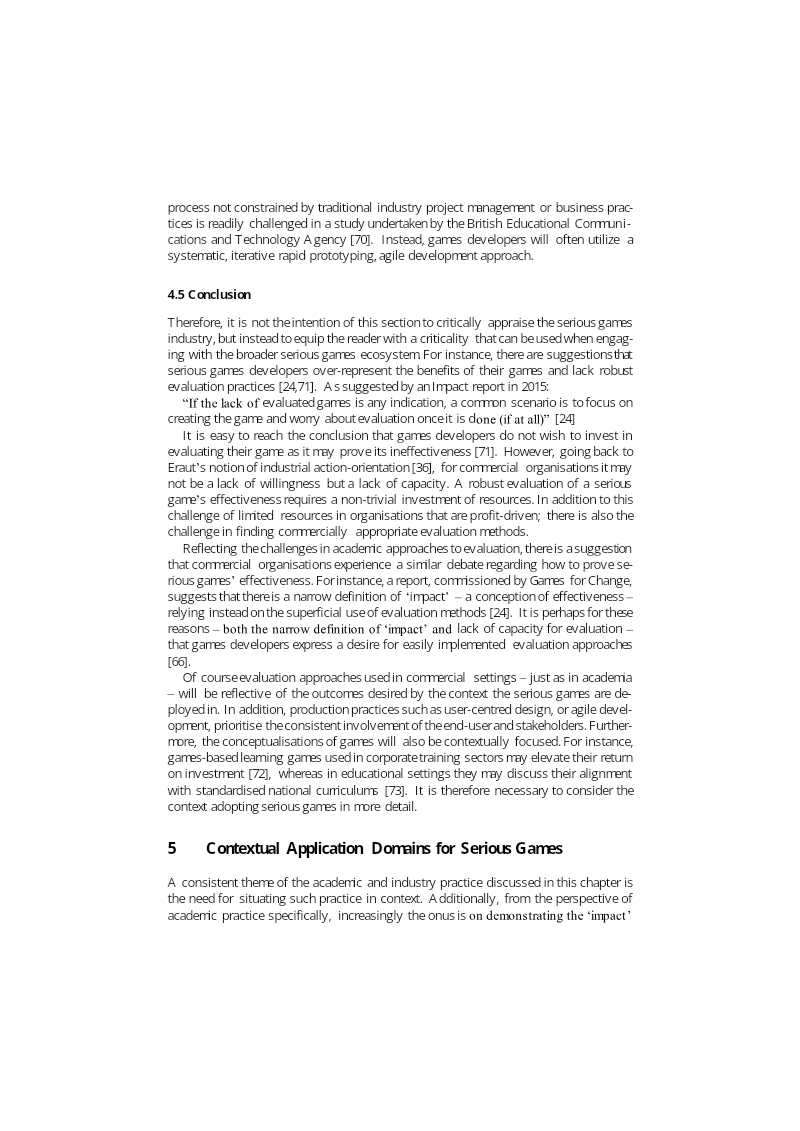
The serious games ecosystem represents a complex, interdisciplinary landscape where academic research, commercial development, and clinical application increasingly intersect.
- The serious games sector must transition from isolated academic research to a collaborative model that integrates industrial and non-commercial expertise to ensure practical, context-sensitive implementation.
- A lack of standardized terminology and conceptual ambiguity currently hinders the industry's ability to accurately evaluate the efficacy of serious games.
- Development cycles frequently prioritize superficial engagement metrics over the rigorous, evidence-based learning outcomes required for professional and educational advancement.



A Brief History of Serious Games
Serious games represent a contemporary evolution of centuries-old theories regarding the utility of play, rather than a modern invention.
- Serious games are not a modern invention but a contemporary application of historical theories on play, with foundational concepts dating back to Plato.
- The field transitioned from early analog simulations to a formalized academic discipline following Clark Abt’s 1970 codification of rule-based, experiential learning.
- The industry underwent significant diversification after 2002, expanding its reach from military and corporate training into healthcare, advertising, and social activism.

What Serious Game Studios Want from ICT Research: Identifying Developers' Needs
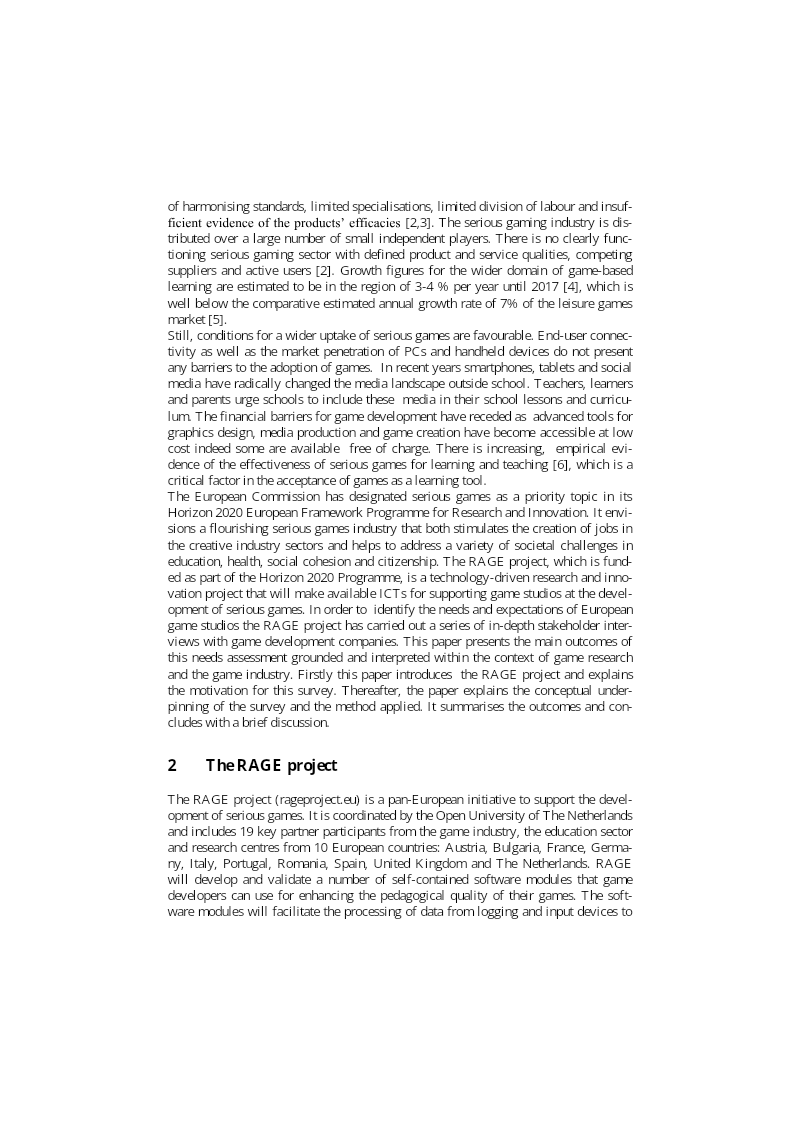
This study identifies the development needs and expectations of European serious game studios to establish a baseline for supporting the industry through advanced information and communication technologies.
- European serious game studios prioritize Unity and C# as their primary development stack, indicating a strong preference for industry-standard tools over specialized academic alternatives.
- Developers are highly interested in learning analytics, real-time progress tracking, and adaptive gameplay, but adoption is hindered by concerns over implementation complexity and uncertain return on investment.
- There is a significant disconnect between instructional design research and studio practices, as developers often avoid in-game instruction to maintain player flow, contrary to traditional pedagogical approaches.
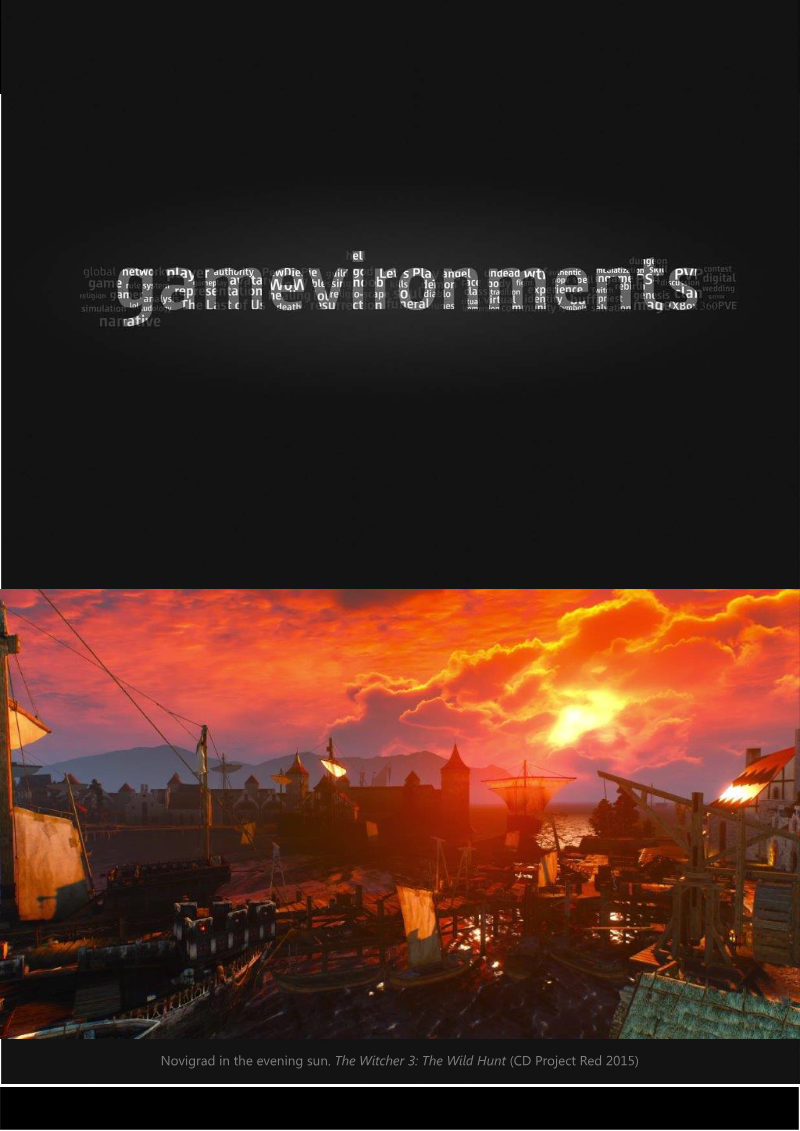
Gamevironments of the Past
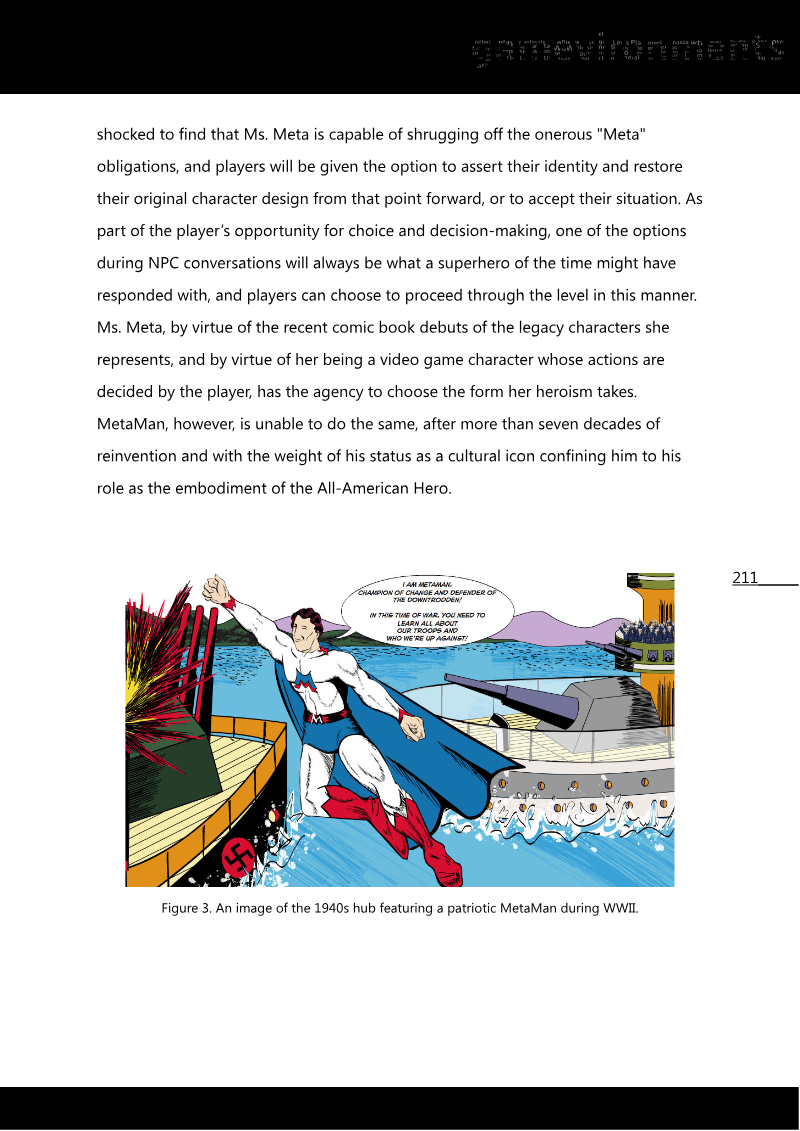
"The Adventures of Ms. Meta" presents the design of a time-travel brawler and puzzle game that uses the evolving American superhero as a lens on cultural history.
- The game is built on the thesis that superheroes continually reshape themselves to reflect each era's ideals and anxieties, and it uses this to invite players to define heroism while exposing the dominant narratives that constrain characters.
- The design centers on meaningful play, meaning player actions produce legible, consequential outcomes, and the game is developed in Unity modeled on side-scrolling brawler mechanics.
- A core design tension arises between the brawler tradition of casual enemy killing and property destruction and the modern superhero's no-kill code, which the designer resolves by reshaping enemies, levels, and interactions.

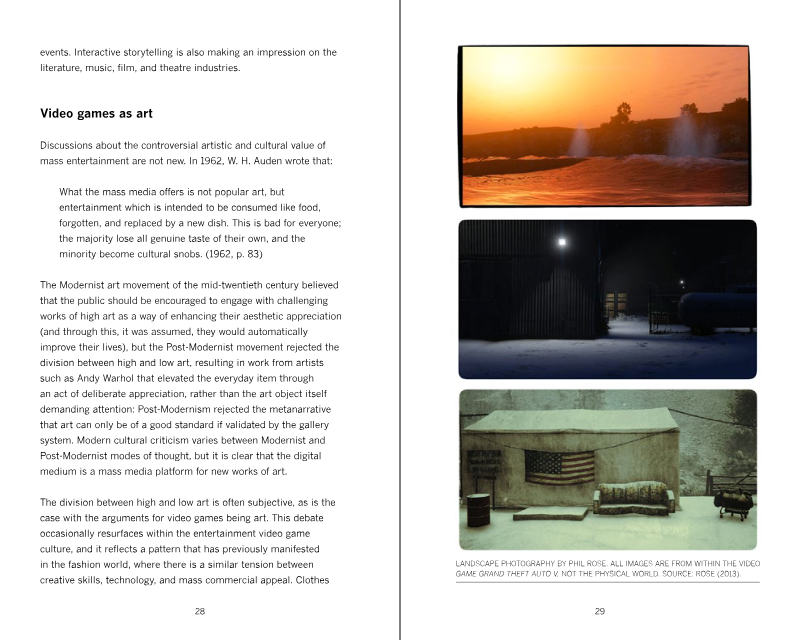
Video Games and the Value of Entertainment
Video games are presented as a young but rapidly maturing medium, comparable to early cinema, and this work focuses on creative and entertainment games rather than serious or applied games designed for education or behavior change.
- The global games market was valued at roughly US$88–91 billion in 2015 and projected to reach about US$110–113 billion by 2018, with the United States and China expected to account for around half of it.
- A 2016 Newzoo figure places the global games market at $99.6 billion that year, underscoring the scale of commercial activity.
- The author argues the UK games sector generates more value added than film, television, music, publishing, design, fashion, and architecture combined, and that Europe must actively pursue this market to stay competitive.

Playing with History's Otherness: A Framework for Exploring Historical Games
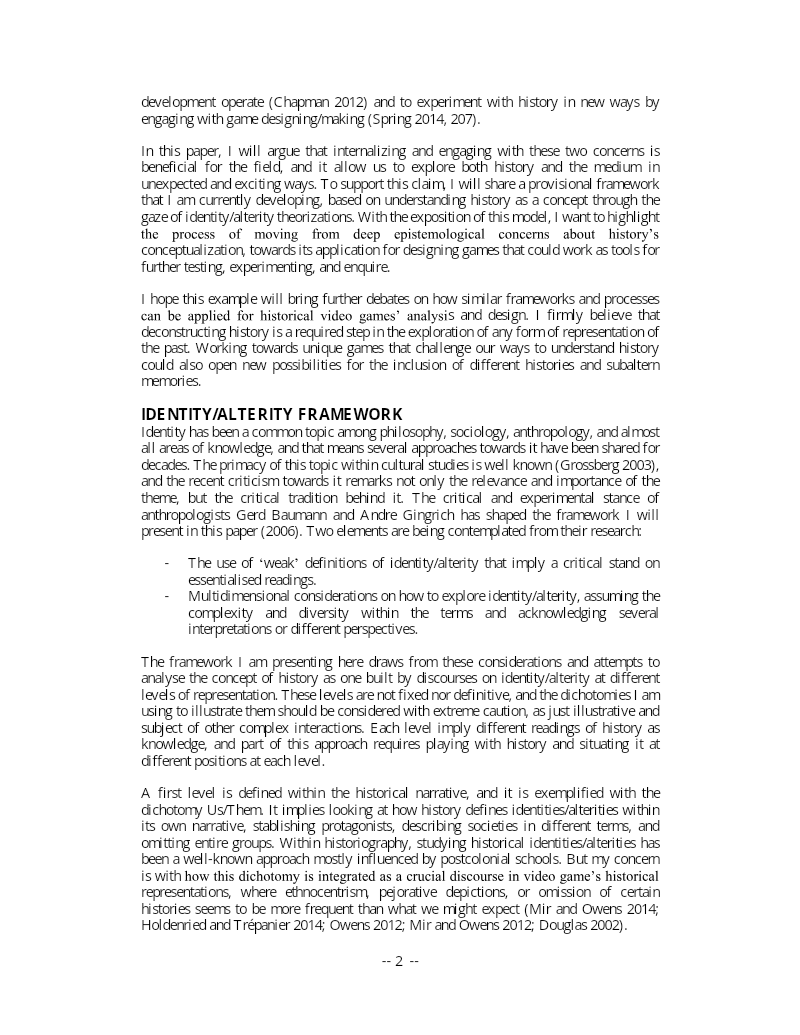
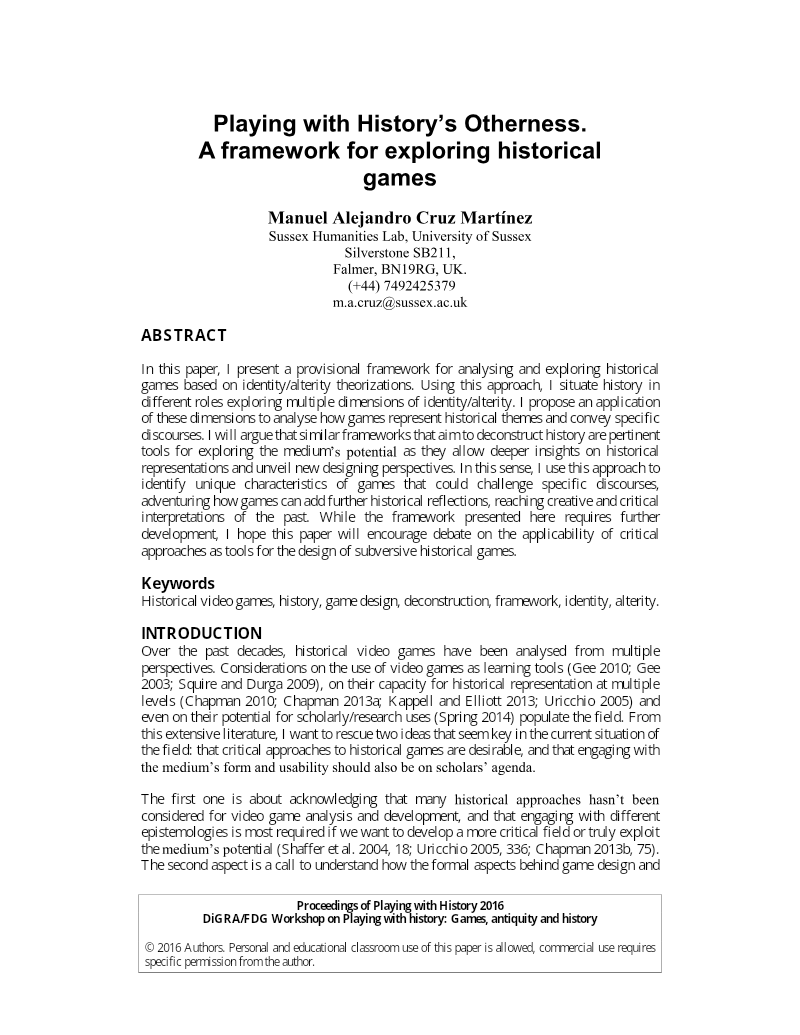
This paper by Manuel Alejandro Cruz Martínez offers a provisional framework for analysing historical video games through the lens of identity and alterity, drawing on the anthropological work of Gerd Baumann and Andre Gingrich.
- The paper offers a provisional framework for analysing historical video games through identity and alterity, drawing on anthropologists Gerd Baumann and Andre Gingrich, and argues that deconstructing history this way is a necessary step to understand how games represent the past.
- The same critical approach can guide the design of subversive historical games that challenge dominant narratives and open space for marginalised or subaltern histories.
- The medium's interactivity and capacity to foster empathy may complicate conventional ideas about who makes history.


Public History, Game Communities and Historical Knowledge
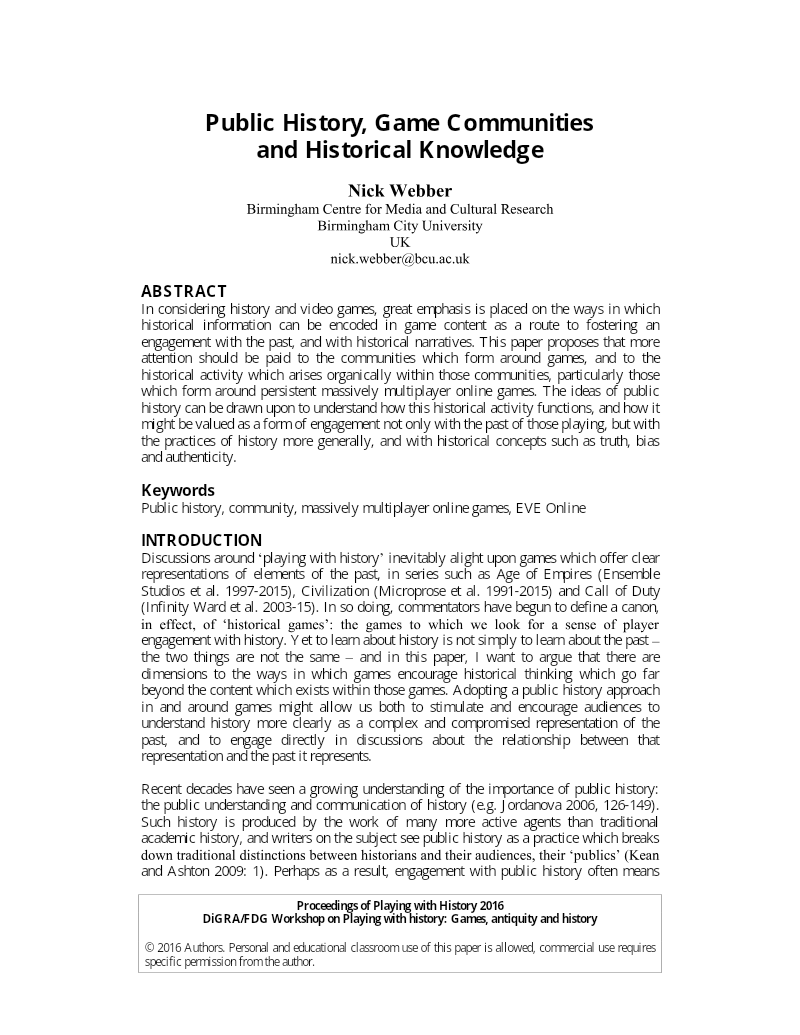
Nick Webber's paper argues that scholarly attention to historical games has focused too narrowly on the historical content encoded within game design, and that the more significant site of historical thinking lies in the communities that form around games, particularly persistent massively multiplayer online games.
- Nick Webber argues that scholarly focus on historical games has been too narrow, concentrating on historical content in game design when the more significant site of historical thinking is the communities that form around games, especially persistent MMOGs.
- The paper frames a tension between historians, who prioritise "what we know" through disciplined analysis of evidence, and publics, who often prioritise "why" the past matters in the present, and proposes public history as a way to reconcile the two.
- The central case study is EVE Online, a science-fiction MMOG with more than 300,000 players on a single server and thirteen years of history at the time of writing, whose sandbox design lets player alliances of thousands produce a persistent, politically complex past.
A History of Voice Interaction in Games
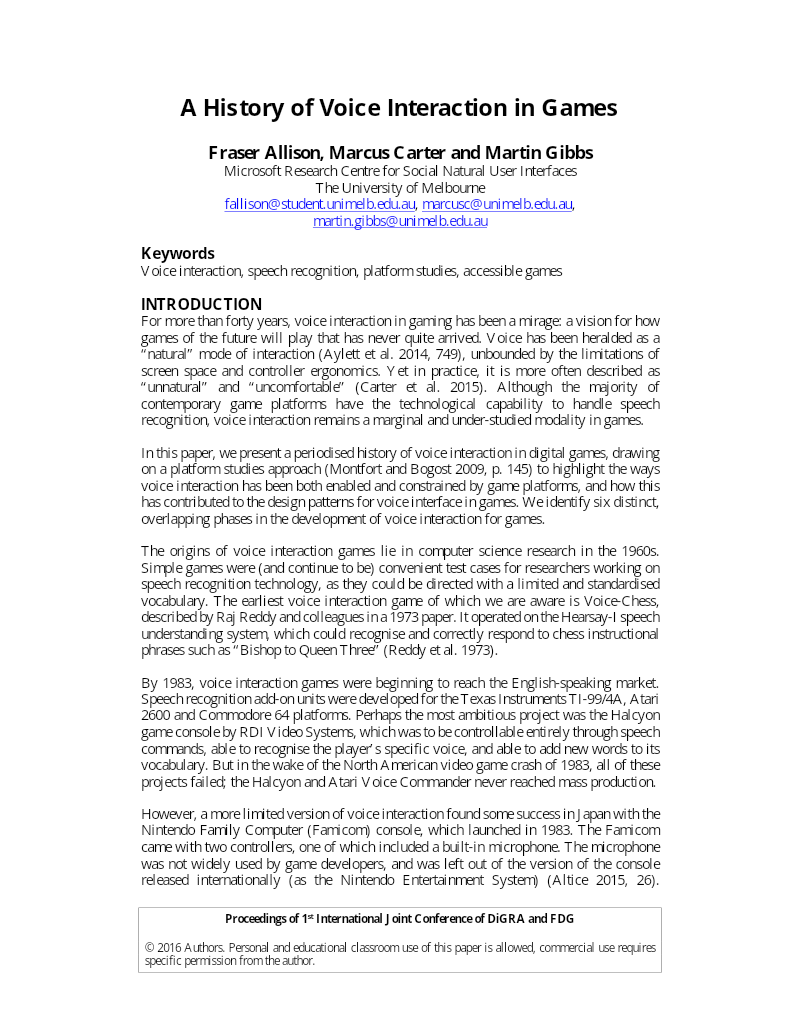
This paper traces the history of voice interaction in digital games, arguing that the modality has long been promised as a natural form of play while remaining marginal in practice.
- Voice interaction in games has long been promised as a natural form of play yet has remained marginal in practice, a tension the paper examines through platform studies and the constraints platforms place on voice input.
- The earliest identified voice-controlled game is Voice-Chess, built on the Hearsay-I speech understanding system in 1973, and 1960s computer science research used simple games as test cases because a limited, standardised vocabulary made recognition tractable.
- Ambitious early-1980s speech add-ons such as the Halcyon console and the Atari Voice Commander never reached mass production after the 1983 North American video game crash, while Japan's Famicom microphone, largely unused and omitted from the international NES, found a modest niche in titles like The Legend of Zelda and Kid Icarus.