Game Studies reports and market data
Documents
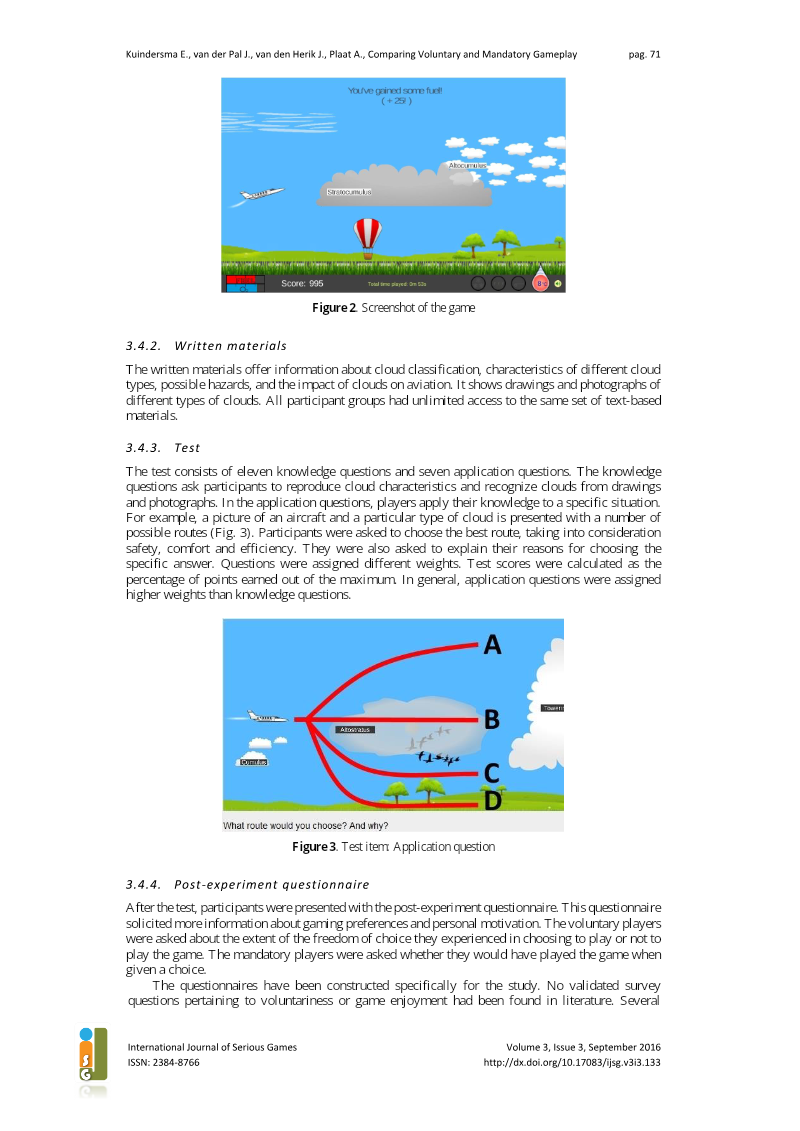
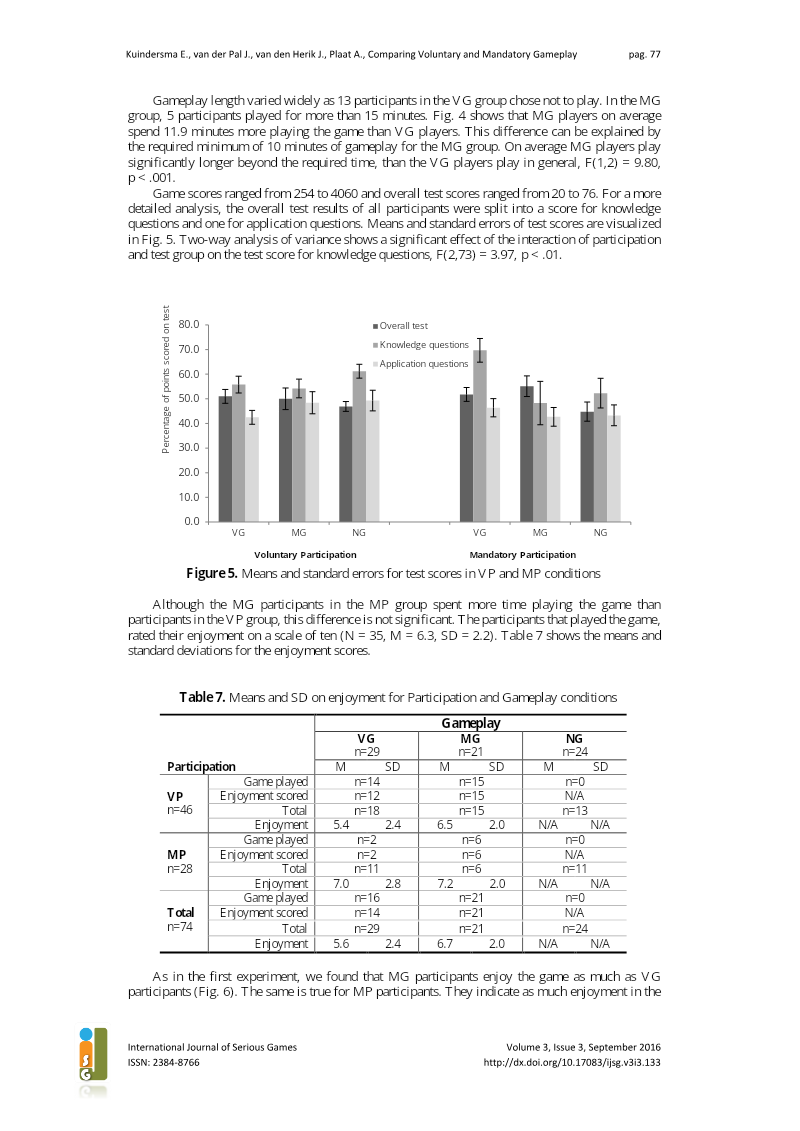
Comparing Voluntary and Mandatory Gameplay
The integration of serious games into professional and academic curricula often rests on the assumption that voluntary participation is a prerequisite for engagement and learning success.
- Mandatory gameplay requirements do not negatively impact user enjoyment or instructional effectiveness compared to voluntary participation models.
- Requiring participation in serious games consistently increases the total duration of user interaction with the system.
- While voluntary participants may report higher initial motivation, this does not result in statistically significant differences in final test performance.
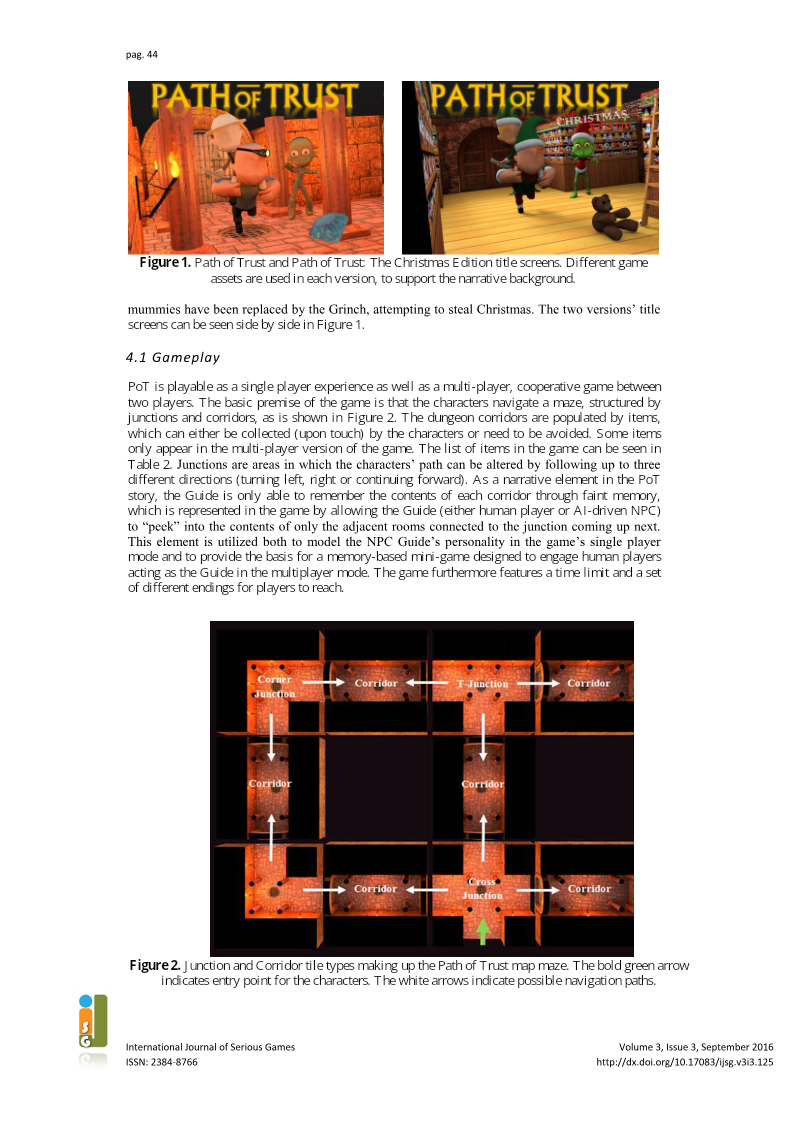
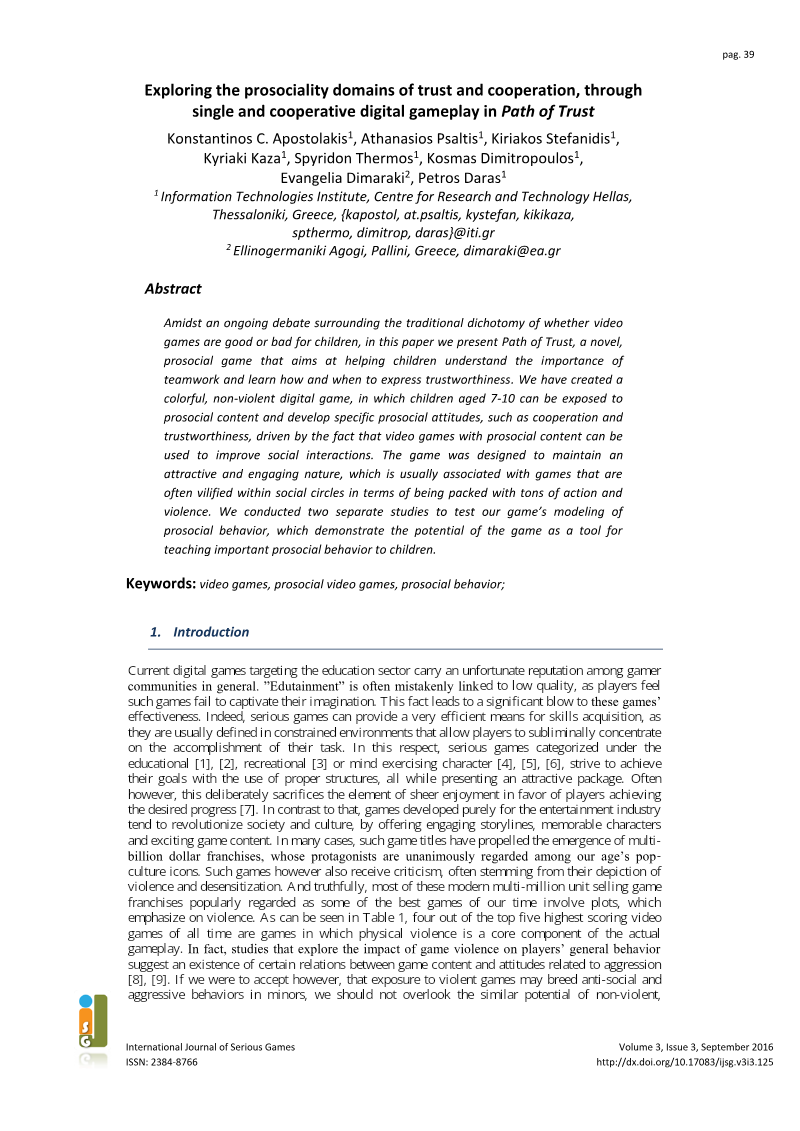
Exploring the Prosociality Domains of Trust and Cooperation, through Single and Cooperative Digital Gameplay in Path of Trust
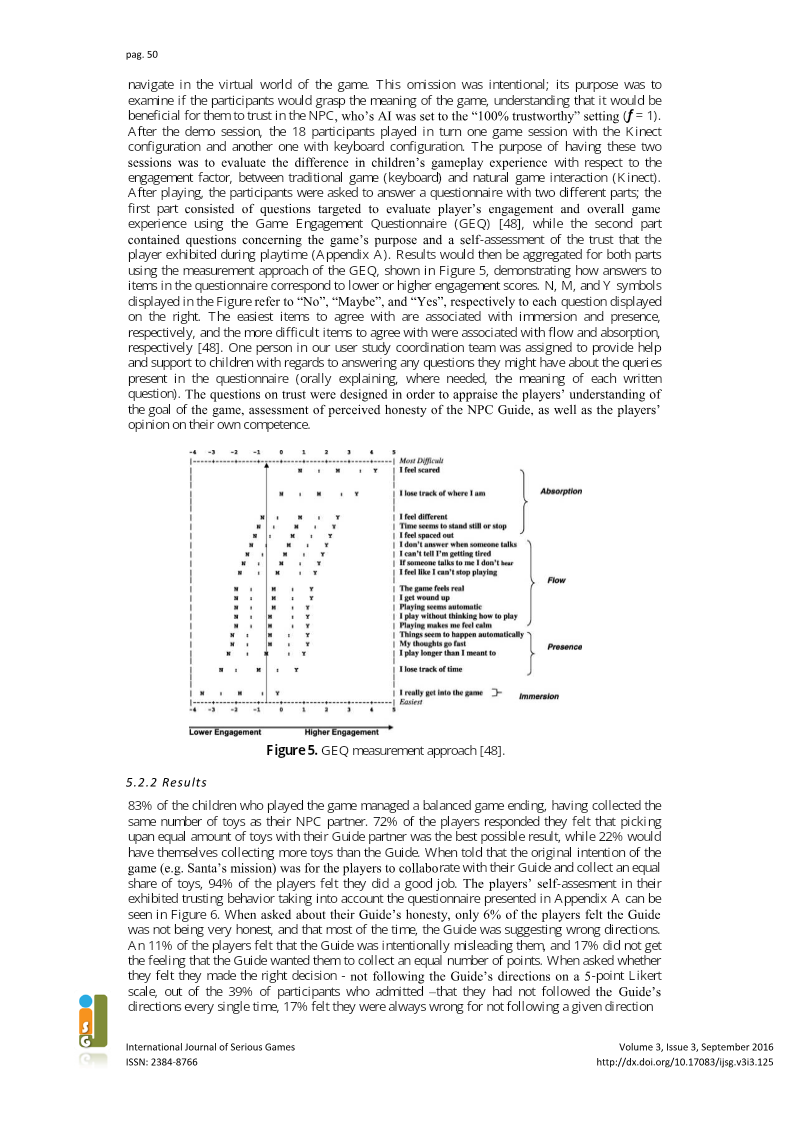
Path of Trust functions as an innovative educational intervention designed to cultivate prosocial skills, specifically trust and cooperation, among children aged 7 to 10.
- Eighty-eight percent of children aged 7 to 10 demonstrated intended trusting behaviors after playing Path of Trust, confirming the game's effectiveness in teaching cooperation.
- The game utilizes asymmetric roles, Fog of War mechanics, and mandatory role-switching to force a balance between individual incentives and collective success.
- Participants consistently viewed game outcomes as shared achievements rather than individual wins, successfully shifting the focus from competitive gain to mutual reliability.
Default Characters and the Embodied Nature of Play: Race, Gender, and Gamer Identity
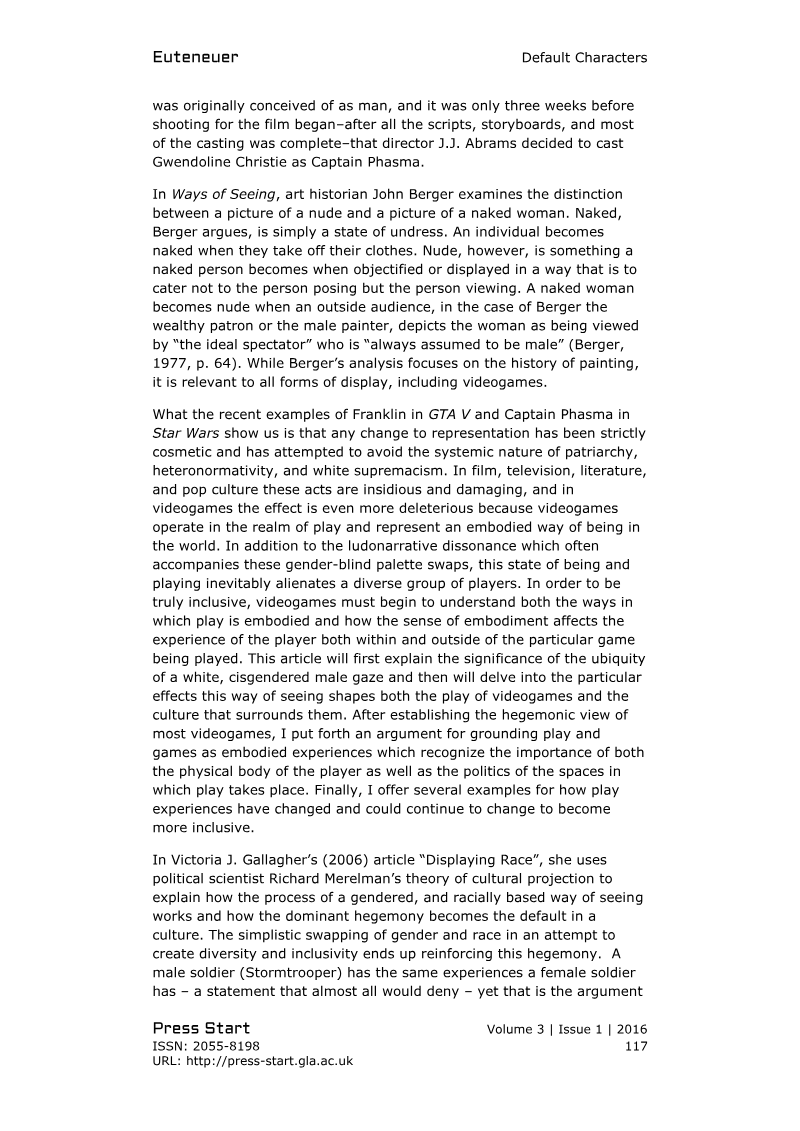
The gaming industry frequently relies on a default protagonist archetype—typically white, male, and heterosexual—which reinforces exclusionary power structures and limits the inclusivity of player identity.
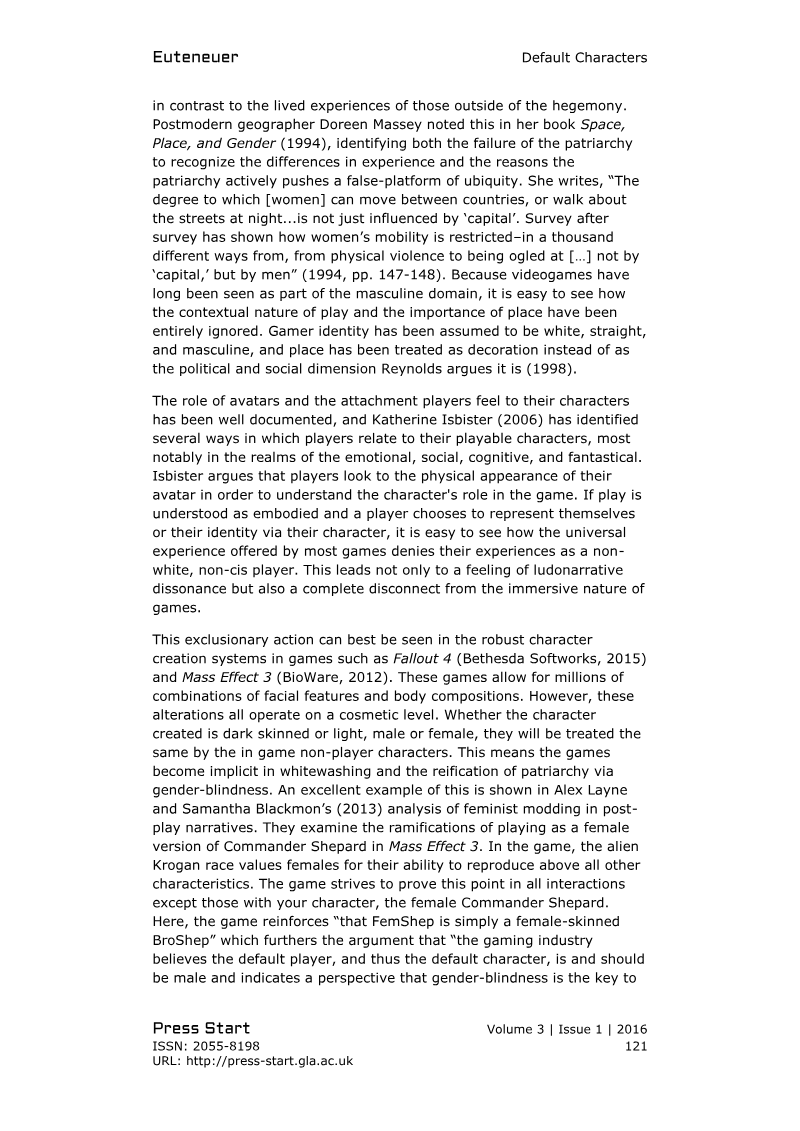
- The gaming industry frequently relies on a 'default' character model that is white, cisgender, and male, which alienates diverse players by treating race and gender as mere cosmetic palette swaps rather than lived experiences.
- Games like Mass Effect 3 and Fallout 4 utilize robust character creation systems that remain functionally 'gender-blind,' failing to acknowledge how social or cultural contexts should realistically impact a character's interactions with the game world.
- The controversy surrounding Grand Theft Auto V (2013) highlighted how players perceived systemic bias in the game's AI, with many reporting that the African-American protagonist, Franklin, faced harsher police scrutiny than white counterparts, a claim Rockstar Games denied.
Female Fighters: Perceptions of Femininity in the Super Smash Bros. Community
The Super Smash Bros. community, as represented by discourse on the SmashBoards forum, maintains a unique cultural environment where technical gameplay proficiency often supersedes traditional gender-based social dynamics.
- Analysis of 284 SmashBoards forum posts reveals that technical gameplay utility often takes precedence over gendered perceptions, resulting in an ambiguous approach to femininity within the community.
- Hypermasculine performances, defined by the sexualization of female characters, occurred in approximately 13.73% of the analyzed posts.
- Aesthetic-focused commentary regarding female characters appeared in 30.04% of the analyzed posts, indicating that a significant portion of the community places importance on appearance as a component of a character's value.
"No Girls on the Internet": The Experience of Female Gamers in the Masculine Space of Violent Gaming
Female gamers navigating masculine-coded, violent gaming environments frequently encounter systemic toxicity and harassment, which necessitates the strategic management of their gender identity.
- Female gamers who play more frequently are significantly more likely to publicly identify as gamers, with a positive correlation between weekly hours played and the willingness to disclose this identity to others.
- Toxic behavior is a pervasive issue in online gaming, with 62.2% of the 291 surveyed women reporting exposure to such conduct.
- Despite the prevalence of toxicity, there is no significant statistical difference in the level of female gender expression between those who have experienced harassment and those who have not.
Discussing Identities through Game-Making: A Case Study
Game-making in educational environments functions as a critical platform for students to negotiate and perform complex identities, moving beyond traditional academic boundaries.
- Gamer identity is not a static, defining trait but a fluid, temporary performance that individuals use to navigate social and cultural positions.
- Game-making serves as a form of literacy that allows individuals to express themselves and negotiate identities, rather than being limited to teaching specific curricular content like math or programming.
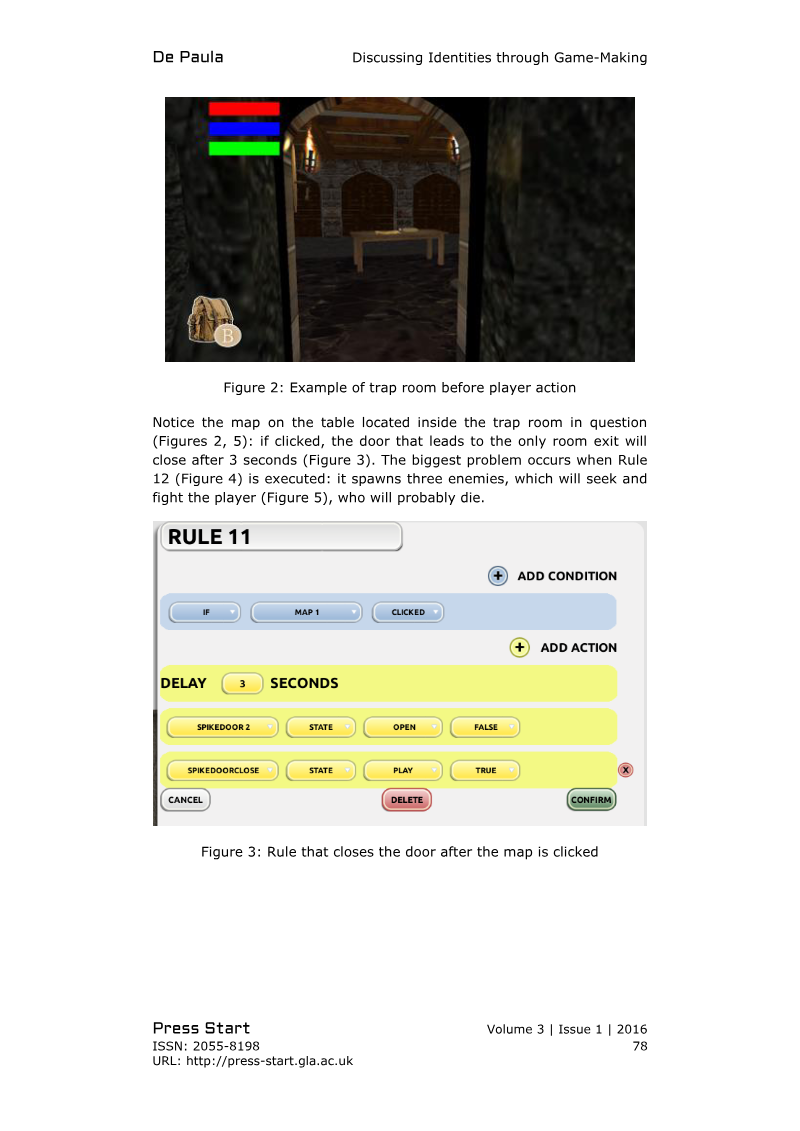
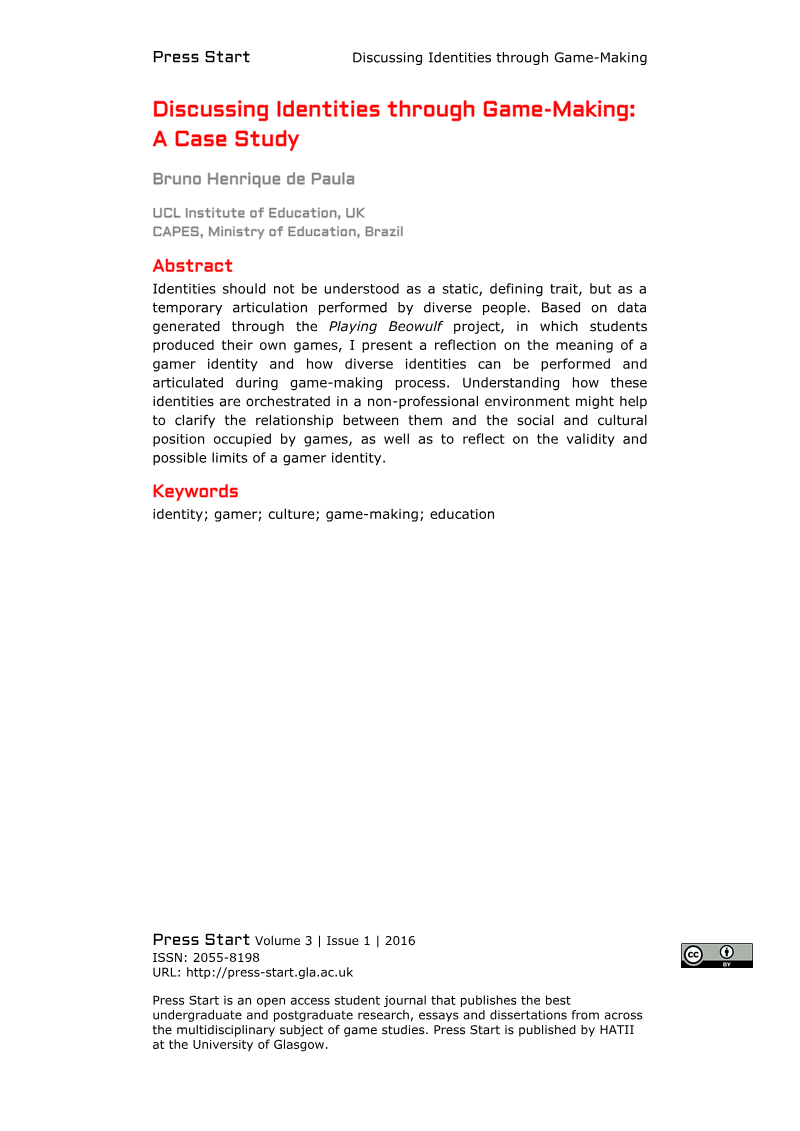
- Participants in the 'Playing Beowulf' project used game-making to perform 'proto-professional' and 'gamer' identities, utilizing their gaming capital—such as references to 'Fallout' and the 'Wilhelm Scream'—to establish their status as industry insiders.
Girls, Guys and Games: How News Media Perpetuate Stereotypes of Male and Female Gamers
Mainstream news media coverage between 2009 and 2015 consistently perpetuated outdated gender stereotypes, framing video games as an inherently male-dominated space despite the industry’s increasingly diverse demographic reality.
- News media coverage of gaming remains heavily skewed toward male perspectives, with male gamers interviewed or discussed 15.4 times more frequently than female gamers regarding topics unrelated to sexism.
- Journalistic framing of gaming frequently relies on three gendered tropes: the 'not real' female gamer, women as both victims and oppressors, and the toxic male gamer.
- Coverage of female gamers outside of sexism-focused stories consistently frames them as 'casual' players, often associating them with simplified, 'silly' titles like Candy Crush or Peggle.
A Gendered Identity Debate in Digital Game Culture
The traditional alignment of gamer identity with masculinity faces significant disruption as the industry experiences a surge in player diversity.
- The gaming industry has historically constructed a 'hegemony of play' that equates gamer identity with masculinity, creating a social barrier that discourages many women from identifying as gamers despite their significant presence in the population.
- Industry data from 2015 shows the gender gap in gaming has largely closed, with 56% of players being male and 44% female, a demographic shift that has triggered a 'gamer status threat' among traditional male players.
- To protect the masculine gamer identity, some players employ a 'strategy of splitting' by framing casual gaming as feminine and inferior, while labeling core, hardcore gaming as masculine and superior.
Development and Validation of a Questionnaire to Measure Perceptions of Freedom of Choice in Digital Games
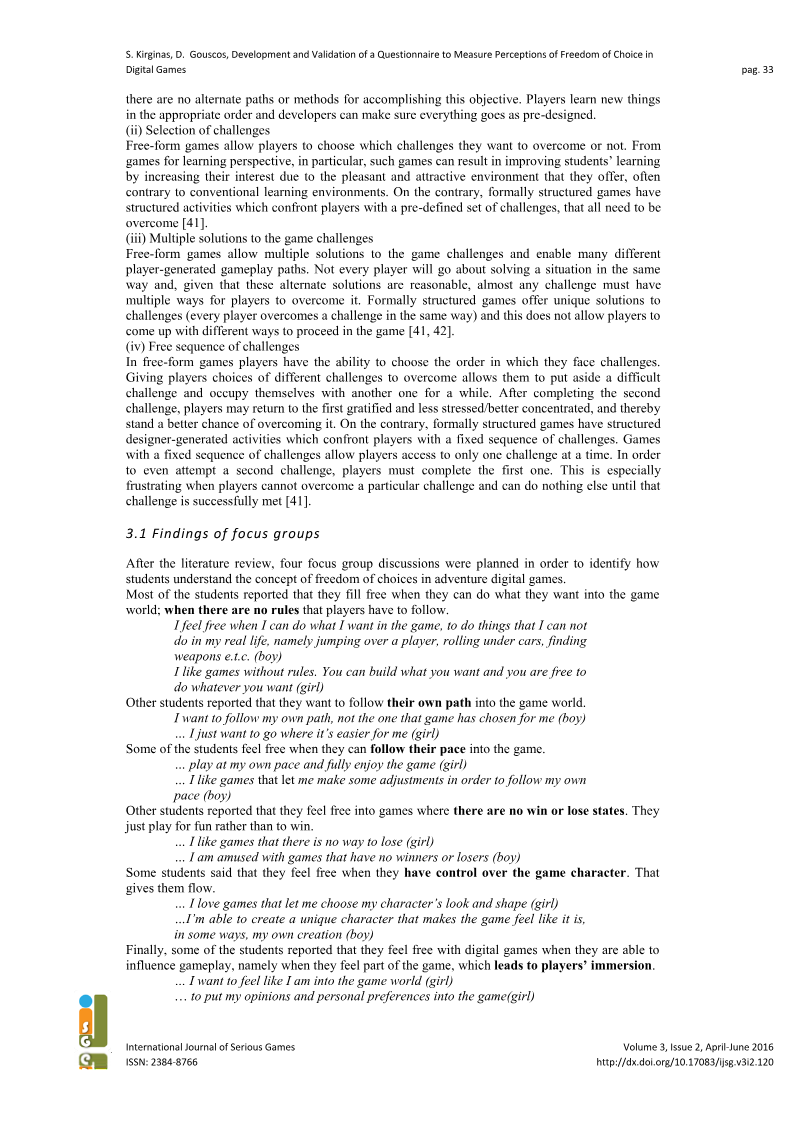
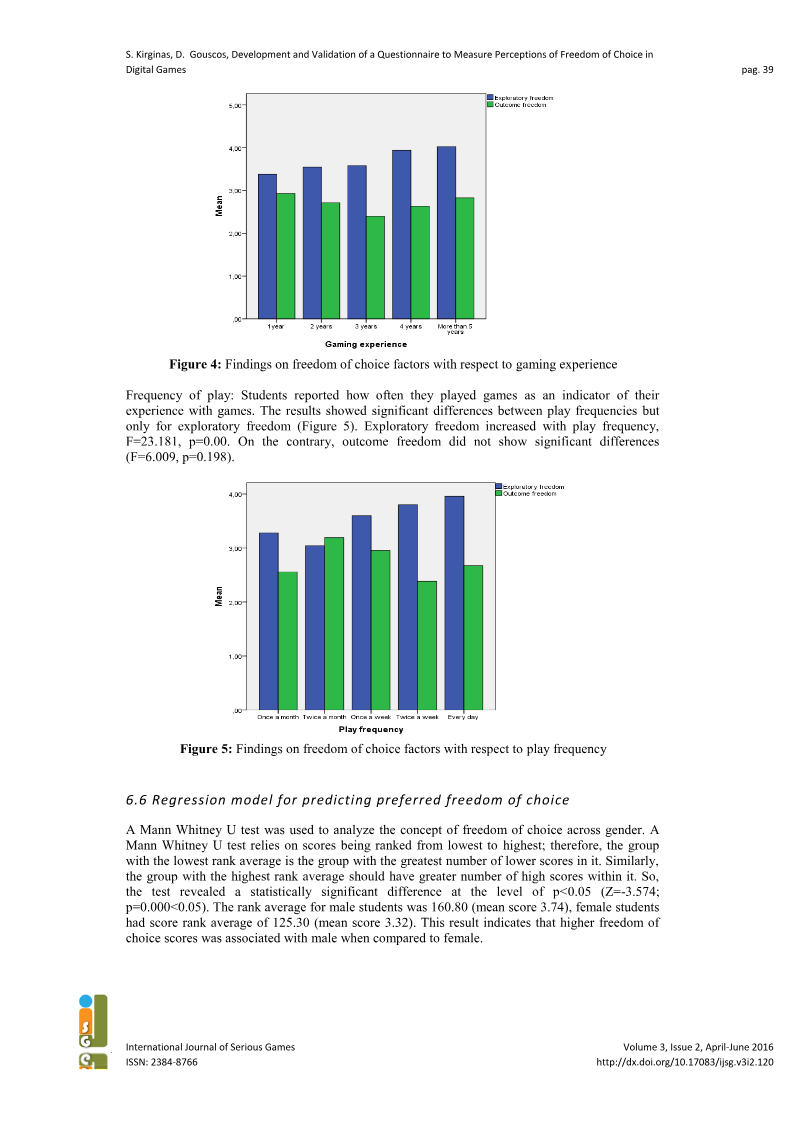
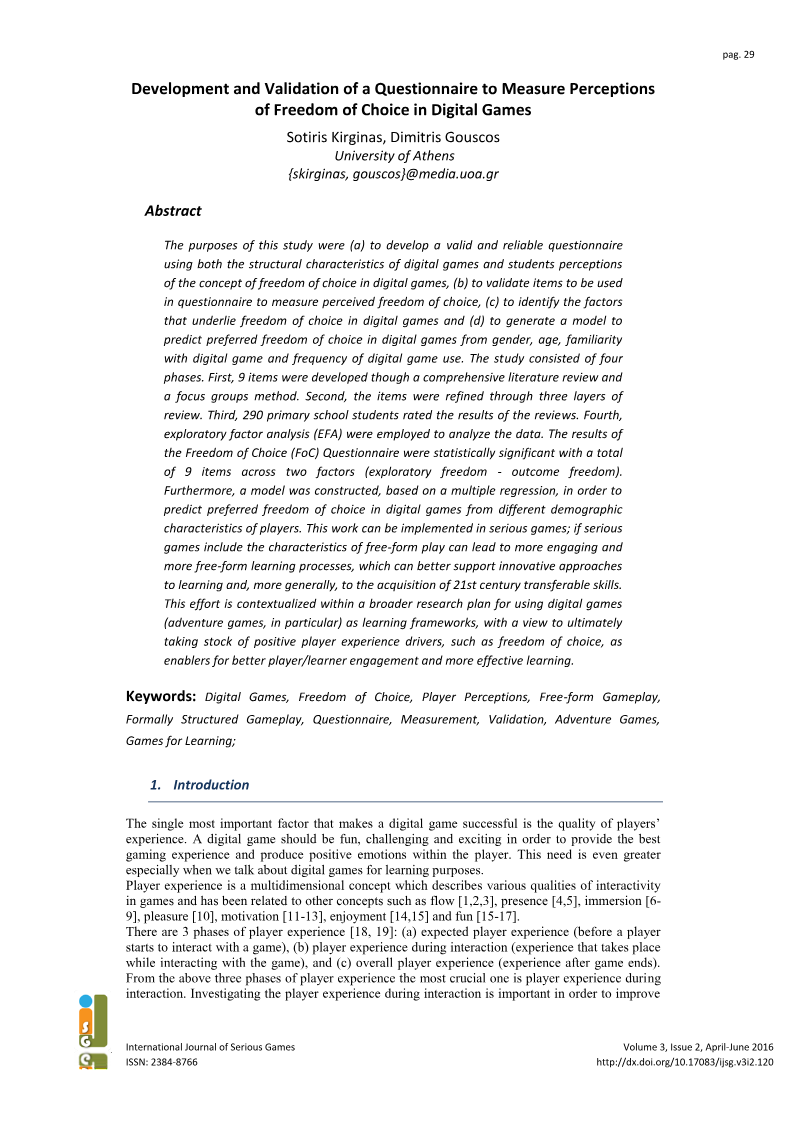
The perception of autonomy in digital environments is defined by two core dimensions: exploratory freedom, which relates to the ability to navigate and interact with game worlds, and outcome freedom, which pertains to the influence players exert over narrative or mechanical results.
- Player autonomy is defined by two distinct dimensions: exploratory freedom (navigation and interaction) and outcome freedom (influence over narrative or mechanical results).
- A validated nine-item questionnaire provides a reliable method for measuring player perceptions of autonomy, demonstrating high internal consistency and construct validity.
- Data from 290 primary school students indicates that players prioritize immersion, agency, and character control over the presence of win/loss states.
Using Digital Games to Learn Mathematics: What Students Think?
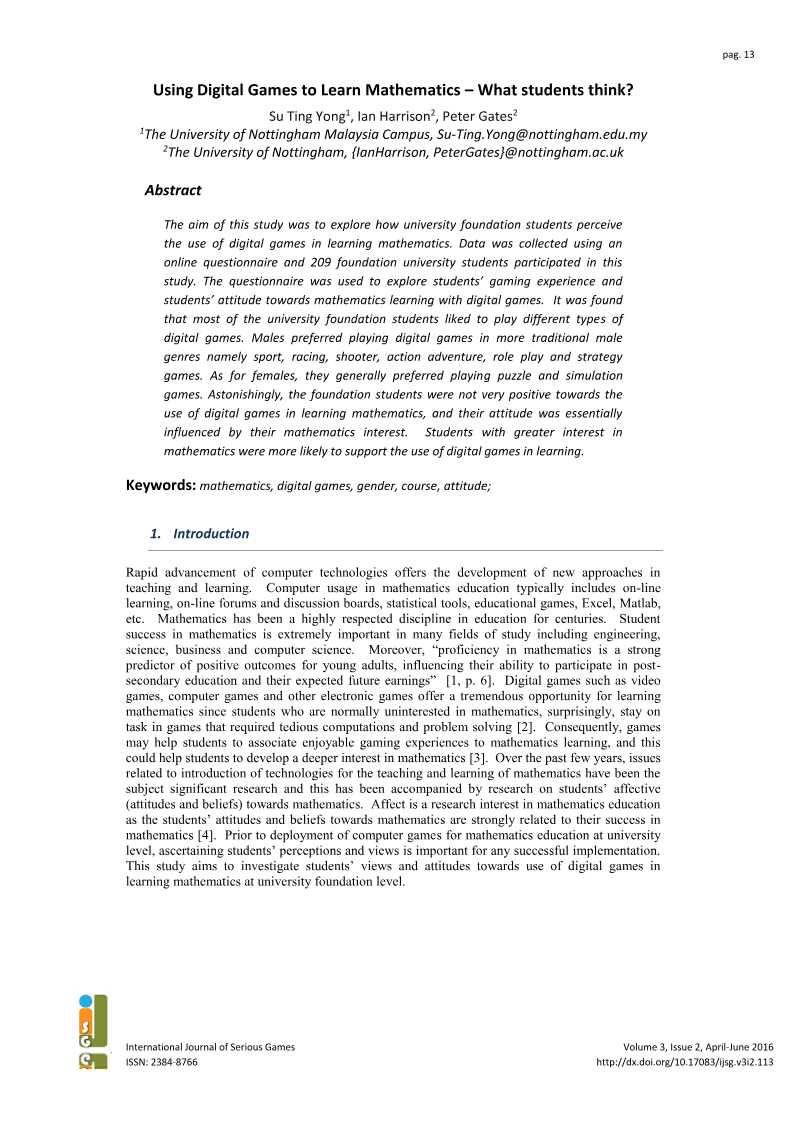
Digital games offer a potential, albeit nuanced, pedagogical tool for mathematics education at the university foundation level.
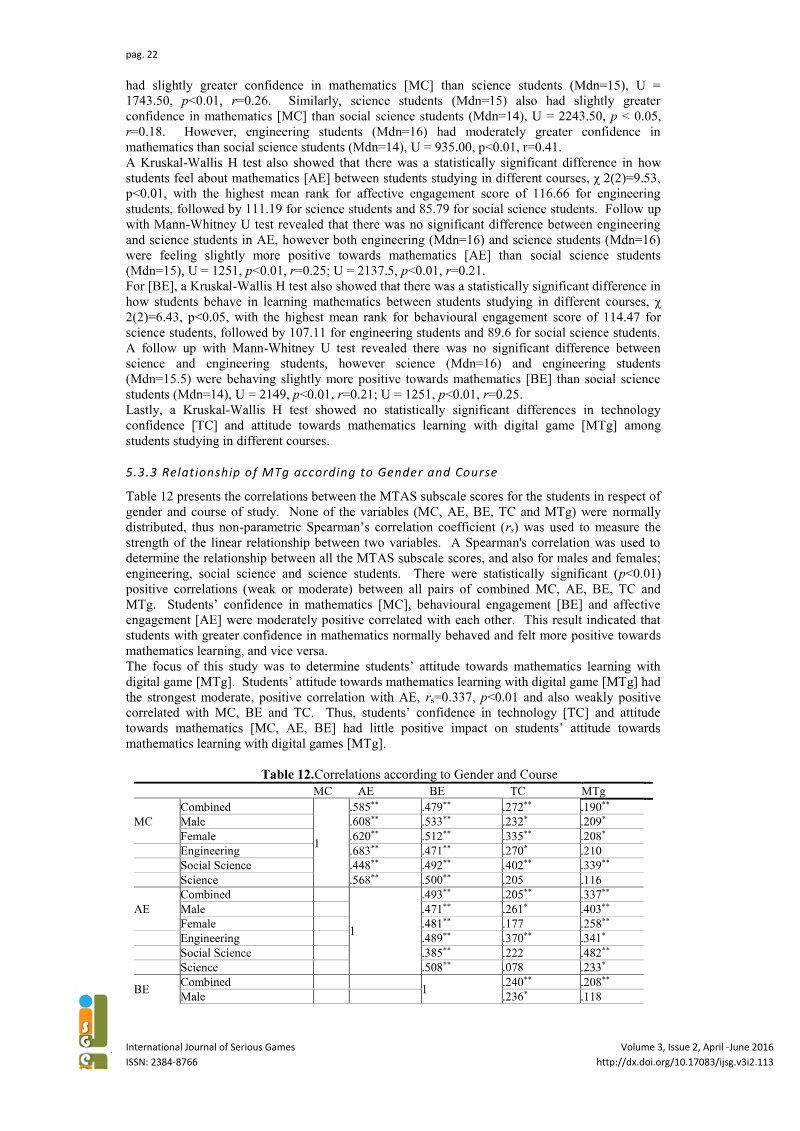
- A student’s pre-existing interest in mathematics is the primary determinant of success for game-based learning, rendering technology confidence and gaming habits insufficient drivers on their own.
- Digital games are not a universal solution for disengaged learners but function most effectively as a supplementary tool for students who already possess a positive attitude toward mathematics.
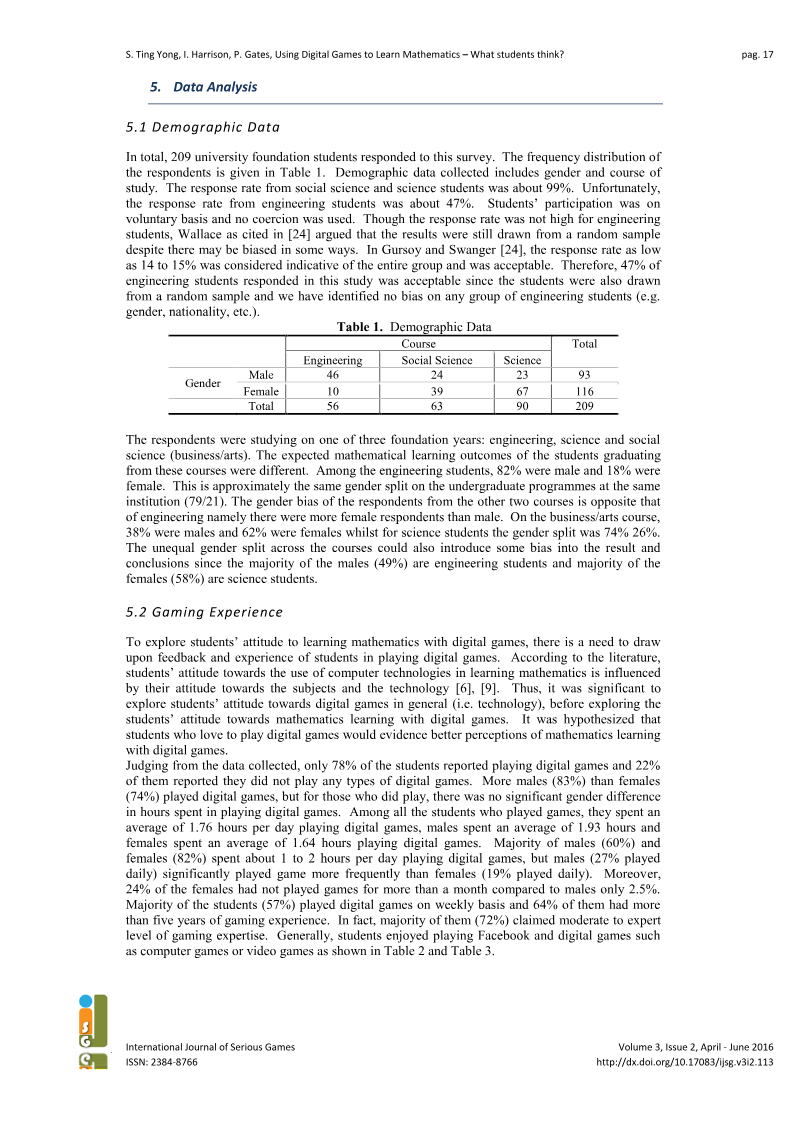
- While 78 percent of university foundation students identify as active gamers, their enthusiasm for integrating these games into formal mathematics curricula is only moderately positive.
The Political and Ethical Force of Bastion: Gameplay and the Love of Fate
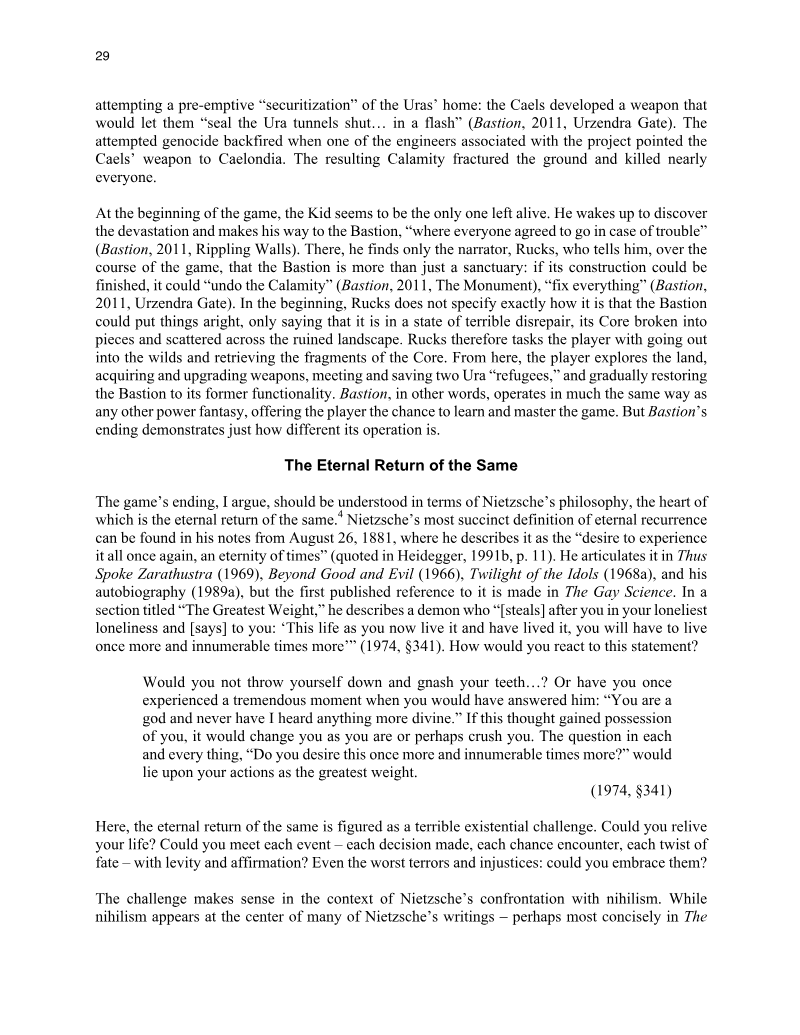
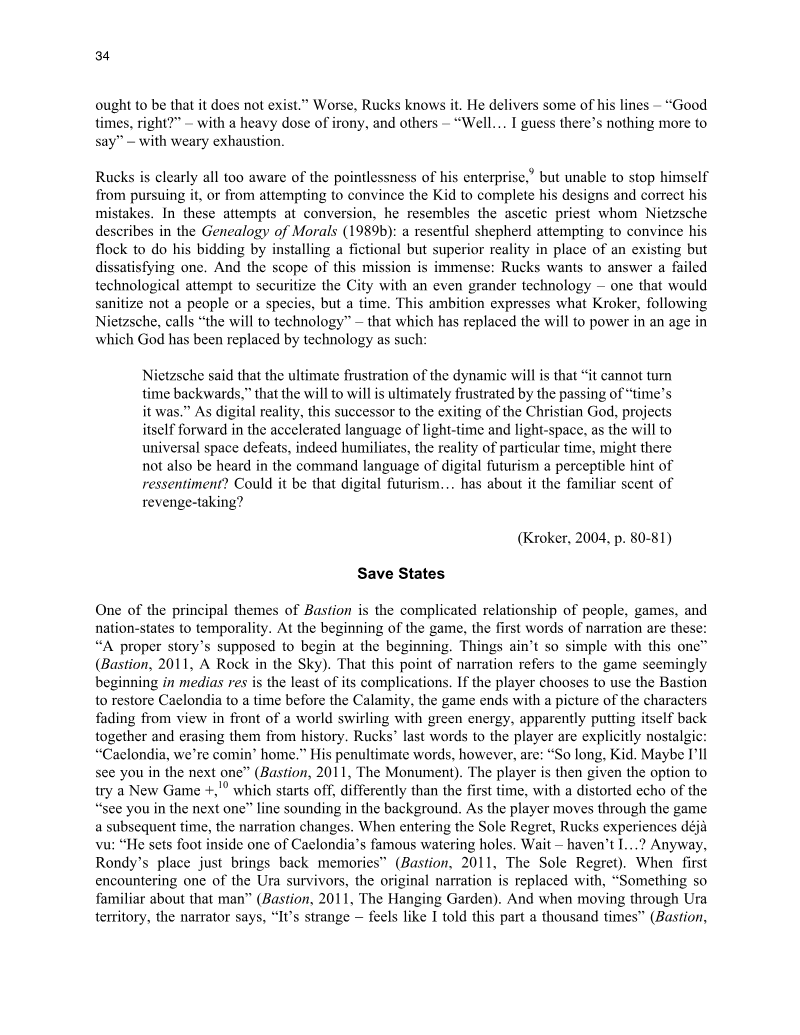
Most video games operate as power fantasies that prioritize player control, calculability, and the ability to manipulate digital environments.
- Bastion functions as an ethical intervention by challenging the standard gaming trope of player mastery, instead forcing users to confront the limits of their agency.
- The game’s final choice between Restoration and Evacuation serves as a philosophical litmus test regarding the player's relationship with history and control.
- The Restoration ending is framed as a futile, cyclical attempt to undo past suffering through technological mastery, exposing the dangers of nostalgia and the desire to rewrite history.
Playing Educational Math Games at Home: The Monkey Tales Case
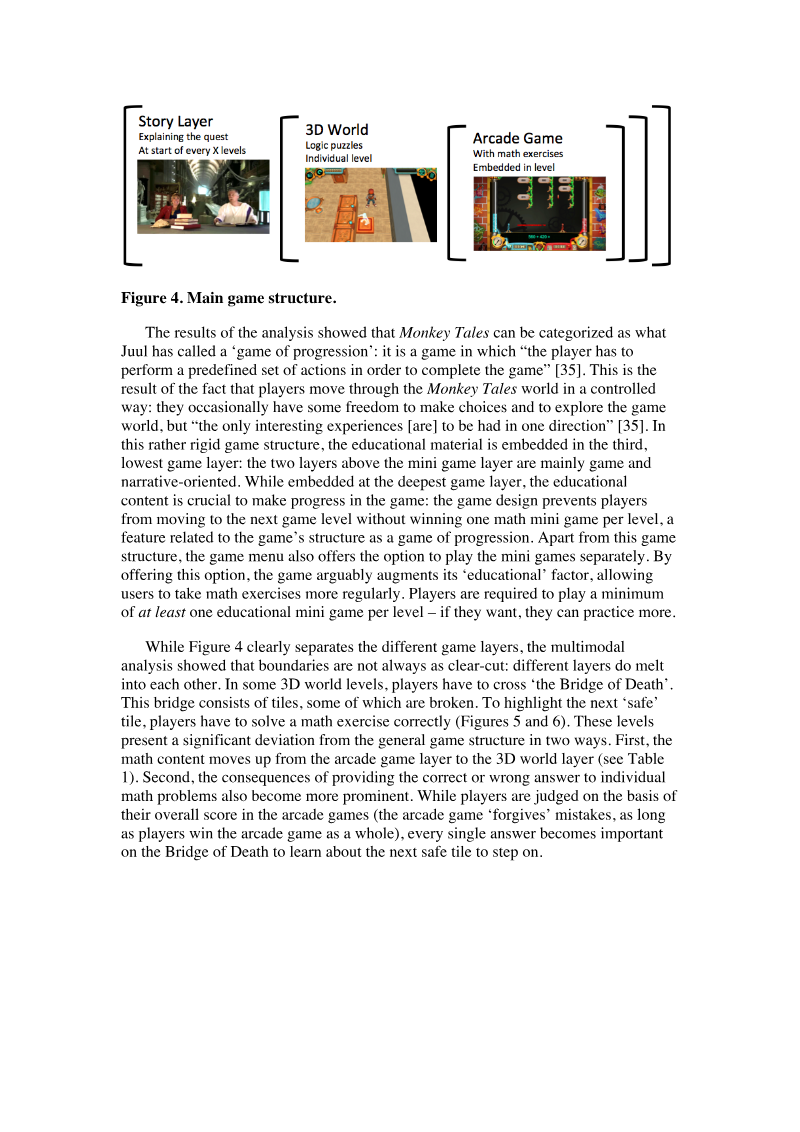
The integration of educational math games into the home environment reveals a significant tension between intended pedagogical goals and the reality of child-led play.